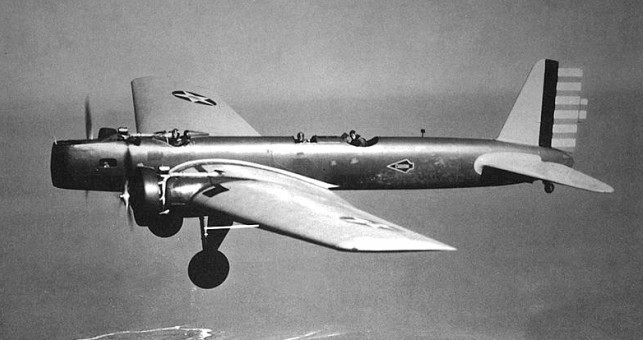
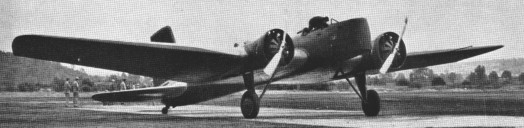
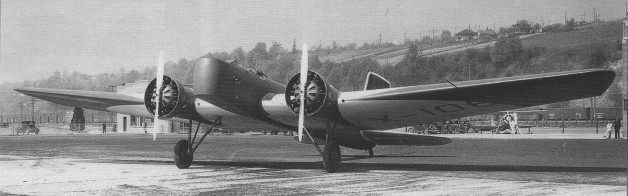
In 1930 Boeing began the private-venture development of a bomber aircraft based on the Model 200 Monomail. The resulting prototypes and service evaluation bombers were scaled-up versions of this aircraft. They differed by having twin-engines, installed in nacelles at the wing leading edge, and by adaptation of the fuselage to cater for the crew and weapons.
Y1B-9A
To provide the crew accommodation, the fuselage was extended forward of the wing. A bomb-aimer/gunner was accommodated in the nose and immediately behind him, within the fuselage, was a radio operator’s position. Aft of the radio operator were two cockpits in tandem, for pilot and co-pilot, with a fourth open cockpit, just aft of the wing trailing edge, for the rear gunner. A bombload totalling 1025kg could be divided between an internal bomb bay and underwing racks.
Y1B-9
First flying, on 13 April 1931, was the Boeing Model 215, powered by two 429kW Pratt & Whitney R-1860-13 Hornet radials. This was tested by the USAAC under the initial designation XB-901 (Experimental Bomber), and satisfactory conclusion of testing resulted in the procurement of this aircraft under the designation YB-9. At the same time the then incomplete Boeing Model 214 was contracted under the designation Y1B-9, plus five additional service test aircraft with the designation Y1B-9A (Model 246). The Model 214, powered by 447kW Curtiss V-1570-29 Conqueror inline engines, was flown for the first time on 5 November 1931, and following further tests, the Model 214 was re-engined with a supercharged version of the Pratt & Whitney Hornet. This power-plant was chosen also for the Y1B-9As, the first of which was flown on 14 July 1932. The Y1B-9A differed externally from the earlier prototypes in having modified vertical tail surfaces, and had internally a number of equipment and structural changes to meet service requirements. Subsequent testing, and evaluation against the Martin Model 123, resulted in the Martin aircraft entering service as the B-10. This came as a great disappointment to the Boeing company, which had produced this bomber with performance superior to most contemporary fighter aircraft.
Boeing 215 / XB-901 / YB-9 Engines: 2 x Pratt & Whitney R-1860-13 Hornet radials, 429kW
Boeing 214 / Y1B-9 Engines: 2 x Curtiss V-1570-29 Conqueror inline, 447kW re-engined with 2 x 447kW Pratt & Whitney SR-1860-11 Hornet supercharged radial piston
Boeing 246 / Y1B-9A Engine: 2 x Pratt & Whitney SR-1860-11 Hornet, 447kW / 600 hp Take-off weight: 6495 kg / 14319 lb Empty weight: 4056 kg / 8942 lb Wingspan: 23.42 m / 76 ft 10 in Length: 15.77 m / 51 ft 9 in Height: 3.66 m / 12 ft 0 in Wing area: 88.63 sq.m / 954.00 sq ft Max. speed: 299 km/h / 186 mph / 163kt Cruise speed: 266 km/h / 165 mph Ceiling: 6325 m / 20750 ft Rate-of-Climb: 900ft/min (274m/min) Range: 869 km / 540 miles Armament: 2-4 x 0.30 caliber machine guns Bombload: 2,260lbs Accommodation: 4 or 5
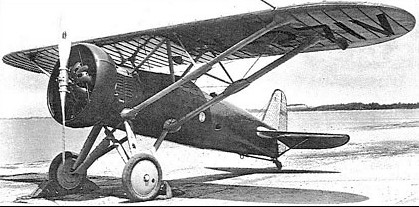
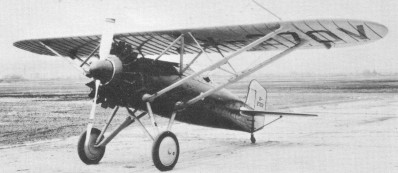
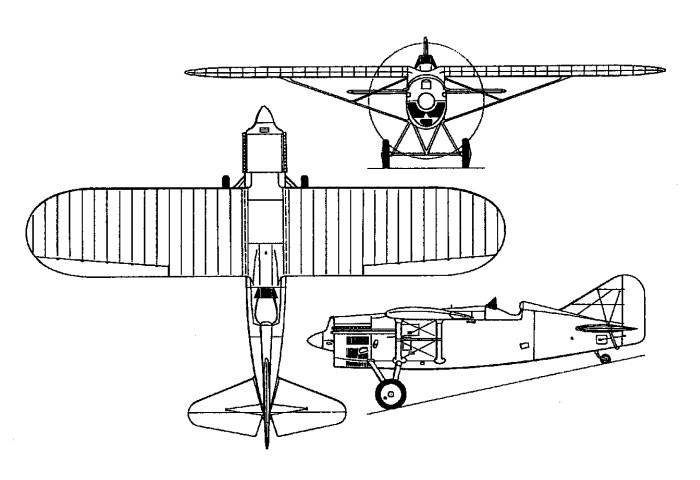
During 1929, work began as a private venture on two prototypes of a single-seat parasol fighter monoplane, one (Model 202) being intended for the USAAC and the other (Model 205) having arrester gear for US Navy evaluation. The Models 202 and 205 featured a semi-monocoque metal fuselage and metal wings, with smooth, non-stressed metal skinning. Provision was made for the standard twin 7.62mm gun armament and the Model 205 could carry a single 227kg bomb or five 13kg bombs.
Model 202 XP-15
The Model 202 had a Pratt & Whitney SR-1340D Wasp rated at 450hp at 2438m and the Model 205 had an SR-1340C rated at 480hp at sea level. The Model 202 was flown in January 1930, and was unofficially assigned the designation XP-15 when evaluated by the USAAC. During evaluation it was fitted with a ring cowling and revised vertical tail surfaces, but was rejected by the USAAC and eventually crashed on 7 February 1931 after propeller failure. The similar Model 205 was assigned the designation XF5B-1, and underwent modifications identical to those applied to the Model 202. Flown in February 1930, the XF5B-1 was used for experimental purposes for three years, no production being undertaken.
Model 205 XF5B1
Model 202 / XP-15 Engine: Pratt & Whitney SR-1340D Wasp, 450hp at 2438m Take-off weight: 1245 kg / 2745 lb Empty weight: 931 kg / 2053 lb Wingspan: 9.29 m / 30 ft 6 in Length: 6.40 m / 20 ft 12 in Height: 2.84 m / 9 ft 4 in Wing area: 14.61 sq.m / 157.26 sq ft Max. speed: 298 km/h / 185 mph
Model 205 / XF5B-1 Engine: Pratt & Whitney SR-1340C, 480hp
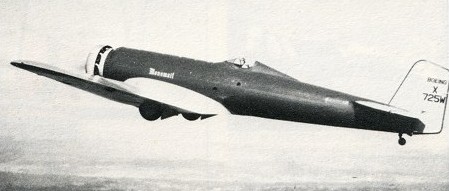
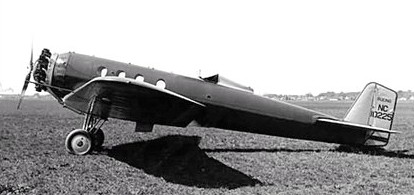
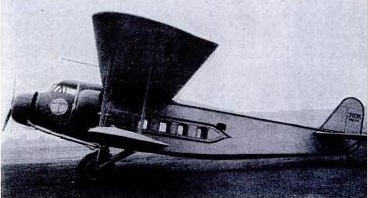
A cantilever low-wing monoplane of all-metal construction, the Boeing Model 200 Monomail benefited by the cantilever wing eliminating drag-inducing struts and bracing wires. The a semi-monocoque fuselage structure provided a more streamlined shape, the semi-retractable tailwheel landing gear ensured that most of the main unit structure was retracted within the wing, and the Pratt & Whitney Hornet B radial engine was surrounded by an anti-drag cowling. It retained an open cockpit for the pilot, seated well aft, and the forward cargo/ mail compartments.
First flown on 6 May 1930, the Monomail was used for a number of tests and experimental flights before entering service on Boeing Air Transport’s San Francisco – Chicago route in July 1931. The aircraft did not achieve a single order beyond the prototype.
Generally similar to the Model 200 Monomail, this single aircraft had a fuselage lengthened by 0.2m and cargo/mail capacity reduced from 1043kg to 340kg, to provide accommodation for six passengers in an enclosed cabin; first flown on August 1930, and entered service with Boeing Air Transport
221 Monomail
Boeing Model 221A: designation applied to the Models 200 and 221 following fuselage ‘stretches’ to provide accommodation for eight passengers; both saw service on the Cheyenne-Chicago route of Boeing’s newly-formed United Air Lines
The advanced design of this aircraft led to development of the Model 214 and Model 215 experimental bombers, and two variants of this basic civil design.
Boeing Model 200 Engine: 1 x 429kW Pratt & Whitney Hornet B radial Take-Off Weight: 3629 kg / 8001 lb Empty Weight: 2158 kg / 4758 lb Wingspan: 18.02 m / 59 ft 1 in Length: 12.56 m / 41 ft 2 in Max. Speed: 254 km/h / 158 mph Cruise Speed: 217 km/h / 135 mph Ceiling: 4265 m / 14000 ft Range: 853 km / 530 miles
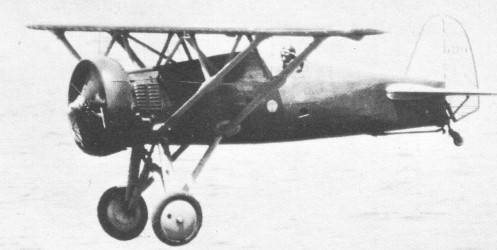
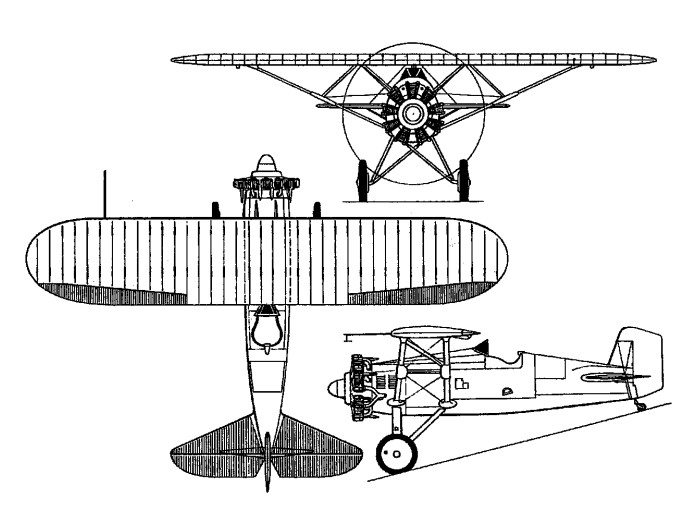
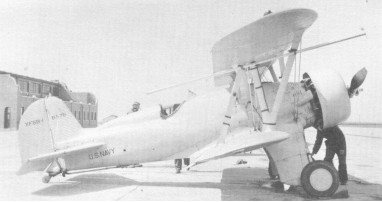
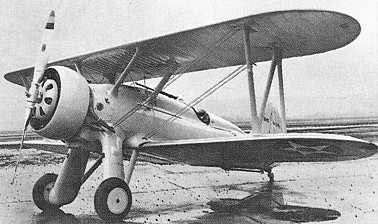
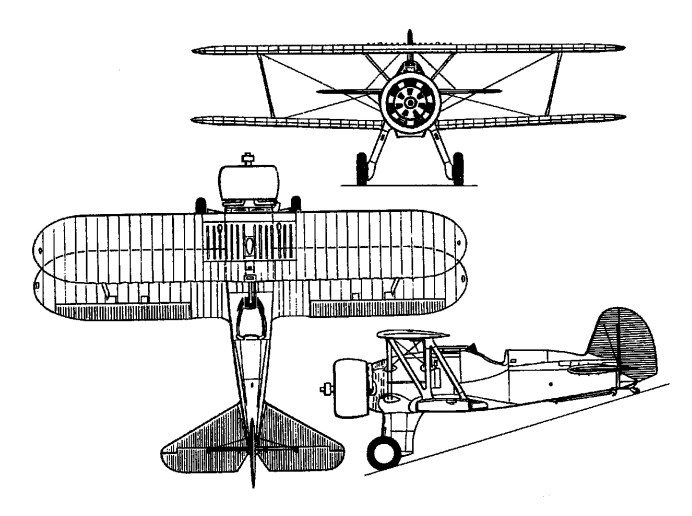
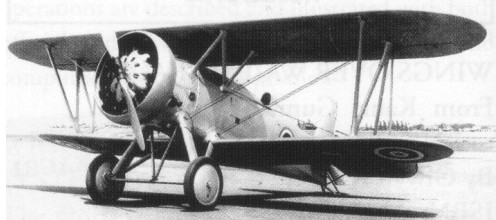
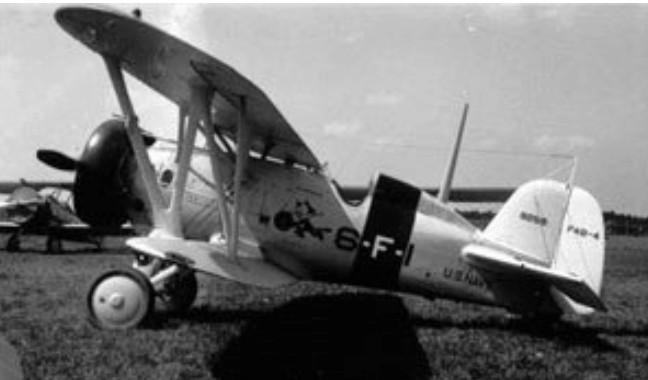
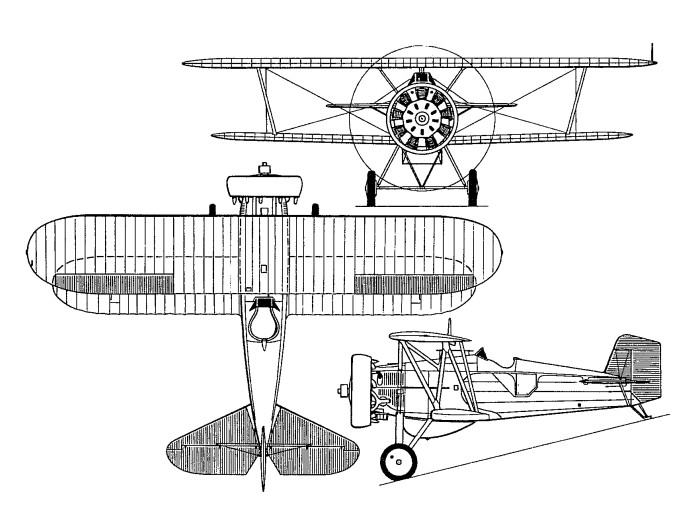
The last Boeing biplane fighter, the Model 236 single-seat shipboard fighter was designed around the 14-cylinder twin-row Pratt & Whitney R-1535 Twin Wasp Junior engine rated at 625hp at 1676m. Of all-metal construction with fabric-covered wings, the Model 236 was assigned the designation XF6B-1 by the US Navy and flew on 1 February 1933. Armament was two 7.62mm guns and provision was made for a single 227kg bomb or two 52kg bombs, and on 21 March 1934, the prototype was assigned the new “bomber-fighter” designation of XBFB-1. The engine installation and undercarriage were refined during the test and evaluation programme, but no production was undertaken.
Engine: Pratt & Whitney R-1535 Twin Wasp Junior, 625hp Take-off weight: 1680 kg / 3704 lb Empty weight: 1038 kg Wingspan: 8.69 m / 28 ft 6 in Length: 6.74 m / 22 ft 1 in Height: 3.22 m / 10 ft 7 in Wing area: 23.41 sq.m / 251.98 sq ft Max. speed: 322 km/h / 200 mph Range: 845 km / 525 miles
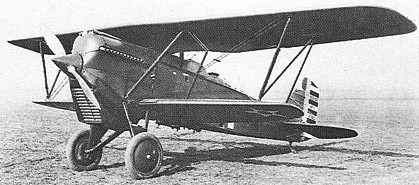
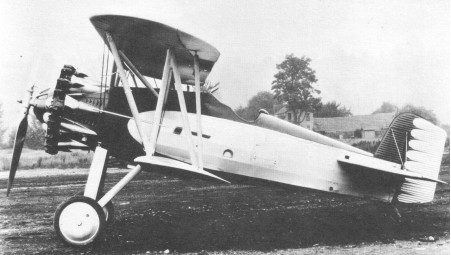
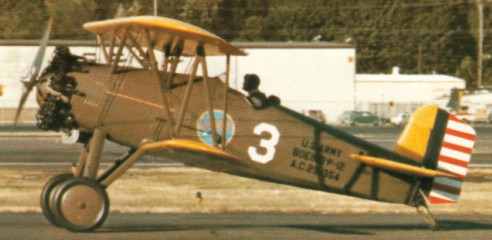
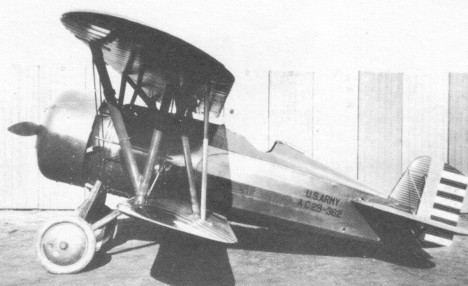
The final production PW-9D (the 16th) was retained by Boeing for the experimental installation of a 600hp water-cooled Curtiss Conqueror V-1570 engine and, as the XP-7 (Model 93), was eventually delivered to the USAAC on 4 September 1928. Distinguished from the PW-9D by a shorter, deeper nose with a larger radiator, the XP-7 enjoyed some success during trials, proving the suitability of the Conqueror for fighter installation. Proposals to build four service evaluation P-7s were abandoned when it was concluded that the basic PW-9 airframe had reached the limit of its development. The XP-7, the last Boeing fighter biplane to employ a liquid-cooled engine, was reconverted to PW-9D standards.
Engine: 600hp water-cooled Curtiss Conqueror V-1570 Take-off weight: 1479 kg / 3261 lb Empty weight: 1 053 kg Wingspan: 9.75 m / 31 ft 12 in Length: 7.31 m / 23 ft 12 in Height: 2.74 m / 8 ft 12 in Wing area: 22.39 sq.m / 241.00 sq ft Max. speed: 269 km/h / 167 mph
Both Models 83 and 89 were Navy designated Boeing XF4B-1 fighters. The difference was the Model 83 had a spreader-bar axle landing gear, and an arrester hook. The Boeing Model 89 had a split-axle landing gear so that a 500 lb bomb could be carried beneath the fuselage.
A private venture built at Boeing’s expense, the XF4B-1 first flew on 7 August 1928. It was placed in production as the Boeing 99 for the Navy F4B-1 series and Model 102 for Army P-12 series, 27 were ordered as F4B-1, and was first delivered in July 1928.
The P-12 was constructed of dural tubing, fabric covered and having wooden wings with corrugated metal control surfaces. Powered by a Pratt & Whitney R-1340 Wasp of 450 hp, the top speed was 171 mph and ceiling 29,000 ft fully loaded.
Model 102 P-12
One XP-12A was built as a test vehicle for the newly NACA cowl. The fuselage was flared to conform to the enlarged nose and shorter landing gear was installed. The XP-12A was a modification of the 10th production P-12. It was later destroyed in a crash. The original P-12 and P-12B were the only two P-12 models that were not equipped with a speed-ring cowl.
XP-12A
The USAAC ordered ten aircraft similar to the F4B-1 in late 1928, accepting the naval evaluation as being correct. Designated P-12, these differed only by having the arrester hook and other specifically naval equipment deleted. P-12B, of which 90 were built with 317kW Wasp engines, differed very slightly with Frise balanced ailerons and internal improvements and were followed by 96 P-12C, which were similar to the Navy’s F4B-2. P-12D, of which 35 were built, had a more powerful 391kW Wasp engine.
The P-12C and P-12D models were improved models and utilised improved and heavier constructed cross-axle landing gear and a speed ring cowl around a Pratt & Whitney Wasp of 550 hp. Many P-12C and D models were fitted later with P-12E type vertical tail surfaces to give better control. The P-12E introduced an all metal monocopue fuselage with greater greater structural rigidity of the fuselage for higher G loads. Most extensively built of the Army versions was the P-12E. This had a pilot’s headrest faired by a turtleback and the more powerful engine of the P-12D. A total of 135 were ordered in 1931, many remaining in service until replaced by P-26A in 1935. The last few of the order were given 447kW / 550 hp Pratt & Whitney R-1340-19 Wasp engines and the designation P-12F. The P-12F had a top speed of 195 mph and ceiling of 32,000 ft. The P-12F had a swivel tail wheel in place of a skid. All P-12s in service were later fitted with tail wheels.
Model 218 c/n 1260
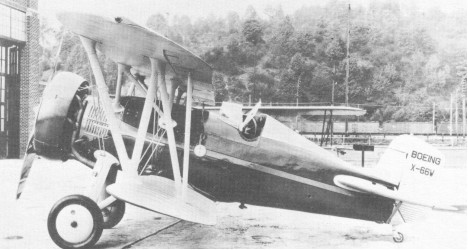
The Boeing Model 218 (XP-925H) was the prototype of the P-12E/F4B-3 series. With a 500 hp Pratt & Whitney Wasp engine the P-12E had a top speed of over 190 mph and a service ceiling of 27,000 ft fully loaded. One P-12E was fitted with a special cockpit enclosure and others had “Panama Conversion Kits” installed. Experimental test models included; XP-12G – turbo-supercharged Wasp engine and 3 blade propeller. XP-12H – basic P-12D with a geared Wasp engine instead of the usual direct drive. P-12L – engine test model. P-12J – engine test model. P-12K – P-12Es modified for fuel injection.
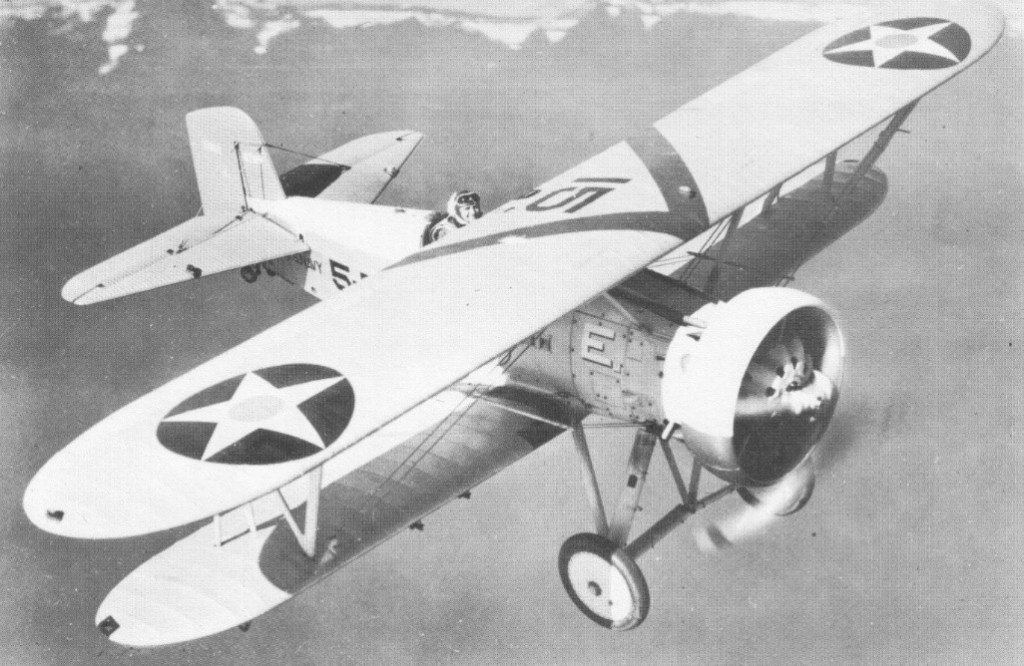
Forty-six F4B-2, delivered in early 1931, had the spreader-bar axle, a tailwheel, Frise ailerons and a neat ring cowling for the engine. They were followed by 21 F4B-3 with a semi-monocoque metal fuselage and 92 F4B-4 which differed by having a larger fin and rudder.
F4B-2 USN
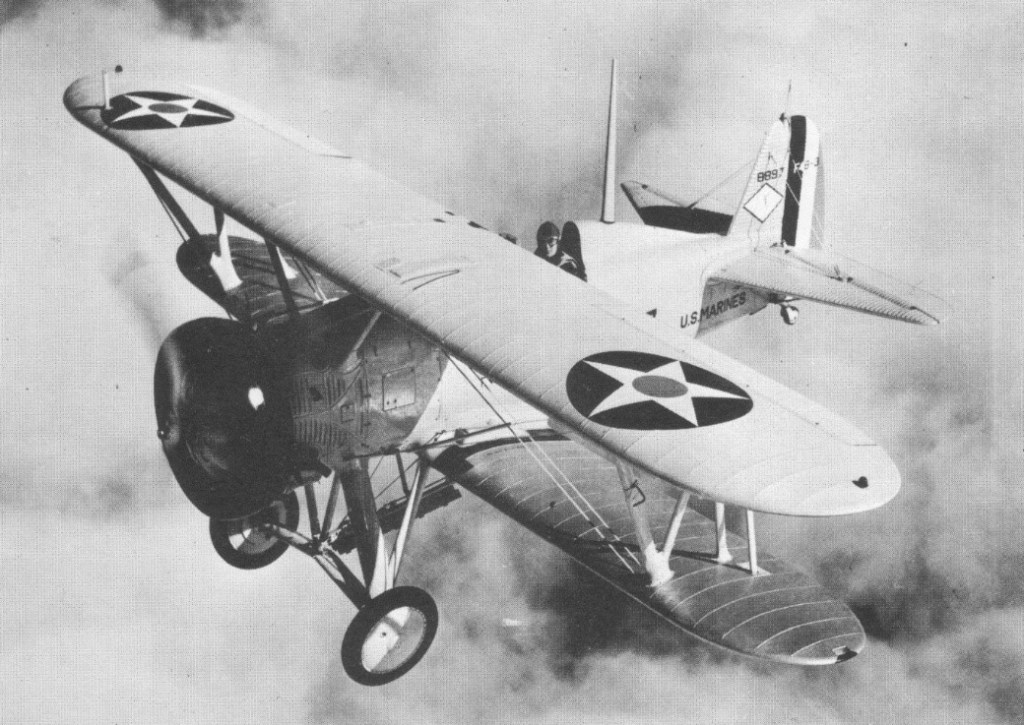
The F4B-3 and P-12E were identical except for the carrier hook, cabane wire, and double row of rivets, and a tall radio mast on the F4B-3. The F4B-4 served the US Navy and US Marines.
F4B-3 Marines
The Navy bought 94 F4B-4s, 21 going to the Marine Corp to operate from land bases.
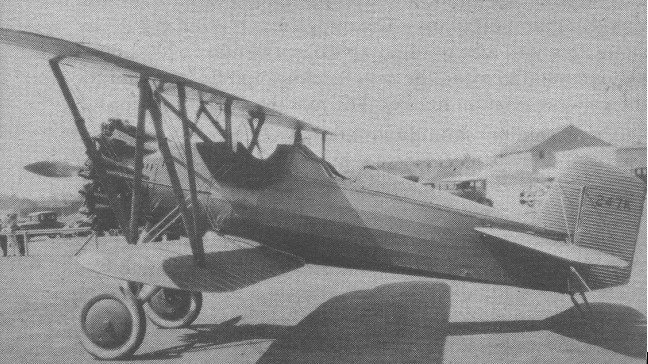
The Boeing 100 of 1929 was an ATC’d civil version of the P-12 built as a sport plane and for export. They were lighter in weight and the early models resembled the P-12B in appearance. Seven were built and owners included Howard Hughes, Art Goebel, Tex Rankin and Paul Mantz, as well as several foreign governments. Howard Hughes one was delivered as a two-seater as Model 100-A. Hughes soon had it reconverted to one seat, and it survived as such until 1958.
Model 100-A
It was reported in September 1956 that the sole Boeing 100-A, N247K, crashed at Dallas, USA, killing the owner -pilot, Robert Hallbeck. Hallbeck was rolling the machine at about 3000 ft when one of the wings collapsed, and although he was wearing a parachute he was unable to jump clear.
The Japanese imported a civil Boeing 100 and two Boeing 100Es were exported to Siam in September 1931.
Boeing 100E
One Boeing 100E survives on display at the Kings Museum, Bangkok, Thailand. Fourteen F4B-4s were exported to Brazil before World War 2. A total of 554 in the P-12 – F4B series were built, 110 of which were P-12Es. The one surviving P-12E is on display in “The Air Museum”, Ontario International Airport, Ontario, Canada.
Boeing 100E
P-12/F4Bs saw service in Panama, Hawaii and the Phillipines. A few went to China and one of them was the first American made plane to shoot down a Japanese plane in combat prior to World War 2. Two F4B-4 Navy aircraft were released to the CAA Air Safety Board during the early 1930s. Later sold to private buyers, they were used in many pre-war and post-war airshows. One was owned by Hyland Flying Service, Rochester, New York, was later acquired by the Smithsonian Institute and placed on loan to the Navy Museum, fully restored.
75% replica: Reid Boeing P-12E Aero-Tech Boeing F4B-2/P-12C
Boeing F4B / P-12 Engine: 1 x Pratt & Whitney R-1340-D Wasp Length: 20.08ft (6.12m) Width: 29.99ft (9.14m) Height: 9.32ft (2.84m) Empty Weight: 2,355lbs (1,068kg) Maximum Take-Off Weight: 3,611lbs (1,638kg) Maximum Speed: 188mph (303kmh; 164kts) Maximum Range: 370miles (595km) Rate-of-Climb: 1,666ft/min (508m/min) Service Ceiling: 26,903ft (8,200m) Armament: 2 x 7.62mm machine guns Accommodation: 1
Variants:
Boeing 83 / XF4B-1 Number built: 1 Serial number / Registration: 8129 First flight: 25 June 1928 Bought by Navy 19 June 1929.
Boeing 89 / XF4B-1 Number built: 1 Serial number / Registration: 8128 First flight: 7 August 1928 Bought by Navy 19 June 1929.
Armament: 500 lb bomb
Boeing 99 / F4B-1 Number built: 27 Serial number / Registration: 8130-8156 First flight: 6 May 1929 Production version of 89. Navy sn8133 converted to executive model.
Boeing 100 Number built: 4 Serial number / Registration: NS-21, NC872H, C873H, NC874H First flight: 18 October 1929 Civil version of 83/89.
Boeing 100A Number built: 1 Serial number / Registration: 247K First flight: 26 July 1929 Howard Hughes 2 seat version.
Boeing 100E Number built: 2 Serial number / Registration: First flight: Siam P-12E export version.
Boeing 100F Number built: 1 Serial number / Registration: X10696 First flight: 20 June 1932 Civil P-12F testbed for Pratt & Whitney.
Boeing 101 / XP-12A Number built: 1 Serial number / Registration: 29-362 First flight: 10 May 1929 Destroyed in mid-air collision.
Boeing 102 / P-12 Number built: 9 Serial number / Registration: 29-353 – 29-361 First flight: 11 April 1929 83, 89 Army version.
Engine: Pratt & Whitney R-1340 Wasp, 450 hp Top speed: 171 mph Ceiling at MAUW: 29,000 ft
Boeing 102B / P-12B Number built: 90 Serial number / Registration: 29-329 – 29-341, 29-433 – 29-450, 30-29 – 30-87 First flight: 12 May 1930
Engine: Pratt & Whitney R-1340 Wasp, 317kW
Boeing 218 / XP-925 Number built: 1 Serial number / Registration: X66W First flight: 29 September 1930 Army revised P-12B, prototype P-12E & F4B-3.
Engine: Pratt & Whitney R-1340 Wasp, 500 hp Top speed: 190+ mph Service ceiling at MAUW: 27,000 ft
Boeing 222 / P-12C Number built: 96 Serial number / Registration: 31-147 – 31-229, 31-230 – 31-242 First flight: 31 January 1931 131 ordered, last 35 built as P-12D.
Engine: Pratt & Whitney R-1340 Wasp, 391kW / 550 hp
Boeing 223 / F4B-2 Number built: 46 Serial number / Registration: 8806, 8613-8639, 8791-8809
Engine: Pratt & Whitney R-1340 Wasp, 391kW / 550 hp
Boeing 227 / P-12D Number built: 35 Serial number / Registration: 31-243 – 31-277 First flight: 2 March 1931 Improved P-12C, last 35 P-12C built as P-12D.
Engine: Pratt & Whitney R-1340 Wasp, 391kW / 550 hp Top speed: 188mph
Boeing 234 / P-12E Number built: 110 Serial number / Registration: 31-553 – 31-586, 32-1 – 32-76 First flight: 15 October 1931 Production 218 models, 1 converted to P-12J, 7 to P-12K.
Engine: Pratt & Whitney R-1340E Wasp, 391kW / 550 hp, 500 hp at 6000 ft Engine compression ration: 6:1 Overall span (Upper): 30 ft Length: 20 ft 4 11/16 in Height: 8 ft 9 in Airfoil section: Boeing 106 Total wing area: 227.5 sq.ft Upper wing span: 30 ft Upper wing chord: 60 in Upper wing diherdral: 0 degs Upper wing area: 141.4 sq. ft Lower wing span: 26 ft 4 in Lower wing chord: 45 in Lower wing diherdral: 2 degs Lower wing area: 86.1 sq. ft Empty weight: 1981.5 lb Fuel: 300 lb Wing loading: 11.75 lb/sq.ft Loaded weight: 2674.3 lb Landing speed; 59 mph Cruise speed: 167 mph Max speed: 190 mph Range at cruise: 475 miles Armament: 2 x .30 Browning 30M mg or 1 x .30 mg and 1 x .50 mg, and 2 x M-3 bombs
Boeing 235 / F4B-3 Number built: 21 Serial number / Registration: 8891-8911 Production 218 models.
Engine: Pratt & Whitney R-1340D Wasp, 391kW / 550 hp Speed: 187 mph at 6000 ft Empty weight: 2200 lb Armament: 2 x .30 Browing mg or 1 x .30 and 1 x .50 cal mg
Boeing 235 / F4B-4 Number built: 92 Serial number / Registration: 8912-8920, 9009-9053, 9226-9263 Improved F4B-3, larger tail. 14 to Brazil.
Engine: Pratt & Whitney R-1340D Wasp, 500 hp Speed: 187 mph at 6000 ft Empty weight: 2312 lb Armament: 2 x .30 Browing mg or 1 x .30 and 1 x .50 cal mg
Boeing 251 / P-12F Number built: 25 Serial number / Registration: 31-77 – 31-101 Improved P-12E.
Engine: Pratt & Whitney R-1340-19 Wasp, 447kW / 550 hp Top speed: 195 mph Ceiling: 32,000 ft
Boeing 256 / “1932” Number built: 14 Export F4B-4s from Navy order to Brazil.
Boeing 267 / F4B-3 / P-12E Number built: 9 F4B-3 fuselage, P-12E wings. Light export model to Brazil.
XP-12G turbo-supercharged Wasp engine and 3 blade propeller.
XP-12H basic P-12D with a geared Wasp engine instead of the usual direct drive.
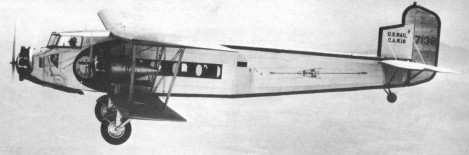
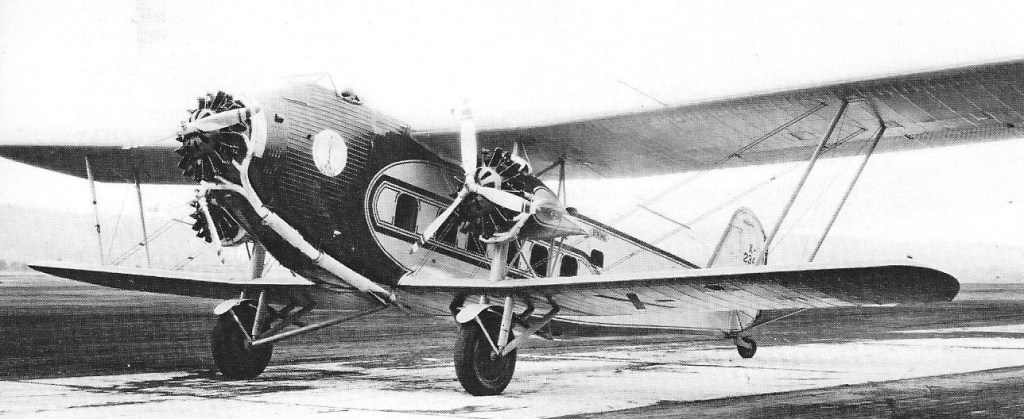
The growth of operations on Boeing Air Transport’s San Francisco-Chicago route resulted in the design and development of a purpose-designed passenger transport, the Boeing Model 80, first flown during August 1928. A large unequal-span biplane, with the lower wing of reduced chord, the Model 80 had a wing structure of wood, fabric-covered, and a fuselage and tail unit of welded steel tube, also fabric-covered. Landing gear was of fixed tailwheel type, and power was provided by three 306kW Pratt & Whitney Wasp radial engines. These were mounted in tri-motor configuration, one in the fuselage nose, and one each side of the fuselage, between the biplane wings. The main cabin of the Model 80 accommodated 12 passengers, plus a flight stewardess. Boeing stewardesses were all registered nurses. The Model 80 provided a separate enclosed flight deck for the pilot and co-pilot/navigator. Four of these aircraft were built, entering service with Boeing Air Transport in the late summer of 1928.
The Model 80s were followed by 10 of the improved Model 80A, this type having more powerful Pratt & Whitney Hornet engines, refinements to the wing, improved streamlining and, because of the increased power available, a cabin layout to accommodate a maximum of 18 passengers.
80A
Some pilots insisted on an open cockpit. One Model 80 was re-designed as the Model 80B with open cockpit and raised seats.
80B
The 80B was rebuilt to 80A configuration at the insistence of the majority.
Boeing 80 Engines: 3 x Pratt & Whitney Wasp, 306 kW Passengers: 12
Boeing 80A-1 Engines: 3 x 391kW Pratt & Whitney Hornet radial piston Take-off weight: 7938 kg / 17500 lb Empty weight: 4800 kg / 10582 lb Wingspan: 24.38 m / 79 ft 12 in Length: 17.22 m / 56 ft 6 in Height: 4.65 m / 15 ft 3 in Wing area: 113.34 sq.m / 1219.98 sq ft Max. speed: 222 km/h / 138 mph Cruise speed: 201 km/h / 125 mph Ceiling: 4265 m / 14000 ft Range: 740 km / 460 miles Passengers: 18
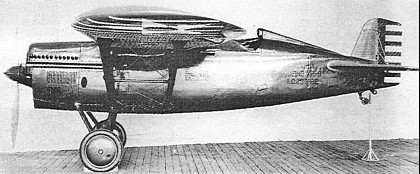
In May 1928, the USAAC issued a single-seat fighter specification to which Boeing responded with a shoulder-wing all-metal monoplane, the Model 96, which was assigned the official designation XP-9. Low development priority and production problems delayed the planned delivery date of the XP-9 from April 1929 until September 1930, the aircraft eventually flying for the first time on 18 November of that year. Powered by a Curtiss V-1570-15 liquid-cooled engine rated at 600hp, but actually delivering 583hp, the XP-9 featured a semi-monocoque fuselage of sheet Dural over metal formers. Performance proved disappointing, the poor vision from the rear-positioned cockpit and the unpleasant handling characteristics resulting in the test pilot referring to the XP-9 as “a menace”. After initial tests, the original vertical tail surfaces were replaced by larger P-12 surfaces, but little improvement resulted and the USAAC did not exercise its option on five Y1P-9s.
Engine: Curtiss V-1570-15 liquid-cooled, 583hp Take-off weight: 1643 kg / 3622 lb Empty weight: 1210 kg / 2668 lb Wingspan: 11.13 m / 36 ft 6 in Length: 7.66 m / 25 ft 2 in Height: 2.36 m / 7 ft 9 in Max. speed: 343 km/h / 213 mph
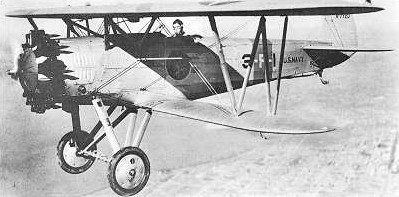
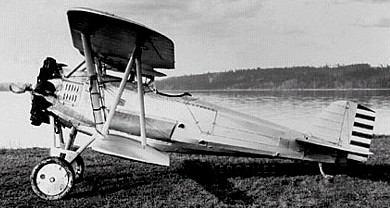
The XF3B-1 (Model 74) was built by Boeing as a private venture and externally resembled closely the F2B-1, but had provision for a single central float with outboard stabilising floats. Powered by a 425hp Pratt & Whitney R-1340 Wasp, it was flown for the first time on 2 March 1927 as a float seaplane. Showing no significant advance over the F2B-1, the XF3B-1 was returned to Boeing by the US Navy and completely rebuilt (as the Model 77), a redesigned undercarriage, wing and tail being introduced. In this new form the fighter proved successful and was the basis of an order from the US Navy for 73 production examples as F3B-1s. The F3B-1 was of mixed construction with wooden wings, a steel-tube fuselage and fabric skinning, but the ailerons and tail surfaces were of semi-monocoque all-metal construction with corrugated covering. Armament comprised two synchronised 7.62mm machine guns and provision was made for five 11kg bombs to be carried. The first flight of the rebuilt XF3B-1 took place on 3 February 1928, and the first production F3B-1, powered by an R-1340-B Wasp, was delivered to the US Navy on 23 November 1928.
F3B-1 Engine: Pratt & Whitney R-1340-B Wasp Take-off weight: 1336 kg / 2945 lb Empty weight: 988 kg / 2178 lb Wingspan 10.06 m / 33 ft 0 in Length: 7.56 m / 24 ft 10 in Height: 2.79 m / 9 ft 2 in Wing area: 25.55 sq.m / 275.02 sq ft Max. speed: 253 km/h / 157 mph Range: 547 km / 340 miles
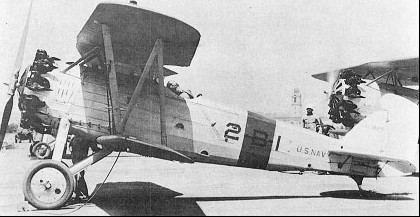
US Navy evaluation of the FB-4 with a Wright P-1 radial engine led to this aircraft being re-engined with a Pratt & Whitney Wasp and redesignated FB-6. It was flight-tested and demonstrated the clear superiority of the Wasp, leading to a decision to combine this engine with an airframe based on the Model 66. From this marriage of airframe and powerplant came the Boeing Model 69, designated XF2B-1 by the US Navy, and first flown in prototype form on 3 November 1926. It differed mainly in having the span of upper and lower wings more nearly equal, and by the propeller having a large spinner.
74 / XF3B-1
Satisfactory testing of the prototype resulted in an order for 32 production aircraft under the designation F2B-1, with deliveries beginning on 30 January 1928, and these served with US Navy Squadrons VF-1B (fighter) and VB-2B (bomber) on board USS Saratoga. The F2B-1s differed from the prototype by deletion of the spinner, and introduction of a balanced rudder.
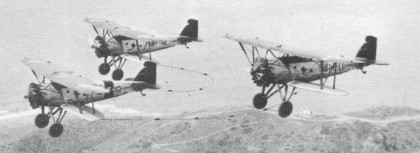
Three F2B-1s were flown by the “Three Sea Hawks” Navy precision stunt flying team of the late 1920s.
Model 69 / F2B-1 Engine: 1 x 317kW Pratt & Whitney R-1340-B Wasp radial Take-Off Weight: 1272 kg / 2804 lb Empty Weight: 902 kg / 1989 lb Wingspan: 9.17 m / 30 ft 1 in Length: 6.98 m / 22 ft 11 in Height: 2.81 m / 9 ft 3 in Wing Area: 22.57 sq.m / 242.94 sq ft Max. Speed: 254 km/h / 158 mph Cruise Speed: 212 km/h / 132 mph Ceiling: 6555 m / 21500 ft Range: 507 km / 315 miles Armament: 1 x 12.7mm + 1 x 7.62mm machine-guns, 5 x 11kg bombs