British Aerial Transport Co. / BAT F.K.28 Crow       

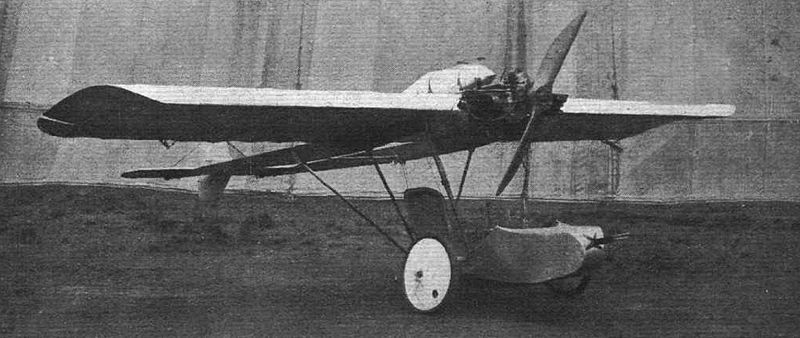
The smallest of designs from Frederick Koolhoven when he worked for the British Aerial Transport Company was the F.K.28 Crow.

The B.A.T. Crow monoplane was built in 1919. It was very small and light. Its tail surfaces were carried by two slim booms. An ABC Gnat 2-cylinder horizontally-opposed engine – together with fuel and oil tanks – was mounted in a pusher configuration on the wing centre section. The pilot’s seat was set between the landing gear suspended below the wing. It was designed to be dismantled for road-transport with the removal of twelve bolts. It was displayed at the First Air Traffic Exhibition in Amsterdam, but it did not fly until some time later. It only flew once and proved to be underpowered. It was scrapped in 1920.

Powerplant: 1 × ABC Gnat, 40 hp (30 kW)
Propeller: 2-bladed fixed-pitch
Wingspan: 15 ft 0 in (4.57 m)
Length: 14 ft 0 in (4.27 m)
Height: 4 ft 6 in (1.37 m)
Empty weight: 220 lb (100 kg)
Gross weight: 400 lb (181 kg)
Maximum speed: 75 mph (121 km/h, 65 kn)
Range: 150 mi (240 km, 130 nmi)
Endurance: 2 hours
Crew: 1

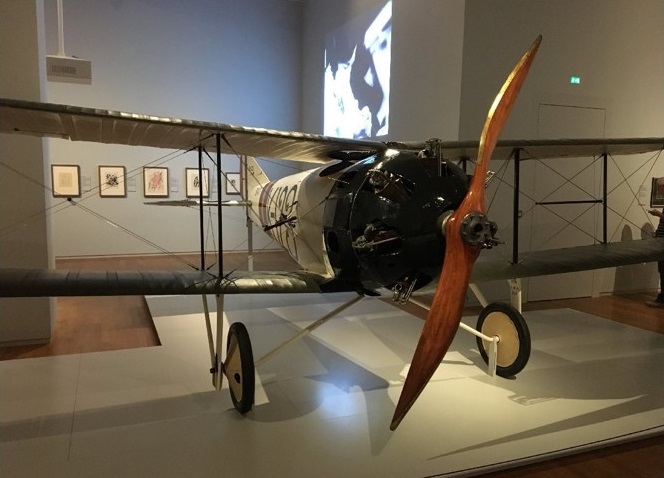
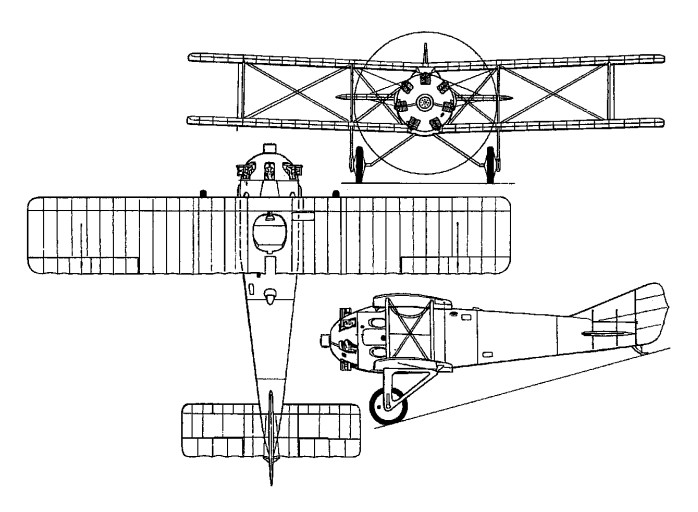
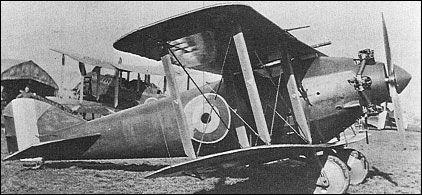
British Aerial Transport Co. / BAT FK.25 Basilisk

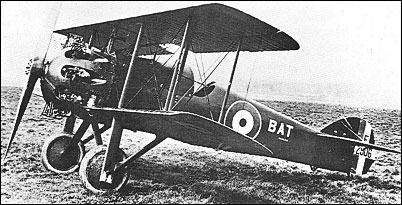
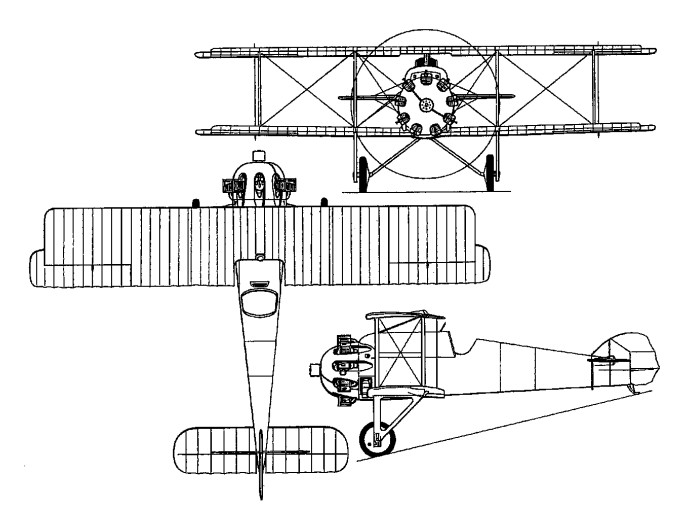
The last single-seat fighter of Koolhoven design built by the British Aerial Transport Company, the F.K.25 Basilisk was designed around the 350hp A.B.C. Dragonfly I nine-cylinder radial engine and carried the usual armament of twin synchronised 7.7mm Vickers guns. Of wooden construction with a monocoque fuselage, the Basilisk featured a hood-like fairing, ahead of the cockpit, which enclosed the guns and shielded the pilot. Three prototypes were ordered, the first of these flying during the summer of 1918. The second prototype, completed in 1919, differed from its predecessor primarily in having a deeper fairing ahead of the cockpit. Further work on the Basilisk was abandoned at the end of 1919.

Engine: 350hp A.B.C. Dragonfly I nine-cylinder radial
Take-off weight: 990 kg / 2183 lb
Empty weight: 659 kg / 1453 lb
Wingspan: 7.72 m / 25 ft 4 in
Length: 6.22 m / 20 ft 5 in
Height: 2.49 m / 8 ft 2 in
Wing area: 19.69 sq.m / 211.94 sq ft
Max. speed: 228 km/h / 142 mph
Armament: 2 x 7.7mm Vickers

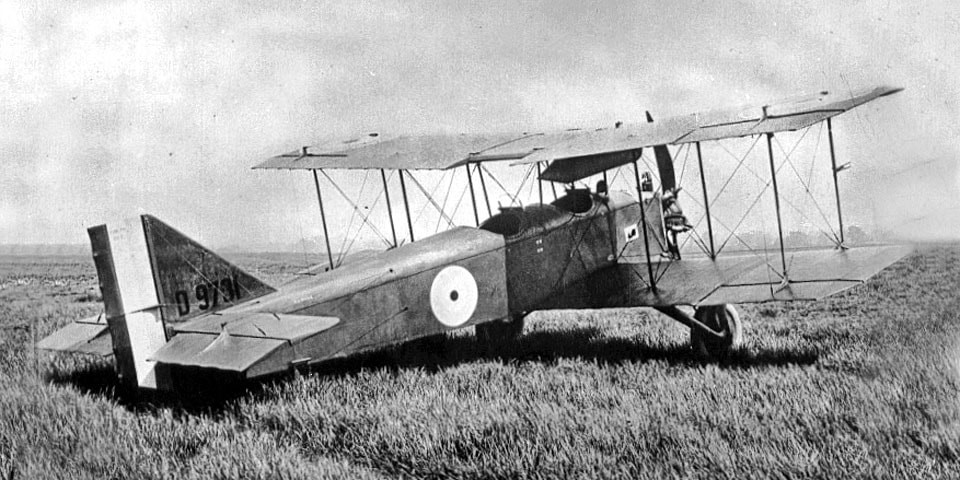
British Aerial Transport Co. / BAT F.K.24 Baboon

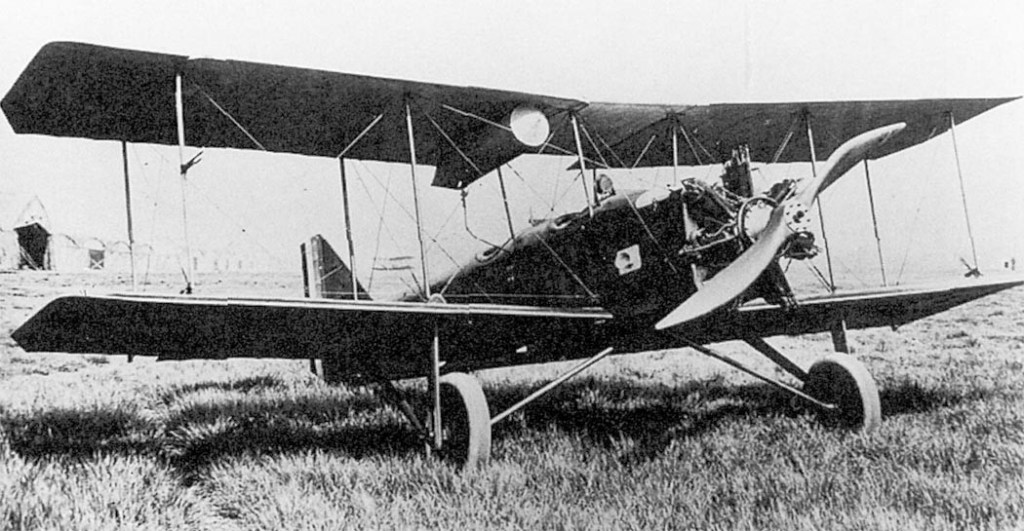
The British Aerial Transport Company Limited F.K.24 Baboon was a two-seat training biplane produced during World War I. Using experience gained designing the Bantam, aircraft designer Frederick Koolhoven (assisted by Robert Noorduyn) designed the two-bay biplane elementary trainer.

The aircraft had a flat-sided fuselage and an uncowled 170 hp (127 kW) ABC Wasp engine simply bolted to the firewall. Maintenance and repair costs have been kept to a minimum through the use of interchangeable upper and lower wing panels, ailerons, elevators and rudders.

Six aircraft were planned but only one was built in July 1918 as a consequence of the end of the First World War and the subsequent sharp reduction in orders for military aircraft.

The Baboon was registered with British Aerial Transport Co. Ltd in May 1919. The only notable act was when it won the Hendon Trophy Race over a 20-mile (32-km) circuit in July 1919 flown by Major Christopher Draper. The Baboon was scrapped at Hendon in 1920.

Powerplant: 1 × ABC Wasp I, 170 hp (130 kW)
Propellers 2-bladed BAT tractor, 5 ft (1.52 m), 7 ft 10 in (2.39 m) diameter
Wingspan: 25 ft (7.6 m)
Wing area: 259 sq ft (24.1 m2)
Length: 22 ft 8 in (6.91 m)
Height: 8 ft 10 in (2.69 m)
Empty weight: 950 lb (431 kg)
Gross weight: 1,350 lb (612 kg)
Fuel capacity: 12 imp gal (54.55 l; 14.41 US gal)
Maximum speed: 90 mph (140 km/h, 78 kn)
Landing speed: 40 mph (64 km/h; 35 kn)
Endurance: 2 hours
Rate of climb: 833.33 ft/min (4.2333 m/s)
Time to altitude: 10,000 ft (3,048.0 m) in 12 minutes
Wing loading: 5.2 lb/sq ft (25 kg/m2)
Power/mass: 0.126 hp/lb (0.206 kW/kg)
Crew: 2
Capacity: 400 lb (181.44 kg) disposable load

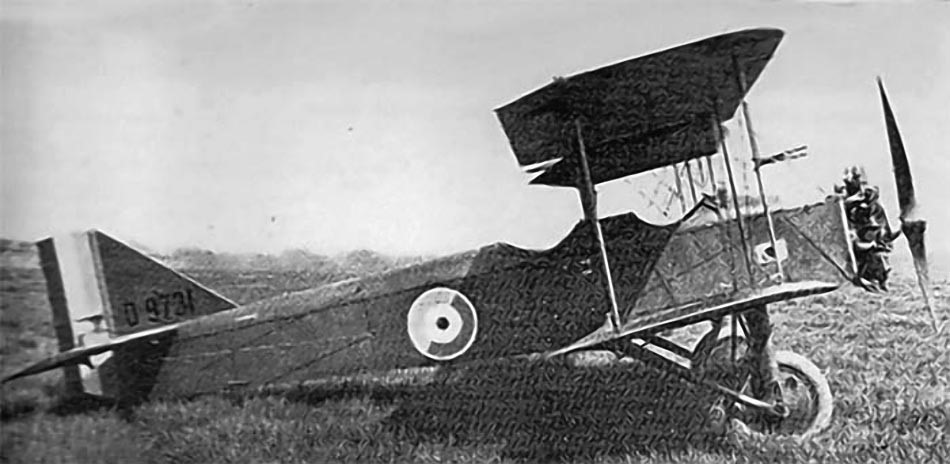
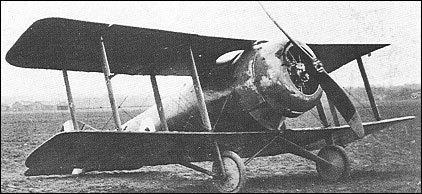
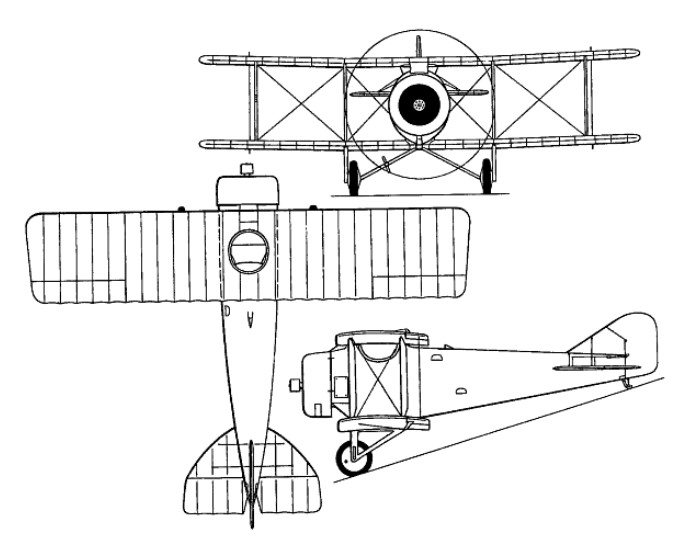
British Aerial Transport Co. / BAT FK.23 Bantam I

The first prototype F.K.23 was originally ordered as the fourth of a batch of six development F.K.22s, and while retaining the wooden structure with monocoque fuselage, it embodied extensive redesign. Overall span and wing area were reduced to 6.09m and 14.86sq.m respectively, and the tail surfaces were redesigned. Armament comprised two synchronised 7.7mm Vickers guns and power was provided by a 170hp A.B.C. Wasp I, flight testing being initiated in May 1918. Two further prototypes (originally ordered as the fifth and sixth F.K.22s) were similarly powered, but dimensionally larger, and after further redesign resulting from initial flight trials, a batch of 12 F.K.23 Bantam Is was ordered, the first of these being delivered to the RAE at Farnborough on 26 July 1918. At least nine Bantam Is were completed, one of these being sent to France and evaluated at Villacoublay in the late summer of 1918. One example was sent to the USA for evaluation at Wright Field, but this fighter’s principal shortcoming was the poor reliability of its Wasp I engine.

Engine: 170hp A.B.C. Wasp I
Wingspan: 6.09m
Wing area: 14.86 sq.m

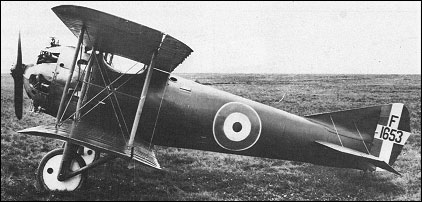
British Aerial Transport Co. / BAT FK.22 Bat / Bantam II

The first design by Frederick (Frits) Koolhoven after joining the British Aerial Transport Company (B.A.T.), the private-venture F.K.22 single-seat fighter flown in September 1917 was of wooden construction with a monocoque fuselage. Powered by a 120hp A.B.C. Mosquito six-cylinder radial engine, it displayed sufficient promise to win an official contract for a batch of six development aircraft. The first and third of these were powered by the 170hp A.B.C. Wasp seven-cylinder radial (F.K.22/1) and the second by a 100hp Gnome Monosoupape nine-cylinder rotary (F.K.22/2), the remaining three eventually being completed as prototypes for the F.K.23. The F.K.22/2, retroactively named Bantam II, was the first to fly, commencing its trials in December 1917 and being delivered to Martlesham for official trials on 19 January 1918. Armament comprised two synchronised 7.7mm Vickers guns, and this prototype, later re-engined with a 110hp Le Rhone 9J nine-cylinder rotary, was eventually assigned to the Central Flying School at Upavon.

F.K22
Engine: 120hp A.B.C. Mosquito six-cylinder radial

F.K.22/1
Engine: 170hp A.B.C. Wasp seven-cylinder radial

F.K.22/2
Engine: 100hp Gnome Monosoupape nine-cylinder rotary
Take-off weight: 571 kg / 1259 lb
Empty weight: 393 kg / 866 lb
Wingspan: 7.52 m / 24 ft 8 in
Length: 6.30 m / 20 ft 8 in
Height: 2.26 m / 7 ft 5 in
Wing area: 21.37 sq.m / 230.02 sq ft
Max. speed: 161 km/h / 100 mph

Belite Aircraft Sealite

Belite Aircraft has developed the single-seat Sealite amphibious floatplane that weighs less than 338 pounds empty and meets FAR 103 requirements for ultralight float-equipped “vehicles,” as the FAA calls them.

The Sealite flew in December 2013, the 110th anniversary of the Wright brothers’ first flight at Kitty Hawk. Belite President James Wiebe made the first flight – “I was pleased with this test flight. It demonstrated the performance and utility possible with a single-place amphibious aircraft. The ground roll was very short, the climb rate was impressive, and the landing manners were easy and benign”.

The first flight was from a grass strip but water tests are planned. The vehicle is an adaptation of the company’s UltraCub model. It made the weight with extensive use of carbon fiber in the floats and wing spars. The wings and floats weigh only 20 pounds each.

Bristol Titan / Gnome-Rhône 5K Titan

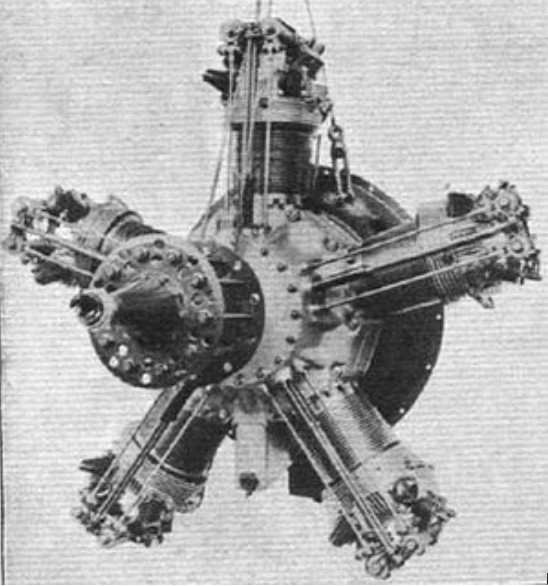
Bristol Titan

The Bristol Titan was a British five-cylinder air-cooled radial engine, designed byRoy Fedden and built by the Bristol Aeroplane Company in the late 1920s. The engine was designed as a five-cylinder radial to use as many parts of the Bristol Jupiter as possible, cylinders, pistons, articulated connecting rods, crankshaft and other minor parts were interchangeable with the Jupiter. It had the same size cylinders as the earlier Bristol Mercury engine, 5.75 in x 6.5 in (844 cu in/13.8 L) and produced between 200-240 hp.

The major significance of the Titan was that it was licensed to Gnome-Rhône and became the pattern for the Gnome-Rhône 5B and 5K. In 1927 Gnome-Rhône was looking for ways out of its license agreement with Bristol for the Jupiter engine of 1920 and began to produce the Gnome-Rhône 5B and 5K without royalties. Later versions of the Bristol Titan also used a Farman style reduction gear produced by Gnome-Rhône.

Gnome-Rhône was not satisfied with simply producing Bristol designs under license, and started a major design effort based around the mechanicals of the Titan engine. The results were introduced in 1927 as the K-series, spanning the 260 hp (190 kW) Gnome-Rhône 5K Titan, the 7-cylinder 370 hp (270 kW) the Gnome-Rhône 7K Titan Major, and the 9-cylinder 550 hp (405 kW) Gnome-Rhône 9K Mistral. With the introduction of the K-series, Gnome-Rhône finally ended royalty payments to Bristol, the Gnome-Rhône 5K was built in much greater numbers than the original Bristol Titan. By 1930 they had delivered 6,000 Jupiters, Mistrals and Titans, making them the largest engine company in France.

Variants:

Titan I
(1928) – 205 hp.

Titan IIF
Modified valve gear.

Titan IV or Titan II (Special)
(1928) – 205 hp, 0.5:1 reduction gear from Bristol Jupiter.

Gnome-Rhône 5K Titan
licence-built Titan II, 230 hp

Gnome-Rhône 7K Titan major
enlarged 7-cyl Titan with many detail improvements, produced by Gnome-Rhône without licence.

Applications:
Avro 504N
Bristol Primary Trainer
Bristol Type 110A

Specifications:

Titan I
Type: Five cylinder air-cooled radial engine.
Bore: 5.75 in (146 mm)
Stroke: 6.5 in (165 mm)
Displacement: 844 in³ (13.8 L)
Diameter: 48.4 in (1229.3 mm)
Dry weight: 500 lb (227 kg)
Valvetrain: Overhead valve, 4 valves per cylinder
Cooling system: Air-cooled
Reduction gear: None, direct drive, left hand tractor
Power output: 210 hp (157 kW) at 1,800 rpm
Specific power: 0.25 hp/in³ (11.4 kW/L)
Compression ratio: 5:1
Power-to-weight ratio: 0.42 hp/lb (0.7 kW/kg)

Bristol Jupiter / Orion / Gnome-Rhône 9 Jupiter / Cosmos Jupiter / Brazil Straker Jupiter I / Siemens-Halske Sh20 / Sh21 / Nakajima Ha-1 Kotobuki / PZL Bristol Jupiter / Weiss – Bristol Jupiter VI / Walter Jupiter

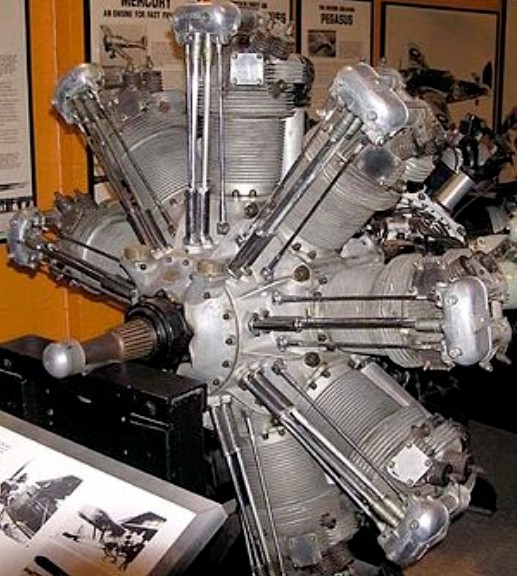
The Jupiter was designed during World War I by Roy Fedden of Cosmos Engineering as the Cosmos Jupiter. During the rapid downscaling of military spending after the war, Cosmos became bankrupt in 1920, and was eventually purchased by the Bristol Aeroplane Company on the strengths of the Jupiter design and the encouragement of the Air Ministry. First run on 29 October 1918 the engine matured into one of the most reliable on the market. It was the first air-cooled engine to pass the Air Ministry full-throttle test, the first to be equipped with automatic boost control, and the first to be fitted to airliners.

The Jupiter was fairly standard nine-cylinder single-row piston radial engine in design, but featured four valves per cylinder, which was uncommon at the time. The cylinders were machined from steel forgings, and the cast cylinder heads were later replaced with aluminium alloy following studies by the RAE. In 1927, a change was made to move to a forged head design due to the rejection rate of the castings. The Jupiter VII introduced a mechanically driven supercharger to the design, and the Jupiter VIII was the first to be fitted with reduction gear.

In 1925, Fedden started designing a replacement for the Jupiter. Using a shorter stroke to increase the rpm, and including a supercharger for added power, resulted in the Bristol Mercury of 1927. Applying the same techniques to the original Jupiter-sized engine in 1927 resulted in the Bristol Pegasus. Neither engine would fully replace the Jupiter for a few years.

A 1926 turbo-supercharged version of the Jupiter known as the Orion suffered development problems and only a small number were produced. Metallurgy problems with this turbo-supercharged engine caused the project to be abandoned after only nine engines had been built.

The Jupiter saw widespread use in licensed versions, with fourteen countries eventually producing the engine. In France, Gnome-Rhone produced a version known as the Gnome-Rhône 9 Jupiter which was used in several local civilian designs, as well as achieving some export success. Siemens-Halske took out a license in Germany and produced several versions of increasing power, eventually resulting in the Bramo 323 Fafnir, which saw use in wartime models.

In Japan, the Jupiter was license-built from 1924 by Nakajima, forming the basis of their own subsequent radial aero-engine design, the Nakajima Ha-1 Kotobuki. It was produced in Poland as the PZL Bristol Jupiter, in Italy as the Alfa Romeo 126-RC35,[6] and in Czechoslovakia by Walter Engines. The most produced version was in the Soviet Union, where their Shvetsov M-22 version powered the famous Polikarpov I-16 which was built in the thousands. Production started in 1918 and ceased in 1930 after more than 7100 were built.

The Jupiter is probably best known for powering the Handley Page HP.42 Hannibal airliners, which flew the London-Paris route in the 1930s. Other civilian uses included the de Havilland Giant Moth and Hercules, the Junkers G 31, and the Dornier Do X flying boat which used twelve engines.
Military uses included the parent company’s Bristol Bulldog, as well as the Gloster Gamecock and Boulton Paul Sidestrand. It was also found in prototypes from Japan to Sweden.

By 1929 the Bristol Jupiter had flown in 262 different aircraft types, it was noted in the French press at that year’s Paris Air Show that the Jupiter and its license-built versions were powering 80% of the aircraft on display.

Variants:

Brazil Straker Jupiter I
(1918) 400 hp. Two built.

Cosmos Jupiter II
(1918) 400 hp. One built.

Bristol Jupiter II
(1923) 400 hp.

Bristol Jupiter III
(1923) 400 hp.

Bristol Jupiter IV
(1926) 430 hp. Variable valve timing, Bristol Triplex carburettor.

Bristol Jupiter V
(1925) 480 hp.

Bristol Jupiter VI
(1927) 520 hp. Produced in both high (6.3:1) and low (5.3:1) compression ratios.

Bristol Jupiter VIA
(1927) 440 hp. Civil version of Jupiter VI.

Bristol Jupiter VIFH
(1932) 440 hp. Equipped with gas starter motor.

Bristol Jupiter VIFL
(1932) 440 hp. Compression ratio 5.15:1.

Bristol Jupiter VIFM
(1932) 440 hp. Compression ratio 5.3:1.

Bristol Jupiter VIFS
(1932) 400 hp. Compression ratio 6.3:1.

Bristol Jupiter VII
(1928) 375 hp. Compression ratio 5.3:1, fully supercharged. Built by Gnome-Rhone as the 9ASB.

Bristol Jupiter VIIF
(1929) 480 hp. Compression ratio 5.3:1. Forged cylinder heads.

Bristol Jupiter VIIF.P
(1930) 480 hp. ‘P’ for pressure feed lubrication to wrist-pins.

Bristol Jupiter VIII
(1929) 440 hp. Jupiter VI but compression ratio increased to 6.3:1.

Bristol Jupiter VIIIF
(1929) 460 hp. Jupiter VIII with forged cylinder heads and lowered compression ratio (5.8:1).

Bristol Jupiter VIIIF.P
(1929) 460 hp. As Jupiter VIII with pressure feed lubrication (TBO at this stage in development was only 150 hours due to multiple failures).

Bristol Jupiter IX
480 hp. Compression ratio 5.3:1.

Bristol Jupiter IXF
550 hp. Compression ratio 5.3:1. Forged cylinder heads.

Bristol Jupiter X
470 hp. Compression ratio 5.3:1.

Bristol Jupiter XF
540 hp. Compression ratio 5.3:1. Forged cylinder heads.

Bristol Jupiter XFA
483 hp. Compression ratio 5.3:1.

Bristol Jupiter XFAM
580 hp.

Bristol Jupiter XFBM
580 hp.

Bristol Jupiter XFS
Fully supercharged.

Bristol Jupiter XI
Compression ratio 5.15:1.

Bristol Jupiter XIF
500 hp. Compression ratio 5.15:1.

Bristol Jupiter XIFA
480 hp. As Jupiter XIF with 0.656:1 reduction ratio

Bristol Jupiter XIF.P
525 hp. As Jupiter XIF with pressure feed lubrication.

Bristol Orion I
(1926) Jupiter III, turbo-supercharged, abandoned programme.

Siemens-Halske Sh20, Sh21 and Sh22
Siemens-Halske took out a license in Germany and produced several versions of increasing power, eventually resulting in the Bramo 323 Fafnir, which saw use in wartime models.

Nakajima Ha-1 Kotobuki
In Japan, the Jupiter was license-built from 1924 by Nakajima.

PZL Bristol Jupiter
Polish production.

Alfa Romeo Jupiter
Italian licence production, 420 hp (310 kW).

Alfa 126 R.C.35
Alfa Romeo developed variant

Walter Jupiter
Licence production in Czechoslovakia by Walter Engines

Weiss – Bristol Jupiter VI

Applications:

Cosmos Jupiter:
Bristol Badger
Bristol Bullet
Sopwith Schneider
Westland Limousine

Bristol Jupiter:
Aero A.32
Airco DH.9
Arado Ar 64
Avia BH-25
Bernard 190
Blériot-SPAD 51
Blériot-SPAD S.56
Boulton & Paul Bugle
Boulton Paul P.32
Boulton Paul Partridge
Boulton Paul Sidestrand
Blackburn Beagle
Blackburn Nile
Blackburn Ripon
Bristol Badger
Bristol Badminton
Bristol Bagshot
Bristol Beaver
Bristol Bloodhound
Bristol Boarhound
Bristol Brandon
Bristol Bulldog
Bristol Bullfinch
Bristol Jupiter Fighter
Bristol Seely
Bristol Type 72
Bristol Type 75
Bristol Type 76
Bristol Type 89
Bristol Type 92
Bristol Type 118
de Havilland Dingo
de Havilland DH.72
de Havilland DH.50
de Havilland Dormouse
de Havilland Hercules
de Havilland Hound
de Havilland Giant Moth
de Havilland Survey
Dornier Do 11
Dornier Do J
Dornier Do X
Fairey IIIF
Fairey Ferret
Fairey Flycatcher
Fairey Hendon
Fokker C.V
Fokker F.VIIA
Fokker F.VIII
Fokker F.IX
Gloster Gambet
Gloster Gamecock
Gloster Gnatsnapper
Gloster Goldfinch
Gloster Goring
Gloster Grebe
Gloster Mars
Gloster Survey
Gourdou-Leseurre LGL.32
Handley Page Clive
Handley Page Hampstead
Handley Page Hare
Handley Page Hinaidi
Handley Page HP.12
Handley Page H.P.42
Hawker Duiker
Hawker Harrier
Hawker Hart
Hawker Hawfinch
Hawker Hedgehog
Hawker Heron
Hawker Woodcock
Junkers F.13
Junkers G 31
Junkers W 34
Parnall Plover
PZL P.7
Saunders Medina
Saunders Severn
Short Calcutta
Short Chamois
Short Gurnard
Short Kent
Short Rangoon
Short Scylla
Short Springbok
Short S.6 Sturgeon
Short Valetta
Supermarine Seagull
Supermarine Solent
Supermarine Southampton
Svenska Aero Jaktfalken
Tupolev I-4
Vickers F.21/26
Vickers F.29/27
Vickers Jockey
Vickers Type 143
Vickers Type 150
Vickers Valiant
Vickers Vellore
Vickers Vellox
Vickers Vespa
Vickers Viastra
Vickers Victoria
Vickers Vildebeest
Vickers Vimy
Vickers Vimy Trainer
Vickers Wibault Scout
Westland Interceptor
Westland Wapiti
Westland Westbury
Westland Witch
Westland-Houston PV.3

Gnome-Rhône Jupiter:
Bernard SIMB AB 12
Blanchard BB-1
Fizir F1M-Jupiter
Latécoère 6

Shvetsov M-22:
Kalinin K-5
Polikarpov I-5
Polikarpov I-15
Polikarpov I-16
Tupolev I-4

Specifications:

Jupiter XFA
Type: Nine-cylinder, naturally aspirated, air-cooled radial engine
Bore: 5.75 in (146 mm)
Stroke: 7.5 in (190 mm)
Displacement: 1,753 in³ (28.7 L)
Diameter: 54.5 in (1,384 mm)
Dry weight: 995 lb (451 kg)
Valvetrain: Overhead poppet valve, four valves per cylinder, two intake and two exhaust
Supercharger: Single speed, single stage
Fuel type: 73-77 Octane petrol
Cooling system: Air-cooled
Power output:
550 hp (414 kW) at 2,200 rpm at 11,000 ft (3,350 m) – maximum power limited to five minutes operation.
525 hp (391 kW) at 2,000 rpm – maximum continuous power at 11,000 ft (3,350 m)
483 hp (360 kW) at 2,000 rpm – takeoff power
Specific power: 0.31 hp/in³ (14.4 kW/L)
Compression ratio: 5.3:1
Power-to-weight ratio: 0.55 hp/lb (0.92 kW/kg)