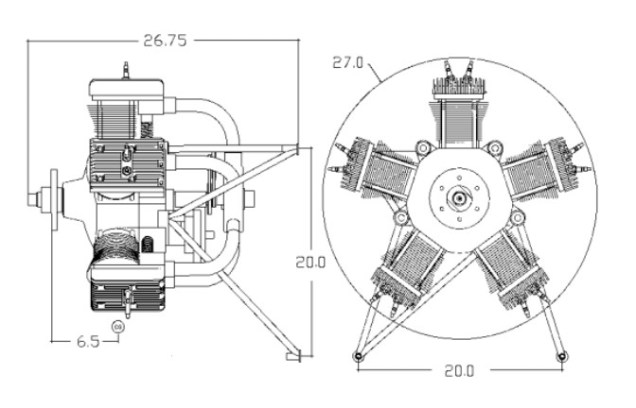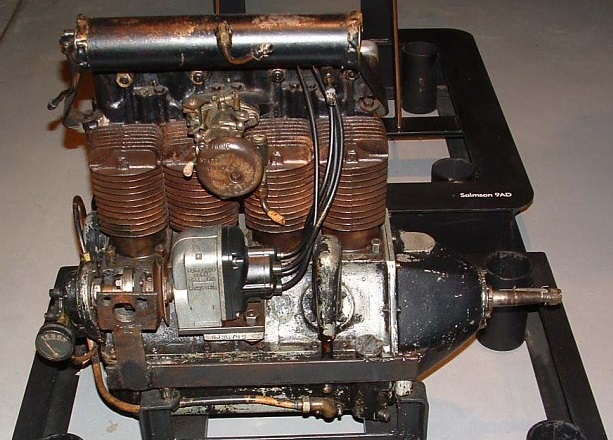
Heath-Henderson B-4

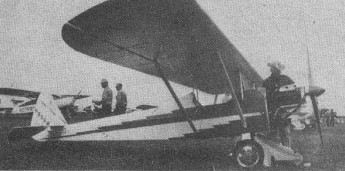
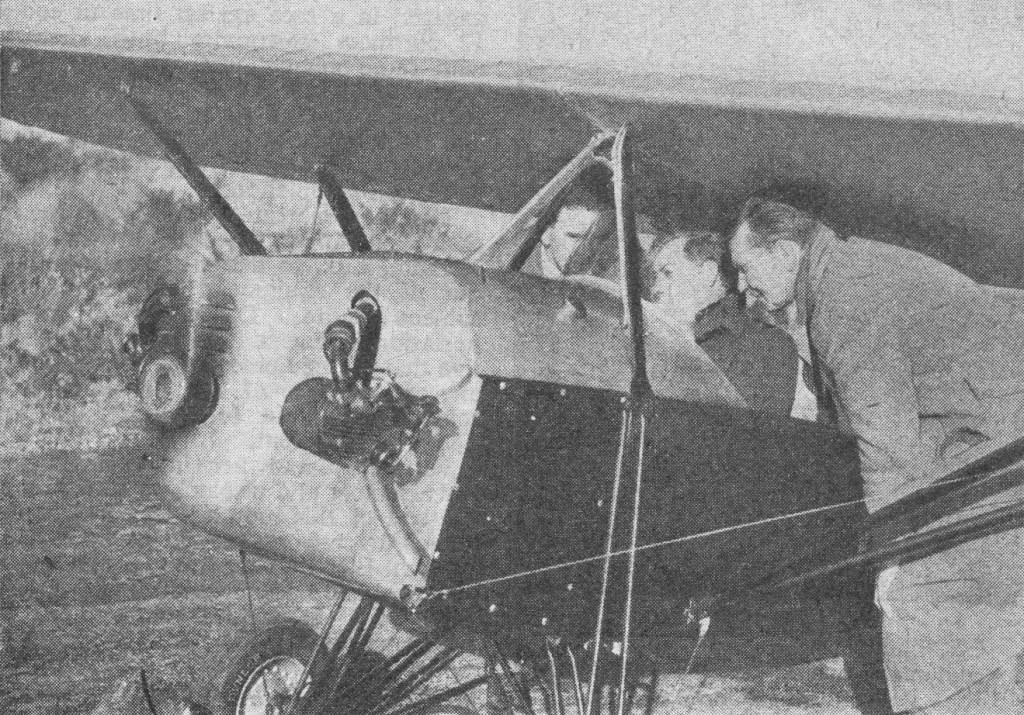
Henderson was a manufacturer of 4-cylinder motorcycles from 1912 until 1931. They were one of the largest and fastest motorcycles of their time. Many of the Henderson “DeLuxe” engines were converted by the Heath Airplane Company as Model B-4s which featured a modified lubrication system, different valves, and removal of the transmission. The B-4 mainly powered the small and economical Heath Parasol monoplane, which Heath sold in kit form for homebuilders in the 1920s and ‘30s.

The Heath Airplane Company’s Model B-4 was an in-line, four-cylinder, air-cooled Henderson motorcycle engine converted for use in aircraft by modifying the lubrication system and the valves. The B-4 mainly powered the small and economical Heath Parasol monoplane, which Heath sold in kit form for homebuilders in the 1920s and ’30s.

The low-cost, reliable Henderson motorcycle engine was well-suited for the Heath airplane design because it helped make sport flying affordable for many people. Service was simple and economical because parts were cheap and easy to obtain throughout the country.

Type: Reciprocating, In-line, 4 cylinders, air cooled
Power rating: 30 hp / 22.4 kW at 3,000 rpm
Displacement: 83 cu in / 1400 cc
Bore and Stroke: 70 mm (2.8 in.) x 89 mm (3.5 in.)
Weight: 119 lb / 54 kg
Length 64.1 cm (25.25 in.)
Width 36.8 cm (14.5 in.)
Height 61 cm (24.0 in.)
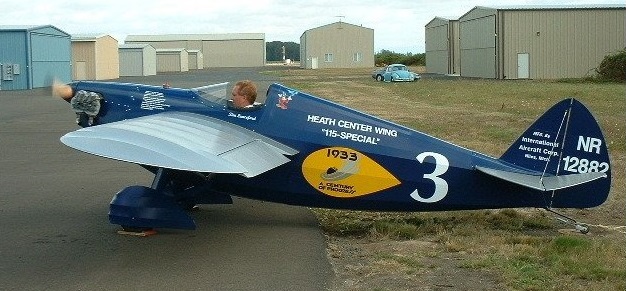
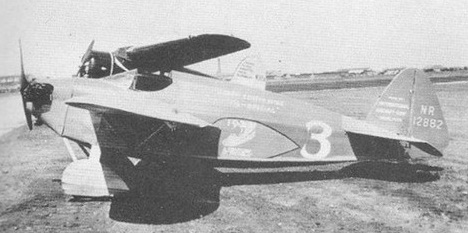
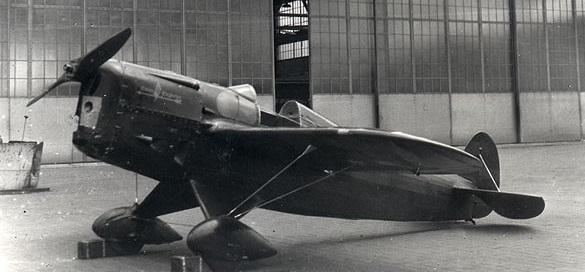
Heath 115 Special / CNA-40 / Hansen Specal

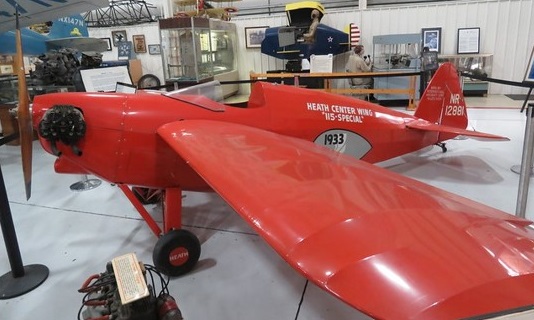
Heath CNA-40 C/N TD-3, Heath 115 Special Racer NR 12882 restored 2007

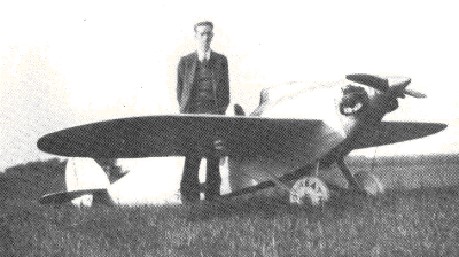
The 1933 Heath CNA 115 Special is a competition version of CNA-40 with clipped wing and bigger propeller for improved performance in races.

Heath CNA NC12892 was modified for racing and named the 115 Special. Higher turtledeck, shorter tapered wings, wheels pants, and general overall refining improved performance. After appearing in the 1933 races, NR12882 was returned to ATC status which included longer constant chord wing with full span ailerons. It did retain the raised turtledeck.

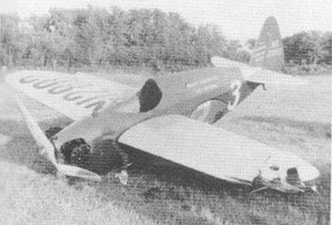
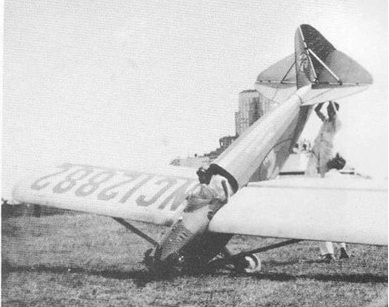
The first flight of NR12882, after modifications, ended with an engine failure. Pilot Bill Kysor ran out of altitude and ended in a ditch bordering Niles Airport.

Following the Chicargo races, after it was returned to ATC status, NC12882 suffered another incident.

One was built as Hansen Special, NR282W, and restored in 1965.

Gallery

Heath 115 Special
Engine: 32hp Bristol Cherub
Wing span: 18’2″
Length: 17’3″
Load: 228 lb
Max speed: 105 mph
Cruise speed: 85 mph
Stall: 60 mph

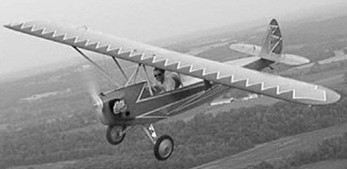
Heath LNB4 Parasol

Designed and built originally in the U.S.A. by Ed. Heath during the early 1930s, this single seat sports aeroplane was built in large numbers prior to the 1939-45 War. The Parasol was powered mainly with Heath’s own conversion of the 25-hp Henderson motorcycle engine. Production was undertaken for an early version of this aircraft in Australia, as early as 1931 by the Adcock-Heath Co.

Heath LNB4 Parasol Article

Heath B-4 / OK-AT(V) Švec

The fuselage is built of welded steel tube and is fabric covered. The wings consist of two solid spruce spars, built-up wooden ribs, compression struts and internal bracing. Externally, the wings are braced by steel tubes to the fuselage. The empennage is built of wood, the fin and tailplane being externally braced. The whole aircraft is fabric covered. Two 5 Imp. gallon fuel tanks are installed at the root end of each wing half, the fuel being gravity fed to the engine.

While some were factory built, and the last model actually received an Approved Type Certificate (ATC) in 1932, the majority were homebuilt from factory-supplied kits or from magazine plans. Still being built, this single-seater is usually powered by either a Volkswagen conversion or a 65 hp Continental and is constructed of wood, fabric and tubular steel.

A Plymouth Aero Club member flew a Parasol in the UK powered by a Douglas dirt track motor cycle engine.

1949 A.B.C. Scorpion powered in the UK

Ultralight replica: Rag Wing RW 5 Heath Replica

Gallery

Engine: Continental A40
Wingspan: 31ft. 3 in
Length: 17 ft. 3 in
Wing Area: 135 sq. ft.
Empty Weight: 450 lb.
Gross weight: 700 lb
Fuel capacity: 9 USgals
Wing Loading: 5.2 lb/sq. ft.
Max. Speed: 85mph.
Top speed: 73 mph
Cruise speed: 62 mph
Stall Speed: 32mph.
Climb rate: 500 fpm.
Range: 330 miles.
Takeoff run 400 ft.
Landing roll 400 ft.

HCI R 220

Horsepower 123 @ 2500 rpm
Cruise Power (70%) 85 @ 1750 rpm
Weight 160 lbs. installed
Installation Displacement 219.8 cubic inches
Bore 3-5/8
Stroke 3-1/2
Ignition Distributorless Electronic
Fuel Electronic Injection
Oil System Full Time Inverted
Electrical System Starter & Alternator Optional
Main/thrust bearings Tapered roller
Master rod bearings two row ball
Link rod bearings Plain journal bearings.

HCI R 180

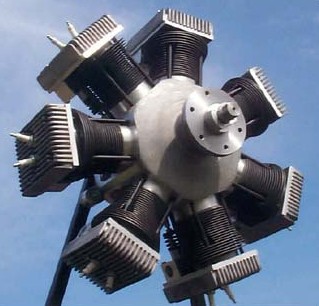
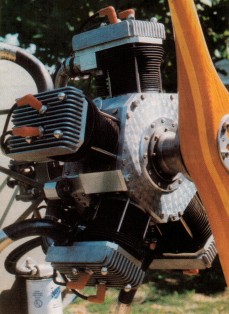
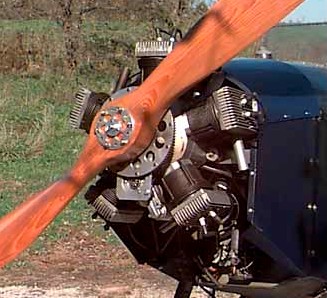
The R180 radial design uses five Volkswagon air cooled cylinders and a supercharger. The supercharger pressure filling of the cylinders overcomes the side valve’s tendency toward lower volumetric efficiency.
The side valves reduce the over all cylinder height and exposed diameter of the engine.

A feature of the R180 is the all cylinder compression relief. Originally added to make electric starting easier, with the relief valve open, there is no possibility of hydraulic lock in the bottom cylinder.
The crankcase of the first engine was built up from plate but further engines use castings.
Testing has been carried out in a Fly Baby.

In 2010 a complete set of engineering drawings and parts list with item numbers and suppliers for stock automotive components sold for US$130.00.
The kits available in 2010 were:

  • Unmachined aluminum castings US$1,400.00
  • Machinist kit, including machined case, heads, subheads, and mount lugs cam finished master rod and link rods (no bushings or knuckle pins) crank (main, pin, weights, cheekplate tail) complete drawings assembly guide video. It excludes standard automotive components
    $5,200.00
  • Complete kit, plans, and video. Complete and ready to assemble includes Ignition and Engine Mount Design, but Fuel System Sold Separately US$9,995.00
  • Assembled engine run tested and performance verified including Ignition and Engine Mount Design but Fuel System Sold Separately US$12,000.00

Standard automotive components
5 VW Piston, Ring, & Cylinder Sets
Tapered, Roller, and Ball Bearings
Valves, Valve Seats, Valve Springs, Valve Keepers, Valve Locks
Aircraft and Automotive Bolts, Nuts, and Washers
GM Ignition Components
A specific, itemized list is included with the kits.

Horsepower 75 @ 2150 rpm
Weight 122 lbs.
Displacement 180 cubic inches
Bore 3.625 inches
Stroke 3.5 inches
Compression Ratio 7:1
Intake Valve 1.8 in.
Exhaust Valve 1.2 in.
Valve Lift (all) 0.250 in.
Valve Clearance 0.014 in.
Ignition Timing Start TDC
Ignition Timing Run 38 deg. btc
Supercharger drive ratio 9:1
Supercharger flow 1450 fpm
Oil Pump Capacity 5.5 qt./min. @ 2150 rpm
Scavange/feed pump 8:3 ratio
Main/thrust bearings Tapered roller
Master rod bearings Two row ball
Link rod bearings Plain journal bearings

Cycle: 4 stroke
No cylinders: 5
Bore: 94 mm
Stroke: 89 mm
Compression: 8
Displacement: 3080 cc
Cooling: Air
Ignition: Double electronic
Reduction: None
Weight: 54 kg
Max pwr: 75 hp at 2150 rpm
Kit Price 1998: $9600