ICP Savannah / Bingo / Outback Aircraft Savannah / Bingo / Skykits Savannah

Savannah ADV

Savannah is a modified copy of the Zenith Zodiac CH-701 STOL aircraft. I.C.P. srl was once a distributor of the Zenith STOL CH-701. I.C.P. was established in 1980 to produce accessories for the automotive sector. At the beginning of the 1990s, I.C.P. began production of UL aircraft, in collaboration with Agrocopteros of Colombia, including models such as the MXP-740, the MXP-740 Savannah, the MXP-640 Amigo and the MXP-650 Amigo. The Savannah has evolved into the Savannah Turbo, Hydro, ADV, VG (Vortex Generator) and the new Savannah XL which features a wider and more comfortable cabin. A light-weight Savannah is the Bingo, offered with different power units. On 12 September 2009, I.C.P. opened its new factory at Castelnuovo Don Bosco (Province of Asti) in Italy.

The Savannah is an evolved version of the Zenith/Zenair STOL CH701 built by the Italian ICP Company (a one time distributor of the CH701). Some differences include a raised cabin the CH701 has the tapered wing roots, the ICP does not and there are also changes to the tailplane. The NZ MCTOW is 544 kg, as against 520 kg in Australia and the US. It is fitted with two 40 litre wing fuel tanks and burns around 15 litres an hour. Power on stall (without flaps) occurs at about 13 kts and the Savannah will cruise at 85 kts. Newer models have progressive modifications including long-¬range tanks and manual slats, additional avionics, electrics and a Rotax 912ULS with a DUC three blade propeller.

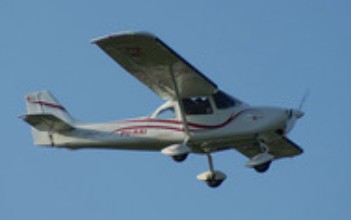
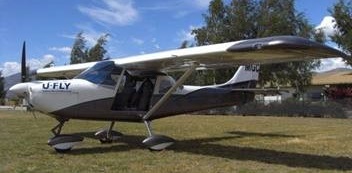
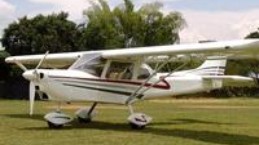
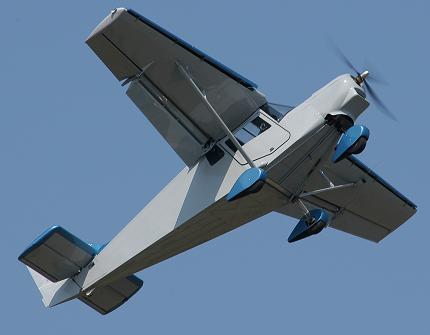
The Savannah is an ultralight STOL aircraft (short takeoff and landing) with two side-by-side seats, single high wing, tricycle landing gear and full metal (alluminium) construction. It shares the same structure of the Bingo, differing just in some minor details, the engines mounted and the equipment.

The Savannah ADV tapered wing with reduced surface has a NACA 2315 profile. In substance, a fast wing that seems to clash with the squared and simple fuselage of the Savannah, and its STOL performance. The stall speed at a MTOW of 560 Kg, in clean configuration, is up to 49 kts and has achieved 44 kts during test. In front, the slats run on linear guides and perfectly re-enter in the leading edge profile, keeping it clean. At the trailing edge are two big flaps with high full deflection angle and another slotted winglet extending for the whole leading edge of the flap itself.

Activation of the flap is by a single electrical control, therefore, for every degree of flaps deflection there is a defined extension of the front slats. The pilot has just one switch to operate and the whole mechanism is automatic. This made it possible to establish the optimal settings during the testing phase, thus avoiding potentially dangerous “personal interpretations” by the pilots and making the airplane safe and simple to manage. So, a single switch activates the four moving surfaces and their position is indicated by a pin moving along an arch drawn out at the root of the right wing, where the electric motor and the mechanical activation system is embedded, but still in sight. The regulation is continuous and in case of emergency a little winch is provided to be connected to the electric motor shaft with a cotter pin. The production aircraft were to be fitted with a permanent winch connected to the motor shaft, in order to allow for immediate activation in case of electrical failure.
Savannah Bingo 4S

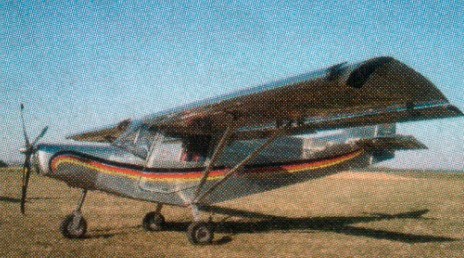
The Bingo is an ultralight STOL (short take off and landing) aircraft with side-by-side seats, single high wing, tricycle landing gear, metal construction. It has the same structure as the Savannah, differing just in some minor detials, the engine mounts, cowlings, and equipment.

All models are LSA.
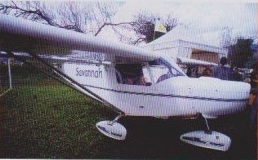
Formerly known in the U.S. as the Skykits Savannah line, Italian maker I.C.P. became represented in the US by ICP Aviation in 2012 and included a tail-dragger version (model “T”) of the all-metal Savannah S-LSA. Twenty-nine of the tricycle-gear S model are registered in the U.S. in 2012. The STOL-capable S-LSA has a high-lift airfoil, Junkers-style flaperons, all-window doors and a true STOL stall speed of 26 knots. S model price 2012: $71,950; T model price 2012: $74,950.
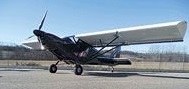
Savannah

Variation:
Agrocopteros MXP-740

Specifications:

Savannah
Stall: 24 kt / 28 mph / 45 kmh
Cruise: 76 kt / 87 mph / 140 kmh
VNE: 86 kt / 99 mph / 160 kmh
Empty Weight: 272 kg / 600 lbs
MTOW Weight: 450 kg / 992 lbs
Climb Ratio: 1000 ft/min / 5 m/s
Glide Ratio: 12:1
Take-off distance (50ft obstacle): 330 ft / 100 m
Landing distance (50ft obstacle): 440 ft / 135 m

Savannah (jabiru)
Stall: 23 kt / 26 mph / 43 kmh
Cruise: 70 kt / 81 mph / 130 kmh
VNE: 109 kt / 125 mph / 202 kmh
Empty Weight: 278 kg / 613 lbs
MTOW Weight: 450 kg / 992 lbs
Climb Ratio: 750 ft/min / 4 m/s
Take-off distance (50ft obstacle): 260 ft / 80 m
Landing distance (50ft obstacle): 260 ft / 80 m
2009 Price: 25000 EURO

Savannah
Engine: Rotax 912S, 100 hp
HP range: 80-120
Length: 21.3 ft / 6.1 m
Height: 2.10 m
Wing span: 29.3 ft / 9m
Wing area: 142 sq.ft / 12,96 sq.m
Wing chord: 144 cm
Aspect ratio: 6,3
Empty weight: 635 lb / 272 Kg
Gross weight: 1234 lb / 560 Kg
Fuel capacity: 21 USG / 80 lt
Wing load: 35 kg/sq.m
Max. speed: 87 – 95 kt
Vne: 108 kt
Cruising speed: 78 – 84 kt
Stall: 28 mph / 23 kt
Approach speed: 31 kt
Manoeuvre speed: 74 kt
Range: 460 sm / 800 km
Rate of climb: 1300 fpm
Takeoff dist: 90 ft
Landing dist: 160 ft
Cockpit width: 41 in
Undercarriage: nose wheel
Wheels: 4×8″
Loading factor: +6/-4g
Fuel consumption 75%: 12 – 14 lt/h
Seating: 2, side by side
Flaperons 0-20-40°

Savannah ADV
Engine: Rotax 912S, 100 hp
HP range: 80-120
Length: 21.3 ft
Wing span: 26.3 ft / 8 m
Wing area: 102 sq.ft / 9.4 sq/m
Wing cord at root: 1.5m
Wing cord at tip: 0.75m
Empty weight: 654 lb
Gross weight: 1234 lb
Fuel capacity: 21 USG
Maximum speed: 112 kts
Cruise: 115 mph / 100 kts
Stall speed clean: 43 kts
Stall speed flaps: 30 kts
Range: 510 sm
Climb rate: 1200 fpm at 52 kts
Takeoff dist: 110 ft / 35 m
Landing dist: 160 ft
Cockpit width: 41 in
Seats: 2
Cockpit width: 41 in
Load factor: +6 -3 g

Savannah Bingo 4S
Engine: HKS 700E, 60 hp
Length: 21.3 ft / 6.1 m
Height: 2.45m
Wing span: 29.5 ft
Wing area: 140 sq.ft
Empty weight: 610 lb / 255 kg
Gross weight: 1234 lb
Fuel capacity: 21 USG
Cruise: 75 mph / 65 kt
Stall: 28 mph / 25 kt
Max speed: 73 kt
Range: 460 sm
Range with reserve: 880 km
Rate of climb: 680 fpm
Takeoff dist: 160 ft / 50 m
Landing dist: 230 ft / 70 m
Cockpit width: 41 in
Landing gear: Nose fixed
Wheel track: 1.7m
Seats: 2
Fuel consumption: 10 lt/hr

Savannah Bingo 4S
Engine: Rotax 503
Wing span: 9m
Wheel track: 1.7m
Empty weight: 245 kg
Stall speed: 25 kt
Cruise speed: 60 kt
Max speed: 70 kt
Take off run: 50 m
Landing roll: 70 m
Climb rate: 480 fpm
Fuel consumption: 15 lt/hr
Range with res: 520 km
MTOW: 450kg
Wing span: 9m
Wheel track: 1.7m
Length: 6.1m
Height: 2.45m

Savannah Bingo 4S
Engine: Rotax 582
Wing span: 9m
Wheel track: 1.7m
Empty weight: 250 kg
Stall speed: 25 kt
Cruise speed: 65 kt
Max speed: 73 kt
Take off run: 50 m
Landing roll: 70 m
Climb rate: 840 fpm
Fuel consumption: 20 lt/hr
Range with res: 410 km
MTOW: 450kg
Wing span: 9m
Wheel track: 1.7m
Length: 6.1m
Height: 2.45m

Savannah Bingo 4S
Engine: Victor 2
Empty weight: 250 kg
Stall speed: 25 kt
Cruise speed: 70 kt
Max speed: 70 kt
Take off run: 50 m
Landing roll: 70 m
Climb rate: 840 fpm
Fuel consumption: 18 lt/hr
Range with res: 500 km
MTOW: 450kg
Wing span: 9m
Wheel track: 1.7m
Length: 6.1m
Height: 2.45m

Savannah Bingo 4S
Engine: HKS Turbo
Wing span: 9m
Wheel track: 1.7m
Length: 6.1m
Height: 2.45m
Empty weight: 265 kg
Stall speed: 25 kt
Cruise speed: 73 kt
Max speed: 84 kt
Take off run: 35 m
Landing roll: 70 m
Climb rate: 960 fpm
Fuel consumption: 12 lt/hr
Range with res: 810 km
MTOW: 450kg

Savannah VG
Cruise: 100 mph
Stall: 30 mph
Range: 460 sm
Rate of climb: 1300 fpm
Takeoff dist: 90 ft
Landing dist: 160 ft
Engine: Rotax 912S, 100 hp
HP range: 80-120
Fuel capacity: 21 USG
Empty weight: 645 lb
Gross weight: 1234 lb
Length: 21.3 ft
Wing span: 29.3 ft
Wing area: 132 sq.ft
Cockpit width: 41 in
Landing gear: fixed nose wheel


Icarus Foundation F99

F99 Rambo

The Rambo is of aluminum construction, steel tube cabin, 118 cm wide. It is fitted with an electric elevator trim, carburator deicing, and cabin vent as standard
2009 Price: 33000 EURO
The F99 LSA is a high wing LSA legal craft.

F99 LSA

F99 Rambo
Stall: 32 kt / 37 mph / 60 kmh
Cruise: 108 kt / 124 mph / 200 kmh
VNE: 124 kt / 143 mph / 230 kmh
Empty Weight: 285 kg / 628 lbs
MTOW Weight: 475 kg / 1047 lbs
Climb Ratio: 1200 ft/min / 6 m/s
Glide Ratio: 13
Take-off distance (50ft obstacle): 490 ft / 150 m
Landing distance (50ft obstacle): 820 ft / 250 m

F99 LSA
Stall: 50 kt / 58 mph / 93 kmh
Cruise: 125 kt / 144 mph / 232 kmh
VNE: 138 kt / 159 mph / 256 kmh
Empty Weight: 308 kg / 680 lbs
MTOW Weight: 594 kg / 1310 lbs
Climb Ratio: 1100 ft/min / 6 m/s
Glide Ratio: 12
Take-off distance (50ft obstacle): 610 ft / 186 m
Landing distance (50ft obstacle): 700 ft / 213 m

Icon A5

The Icon A5 amphibious LSA was unveiled at a very rock ’n’ roll premiere in Los Angeles in June 2008.

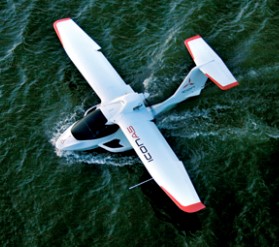
The ICON A5 has two seats and is made mostly of composite materials, with a high wing, T-tail, pusher prop, and tricycle landing gear. It is powered by a Rotax 912 flat-four engine, with hybrid air-water cooling and providing 75 kW (100 HP). All landing gear assemblies have single wheels, the nose gear hinging forward, the main gear retracting into sponsons that also provide flotation stability. Seating is side-by-side, the canopy hinging forward for access. The wings fold back along the rear of the aircraft for ease in handling.

Designed for recreation rather than transport and first flown in July 2008, the A5 is a sport plane available in 2008 for US$139,000.

The A5 received a lot of publicity but no production machine had flown yet.

The long-delayed amphibian could at last be nearing production after wrestling with overweight issues for years. In 2012 the manufacturer awaited FAA’s final decision on whether that agency would allow an additional 250 pounds beyond the LSA amphibious spec of 1,430 pounds or 1,680 pounds MTOW.

Icon’s stated grounds for exception: The extra weight is needed for its spin-resistant wing design. The ruling would only benefit the A5, not any other amphib or float plane.

Engine: Rotax 912, 75 kW
Wing span: 10.4m / 34 ft
Length: 6.7 m / 22 ft
Empty weight: 450 kg / 1,000 lb
Max speed: 192 kph
Stall: 80 kph

Ibis Aircraft Magic GS-700

Option 1; kit completely assembled; Option. 2 ready to fly. 2009 Price: US$25900

Engine: Rotax 912 ULS
Propeller: Bolly 3 Blade ground adjustable
Empty Weight: 320 kg / 705 lbs
MTOW Weight: 569 kg / 1254 lbs
Fuel cap: 140 lt
Stall: 42 kt / 48 mph / 77 kmh
Cruise: 100 kt / 115 mph / 185 kmh
VNE: 113 kt / 130 mph / 209 kmh
Fuel burn: 16 lt/hr
Climb Ratio: 1000 ft/min / 5 m/s
Take-off distance (50ft obstacle): 262 ft / 80 m
Landing distance (50ft obstacle): 328 ft / 100 m

Ibis Aircraft GS240

The IBIS GS240 is an all-metal, high-wing aircraft manufactured by the IBIS Aircraft company in Colombia. The GS240 has specifications and performance that are within the limitations of the new Light Sport Aircraft category. The GS240 is available for the U.S. market as a “quick-build kit” that will still meet the requirements of the FAA “51% rule” and allow the GS 240 to be put into the Experimental (Amateur-Built) Category. The GS240 kit is intended to provide as short a building time as reasonably possible for the builder, with all difficult aspects of fabrication and assembly having been done at the factory to minimize complications and delay for the first-time builder.
The IBIS GS-240 has specifications and performance that allow it to fit within the new “Light Sport Aircraft” rules. With the GS240 in this category, it can be flown by existing Private and Recreational pilots (without them having to maintain an FAA Medical Certificate), but also by people holding the new “Sport Pilot” license.

Stall: 35 kt / 40 mph / 64 kmh
Cruise: 104 kt / 120 mph / 193 kmh
VNE: 122 kt / 140 mph / 225 kmh
Empty Weight: 341 kg / 752 lbs
MTOW Weight: 599 kg / 1320 lbs
Climb Ratio: 700 ft/min / 4 m/s
Glide Ratio: 14:1
Take-off distance (50ft obstacle): 300 ft / 91 m

IAE V2500

V2528-D5 mounted on the MD-90-30

Just a year after IAE was formed, the V2500 two-shaft high-bypass turbofan engine won a position on the Airbus A320 family, formally launching the program. Following a development program, the V2500-A1 engine first entered service with Adria Airways in 1989.

That same year McDonnell Douglas selected the V2500 engine to power the MD-90, providing diversity to the engine program. Delta Air Lines launched this new program with an order for 26 firm aircraft.

Rolls-Royce plc based the HP compressor on a scale-up of the RC34B eight stage research unit used in the RB401-06 Demonstrator Engine, but with a zero-stage added at the front and a tenth stage added to the rear. Pratt & Whitney developed the combustor and the 2-stage air-cooled HP turbine, while the Japanese companies provided the LP compression system. MTU were responsible for the 5-stage LP turbine.

FAA flight certification for the V2500 was granted in 1988.

IAE’s philosophy of continuous improvement was evident from the start, and the first major performance enhancements were introduced into service in 1993 through the V2500-A5 engine. IAE subsequently took the HPT technology developed for the V2500-A5 engine and incorporated it into the V2500-A1 engine in what was termed the “Phoenix Standard” in 1998. This resulted in improved time-on-wing.

The latter part of the 1990s saw IAE and the V2500 engine start to become a dominant force in commercial aviation: (i) the MD-90 entered service; (ii) the first orders were taken from Chinese airlines; (iii) records were broken for deal sizes; and (iv) the first V2500 engine-powered A319 flew in United Airlines’ colors. In addition, the 1,000th V2500 engine was delivered.

The new Millennium saw existing MD-90 operators – China Northern and SAS – select V2500 engine-powered Airbus aircraft for the first time. The engine also became available to power the Airbus Corporate Jetliner (ACJ).

The success story continued throughout the decade as customer numbers approached 200, and a number of record-breaking deals were signed. The 2,000th V2500 engine was delivered in 2002, and the engine program surpassed the milestone of 20 million flying hours.

IAE continued its philosophy of continuous improvement with the introduction of V2500 SelectOne engine in 2005, along with the first comprehensive OEM-managed aftermarket service program in this class. More records were broken as a number of first-run engines remained on wing in excess of 30,000 hours. Following the delivery of the 3,000th V2500 in 2006, orders continued to climb with tremendous success in China with orders from Sichuan Airlines, Hainan Airlines, Shanghai Airlines and Shenzhen Airlines.

The V2500 SelectOne engine gained segment acceptance throughout the decade as customers selected the new engine standard and upgraded their existing fleets with the new retrofit upgrade. The new engine build standard, which debuted with IndiGo in 2008, delivered over 1500 engine units by the end of 2012 and continues to grow. It has a record of exceptional reliability following a flawless entry into service and continued dependable operation. In addition, the V2500 engine became a launch engine for the Airbus A320 Final Assembly Line in Tianjin, China.

An upgrade option for the V2500 SelectOne engine – the V2500 SelectTwo engine was also announced. Meanwhile, the V2500 SelectOne engine reached a major milestone with its 1,000th delivery to IndiGo, and IAE’s order book continued to grow as China Southern became IAE’s largest customer with its order for 65 V2500 SelectOne engines.

In its first military application, IAE was chosen in 2011 by Embraer Defense and Security, in concurrence with the Brazilian Air Force, to provide the powerplant for the country’s new KC-390 multi-role tanker/transport aircraft. The engine will be the V2500-E5 engine.

The 4,000th V2500 engine was delivered to the Brazilian flag carrier TAM and installed on the 4,000th Airbus A320 family aircraft (an A319).

In early 2012, the 5,000th V2500 engine was delivered to SilkAir, and IAE achieved 100 million flying hours.

Variants:

V2500-A1

V2533-A5
A fourth booster stage was introduced into the engine basic configuration to increase core flow. This, together with a fan diameter/airflow increase, helped to increase the thrust to 33,000 lbf (147 kN) thrust, to meet the requirements of the larger Airbus A321-200.
A number of derated, Stage 4 noise compliant engines have been produced from the -A5 configuration, including:
The 23,500 lbf (105 kN) thrust V2524-A5 for the Airbus A319
The 27,000 lbf (120 kN) thrust V2527-A5 for the Airbus A320
The 28,000 lbf (120 kN) thrust V2528-D5 for the McDonnell Douglas MD-90-30.
The 33,000 lbf (150 kN) thrust V2533-A5 for the Airbus A321

V2500SelectOne
On October 10, 2005, IAE announced the launch of the V2500SelectOne with a sale to IndiGo Airlines to power 100 A320 series aircraft. The V2500SelectOne is a combination performance improvement package and aftermarket agreement. In February 2009, Pratt & Whitney upgraded the first V2500-A5 to the SelectOne Retrofit standard; the engine was owned by US Airways and had been in use since 1998.

V2500SelectTwo
On March 15, 2011, IAE announced an upgrade option of V2500 SelectOne Engines to the SelectTwo Program.

Applications:
Airbus A320 family (excluding A318)
Embraer KC-390
McDonnell Douglas MD-90

Specifications:

V2500-A1
Thrust: 111 kN
Bypass ratio: 5.4 : 1
Compression ratio: 35.8 : 1
Fan diameter: 1.587 m
Total length: 3.2 m
Weight: 2,327 kg
Production start year: 1989
Aircraft type: A320

V2522-A5
Thrust: 97.86 kN
Bypass ratio: 4.9 : 1
Compression ratio: 32.8 : 1
Fan diameter: 1.613 m
Total length: 3.2 m
Weight: 2,359 kg
Production start year: 1992
Aircraft type: A319

V2524-A5
Thrust: 106.75 kN
Bypass ratio: 4.9 : 1
Compression ratio: 32.8 : 1
Fan diameter: 1.613 m
Total length: 3.2 m
Weight: 2,359 kg
Production start year: 1996
Aircraft type: A319

V2525-D5
Thrust: 111 kN
Bypass ratio: 4.8 : 1
Compression ratio: 34.5 : 1
Fan diameter: 1.613 m
Total length: 3.2 m
Weight: 2,484 kg
Production start year: 1995
Aircraft type: MD90

V2527-A5
Thrust: 117.88 kN
Bypass ratio: 4.8 : 1
Compression ratio: 32.8 : 1
Fan diameter: 1.613 m
Total length: 3.2 m
Weight: 2,359 kg
Production start year: 1993
Aircraft type: A320

V2528-D5
Thrust: 124 kN
Bypass ratio: 4.7 : 1
Compression ratio: 35.2 : 1
Fan diameter: 1.613 m
Total length: 3.2 m
Weight: 2,484 kg
Production start year: 1995
Aircraft type: MD90

V2530-A5
Thrust: 139.67 kN
Bypass ratio: 4.6 : 1
Compression ratio: 35.2 : 1
Fan diameter: 1.613 m
Total length: 3.2 m
Weight: 2,359 kg
Production start year: 1994
Aircraft type: A321

V2533-A5
Thrust: 146.80 kN
Bypass ratio: 4.5 : 1
Compression ratio: 35.2 : 1
Fan diameter: 1.613 m
Total length: 3.2 m
Weight: 2,359 kg
Production start year: 1996
Aircraft type: A321

International Aero Engines / IAE

IAE International Aero Engines AG is a Zürich-registered joint venture manufacturing company founded in 1983 to develop an engine to address the 150-seat single aisle market.

The original collaboration involved Pratt & Whitney of the United States, Rolls-Royce plc of the United Kingdom, Japanese Aero Engine Corporation of Japan and MTU Aero Engines of Germany. FiatAvio withdrew as a shareholder of the program early on, but the now-renamed Avio S.p.A. remainede as a supplier. The “V” product nomenclature remains as a legacy of the five original shareholders.

The collaboration produced the V2500 – the second most successful commercial jet engine program in production in terms of volume, and the third most successful commercial jet engine program in aviation history.

In October 2011, Rolls-Royce agreed to sell its 32.5% stake in the company to Pratt & Whitney’s parent company, United Technologies (UTC), giving UTC a combined equity ownership share of 49.5% (which is different from UTC’s total program share in the IAE collaboration, which stands at 61%). The transaction was completed on 29 June 2012.

Rolls-Royce remains a major supplier to IAE.

IAE had developed the abortive Superfan for the Airbus A340. IAE’s purpose became the development, production and aftermarket services of the IAE V2500 aero engine family.

By 2012, more than 5,700 engines had been delivered and approximately 1,600 more were on backlog, which is equivalent to nearly five full years production. Over the previous five years, production had doubled with over an engine a day being delivered.

In 2011, the IAE Executive Board of Directors announced the extension of its collaboration agreement to 2045. After receiving regulatory approvals and partner consent, Pratt & Whitney closed on the purchase of Rolls-Royce’s equity and program share in IAE on June 29, 2012. Rolls-Royce were to continue to support IAE as a strategic supplier for the V2500 engine and continue to perform its key responsibilities for IAE, including the manufacture of parts and engines, as well as supply MRO services for IAE’s fleet.

Shareholders in 2012 were:
Pratt & Whitney, USA: 25.00%
Pratt & Whitney Aero Engines International GmbH, Switzerland: 24.50%
MTU Aero Engines, Germany: 25.25%
The Japanese Aero Engine Corporation: 25.25%

The Japanese Aero Engine Corporation consisted of:
Kawasaki Heavy Industries
Ishikawajima-Harima Heavy Industries
Mitsubishi Heavy Industries