Kazurov-Poluchkine-Rusakov Chtyvnoplat (Hybrid)

A single seat single engined high wing monoplane with hybrid control circa 1983. Wing has unswept leading and trailing edges, and constant chord. Yaw control by rudder. Control inputs through weight shift for pitch/yaw/roll.
The Chtyvnoplat appears from the very sketchy information available to be a Russian equivalent of the Quicksilver E. It differs from the Eipper-formance machine in that the pilot lays prone, but the control system is similar, being primarily weight shift but assisted by a rudder. The high rectangular wing has a large dihedral and a single boom supports the tail, the whole structure being supported in flight by a web of cables of considerable density.
The claimed glide ratio is 15 17/1.

Length overall 17.1ft, 5.20m.
Wing span 31.5 ft, 9.60 m.
Constant chord 4.8 ft, 1.46 m.
Total wing area 151 sq.ft, 14.0 sq.m.
Wing aspect ratio 6.5/1.

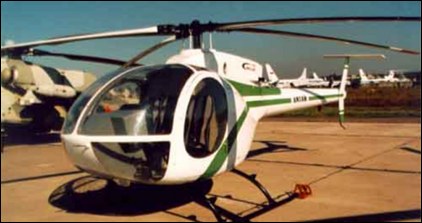
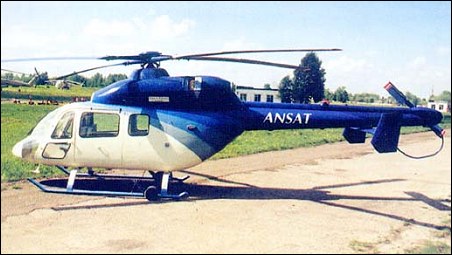
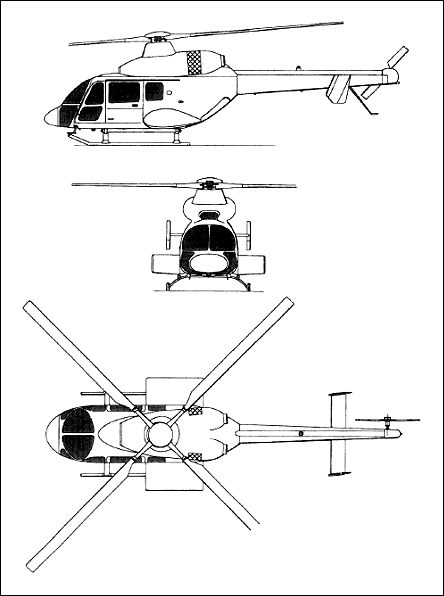
Kazan Ansat

Design began at Kazan in 1993, with design subcontracts to Kazan State Technical University for structural strength and aerodynamic calculations; Aviacon Scientific and Production Centre for rotor; and Aeromekhanica for transmission.

A fuselage mockup was exhibited at the 1995 Paris Air Show, followed by a considerably revised engineering mockup (001) at Paris ’97. By August 1998, now marked ’01’, this had accumulated 10 hours of ground running with engines and rotors, and totalled 800 hours by February 2003.

The design features a traditional metal structure and meets FAR Pt 29 Category A and Russian AP-29 requirements. A hingeless main rotor hub with glass fibre torsion bar, has four main blades; two-blade tail rotor. A two-stage, VR-23 main rotor reduction gear in magnesium case ahead of engines has ratio 16.4; rotation speed 365.4 rpm; blade tip speed 220m/s, and transmission rating 769kW. Tail rotor speed 2,000 rpm via single stage conical geabox. Rotor brake. Manual blade folding. Main rotor aerofoil section NACA 23012.

The aluminium alloy fuselage has sparing use of composites, layered glass fibre main rotor blades, window frames and nosecone. The landing gear has twin skids with Kazan transverse shock-absorbers, tail bumper to protect anti-torque rotor, and wheels optional in tricycle configuration, with Yaroslav tyres and Gidroagregat (Balashikha) brakes.
Power is from two P&W Rus XRK206S turboshafts, each rated at 477kW for T-O, 418kW max continuous, in prototypes. Production version with PW207Ks, rated at 470kW for T-O, 410kW max continuous, 529kW for 30 s, 470kW continuous OEI and 491kW 2 minutes OEI. FADEC standard. Fuel capacity 700 litres in either external panniers or underfloor. Optional internal ferry fuel. Alternatively, two Salyut TV-500A turboshafts, each 478kW.
Seating is for up to 11 persons, including one or two pilots, on energy-absorbing seats; or two stretcher patients and three attendants; or internal or externally slung freight. Two forward-hinged doors each side of flight deck; two horizontally split doors each side of cabin, forward; baggage bay behind cabin, with rear-facing door. Baggage door also used for loading stretchers of medical variant. Accommodation ventilated and heated; optional air conditioning.
Avionika FBW controls comprise quadruples electronic system and duplex hydraulic system. Automatic flight control is standard on all piloting functions and optional on navigation functions. Current FBW system to be replaced by KSU-A digital control system. Main transmission drives two alternators (each 200V, 400Hz), two generators (each 27V), two fans and two hydraulic fuel pumps for separate systems. Electrical system 27V, with battery; optional AC system, with second battery. Electric de-icing optional.
First flight was scheduled for late 1997, but initial designated flight trials aircraft (02) exhibited at Farnborough in September 1998, still unflown. First flight (02) was 12 minute hover on 17 August 1999, with an initial forward flight on 6 October 1999. Trials halted in November 1999, after 4 hours, due to gearbox problems, but resumed in the second quarter of 2000 with a strengthened and redesigned main transmission, scarfed engine exhausts and new identity ‘902’. Total 120 hours up to February 2003.

The third (second flying) prototype (03) was to have joined the programme in late 1999, but was not completed until August 2001. First flown 27 December 2001, this is to preproduction standard with small, detachable, pannier tanks, increased fin area, PW207 engines, additional side window and flatter windscreen combined with revised nose shape; will add 400 hours to trials programme. Certification flight resting began in October 2002, for completion before end of 2003; by early 2003 had been renumbered ‘904’.

On 14 September 2001, Ansat declared winner of competition to supply 100 training helicopters to Russian armed forces by 2015.

Aircraft No.5 was to Ansat-U standard, including dual controls and wheel landing gear. Optimised for training (uchebni).

Russian Federal Border Service (Federalnaya Pogranichnaya Sluzhba) requirement for 100 notified in 1997. Total 12 civil sales reported by late 2002, including one for export.
The price was US$2.0 million for utility version (2003). Kazan’s development expenditure had reached Rb200 million by mid-2000.

Ansat
Engine: 2 x Klimov / Pratt & Whitney Canada PW 206 C, 631 shp
Main rotor diameter: 11.5m
Fuselage Length: 37.861 ft / 11.54 m
Length with rotors turning: 13.77m
Height: 11.286 ft / 3.44 m
Rotor diameter: 37.73 ft / 11.5 m
Max take off weight: 7276.5 lb / 3300.0 kg
Cruising speed: 129 kts / 238 km/h
Max speed: 280km/h
Economic cruising speed: 140km/h
Service ceiling: 19685 ft / 6000 m
Hovering ceiling, OGE: 1800-2700m
Maximum range: 335 nm / 620 km
Range: 281 nm / 520 km
Endurance: 3 h
Crew: 1
Payload: 8 pax / 1300 kg int. max. / 1650 kg ext. max.
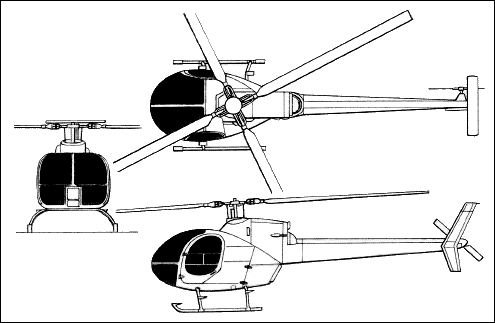
Kazan Aktay / White Colt

Work beginning in 1996, the project was revealed at the Moscow Air Show, on 19 August 1997, with display of a mockup. A second engineering mockup was built in 1998. Kazan decided in mid-2001 to begin building a prototype to fly in 2003.

Intended for light transport, patrol, medical evacuation and training, certification was to be to FAR Pt 27. A conventional pod and boom configuration with T tail, semi-articulated three-blade main rotor, tapered blades on production version. The max (emergency) rotation speed is 2,586 rpm. A rotor brake is standard but no provision for folding. A Krasnyy Oktyabr VR-10 main gearbox, rated for 216kW, receives an engine input of 6,000 rpm. A XP-10 gearbox is fitted for the two-blade tail rotor.
Extensive use of composites is made throughout, including main rotor blades.
The landing gear is a conventional, non-retractable skids on arched support tubes, with spring shock absorbtion.
Power is by one 201kW VAZ-4265 rotary engine mounted above the cabin and behind the gearbox and operating on 92/93 grade petrol. Rpm control is manual. Fuel capacity is 300 litres. A refuelling point is on the left side. Oil capacity 20 litres.

The pilot and two passengers, all side by side, in individual seats, have a forward-hinged door each side. Twin clamshell doors are at the rear of the pod, below the tailboom, provideding access to the flat freight floor. One casualty stretcher can be loaded through rear doors when a passenger seat is removed. Alternative access via door on starboard side. Optional, rear-facing seat in luggage bay. Optional heating and air conditioning.
The electrical system with accumulator and M-16 generator has a max rating of 16kW. Anti-icing is fitted for the main rotor blades.

Engine: 1 x 201kW VAZ-4265 rotary
Max take-off weight: 1050kg
Payload: 300kg
Empty weight: 2402kg
Max speed: 190km/h
Cruising speed: 155km/h
Hovering ceiling, OGE: 1300m
Service ceiling: 4700m
Range with 300kg payload: 100km
Range with 190kg payload: 600km
Max endurance: 6h
Crew: 1
Passengers: 2

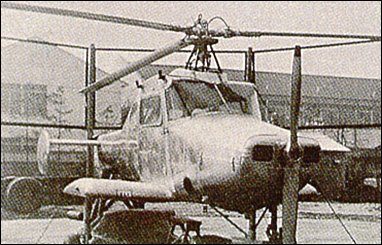
Kayaba Heliplane

In 1952, Kayaba returned to rotary wing experimentation with the “Heliplane”. This was a compound helicopter fabricated from the fuselage and 180 hp Continental E-180 engine of a Cessna 170 light aircraft, with a rotor mounted above the cabin roof and low-set stub wings to which the undercarriage was attached. The three-blade rotor was fitted with small ramjets which were used for takeoff and landing and the rotor would rotate freely in horizontal flight when the “Heliplane” was being driven by the normal propeller. It first flew in 1954.

Engine: 185 hp Continental E-180
Rotor diameter: 24 ft 3.25 in
Fuselage length: 10 ft 6 in
Height: 9 ft 2.25 in
Seats: 4

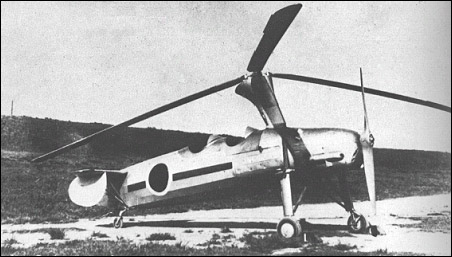
Kayaba “Ka”-Go / Ka-1 / Ka-2

In 1939 the Imperial Japanese Army imported a Kellet KD-1A single-engined two-seat autogyro as an artillery spotter. Powered by a 225hp Jacobs L-4M4 seven-cylinder air-cooled radial, the KD-1A featured an advanced version of the Kellet direct control rotor system. Shortly after its arrival in Japan, the aircraft was seriously damaged during flight trials at low speeds. The Kellet KD-1A had been damaged beyond repair, but the Japanese Army delivered the wreck to K.K. Kayaba Seisakusho (Kayaba Industrial Co Ltd), a small company doing autogyro research, with instructions to develop a similar machine.
The Kayaba engineering team developed a two-seat observation autogyro based on the Kellet KD-1A but modified to Japanese production standards, designated Ka-1.
The Ka-1 was powered by a 240hp Kobe eight-cylinder inverted-vee air-cooled (licence version of the German Argus Argus As 10c) engine driving a two-blade propeller, and had a three-blade rotor. Completed in May 1941 at the Sendai (Miyagi Prefecture) plant of Kayaba, the first Ka-1 made its maiden flight at Tamagawa on 26 May, 1941.
During its flight test programme the Ka-1 performed remarkably well, demonstrating its ability to take-off after running only 30m in still air. By running the engine at full power and holding the nose 15 deg up, the Ka-1 could hover and could also execute a full 360 deg turn while hovering. As maintenance in the field appeared to present less difficulty than anticipated the aircraft was placed in production for service with artillery units.
Eventually some two hundred and forty aircraft of this type were built.

A small number of Ka-ls were modified for operation from naval craft as anti-submarine patrol aircraft. As the load-carrying capability of the standard two-seat Ka-1 was too limited, the carrier-borne Ka-ls were operated as single-seaters and carried two 60kg bombs or depth-charges. In this role the Ka-ls operated over Japanese coastal waters and particularly over the Tsugara and Korean channels.
The Kayaba Ka-1 autogyro was the first armed autogyro/helicopter to have been used operationally.

At least one of these aircraft, the Ka-1 KAI, was tested with powder rockets on the rotor tips in an attempt to improve its load-carrying capability while another aircraft was fitted with a 240hp Jacobs L-4MA-7 seven-cylinder air-cooled radial. With Jacobs engine the type became the Ka-2.

Kayaba Ka-1
Engine: 1 x Kobe/Argus As 10c, 180kW / 240 hp
Main rotor diameter: 12.2m
Max take-off weight: 1170kg
Empty weight: 775kg
Max speed: 165km/h
Cruising speed: 115km/h
Ceiling: 3500m
Range: 280km
Armament: 2 x 60kg depth charges

Kay Autogyro

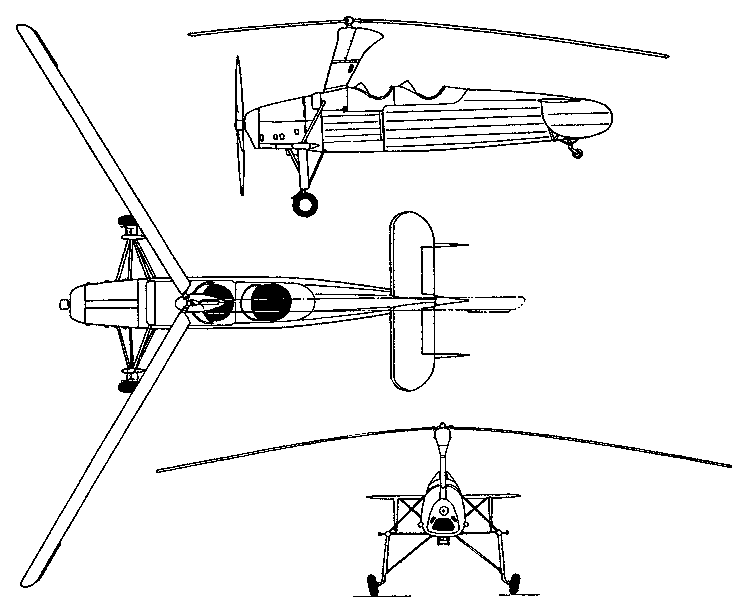
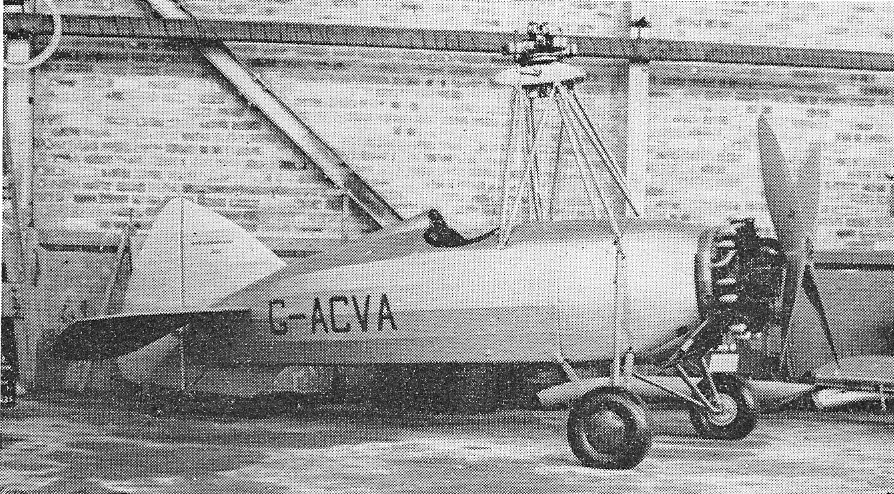
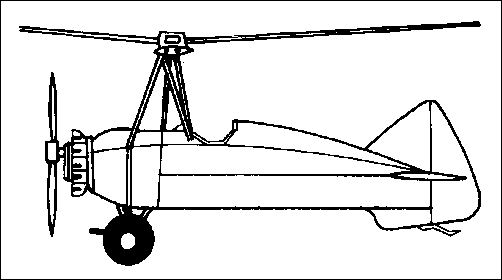
The only Kay Gyroplane constructed, G-ACVA, was designed by D. Kay and constructed by Oddin, Bradbury and Cull Ltd of Eastleigh, Hants.

Kay Autogyro Article

Power was a 75 hp Pobjoy, and chief feature of the machine was the positive control of lift by variable incidence of the rotor blades while in flight. Lateral control could be obtained by rocking the rotor spindle, while fore and aft control was by a hinged tailplane and normal elevators.

Engine: 75hp Pobjoy
Rotor diameter: 22 ft
Overall length: 17 ft 11 in
Height: 7 ft 8 in

Kawasaki KAL-2

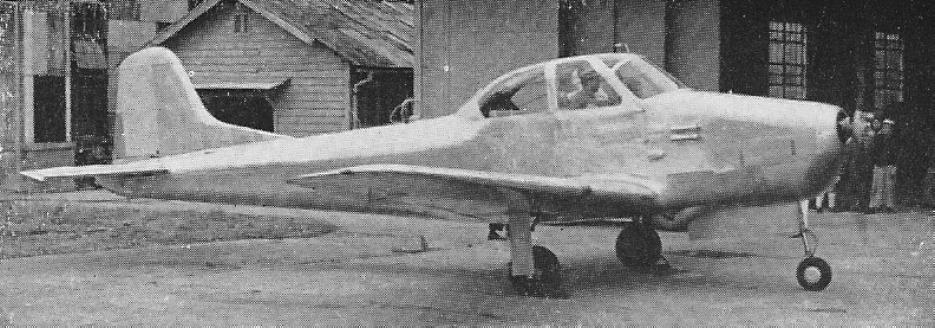
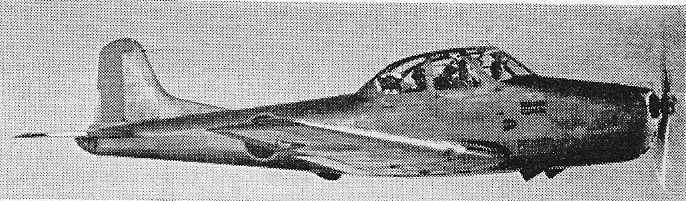
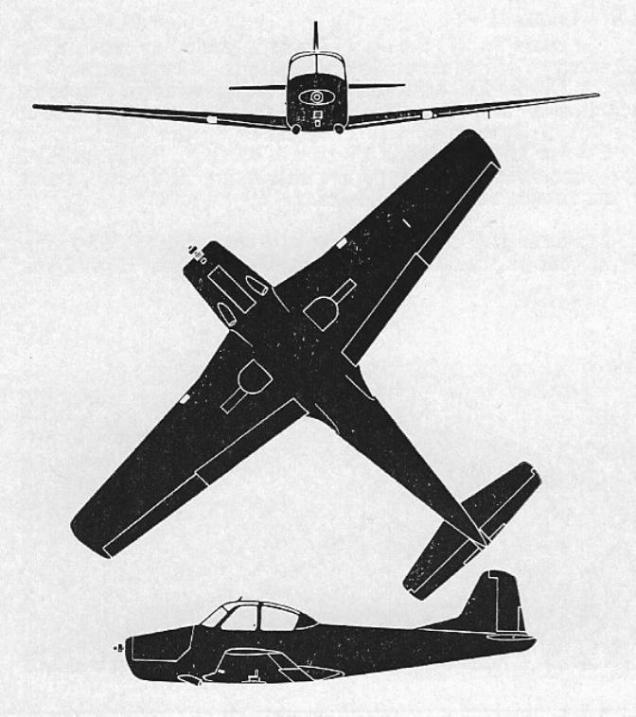
The Kawasaki KAL-2, deigned and built by the Kawasaki-Gifu division of the Kawasaki Aircraft Company, was produced in 1955 as a development of the KAL-1 ns KAT-1.

Of all-metal construction, the KAL-2 seats four.

KAL-2 no.2

An initial order for two was placed by the Japanese Air Self-Defence Force.

Engine: Lycoming GO-435-C2B, 260 hp
Span: 39 ft 0.5 in
Wing area: 206.66 sq.ft
Length: 28 ft 8.5 in
Height: 9 ft 6 in
Empty weight: 2315 lb
Loaded weight: 3527 lb
Max speed: 183 mph at 7742 ft
Cruise: 112 mph
Range: 994 mi
Seats: 4

Kawasaki 440 / T/A 440

The Kawasaki 440, also called the T/A 440, is a Japanese twin-cylinder, in-line, two-stroke engine that was designed for snowmobiles and produced by Kawasaki Heavy Industries until the early 1980s.

The engine was widely adapted for other purposes, including ultralight aircraft and Formula 500 automobile racing. Kawasaki did not condone or support the use of the engine in aircraft and it was largely supplanted in this role by the similar purpose-designed Rotax 377 aircraft engine.

The engine has two cylinders in an in-line configuration. The single ignition system uses a coil and points. Fuel is metered by a Mikuni 34 mm slide-type carburetor. Starting is by a recoil starter system with electric start as an option.

In its aircraft applications the 440 uses an aftermarket reduction drive system to reduce the maximum 5000 rpm to a speed more manageable for propeller use.

Applications:
Acrolite
Bell Sidewinder
CGS Hawk
Fisher Barnstormer
Fisher Boomerang
Golden Gate Mosquito
Goldwing Ltd Goldwing
Hovey Delta Hawk
Manta Foxbat
Mathews PUP
RagWing RW1 Ultra-Piet
RagWing RW2 Special I
RagWing RW7 Duster
RagWing RW9 Motor Bipe
Seahawk Condor
Ultimate Jetwing
Ultralight Flight Mirage
Ultralite Soaring Wizard
Vortech G-1
Worldwide Ultralite Skyraider S/S
Worldwide Ultralite Spitfire

Specifications
Type: twin-cylinder, two-stroke engine
Displacement: 436 cc (26.61 cu inches)
Dry weight: 49 lb (22 kg)
Valvetrain: piston ported
Fuel system: Mikuni 34 mm slide-type carburetor
Oil system: premixed oil and fuel
Cooling system: air cooled
Reduction gear: aftermarket reduction drive for aircraft use
Power output: 38 hp (28 kW) at 5000 rpm