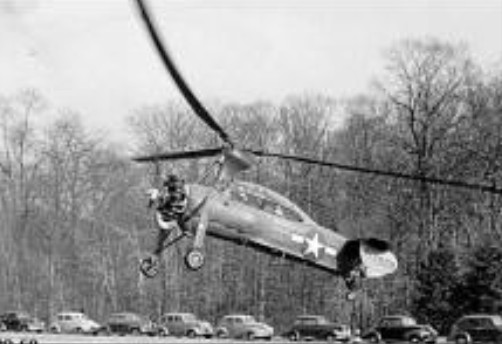
Experimental conversion of a standard Kellett KD-IB Autgiro into a convertiplane, for the U.S. Navy. Chief external changes are addition of wings and two wing-mounied engines. Was due to fly in 1955.
Engine: 1 x 275 hp Jacobs and 2 x 140 hp Lycoming Rotor diameter: 40 ft Rotors: 3-blade main; 3 propellers Length (blades folded): 25 ft 11 in Loaded weight: 3,400 lb Seats: 1.
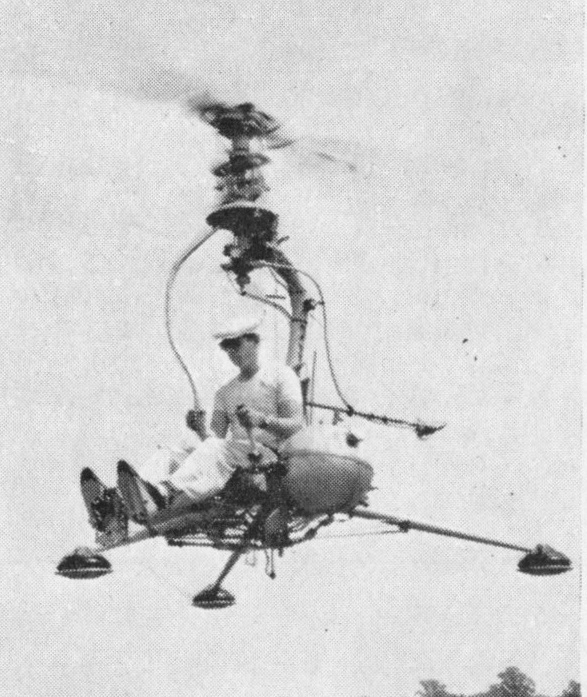
In 1954 the first helicopters with rocket-driven rotors were flown; the Kellett KH-15 and Rotor-craft RH-1.
Nicknamed ‘Stable Mable’, the KH-15 has been built for the U.S. Navy to test a new system oft gyro-abilisng cotrols. It flew after only 8 minutes of tethered tests. Power units are tip-mounted hydrogen peroxide rocket motors.
Power: 2 Reaction Motors XLR32 rockets Rotors: 2-blade tip-powered main rotor and tail rotor Rotor diameter: 18 ft Loaded weight: 644 lb Seats: 1
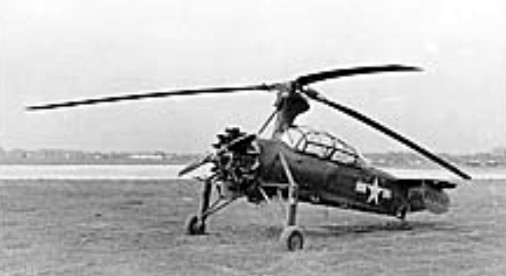
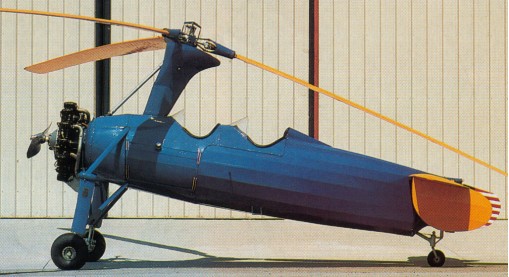
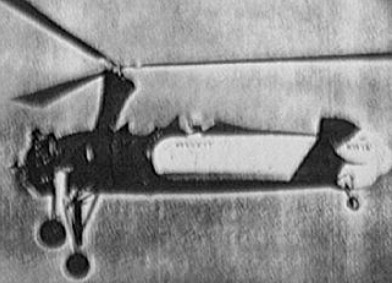
The Kellett O-60 was built and tested as an observation aircraft for the US Army in 1942 while the helicopter was still in development. The aircraft had a free-turning 43 ft 2 in rotor which provided lift in place of a conventional wing. A 285 horsepower radial engine turning a two-blade propeller gave the O-60 its forward thrust. The two-place YO-60 was designed by Richard O. Prewitt and could do jump take-offs. The rotor was spun up to about 280 rpm (rotations per minute) at a no-lift angle using the power of the radial engine. When ready for take-off, the pilot would release a clutch mechanism which changed the blade angle to 8 degrees. This caused the aircraft to ‘jump’ about 10 feet into the air. The engine and propeller then pulled the YO-60 into forward flight as the rotor angle was decreased to a normal flight pitch of 3 degrees. The engine was only used to spin the rotor up to flight speeds on the ground, while in flight the rotor was free spinning.
The YO-60 never got past the service test phase. Seven aircraft were built as XO-60 (S/N 42-13604 to 42-13610) with 225 hp radial engines and later re-engined with 285 hp. radials and redesignated YO-60.
YO-60 Engine: Jacobs R-915-3 of 285 hp. Fuselage length: 20 ft. 9 in. Fuselage width: 9 ft. 6 in. (at landing gear); 10 ft. at horizontal stabilizer Height: 10 ft. 3 in. Rotor diameter: 43 ft. 2 in. No of blades: 3 Weight: 2,640 lbs. (gross) Crew: 2 Top speed: 122 mph
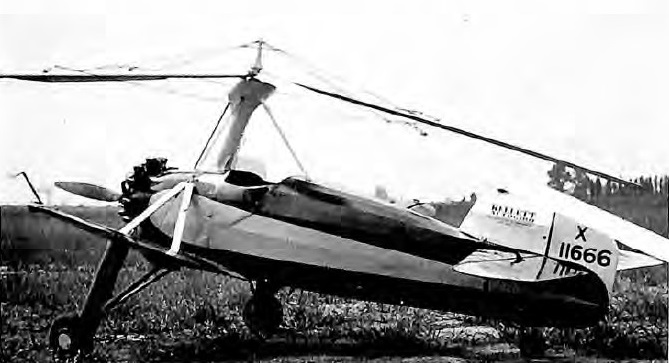
Cierva and Pitcairn licensed the Kellett Autogiro Corporation of Philadelphia to build autogiros and the developed Kellett YG-1 of the late 1930s became the US Army’s first rotary-winged aircraft. Seven YG-1B autogyro were procured by the US army in 1937 for observation duties.
YG-1A Year: 1936. Seats: 2. Engine: Jacobs L4MA7, 225 hp. Gross wt: 2205 lbs. Empty wt: 1586 lbs. Rotor dia: 40 ft. No of blades: 3.
YG-1B Year: 1937. Seats: 2. Engine: Jacobs L4MA7, 225 hp. Gross wt: 2400 lbs. Empty wt: 1617 lbs. Rotor dia: 40 ft. No of blades: 3.
Cierva’s C30 series and Pitcairn’s PA-22 and Luscombe-built aluminum body PA-36, and the KD-1 series constructed by Kellett Autogiro Company of Philadelphia were capable of jump take-offs and direct-control without wings.
KD-1 Year: 1935. Seats: 2. Engine: Jacobs L4MA7, 225 hp. Gross wt: 2050 lbs. Empty wt: 1345 lbs. Rotor dia: 40 ft. No of blades: 3.