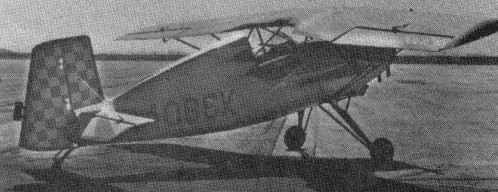
The Jungster II is a follow-up design that grew out of experience with the Jungster I. The intent was to create a plane with the same open cockpit concept but to increase speed and capacity so that it would be an acceptable cross-country airplane. The Jungster II uses the same design and construction concepts except that it is just a little bit bigger, has left the lower wing, behind in favor of a single extended parasol-type wing, and uses a welded steel-tube center section. Engines rated from 85 to 180 hp are used.
Gross Wt. 1375 lb Empty Wt. 739 lb Fuel capacity 16 lb Wingspan 22’4” Length 16’11” Top 170 mph Cruise 148 mph Stall 55 mph Climb rate 3500 fpm Takeoff run 200 ft Landing roll 800 ft
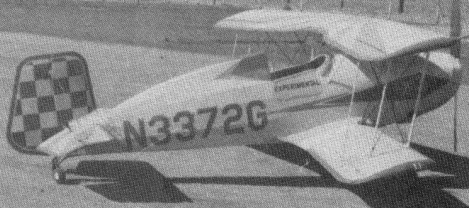
The Jungster I was developed as an 8/10 scale version of the famous Bunker Jungsmeister aerobatic airplane. The intention was to capture many of the flying qualities of the Jungmeister in a smaller size. This all-wood, fabric-covered biplane has a swept-back wing design of about 11 degrees to keep the center of lift close to the center of gravi¬ty. It can handle engines rated from 85 to 150 hp and is a frisky single place aerobatic plane.
Gross Wt, 1000 lb Empty Wt. 605 lb Fuel capacity 16 USG Wingspan 16’5”. Length 16’. Wing area: 80 sq.ft. Top 200 mph. Cruise 150 mph Stall 52 mph Climb rate 2500+ fpm Takeoff run 300 ft Landing roll 800 ft Range 300 miles Seats: 1.
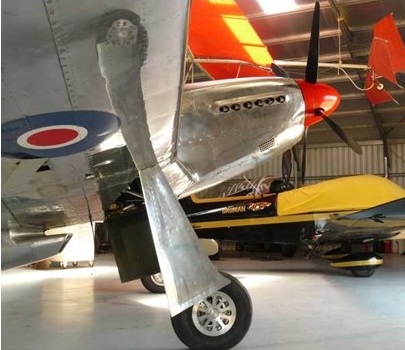
Terry Kronks K-W Mustang is a scratch built, one-off 80% scale, all aluminum P-51 replica based on RV series. Based at Gatton Airpark, QLD, Australia, the first flight was in August 2011.
The engine is a supercharged GM LS-6 V8 with intercooler, and a King Air prop.
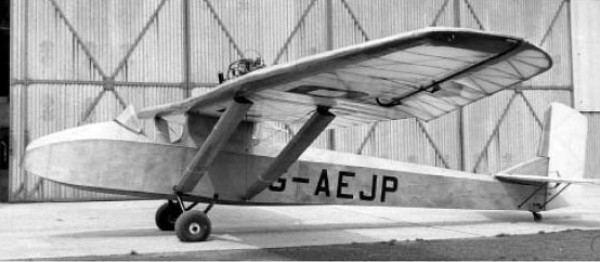
A further development was the single-seat, single engine Drone of 1935. A lightly laden high wing monoplane of 40 ft span, the Drone was devised by Charles Herbet Lowe-Wylde by fitting a motor-cycle engine to his sailplane. The idea was to give cheap training to pilots who had already gone solo. The pusher engine was mounted on top of the wing, behind the cockpit. Two were produced and two conversion were made.
Drone
The BAC Drone was the production version of the Lowe-Wylde Planette and was first produced in 1933. B.A.C (1935) Ltd was formed in 1935 to take over production and development of the Drone.
BAC Drone
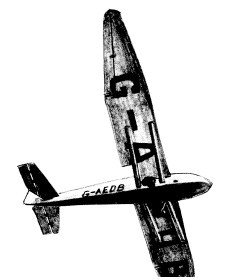
In 1935 twenty-five of the further developed Super Drone were produced, plus 1 conversion.
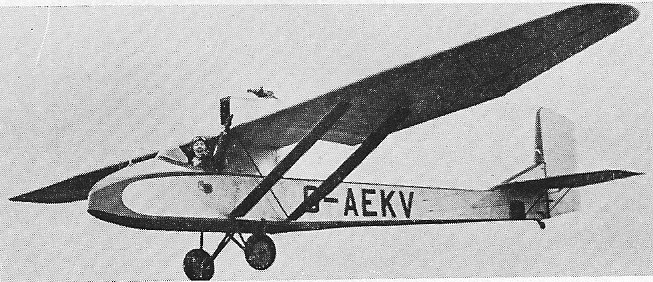
The final B.A.C.VII development was the Drone de Luxe of 1935. One was built and one conversion made.
Kronfeld Drone de Luxe G-AEKV
In 1936 Kronfeld built 20 Drone monoplanes.
In 1937 the Carden Ford 10 engine of 30 hp was fitted, along with the 32 hp Bristol Cherub 3.
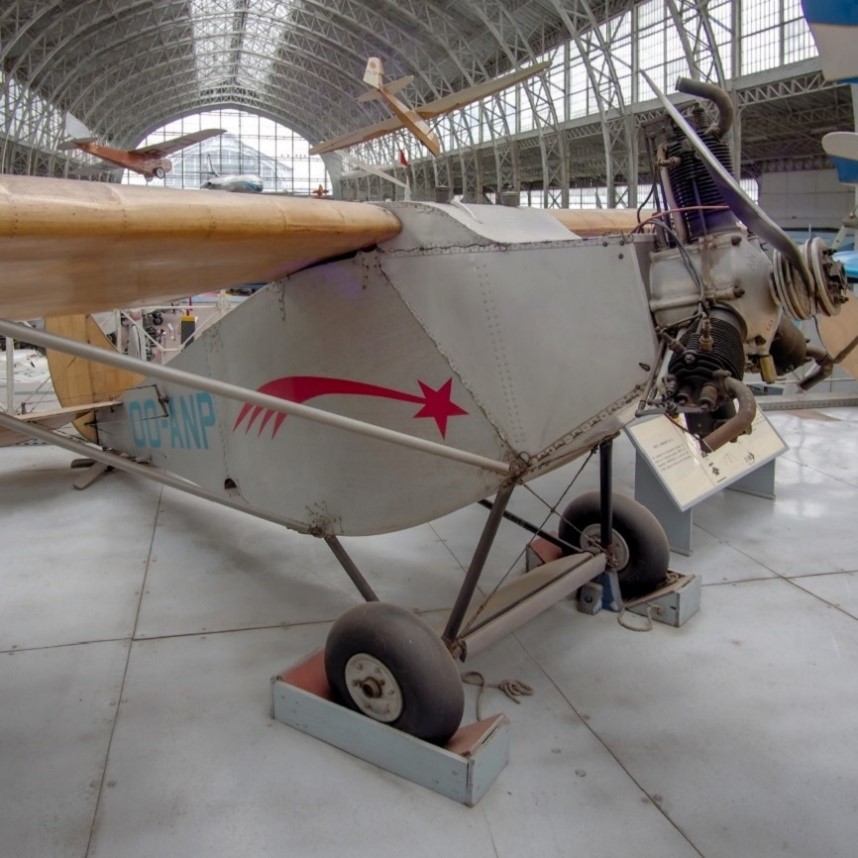
The Drone was also built under licence at Issy les Moulineaux in France by the Societe Francaise des Avions Nouvelles (SFAN), and at Ghent in Belgium by the Societe Gantoise des Avions sans Moteur.
British Aircraft Co Drone Engine: Douglas Sprite 600cc Span: 40 ft Seats: 1 Max level speed: 73 mph Cruise: 65 mph Ceiling: 12,500 ft Range: 340 miles Price 1936: £295
BAC Drone Engine: Carden Ford 10, 30 hp Wingspan: 39 ft 8 in Length: 22 ft Height: 8 ft 4.5 in Empty weight: 453 lb Loaded weight: 670 lb Max speed: 73 mph Cruise: 65 mph Range: 300 mi
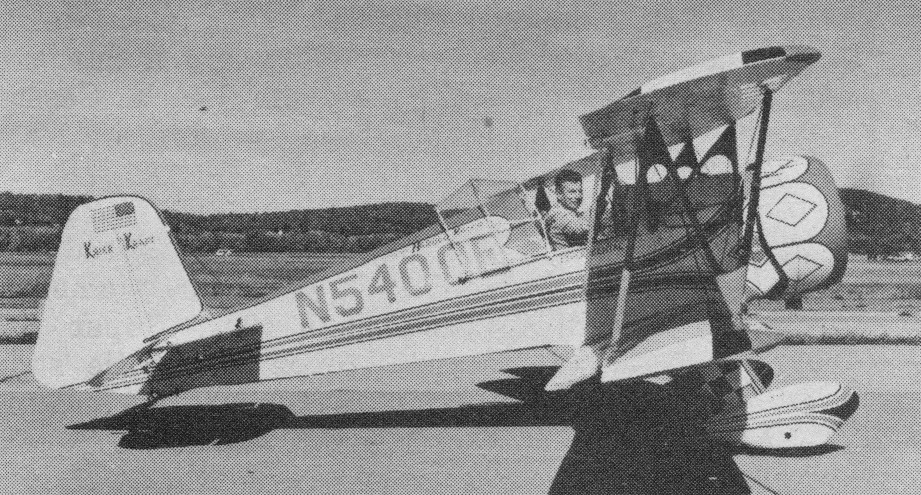
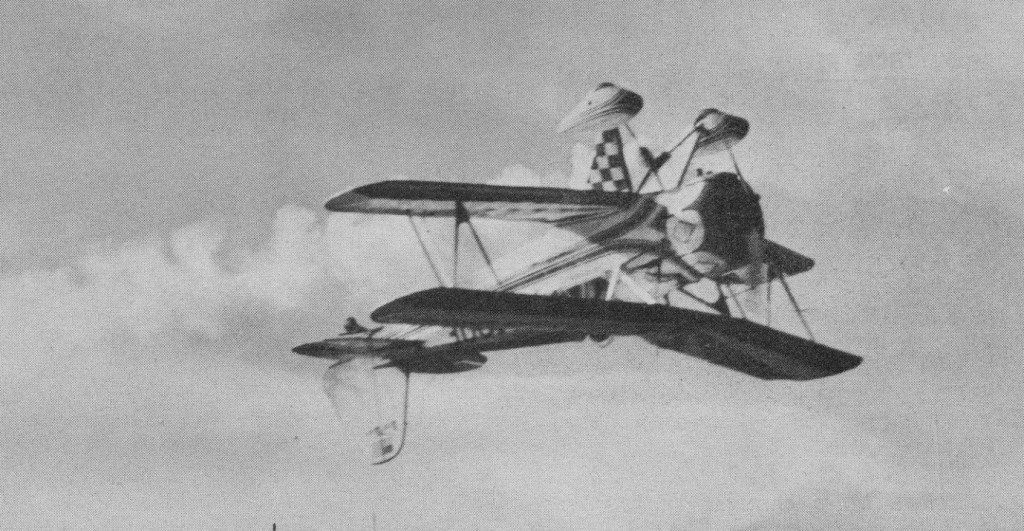
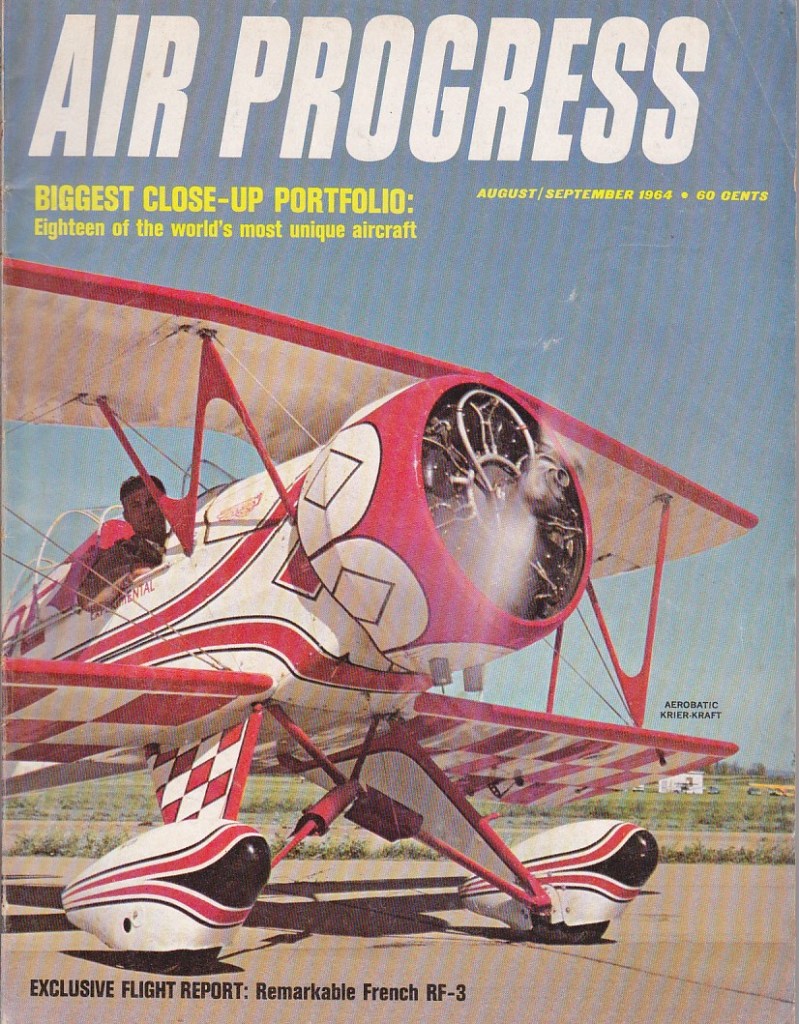
The 1964 Krier-Kraft Acromaster was an original aerobatic biplane built by Harold Krier, Wichita, Kansas, USA.
A performer for National Airshows, the Acromaster has a number of features to Bucker Jungmeister and Great Lakes and fully inverted engine and took nine months to build.
Engine: Warner 185J, 185 hp Prop: Aeromatic 220-085 Wingspan both: 23 ft 8 in Sweepback: 10.5 deg Chord: 43 in Length: 19 ft 8 in Empty weight: 875 lb Aerobatic weight: 1198 lb Cruise: 120-125 mph
In 1928 Kreutzer made the Air Coach six-seat high-wing monoplane with 90 hp nose engine and two 65 hp units outboard. The six seater cruised at 97 mph and had a range of 600 miles.
Designed by Karl Kretzschmar, a Dresden engineer, in 1911, it was to have been fitted with a gas turbine engine that would power the tractor propeller.