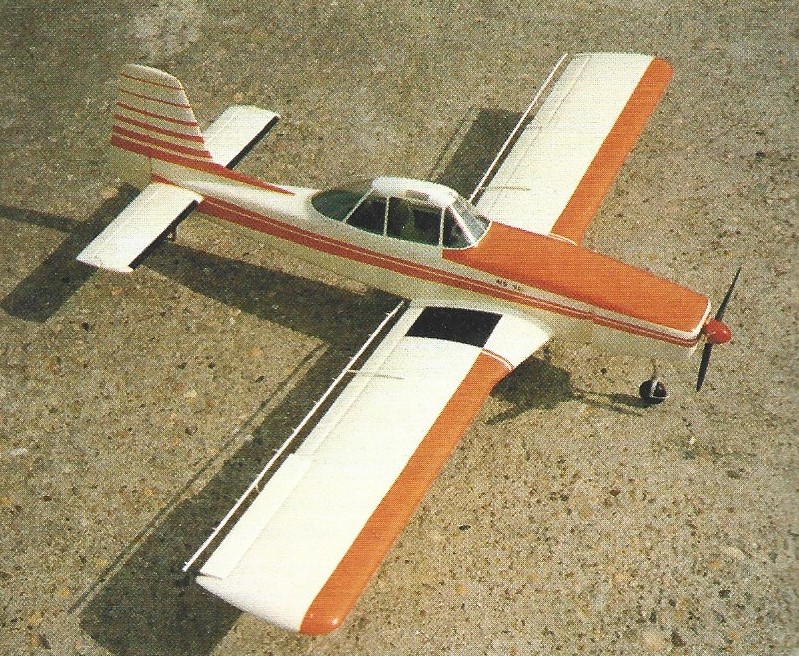
In 1988 Textron was contracted to supply three 400hp IO-720-D1B engines for the N-5. The contract provided for three specially equipped engines to be supplied for the N-5 prototypes, with an option on production engines from late-1990.
Nanchang developed the N-5A agricultural aircraft, first flown on 26 December 1989. The N5A received its CAAC production certificate in the 1990s. By 1995, eight had been built.
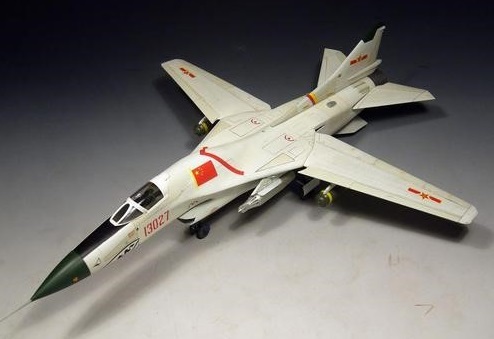
In the mid-’70s, China managed to get their hands onto Egyptian MiG-23BNs and -MSs, and downed American F-111s. Using this captured technology, Nanchang was asked to develop a swing-wing strike aircraft for the PLAAF. Originally, plans centered around a quick domestic copy of the MiG-23BN. However, when PLAAF requirements added air-to-air capabilities, the MiG-23BN would prove inadequate. Plans then shifted to repurposing the F-111 electronics for the new design. Chinese industry proved incapable of producing systems as small as the design called for, forcing a major redesign that made the Q-6 comparable in size to the Su-24. The side intakes of the MiG-23 proved inadequate for dogfighting, so they were relocated to the chin, while the inadequate engine was to be replaced with the domestically-produced WS-6 turbofan. Overall, however, the project quickly proved to be beyond the means of the Chinese aerospace industry. Development dragged on as much of the intended onboard systems proved too difficult to copy. While an advanced fly-by-wire system (first of its kind for China) was developed for the Q-6’s swing wings, it proved to be 12% heavier than the one employed on the MiG-23. The WS-6 proved to be failure as well, and thus, in 1989, with requirements shifting away from swing-wing designs, the Q-6 was finally cancelled.
As Shenyang began developing MiG-19s locally under the J-6 name in 1958, the PLAAF requested the development of the design into a dedicated attack aircraft. Shenyang assigned the same project manager as the one in charge of the J-12 program. The aircraft was designated Qiangjiji-5 (Q-5) which stands for Attack aircraft 5. A long list of changes was made to the MiG-19 design, making the new aircraft virtually unrecognizable. The intakes were moved to the fuselage sides to make space for a radar, while the aircraft was lengthened and area ruled to make space for an internal weapons bay and reduce transonic drag, respectively. The wing root 30mm cannon of the J-6 were replaced with 23mm cannon, but payload was doubled to 2,000kg, and the number of hardpoints was increased from four to six. Meanwhile, larger, less swept wings were added. Although it was designed by Shenyang, further development and production were assigned to Nanchang. The prototype was completed in 1960, but due to the political climate at the time, was cancelled before it took flight in 1961.
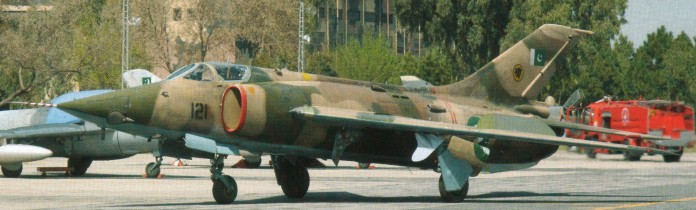
The prototype program was kept alive by small team and resumed officially 1963, when the PLAAF revived the project and moved it to Nanchang. First flight took place on 4 June 1965, featuring an area ruled fuselage for minimum transonic drag, cockpit armour protection, a “solid” nose and a weapon bay (for early test and production aircraft, but omitted from improved production versions). The Q-5 (particularly its wing) is based on the Mikoyan-Gurevich MiG-19, already built in the People’s Republic under the designation Shenyang J-6. Slightly longer than its ancestor, the Q-5 differs considerably in profile by reasons of a ‘solid’ nose and cheek air inlets made necessary by transfer of some avionics from the centre fuselage to make way for an internal weapons bay (now used for additional fuel), although the MiG’s four wing strongpoints and root-mounted cannon are retained for close support work. Over¬all length was increased, and wing span was extended to compensate. An internal weapons bay was incorporated, but this is now used to house additional fuel, increasing internal fuel capacity by 70 per cent. External stores are carried on four underwing and four under-fuselage stations. Powered by the same Soviet-designed, Chinese-built engines as the J-6, this variant has a taller fin and a narrower centre fuselage. A camera mounted on starboard side of the nose is for gunnnery recording only.
Performance was found to be slightly worse than the J-6 at high altitude, but it was just as fast at low altitudes. Further modifications were found necessary, leading to flight test of two much modified prototypes from October 1969. Known in the West as the Nanchang A-5 ‘Fantan-A’ and to the People’s Liberation Army Air Force as the Qiangjiji-5 (Attack Aircraft Type 5), the Q-5 was revealed in limited detail only during 1980.
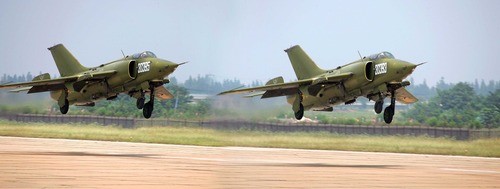
Series production was approved at the end of 1969, with deliveries beginning 1970. A total of approximately 1000 aircraft were built, of which nearly 600 were the improved Q-5IA variant. A small number, perhaps a few dozen, of the Q-5IAs were modified to carry nuclear weapons. The nuclear capable Q-5A first flew on 1st August 1970. The Q-5A added two more hardpoints. On 7th January 1972, a Q-5A dropped a 20 kT nuclear bomb on Lop Nor nuclear test site in northwest China.
A long-range variant emerged, replacing the interal bay with a fuel tank, and the late production Q-5D received advanced HUDs, laser designators, and FLIR. In the late 1980s, there were plans to upgrade the Q-5 fleet with the avionics of the AMX International AMX, but these plans fell through after sanctions over the heavy-handed response to the 1989 Tiananmen Square protests.
Exported from 1983 as the A-5, North Korea was the first export customer for the aircraft, buying 40 Q-5As.
Peak production levels were attained in the early 1970s, and by 1978 production had almost come to an end. Export orders from North Korea, Burma and Pakistan, together with additional local requirements, caused production to be increased in the early 1980s. 40 or more were delivered to Pakistan in 1982-3. Pakistan required an eventual total of some 150 of this type.
1984 production models at Nanchang were the Q-5-III for Chinese use, and the A-5C for export. The A-5C (Q-5III) is the improved version of the Q-5I variant. It was flight tested in late 1980 and certified for production on 20 October 1981 and was exported in 1983 to Bangladesh (20) and Pakistan (52).
In 1988 the A-5M version first flew with a ranging radar, and simultaneously the Q-5K Kong Yun entered testing with a French avionics package.
A small number of aircraft were modified to carry nuclear weapons designated Q-5A. The Q-5B was equipped with a Doppler radar in a reshaped nose and was capable of carrying two torpedoes for maritime strike missions. Q-5I was the first improvement of the Q-5 design. The internal bomb bay was deleted in favour of more internal fuel storage to extend the aircraft’s range. The landing gear was strengthened and two extra hardpoints were fitted. Some of the Q-5I aircraft for the Navy were fitted with Doppler radar making it capable of using the C-801 Anti-Ship Missile.
The Q-5IA is an upgraded Q-5I featuring two extra underwing hardpoints and a new gun/bomb-sighting system. Later RWR was added which resulted in the Q-5II. The Q-5IA was further enhanced and offered for export designated A-5C (Q-5III). The A-5C incorporated many modifications including upgraded avionics and AIM-9 Sidewinder AAM capability.
Upgrade programmes involving Western avionics such as laser rangefinder, INS, and HUD systems from Thomson-CSF started in 1986 with France (Q-5K Kong Yun based on the Q-5II) and Italy (A-5M), but Kong Yun programme terminated in 1990. The all-weather Q-5M (A-5M) incorporated the nav/attack system from the AMX aircraft, and made its first flight on 30 August 1988 and 24 aircraft were ordered by Myanmar. Later that year the A-5M prototype crashed and somewhere in the second half of the 1990s the program was ultimately stopped. Some sources say that Myanmar bought 24 A-5Cs from China instead.
In late 2003, Sudan was reported to have acquired 15-20 A-5Cs from China, believed to be financed by Iran. Reports indicated that Sudanese pilots were trained in China, Iran and locally in Sudan. Pakistan Air Force instructors were said to be involved in the training of Sudanese aircrew, particularly at Dezful-Ardestani Air Base in southern Iran. In January 2007, two Sudanese Air Force A-5Cs (serials 402 and 403) deployed to Nyala Airport, southern Darfur, with at least one more (410) being deployed later. Sudan failed to submit a prior request to the UN for their deployment, as required under UN Security Council resolution 1591.
The two-seat JQ-5J version was developed by Hongdu Aviation Industry Group (HAIG). It was first revealed to the public in the form of a model at the Zhuhai Air Show in December 2004. In addition to the redesigned front fuselage the aircraft features a larger vertical tail. The first prototype JQ-5J made its maiden flight on 25 February 2005.
Q-5 Powerplant: two 3250-kg (7,165-1b) thrust Shenyang Wopen-6 (Tumansky R-913F-811) afterburning turbojets Wing span: 9. 70 m (31 ft 10 in) Length 16.73 m (54 ft 10.5 in) Height 4.51 m (14 ft 9.5 in) Empty weight: 6494 kg (14,317 lb) Maximum take-off weight: 12000 kg (26,455 lb) Maximum speed 11000 m (36,090 ft): 1190 km/h (739 mph) or Mach 1.12 Maximum speed sea level: 1210 km/h (752 mph) Service ceiling 16000 m (52,495 ft) Combat radius lo-lo-lo max load: 400 km (249 miles) Combat radius hi-lo-hi: 600 km (373 miles) Armament: two 23-mm Type 23-2 cannon (with 100 rpg) in wing roots Hard points: four wing and four fuselage pylons carrying (normally) 1000 kg (2,205 lb) or (maximum) 2000 kg (4,409 lb) of ordnance
Q-5A
Q-5 Fantan A Engine: 2 x Wopen WP-6. Installed thrust (dry / reheat): 51 / 64 kN Span: 9.7 m Length: 15.7 m Wing area: 28 sq.m Empty wt: 6500 kg MTOW: 12,000 kg Warload: 2000 kg Max speed: 1.1+ Mach Ceiling: 16,000 m T/O run: 1250 m Ldg run: 1050 m Combat radius lo-lo-lo: 400 km Fuel internal: 3700 lt Air refuel: No Armament: 2 x 23 mm Hard points: 8
Q-5B
Q-5I
Q-5IA
Q-5II
Q-5III / A-5C Powerplant: two 31.87 kN (7,165 lb st) Shenyang Wopen-6 (WP6) afterburning turbojets Length 16.25m (53 ft 4 in) Height 4.52m (14 ft 10 in) Wing span 9.70m (31 ft 10 in) Empty weight: 6494 kg (14,317 lb) Max Take-Off Weight: 12000 kg (26,455 lb) Max level speed at 11.000m (36,000 ft) Mach 1.1 or 1190 km/h (740 mph) Service ceiling 15,850 m (52,000 ft) Armament: two Type 23-2K 23mm cannons with 100 rounds per gun; up to 2000 kg (4,410 lb) of ordnance
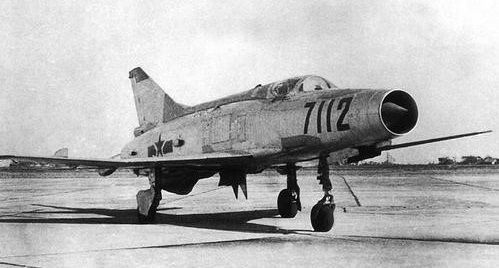
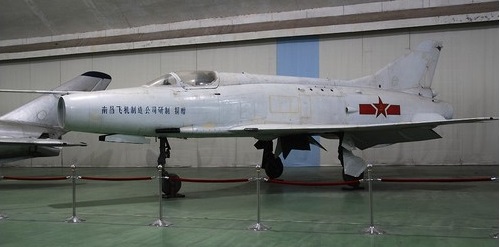
In the mid 1960s, the North Vietnamese had shown the efficacy of the use of “guerilla interceptors” – small aircraft operating from camouflaged airfields to ambush enemy aircraft. While the PLAAF recognized the practicality of such operations and wished to apply them locally, the aircraft currently available for the role – MiG-17s, -19s, and -21s – were less than ideal. Thus, in 1969, Nanchang was issued requirements for a new lightweight fighter with a loaded weight under 4,500kg. Development proceeded and by August, they were performing wind tunnel testing, and by the next year, the design had started prototyping. The resulting J-12 was simple, coming in at 4,530kg. The J-12 was armed with a single 30mm and 23mm cannon in the wing roots, and was powered by a single WP-6Z turbojet. To simplify the design, it used only an optical gunsight, and lacked area ruling. To facilitate rough airfield operations, intake flow could be diverted through auxiliary ports on the fuselage sides.
When the J-12 first flew in December 1970, testing revealed a top speed of 1,300km/h, making the J-12 the lightest supersonic fighter ever to fly. Range was a short 688km, making the design effectively a point-defence interceptor. The only guided munitions that the aircraft could carry were simple IR-guided short range AAMs. In all, nine J-12s were built, with testing continuing until 1977. At this point, the shortcomings of the design were found to greatly outweigh its benefits, and the design was cancelled in favour of further development of the J-7 and J-8.
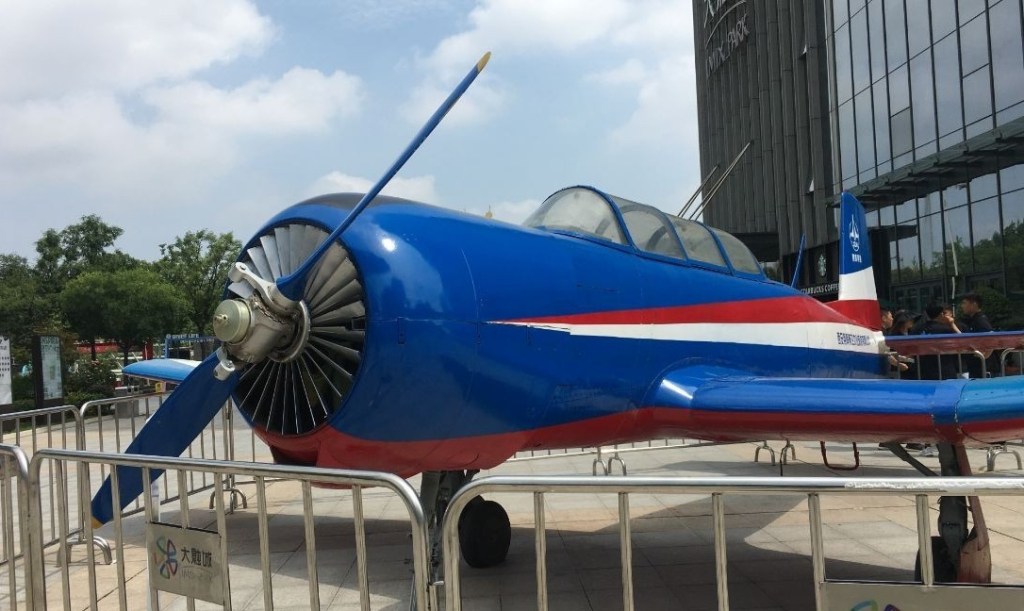
In the early 1950s, the primary trainer aircraft used by the Air Force was the Soviet Yak-18. At that time, the Nanchang Aircraft Factory was able to independently produce the aircraft in accordance with Soviet drawings. The steel frame of the Yak 18 type of steel frame, the structure of the outer cover was relatively backward, and the airborne power supply was insufficient. Designers such as Xu Shunshou believe that it is no longer necessary to introduce the improved Yak 18A, and it is entirely possible to independently develop a primary trainer based on domestic technical strength.
In July 1957, the Chujiao 6 design was begun, and the prototype flew for the first time in August of the following year. On January 5, 1962, Chujiao-6 completed the design finalization. After the successful test flight of the Chujiao 6 in Nanchang, many people in the aviation industry system and the air force still believed in the Soviet aircraft and advocated the production of the Yak 18A. Until a new leader of the Aviation Industry System took office, he decided to continue to improve the elementary trainer 6.
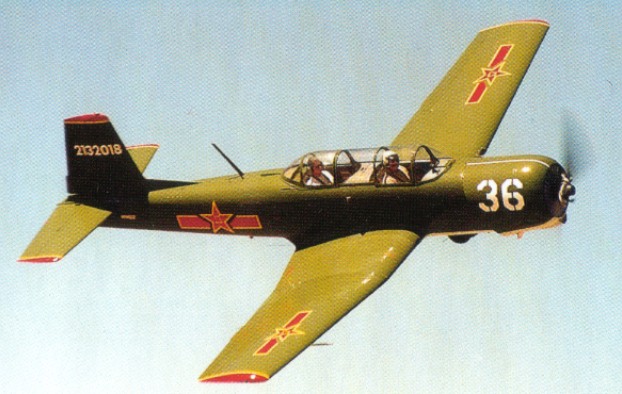
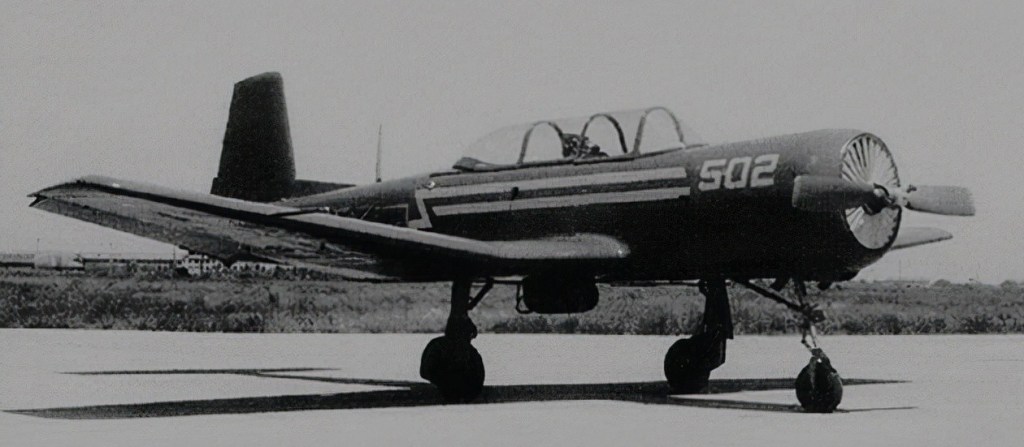
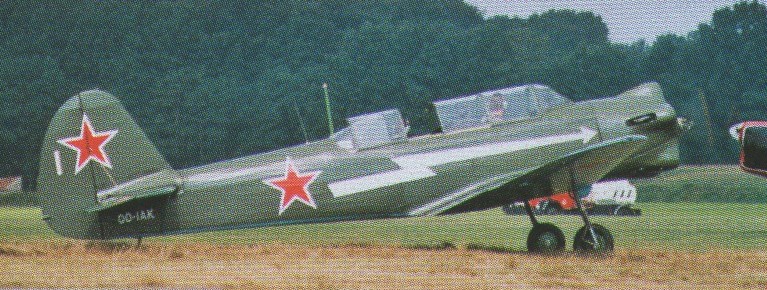
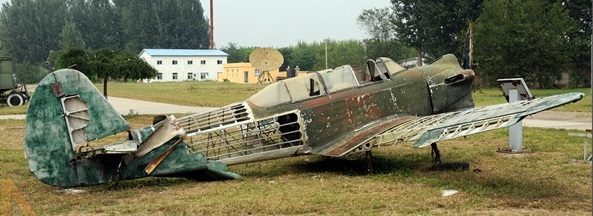
The body of Chujiao 6 adopts an all-metal thin-skinned shell structure, which is similar to the Yak 18 in appearance. The actual fuselage, wings and front three-point landing gear are all new designs.
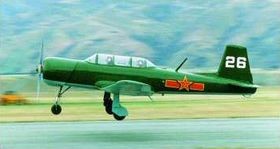
A Chinese derivative of the Yak-18, and development of the CJ-5, the CJ-6 is aerobatic, with a fully retracting undercarriage.
A military primary trainer, approximately 2000 were built for the Peoples Liberation Army Air Force from 1962. It has also served with the air forces of Albania, Bangladesh, Cambodia, Tanzania and Zambia.
The improved CJ-6A still being built in the late 1990s in very low volume for the same radial piston-engined primary training role.
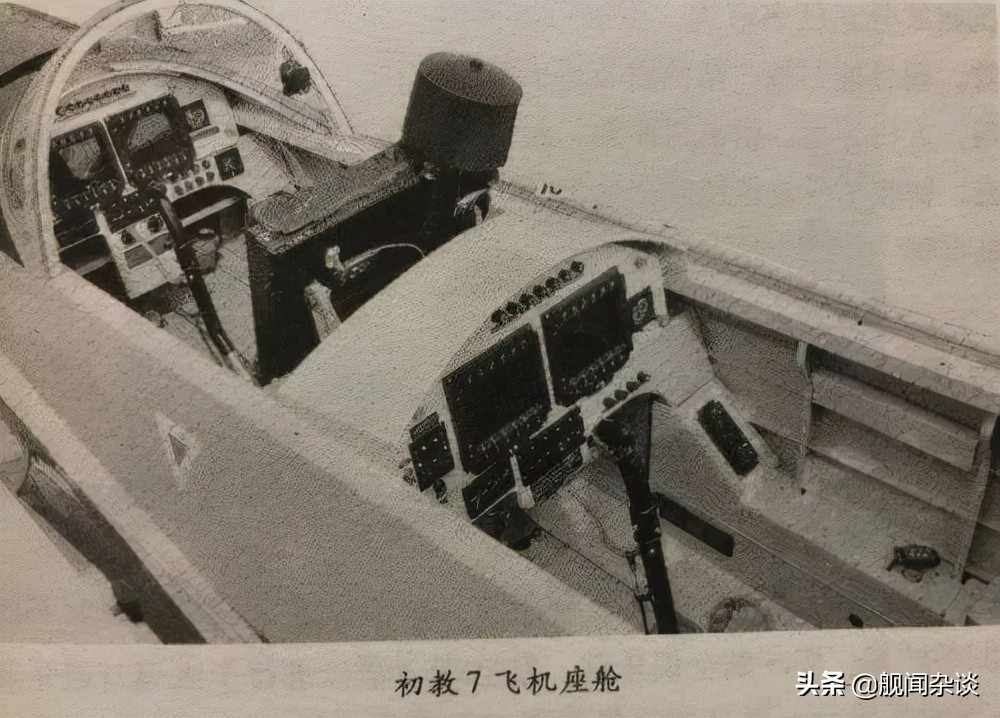
Elementary Education 6 also has many shortcomings: the onboard equipment is backward, there is no ejection rescue system, the cockpit is not sealed, the noise is loud, and the operating environment is not good in cold weather. Therefore, the domestic development of a new generation of primary trainers has been brewing since the 1990s. In August 2007, Chujiao 7 was formally established, and the first flight was successful in 2010, and it was publicly unveiled at the Zhuhai Air Show.
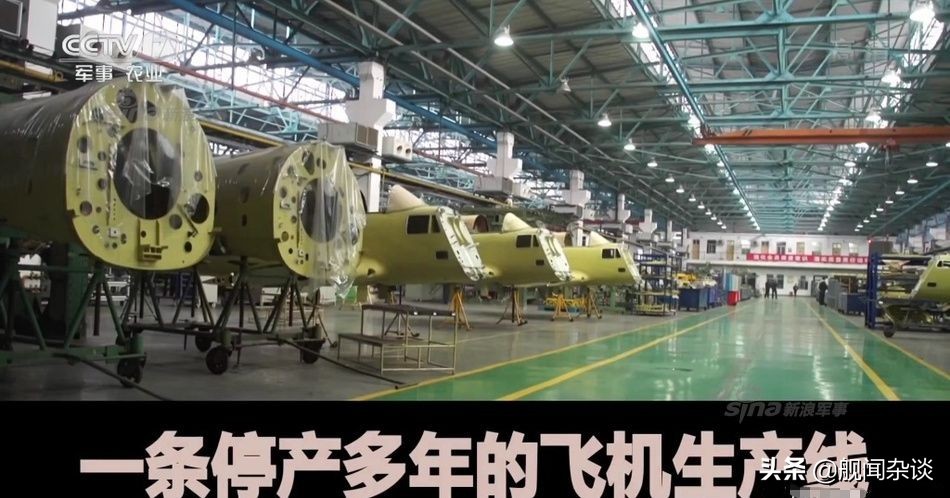
In 2015, Hongdu Company officially began to resume primary education 6. It can be seen in the news that there are a large number of newly manufactured Chujia 6 in the Hongdu Aviation Workshop. The production number of the fuselage shows that the output is at least dozens of aircraft. The Air Force has resumed bulk purchase of Chujia 6, and Chujia 7 is completely yellow.
Design work on the YS-11 began in 1957 when the Japanese Ministry of International Trade and Industry (MJTI) urged six of the country’s leading aviation companies to join forces in the development of what was to become Japan’s first postwar airliner. The ensuing joint design bureau became known as TADA (Transport Aircraft Development Association or Yusoki Sekkei Kekyu Kyokai). What finally came off the drawing boards was a conventional design, tailored for the Japanese domestic market. In 1959 TADA was replaced by NAMC (Nihon Aeroplane Manufacturing Company) to provide manufacturing and marketing capability. Among the participating companies, construction responsibilities were divided as follows: Fuji – tail unit; Japan Aircraft – control surfaces; Kawasaki – wings; Shin Meiwa- aft fuselage; Showa Aircraft – composite structures; and Mitsubishi – forward fuselage and final assembly.
Two prototypes were built by NAMC, each powered by two 3,060 h.p. Rolls-Royce Dart RDa.10/1MkP542 engines, plus two further airframes for static testing. Fifty-four YS-11s were to be built between 1963 and 1966, according to plans, for All-Nippon Airways (25), Japan Air Lines (about 10), the Japanese Defence Agency (10), the Maritime Safety Agency (2 for ASR) and the Meteorological Agency (four for weather observation).
The first flight came on August 30, 1962, when the YS-11 first took to the skies. Japan Domestic Airlines placed the type into service on April 1, 1965. A higher gross weight version, the YS-11A, became available in 1967. Not surprisingly, Japanese airlines were the largest customers, although Piedmont Airlines took delivery of 21 aircraft. Other customers included Hawaiian Airlines, Cruzeiro do Sul, VASP, and Olympic Airways. Throughout its production life, the YS-11 was dependent on state subsidies. In 1971 the Japanese government announced that it would no longer provide financial backing and production ended two years later, with a total of 182 aircraft completed. Although from an economic point of view the YS-11 was a Y38 billion disaster for Japanese taxpayers, the airplane itself proved to be a solid and reliable design. Over the years, many YS-11s were passed on to smaller operators all over the world. Among these were a number of US-based com¬panies, such as Mid Pacific Air, Provincetown-Boston Airline, Reeve Aleutian Airways, Simmons Airlines, Pinehurst Airlines, and Airborne Express.
112 of the YS 11 were in service in 1981, the largest operators being TDA with 42 and ANA with 34. The fleet has totalled more than three million hours.
Engines: two 3,060 h.p. Rolls-Royce Dart RDa.10/1MkP542 Span: 105 ft Length: 86 ft 3 in Height: 30 ft Gross weight: 50,265 lb Empty weight (equipped): 31,970 lb Max cruising speed at 20,000ft: 296 mph Econ cruising speed at 20,000ft: 288 mph Max rate of climb at SL: l,520 ft/min Service ceiling: 27,500 ft TO field length (SR422B): 2,900 ft; Landing field length (SK422B): 3,790 ft Range max fuel/ 5,4001b load, res 230-mile & 45min: 1,485 miles Range with max payload, same res: 380 miles
YS-11A-500 Engines: 2 x RR Dart Length: 26.3m (86.3ft) Wing span: 32m (105ft) MTOW: 25,000kg (55,115kg) Max payload: 5,900kg (13,000lb) Economical cruise: 245kt ROC: 800fpm at l40kt Takeoff dist: 1,200m (3,940ft) Landing dist: 1,000m (3,280ft) Range (max fuel): 1,735nm Range (max load): 600nm
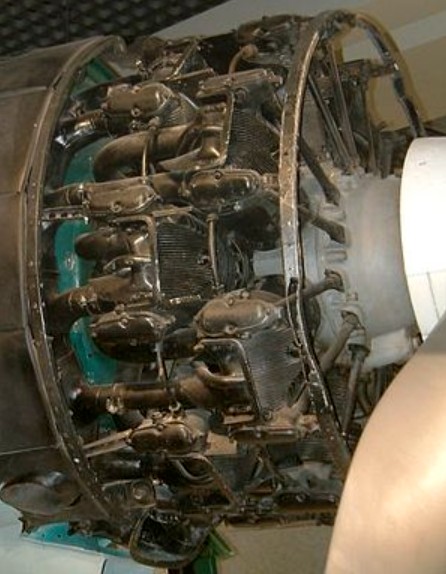
The Nakajima Sakae (栄, Prosperity) was a two-row, 14-cylinder air-cooled radial engine used in a number of combat aircraft of the Imperial Japanese Navy and Imperial Japanese Army before and during World War II.
The engine was designed by Nakajima Aircraft Company after acquiring a license for the French Gnome-Rhone 14K. The Imperial Japanese Army Air Force called the first of the series the Ha-25 (ハ25) and later versions were designated Ha35, Ha105 and Ha115, while the Imperial Japanese Navy Air Service designation was Nakajima NK1, with sub-types identified by Model numbers; thus Nakajima NK1 Sakae 10, 20 and 30 series.
A total of 21,166 were made by Nakajima; 9,067 were manufactured by other firms.
Variants: Army Type 99 975 hp Air-cooled Radial Long Army designation for the Nakajima NK1 radial engine named Sakae.
Nakajima Ha25 Short Army designation for the initial production version of the Nakajima NK1 radial engine named Sakae.
Nakajima Ha35 Nakajima Ha35 Model 11 Nakajima Ha35 Model 12 Nakajima Ha35 Model 23 – 1,150 hp (858 kW)
Nakajima Ha105
Nakajima Ha115 Nakajima Ha115-I Nakajima Ha115-II
Nakajima NK1 NK1C Sakae 12 – 925 hp (690 kW), 940 hp (701 kW), 975 hp (727 kW) NK1D Sakae 11 – 970 hp (723 kW), 985 hp (735 kW) NK1F Sakae 21 – 1,115 hp (831 kW), 1,130 hp (843 kW) NK1E Sakae 31 – 1,130 hp (843 kW), boosted to 1,210 hp (902 kW) with water-methanol injection
The Nakajima Hikari (Japanese: 光 “Light”) was a nine-cylinder, air-cooled, radial aircraft engine developed in Japan for Navy use during World War II by the Nakajima Aircraft Company. It was a development of the Nakajima Kotobuki and Wright Cyclone.
Variants: Hikari 3 – 770 hp (574 kW) Hikari 1 – 820 hp (611 kW)
The “Kotobuki” air-cooled aircraft engine was improved and developed into the “Hikari (light)” engine with the bore and stroke expanded to the limit of the cylinder (160 × 180 mm for a displacement of 32.6 L), with the power was increased to 720 PS. The “Hikari” was used in Type 95 carrier fighters and Type 96 Carrier Attack Plane.
Nakajima knew that engines of higher power would be needed and began work on a new two-row, 14 cylinder design that was based on the 160 × 180 mm cylinder design of the Hikari. The Ha-5 prototype engine was completed in 1933, producing 1,000 PS, combining features of the Bristol Jupiter and Pratt & Whitney R-1340 Wasp designs. The Ha-5 had separate camshafts for the front and rear rows of cylinders like American designs, rather than using a single, front-mounted camshaft and long pushrods to operate both rows of cylinder valves. An improved Ha-5 was developed as a 1,500 PS engine. In all about 5,500 Ha-5 engines were produced for the military.
Later on, as the weights of aircraft rose and higher speeds were required, Nakajima continued to improve the Ha-5 design, creating the “Ha-41” and “Ha 109”, which shared the same 146mm x 160mm bore and stroke as the Ha-5, but were increased from the 950 hp of the Ha-5 to 1,260 hp and 1,440 hp, respectively. The unified code for the Ha-41 was “Ha-34”. Later the engine was developed into an 18 cylinder, twin-row engine called the “Ha-219”, but this never got past the development phase. All these engines used essentially the same cylinder heads, the differences being in supercharging and engine revolutions per minute. The Ha-5 and Ha-41 shared the same weight of 630 kg, while the Ha-109 weighed 720 kg due to its larger, twin-stage supercharger system. The Ha-41 was the primary engine of early variants of the Nakajima Ki-49 “Helen” bomber, and the Nakajima Ki-44 “Tojo” fighter, later versions of both planes using the more powerful Ha-109 engine. Early versions of the Mitsubishi Ki-21 “Sally” used the Ha-5. The Ha-41 would have been an ideal powerplant in aircraft that used the Mitsubishi Kasei, being of smaller dimensions and displacement, yet making equivalent power levels.
About 7,000 civilian and 5,500 military Ha-5’s were built during World War II.
Variants: Ha-5 634 kW (850 hp), Base design, (used on Mitsubishi Ki-21 Army Type 97 Heavy Bomber) Ha-5 KAI 634 kW (850 hp), (used on Mitsubishi Ki-30) Ha-5 660 kW (890 hp) (used on Nakajima Ki-19) Ha-5 KAI 708 kW (950 hp), (used on Mitsubishi Ki-57 and Ki-57-I Army Type 100 Transport Model 1) Ha-5-KAI 708 kW (950 hp) take-off, 805 kW (960 hp) at 3,000 m (11,810 ft), (used on Mitsubishi Ki-30 and on first prototype Nakajima Ki-49 Donryu) Ha-5 KAI 708 kW (950 hp) take-off, 805 kW (1,080 hp) at 3334 m (13,125 ft), (used on Mitsubishi Ki-21-I Army Type 97 Heavy Bomber Model 1 and Ki-21-Ia, Army Type 97 Heavy Bomber Model 1A) Ha-41 1,260 hp@2,500rpm takeoff, 1,260 hp@2,450rpm @ 3,700m Ha-109 1,500 hp@2,650rpm takeoff, 1,440 hp@2,600rpm @ 5,200m
Applications: The Ha-5 engine was used to power: Mitsubishi Ki-21 “Sally” Mitsubishi Ki-30 Mitsubishi Ki-57
The Ha-41 engine was used to power: Nakajima Ki-49-I ‘Donryu’ (“Helen”) Nakajima Ki-44-I ‘Shoki’ (“Tojo”)
The Ha-109 engine was used to power: Nakajima Ki-49-II Nakajima Ki-44-II
Specifications:
Nakajima Ha-5 Type: 14-cylinder, air-cooled, two-row radial piston engine Bore: 146 mm (5.75 in) Stroke: 160 mm (6.3 in) Displacement: 37.5 L (2,288 cu.in) Diameter: 1,260 mm (49.6 in) Dry weight: 625kg (1,378 lb) (720kg Ha-109) Valvetrain: four-valve intake and exhaust pushrod-operated overhead valve system Supercharger: Centrifugal, 280mm impeller at 8.39:1 reduction (Ha-5 and Ha-41), 6.55:1 and 8.55:1 for Ha-109 (twin stage supercharger) Cooling system: Air-cooled Reduction gear: 0.6875:1 (11/16) Power output: 890hp (663.7 kW) at 2,200 rpm at 4700m (15,490 ft) with -50mm boost (Nominal Power) 950hp (708.4 kW) at 2,200 rpm with +50mm boost (Takeoff Power) Specific power: ( to ) 0.58 hp/ cu.in to 1.02 hp/ cu.in Compression ratio: 6.7:1