Parker 1910 Monoplane

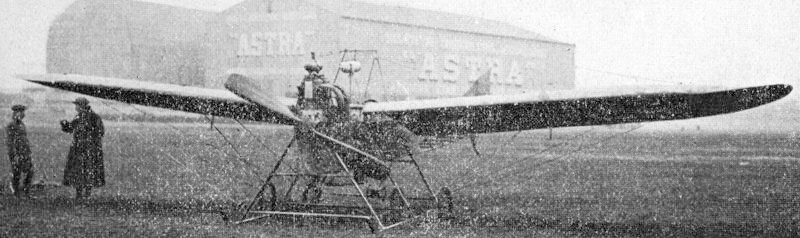
The Spokane (Washington) Spokesman-Review of August 28, 1910 reported Fred Parker’s monoplane’s first flight in Minnesota occurring a day earlier. Fred was 22-years old at the time. The monoplane was built in a workshop in Hamline, a St. Paul suburb, and weighed 130 pounds. It is stated in Popular Mechanics (1909) that Fred Parker had previously made several dirigible flights for Roy Knabenshue and Captain Baldwin.

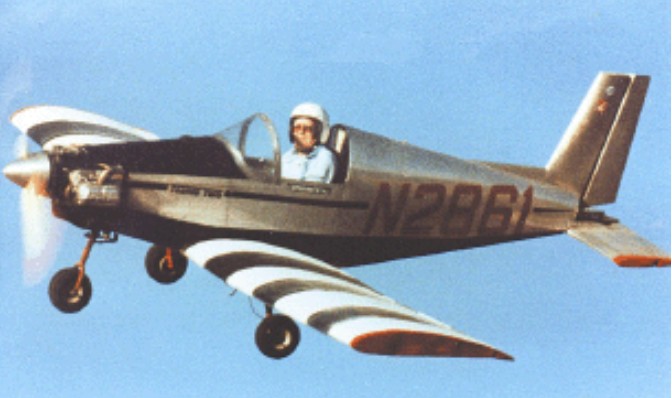
Parker Teenie Two / Double Teenie

An improved version of the Jeanie’s Teenie, the Teenie Two is an all-metal, single-place monoplane built entirely from aluminum except for the landing gear and controls. Building needs no bending brake, nor is any metal or riveting experience required. Most of the sheet metal bending involved in building the Teenie Two is done by hand and the design is close to optimum simplicity. Power is provided by a Volkswagen conversion. Stressed for aerobatics. The wingspan is optionally 19 feet 10 inches w/wingtips.

Cruise at 3/4 throttle is 110 mph, using 2 1/2 Usgph. The top speed level is 120 mph, and up to 140 mph with full canopy & cowl.

Plans and component kits were available.

The Double Teenie was a two place version.

Gallery

Engine 1600-cc Volkswagen
HP range: 60-80
Wingspan 18 ft – 19 ft 10 in
Length 12 ft 11 in
Height: 6 ft
Wing area: 59 sq.ft
Gross Wt. 550-590 lbs
Empty Wt. 310 lbs
Fuel capacity 9 USG
Usefull load: 240 lb utility to 280 lbs. standard category
Top speed 120-140 mph
Cruise 110 mph
Stall 48 mph
Takeoff run 600 ft
Landing roll 800 ft
Range 400 sm
ROC: 800 fpm
Service ceiling: 14,000 ft
Seats: 1
Tricycle gear 350 x 4 tires & wheels

Parker Jeanie’s Teenie

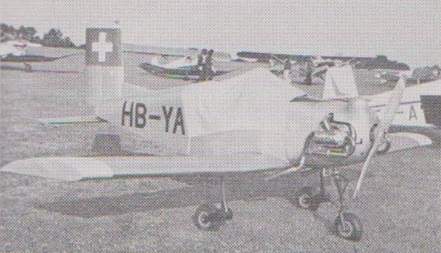
HB-YAO c/n SF.01

In the 1960s Calvin Parker built one prototype Jeanie’s Teenie, single place, open cockpit low wing monoplane.
Several thousand sets of plans were reportedly sold to home-builders.

HB-YAO c/n SF.01 was built by S.Freudiger, appearing at Sywell, UK, in 1974 and 1975. Destroyed at Ecuvillens, Switzerland, in an overshoot on 23 August 1975.

Engine: Volkswagen, 36hp
Wingspan: 18’4″
Length: 12’8″
Useful load: 250 lb
Max speed: 110 mph
Cruise speed: 90 mph

Parker Tin Wind

Built in 1962, the two place cabin, mid-wing monoplane Tin Wind had all components made from flat alumninum stock. Cost for prototype, N348L, was about $500, less motor.

Plans were marketed for home-builders.

Engine: Lycoming O-290G, 125hp
Wing span: 21’0″
Length: 18’0″
Useful load: 600 lb
Max speed: 180 mph
Cruise speed: 160 mph
Stall: 55 mph
Seats: 2

Parisot Tristable

Léon Parisot was a Frenchman who qualified for a French pilot’s license on a Farman in 1910, before moving to Belgium and starting a flying school at the Liège-Ans airfield. He built the “Tristable” in 1913, a rather Farman-like biplane powered by a 50 hp Gnôme rotary. Parisot was killed in a 1913 crash in this machine during a display in Bombaye in northern Belgium, close to the border of Luxemburg, together with two more on the ground and three injured.

Para-Ski Top Gun

The Para-Ski Top Gun is a powered parachute that was designed and produced by Para-Ski of Mascouche, Quebec, Canada.

The Top Gun was designed to comply with the Canadian Basic Ultralight Aeroplane category, as well as the Fédération Aéronautique Internationale microlight category. In kit form the aircraft was designed to comply with the Canadian Amateur-built Aircraft rules as well as the US Experimental – Amateur-built aircraft rules. It features a 521 sq ft (48.4 sq.m) parachute-style wing, two-seats-in-tandem accommodation, four-wheeled landing gear and a single 64 hp (48 kW) Rotax 582 engine in pusher configuration. The 65 hp (48 kW) Hirth 3203, the 80 hp (60 kW) Hirth F-30 or 110 hp (82 kW) Hirth F-30ES engines were factory options. Parachute options included square or elliptical canopies of 400 to 600 sq ft (37 to 56 sq.m). Landing gear options include skis and floats.

The aircraft carriage is built from welded aluminium tubing and has a “sledge-like” cockpit fairing incorporating dual square headlights. In flight steering is accomplished via handle bars that actuate the canopy brakes, creating roll and yaw. On the ground the aircraft has front wheel steering. The aircraft uses a large rudder to offset the engine torque effects. The landing gear incorporates independent shock and spring suspension.

The aircraft has an empty weight of 400 lb (181 kg) and a gross weight of 900 lb (408 kg), giving a useful load of 500 lb (227 kg). With full fuel of 38 litres (8.4 imp gal; 10 US gal) the payload for crew and baggage is 440 lb (200 kg).

The Top Gun was introduced in 2003 and was available as a complete ready-to-fly-aircraft and also as a kit for amateur construction at US$17,050 in 2004. Production ended when the company went out of business in about 2011.

Two variants were produce; the Top Gun base model, and the Top Gun Discovery model including some options as standard.

In July 2015 three examples were registered with the Transport Canada.

Top Gun Discovery
Engine: 1 × Rotax 582, 64 hp (48 kW)
Propellers: 3-bladed Ivo-Prop, 5 ft 8 in (1.73 m) diameter
Wingspan: 30 ft 0 in (9.14 m)
Wing area: 521.0 sq ft (48.40 sq.m)
Aspect ratio: 1.72:1
Empty weight: 400 lb (181 kg)
Gross weight: 900 lb (408 kg)
Fuel capacity: 30 litres (6.6 imp gal; 7.9 US gal)
Maximum speed: 35 mph; 30 kn (56 km/h)
Cruise speed: 30 mph; 26 kn (48 km/h)
Stall speed: 25 mph; 22 kn (40 km/h)
Rate of climb: 790 ft/min (4 m/s)
Wing loading: 1.7 lb/sq ft (8.4 kg/sq.m)
Crew: one
Capacity: one passenger

Para-Ski VX

The Para-Ski VX is a powered parachute that was designed and produced by Para-Ski of Mascouche, Quebec, Canada.

The aircraft was developed from the two-seat XS and, like that model, was designed to be an all-terrain vehicle, capable of operating cross-country on wheels, skis, floats and flying under a canopy. As such it incorporates some design features that are unusual on powered parachutes. It features a custom made Para-Ski parachute-style high-wing, single-seat accommodation, quadracycle landing gear and a single 64 hp (48 kW) Rotax 582 engine in pusher configuration. To allow land and water operations the propeller has a rudder behind it, in the manner of an airboat, for steering via a set of handlebars. For surface operations the parachute is stowed in a specially designed compartment under the rear seat and the handlebars steer the wheels or the float-fitted water rudders. In flight the VX is steered either by the rudders, by foot pedals that actuate the canopy brakes, creating roll and yaw, or by a combination of both.

The aircraft is made from welded aluminum with the axles made from steel. It includes a fairing to provide occupant protection and a shield to keep water and stones out of the propeller during surface operations. The aircraft is capable of taking off from water, provided the wing can be laid out on the shoreline without getting wet. The wing is a high-performance design that allows a fast cruising speed for a powered parachute of 40 mph (64 km/h).

In 1998 the VX design was altered to allow it to also optionally mount a hang glider-style wing, transforming it into an ultralight trike and allowing faster cruising speeds than the parachute wing permits.

The aircraft was supplied as a completed aircraft or as component kits for amateur construction, priced at US$12,700 in 2001. Production is now completed.

VX
Engine: 1 × Rotax 582, 64 hp (48 kW)
Wing area: 555 sq ft (51.6 sq.m)
Empty weight: 340 lb (154 kg)
Gross weight: 690 lb (313 kg)
Fuel capacity: 9 U.S. gallons (34 L; 7.5 imp gal)
Cruise speed: 40 mph (64 km/h; 35 kn)
Rate of climb: 950 ft/min (4.8 m/s)
Wing loading: 1.24 lb/sq ft (6.1 kg/sq.m)
Crew: one
Parasport alti-MAXX

Circa 1998, they came with tuned exhaust, electric start and air cooloing. Harnesses were by Woody Valley.

alti-MAXX fun
Empty weight: 21.8 kg
Engine: Lark 14 hp
Reduction: 1:1.69
Fuel capacity: 5 lt
Price (1998): 5590 DM

alti-MAXX fun II
Empty weight: 22.2 kg
Engine: Lark 14 hp
Reduction: 1:2.69
Prop diameter: 110 cm
Fuel capacity: 5 lt
Price (1998): 5690 DM