Sherwood Ranger

Sherwood Ranger

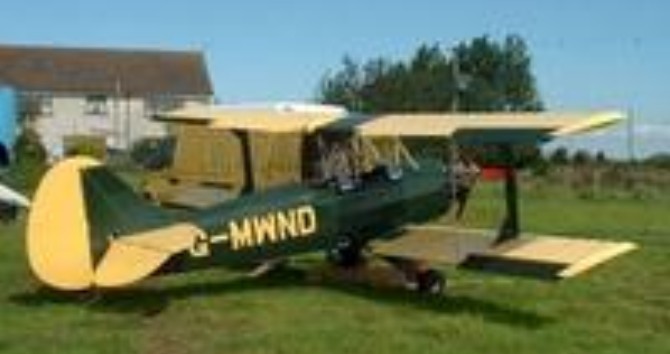
The Sherwood Ranger is a lightweight two seat open cockpit biplane, designed to reduce the cost of owning and operating your own aeroplane to the absolute minimum. One of its major features is that the wings can be folded and the aeroplane loaded onto a trailer in less than three minutes, thus eliminating hangarage costs by allowing the aeroplane to be stored at home. The performance and handling characteristics allow safe operation from unprepared grass fields as short as 250yds.

The Ranger XP was first flown in 1991, and the LW in 1994.

TCD Ltd, UK, markets kits for the Sherwood Ranger ST single- or tandem two-seat biplane.
Engine: Rotax 532, 64 hp
HP range: 50-100
Height: 7.33 ft
Length: 20 ft
Wing span: 23 ft
Wing area: 140 sq.ft
Weight empty: 495 lb
Gross: 1000 lb
Fuel cap: 12 USG
Speed max: 95 mph
Cruise: 85 mph
Range: 210 sm
Stall: 38 mph
ROC: 1600 fpm
Take-off dist: 100 ft
Landing dist: 200 ft
Service ceiling: 14,000 ft
Seats: 1-2
Landing gear: tail wheel

The Little Aeroplane Co Sherwood Ranger
Stall: 56 kt / 65 mph / 105 kmh
Cruise: 78 kt / 90 mph / 145 kmh
MTOW Weight: 450 kg / 992 lbs
Climb Ratio: 1000 ft/min / 5 m/s
Take-off distance (50ft obstacle): 700 ft / 213 m
Landing distance (50ft obstacle): 800 ft / 244 m

Sherwood Ranger LW
Engine: Rotax 532, 64 hp
HP range: 50-100
Height: 7.3 ft
Length: 20 ft
Wing span: 26 ft
Wing area: 168 sq.ft
Empty weight: 400 lb
Gross weight: 860 lb
Fuel capacity: 6-12 USG
Top speed: 85 mph
Cruise: 70 mph
Stall: 38 mph
Range: 140 sm
Rate of climb: 1000 fpm
Takeoff dist: 100 ft
Landing dist: 200 ft
Service ceiling: 14,000 ft
Seats: 2
Landing gear: tailwheel

Sherwood Ranger XP
Engine: Rotax 618, 75 hp
HP range: 65-100
Height: 7.3 ft
Length: 20 ft
Wing span: 23 ft
Wing area: 140 sq.ft
Empty weight: 500 lb
Gross weight: 1000 lb
Fuel capacity: 12 USG
Top speed: 95 mph
Cruise: 85 mph
Stall: 38 mph
Range: 210 sm
Rate of climb: 1300 fpm
Takeoff dist: 100 ft
Landing dist: 200 ft
Service ceiling: 14,000 ft
Seats: 2
Landing gear: tailwheel

TCD Sherwood Ranger
Engine: Rotax 582, 64 hp
Wing span: 7.92 m
Wing area: 15.70 sq.m
MAUW: 390 kg
Empty weight: 200 kg
Max speed: 150 kph
Cruise speed: 115 kph
Minimum speed: 65 kph
Climb rate: 4 m/s
Certification: PFA
Seats: 2
Fuel consumption: 16 lt/hr
Kit price (1998): £10,516

Sherpa K-650T

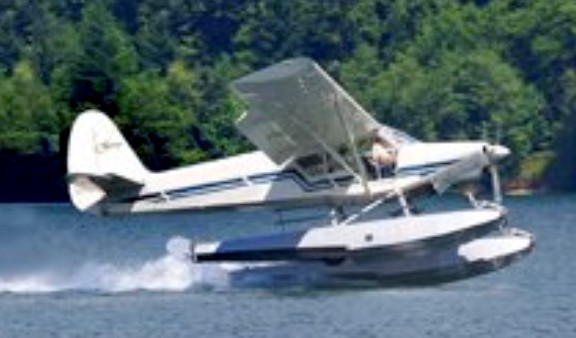
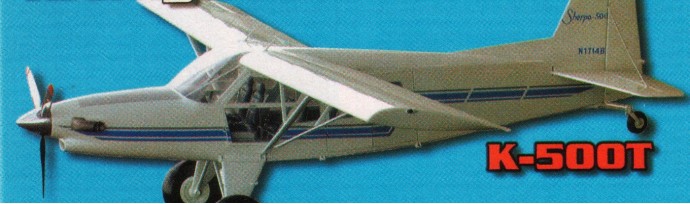
The Sherpa K-650T 8 place is turbine powered and capable of operating on wheels, skis, or floats.

I don’t like it. For me the worst aircraft of all bush planes.
The plane is hard to land correctly and difficult to control.
I regret the purchase.
ry.ma@gmx.net

Engine: Honeywell TPE331-5, 840 hp
Optional engine: Honeywell TPE331-10, 1000 hp
Prop: 116 in 3-blade
Wingspan: 47 ft 4 in
Wing chord: 6 ft 8 in
Aspect ratio: 7.1
Length: 34 ft 1 in
Height: 9 ft 9 in
Empty weight: 3500 lb
MTOW: 6500 lb
Max wing loading: 20.63 lb/sq.ft
Max power loading: 8.66 lb/hp
Fuel capacity: 346 USG
Tailplane span: 18 ft 3 in
Wheel track: 8 ft 10 in
Prop ground clearance 3 pt: 3 ft 1 in
Prop ground clearance level: 1 ft 7 in
Cabin door height: 3 ft 7 in
Cargo door width: 5 ft 1 in
Baggage door height; 1 ft 8 in
Baggage door width: 2 ft 6 in
Cruise 18,000 ft: 188 mph
Econ cruise 18,000 ft: 174 mph
Stall clean: 58 mph
Stall flaps down: 34 mph
ROC SL: 1400 fpm
Service ceiling: 25,000 ft
TO run gross: 336 ft
Landing run gross; 240 ft
Range max cruise (42USG/hr) + res: 1256 sm
Range econ cruise (36USG/hr) + res: 1500 sm
Cabin volume: 220 cu.ft
Baggage volume: 7.5 cu.ft
Useful load: 3000 lb
Wing area: 315 sq.ft
Aileron area – total: 26.4 sq.ft
Spoileron area – total: 4.6 sq.ft
Flap area: 67.9 sq.ft
Fin area: 32.6 sq.ft
Rudder area: 15.7 sq.ft
Horiz. Stab. Area: 77.6 sq.ft
Elevator area: 36.8 sq.ft
Seats: 8
Tires: 29x11x10 (35in opt.)

Sherpa K-300

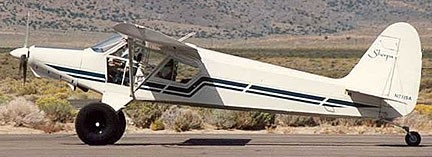
Sherpa N711SA

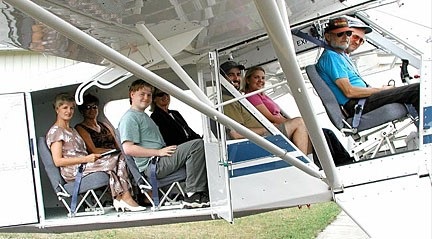
The K-300 can carry up to eight people. They are convertible for freight or passengers, also as two-litter medivac ambulance.

Tires can be up to 42 inch.

Engine: Lycoming O-720, 400 hp
Stall: 41 mph
Seats: 6
Max payload: 2200 lb

Engine: Lycoming TIO-720 twin-turbo, 450hp
Wingspan: 44’10”
Useful load: 2504 lb
Max speed: 166 mph
Stall: 42 mph
Ceiling: 12,000′
Seats: 8

Sherpa K-200

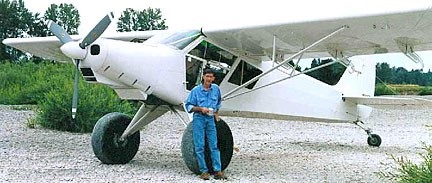
Sherpa 200 N1415B and designer Root (Sherpa) 1995 by Byron Root.

Designed as a STOL bush plane, it was available in kit packages and amphibious twin-pontoon option.

The first protype was N1415B. The Sherpa 200 was designed circa

Engine: Lycoming IO-720, 400hp
Wingspan: 42’7″
Useful load: 1600 lb
Cruise: 139 mph
Stall: 38 mph
Seats: 5-6

Engine: M-14P, 360 hp
Seats: 5-6

Sheppard CS2

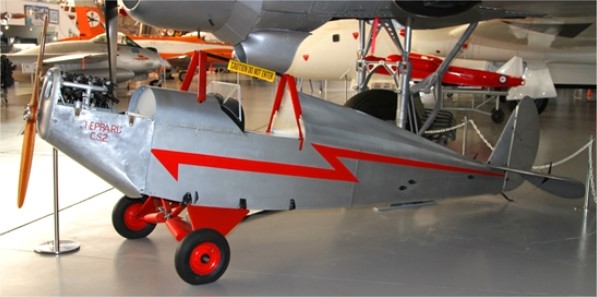
After building the CS1 glider in the early 1930s, Clem Reginald Sheppard of Adelaide, Australia, designed the single seat Sheppard CS2 aircraft in the 1930s. The plans for this aircraft were first drawn in chalk on his parents’ lounge room floor at Kensington Park. The aircraft was later built in the backyard and garage. The fabric to cover the aircraft was sewn by his mother.

By 1938, after Clem had spent all his spare time and money, the aircraft was ready to fly. The CS2 had fold-back wings so it could be towed behind a car to Virginia, where it was flown on a number of occasions by Bill Maddocks. Bill was a Royal Aero Club of SA instructor.

On Clem Sheppard’s death, the aircraft was taken into store by the Royal Aero Club of SA. It went to the South Australia Aviation Museum in November 1987. The wings were to be refitted following restoration.

Gallery

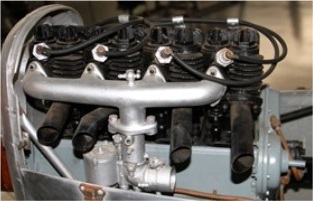
Engine: 4-cylinder Henderson Ace Motorcycle engine rated at 8 hp
Wingspan: 7.62 m
Length: 5 m
Height: 1.68 m
Maximum take-off weight: 174 kg
Capacity: 1 pilot

Shenyang J-31

The second product of the J-XX program to be revealed to the public was the J-31. Revealed to the public in 2012, it clearly incorporates some stealth aspects, especially towards the front of the aircraft.

Testing began in October 2012, and in late 2014, the J-31 was displayed publicly at an airshow for the first time. The prototype mounts two Russian-designed RD-93 turbofans (the same engines as the MiG-29). The mockup shown at that same event seems to show that several changes to the design are in store. While the intended role of the J-31 within China is unclear, it does seem to be slated for export, with Pakistan reportedly planning to purchase up to 40 J-31s.