The 1929 S-1 monoplane was built by Boyd J Shores of Pasadena CA., USA, and first flown about the 30 May 1929.
The registration N717K c/n 5 was cancelled on 14 July 1930.
Engine: LeRhône, 80hp
Wingspan: 32’0″
Length: 25’0″
The 1929 S-1 monoplane was built by Boyd J Shores of Pasadena CA., USA, and first flown about the 30 May 1929.
The registration N717K c/n 5 was cancelled on 14 July 1930.
Engine: LeRhône, 80hp
Wingspan: 32’0″
Length: 25’0″

The Herring-Burgess airplane was sold to Joseph C. Shoemaker sometime in 1910 or early 1911. Shoemaker, along with Fred C. Chanonhouse, modified the Herring-Burgess design by eliminating the fins on the upper wing and removing the forward elevator. The landing gear was also rebuilt.
Shoemaker soloed his modified Herring-Burgess Model A on June 3, 1911, and by August the airplane was capable of executing basic flight manoeuvres, including circles and figure 8s, in addition to achieving distances up to 14.5 km (9 mi), altitudes up to 30 m (100 ft), and flight durations of ten minutes.
After a crash on September 2, 1911, which resulted in slight damage, the airplane does not appear to have been flown again. The Herring-Burgess biplane was donated to the Smithsonian Institution by the Shoemaker estate in February 1961.
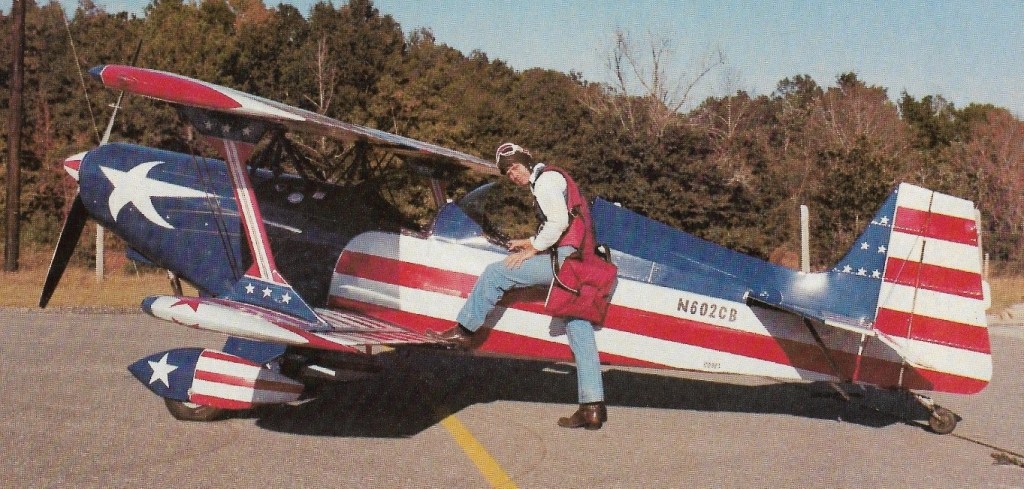
The Shober Willie II is an American two-seat sporting or aerobatic aircraft designed and built by Shober Aircraft Enterprises.
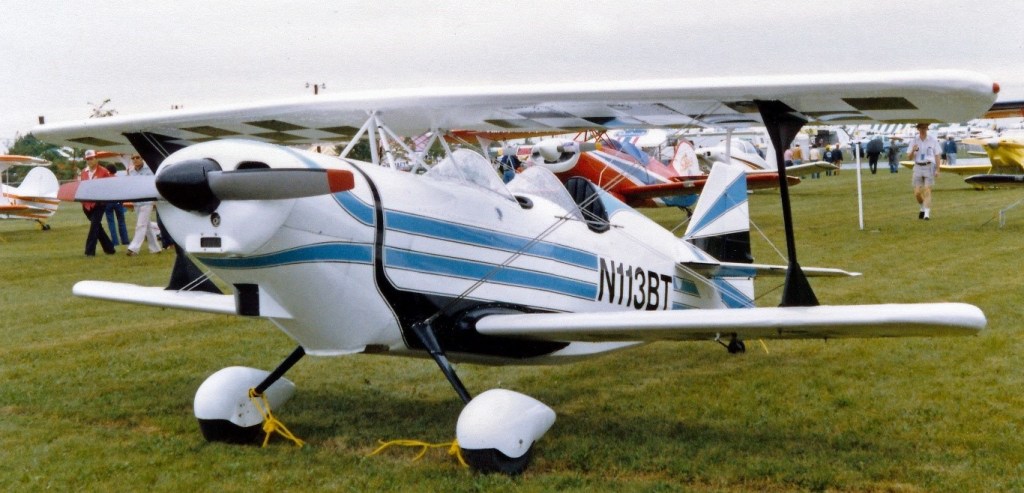
The Willie II is a braced single-bay biplane with a fabric covered welded steel fuselage. The two-spar wooden wings are fabric covered with wide-span ailerons on the lower wing and a fabric covered wired-braced welded steel tail unit. The prototype is powered by a 180 hp (134 kW) Lycoming O-360-A3A engine. It has two open cockpits in tandem and a fixed conventional landing gear with a tailwheel.
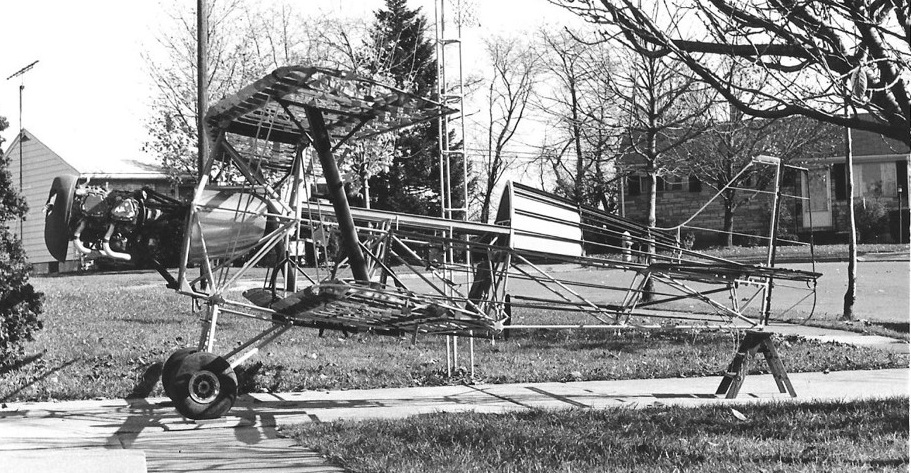
First flying in 1971, the aircraft was designed to be sold as plans for amateur construction.
Suited for engines in the 150 to 200 hp range, at least four further aircraft were completed. Further development was halted in 1976 when the type was withdrawn from the market.
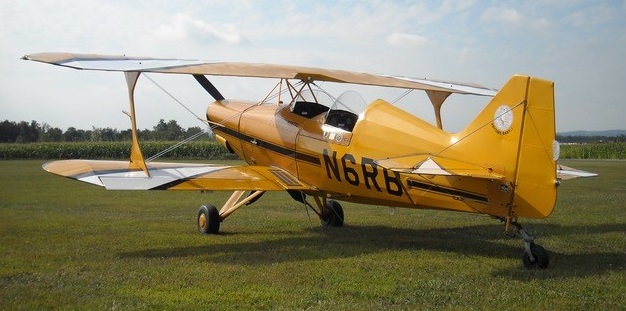
The Willie II has the M-6 airfoil and two ailerons. The Skybolt Biplane with symmetrical airfoils and four ailerons came out shortly after the Willie II, possibly that is why the Willie II plans were withdrawn from the market.
There appears to have been five Willie II biplanes built;
N7919 – the prototype built by William Shober
N113BT
N—- built by Richard Fox in Frederick Maryland.
N602CB
N6RB
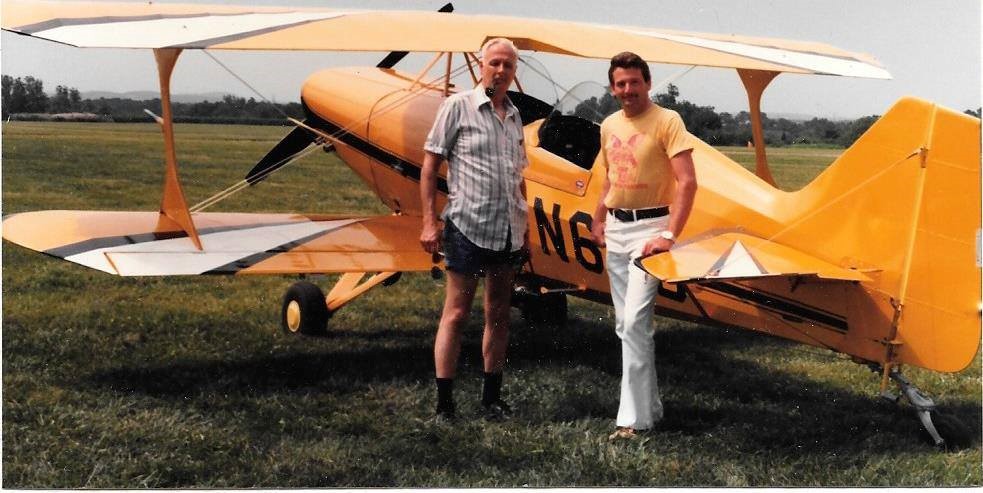
Willie II Prototype N7919
Engine: 1 × Lycoming O-360-A3A, 180 hp (134 kW)
Wingspan: 6.10 m (20 ft 0 in)
Wing area: 13.75 sq.m (148 sq ft)
Length: 5.79 m (19 ft 0 in)
Empty weight: 388 kg (856 lb)
Gross weight: 612 kg (1,350 lb)
Cruise speed: 241 km/h (150 mph, 130 kn)
Stall speed: 96 km/h (60 mph, 52 kn)
Range: 603 km (375 mi, 326 nmi)
Service ceiling: 4,570 m (15,000 ft)
g limits: +9 -9g
Rate of climb: 15 m/s (3,000 ft/min)
Seats: 2
Willie II N602CB
Engine: 1 × Lycoming O-320 150 hp
Wingspan: 6.10 m (20 ft 0 in)
Wing area: 13.75 sq.m (148 sq ft)
Gross weight: 1276 lb
Empty weight: 907 lb
g limits: +6 -5g
The 1909 Shneider I and II were direct copies of Wright A for exhibition work. The were two-place, open biplanes powered by a 30hp 3-cyl Eldbridge with two chain-driven pusher propellers.
The Model I was destroyed in a crash on 12 July 1909. Following the subsequent crash of Model II, Shneider concentrated on building Curtiss pushers.
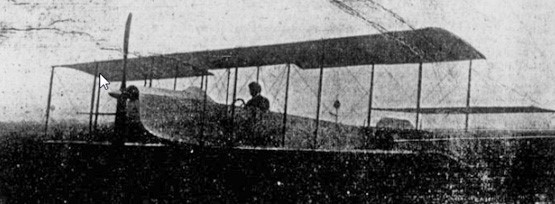
This machine was designed by Fred P Shneider of New York City, who built several Curtiss-inspired types, and piloted by Josef Richter. It was intended for use by the pupils of the Shneider School of Aviation at Hempstead Plains Field, Garden City.
The Big Cootie is a modernized version of the Powell PH Racer biplane for homebuilt construction. The aircraft is a single seat biplane with conventional landing gear, designed for mild aerobatics. The fuselage is welded steel tube construction with aircraft fabric covering. The cowling is fiberglass. The ailerons are controlled with push-pull tubes. The wings use wooden spars with plywood leading edges.
The prototype, N84Z, survived an in-flight impact with powerlines during its initial testing. It was rebuilt at the Piedmont Aerospace Institute at Smith Reynolds Airport in Winston-Salem, North Carolina. A Continental A-80 80 hp (60 kW) engine replaced the Lycoming O-145 65 hp (48 kW) engine installed in the prototype.
The kits included all premolded composite parts. All metal parts and fuselage are welded. The wings and tail are attached like a glider and a removed in 5 minutes.
Shirlen Big Cootie
Engine: 1 × Lycoming O-145, 65 hp (48 kW)
Propeller: 2-bladed
Length: 15 ft 9 in (4.80 m)
Wingspan: 15 ft (4.6 m)
Airfoil: RAF 15
Empty weight: 467 lb (212 kg)
Gross weight: 750 lb (340 kg)
Fuel capacity: 12 U.S. gallons (45 L; 10.0 imp gal)
Maximum speed: 122 kn; 225 km/h (140 mph)
Cruise speed: 104 kn; 193 km/h (120 mph)
Stall speed: 55 kn; 101 km/h (63 mph)
G limits: -4g
Crew: 1
Gross Wt. 750 lb
Empty Wt. 467 lb
Fuel capacity 12 USG
Wingspan 18’9”
Length 14’
Top speed 140 mph
Cruise 120 mph
Stall 63 mph
Takeoff run 500 ft
Landing roll 500 ft
Range 300 sm
Engine: Rotax 912, 80 hp
HP range: 80-120
Height: 6.4 ft
Length: 20.4 ft
Wing span: 29.4 ft
Wing area: 113.8 sq.ft
Empty weight: 550 lb
Gross weight: 1200 lb
Fuel capacity: 18 USG
Top speed: 190 mph
Cruise: 160 mph
Stall: 40 mph
Range: 690 sm
Rate of climb: 1600 fpm
Takeoff dist: 230 ft
Landing dist: 230 ft
Seats: 2
Landing gear: nose or tailwheel
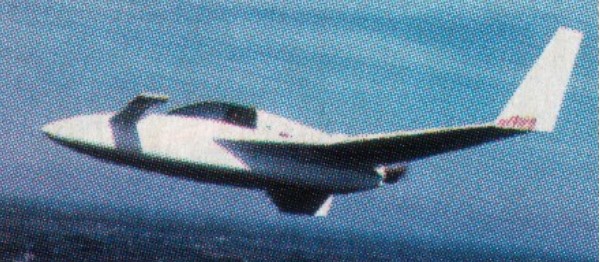
A derivative of the Rutan Long EZ, the E-Racer has retractable undercarriage. There were various options including the Mk.1 (auto engine), Mk.2 (aero engine), and the King Racer (enlarged cockpit).
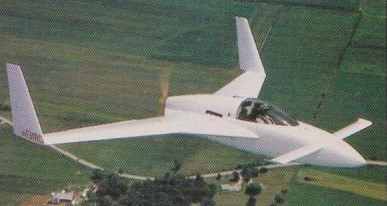
Five were flying by 1998.

Mk.1
Engine: Buick V8, 240 hp
HP range: 160-250
Height: 7.8 ft
Length: 17 ft
Wing span: 26.2 ft
Wing area: 94 sq.ft
Weight empty: 1000 lb
Gross: 1800 lb
Fuel cap: 46 USG
Speed max: 240 mph
Cruise: 220 mph
Range: 1000 sm
ROC: 2500 fpm
Take-off dist: 1200 ft
Landing dist: 1500 ft
Service ceiling: 25,000 ft
Seats: 2
Landing gear: retractable nose wheel
Engine: Lycoming/Buick, 240 hp
Wing span: 7.99 m
Wing area: 8.65 sq.m
MAUW: 816 kg
Empty weight: 454 kg
Fuel capacity: 174 lt
Max speed: 386 kph
Cruise speed: 354 kph
Climb rate: 12.5 m/s
Seats: 2
Plan price (1998): $250
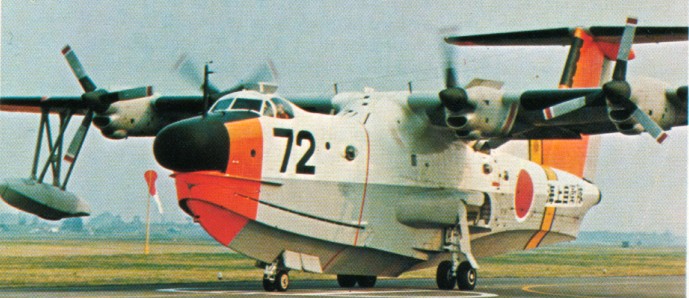
After January 1966, directed attention was put into a new marine aircraft. A Grumman Albatross was rebuilt as a dynamically similar flying model for a projected very large STOL ASW flying-boat for the Japanese Maritime Self Defense Force. The type was developed as the four-turboprop PS-1, but later as the US-1 amphibious search-and-rescue aircraft.
The Shinn Meiwa PS 1, a four turboprop STOL amphibian with an auxiliary engine driving a boundary -layer control pump, has a speed range from 295 knots maximum to a 40 knot stall. PS 1s carry search radar, sonobuoys, MAD and ECM equipment to aid in the search for submarines, and against which they can deploy anti submarine bombs, homing torpedoes, and rockets for surface attack.
Shinn Meiwa PS-1 / US-1 Article
Designed for long-range ASW, the four-turboprop PS-1 flying boat first flew in October 1967, entered service in 1973, and was followed by the US-1 amphibious variant in October 1974.
The first prototype PS-1 was converted later as waterbombing test vehicle.
Production of the PS-¬1 was completed with the 23rd aircraft in 1979. The seventh and subsequent US-1s are fitted with uprated T-64 IHI-10J turboprops and are designated US-lAs. Earlier aircraft are being progressively retrofitted with these engines.
The JMSDF intended to purchase one US-1A SAR amphibian every two years, the next funding was being sought in FY1988.
PS-1
Engines: 4 x T64-IHI-10 turboprop, 3060 shp
Wing span: 108 ft 8.75 in (33.14 m)
Max speed 340 mph (547 km/h)
Crew: 10
Shijiazhuang built light aircraft in the W5A, W5B and W6 Dragonfly range.
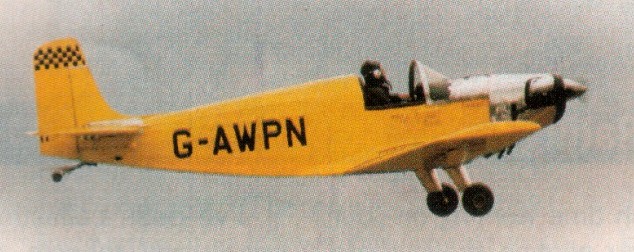
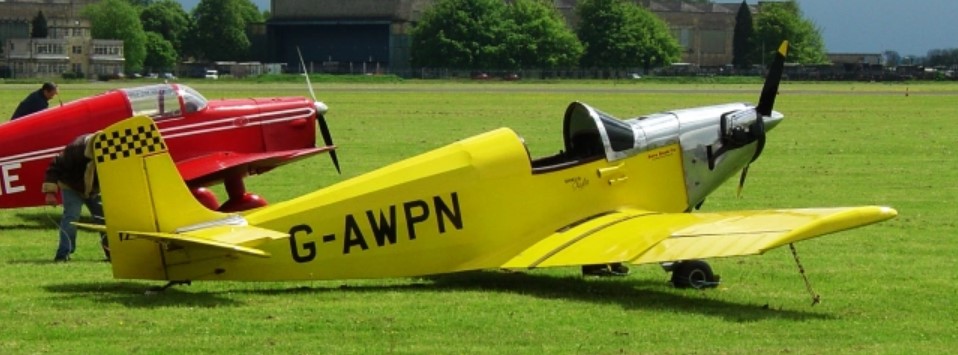
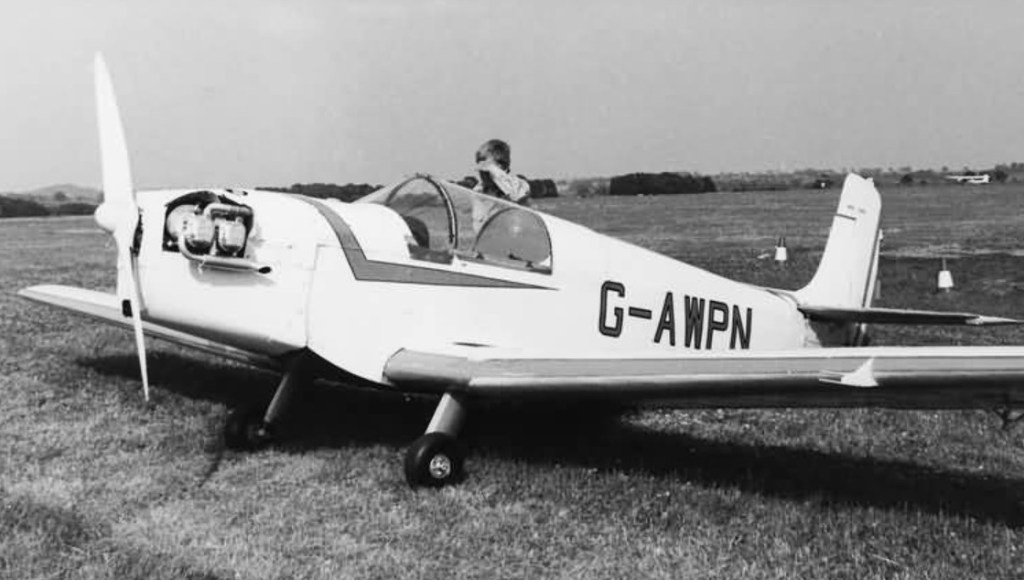
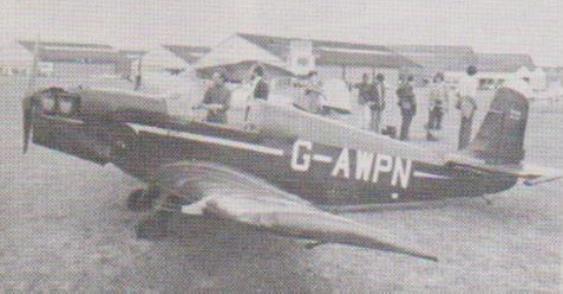
George William Shield of Conisbrough, Yorkshire, UK, was Headmaster of the Grammar School at nearby Mexborough, where this large wooden single-seater was built as a school project. The Xyla (Greek for wood) was registered as G-AWPN c/n 2 PFA.1320 on September 13, 1968 whereafter construction was started.
Wings: Cantilever low-wing monoplane. Wing section NACA 4418 at root with a chord of 6 ft 3 in (1.91 m), NACA 4416 at junction of center section and outer panels (3 ft, 0.91 m from aircraft center line) and NACA 4412 at tip with a chord of 3 ft 9 in (1.14 m). Dihedral 4° 30′ on outer panels. Incidence 3°. All-wood structure of spruce, with birch plywood covering. Wooden Frise-type ailerons. No flaps or tabs.
Fuselage: All-wood structure, of Warren-girder construction; plywood-covered to rear of cockpit.
Tail unit: Cantilever type, of similar construction to wings. Tail plane incidence adjustable on ground. No tabs. Tail plane span 9 ft 0 in (2.74 m).
Landing gear: Non-retractable tail wheel type. Cantilever main legs attached to wing front spar. Steel coil-spring shock-absorption. Spitfire tail wheels, of 1 ft (0.305 m) diameter, are used as main wheels. Tire pressure 30 lb/sq in (2’11 kg/crri’). Wheel track 6 ft 0 in (1.83 m), No brakes.
Power plant: One 92 hp Continental converted PC60 GPU engine, driving initially a Shield two-blade wooden propeller with diameter of 6 ft 0 in (1.83 m) propeller, subsequently a 5 ft 3 in (1.60 m) diameter three-blade wooden propeller, in 1999 refitted with two-blade type. Fuel in two wing tanks, total capacity 13.21 gal (50 l), and one gravity-feed fuselage tank forward of cockpit. Refueling points in fuselage top and each wing. Oil capacity 1 gal (4.5 l).
Accommodation: Single seat in initially open cockpit behind one-piece windshield, later cockpit was covered with canopy.
Equipment: Provision to fit generator and radio.
Powered by a converted GPU (ground power unit) engine the aircraft made its first flight at Helmswell on October 30, 1971.
Early test flights indicated that the aircraft performed satisfactorily at low levels, but that some modification to the areas of the vertical and horizontal tail surfaces might improve overall handling and performance. Hence, to prevent leakage of air, the tail-surface hinge lines were sealed with fabric; the fin was relocated at an angle of 4° to port; and a three-blade wooden propeller replaced the original two-blade one.
Shield sold the aircraft seven years after the first flight and it was seven times reregistered:
October 13, 1978, to Terry Girvon of Roterham, Yorkshire
February 19, 1986, to Alan Price of Aylesbury, Buckinghamshire
January 29, 1991, to Michael Herlihy of Haywards Heath, West Sussex
December 9, 1997, to Kenneth Snell of Uckfield, East Sussex
April 28, 2006, to Paul Stacey of Ventnor, Isle of Wight
September 3, 2009, to Stacey Aviation of Ventnor, Isle of Wight
October 15, 2010, to Peter Gasson of Reading, Berkshire
In 1980 the Xyla was damaged when it ground-looped at Finmere, Buckinghamshire, it was grounded and sold in 1986. The new owner did not manage to repair the aircraft and it was stored at the attic of a paint shop. When Schnell bought the aircraft in 1997, he started a restoration to airworthiness that took 1,500 hours. Finished in a new yellow livery with polished metal cowlings, and fitted again with a two-blade propeller the Xyla participated in the PFA Rally in 1999.
The aircraft is pictured at the PFA Rally at Leicester in an overall white paint scheme which was apparently worn only briefly before its 1980 mishap.
Span: 27 ft 3 in (8.31 m)
Length: 19 ft 3 in (5.87 m)
Height: 5 ft 4 in (1.63 m)
Wing area: 126 sq.ft (11.7 sq.m)
Max weight: 1,000 lb (454 kg)
Max never-exceed speed: 200 mph (322 kmh)
Max cruise speed: 110 mph (177 kmh)
Econ. cruise speed at sea level: 98 mph (157 kmh)
Stall speed: 47 mph (76 kmh)
Climb: 400 ft (122 m)/min
Take off run: 150 ft (46 m)
Seats: 1

