Designed by Floyd Copeland, the 1928 Southern Commercial Aircraft Co Sea Hawk was a four-place, open cockpit, biplane flying boat, powered by a Wright J-5 engine.
Only the one was built, priced at $7,000.
Designed by Floyd Copeland, the 1928 Southern Commercial Aircraft Co Sea Hawk was a four-place, open cockpit, biplane flying boat, powered by a Wright J-5 engine.
Only the one was built, priced at $7,000.
First flown on 14 Feb 1950, the Southern Airmotive Special (possibly N3900) was a single seat open cockpit biplane. It was operated as the aerobatic ‘Roberts Special”, piloted by Charles Roberts.
Only the one was built.
Engine: Continental C-85, 85hp
Wingspan: 20’4″
Length: 16’2″
Max speed: 130 mph
Cruise speed: 118 mph
Stall: 43 mph
Range: 350 mi
One prototype of the Southernaire XC-1 was built in 1947. A two place, high wing, cabin monoplane.
Engine: 130hp Franklin
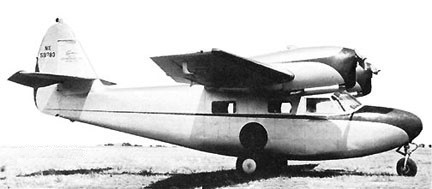
The 1940 Southernaire BM-11 was a six place, high wing, cabin monoplane. One was built, NX59783.
Engines: two 200hp Ranger 6-440
Wingspan: 42’0″
Length: 29’3″
Loaded weight: 1921 lb
Max speed: 175 mph
Cruise speed: 166 mph
Stall speed: 61 mph
Range: 760 miles

The 1940 Southernaire BM-10 was a 2 place, open cockpit biplane. Metal-framed fuselage, metal and fabric covered, wood and fabric wings and tail group. NX17670 was refitted with 225hp Jacobs L-4.
Engine: 220hp Continental R-670
Wingspan: (upper): 34’1″
Wingspan (lower): 33’0″
Length: 25’2″
Loaded wight: 720 lb
Max speed: 123 mph
Cruise speed: 105 mph
Stall speed: 50 mph
Range: 355 miles
Ceiling: 15,000′
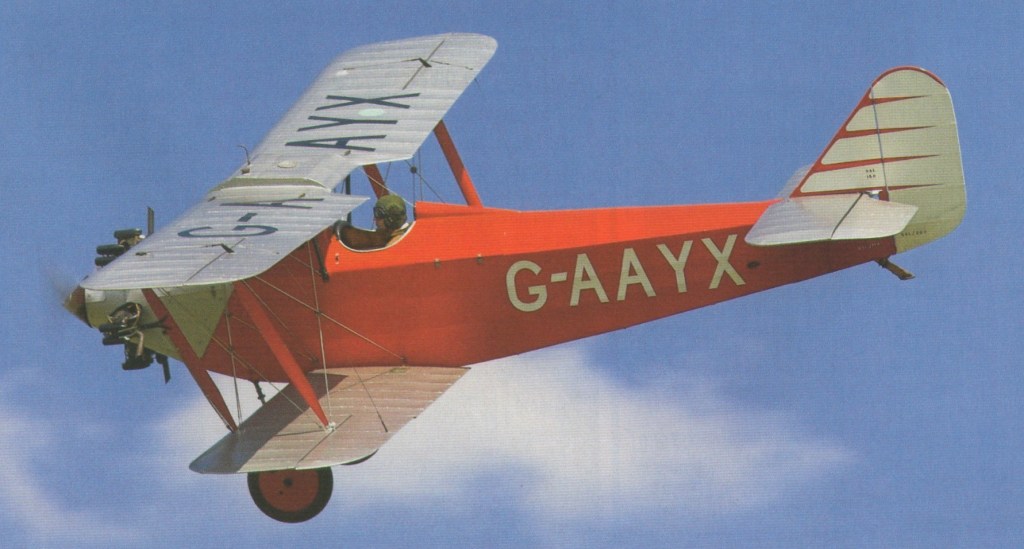
F. G. Miles developed the Avro Baby into Martlet and Metal Martlet light aerobatic and sporting types. Last example flew 1931.
Southern Aircraft Martlet Article
The first Martlet G-AAII was a modified Avro Baby powered by an 85 hp ABC Hornet. Development of the type was by the Miles Brothers, D L Brown and H Hull at Shoreham and it was first flown in August 1929. During the following two years five Martletts were built; G-AAVD, G-AAYX, G-AAYZ and G-ABIF, all with different specifications and various powerplants. It was to have been succeeded by the Metal Martlett in 1931 but this machine was scrapped after a limited amount of flying.
The Scorpion was grounded by the UK Civil Aviation Authority. This followed a series of three in flight structural failures, two on single seaters and one on a two seater, which resulted in three deaths and one serious injury. Subsequent investigation by the Accident Investigation Branch revealed a lack of torsional stiffness in the main structural components, as well as a poor standard of detail engineering. The company went into liquidation shortly after the accidents. By 1982 were no longer trading.
Between 30 and 40 Scorpions were made, in various guises, all using Robin engines of either 330 or 440 cc.

This Formula-V sport racer features a straight-line midwing design. The design was largely based on the Cassutt Special III, but was made suitable to accept VW or VW-based engines. Its designer, Charles Lasher, has chosen steel-tube construction for the fuselage and tail because of its ability to withstand the shock of a crash better than other materials
The wings are a wood-frame structure with fabric covering. The ship is made to handle any Volkswagen from 35 to 65 hp.
The first aircraft was built by M. Ricketts and after eighteen months of construction it was first flown in 1974, registered N73RL (c/n B15). Of conventional construction with all-wood wings and fabric-covered fuselage, the single-seat aircraft was powered by one 55 hp Volkswagen VW1600 motor car engine.
N73RL took second and third places in the Formula V competition at the 1978 and 1979 Cleveland National Air Races respectively, and was used for aerobatic displays.
Plans for amateur construction were marketed via Southern Aero Corporation of Miami Lakes, Florida, after 1983 via Charles Lasher.
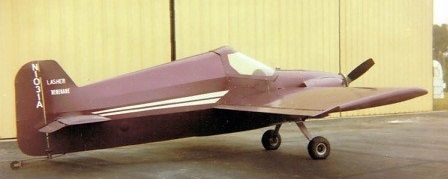
At least four Renegade I aircraft were completed in the USA:
N73RL, N1031A, N35DE, and N64JM (designated Michalak R-1).
Biplane Racer Andrew Buehler has set up an LLC and negotiated to acquire the design and manufacturing rights for the Renegade from Creighton King in 2014. Initial planning was for Ed Fisher of Raceair Designs to help with the development and construction of a new Renegade airframe, to use in the promotion of the design. Several minor improvements, and a new wing design were in the works.
Engine: VW 40-hp
Wingspan 16 ft
Length 14 ft
Gross Wt. 652 lb
Empty Wt. 400 lb
Fuel capacity 7.5 USG
Top speed 130 mph
Cruise 120 mph
Stall 49 mph
Climb rate 1000 fpm
Takeoff run 560 ft
Landing roll 400 ft
Range 375 sm
Span: 17 ft 0 in (5.18 m)
Wing chord, constant: 5 ft 0 in (1.52 m)
Length: 15 ft 0 in (4.57 m)
Height: 4 ft 3 in (1.30 m)
Empty weight: 451 lb (205 kg)
Max takeoff weight: 670 lb (304 kg)
Max speed: over 170 mph (273 kmh)
Max cruise speed: 145 mph (233 kmh)
Landing speed: 50 mph (81 kmh)
Max climb at sea level: 850 ft (259 m)/min
Service ceiling: 12,000 ft (3,660 m)
Range: 225 mls (362 km)
An advanced two-seat man-powered aircraft completed by the Southend Man-Powered Aircraft Group, UK. The pilots were located in the nose, side-by-side, beneath a fully enclosed cockpit. A tractor propellor was mounted above the pilots. The fuselage was circular section, with conventional tail surfaces at the extreme rear. A high mounted wing had considerable taper to the tips. The construction was metal tube with balsa non-load carrying parts. The covering was aluminium foil. Tricycle undercarriage.
The project was abandoned after early tests showed mechanical drive problems.
Wingspan: 90.00 ft
Wing area: 400 sq.ft
Aspect ratio: 20:1
Empty weight: 156 lb
A Puma is a combination of the South¬down Sailwings Lightning DS wing and a Southdown Sailwings approved two seat trike unit. The first such combination used an Ultra Sports trike unit and is known simply as the Puma. Later combinations carry a suffix to show the trike unit manufacturer, viz: Puma MS (Mainair Tri Flyer Two Seater trike unit) and Puma SS (Southdown Sailwings’ own trike unit).
A Puma Sprint is a combination of the Southdown Sailwings Sprint wing and a Southdown Sailwings approved two seat trike unit. The first such combination used Southdown Sailwings’ own trike unit and is known simply as the Puma Sprint. Later combinations carry a suffix to show the trike unit manufacturer. One such combination uses the Mainair Tri Flyer Two Seater trike unit and is called the Puma Sprint Ms.
The Sea Puma is a combination of the modified Southdown Sailwings Lightning DS wing and a modified version of Southdown Sailwings’ own two seater trike unit.
Thus there is no such thing as a single seat Puma.
Puma MS
Puma Sprint MS

