Tallmantz P-1 Phoenix

In 1966 Tallmantz Aviation built the Phoenix specially for the motion picture, “Flight of the Phoenix”. Based on a Fairchild C-82A, with North American AT-6 and other parts, power was a 450hp P&W R-985.

Built for filming in “The Flight of the Phoenix” the aircraft was not sufficiently strong nor the engine powerful enough for an actual landing and take-off on the desert floor. Instead, Paul would simulate takeoff and landing with low approaches and climb outs.

On July 6, Paul made his first attempt to film the scenes. Shortly after take-off from Yuma, he returned with an overheating engine. He tried again the next day, and in the relative cool of daybreak he flew the Phoenix to Buttercup Valley in the desert for the first time. Crouching just behind Paul in a makeshift crew position was stuntman Bobby Rose, with three plywood cut-outs of men attached on top of the wings near the fuselage, to depict ‘passengers’.

On that early morning he flew the requested low approaches in front of three widely-spaced motion picture cameras and returned safely to Yuma before the air got too hot and thin. Only later did the second unit director decide the cameras were set up too close to the scene and requested a repeat the next morning.

Before the sun broke above the horizon, Paul and Bobby again clambered up the ungainly Phoenix and strapped themselves in. They took off shortly after 05:00 for the short flight westward. Paul rolled into the shallow valley, sun rising behind him, descending to just feet above the desert floor, gunning the Pratt & Whitney R-985 and, with exaggerated effect for the cameras to depict the struggling Phoenix reaching for the sky, barely cleared a ridge of sand dunes. The director was pleased with what he knew his cameras had captured but called for an “insurance shot” just to make sure what he needed was in the can.

Paul knew the routine. He was heard over the radio vowing to “give them a good one” and brought the Phoenix around one more time. During the second approach it was obvious the descent rate was far too high and whatever Paul was doing to correct it wasn’t enough. The Phoenix hit the desert hard on its makeshift landing gear, right in front of a camera.

Quickly recovering, Paul struggled to pull the Phoenix back into the air. But the jarring impact had neatly snapped the aircraft just aft of the wing where the wooden fuselage joined the centre section. With the fuselage disintegrating and out of balance, the nose dropped and the propeller dug in to the desert causing the engine to shear off. The resulting wreckage tumbled across the desert floor.

Within the billowing cloud of dust and wreckage, Paul was killed instantly. Mantz might have survived the crash, as the cockpit section was relatively undamaged but, instead of a crash helmet, he was requested to wear a soft hat like actor James Stewart wore in the film. Bobby was thrown clear, miraculously surviving the crash, but with serious injuries.

The movie, of course, remained in production, but key scenes planned for the ending remained unshot. The footage from Buttercup Valley was usable, up until the accident anyway, but it amounted to a minute or less of film.

With no aircraft to film, the film crew packed up and moved back to Hollywood while other plans were considered. As the impending release date approached, Twentieth Century Fox finally came up with a makeshift replacement. A stubby North American O-47 belonging to The Air Museum at Ontario, California, was hurriedly modified to fill in as the Phoenix, at least for distant shots. The landing scenes were awkwardly deleted from the script but the end of the film was essentially as planned, with the survival of the eight men from their desert ordeal.

Tallmantz footage depicting the take-off amounted to about 18 seconds in the completed film, with the replacement O-47 sequence occupying about the same time in later scenes. The completed film, released in December 1965, does the best with what it has, but the loss of the flying Phoenix early in the filming is obvious.

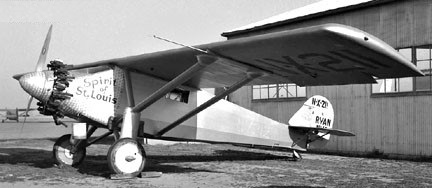
Replacement

Talleres MWT-1

Dr Watter conducting first engine run

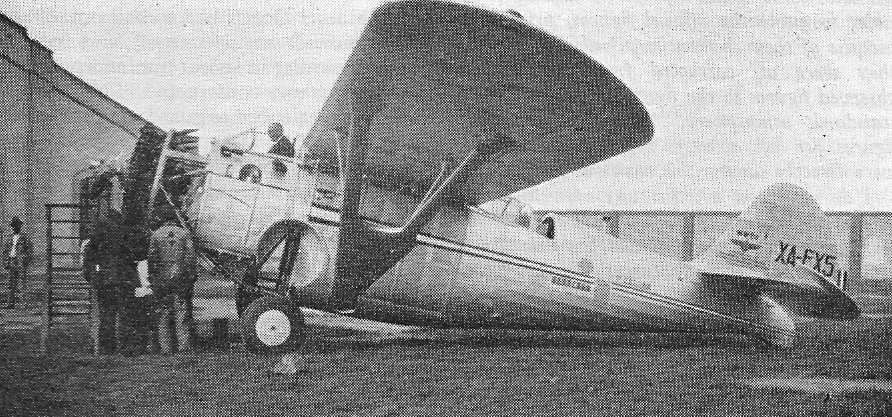
In June 1933 the Mexican Government decided to send one of Mexico’s best pilots, Francisco Sarabia, non-stop from Mexico to Seville, Spain, in a Mexican built aircraft.

Th task was given to Angel Lascurain, Juan Guillerme Villasana, Adrian del Pase, Juan Brelivet and Michael Watters.

The plane was built in the Talleres Nacionales de Constructcienes Aeronauticas. Built in 1934 it was powered by a Pratt & Whitney Wasp of 550 hp and had a retractable undercarriage. The aircraft incorporated the first Watter Cowling.

The registration was XA-EX5, model designation MWT-1, and named ‘Barberan y Collar’ after famous Spanish fliers. The red, white, and green striping was after the colours of the Mexican flag.

Due to a weak landing gear, the plane had a slight accident on 16 June 1934, when it ground-looped during landing and take-off tests at Mexico City Central Airport. Pilot Sarabia and passenger Watter were not injured.

For various political reasons the entire project collapsed and the plane was put in storage. The engine was sold to a high officer in the Mexican Air Force.

Engine: Pratt & Whitney Wasp, 550 hp
Wing span: 16.68 m
Chord: 2.3 m
Incidence: 3 deg
Length: 9.85 m
Height: 2.80 m
Empty weight: 1620 lb
MAUW: 5597 lb
Fuel capacity: 5000 lt / 3380 kg
Oil capacity: 284 lt / 255 kg
Crew: 2
Baggage capacity: 190 kg
Max speed: 270 kph
Cruise: 200 kph
Landing speed: 130 kph
Ceiling: 2000 m
Endurance: 70 hr
Range: 11,600 km

Talleres Tezuitlan

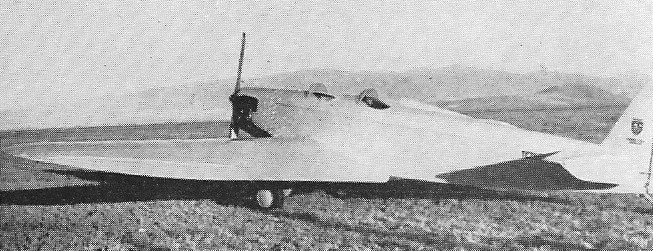
September 1942, a new Mexican primary trainer, the Tezuitlan designed by Antonio Sea and making extensive use of mahogany ply in its construction, commenced flight testing.

Powered by a 125 hp Lycoming engine. The Teziutlan was designed to operate from Mixico’s high-altitude airfields and utilised 95% nationally-produced materials. Construction is all-wood.

Forty five were ordered for the FAM, but, in the event, the considerable infusion of training aircraft from the USA that commenced at this time rendered the Tezuitlan surplus to requirements, only five being completed.

Engine: 125 hp Lycoming
Wingspan: 38 ft 5 in
Length: 23 ft 10.5 in
Height: 6 ft 2.75 in
Empty weight: 986 lb
Loaded weight: 1633 lb
Max speed: 108 mph
Cruise: 102,5 mph
ROC: 1380 fpm
Service ceiling: 22,960 ft

Talleres Azcarate OE-1

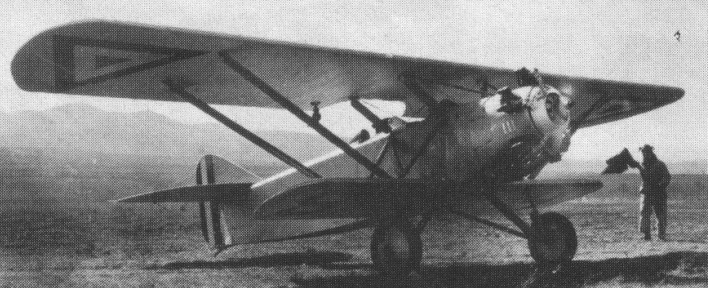
In 1928, the National Aviation Shops produced two sesquiplanes to the designs of Brig Gen Juan F Azcarate, who had assumed command of Mexican Army Aviation, these, the Azearate OE 1 light bomber and recon-naissance aircraft and the Azearate E trainer, both entering limited production at Balbuena, three of the former and 10 of the latter being built in 1929.

Talleres Azcarate E

Azcarate E

In 1928, the National Aviation Shops produced two sesquiplanes to the designs of Brig Gen Juan F Azcarate, who had assumed command of Mexican Army Aviation, these, the Azearate OE 1 light bomber and recon-naissance aircraft and the Azearate E trainer, both entering limited production at Balbuena, three of the former and 10 of the latter being built in 1929.

The Azcarate E is primarily of wooden construction, the cew of two in tandem with full dual controls. A single 0.30in machine gun was mounted in the rear cockpit.

Serveral squadrons were equipped with the type until the mid-1940s, still serving with the Mecican School of Military Aviation.

Engine: Wright J-5, 220 hp
Max speed: 100 mph
Cruise: 82 mph

Talleres Anahuac

The National Aviation Shops, direction of which had been taken over by Angel Lascurain y Osio, continued to produce small series of aeroplanes of indigenous design, among which was the Toloche parasol fighter monoplane powered by a Gnome rotary, the Quetzalcoatl with a BMW engine, the Mexico parasol trainer and the Sonora low wing training monoplane. The Avro 504K Mk II trainer was built in series as the Anahuac. More than 50 Anahuac trainers were manufactured by the Balbuena factory, these remaining the principal equipment of the Military Aviation School until 1930.

Talleres Sonora

The National Aviation Shops, direction of which had been taken over by Angel Lascurain y Osio, continued to produce small series of aeroplanes of indigenous design, among which was the Toloche parasol fighter monoplane powered by a Gnome rotary, the Quetzalcoatl with a BMW engine, the Mexico parasol trainer and the Sonora low wing training monoplane. The Avro 504K Mk II trainer was built in series as the Anahuac. More than 50 Anahuac trainers were manufactured by the Balbuena factory, these remaining the principal equipment of the Military Aviation School until 1930.

Talleres Mexico

The National Aviation Shops, direction of which had been taken over by Angel Lascurain y Osio, continued to produce small series of aeroplanes of indigenous design, among which was the Toloche parasol fighter monoplane powered by a Gnome rotary, the Quetzalcoatl with a BMW engine, the Mexico parasol trainer and the Sonora low wing training monoplane. The Avro 504K Mk II trainer was built in series as the Anahuac. More than 50 Anahuac trainers were manufactured by the Balbuena factory, these remaining the principal equipment of the Military Aviation School until 1930.