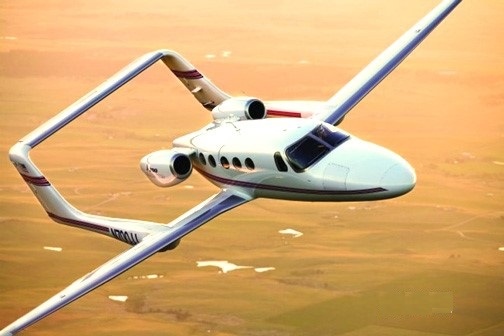
Derived from the A500, the A700 twin-jet (two Williams FJ33, 1700 lb) began testing on 27 July 2003. The Adam 700 flew into AirVenture on a Thursday in 2003 after only a few test flights. The pilot never retracted the gear in flight from Denver to Oshkosh. The airfoil is the NASA LS(1)-0417 from root to tip.
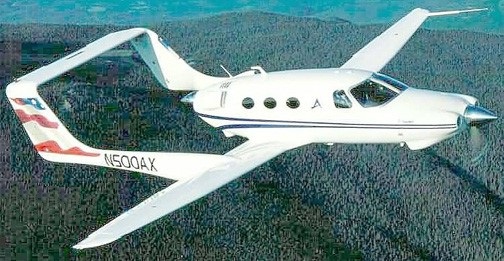
The Model 309 was a Proof-of-Concept aircraft built for Adam Aircraft Industries of Denver, Colorado, by Scaled Composites. To provide a safe twin-engine aircraft, the centerline thrust configuration was chosen and the cabin was designed to carry a pilot and five passengers in pressurized comfort with an unpressurized baggage space in the nose, and the remainder of baggage stowed in the cabin aft of the rear seats. The tricycle landing gear was retractable with the trailing-link mains folding into the booms.
The outboard wings, horizontal tail, elevator, rudders and flaperons had no secondary bonds in their primary structure being produced as single cure parts. This allowed lighter, stronger and safer structure due to the significant elimination of fasteners and secondary bonds.
Conceptual design started in May of 1999, the first tool was cut late in August, and the first flight was on March 21, 2000. The aircraft was unveiled to a small group of guests on April 5, 2000. After a flight test and refinement program, the aircraft was delivered to Adam.
Adam M-309 N309A
The M309 can now be viewed on display at the Wings Over the Rockies Air and Space Museum.
Engines: 2 x Continental TSIO-550-G Wingspan: 42’0″ Length: 34’6″ Useful load: 2300 lb Max speed: 288 mph Cruise speed: 253 mph Ceiling: 25,000 ft Seats: 6
Created by Burt Rutan and first flown on 21 March 2000 (pilot Glenn Maben), the fuselage seats six, in between a tractor and a pusher engine, each of 350 hp.
The airfoil is the NASA LS(1)-0417 from root to tip.
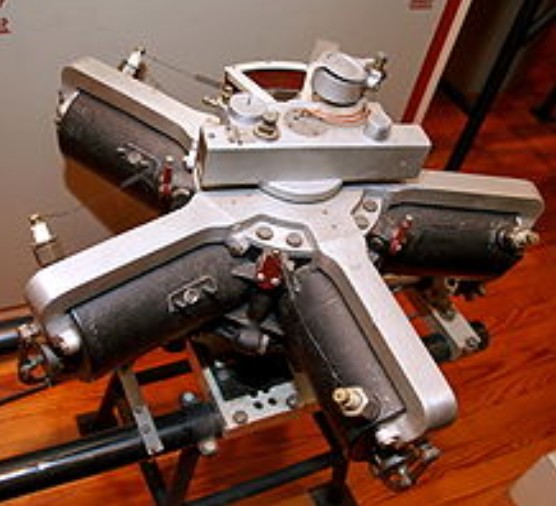
The Adams Company offered light gyrocopter engines which successfully powered experimental flying machines by Emile Berliner in 1909-1910 and J. Newton Williams in 1909. Engine production lasted longer than automobile manufacture although it is not clear when this stopped, too.
Like another builder of rotary engined road vehicles, Stephen Marius Balzer of New York, the Adams Company offered light gyrocopter engines which successfully powered experimental flying machines by Emile Berliner in 1909-1910 and J. Newton Williams in 1909. Engine production lasted longer than automobile manufacture although it is not clear when this stopped, too. The Adams Company then relied on their iron foundry and manufacture of gears, shafts and parts for power transmissions which it does until today.
When F. Oliver Farwell left the company in 1921, he had about 20 patents on his name and tried to build up a business on one he held for a novel transmission for merry-go-rounds. Later, he worked again in a gear-cutting company in Toledo, Ohio.
The RA-17 was a special version for use as ag-plane with spraying equipment under the wings and the chemicals hopper in the fuselage, making it a single-seat aircraft. Only a prototype was built which was modified from the second RA-15/1, and the sole RA-17 made a first flight on June 2, 1949.
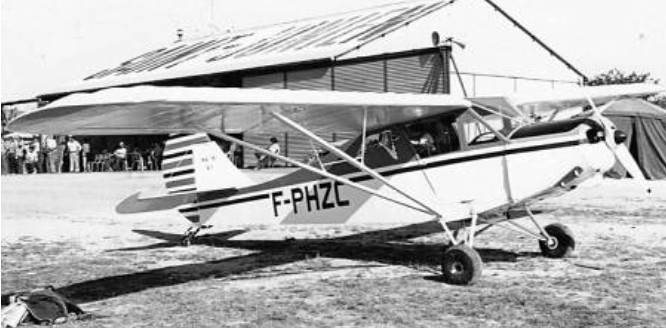
A side-by-side two-seater, the RA-15 Major was externally and dimensionally similar to the RA-14, but had a plywood covered fuselage, a much larger vertical tail and also featured improved systems.
The first example made its maiden flight on April 13, 1947. Engine in the RA-15 was a 75 hp Régnier 4D-2.
RA-15/1
The RA-15/1 Major was similar to the RA-15, but powered by a 65 hp Continental A65 engine.
RA-15 Major Engine: 75 hp Régnier 4D-2 Wingspan: 34 ft 9 in Length: 22 ft 11 in Empty weight: 616 lb Loaded weight: 1145 lb Max speed: 109 mph Ceiling: 16,400 ft
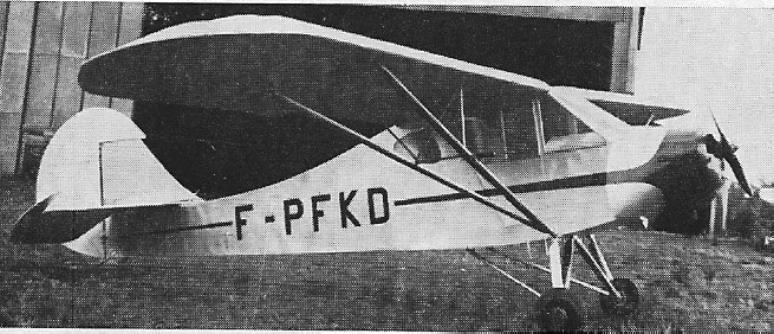
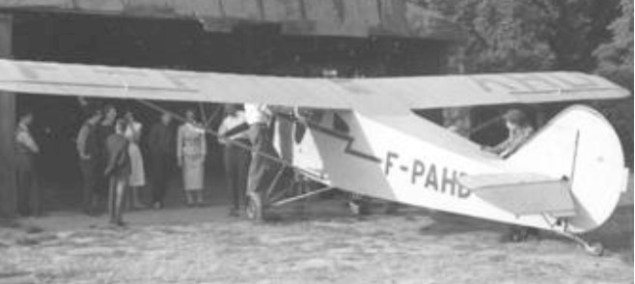
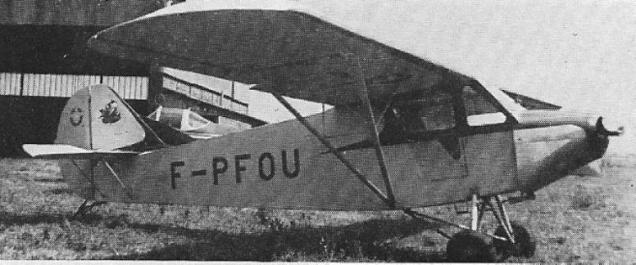
A side-by-side two seater, the RA-14 Loisirs was mainly intended for construction by amateur builders and aero clubs, using Adam-supplied parts and components. The RA-14 was also delivered complete.The RA-14 made the first flight on March 16, 1946 and this aircraft was powered by a 40 hp Train engine. The RA-14 had a fabric covered fuselage and wings and was built in several variants, with engines in the 65-90 hp power range. The type was popular in the immediate post-war years and several dozens were built.
One example of the RA-14S Loisirs was built, featuring a plywood covered fuselage and several other features of the RA-15 model. In 1957 Maranda Aircraft in Canada acquired the marketing rights for the RA-14 and also developed several improved versions. The RA-14 serving as the basis of the AMF S-14. Another homebuilt variant was available from Falconar, also in Canada.
India Founded in 1990 and based at Bangalore, the ADA is a government organization managing the Light Combat Aircraft (LCA) program, to provide the Indian Air Force with the first modern fighter to be designed and produced in India. First flown in 1998, the LCA has brought together many years of scientific and technological research, including test facilities, computer simulation, composite materials, and digital flight control system. Operational trainer and naval carrier-borne versions are also under development. Construction is undertaken by HAL.