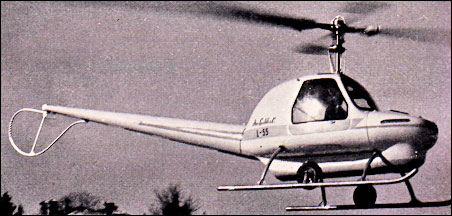
Following on from the L.55, Lualdi developed the L.57 with a larger diameter main rotor, glass-reinforced tail rotor, and operational improvements including provision of an autopilot. Flight testing proved so satisfactory that it forms the basis for the fully-developed L.59.
Aer Lualdi were appointed agents and licencees for Hiller in Italy, and the rotor system pioneered with the ES 53 became a feature of each of their subsequent designs. The first of these was the all-metal L.55, which introduced a fully-streamlined fuselage with stressed-skin tailboom and was powered by a 180hp Lycoming engine mounted in the nose and driving a rotor pylon which was carried in a housing in the centre of the cabin. Experience with the L.55 prototype led to construction of an improved model, designated the L.57.
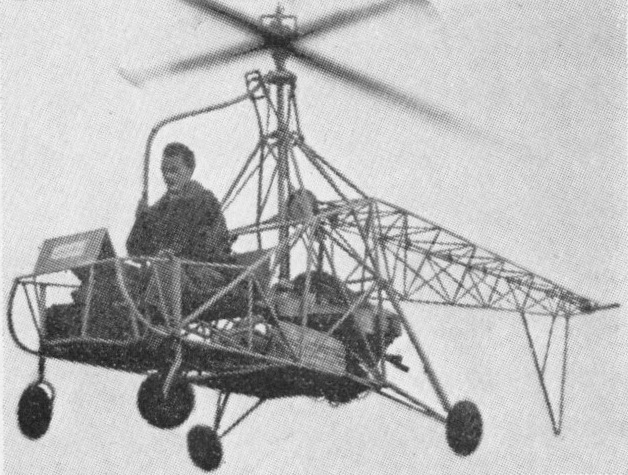
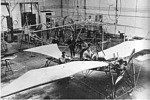
Aer Lualdi flew its first experimental helicopter, designated the ES 53, at Campoformido in September 1953, powered by an 85hp Continental engine. The ES 53 incorporated the “Rotor-Matic” rotor system designed by Hiller Aircraft Corp. supplemented by a Lualdi gyroscopic system which was claimed to ensure smoother flight and easier handling qualities. Subsequently, Lualdi were appointed agents and licencees for Hiller in Italy, and the rotor system pioneered with the ES 53 has been a feature of each of their subsequent designs. The first of these was the L.55.
Engine: Continental, 85 hp Rotors: 2 x 2-blade co-axial Rotor diameter: 24 ft Cruising speed: 75 mph Seats: 1
In 1977 the Italian Air Force (AMI) issued a requirement for a multi-role strike/recce aircraft to replace its Fiat G-91R/Ys and F-104G/Ss.
Mid-1978 Aeronautica Macchi concluded an agreement with Aeritalia for the joint design, development and production of what became the AMX (Aeritalia-Macchi-eXperimental). This agreement provided for assembly lines in both countries and single-sourced sub-assemblies.
Alenia and Aermacchi started development of the AMX and in 1980 Embraer joined the project, the Brazilian Air Force (FAB) also having issued a requirement for a similar aircraft to replace its AT-26 Xavantes. The consortium was based in Rome, Alenia 46.5%, Aermacchi 23.8%, and Embraer 29.7%.
The basic single-seat aircraft is designed for daytime low-level attack and tactical reconnaissance. Work was split 70:30 between Italy and Brazil, and 70:30 between Aeritalia and Aermacchi in Italy. Embraer was responsible for the wings, flaps, intakes, and tailplane, Aermacchi for the forward and rear fuselage sections, and Aeri¬talia for the centre fuselage and fin. Italy built four prototypes and Brazil two. Final-assembly lines were located in both countries.
In May 1984 the AMX made its first flight, and in February 1987 Embraer’s first prototype flew with the purpose-designed reconnaissance pallet, and by May the aircraft was undertaking static test firing of the Brazilian versions twin 30mm DEFA cannon. A second Brazilian prototype joined the test programme in December 1986.
The AMX International AMX has high-mounted monoplane wings, twin intakes and a single engine exhaust under the single tail rudder. Crew accommodations vary with model and can either be a single pilot or pilot and rear-cockpit operator in tandem. Standard armament varies between the Italian and the Brazilian models, with the Italian version receiving a single 20mm General Electric cannon and the Brazilian version being fielded with twin 30mm DEFA cannons. Four underwing hardpoints, a centerline hardpoint and wingtip hardpoints are fitted. Wingtip mounts are reserved for short-range air-to-air missiles.
Final assembly of the first Italian production AMX began on schedule in January 1987 and was delivered to the Italian Air Force in January 1989 and to the Brazilian Air Force in 1990.
The AMX were assembled in both Italy as Brazil. Planed build was for 317 aircraft of both types (238 for Italy and 65 for Brazil). The initial order was later cut to 136 due to budgetary constraints to defences in both countries. Production continued with little in the way of developmental setbacks. Production of the AMX series broke down with Alenia (Aeritalia) handling up to 46.7% whilst Embraer took 29.7% and Aermacchi 23.6%. Final production would be handled in their respective countries.
A single-seat multi-role strike fighter aircraft, designed to fly low-altitude missions at high-subsonic speeds in day or night and in poor visibility, it is capable of operating from damaged or unprepared runways. It has a limited air-to-air capability and integrated ECM for self defense.
AMX-T is the twin-seat variant of the AMX and is used as advanced trainer. The AMX-T retains the operational capabilities of the single-seat version.
The aircraft for the Brazilian Air Force (FAB) are designated A-1 (single-seat) and TA-1 (two-seat), and are equipped with two DEFA 544 30mm cannons, while the Italian variant is fitted with one M61A1 multi-barrel 20 mm canon.
The Brazilian A-1/TA-1 fleet underwent an upgrade, the aircraft designated A-1M in FAB service, The A-1M upgrade is based on the Brazilian AT-29 and the F-5M upgrade program, giving the aircraft many simularities in avionics and capabilities. The new cockpit includes three colored MFDs, HOTAS, new multimode radar (the Italian Grifo F) and the capability to use smart weapons.
The Italian AMX and AMX-Ts went through the ACOL upgrade program. Alenia Aerospace upgraded 43 single-seat and 12 two-seat AMX aircraft as the AMX-ATA extending the operational life to 2015 and giving the AMX improved combat capabilities. It includes a new inertial navigation system/GPS, GPS-guided weapons integration, new colour MFDs, updated communications and IFF, and a new computer symbol generator with digital map functions.
The AMX aircraft under the Italian banner saw extensive service in the war against Serbia in Operation Allied Force, accounting for over 250 sorties all its own. The system was fielded with advanced Israeli Elbit Opher imaging infra-red guided bombs, Mk 82, Mk 83 and Mk 84 conventional bombs and Paveway II laser-guided bombs.
Variants: AMX A-1 TA-1 AMX-T AMX-ATA
AMX International AMX (Ghibli) Engine: 1 x R-R Spey 807 non-afterburning turbofan, 49.1 kN (11,030 lb st) Length: 44.521 ft / 13.57 m Height: 15.026 ft / 4.58 m Wingspan: 29.101 ft / 8.87 m Wing area: 226.044 sqft / 21.0 sqm Max take off weight: 28665.0 lb / 13000.0 kg Weight empty: 14773.5 lb / 6700.0 kg Wing load: 126.9 lb/sq.ft / 619.0 kg/sq.m Max. speed: 493 kts / 913 km/h Initial ROC: 10236.22 ft/min / 52.0 m/s Service Ceiling: 13,000 m / 42,650 ft Maximum Range int. fuel: 345miles (556km) Max range: 1801 nm / 3336 km T/O run: 950 m Ldg run: 1525 m. Crew: 1 / 2 Hard points: 5 + 2 wing tips. Armament: 1 x 20mm General Electric GE M61A1 Vulcan cannon (Italian AMX) with 350 rounds 2 x 30mm DEFA cannons (Brazilian AMX) Bombload: 3800 kg (8,377 lb)
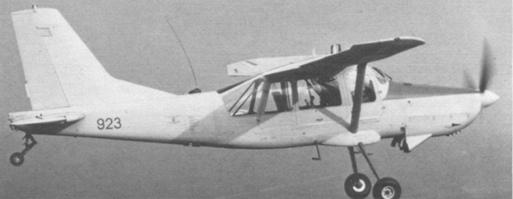
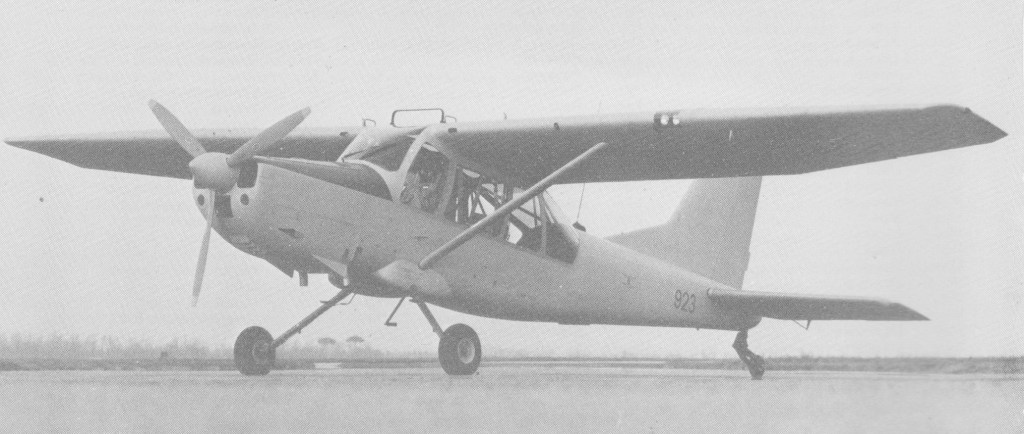
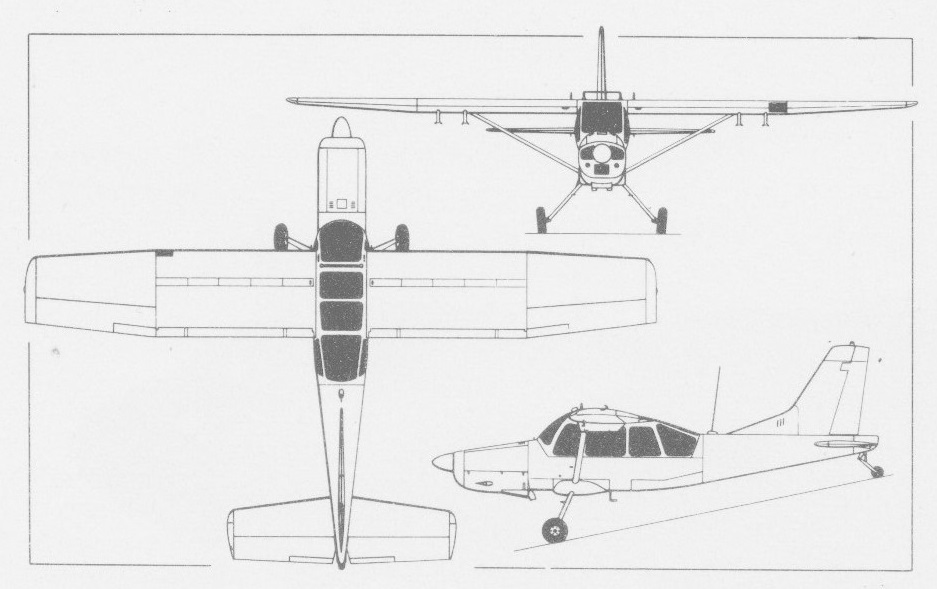
This dedicated battlefield surveillance and forward air control aircraft was developed in the late 1960s as a joint venture by Aerfer (later Aeritalia) and Aermacchi. Developed with a new, narrower, low drag fuselage and the wings of the Lockheed AL.60, for which Aermacchi held a produc¬tion licence, the AM.3 featured a new fin. Two prototypes were built (I-AEAN and I-RAIC), designated MB-335As and the first (assembled by Aermacchi) flew on 12 May 1967, the Aerfer assembled second prototype flying on 12 August 1968. Evaluated by the Italian army, but no orders were received. An improved AM.3 was developed. The prototype (I-TAAA) powered by a Continental GTSIO-520-C of 340 hp but later fitted with a 340 hp Piaggio built Lycoming GSO-480-Bl B6 piston engine and seating two in tandem. This production standard was designated AM.3C and first flew in May 1967.
One of the AM.3 prototypes was briefly evaluated by the USAF, Army and USM, as part of their Pave-COIN requirement. The AM.3C featured lengthened outer wing panels (by 3 ft 2.5 in / 0.98m) raising the wing area by 14.21 sq.ft / 1.32 sq.m. The AM-3 wing is NACA 23016 at the root and NACA 4412 at the tip. The nose was lengthened and refined aerodynamically, fairing incorporated under the fuselage for attachment points for the wing struts and main undercarriage legs. The plexiglass windows were bulged for increased visibility. A third seat in the rear was removable to accommodate a stretcher or freight. Provision of a single NATO M-4A stores attachment rack under each wing assisted contracts being obtained from the South African Air Force for a total of 40 AM.3Cs, which were given the name Bosbok, and three for Rawanda. The South African aircraft were delivered between May 1972 and December 1974. Defence cuts forced their retirement by September 1992. Two were preserved and the remainder sold to civilian operators.
AM3C
AM.3C Engine: Lycoming GSO-480-B1B6, 340 hp Wing span: 41 ft 8 in (12.7m). Length: 28 ft 7.75in / 8.73m Height: 8 ft 11 in / 2.72m Wing area: 219.2 sq.ft / 20.26 sq.m Empty wt: 2381 lb / 1080 kg MTOW: 3748 lb / 1700 kg Max external bomb load: 750 lb / 340 kg Max speed: 173 mph / 278 khp @8000ft Max speed SL: 162 mph / 260 kph / 141 kt Cruise 75%:153 mph / 246 kph @ 8000 ft Stall: 48 mph / 77 kph Max ROC: 1378 fpm / 420 m/min Climb to 9850 ft: 7 min 30 sec Service ceiling: 27,560 ft / 8400m TO run: 279 ft / 85 m Range with res: 615 sm / 990 km Hard points: 2 Seats: 3. Cabin length: 8 ft 2 in / 2.50m Cabin max width: 2 ft 8 in / 0.81m Cabin max height: 5 ft 3 in / 1.60m
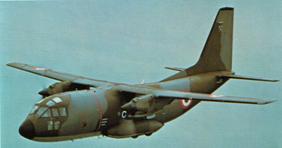
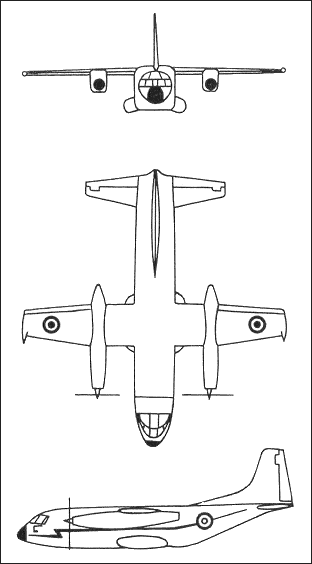
The project began with Fiat’s submission in the NATO NBMR 4 design competition for a tactical V/STOL (vertical/short takeoff and landing) transport with jet lift engines. One of more than 12 entries, it was the only project to be pursued to the hardware stage, though the V/STOL feature was abandoned. Originally the powerplants were all Rolls Royce, the main engines being two Dart turboprops. Four lift jets were to be installed in the rear of each turboprop nacelle. The design changed, lift jets were removed, and new models appeared for including ASW (antisubmarine warfare), military and civil cargo transport, which had outer wings of greater span. In 1966 the design changed to two General Electric T64 main engines and later the 3400 shp T64 P4D single shaft engine with Hamilton propeller, and put into licence production by the Fiat engine company. The original contract was awarded by the Italian air force in 1963 to what was then Societa per Aviazioni Fiat. Initially two prototype G222s were built, the first flying at Turin on July 18, 1970. A production programme was agreed in which Fiat make fuselages at Pomiglio d’Arco, Naples. Wing centre sections are made by Piaggio and outer panels by Aermacchi; tails by SIAI Marchetti; landing gear by CIRSEA; and various other airframe sections by SACA. The Italian air force ordered 44 G222 transports, and Aeritalia marketed the aircraft, achieving limited success with orders for three from Argentina and one from Dubai. A prototype ECM version, the 222VS, equipped with extensive electronic installations and with accommodation for 10 systems operators, was also produced in 1978. The G.222 entered service in 1976 as a tactical airlifter, certified for operation with a crew of two and can take-off and land on grass strips. Its volumetric capacity allows loads of up to 20,000 lbs, 53 fully equipped soldiers, parachute 42 paratroopers, or to air drop heavy loads up to 11,000 lbs. The plane has a hold accessed by a rear ramp/door for the straight-in loading of bulky items. Production was completed in 1989 with the 90th plane. The type’s major operator was the Italian air force, though smaller quantities were exported to several countries, of which the single largest operator is Libya with a special version produced to avoid export restrictions on American engines and equipment. Principal versions: G222 (basic tactical transport), G222RM (navaid calibration model), G222SAA (firefighting model), G222T (version for Libya with European avionics and engines for improved hot-and-high performance), G222V5 (electronic warfare model). The transport version had some export success, customers including Argentina (3), Dubai (1), Libya (20), Nigeria (4), Somalia (4), the USA (10) and Venezuela (8). Some G.222s were converted to the radio/radar calibration role and for fire-fighting duties.
G.222 Engine: 2 x 3,400-shp (2,535-kW) Fiat-built General Electric T64-GE-P4D turboprops. Installed pwr: 5070 kW. Span: 28.7 m. Length: 22.7 m. Height: 32 ft 2 in (9.80 m). Wing area: 82 sq.m/ 882.67 sq ft. Empty wt: 14,590 kg. MTOW: 28,000 kg. Payload: 9000 kg. Cruise speed: 440 kph. Initial ROC: 520 m / min. Max speed: 336 mph /540 kph / 292kt @ 15,010 ft (4,575 m) Service Ceiling: 25,000ft / 7,620m T/O run: 660 m. Ldg run: 545 m. Fuel internal: 12,000 lt. Range/payload: 1371 km with 9000 kg Range/payload: 851 miles (1,370km) with maximum payload. Capacity: 53 pax. Crew: 3.
G222T Engines: 2 x 4,860-shp/3,624-kW Rolls-Royce Tyne Mk 801 turboprops
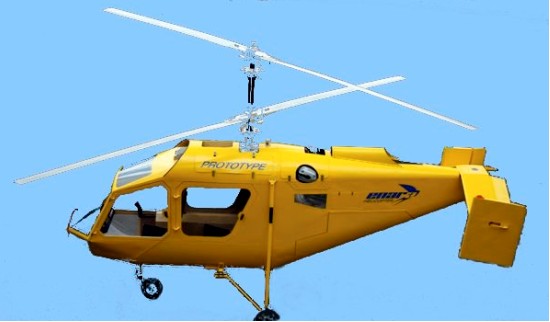
A two seater, piston engine helicopter with a fully articulated coaxial rotor system. First introduced on 1/1/2011, the price (2012) was US$130000.
Engine: Lycoming IO 233 LSA, 115 hp Rotor Diameter: 22.9 ft Number of rotor blades: 4 Number of tail rotor blades: 0 Length: 17.3 ft Height: 11.3 ft Fuselage width: 2.6 ft Gross Weight: 1320 lb Empty Weight: 860 lb Useful Load : 460 lb Max. Range: 466 mi Cruise Speed: 93 mph Maximum Speed: 105 mph Service Ceiling: 15000 ft Seats: 2