Aermacchi M-290TP RediGO / L.90TP / Valmet L-90TP RediGO / Aermacchi M-290TP

Derived from the earlier Valmet L.70, through an intermediate design known as the L.80TP, the Valmet L.90TP completed its maiden flight in June 1986. The Redigo differed from the L.70 primarily in having an Allison 250-B17D turboprop power plant, a new, increased-span wing, and a retractable undercarriage. The wing is NACA 63-218(mod B3) at the root and NACA 63-412(mod B3) at the tip. The L.90TP is designed to take student pilots through the first 100 hours of training, for graduation directly on to a suitable advanced trainer. Six underwing hardpoints can carry a total of 800kg of stores.
In 1996 Aermacchi took over L-90TP RediGO from Valmet of Finland and redesignated it the M-290TP RediGO.

Valmet L 90 TP Redigo
Engine: 1 x Allison 250 turboprop B17F, 309 shp.
Length: 25.919 ft / 7.9 m
Height: 9.514 ft / 2.9 m
Wingspan: 33.793 ft / 10.3 m
Wing area: 159.307 sq.ft. / 14.75 sq.m
Max take off weight: 2976.8 lb / 1350.0 kg
Weight empty: 1962.5 lb / 890.0 kg
Max. weight carried: 1014.3 lb / 460.0 kg
Max. speed: 181 kt / 335 km/h
Landing speed: 50 kt / 93 km/h
Cruising speed: 165 kt / 305 km/h
Initial climb rate: 1929.13 ft/min / 9.8 m/s
Service ceiling: 25000 ft / 7620 m
Wing load: 18.66 lb/sq.ft / 91.0 kg/sq.m
Range: 810 nm / 1500 km
T/O run (to 15m): 310 m.
Fuel internal: 360 lt.
Ldg run (from 15m): 360 m.
Endurance: 5+ hr.
Crew: 2
Armament: ext. 800kg 4 pods
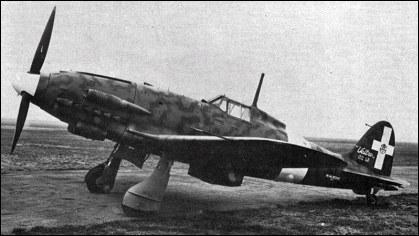
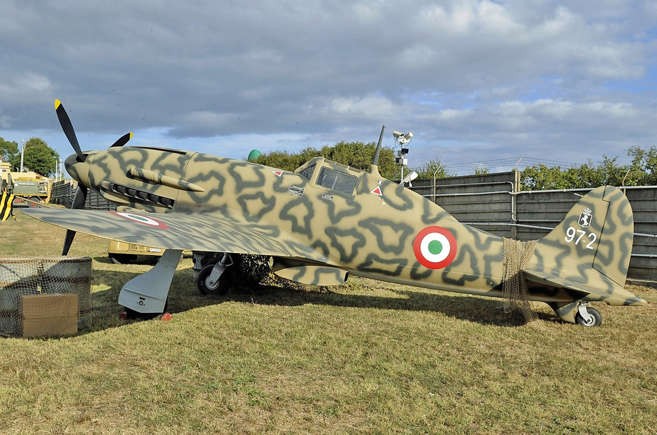
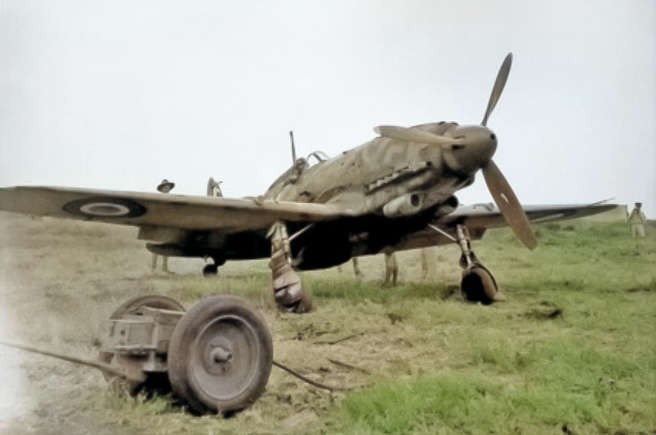
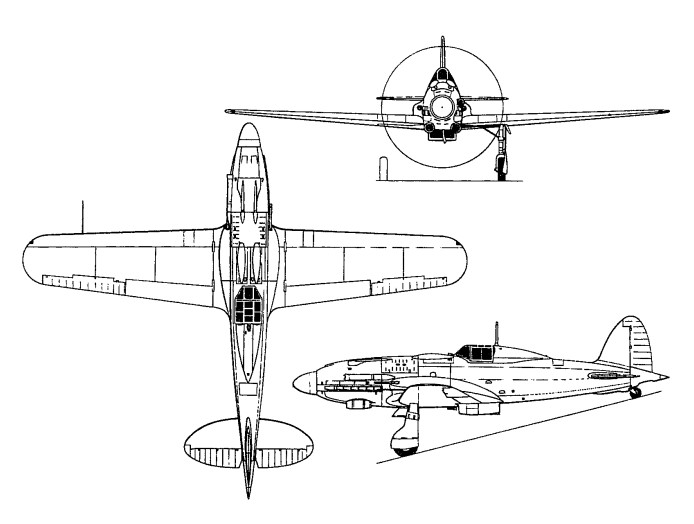
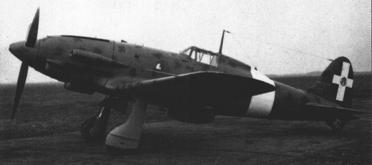
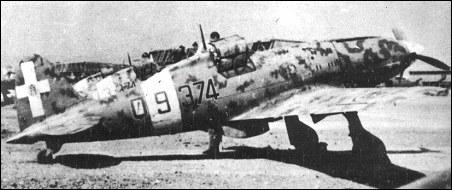
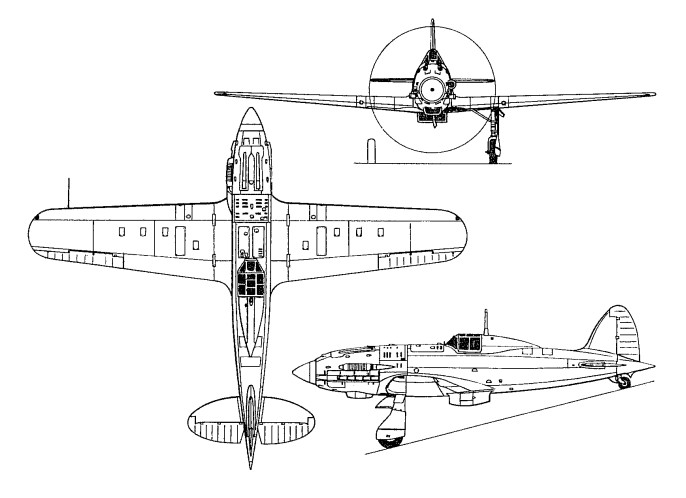
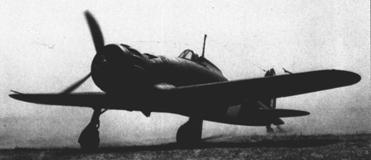
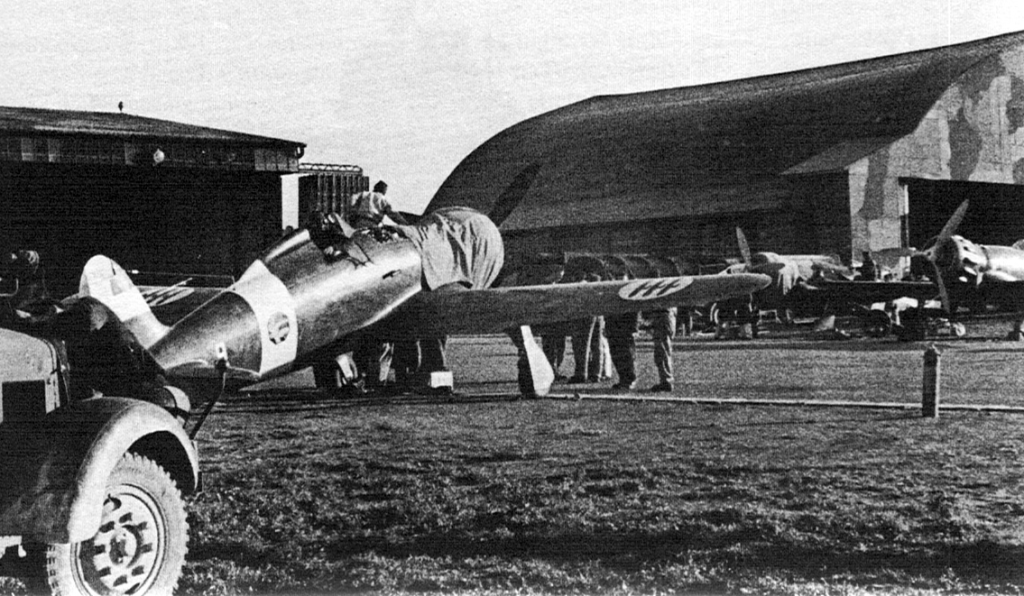
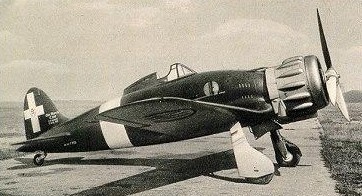
Aermacchi MC.205 Veltro

Re-powering the Folgore with a 931kW Fiat R.A.1050 RC.58 Tifone engine – a licence-built Daimler-Benz DB.605 resulted in the Veltro (Greyhound).

First flown as a prototype on 19 April 1942, production aircraft entered service in the following year but saw little action before the Italian surrender to the Allies. Most of the 262 MC.205V production aircraft served with the fascist Italian and German air arms. Later aircraft had two 20-mm cannon in place of the two rifle-calibre wing machine-guns to provide an effective armament.

A variant that failed to enter production was the MC.205N Orione high-altitude fighter with increased-span wings and an armament of one 20-mm cannon and four 12.7-mm (0.5-in) machine-guns in the N-1 variant or three cannon and two machine-guns in the N-2 variant.

Engine: Fiat RA. 1050 RC.58 Tifone, 1455 hp
Length: 29 ft 0.5 in / 8.58 m
Height: 9.974 ft / 3.04 m
Wingspan: 34 ft 8.7in / 10.58 m
Wing area: 180.835 sq.ft / 16.8 sq.m
Max take off weight: 7514.6 lb / 3408.0 kg
Weight empty: 5691.1 lb / 2581.0 kg
Normal TO weight: 3224kg / 7,108 lb
Max. speed: 347 kts / 642 km/h at 23620 ft
Cruising speed: 270 kts / 500 km/h
Service ceiling: 53707 ft / 16370 m
Wing load: 41.62 lb/sq.ft / 203.0 kg/sq.m
Range: 562 nm / 1040 km
Crew: 1
Armament: 2x MG 12,7mm, 2x MG 7,7mm up to 320 kg (1706 lb) of bombs

Macchi C.205 Veltro

Aermacchi MC.202 Folgore           

Mario Castoldi’s Macchi C.202 Folgore (thunderbolt) was developed from the radial-engined C.200, and powered by a Daimler- Benz DB 601A-1 produced under licence as the Alfa Romeo RA 1000 RC 411.

First flown by Carestiato on 10 August 1940, the C.202 Series 1 production version entered service with the 1° Stormo at Udine in the summer of 1941, this unit arriving in Libya in the following November. The Folgore was a low wing monoplane with inward retracting undercarriage and two 12.7mm Breda-SAFAT machine-guns in the nose; there was also provision for two 7.7mm guns in the wings.

Aermacchi MC.202 Folgore Article

The aircraft was developed and produced in 11 series with imported or licence-built engines. Later aircraft featured increased armament with the addition of two rifle-calibre wing machine-guns. Variants used in small numbers were the tropicalised MC.202AS and the dual-role MC.202CB that could be used as a fighter-bomber with 320 kg (706 lb) of bombs under the wings or as a long-range escort fighter with underwing drop tanks. The type was also trialled as the MC.200D with a chin radiator. It served with 45 Squadriglie of the 1°, 2°, 3°, 4°, 51°, 52°, 53° and 54° Stormi in North Africa, Sicily, Italy, the Aegean and Russia. Production totalled about 1,500, of which 392 were produced by the parent company and the remainder by Breda.

Ultimate wartime development of the C.200/202 series of Italian fighters was the Daimler Benz-powered C.205.

Gallery

Engine: l x Alfa Romeo AR.1000 PC 41-1 Monsone, 876kW (1,175 hp)
Span: 10.58m (34 ft 8.7 in).
Length: 8.85m (29 ft 0.5 in).
Normal T/O weight: 2937 kg (6,475 lb).
Max speed: 370 mph at 16,405 ft.
Operational range: 475 miles.
Armament: 2 x 12.7-mm (0.5-in) mg and (later aircraft) 2 x 7.7-mm (0.303-in) mg.

Engine: Alpha Romeo RA.1000 RC.41 Monsone, 1159 hp
Length: 29.035 ft / 8.85 m
Height: 9.974 ft / 3.04 m
Wingspan: 34.711 ft / 10.58 m
Wing area: 180.835 sq.ft / 16.8 sq.m
Max take off weight: 6637.1 lb / 3010.0 kg
Weight empty: 5181.8 lb / 2350.0 kg
Max. speed: 321 kts / 595 km/h
Service ceiling: 37730 ft / 11500 m
Range: 413 nm / 765 km
Wing load: 36.7 lb/sq.ft / 179.0 kg/sq.m
Crew: 1
Armament: 2x MG 12,7mm Breda-SAFAT, 2x MG 7,7mm Breda-SAFAT

Macchi C.202 Folgore

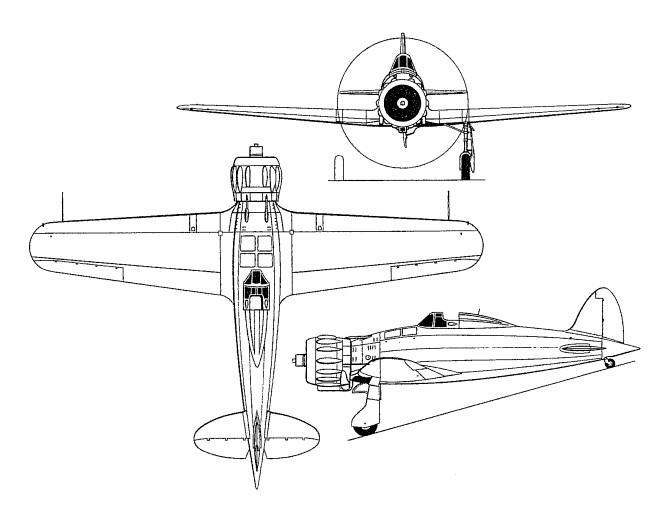
Aermacchi MC.200 Saetta

First flown on 24 December 1937 by Giuseppe Burei, the prototype featured an enclosed cockpit and retractable tailwheel, both features being disliked by most service pilots and were eliminated from the MC.200A1 initial production model.

The Mario Castoldi designed radial-powered Fiat C.200 Saetta (lightning) arrived in service in 1939. The first C.200 unit, the 4° Stormo, expressed a preference for the CR.42 and reverted to the biplane in 1940.

Aermacchi MC.200 Article

The MC.200A2 was equipped two 7.7-mm (0.303-in) machine-guns in the wings.

When Italy entered the war on 10 June 1940, two home-based stormi were combat-ready with the C.200, being first flown in action over Malta in September that year.

The C.200, named the Saetta (lightning), equiped the 1°, 2°, 3°, 4° (in mid-1941) and 54° Stormi, and the 8°, 12°, 13°, 21″ and 22° Gruppi.

The attrition suffered by all Italian air force units quickly reduced the number of C.200s. Some 51 Saettas of the 22° Gruppo operated in the Odessa zone of the Eastern Front from August 1941 onwards, proving capable of matching the older Soviet fighters in the early stages of that campaign. By the time of the Italian armistice in September 1943 the Regia Aeronautica’s total inventory of serviceable C.200s stood at only 33.
Production by Macchi, Breda and SAI Ambrosini totaled 1,153 aircraft in 25 series, and other variants were the MC.200AS tropicalised fighter and the MC.2000B able to operate as a fighter-bomber with 320 kg (706 lb) of bombs or as a long-range escort fighter with drop tanks. The MC.201 variant was to have had the 746-kW (1,000-hp) Fiat A.76 RC 40 in a modified fuselage.

Because all three Aeroplane Works within a range of German bombers were, a new plant was built at the village of Kunovice in South Moravia. There were 70 production MB-200s built there.

Macchi MC 200 Saetta
Engine: Fiat A. 74 RC.38, 858 hp
Length: 26ft 10.5 in / 8.19 m
Height: 11.483 ft / 3.5 m
Wingspan: 34 ft 8.7in / 10.58 m
Wing area: 180.835 sq.ft / 16.8 sq.m
MTOW: 5711.0 lb / 2590.0 kg
Normal T/O weight: 2200 kg / 4,850 lb
Weight empty: 4178.5 lb / 1895.0 kg
Max. speed: 271 kt / 502 km/h at 14,765ft
Cruising speed: 246 kt / 455 km/h
Service ceiling: 29199 ft / 8900 m
Wing load: 31.57 lb/sq.ft / 154.0 kg/sq.m
Max range: 470 nm / 870 km
Crew: 1
Armament: 2x MG 12,7mm Breda-SAFAT, 2x MG 7,7mm

Macchi C.200 Saetta

Aermacchi MC.94

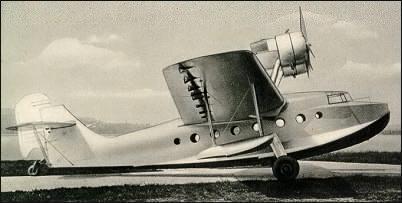
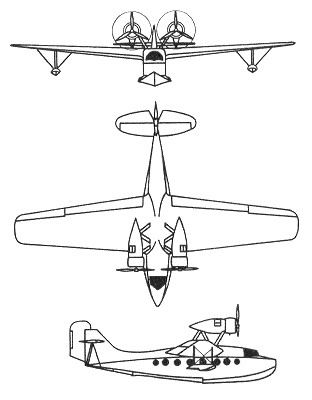
The prototype MC.94 commercial amphibian flew for the first time in 1935 powered by two 574kW Wright SGR-1820-F air-cooled radial engines, and fitted with retractable wheels which swung forward into streamlined casings in the leading edges of the wings. The two pilots had a fully enclosed cockpit, and up to 12 passengers a main cabin equipped with a toilet to the rear, baggage in an aft compartment and marine gear in a nose compartment.
The first five production MC.94 (without the retractable wheels of the prototype) were similarly powered. The only other production aircraft were six similar flying-boats with 596kW Alfa Romeo 126 RC.10 engines. All MC.94 served initially with Ala Littoria.

Engine: 2 x Alfa Romeo 126-R.C.10, 550kW
Take-Off Weight: 8200 kg / 18078 lb
Empty Weight: 5350 kg / 11795 lb
Wingspan: 22.8 m / 74 ft 10 in
Length: 16.2 m / 53 ft 2 in
Wing Area: 76.0 sq.m / 818.06 sq ft
Max. Speed: 292 km/h / 181 mph
Cruise Speed: 250 km/h / 155 mph
Ceiling: 6000 m / 19700 ft
Crew: 3
Passengers: 12

Aermacchi MC-72

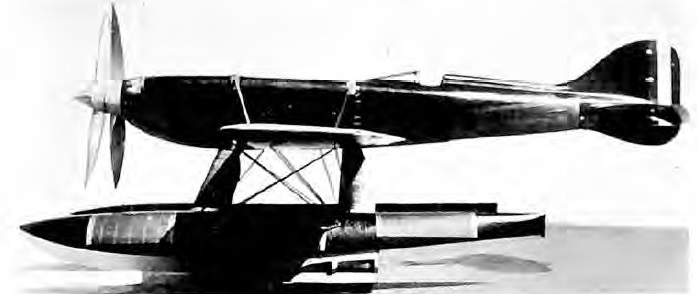
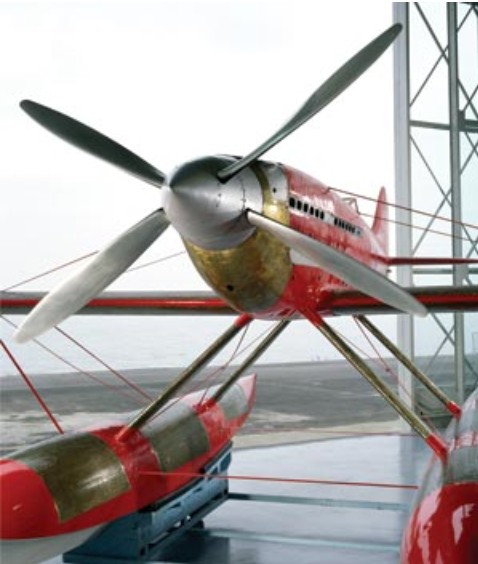
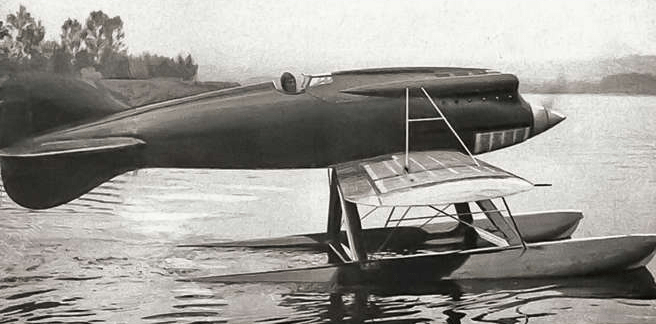
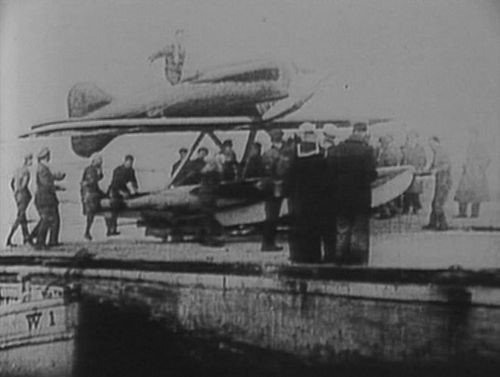
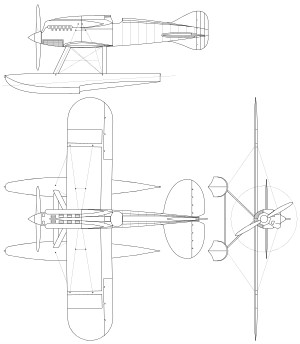
Designed by Mario Castoldi over three years from 1931 to 1933, it was hoped this plane would enter (and win) the Schneider Trophy race of 1931 but the plane could not be ready in time for that contest (the winner was the British Supermarine S.6B).

First flown in June 1931, the MC.72 was a single-seat twin-float seaplane. The unique engine was effectively two in tandem driving separate (counter-rotating) propellors.

In late 1927, Italian Mario de Bernardi upped the world absolute speed record mark to 298 mph with a Macchi M-52 seaplane developed from the M-39 in which he had won the 1926 Schneider Race. He soon raised the mark to 318 mph with the same airplane.

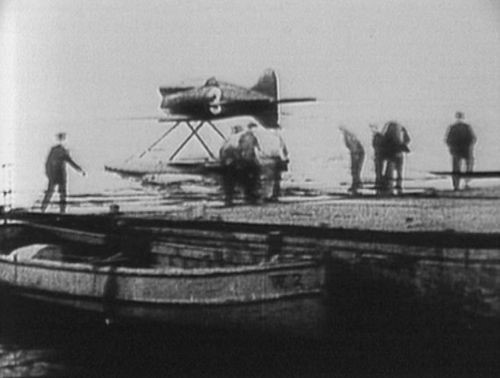
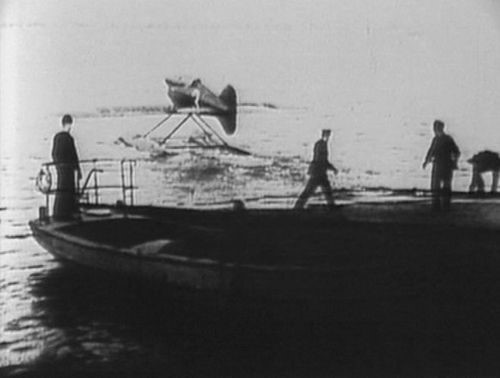
Problems with the Fiat 24 cylinder engine hp prevented it taking part in the Schneider seaplane contests, but Francesco Agello boosted the 3 km speed record with it to 423.57 mph 10 April 1933 and then 100 km speed record to 390.8 mph. The Coupe de Vitesse Louis Bleriot record of 30 min was raised to 384.86 mph. A world speed record was established on October 23, 1934 at 440.67 mph / 709 km/h. This world speed record lasted for five years – but as a record for a piston-engine seaplane it has never been broken (likely because development of racing seaplanes essentially came to an end with the end of the Schneider Trophy contest).

The Schneider Trophy never experienced any casualties during competition, but several pilots were killed training for the races. Italy had five casualties: Vittorio Centurione in 1926 in a Macchi M-39; Giuseppe Motta in 1929 in a Macchi M-67; Tomasso Dal Molin in 1930 in a Savoia S.65; Giovani Monti and Stanislao Bellini in 1931 in a Macchi MC-72.

As a result of three consecutive victories for the British, the Schneider races were over.

Engine (1934): Fiat AS.6 24 cyl., 2300 hp
Engine (1934): Fiat AS.6 24 cyl., 2500 hp
Engine (1934): Fiat AS.6 24 cyl., 2800 hp
Prop: Twin CR

Engine: 2 x Fiat A.S.6, 2280kW
Take-Off Weight: 2907 kg / 6409 lb
Empty Weight: 2500 kg / 5512 lb
Wingspan: 9.5 m / 31 ft 2 in
Length: 8.2 m / 26 ft 11 in
Height: 3.3 m / 10 ft 10 in
Max. Speed: 702 km/h / 436 mph
Crew: 1

Macchi M.C.72

Aermacchi M-39

In 1922 Mario Castoldi moved to Macchi Aeronautica, where he became famous for designing a series of seaplanes that set world speed records. His first winning plane was the Macchi M.39 seaplane. It was designed in 1925-26 to compete in the Schneider Trophy race of 1926. Powered (like all the Macchi planes from this time) by a Fiat engine it managed a top speed of 396 km/h (246 mph) and won the contest for that year.

Macchi M.39

Italian Mario de Bernardi won the 1926 Schneider Race with a Macchi M-39.

Macchi M.39

The Schneider Trophy never experienced any casualties during competition, but several pilots were killed training for the races. Italy had five casualties: Vittorio Centurione in 1926 in a Macchi M-39; Giuseppe Motta in 1929 in a Macchi M-67; Tomasso Dal Molin in 1930 in a Savoia S.65; Giovani Monti and Stanislao Bellini in 1931 in a Macchi MC-72.

Macchi M.39

Aermacchi M.5

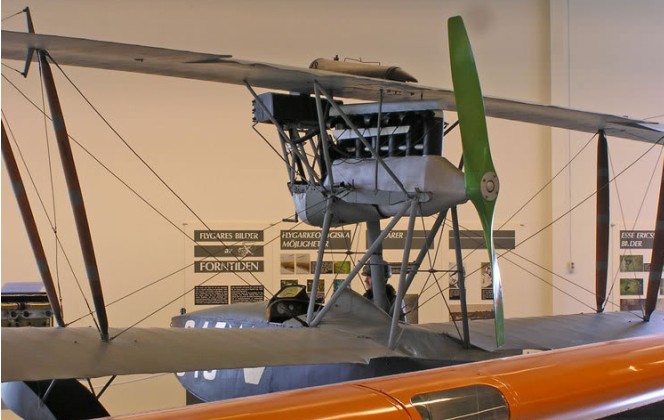
The Macchi M.5 was Italy’s first flying-boat fighter and first single-seat aircraft. A total of 244 M.5s were built, equipping five Italian maritime patrol squadrons from early 1918 until after the Armistice. The M.5mod was equipped with a 250hp engine.

Replica: Petroelje Macchi M.5

Macchi M.5mod
Engine: 1 x 250hp Isotta-Fraschini V6B liquid-cooled
Take-off weight: 1080 kg / 2381 lb
Wingspan: 9.95 m / 32 ft 8 in
Length: 8.10 m / 26 ft 7 in
Height: 2.95 m / 9 ft 8 in
Max. speed: 209 km/h / 130 mph
Ceiling: 5000 m / 16400 ft
Climb to 4000m: 20 min
Armament: 2 x 7.7mm mg
Crew: 1

Aer Lualdi L.59

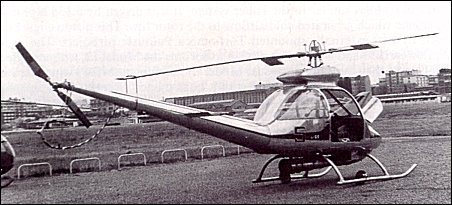
The L.57 flight testing has proved so satisfactory that it forms the basis for the fully-developed L.59, with more powerful engine and metal rotor blades. The L-59 had more extensive cockpit transparencies and a 260hp Continental IO-470-D engine. A four-seat light general-purpose helicopter with a two-blade main rotor of metal construction, built by Parsons and of the type fitted to the Hiller UH-12C helicopter. Cyclic pitch control is of Hiller “Rotor-Matic” type with Lualdi gyro-stabilizer. The L.59 has a two-blade reinforced plastic tail rotor. The all-metal fuselage has four seats in two pairs, with dual controls for the front pair, and car-type door on each side. The undercarriage was of two tubular metal skids with upturned forward ends and wheels for ground handling (stored under the boom, forward of the tail rotor).

The nose mounted engine exhausted through a central exhaust under the fuselage, between the skids. Fuel was in a pair of tanks mounted side-by-side above the cabin on each side of the rotor pylon on pylons. Provision was made for the addition of a rescue hoist and carriage of two litters.

Two L.59 prototypes were constructed by Macchi at Varese with technical assistance from Sud Aviation. A test flight programme was flown from 1960 and the commercial type certificate was issued in August 1961 but the programme was terminated as more capable helicopters had become available.
The first prototype (I-GOGO – later MM576) was bought by the Italian army’s air corps for evaluation as an observation platform and was later transferred to a museum.

L-59
Engine: Continental IO-470-D, 260 hp
Main rotor dia: 34 ft 9.5 in / 10.6m
Fuselage length: 29 ft 9.5 in / 9.08 m
Height: 9 ft 10 in / 3m
Main rotor disc area: 949.92 sq.ft / 88.25 sq.m
Tail rotor dia: 1.70m
Payload: 380kg
Empty weight: 1631 lb / 740 kg
MTOW: 2646 lb / 1200 kg
Max speed: 99 mph / 160 kph
Cruise speed: 86 mph / 139 kph
Initial ROC: 820 fpm / 250 m/min
Absolute ceiling: 19,355 ft / 5900 m
HIGE: 9515 ft / 2900 m
HOGE: 5575 ft / 1700 m
Endurance: 3 hr 30 min
Fuel capacity: 110kg
Seats: 4
Skid track: 2.40m.