single-seat light tactical jet.
Engines – Power
Aerodis America AA300 Rigel
tandem two-seat jet trainer
Aerodis America AA200 Orion
First flown on 2 June 1981, Grinvalds Orion, one of the earliest composite kit- and homebuilt aircraft, was built in France and the USA
A four-seat composites lightplane with tail-mounted propeller
The first one ever built, serial # 001, was the project of Peter L. Rodriguez.
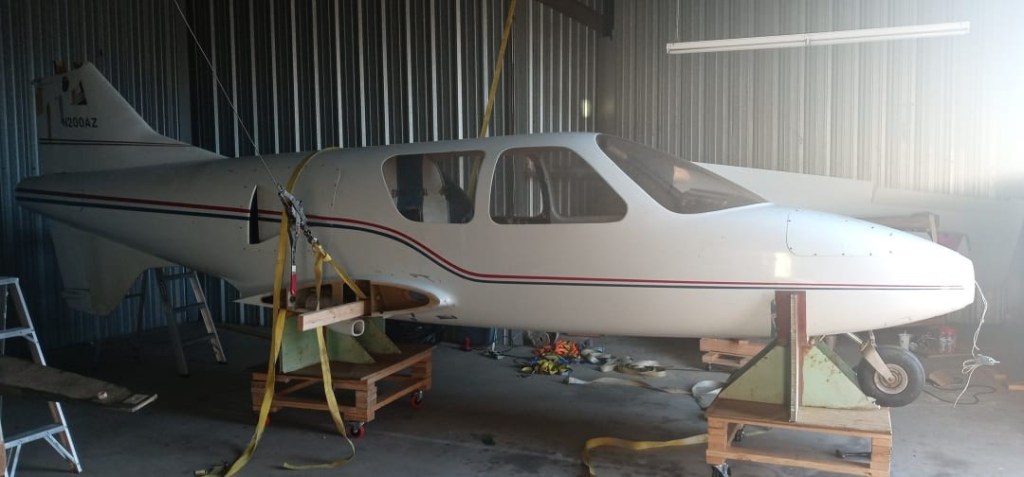
Aero-Difusion Compostela
A refined version of the Aero-Difusion Jodel D.1190S
Aero Development Speer S-2-C
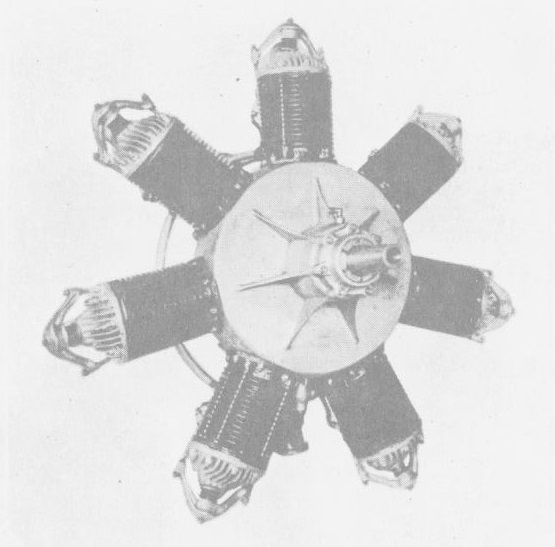
Produced in the 1920s, the Speer S-2-C features a solid master rod operating on roller bearings, and two piece crankshaft. The cast aluminium cylinder head are bolted to nickel iron brrel. The cylinder is of superposed or “F” head construction, the exhaust valve being in the head and the intake valve in the ell. The valves are operated by a special action that eliminates all parts outside the crankcase that require lubrication. The combustion chamber is of a type that provides high turbulence and resulting fuel economies.
All accessories are grouped at the rear of the engine for protection from the weather and to provide ease of maintenance.
Due to the fact that there are no babbit bearings, the need for high pressre lubrication has been eliminated, consequently only sufficient pressure is carried to serve as an indicationbthat oil is flowing.
Available at extra cost were Eclipse starter, Viking fuel pump, tools, and instruction book.
Type: 7 cyl air cooled radial
Power: 120 hp at 1800 rpm
Displacement: 491 cu.in
Compression: 5.2/1
Bore: 4 1/8 in
Stroke: 5 1/4 in
Length: 27 3/8 in
Diameter: 38 1/2 in
Weight: 330 lb
Fuel consumption: not more than .53 lb/hp/hr
Oil consumption: not more than .025 lb/hp/hr
Lubrication: Pressure and scavenging gear pumps
Ignition: Dual Scintilla MN-7D
Carburation: Stromberg NAS5B
Spark Plugs: 2 Champion/cylinder
Aero Development Co
Cedar Falls
Iowa
USA
Circa 1920s built aero engines
Aero Design & Development Hummingbird
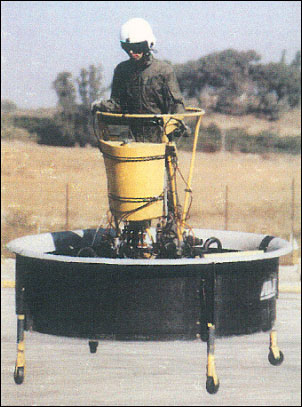
Launched as private venture, reviving concept explored by US Hiller VZ-1 in the 1950s but incorporating new features. The first (tethered) hovering flight was made on 28 August 1997; and the first free (untethered) flight (4X-BEB) 4 October 1998. Availability in kit form was originally planned for 2000.
A naturally stable VTOL platform which can be flown by persons with limited piloting experience. The Hummingbird has full engine redundancy, and can continue flying safely throughout full flight envelope after a single engine failure (initial hovering flights used approximately half of total available power). Air duct has outwards-curved lip on upper surface and diameter to length ratio of approximately 2.75:1.
Vertical speed (rise/descent) is controlled by pilot increasing or reducing rotor rpm via a twist-grip throttle with the left hand. Lateral (sideways) and longitudinal (fore/aft) motion is achieved simply by the pilot tilting his body slightly in desired direction. Maximum allowable speed is attained when pilot’s body reaches limit imposed by circular railing at waist height. The ‘Nose’ of vehicle can be turned by a small lever at pilot’s right hand.
The engines are mounted on four sides of a square gearbox which also serves as pedestal supporting the occupant. Rotors extend from the lower end of gearbox. The engines and propellers are off-the-shelf ultralight components and the circular outer duct is of graphite/epoxy construction.
Four non-retractable, free-castoring single wheels, each with shock-absorbing oleo that can withstand vertical impacts of up to 3.7m/s serve as landing gear.
Four 16.4kW Hirth F33-15A single-cylinder piston engines, each with dual ignition, own carburettor and own fuel line are coupled through torsional dampers and one-way clutches. These drive, via an AD & D gearbox equipped with a chip detector, two three-blade contrarotating propellers/rotors which are synchronised to obtain practically zero yawing moment at all throttle settings.
The Hummingbird accomodates a pilot only, standing inside tubular metal frame.
AD & D Hummingbird
Engines: 4 x Hirth F33-15A, 16.4kW
Diameter: 2.2m
Height overall: 1.9m
Empty weight: 145kg
Max T-O weight: 260kg
never-exceed speed: 74km/h
Hovering ceiling, IGE: 2440m
Hovering ceiling, OGE: 1525m
Range, standard fuel: 31km
Endurance, standard fuel: 30min
Standard fuel capacity: 19 litre
Aero Designs Inc Condor
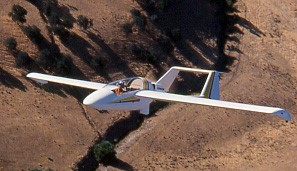
The Condor built by ADI in 1981 was a two place, powered sailplane made out of composite materials and powered by a Revmaster 2100 cc VW engine.
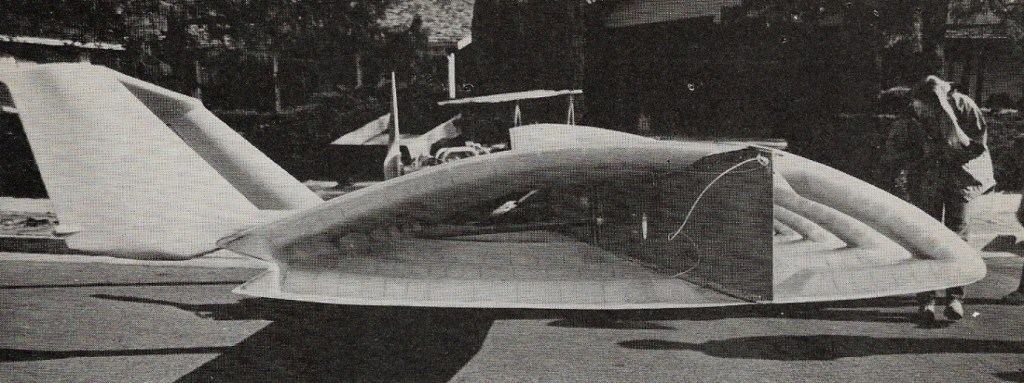
The Condor wing has foam ribbing, fibreglass covered, with a single aluminium spar.
While taking off at night, the engine stopped and the aircraft glided into a hill. The aircraft was totally destroyed.
Engine: Revmaster 2100 cc VW, 65 hp
Prop: Fahlin 34 x 58
Span: 32 ft
Length: 17 ft 11 in
Wing area: 130 sq.ft.
MAUW: 1100 lb
Useful load: 520 lb
Max speed: 95 mph est
Stall: 46 mph
Climb rate: 700 fpm
Aero Designs Inc Super Stallion / Turbine Stallion
A six seat high wing aircraft first flown in July 1994.
Offered with 300-400 hp engine options, or (as the Turbine Stallion) with a P&W or Walter turboprop of around 500 shp.
Aero Designs Inc SuperCruiser / KIS TR-4 Cruiser
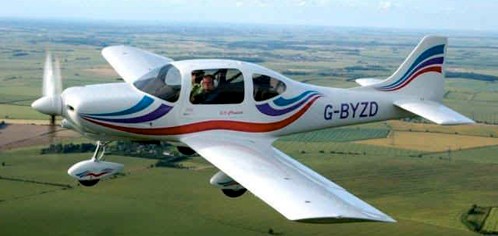
First flown in 1994, the SuperCruiser is a 4-place aircraft with a cruise speed of 190 mph and a stall speed of 59 mph. The aircraft has a length of 25.46 ft. and wing span of 29 ft. It has a gross weight of 2500 lbs. and a useful load of 1100 lbs. The prototype was powered by a Cont. IO-360ES. Lycoming engines from 160-200 HP are recommended and build time is 1200-1500 hours. Aircraft Spruce is a prime supplier for materials used in Super Cruiser kits.
Pulsar Aircraft Corp SuperCruiser
Engine: Continental IO-360, 210 hp
HP range: 80-210
Cruise speed: 175 mph
Stall: 55 mph
Range: 810 sm
ROC: 1400 fpm
Take-off dist: 900 ft
Landing dist: 1350 ft
Fuel cap: 52 USG
Weight empty: 1300 lb
Gross weight: 2400 lb
Length: 23.5 ft
Wing span: 29 ft
Wing area: 135 sq.ft
Seats: 4
Landing gear: nose
KIS TR-4 SuperCruiser
Engine: Lycoming O-360, 180 hp
Speed max: 195 mph
Cruise: 180 mph
Range: 925 sm
Stall: 50 mph
ROC: 1200 fpm
Take-off dist: 1200 ft
Landing dist: 1500 ft
Service ceiling: 17,000 ft
HP range: 160-200
Fuel cap: 200-400 lt
Weight empty: 1200 lb
Gross: 2400 lb
Height: 7.2 ft
Length: 25 ft
Wing span: 29 ft
Wing area: 135 sq.ft
Seats: 4
Landing gear: nose wheel
KIS TR-4 SuperCruiser
Engine: Continental IO-360ES
MTOW: 2500 lb
Cruise: 145 kt
KIS TR-4 SuperCruiser
Engine: Continental IO-300ES
Cruise: 165 kt
Seats: 4

