Aerotecnica AC-13A / Nord 1750 Norelfe

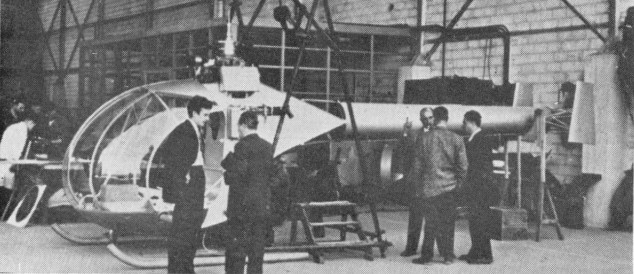
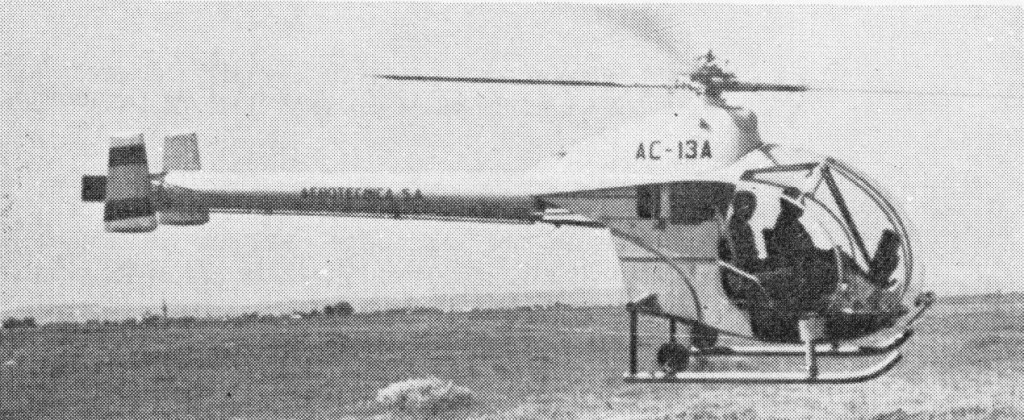
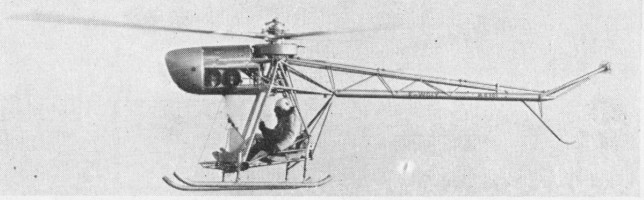
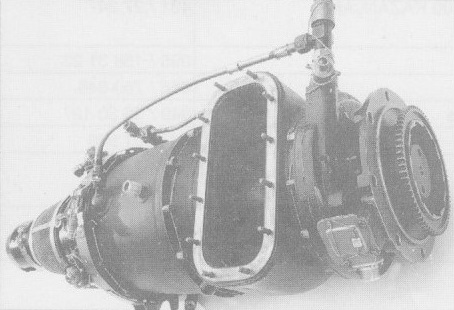
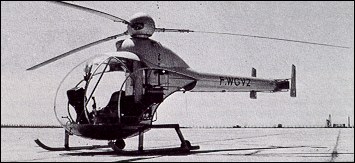
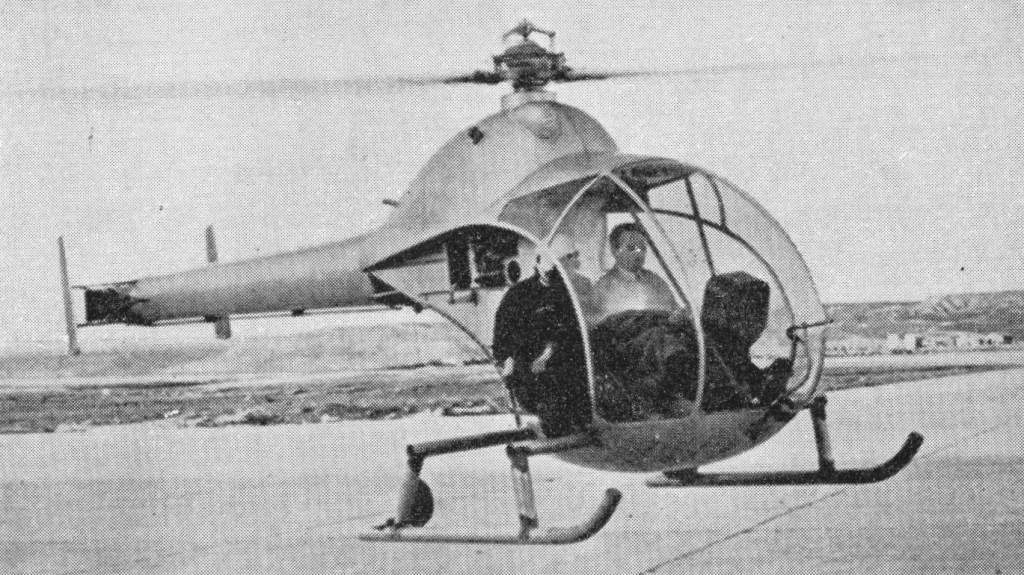
Jean Cantinieau had been working on a three-seat turbine-powered helicopter, the designs for which he had sold to Societe Nationale de Constructions Aeronautiques du Nord (S.N.C.A.N.). Very similiar to the AC.12, SNCAN built two prototypes as the Nord N.1750 Norelfe with a large bubble canopy and a Turbomeca Artouste I turbine mounted above and behind the cockpit.

The three-blade rotor was positioned directly above the engine and had a rotorhead enclosed in a large spherical fairing. The tail rotor was replaced by a ducted exhaust gas controlled by the pilot through pedals.

The first Noreife prototype, F-WGVZ, was flown on 28 December 1954 but SNCAN sold both the aircraft and the rights to Aerotecnica who designated them AC.13A. After further testing in Spain, Aerotecnica moved to a larger five-seat version known as the AC.14.

The two prototypes were acquired by the Spanish Government.

Aerotecnica AC-12 / XZ-1

From the Matra-Cantinieau MC-101 / AC-11 Aerotecnica developed the AC-12 and AC-13, the former powered by a 150hp Lycoming O-320 engine and the latter by a Turbomeca Artouste I gas turbine.

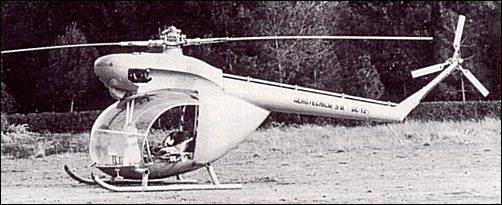
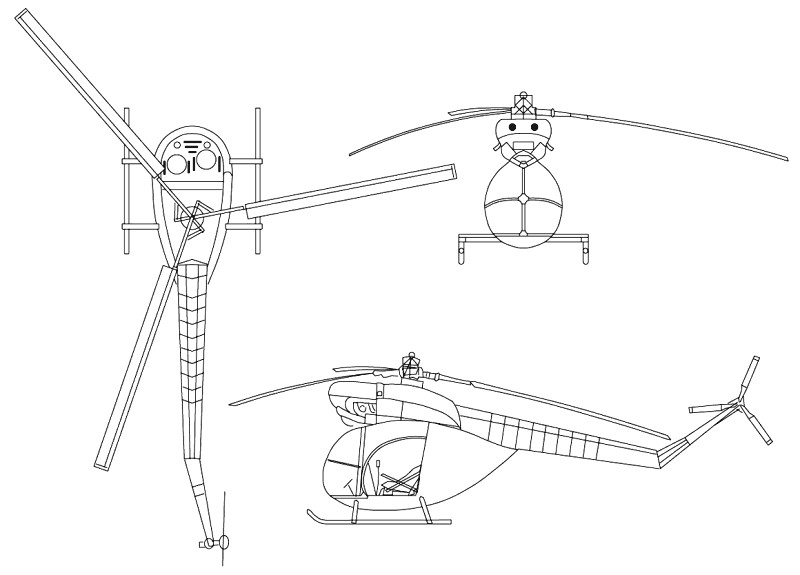
A twin seat single-rotor helicopter, the AC-12 has a full all-metal monocoque fuselage with a large overhead ‘spine’ encompassing the boom and engine mounted above the cabin. Three-blade rotor with double-articulated blades. Each blade has a solid machined duralumin spar which forms the leading-edge, duralumin ribs and trailing-edge. Space between ribs is filled with a plastic foamed resin compound named Klogecell, with a final overall covering of Fiberglas. Floating hub, with cyclic and collective-pitch changes made through a “spider.” Rotor blade area each 0.71sq.m. Rotor disc area 57sq.m. Three-blade anti-torque rotor of similar construction to main rotor. Anti-torque rotor blade area 0.0927sq.m. Anti-torque rotor disc area 2.26sq.m.

The main rotor is driven direct from the engine gear-box (7.28 : 1 ratio) and clutch through a universal joint. The anti-torque rotor is driven through a gear-box (1.4 : 1 ratio) and cardan shaft.

Enclosed cabin seating two side-by-side with dual controls. Entrance door on each side of cabin. Landing gear is skid type. Track of skids 2.0m

Two prototypes were built with Spanish Government funding in Madrid by AISA, with a transmission and reduction gear designed on motor-car principles and built by the ENHASA airscrew company. One 168hp Lycoming O-360-B2A fan-cooled engine mounted above the cabin with direct drive through the gear-box to the main rotor. Fuel tank under seats with capacity of 60 litres. Oil capacity 9 litres. The first of these flew on July 20, 1956.

A production order for 12 was received from the Spanish Government with a military designation of XZ-1 where they served for a relatively short period before being retired.

Aerotecnica AC-12
Engine: Lycoming O-360-B2A, 170hp
Main rotor diameter: 8.50m
Overall length: 8.30m
Fuselage length: 7.35m
Height: 2.75m
Fuselage width: 1.22m
Weight empty: 490kg
Weight loaded: 770kg
Max speed: 140km/h
Cruising speed: 110km/h
Rate of climb SL: 258m/min
Hovering ceiling IGE: 1650m
Hovering OGE: 800m
Service ceiling: 3100m
Cruising range: 170km

Aerotecnica AC-11 / Matra-Cantinieau MC-101

Cantinieau moved on to a two-seater, the MC.101, which retained the general layout of the C.100 but with a much cleaned-up structure and a 105hp Hirth engine. Two examples of the MC.101 were built by Matra (F-WGIX and F-WGIY), the first of which was flown by Gerard Henry at Buc on 11 November 1952. It was shortly after this that Cantinieau gained the interest of the Marquis del Merito, a Spanish industrialist, who had established Aerotecnica SA as an aerial photography and crop spraying business based at Cuatro Vientos near Madrid.
Aerotecnica S.A. began building helicopters by hiring French engineer Jean Cantinieau and acquiring the Matra-Cantinieau MC-101 light helicopter built by the French Societe Matra in 1952. This helicopter was given the designation AC-11 (Aerotecnica-Cantinieau-11). It became evident that the aircraft was underpowered in Madrid’s hot and high conditions and a 150hp Lycoming was installed – in which form it became the Model AC.12.
From the AC-11 have been developed the AC-12 and AC-13.

Engine: 105 h.p. Hirth
Rotor diameter: 26 ft. 4 in
Rotors: 3-blade main; 3-blade tail
Fuselage length: 22 ft
Loaded weight: 1760 lb.
Ceiling; 9,840 ft.
Typical range: 250 miles at 96 m.p.h. with ful1 load.
Seats: 2

Aero Tech Canadian Skyrider

Single seat single engined high wing mono¬plane with hybrid control. Wing has constant chord; cruciform tail. Pitch control by weight¬shift; yaw control by fully flying rudder; no separate roll control; control inputs through weight shift for pitch/yaw/roll. Wing braced from above by kingpost and cables, from below by cables; single ¬surface. Undercarriage has three wheels in tricycle formation; torsion bar suspension on all wheels. Nosewheel steering. No brakes. Aluminium tube framework, without pod. Engine mounted above wing driving pusher propeller. Framework from 6061T6 and 2024T3 aluminium, 4130 aircraft steel; coated stainless steel rigging, Dacron wing surface.
The Canadian Skyrider is a hybrid control ultra¬light, the pilot using his swing seat as the principal means of control, with his weight shift aided in yaw by a rudder.
Standard power unit is a twin cylinder Cuyuna 430R with dual ignition and in flight recoil restart facility. Alternatively, the sing¬le cylinder Cuyuna 215 cc engine may be fitted. Construction time is estimated at 30 h; a trailer is needed for transportation.
After producing between 150 and 200 aircraft, the future of the company seemed in some doubt in 1983.

Engine: Cuyuna 430R, 30 hp
Propeller: 48 x 23 inch, 1.22 x 0.58 m
Reduction ratio: 2.0/1
Power per unit area: 0.19 hp/sq.ft, 2.0 hp/sq.m
Wing span: 32.0ft, 9.75m
Fuel capac¬ity: 3.8 USG, 3.2 ImpG, 14.4 lt
Contant chord: 5.0 ft, 1.52 m
Total wing area: 160 sq.ft, 14.9 sq.m
Aspect ratio: 6.4/1
Nosewheel dia. Overall: 11 inch, 28cm
Empty weight: 155 lb, 70 kg
Main wheels dia overall: 11 inch, 28cm
MTOW: 420 lb, 191 kg
Payload: 265 lb, 120 kg
Vne: 55 mph, 88 kph
Wing loading: 2.62 lb/sq.ft, 12.8 kg/sq.m
Power loading: 14.0 lb/hp, 6.4 kg/hp

Engine: Cuyuna 215R, 20 hp
Power per unit area: 0.13 hp/ sq.ft, 1.3 hp/ sq.m
Wing span 32.0ft, 9.75m.
Fuel capac¬ity: 3.8 USG, 3.2 ImpG, 14.4 lt
Contant chord: 5.0 ft, 1.52 m
Total wing area: 160 sq.ft, 14.9 sq.m
Aspect ratio: 6.4/1
Nosewheel dia overall: 11 inch, 28cm
Vne: 55 mph, 88 kph
Main wheels dia overall: 11 inch, 28cm
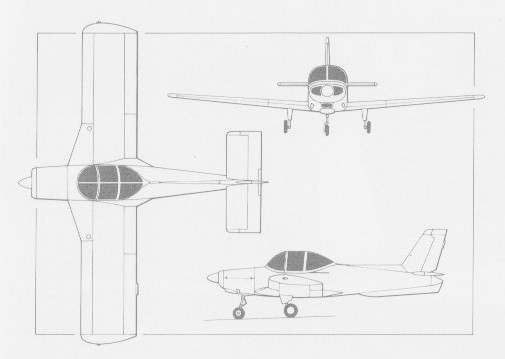
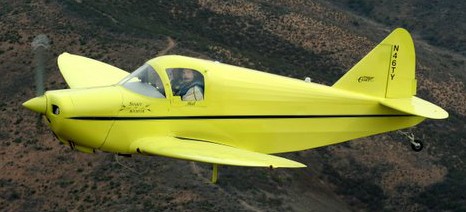
Aerotec A-122 Uirapuru / T-23

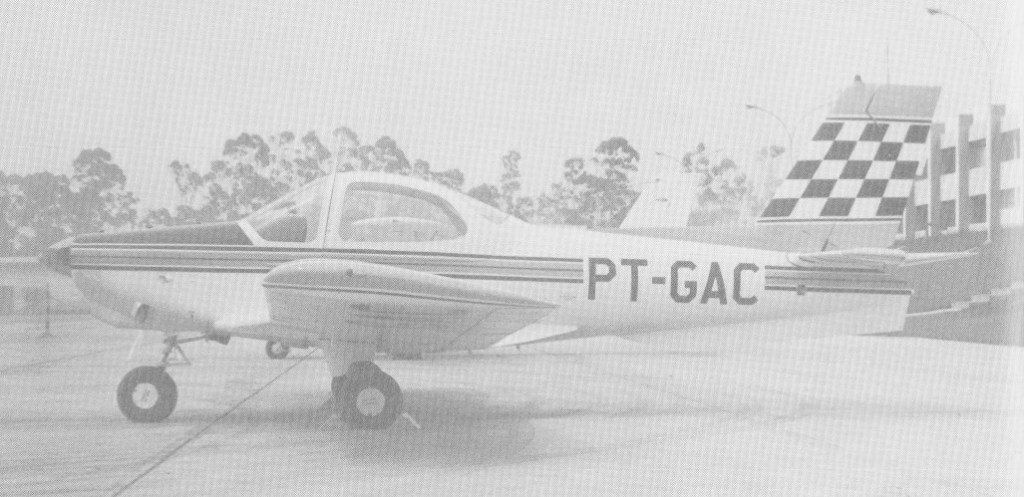
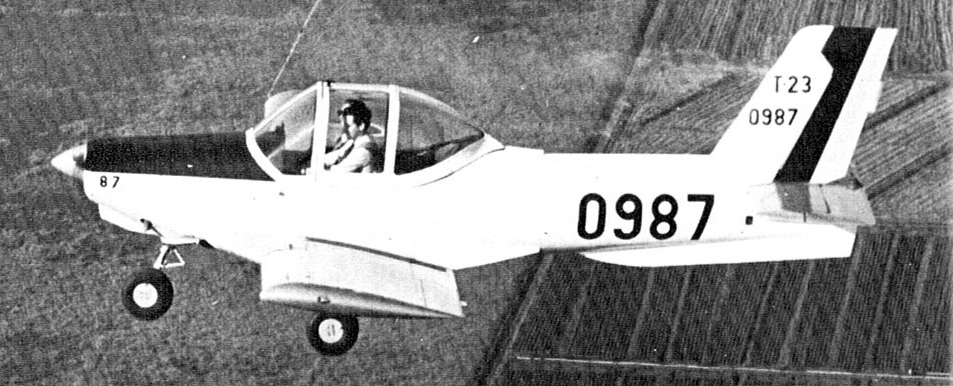
The Aerotec A-122 Uirapuru 2 seat Brazilian military trainer aircraft first flew on 2 June 1965, powered by a 108 hp Lycoming O-235-C1 engine. A second followed powered by a 150 hp Lycoming O-320-a and was offered to the Brazilian Air Force as a replacement for its locally built Fokker S.11 and S.12 basic trainers. Thirty Uirapurus were ordered for this purpose early in 1968 under the military designation T-23. 40 more were ordered in 1969. They have a 160 hp Lycoming O-320-B2B and differ from the civilian model in having fully-adjustable seats, stick controls, a nose wheel the same size as the mains, and a modified cockpit canopy in which only the centre portion slides rearward.

Following the loss of the first production T-23 in 1968, a small ventral fin was added to improve spin recovery.

They were used by Brazilian, Bolivian & Paraguayan Air Forces.

Engine: Lycoming: O-320-B2B, 160 hp
Wingspan: 27 ft 10.75 in / 8.50 m
Length: 21 ft 8 in / 6.60 m
Empty weight: 1191 lb / 540 kg
MTOW: 1825 lb / 840 kg
Max cruise 5000ft / 1525m: 100 kt / 115 mph 185 kph
Service ceiling: 14,760 ft / 4500m
Max range: 700 nm / 805 mi / 1300 km
Max endurance: 6 hr 30 min
Seats: 2
Baggage capacity: 66 lb / 30 kg

Aero-Systems Cadet STF

The 1941 Culver Cadet was a 2-place low wing light plane powered by a 75hp Continental engine and capable of cruising at 120mph. After much design and analysis, Neal La France offers plans for a homebuilt version of the Cadet. The Cadet STF features a steel tube, fabric covered fuselage instead of the production wood fuselage. A considerable weight savings and double the strength was obtained with the new design. Prototype is powered by a 100 hp Continental engine.

Cadet STF
Engine: Continental C-90, 90 hp.
HP range: 85-125
Wing span: 27 ft.
Wing area: 120 sq.ft.
Length: 18.5 ft.
Height: 5.5 ft.
Weight empty: 790 lbs.
Gross: 1305 lbs.
Fuel cap: 25 USG.
Speed max: 175 mph.
Cruise: 130 mph.
Range: 500 sm.
Stall: 50 mph.
ROC: 800 fpm.
Take-off dist: 800 ft.
Landing dist: 825 ft.
Service ceiling: 17,500 ft.
Seats: 2.
Landing gear: retractable tail wheel.

Engine: Continental O-200, 100 hp
Wing span: 8.23 m
Wing area: 11 sq.m
MAUW: 592 kg
Empty weight: 403 kg
Fuel capacity: 95 lt
Max speed: 282 kph
Cruise speed: 217 kph
Minimum speed: 88 kph
Climb rate: 5 m/s
Seats: 2
Fuel consumption: 22 lt/hr
Plan price (1998): $375