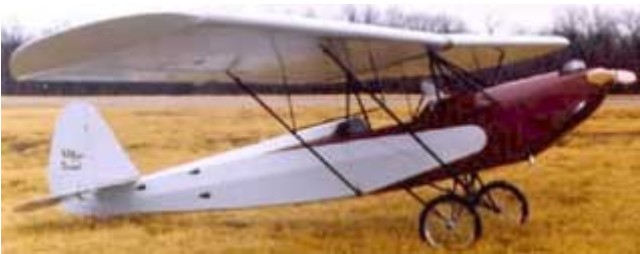
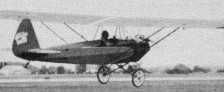
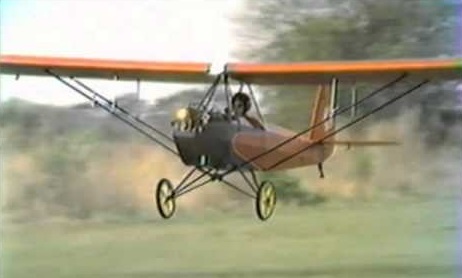
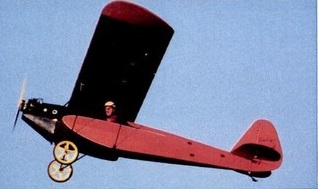
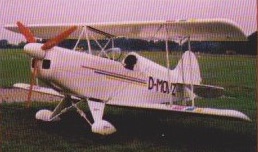
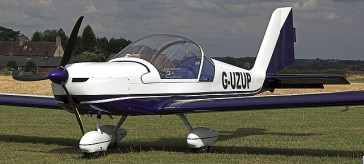
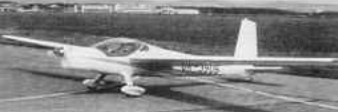
Constructed from gusset reinforced rectangular tubing. The fuselage weighs 12 lbs. Wood wings with ½ span ailerons. Centre mounted joy stick, rudder pedals, and tail skid.
In 1984 the Aerotique Parasol could be built from plans ($75) for about $2500 including a 28 hp engine.
Engine: Rotax 277, 27 hp Empty wt: 250 lb Wing span: 32 ft Wing area: 144 sq.ft Height: 6 ft 2 in Length: 17 ft 6 in Fuel capacity: 5 USG Construction: Steel, Wood, Fabric. Max wt: 520 lb Stall: 22 mph Max speed: 60 mph Vne: 78 mph Climb rate: 700 fpm @ 40 mph Design limit: +6, -2.5g Glide ratio: 12-1 Wing loading: 3.61 lbs/sq.ft Power loading: 19.26 lbs/hp
Engine: Cuyuna UL II-02, 35 hp Wing span 32’ Wing area 140 sq/ft Length 17.5’ Height 6.17’ Empty weight 250 lbs Payload 270 lbs Cruise speed 60 mph Stall speed 24 mph Climb rate 700 fpm Load factors +6 G, -2.5 G Glide ratio 12:1 Build time 150 hrs
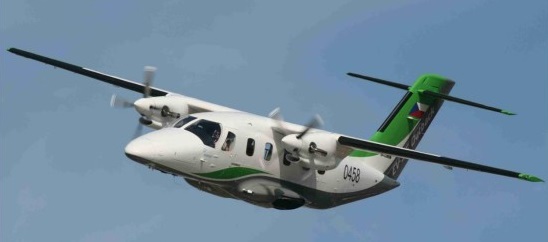
In 2004 Evektor announced its plan to design and construct a two-engined utility aircraft that would carry up to 14 passengers or 4000 lb (1800 kg) of cargo, and operate from unimproved fields and at high-altitude airports.
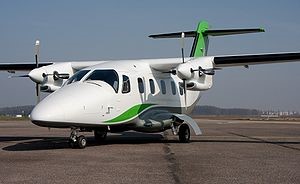
The EV-55 is of conventional high-wing utility design with a T-tail. The prototype aircraft is powered by Pratt & Whitney PT6A-21 turboprop engines (535 shaft horsepower), driving four-blade propellers. The wing is mounted atop a nearly-square fuselage, which has five windows per side. The trailing-link tricycle landing gear retracts into the nose section or pods on the lower fuselage. Expected maximum cruise speed is 220 knots (407 km/h).
The 5.02m x 1.61m cabin standard layout is five and four seats with a cargo compartment separated by a semi bulkhead and an L-410 sized double door at the rear. It is equipped with a full glass cockpit, Czech firm Avia makes the four-blade propellers and Aero Vodochody the landing gear.
The first prototype, an EV-55M (military version), flew from Kunovice Airport in June 2011, with company pilot Josef Charvat and military pilot Maj. Jiri Hana at the controls. It was estimated at $2.1 to $2.2 million in 2012. The first production-conforming aircraft flew from Kunovice in April 2016.
In June 2018, its price was $4 million and two aircraft should finish development flights with 200 hours in 2016, for 500 total hours. Evektor secured enough investment to complete the certification process scheduled for 2017, with a minority investment from a Malaysian company backed by the country’s former premier Mahathir bin Mohamad, but not to begin full production.
With nine passengers, range is 800nm (1,480km), it can take-off in 410m and land in 520m and with more speed, range and short take-off and landing capability, it can replace ageing piston-twins.
The project’s development was suspended on 16 March 2017 due to “some uncertainties” with Evektor’s Malaysian investor.
By December 2018, it was touted as a basis for an EVE-55 hybrid electric aircraft conversion to fly in 2020, with only one PT6A-21 running a 400 kW (540 hp) generator in the rear compartment, for much lower noise, an 18% fuel saving and the same payload and performance: a 3 hours endurance and 40 minutes from electric power only.
EV-55 Engines: 2 × Pratt & Whitney Canada PT6A-21 turboprop, 399 kW (535 hp) each Propellers: 4-bladed AVIA AV-844, 2.082 m (6 ft 10 in) diameter Wingspan: 16.10 m (52.82 ft) Length: 14.35 m (47 ft 1 in) Height: 4.66 m (15.28 ft) Empty weight: 2,597 kg (5,725 lb) Max takeoff weight: 4,600 kg (10,141 lb) Fuel capacity: 1,656 kg (3,651 lb) Maximum speed: 410 km/h (250 mph, 220 kn) 10 000 ft Stall speed: 119 km/h (74 mph, 64 kn) with flaps, 77 knots without Range: 1,713 km (1,064 mi, 925 nmi) , 2,000 lb (907 kg) payload Capacity: 1 776 kg / 3 915 lb payload, 14 pax Crew: 2
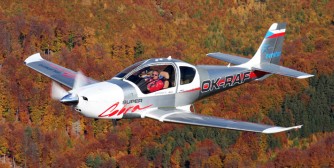
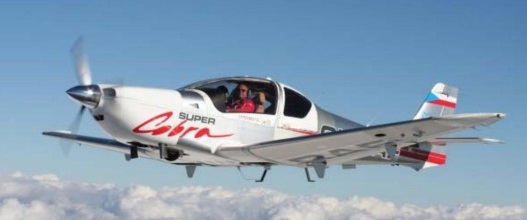
Initial work on the VUT100 Cobra project began in 2001 with the maiden flight made in November 2004. October 2006 saw the maiden flight of the VUT100 SuperCobra.
The VUT 100 Cobra was designed to offer speed with cabin comfort and ergonomics, low cost of ownership and long range. Planned to be available in two versions differing by the power units: The VUT 100-120i is equipped with a Lycoming IO-360-A1B6 (200HP) and mt-propeller MTW-12. The VUT 100-131i is equipped with a Lycoming IO-580-B1A (315HP) and the mt-propeller MTV-9.
The VUT100 Cobra was designed to enable easy and fast access to the parts of the airframe which require inspections and maintenance and the number of nodes which require inspections and adjustment were minimized.
The development team designed the airframe from traditional duralumin using 3D design systems and optimized from the strength point of view by FEM methods.
VUT100-120i Engine: Lycoming IO-360-A1B6, 200 hp Propeller: Hartzell HC-F3YR-1RF Diameter: 74 in / 188 cm Type: 3 blade, constant speed Length: 26.3 ft / 8 m Wing span: 33.5 ft / 10.2 m Internal cabin length: 122 in / 3.1 m Seats: 4 Internal cabin width: 51.5 in / 1.31 m Fuel usable: 90 USG / 340 lt Internal cabin height: 48 in / 1.22 m Max. take-off: 2,930 lb / 1,330 kg Useful load: 1,105 lb / 500 kg Max. level speed: 155 kts / 287 km/h Max. rate of climb: 1,000 fpm / 5 m/s Stall speed: 50 kts / 93 kph Range: 1,080 nm / 2,000 km Endurance: 8 hrs Load factors: +3.8g -1.52g (Normal category) / +4.4g -1.76g (Utility category)
VUT100-131i Engine: Lycoming IO-580-B1A, 315 hp Propeller: Hartzell HC-F3YR-1RF Diameter: 76 in / 193 cm Type: 3 blade, constant speed Length: 26.3 ft / 8 m Wing span: 33.5 ft / 10.2 m Internal cabin length: 122 in / 3.1 m Seats: 4 Internal cabin width: 51.5 in / 1.31 m Fuel usable: 90 USG / 340 lt Internal cabin height: 48 in / 1.22 m Max. take-off: 3,200 lb / 1,450 kg Useful load: 1,260 lb / 570 kg Max. level speed: 175 kts / 324 km/h Max. rate of climb: 1,000 fpm / 5 m/s Stall speed: 55 kts / 103 km Range: 1,000 nm / 1,830 km Endurance: 6 hrs Load factors: +3.8g -1.52g (Normal category) / +4.4g -1.76g (Utility category)
In 1996 Aerotechnik with Evektor began development of the EV-97 team Eurostar airplane.
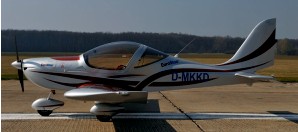
A two-seat light or ultralight monoplane designed for sport/leisure flying, touring and training with limitation to non-aerobatic VFR operations. The Eurostar is aerodynamically controlled, single-engine, two-seat, low-wing, all metal plane with a fixed tricycle undercarriage and controllable nose wheel. The aircraft is equipped with four cylinder four stroke 80 HP Rotax 912 UL engine, optionally 100 HP Rotax 912 ULS or 80 HP Jabiru 2200.
Beginning in 2000 was the development of the EV-97 VLA airplane. This aircraft is called SportStar in US and EuroStar in Europe. Development of the SportStar version began in 2003.
By 2009, over 800 of the EuroStar had been delivered worldwide and the 2009 price was 50000 Euro.
Eurostar SL
The EuroStar SL is an advanced ultralight airplane with 46.5 inches / 1.18 meters of shoulder room, new system of cockpit climate control, and state of the art glass cockpit avionics. During testing more than 450 spins in all configurations were carried out. The airplane was type approved by the Ministry of Defence of the Czech Republic and is operated by the Pilot Training Centre of the Czech Army for initial pilot training. The EuroStar SL has an all metal anodised and corrosion-proofed aluminium airframe. It has all joints of construction riveted as well as bonded for durability and long fatigue life. The EuroStar is certified for towing of the sailplanes up to 700 kilos (Duo Discus, Janus, Ventus, ASK 21, Ventus, Blanik etc.) and for towing of banners up to 140 sq.m.
SportStar Max
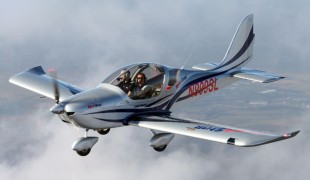
The SportStar MAX is an S-SLA aircraft business travel or training. The airplane was the very first aircraft approved by the FAA (2005) in the U.S. S-LSA category and is holder of the prestigious “S-LSA Aircraft of the Year” honour from AeroNews Network (ANN). The SportStar MAX with a re-designed, based on an EASA JAR-VLA certified pilot training airplane, airframe at 1320 lb / 600 kg MTOW provides up to 640 lb / 290 kg of useful load combined with range 700 nm / 1300 km, and was available as an IFR version. The SportStar MAX combines aerodynamic composite materials with an all-metal primary airframe structure. The SportStar MAX build quality and reliability is based on Evektor´s certified aircraft production by the European Aviation Safety Agency (EASA), ISO 9001:2000 Quality Management System as well as LAMA certification. The canopy gives 46.5 inches / 1.18 meters of shoulder room, and glass cockpit avionics. The SportStar MAX has an all metal anodised and corrosion-proofed aluminium airframe with all joints of construction riveted as well as bonded. The SportStar is certified for towing of the sailplanes up to 700 kilos (Duo Discus, Janus, Ventus, ASK 21, Ventus, Blanik etc.) and for towing of banners up to 140 sq.m. The SportStar is a Light Sport Aircraft (LSA) designed for pilot training, sport and leisure flying and touring with limitation to non-aerobatic VFR operations.
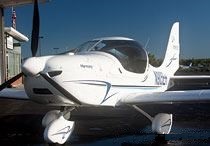
The Evektor fully certified (European EASA standard), general aviation-quality aircraft is conventionally powered (Rotax), and has evolved to the flagship Harmony and includes the SportStar MAX, both with all-metal construction, long range economy cruise at 110 knots by 2012. Base prices 2012: US$98,000 (MAX); US$102,000 (Harmony).
Evektor EV-97 Team Eurostar Engine: Rotax 912 ULS, 100 hp TBO: 1,500 hrs Propeller: Fixed, on-ground or in-flight adjust Cabin width: 46.5 in / 1.18 m Length: 17 ft 7.5 in / 5.98 m Height: 8 ft 1.6 in / 2.48 m Wing span: 26 ft 7 in / 8.1 m Empty weight: 609 lb / 276 kg MTOW: 992 lb / 450 kg Design load: +6 g / -3g Max. baggage: 33 lb / 15 kg Wing tanks cap: 17.17 USG / 65 lt Vne: 270 km/h Stall speed: 65 km/h Maximum level speed: 240 km/h Rate of climb: 7.5 m/s Cruise 75% power: 200 km/h Service ceiling: 6,000 m Take-off distance: 200 m Maximum range: 750 km Landing distance: 300 m
Engine: Rotax 912 UL, 80 hp TBO: 1,500 hrs Propeller: Fixed, on-ground or in-flight adjustable Cabin width: 46.5 in / 1.18 m Length: 17 ft 7.5 in / 5.98 m Height: 8 ft 1.6 in / 2.48 m Wing span: 26 ft 7 in / 8.1 m Empty weight: 609 lb / 276 kg MTOW: 992 lb / 450 kg Design load: +6 g / -3g Max. baggage: 33 lb / 15 kg Wing tanks cap: 17.17 USG / 65 lt Vne: 270 km/h Stall speed: 65 km/h Maximum level speed: 220 km/h Rate of climb: 5.0 m/s Cruise 75% power: 180 km/h Service ceiling: 6,000 m Take-off distance: 280 m Maximum range: 750 km Landing distance: 300 m Glide Ratio: 1:12
Evektor SportStar Engine: Rotax 912ULS, 100 hp TBO: 1500 hr Prop: Fixed, ground adjustable Wingspan: 28 ft 5 in / 8.65 m Overall length: 19 ft 7.5 in / 5.98 m Height: 8 ft 2 in / 2.48 m Power loading: 12.1 lb/hp Max ramp weight: 1212 lb Gross weight: 1212 lb MTOW US VG: 1,320 lb / 600 kg Landing weight: 1212 lb Empty weight, std: 680 lb / 309 kg Useful load: 522-640 lb /237-291 kg Useful fuel, std: 31.2 USG / 118 lt Payload, full std. fuel: 355 lb Seating: 2 Cabin width: 46.5 in / 1.18 m Vne: 146 KIAS / 270 km/h Maximum level speed: 115 KCAS / 213 km/h Cruise 75% pwr: 100-110 kt Fuel consumption 75%: 4.5-5.0 USG/hr Stall speed: 40-46 kt / 74-83 kph Best rate of climb SL: 840 fpm Service ceiling: 13,100 ft Takeoff ground roll: 620 ft / 190 m Landing ground roll: 590 ft / 180 m Baggage volume: 6.2 cu.ft / 175 lt Max. baggage: 55 lb /25 kg Design load: +6 g / -3g Maximum range: 700 nm / 1,300 km Total endurance: 8.5 hrs
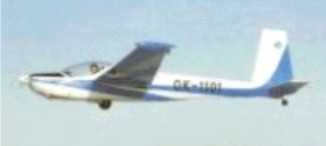
Designed by Karel Dlouhy in the middle of 70´s as a powered self-launching derivative of the LET L 13 Blanik, the Vivat uses a rear fuselage and wings very similar to the L 13. Of all metal with fabric covered control surfaces. The wings do not incorporate the flaps of the L 13, but retain the DFS type airbrakes. The center section and cockpit area are widened to make room for the two-place side- by-side seats. The main wheel is retractable, and the wingtip outrigger wheels fold back at the same time. The tail wheel is steerable, being linked to the rudder circuit. It can also be unlocked and be fully castoring outside the normal rudder-linked range. The Vivat was offered with a choice of engines, the SHE with the Czech Walter mikron, matched to a three position Hoffmann propeller, and the SL with a German Limbach fitted with a Muhlbauer electrically operated constant speed feathering propeller. The engine compartment is fitted with cooling shutters which can be closed to reduce drag when the engine is off. Both models were offered with a two wheel non-retractable landing gear as an alternative to the single retractable wheel with tip outriggers.
Around 200 units of the L-13 Vivat were successfully exported to USA, Canada, Australia, South Africa, Egypt, Israel, Germany, Sweden and many other countries. Production of the L13 Vivat motorgliders ended circa 2005.
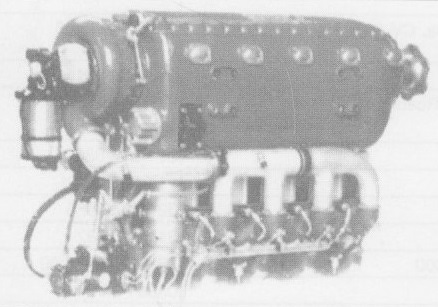
M132A Cycle: supercharged 4 No cylinders: 4 inline Bore: 105 mm Stroke: 115 mm Compression: 6.3 Displacement: 3980 cc Cooling: Air Ignition: Double magneto Drive: Direct Weight: 105 kg Max pwr: 120 hp at 270 rpm Fuel consumption: 26 lt/hr
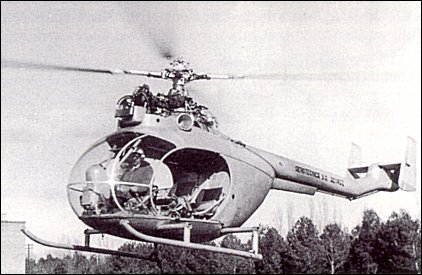
An improved version of the AC-13 was designed, known as the AC-14. A larger version of the AC-13, powered by a Turbomeca Artouste II shaft turbine and with accommodation for five. The prototype AC.14 used part of the structure of one of the AC.13s but had a lengthened cabin section with a rear seating area and a larger 400shp Turbomeca Artouste IIB turboshaft engine. The engine is mounted above the cabin, which is extensively sound-proofed. Residual thrust is used to increase forward speed, and anti-torque control by gas deflection in helicopter flight and by vertical rudders in gyrodyne flight (high speed cruising). The single, four-blade rotor has double-articulated blades with an area each 0.84sq.m, and total disc area of 72.35sq.m. The landing gear of of skid type with a 2.0m track. The enclosed cabin seats a pilot at the front and four passengers in two side-by-side pairs behind. Entrance doors are on each side of cabin. An initial series of six was completed in Madrid by ENHASA and the first flew on July 16, 1957. Having provided funds for the Aerotecnica helicopter project, the Spanish Government ordered ten examples. These were delivered to the Spanish Air Force, with the designation EC-XZ-4, where they served for a relatively short period before being retired.
Aerotecnica AC-14 Engine: 1 x Turbomeca Artouste IIB shaft-turbine, 400hp. Oil capacity: 9.4 lt Main rotor diameter: 9.60m Overall length: 11.22m Fuselage length: 8.25m Height: 3.10m Weight empty: 700kg Weight loaded: 1300kg Max speed: 180km/h Cruising speed: 150km/h Best rate of climb SL: 300m/min HIGE: 2700m Service ceiling: 6350m Range: 260km Fuel capacity: 74 lt ag version Fuel capacity: 244 lt passenger version.