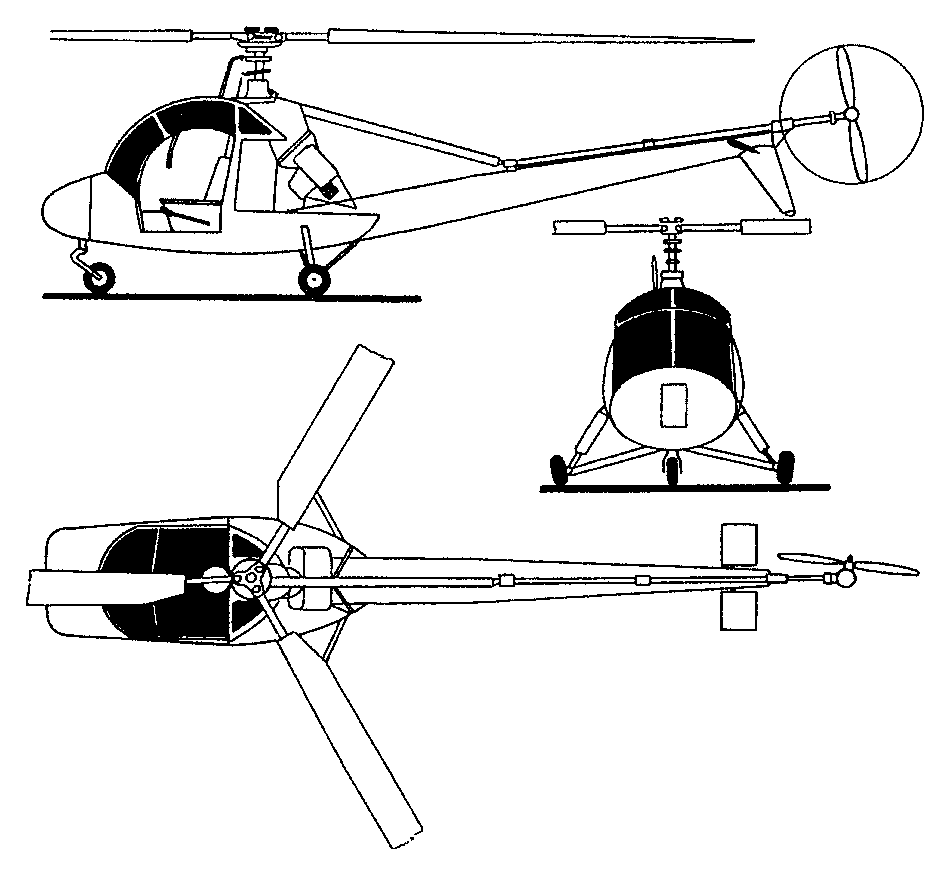
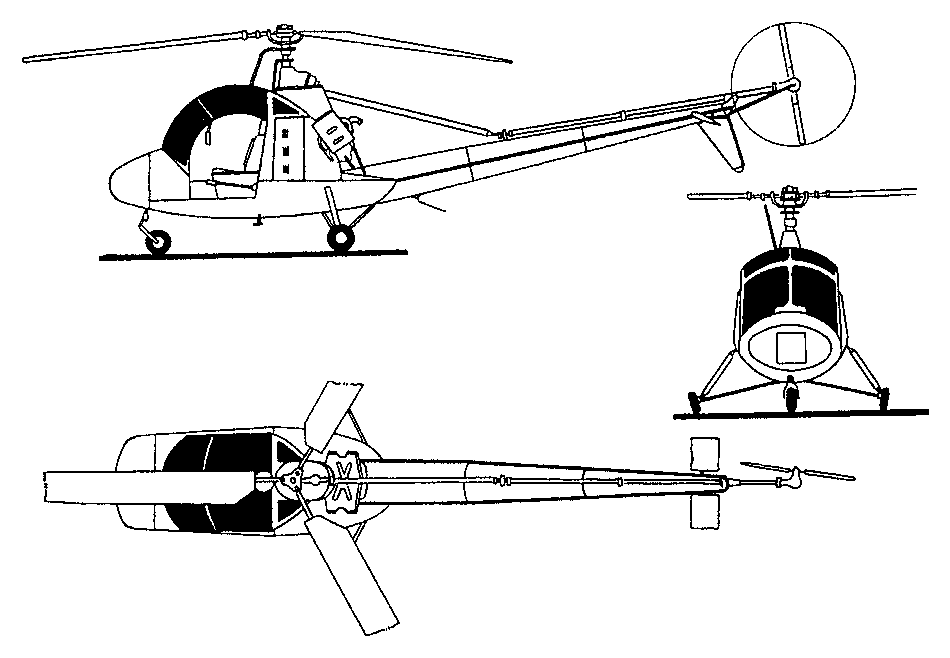
1995: 4950 County Rd. 1510, Pomona, MO 65789, USA.
Built the Avocet 1-A.
1995: 4950 County Rd. 1510, Pomona, MO 65789, USA.
Built the Avocet 1-A.
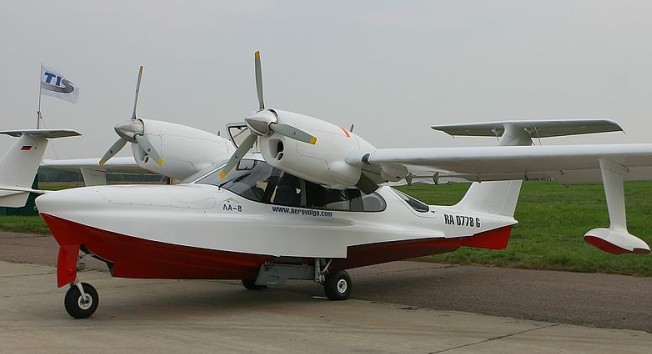
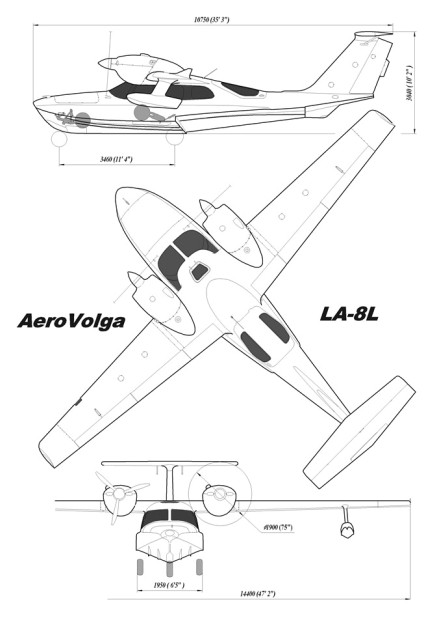
The AeroVolga LA-8 8 seat amphibious aircraft has its origin with the Chaika L-6, first flown in 2000, and its immediate successor the L-6M, promoted by AeroVolga and first flown in 2001. Both of these were twin engine, V-tailed amphibious aircraft, the latter differing in its hull design, undercarriage and maximum take-off weight. Chaika developed the L-6M into the L-4 and AeroVolga developed it into the LA-8. These are very different designs: the LA-8 has a T-tail and is some 25% longer than the L-4, with tricycle gear.
The LA-8 is largely built from plastic foam and PVC filled glass fibre sandwich. Its wing is divided into watertight compartments. The amphibian is a cantilever high wing monoplane with straight tapered wings; most of the sweep is on the trailing edge. First flown on 20 November 2004, the prototype originally had downturned wing tips but these were replaced with extended upturned tips by 2006 and by early 2011 a later aircraft had winglets which extended both above and below the tips. There is no dihedral. Its twin engines are placed above and ahead of the wing leading edge, as close to the centre-line as the clearance between propeller and fuselage allows. The prototype was powered by two LOM M337AK air-cooled six-cylinder supercharged inverted inline engines.
The basic version of the power plant (C-version) is two piston engines LOM PRAHA M337C-AV with take off power 235 HP. The engines are equipped with supercharge and timing fuel injection system. Time between scheduled maintenance of engines is 100 hours, motor oil replacing time is 200 hours.
The LA-8L variants have 175 kW (235 hp) Lycoming IO-540 air-cooled flat-sixes. Turboprop engines are TP-100 (250 HP) or АI-450 (300 HP).
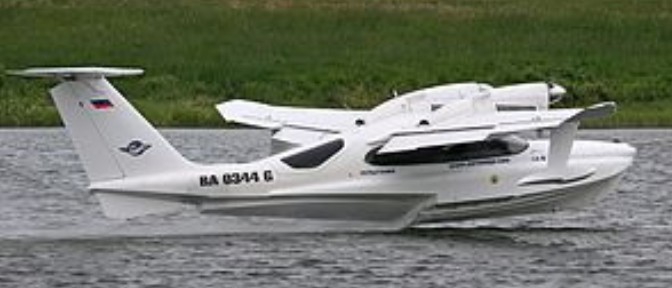
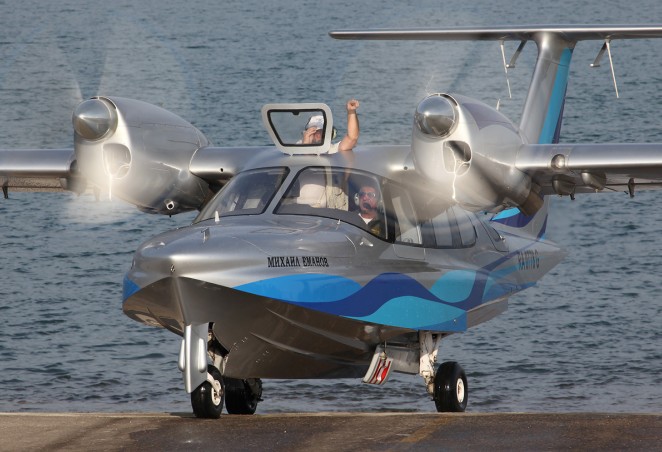
The two step hull is also subdivided into watertight compartments. Two fixed underwing stepped floats at about 75% span stabilize the aircraft on water. The cabin is under the wing, with two long continuous transparencies, one on each side plus two shorter panels in the main entry hatch in the rear roof behind the trailing edge. There is seating for eight, including one or two pilots. The LA-8’s T-tail has a slightly tapered, straight edged, swept fin with a sub-fin extension; both the rudder and the single piece, externally mass balanced elevator have electrically actuated trim tabs.
The LA-8 has a tricycle undercarriage with mainwheels retracting into the fuselage sides and the nosewheel retracting rearwards. A ballistic parachute is an option.
The aircraft has a composite high wing, with T-shaped stabilizer. The main fuel tanks with a capacity of 455 liters (for RS-version – 1 400 liters) are located in the wing of the aircraft. For C-version and L-version it is possible to install the additional fuel tanks in winglets, with total capacity 100 liters.
Two mooring rings are located on the lower surface of the wing, one – in the nose part, one – on the aft. Two cleats are located near the hatch. The cleats can be either fixed or retractable into frame.
There are four knots on the top of the aircraft, for which the aircraft can be lifted by crane onto the deck of the ship and the dock with using a standard four-point brace. The aircraft can be equipped with lifting eye bolts and two sling-adapters.
Ground power unit (GPU) is plugged to the standard onboard socket and allows starting the engines and charging on-board batteries.
The landing/taxi LED lights cluster is installed in the left wing. The quad xenon land light is installed in the right wing. The navigation lights (left and right) are located in the winglets, in the tail part of the fuselage the tail light and anti-collision light are installed, on the fin tip is located the parking light switched on in the water.
Landing gear is tricycle type, with the nose strut. Wheel suspension is wishbone, with gas-fluid absorbers. For manufacture of landing gear it is used special high-quality stainless steel and special coverings with high resistance to seawater. The specially designed landing gear allows to land on unpaved ground. The landing gear retraction/extension is performed by hydraulic drive; emergency main struts extension is performed under its own weight, the nose strut extension is performed by backup pneumosystem.
The emergency extension of all struts is performed under their own weight in RS-version. The working of hydraulic system and emergency pneumosystem is controlled by two pressure gauges mounted on the pilot’s instrument panel.
Indication of the landing gear position is designed specifically for amphibian aircraft, when landing on the water surface is performed with retracted landing gear. So the position of retracted landing gear is displayed as bright-blue color, extended – as yellow color. The additional visual control of position of the landing gear can be made by using panoramic mirrors located on the floats.
For controlling the aircraft when moving on water the different engine thrust or reverse thrust is used, for controlling the aircraft movement on land – separate braking wheels. The brakes are hydraulic, on control pedals. Both main wheels can be stopped by parking brake.
Control of the aircraft is possible from the right or left pilot’s seats which are equipped with control columns and pedals. For locking the elevators and ailerons when standing the safety pin with red marker is inserted into the control column support.
Autopilot is controlled from the central instrument panel and the button of autopilot emergency cutoff is on the control wheel. Control of engines, propellers and trimmers are located on the centre console between pilots.
Engine control levers allow operate as straight thrust as reverse thrust. In order to prevent the propellers transition to reverse mode during flight engine, control console is equipped with computer controlled reverse lever lock disabling reverse activation at speed over 100 km/h and more than 1 400 RPM.
Flaps are controlled by electric drive. The flaps position is controlled by indicator or visually. RS-version of the aircraft normally (other versions – optional) is equipped with automatic follower-up control system of the flaps, where required flap angle from 0 to 40 degrees is set by flap position selector, after that automatic equipment set the flaps into appointed position.
Pilot’s seats have a system of longitudinal movement which provides comfortable seating and adjustment for pilots which are from 160 to 200 cm in height. For convenient seat adjustment the handrail is mounted in the cabin. The design of the seat pan allows using individual anatomic cushion.
The main access door is located in the top tail part of fuselage and designed to provide boarding the aircraft as well on land as in water. The hatch opens up. The dimensions of hatch allow to load long-measuring freight and as well a patient on special stretcher. Gas jacks provide easy hatch opening and closing and locking device – fixing the hatch opened. Hatch lock mechanism provides a two-level protection against accidental opening, allowing, at the same time, almost instantaneous opening hatch, both inside and outside. To access to the cabin is used embedded folding ladder, the design of which allows, if necessary, to climb back on board for swimmers.
There are two emergency exits on left and right sides. Sliding transparent vents are embedded in windshield of hatches. At the top of the cabin there is the access hatch. The windscreen of the cabin is made from acrylic (PMMA) plastics, with improved athermical properties. The windshield is able to stand standard bird strike. The left windscreen of pilot can be equipped with electrical defrost heating for deicing and besides the left windscreen can be equipped with washer which feed water to remove salt stains.
In the cabin up to eight seats can be installed with two pilot seats included. The rear seats have fold-back and lockers under the seat pan. Each seat is equipped with a mandatory safety belt system.
Above each seat individual lighting, adjustable air ball vent and intercom are installed.
For baggage there are two storage compartments – in the nose of the aircraft and in the rear part of the cabin. For small items there are special pockets and niches. The aircraft LA-8C-RS can be equipped with lockable luggage racks.
The aircraft is equipped with two bilge pumps. De-icing system includes electric system of heating the pitot tube, the stall warning indicator, the left pilot windshield, the propeller and the leading edges of wing and tail. Using the M337C-AV engines with compressors and dispersed fuel injection allows eliminating such a dangerous effect as icing the intake system of the engine.
The aircraft is equipped with a speed computer-analyzer which prevents the reverse activation at speed exceeding 100 km/h, as well as the landing gear retraction at speed below 100 km/h. If necessary to retract or extend the landing gear at slow speed (for example on the water or at maintenance works) the lock should be turned off by special switch.
Each propeller is equipped with a centrifugal lock, making it impossible to shift the propeller blades to reverse at 1,400 RPM. Thus to prevent accidental reverse activation in flight there is backup locking system.
Basic power plant is based on the two engines LOM PRAHA M337C-AV with take-off power 235 HP and continuous power of 210 HP each. Each engine has six cylinders in line (capacity of 6 liters, 366 cubic inches). The engines are invert. Such design of the engine provides the minimum aerodynamic resistance of power plant. The engines are equipped with mechanical superchargers and keep power to altitude of 1 200 m. Also the engines are equipped with timing fuel injection which provides record low fuel consumption up to 0,195 kg (kw/h) and have automatic altitude fuel-air mixture correction
The German propeller MTV-12-D-C-F-R(M)/CFR190-53 with constant speed, hydraulic control, reverse and feathering are installed.
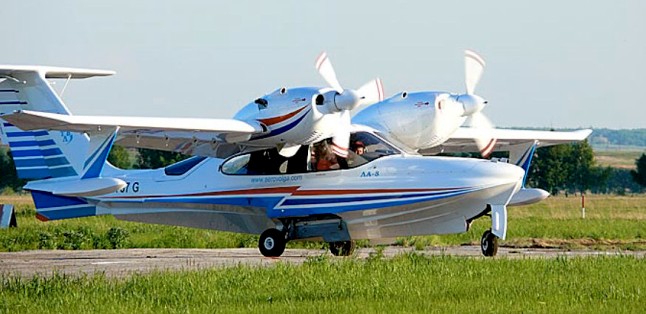
The aircraft can be equipped with LYCOMING 540 of 235HP to 300HP, as well as turboprop TP-100 or AI-450 engines with propellers “AVIA” or MT.
In case of using LYCOMING engines it is possible to install HOFFMAN V-123 propellers with increased starting thrust.
The aircraft can be equipped with auxiliary power unit with generator of 1 500W to increase the independency of the aircraft.
The main electrical network of the aircraft is DC 27V. Energy supply is DC generators. Basic battery of 24V/16 Ah or also the battery of 24V/20 ah can be installed.
Power supply of power-consuming devices such as de-icing devices is performed by AC 42V from the additional generators mounted on the engines. To be able to connect devices with a voltage of 12V can be installed static converter with power up to 250 W.
The main flight instrument is GARMIN G500 avionics display system certified for multiengine piston aircrafts with take off weight up to 5 700 kg and flight altitude up to 6 000 m. The display consists of two monitors.
For better maneuverability of the aircraft on the water is provided the small boat engine installation.
The design of the aircraft allows its quick (within 15 minutes) transformation from a passenger (main) version into cargo version. On the rails of the floor are installed strapping shoes for mooring cargo or cargo mash. Re-equipment of the aircraft is performed from passenger modification into air ambulance less than 30 minutes.
The design of the wing (version RS) allows to mount two underwing containers weighing up to 150 kg each.
It is possible to deliver LA-8 as hydroplane with fast mounted undercarriage (mounting and dismantling take not more 10 minutes) and removable ski set for winter operation. The useful load of LA-8H is 1180 kg (1215 kg for RS-version).
SPU “AeroVolga” offers a unique modification of the fire-monitoring aircraft LA-8 FF (2 person crew) with the possibility of taking onboard 1000 liters of water in the planing mode, water drop (foam-water mixture) during 2 sec from the altitude up to 5 m at speed of 180 km/h and duration for fire monitoring up to 5 hours.
The patrol modification of the aircraft based on LA-8C-RS with radio and video monitoring set of surrounding area can stay in the air up to 14 hours with crew of 4 people. The crew is provided by dry closet, galley and a place for rest for one person as well as multi-channel communication protected system
The first-aid modification of the aircraft based on LA-8C-RS with medical equipment weighing up to 180 kg allows two doctors to resuscitate a patient (injured) during the flight up to 5 hours (1000 km).
In 2013 the aircraft are delivered with airworthiness certificate under FAP-118 Russian Federation at the moment.
The LA-8 first prototype flew for the first time on 20 November 2004 with test pilot M.M. Emanov. The first production aircraft flew in August 2006 and the first Lycoming powered machine was completed in mid-2010.
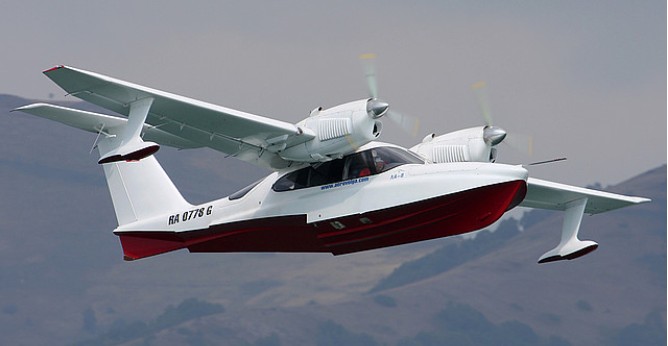
In 2006 the aircraft was modified with series 37 engines: М-337C with power increased by 25%, and specific fuel consumption reduced by 15%. In 2008 the Lycoming 540 (235 h.p.) engine was integrated.
The first flight tests of the LA-8 were carried out successfully. Takeoff from water showed good characteristics: exit to the glideslope is 45 km/h, take-off is 90 km/h, the length of takeoff of an empty plane is 200 meters. Prototyprs 1 and 2 conducted more than 200 hours of factory flight tests.
Certification works are carried out according to Russian aviation rules (АR-23,21) correspondent to international FAR; JAR.
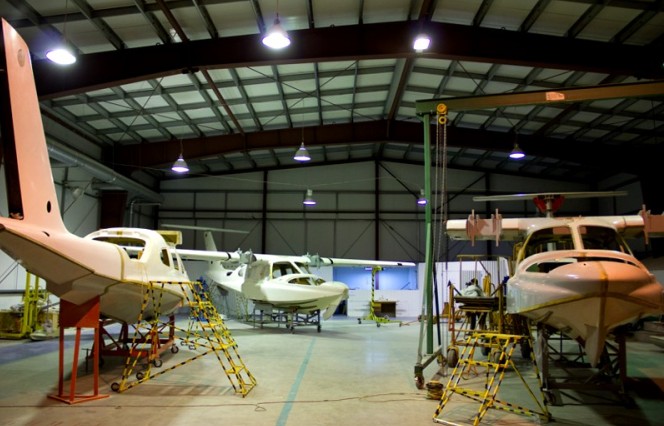
By mid-2012 six LA-8s had been produced for customers as well as the three prototypes. Two were with Russian operators, one flying around Lake Baikal and the other on Lake Seliger. Two went to an operator in Montenegro. Another five have been sold to Rimos Ltd for work in the Persian Gulf; by July 2012 two of these had been delivered.
Seagoing ability allows operating with wave height up to 0,6 m. Minimum length of runway is 400 m. Runway absolute altitude up to 1 500 m for piston version and 2 500 m for turboprop version.
Variants:
LA-8C
Baseline version powered by 2x 175 kW (235 hp) LOM Praha M-337C-AV01.
LA-8L
2x 175 kW (235 hp) Lycoming IO-540B4B5 engines.
LA-8C-RS
Long range version of LA-8C, powered by 2x 175 kW (235 hp) LOM Praha M-337C-AV01.
LA-8L-RS
Long range version of LA-8L, 2x 175 kW (235 hp) Lycoming IO-540B4B5 engines.
LA-8HC
Flying boat / Hydroplane / skis based on the LA-8C
LA-8HL
Flying boat / Hydroplane / skis based on the LA-8L
LA-8LDM
High specification variant.
LA-8FF
Fire-fighting variant.
Specifications:
LA-8
Length: 36,42 ft
Wing length: 46 ft
Ramp height: 11,15 ft
Maximum width of fuselage: 6,56 ft
Track of landing gear: 6 ft
Wheelbase of landing gear: 11,23 ft
Wing area: 217,4 sq.ft
Maximum takeoff weight: 5997 lb
Maximum useful comercial load: 1764 lb
Maximum fuel capacity (ferrying): 396,3 gal
Maximum altitude: 14760 ft
Maximum allowable speed: 189,5 ktas
Maximum speed of horizontal flight: 170,9 ktas
Cruise speed (economy): 146 ktas
Range (payload 1764 lb): nm (max)
Range max: 2160 nm
Endurance (max tow): 5,6 hr
Rate of climb: 787-1181 ft/min
Runway length land (max t.o.w.): 1148 ft
Runway length water level (max t.o.w.): 1476 ft
Landing speed (at maximum weight): 53 ktas
Maximum overload: +3,8 -1,9G
Passenger Cabin length: 11,32 ft
Passenger Cabin width: 5,381 ft
Passenger Cabin height: 4,068 ft
Cabin capacity: 130,7 cu.ft
Maximum length of cargo: 14,53 ft
Front upper access door: 1,47 х 1,90 ft
Rear upper access door: 5,545 x 4,232 ft
Emergency doors (left, right): 2,23 х 2,23 ft
LA-8C
Empty weight: 1 685 kg
Maximum take-off weight: 2 720 kg
Maximum useful load: 1 035 kg
Range 630 kg payload opt tip tanks: 1 400 km
LA-8C-RS
Engines: 2x 175 kW (235 hp) LOM Praha M-337C-AV01.
Empty weight: 1 650 kg
Maximum take-off weight: 2 720 kg
Maximum useful load: 1 070 kg
Maximum range: 4 000 km
LA-8L-RS
Engines: 2 × Lycoming IO-540B4B5 air-colled flat six, 175 kW (235 hp) each
Propellers: 3-bladed Hoffman HO-V123K, 1.95 m (6 ft 5 in) diameter
Length: 10.80 m (35 ft 5 in)
Wingspan: 15.00 m (49 ft 3 in)
Height: 3.14 m (10 ft 4 in)
Wing area: 22.10 sq.m (237.9 sq ft)
Airfoil: P-lll-15
Empty weight: 2,000 kg (4,409 lb)
Gross weight: 2,720 kg (5,997 lb)
Maximum speed: 259 km/h (161 mph; 140 kn)
Cruising speed: 220 km/h (137 mph; 119 kn) normal
Stall speed: 86 km/h (53 mph; 46 kn) power off, flaps down
Service ceiling: 5,000 m (16,404 ft)
g limits: +3.8/-1.9
Take-off run, land: 350 m (1,149 ft)
Take-off run, water: 450 m (1,477 ft)
Crew: One or two
Capacity: max 7 passengers.

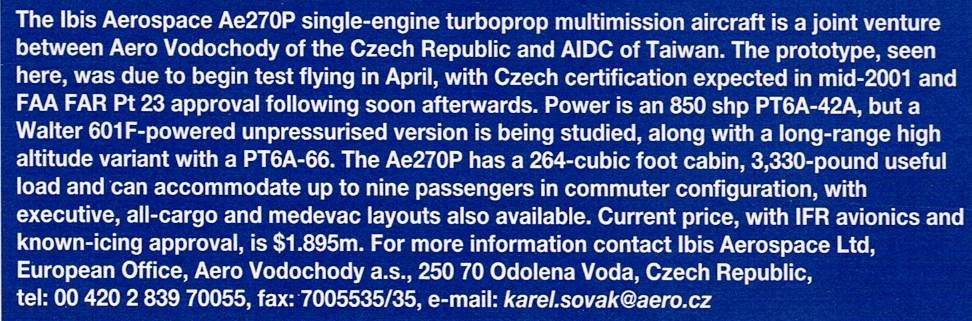
An eight seat, turboprop transport produced 50/50 with Ibis of Taiwan.

Variants: L-159A, L-159B, L-159T, L-159T1 / L-159BAT
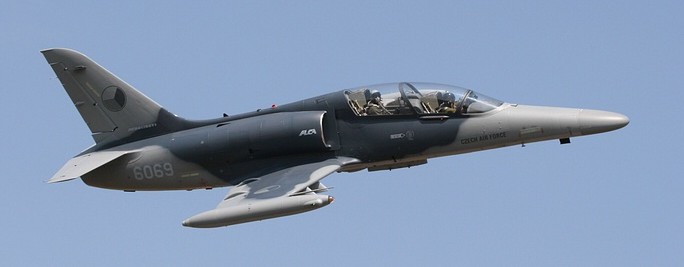
The L-159 ‘Albatross II’ was developed from the L-39 Albatross family for a Czech Air Force’s requirement in the early 1990s. Based on the L-59, the tandem canopy was retained, the back seat of the single-seat L-159A being occupied by an additional fuel tank. This enabled Aero to offer a two-seat combat capable version, designated L-159B, for training and operational conversion.
Compared to the L-59, a number of changes were made although the aerodynamic configuration was retained. The airframe was strengthened and the cockpit area was reinforced with composite and ceramic ballistic armour to offer the pilot better protection. The aircraft’s nose was enlarged to accomodate the radar, and the fuselage was extended behind the cockpit, making the L-159 0.52m (1ft 8in) longer than the L-59. One centre-line weapon pylon was added and the number of underwing pylons was increased from four to six.
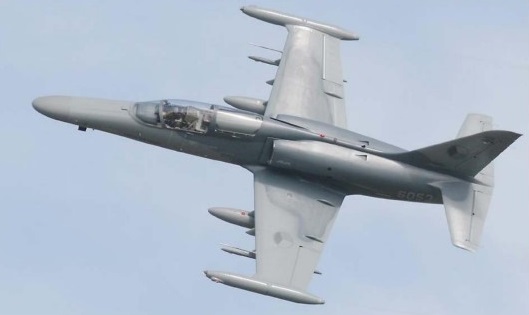
The engine was replaced with the US Honeywell/ITEC F124-GA-100 non-afterburning turbofan, of 6,300 lb of thrust (28,58 kN), providing about 66% more thrust than the L-39’s AI-25TL turbofan, and almost 30% more than the L-59’s Slovak ZMK DV-2 turbofan. Providing a better thrust-to-weight ratio and the ability to carry full weapon loads, the new engine makes the aircraft faster and more capable in the combat role.
The L-159A is fitted with the Italian FIAR Grifo-L multimode pulse Doppler radar. The radar has five air-to-air modes including track-while-scan with four air combat submodes, and is able to track up to eight targets simultaneously. For ground and maritime attack it has nine air-to-surface modes. The L-159B it features a full cockpit including HUD repeater panel. Both versions are fitted with lightweight fully automatic VS-2C zero-zero ejection seats and a canopy jettison system.

The L-159 has the digital MIL-STD-1553 integrated avionics system with two multi-function colour displays and analogue instruments for backup. The cockpit is NVG-compatible and has NATO-compatible radios for secure communication. For navigation it uses a Honeywell GPS navigation system, with Ring Laser Gyro INS as backup. The Head-Up Display is the FV-3000 by Flight Vision, and the L-159 provides Hands On Throttle And Stick (HOTAS) functionality.
The L-159 is capable of carrying a wide range of NATO-compatible weapons. The short-range air-to-air AIM-9M Sidewinder and the air-to-ground AGM-65 Maverick air-to-surface missiles have been integrated. Unguided weapons include Mk.82 bombs, CBU-87 cluster bombs and LAU-5002 rocket launchers. The aircraft is also capable of carrying a podded 20mm cannon.
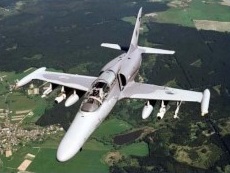
The Czech government signed a contract with Aero on April 11, 1995, to fund 25% of the development cost and stated a requirement for 72 single-seat L-159A, but this many aircraft far exceeded the requirement, and there were no orders for the L-159B.
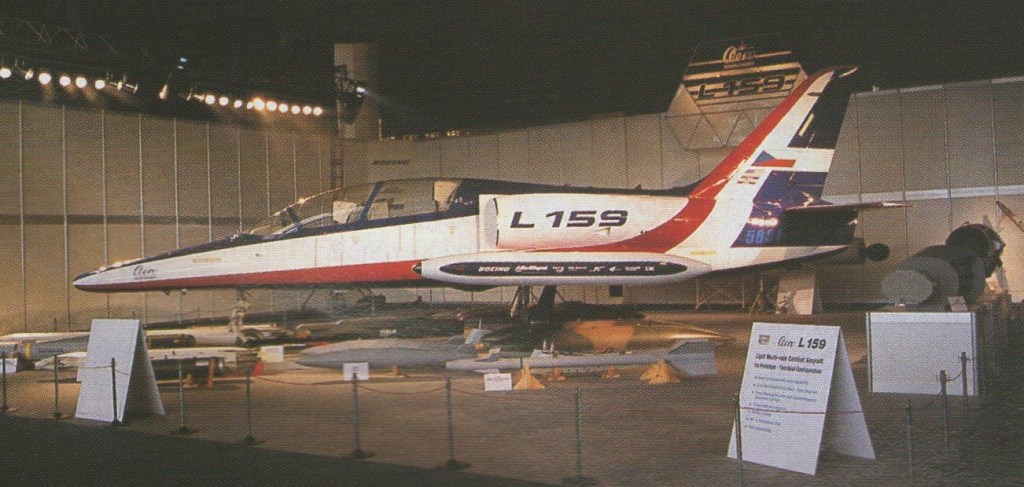
The prototype L-159, 5831, was unveiled at Aero Vodochody near Prague on 12 June 1997.
The first prototype (L-159T serial 5831) was rolled out on June 12, 1997, and first flew on August 2, 1997, flown by Aero’s chief test pilot Miroslav Schutzner. The second prototype (L-159A serial 5832) made its first flight on August 18, 1998. Again flow by Schutzner, it was the first single-seat aircraft to fly with the space of the rear cockpit being occupied by test equipment. In 2002, the third L-159 protype performed its maiden flight on June 1. Designated L-159B, ‘6073’ was a two-seat version designed for advanced training and operational conversion.
The first L-159A arrived at Çáslav AB on December 27, 2000, joining the 42 Fighter Squadron. Economic conditions resulted in defence cutbacks, putting the L-159As into storage. 212 FS remained as the sole L-159 unit with just 18 L-159A ALCA and six aircraft as reserve. The Czech Air Force ordered the conversion of a number of L-159A single-seat aircraft into L-159T1 two-seaters.
The Czech MoD signed a contract for four conversions of surplus L-159A aircraft to two-seat L-159T1 trainers on June 26, 2006. Two days later the first L-159A arrived at Aero’s plant, serialled 6069 it is one from the 24 at Çáslav AB. It was completed in early 2007 and made its first flight on March 8, 2007. The three others converted to L-159T1 are 6067, 6071 and 6072. All four L-159T1 were officially accepted back into service on November 23, 2007.
L-159T1 is the designation introduced by the Czech Air Force, Aero Vodochody also referred to the conversion as L-159BAT (“B from A for Training”). The L-159T1 conversion replaces the front fuselage with a new one providing the second cockpit. The new version lacks cockpit protective armour, but closely resembles the L-159A on all other areas to provide a good conversion trainer.
Aero Vodochody has failed to attract any customers and the Czech MoD also failed to find any takers for its surplus of 47 L-159A ALCAs. Despite this, Aero Vodochody continued to develop the L-159 offering new capabilities including aerial refueling capability.
Aero L 159 ALCA
Engine: Allied Signal / ITEC F 124 GA-100, 28.58 kN / 6,300 lb turbofan
Length: 41.765 ft / 12.73 m
Height: 15.682 ft / 4.78 m
Wingspan: 31.299 ft / 9.54 m
Wing area: 202.363 sqft / 18.8 sqm
MTOW: 17640.0 lb / 8000.0 kg
Weight empty: 9172.8 lb / 4160.0 kg
Internal fuel: 1596 kg / 5,159 lb
Max fuel: 2973 kg / 6,554 lb
Max. speed: 505 kts / 936 km/h / 582 mph
Initial climb rate: 9251.97 ft/min / 47.0 m/s
Service ceiling: 43307 ft / 13200 m
Wing load: 87.33 lb/sq.ft / 426.0 kg/sq.m
Range int. fuel: 1570km / 850 nm
Max range: 2250km / 1,215 nm
Crew: 1-2
Armament: 7x ext.
Max. stores: 2340kg / 5,159 lb
Design load: +8/-4 G
A 1986 trainer for advanced flight instruction.
Engine: AlliedSignal (Garrett) TFE731-4, 17795 N
Length: 40.026 ft / 12.2 m
Height: 15.682 ft / 4.78 m
Wingspan: 31.299 ft / 9.54 m
Wing area: 202.363 sqft / 18.8 sqm
Max take off weight: 11025.0 lbs / 5000.0 kg
Weight empty: 7430.9 lbs / 3370.0 kg
Max. speed: 410 kts / 760 km/h
Cruising speed: 389 kts / 721 km/h
Initial climb rate: 4330.71 ft/min / 22.0 m/s
Service ceiling: 39370 ft / 12000 m
Wing load: 54.53 lb/sq.ft / 266.00 kg/sq.m
Range: 810 nm / 1500 km
Crew: 1+1
Armament: 2x 23mm GSh 2, Kan. ext.
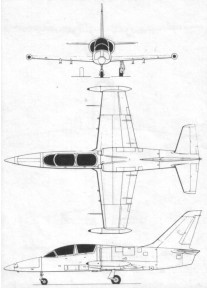
Similar externally to earlier versions, the L 59 (previously designated L 39MS) has a more powerful DV 2 engine of 4,850 lb st (21,57 kN) giving a 20 per cent improvement in climb-rate, a VS 2 zero/zero ejection seat, and upgraded avionics including a HUD. First flight was made on 30 September 1986.
Engine: DV 2, 4,850 lb st (21,57 kN).
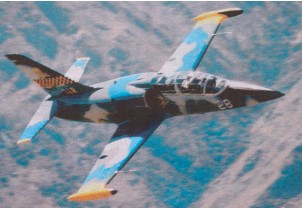
The Albatros, first flown on November 4, 1968, is the L 29’s successor as the standard trainer of all Warsaw Pact countries except Poland, and was in production in a light attack version, mainly for export. Designed three years after the L-29, the L-39 went through a series of prototype and development models before seeing production begin in 1972. The L-39 was designed with simplified and a more modular approach to engineering allowing the L-39 to be produced more efficiently and quicker than the L-28. The base powerplant allowed for a thrust upgrade when compared to the L-29 and avionics coupled with reinforced subsystems put the L-39 ahead.
Aero Vodochody L-39 Albatros Article
A tandem seater, with the instructor in the raised rear ejection seat, it is powered by the 1720 kg (3792 ¬lb) thrust Walter Titan, the Czech built Ivchenko Al 25TL turbofan also used in the Yak 40 STOL trijet. The name Albatros is used only for L 39 aircraft in service with the Czech air force, to which deliveries began in April 1974.
The basic aircraft is equipped with a camera gun and electrically controlled gunsight, but has no internal gun. Gun pods, bombs, rockets and missiles can be carried on two or four wing pylons along with a centerline-mounted 23mm GSh-23L twin-barrel cannon for close quarters work.
With production of 2,600 by 1990 it proved to be a very successful aircraft, with more than 2,900 built by 2005 with about 300 in civilian ownership around the world.
The aircraft is fully aerobatic stressed for +8G and 4G and can climb at the rate of about 3500 feet per minute.
Export numbers for the L-39 Albatross were roughly the same as the L-29. Thailand went on to purchase an export model designated with L-39 ZA/ART that featured Israeli-produced Elbit avionics. The most numerous in terms of production was the L-39 “C” model, which helped drive total production total past 3,000.
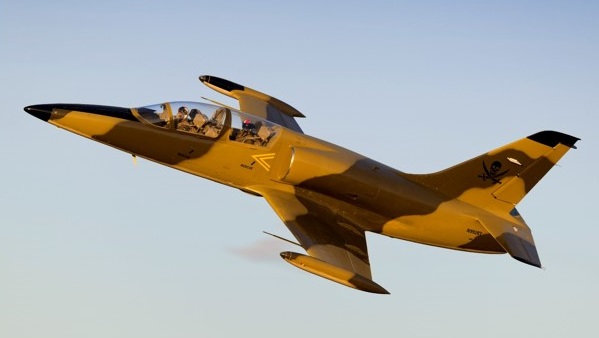
Earlier variants of the aircraft are the L.39ZO weapons trainer, the L.39ZA ground attack and reconnaissance aircraft, which has an under-fuselage gun pod and four wing hardpoints, and the L.39V target tug.
The L.39MS version of the Albatros was rolled out in mid-1986, but later designated the L-59.
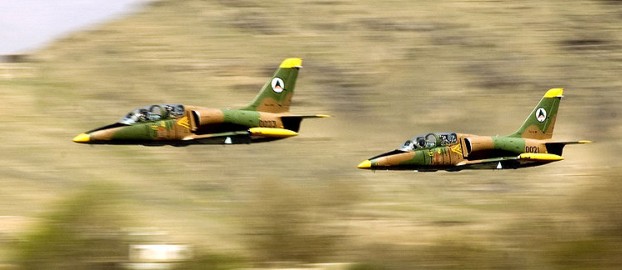
Aero L 39 Albatros
Engine: Ivtshenko AI 25 TL turbofan, 3,792 lb / 16873 N
Wingspan: 31.037 ft / 9.46 m
Length: 40.42 ft / 12.32 m
Height: 15.486 ft 4.72 m
Wing area: 202.363 sqft / 18.8 sqm
Aspect ratio: 4.4
Area of elevons: 18.299 sqft / 1.7 sqm
Area of flaps: 28.848 sqft / 2.68 sq.m
Empty weight: 7,340 lb
MTOW: 11,618 lb
Max. speed: 405 kts / 750 km/h
Landing speed: 92 kts / 170 km/h
TO distance: 1476 ft / 450 m
Landing dist: 2034 ft / 620 m
Initial climb rate: 4330.71 ft/min / 22.00 m/s
Service ceiling: 37730 ft / 11500 m
Wing load: 49.41 lb/sq.ft / 241.00 kg/sq.m
Range: 589 nm / 1090 km
Crew: 2
Armament: 1100kg ext. 4 pods., 23mm MK
L.39A
Engine: 1 x Walter Titan, 1720 kg / 3792 lb thrust.
Span: 9.4 m / 31 ft 0.5 in
Length: 12.25 m / 40 ft 5 in
Gross weight: 4535 kg / 9998 lb
Max speed: 750 km/h / 466 mph
L-39C
Engine: 3,800 lbs thrust turbofan.
Max wt: 4500 kg.
Speed: M 0.8 / 500mph / 600kph / 490 KIAS
Ceiling: 36,000 ft.
G-Limits: +8 / -4
Payload: 550 lb per pylon (2)
Endurance: 1.5+
L.39Z
Engine: 1 x Ivchenko AI-25TL, 16.9 kN.
Span: 9.5 m.
Length: 12.1 m.
Wing area: 18.8 sq.m
Empty wt: 3650 kg.
MTOW: 5600 kg.
Warload: 1100 kg.
Max speed: 755 kph.
Initial ROC: 1260 m / min.
Ceiling: 11,000 m.
T/O run: 480 m.
Ldg run: 600 m.
Fuel internal: 1255 lt.
Range: 1750 km.
Combat radius: 600 km.
Armament: 1 x 23 mm.
Hardpoints: 4.
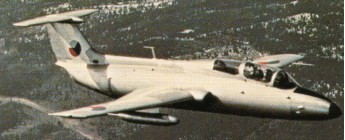
The Czech designed and produced Aero L-29 Delfin (translating to “Dolphin”; NATO designation of “Maya”) series was a highly utilized Cold War jet trainer aircraft for the Soviet Union and its satellite states. The twin-seat aircraft was capable of speeds over 400 miles per hour and a ceiling of over 36,000 feet.
Aero Vodochody L-29 Delfin Article
Early design studies for a two-seat jet trainer were conducted by K Tomas and Z Rubic in 1955. The L-29 features a T tail and can operate from grass, waterlogged, and dirt strips.
The single engine L-29 was built from two XL-29-designated prototypes – one fitted with a British Bristol Siddeley Viper turbojet engine and another fitted with an indigenous 1,960 lb thrust M 701c 500 turbojet, first flown on 5 April 1959. The XL-29 powered by an M 701 turbojet flew for the first time on April 5, 1960.
Further development saw a three-way competitive fly-off occur against the Yak-30 design and the PZL Mielec TS-11 Iskra with the L-29 coming out ahead (Poland would go on to utilize the TS-11 trainer however). Placed in production in 1963, it subsequently became a standard trainer with many Warsaw Pact and other countries.

The last of over 3,600 rolled off the production line in 1974. Almost all production was of the basic aircraft variant (codename Maya), although two other variants did appear.
The Soviet Union alone took over 2,000 Delfins, while significant numbers also served in Czechoslovakia, East Germany, and Hungary. In these countries the Delfin was used in all-through training from ab iniito to advanced stages.
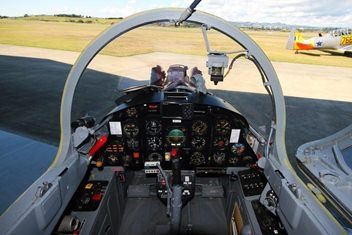
Small numbers of a single seat L-29A Delfin Akrobats were built for aerobatics while a prototype L-29R dedicated attack aircraft was also built.
With two available underwing hardpoints, a light attack strike aircraft was designed that could carry gun pods, drop bombs and rockets. Specialized aerobatic performers were also devised from the existing base L-29 airframe. 3665 were built until production ceased in 1974, superceded by the L-39. NATO name Maya.
Aero L-29 Delfin (Dolphin) / Maya
Engine: 1 x Motorlet M 701c 500 turbojet, 1,960lbs / 870 kgp thrust.
Length: 35ft 5.5 in (10.81m)
Wingspan: 33ft 9.5in (10.29m)
Height: 10.17ft (3.10m)
Wing area: 213.125 sq.ft (19.8 sq.m)
Empty wt: 5071 lb (2 360 kg)
Loaded weight: 6,834 lb (3100 kg)
Maximum Take-Off Weight: 7,804lbs (3,540kg)
Wing loading: 36.7 lb/sq.ft / 179.0 kg/sq.m
Maximum Speed: 407mph (655kmh; 354kts) at 16,400ft (5 000 m)
Cruise speed: 339 mph (545 kph)
Maximum Range: 398miles (640km)
Rate-of-Climb: 2,755ft/min (840m/min)
Service Ceiling: 36,089ft (11,000m)
Accommodation: 2
Hardpoints: 2
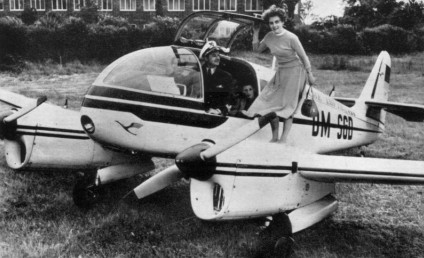
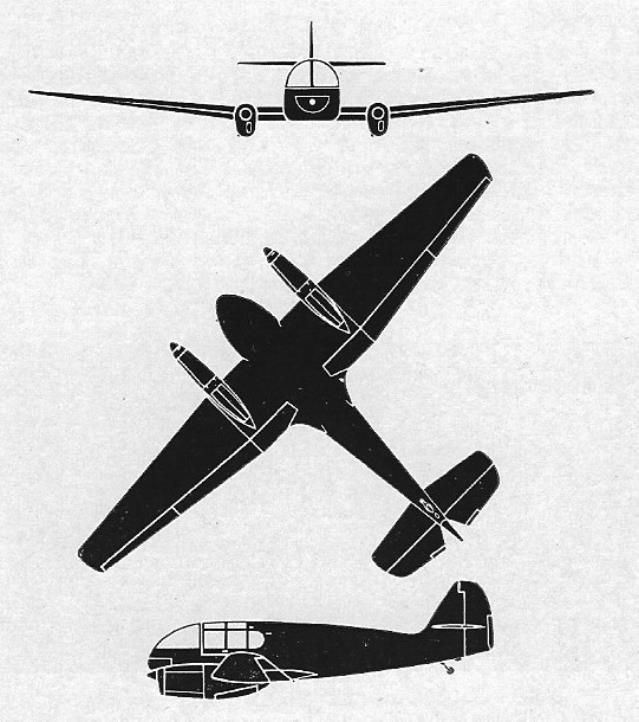
Development began 1946 and was accomplished by the technical designers Jiři Bouzek, Ondřej Němec and František Vik. The design bears a superficial resemblance, viewed nose-on, to the German Siebel Si 204 which, among other German aircraft like the Messerschmitt Bf 109, were produced in Czechoslovakia while under German occupation. The prototype (registered OK-BCA) flew for the first time on 21 July 1947 and the second, registered OK-CDA, one year later. Flight testing ran without incidents and the type was released for series production in 1948. The model number of “45” was not a continuation of Aero’s pre-war numeration scheme, but a reference to the 4/5 seats in the aircraft.
The Aero 45 had a sleek, teardrop-shaped fuselage, with a rounded, extensively-glazed nose affording excellent visibility. It had a low wing on which the engine nacelles were mounted, and a conventional tail. The main undercarriage was retractable but the tailwheel was fixed.
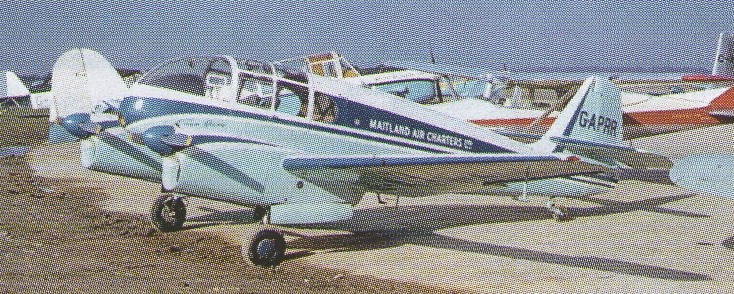
Ae-45 prototypes were widely advertised abroad. In August 1949 Jan Anderle won the Norton Griffiths Race in Great Britain (Ae-45 registration OK-DCL). They also set several international records. As a result, apart from Eastern Bloc countries, the plane was also bought by Italy and Switzerland.
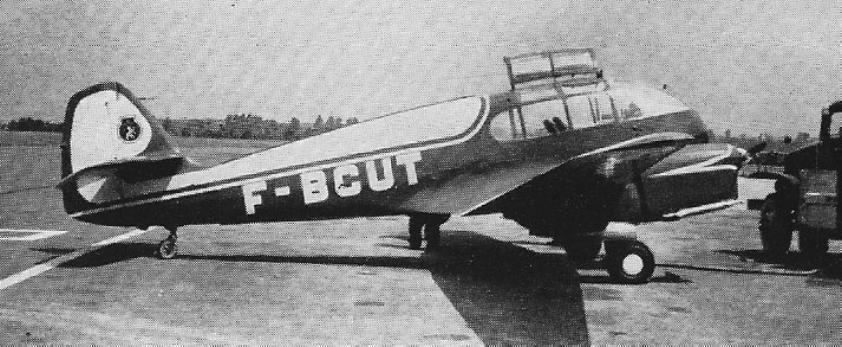
On 10–11 August 1958 Dr. Pier Paolo Brielli flew an Italian Ae-45 3000 kilometers from South America to Dakar across the southern Atlantic (as the first Czechoslovak-built aircraft). In 1981 Jon Svensen flew Ae-45S (390 sold) from Europe to the USA.
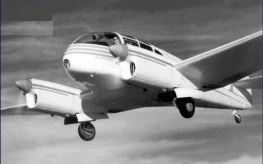
This type was used in Czechoslovakia and was exported to the People’s Republic of China, East Germany, France, Hungary, Italy, Poland, Romania, Soviet Union and Switzerland. Hungary was a major customer, where the aircraft was known as the Kócsag (Hungarian: “Egret”).
Aero Vodochody produced the aircraft in 1947–1951, after which the Let Kunovice rolled out these planes until 1961. In 1958 the Ae-45S became the first Czechoslovak plane to cross the Atlantic Ocean. It was the first product of the nation’s postwar aviation industry and proved a great success, with many of the 590 produced being exported.
Among operators were Interflug (4), Hungarian Police and Hungarian Air Ambulance Service, LOT Polish Airlines operated three Ae-45 in 1952–1957, Polish Air Ambulance Service operated Ae-45 and Ae-145, Aeroflot, Aeroclub Ajdovščina, Vietnam Civil Aviation Department – later as Vietnam Civil Aviation (now Vietnam Airlines), East German Air Force, Hungarian Air Force, Romanian Air Force, and Czechoslovakian National Security Guard. The Czechoslovak Air Force operated aircraft under designation K-75, for liaison purpose, and the Indian Air Force operated a single aircraft gifted by the Czech government
In the People’s Republic of China the People’s Liberation Army Air Force operated license-built Suingari-1 variant. The Vietnam People’s Air Force operated three Ae-45 from 1956 (acquired from China).
Variants:
Aero 45
irst production version built in Aero factory.
200 built between 1948 and 1951.
Aero 45S “Super Aero”
Improved variant produced by Let in Kunovice factory, among others with better navigational equipment.
228 aircraft built between 1954 and 1959.
Aero 145
Version with engines changed to supercharged Motorlet (Walter) M332
Produced later as Avia M332s.
This version was developed and built by Let
162 aircraft built between 1959 and 1961.
Engines: 2 × Avia M 332-III, 100 kW (140 hp) each
Propellers: 2-bladed Type V410, electrically-operated metal 4-position variable-pitch
Propeller diameter: 1.9 m (6 ft 3 in)
Wingspan: 12.25 m (40 ft 2 in)
Wing area: 17.1 sq.m (184 sq ft)
Airfoil: Aero No.58-64
Length: 7.77 m (25 ft 6 in)
Height: 2.3 m (7 ft 7 in)
Empty weight: 960 kg (2,116 lb)
Gross weight: 1,500 kg (3,307 lb)
Max takeoff weight: 1,600 kg (3,527 lb) (full fuel)
Fuel capacity: 324 l (86 US gal; 71 imp gal)
Maximum speed: 282 km/h (175 mph, 152 kn) at 1,600 kg (3,500 lb) AUW
Cruise speed: 250 km/h (160 mph, 130 kn) at 1,600 kg (3,500 lb) AUW
Range: 1,700 km (1,100 mi, 920 nmi)
Service ceiling: 5,900 m (19,400 ft)
Service ceiling one engine out: 2,200 kg (4,900 lb)
Rate of climb: 5 m/s (980 ft/min)
Wing loading: 87.8 kg/sq.m (18.0 lb/sq ft)
Power/mass: 9.5 kg/kW (15.7 lb/hp)
Take-off run to 15 m (49 ft): 460 m (1,510 ft)
Crew: 1
Capacity: 3-4 pax
Sungari-1
Chinese unlicensed copy of the Aero Ae 45S, produced from 1958.
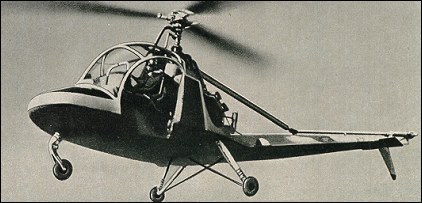
The XE-II was developed into the prototype HC-2, HC-3, and HC-102 Heli-Baby two-seat general-purpose helicopter. With an all-metal fuselage/boom, fixed tricycle undercarriage and 80hp Praga DH engine driving a three-blade rotor, the prototype HC-2 flew on 3 March 1954, and an order for 200 HC-2 helicopters was announced while still flying in prototype form. It is not clear how many examples were finally delivered, but the HC-2 of 1958 served with the Czech Air Force for some years.
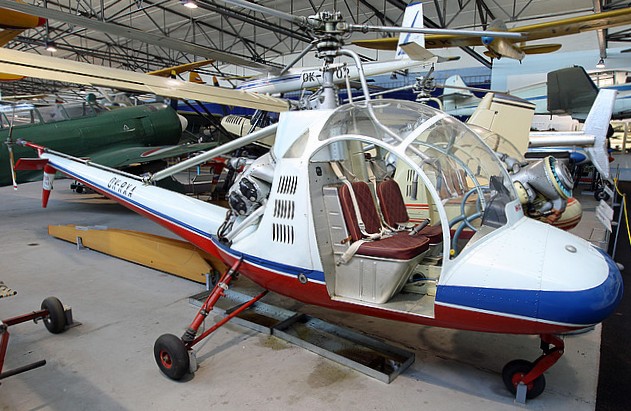
The HC-2 prototype is a two-seat light general-purpose helicopter, with a three-blade main rotor and two-blade anti-torque tail rotor. The main rotor blades are of wooden construction with a steel insert in leading-edge for mass balance and plywood covering armoured with fiberglass of NACA 23015 aerofoil section. The blades are fully articulated in flapping and drag planes with a single adjustable friction damper for all three drag hinges. The blades are mounted on tubular steel spars incorporating tension-torsion bars with cyclic pitch change actuated by control stick. The collective pitch lever is synchronised with engine throttle. Override settings of throttle are by means of twist-grip on pitch control lever. The individually-flapping tail rotor blades of laminated wood with fiberglass covering have the pitch controlled by rudder pedals. Additional horizontal tail surfaces are used during transition from vertical to horizontal flight. The fuselage is an all-metal semi-monocoque structure, with a non-stressed cabin enclosure. The landing gear is a fixed tricycle type, with castoring nose-wheel capable of swivelling through 360°, and oleo-pneumatic shock-absorbers on all three 260x85mm wheels. A tail-skid is fitted to avoid damage to rotor.
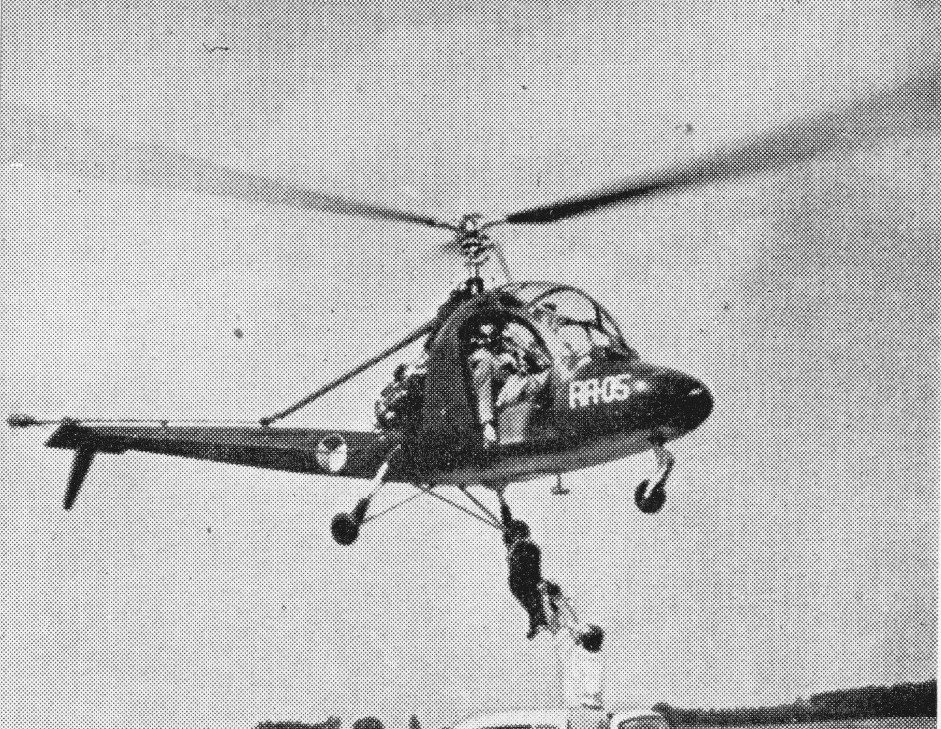
Powered by an 83hp Praga DH four-cylinder horizontally-opposed fan-cooled engine mounted aft of the rotor pylon, with the crankshaft centre-line inclined at 45°. Drive from engine is taken through a centrifugal clutch to the main gearbox with a free-wheel in the main gearbox for autorotation. The tail rotor is driven off the main gearbox through a universal joint and shafting. The engine / main rotor r.p.m. ratio is approximately 10 : 1, and engine / tail rotor r.p.m. ratio approximately 3 : 2. Normal fuel capacity is 40 litres.
Seating is side-by-side for two in a cabin with Plexiglas canopy. Controlled by dual overhead cyclic control sticks and collective pitch levers on the left side of each seat. Starboard controls quickly removable. No doors.

The HC.3 was an enlarged four-seater based on the HC-2 but with a four-leg undercarriage, englarged cabin section and an M-108H engine mounted above and behind the cabin. Three prototypes were tested (OK-15 to OK-17) but the type did not reach production.
HC-2
Engine: 1 x Praga DH, 80 hp / 60kW
Main rotor diameter: 8.8m
Length: 10.50m
Height: 2.3m
Take-off weight: 580kg
Empty weight: 370kg
Max speed: 126km/h
Cruising speed: 100km/h
Ceiling: 3030m
Range: 150km
HC-3
Engine: 1 x Praga DH, 83hp
Fuel capacity: 40 litres
Oil capacity: 8 litres.