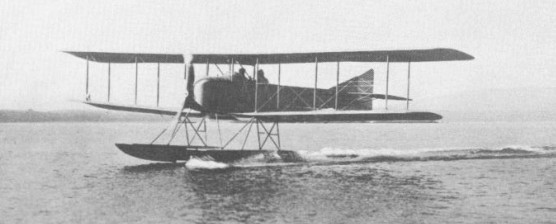
Ago W.2
Sea reconnaissnace, Germany, 1913
Engine: Argus As I, 99 hp
Wingspan: 59.055 ft / 18.0 m
Crew: 2
Span: 61′
Length: 39’4″
The circa 2003 Toy Cat is a highly modified Grumman Ag-Cat cropduster. Modifications include a one-piece canopy, tandem seating, cowl ring, spring-steel undercarriage with wheel pants and more.
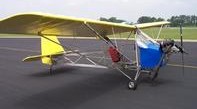
The Affordaplane was introduced in 2001 as a simple to build, affordable ultralight. Featuring three axis control, full span ailerons, and classic lines, the Affordaplane can be built in 250 hours with no welding involved. 2009 price was US$3000. Designed by Dave Edwards this aircraft is for the first time builder and plans are available.
Length: 17’3”
Height 5’0”
Wingspan 27’6”
Wing Area 117 sq. ft
Empty Weight: 115 kg / 254 lbs
MTOW: 245 kg / 540 lbs
Stall: 23 kt / 27 mph / 43 kmh
Cruise: 56 kt / 65 mph / 105 kmh
VNE: 74 kt / 85 mph / 137 kmh
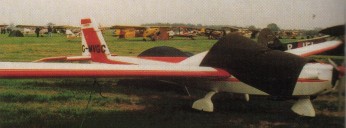
Promoted as a motor glider, the side-by-side two seater has long, cantilevered wings.
After corporate difficulties the Chevrn returned to production by Aviation Enterprises. Aviation Enterprises markets the Chevron 2-32C two-seat composites microlight trainer (first flown 1983 in original prototype form). Over 40 were sold worldwide.
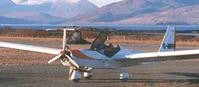
Aviation Enterprises Chevron 2-32C
Engine: Konig SD 570, 32 hp
Wing span: 13.4 m
Wing area: 17.6 sq.m
MAUW: 390 kg / 860 lbs
Empty Weight: 184 kg / 406 lbs
Fuel capacity: 50 lt
VNE: 86 kt / 99 mph / 159 kmh
Max speed: 120 kph
Cruise: 60 kt / 69 mph / 111 kmh
Stall: 28 kt / 32 mph / 52 kmh
Climb rate: 2.0 m/s
Glide Ratio: 17:1
Take-off distance (50ft obstacle): 750 ft / 230 m
Landing distance (50ft obstacle): 460 ft / 140 m
Certification: Vz, BCAR S
Seats: 2
Price (1998): £25,850
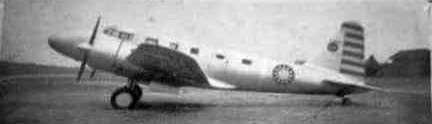
The Zhongyun Transport was designed by the 1st, 2nd or 3rd AFAMF (Air Force Aircraft Manufacturing Factory).
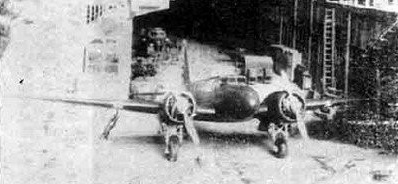
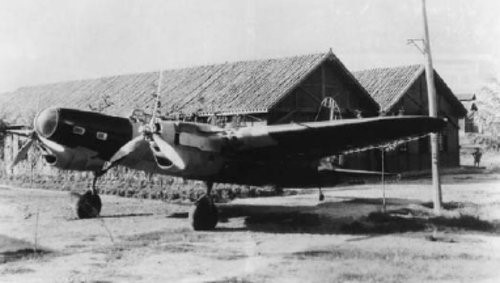
The XB-3 Bomber was designed by the 1st, 2nd or 3rd AFAMF (Air Force Aircraft Manufacturing Factory).
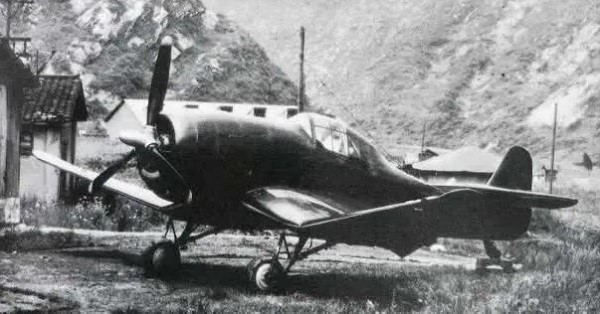
This aircraft seems to have drawn inspiration from the Vought Corsair and contemporary Japanese fighters. The XP-1 had the rear fuselage cut down, assumable to give a good all-round view for the pilot. It also had a rather peculiar wing, which was both bent and swept forward, to quite a strong degree apparently.
The XP-1 was designed in 1942 by Constantin Zakharchenko and built in Guiyang in 1944. with fixed undercarriage, The XP-1 was powered by one 1,200 hp Wright Cyclone R-1820-71 from A C-49D. It had wood/plywood inverted-swept wings, with automatic flaps, and the fuselage was built in steel tube/fabric.
Completed at some point in 1944, it reportedly first flew in January 1945.
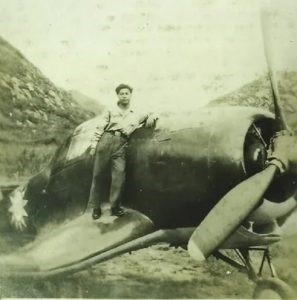
And on this first flight its engine, which was supposedly recovered from a crashed C-47, failed and the aircraft crashed. A second prototype is reported to have been under construction at the time but cancelled after this and the program scrapped.
The chaos of the Chinese Civil War seems to have destroyed most traces of the XP-fighters and all that remains of them are a few snippets.
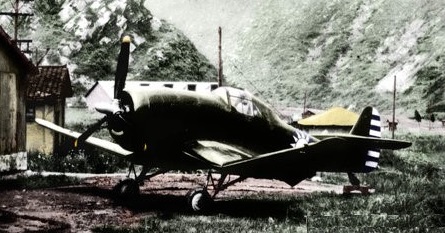
Engine: 1,200 hp Wright Cyclone R-1820-71
Wingspan: 12.10 m
Length: 8.72 m
Max weight: 2,930 kg
est.Max speed: 580 kph
Armament: two 12.7 mm machine guns
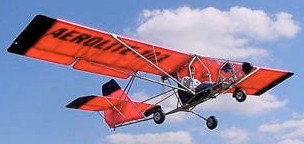
A kit built ultralight featuring aircraft grade aluminum tube, steel tube and fabric construction. There is a Kwik Kit for the Aerolite 103. The jig built air frame comes 100% complete with everything needed to fully assemble and finish your new Aerolite 103. The Aerolite’s airframe features Aircraft Grade aluminum tubing, hardware, bolts, rivets, and professionally welded 4130 steel components throughout it’s construction. The exposed aluminum tubing is clear anodized for cosmetic appearance and protection from the elements. The 4130 steel components are both primed and finished in Aerolite Trim Black.
Single seat, high wing, with trigear, the fuselage comes completely framed and includes several items such as the seat, 4-point safety harness, fuel-tank and engine mounts already installed. The fuselage needs only the wheels, windshield, engine, prop, gauges, and flying instruments to complete. The wing panels and all flying surfaces are completely built and are ready for covering. The wing struts and tail-boom assemblies are pre-built and only require final adjustments during the final assembly of the airframe. Pre-sewn Dacron covers slide onto the pre-built flying surfaces and the covers are secured to the air frame by a combination of zippers, quick latch straps and wing rib battens. The wing ribs are inserted into pre-sewn pockets inside the wing covers.
The control surface set up and final rigging is made easy by using the supplied push-pull stainless steel cables that securely lock into place, and with only the final adjustments needing to be made.
Normal Take-Off uses full throttle, accelerating to 30 mph, rotate, and climb at Vy 45 mph. A Short Field Take-Off uses 15 – 20 degrees of flaps and climb at Vx 40 mph. Cruise Flight is at 45 – 63 mph indicated airspeed.
Normal Landing involves 45 – 50 mph on final and wheels touch down at 30 mph.
Short Field Landing or Landing Over an Obstacle uses 30 – 40 degrees of flaps and a minimum 40 mph from base to final. Maintain 40 mph on final and wheels touch down at 30 mph.
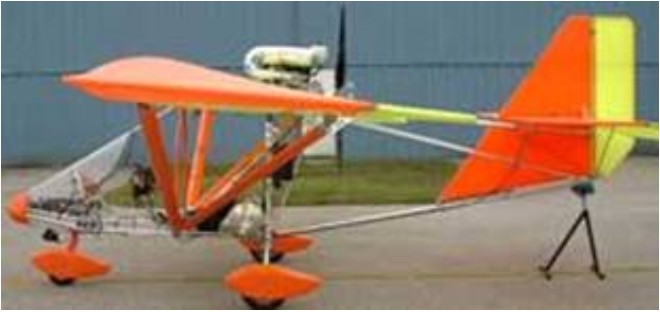
Engine Power Requirements: 28 hp. – 50 hp.
Reduction: Cog Belt / B-model gearbox / ratios 2.5/1, 2.58/1, 2.6/1, 3.0/1
Empty Weight: 252 lb – 300 lb
Gross Weight: 600 lb.
Rec. Gross TO Wt: 450 lb-525 lb
Wingspan: 26ft 10in
Wing Loading @ Gross Wt: 4.8 lb. / per sq. ft.
Wing Area: 124 sq. ft.
Propeller Maximum Diameter: 63″
Design Load Limits: +4 / -2
Stall Speed: 26 mph – 35 mph
Cruise Speed: 45-63 mph
Top Speed: 63-70+ mph
Rate of Climb: 800-1000 fpm
Sink Rate: 350-400 fpm
Glide Ratio: 9:1
Roll Rate 45 deg-45 deg: 2.5 seconds
Take-Off Distance: 100-200 ft
Landing Distance: 100-200 ft
TO dist (50ft obstacle): 300 ft / 91 m
Landing distance (50ft obstacle): 300 ft / 91 m
Fuel Capacity: 5-6 US gallons
Endurance: 1.5 – 2.5 hrs.
Fuel Consumption: 2-4.5 USG/.hr
Range: 80 – 120 sm
Vne: 65 kt / 75 mph / 121 kmh
Va (design maneuvering speed): 50 mph
Vfe (maximum flap extend speed): 70 mph (0 – 40 degrees)
Vy (best rate of climb speed): 45 mph
Vx (best angle of climb speed): 40 mph
Vr ( take-off rotation speed): 30 mph
Maximum Crosswind Component: 15 mph
Maximum Wind Speeds: 25 mph
Maximum Bank Angle: 45 degrees
Maximum Pitch Angle (up & down): 30 degrees
Aerolite 103 (1996)
Engine: 35 hp 2si
Wing span 26.8′
Length: 17′
Height: 6′ 5″
Wing area: 124 sq/ft
Empty weight: 250 lb
Useful load: 270 lb
Cruise speed: 55 mph
Stall speed: 28 mph
Structural limits: +4Gs, -2.8 G
Steerable nose wheel
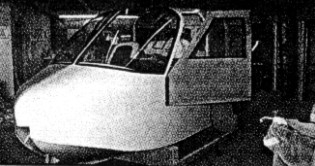
This 4-seat amphibian was a design of a company name Aero Wood Specialties, Inc. and work started around 1993. The aircraft had a largely all composite materials construction and the first example (a Model Avovet 1-A with a 300hp Lycoming IO-540-K1D5 engine) was under construction when the project was halted, possibly in/around 1998 and consequently the prototype was never completed.
Engine: Lycoming IO-540-K1D5, 300 hp.
HP range: 240-350.
Wing span: 39 ft.
Wing area: 185 sq.ft.
Height: 10.75 ft.
Length: 26.25 ft.
Weight empty: 1960 lbs.
Gross: 3520 lbs.
Speed max: 165 mph.
Cruise: 155 mph.
Range: 900 sm.
Stall: 53 mph.
ROC: 1200 fpm.
Take-off dist: 700 ft.
Landing dist: 1200 ft.
Service ceiling: 16,500 ft.
Fuel cap: 100 USG.
Seats: 4.
Landing gear: retractable nose wheel amphibian.

