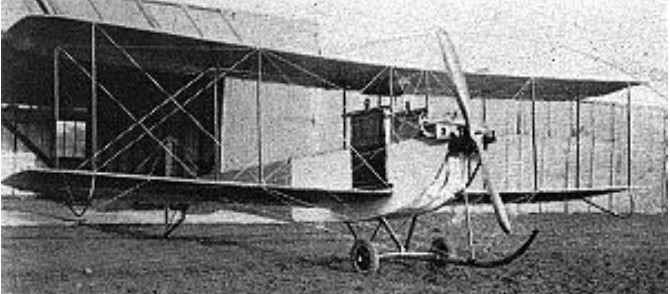
Avro Duigan / Lakes Sea Bird

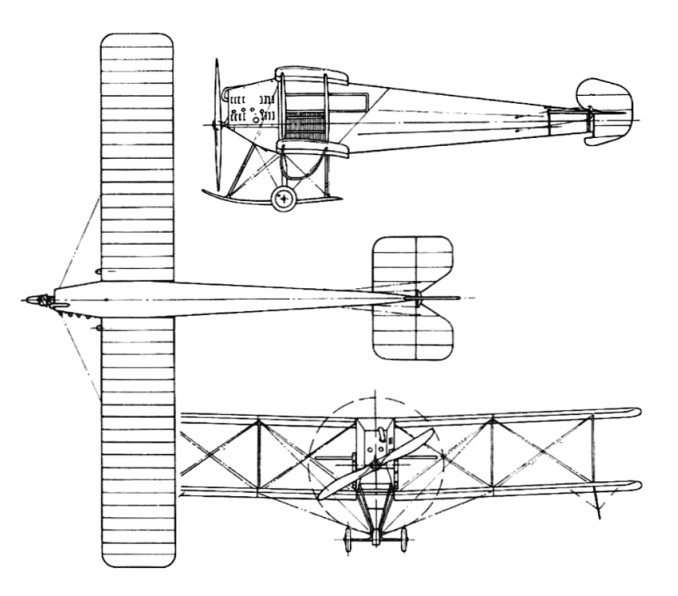
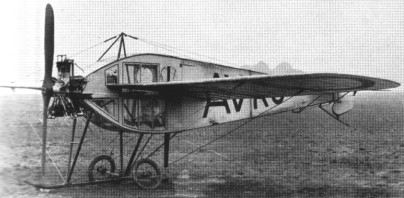
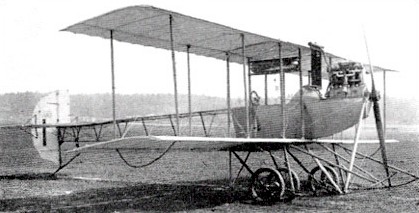
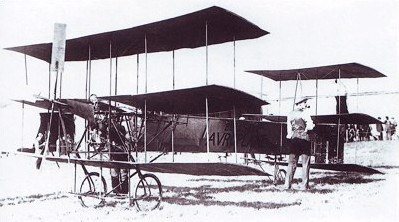
The Avro Duigan was single seat tractor biplane built by A.V. Roe for the pioneer Australian aviator John Robertson Duigan in 1911. Only one was built, but several examples of the very similar slightly larger two-seater aircraft built by Roe at the same time, the Avro Type E, were bought by the RFC

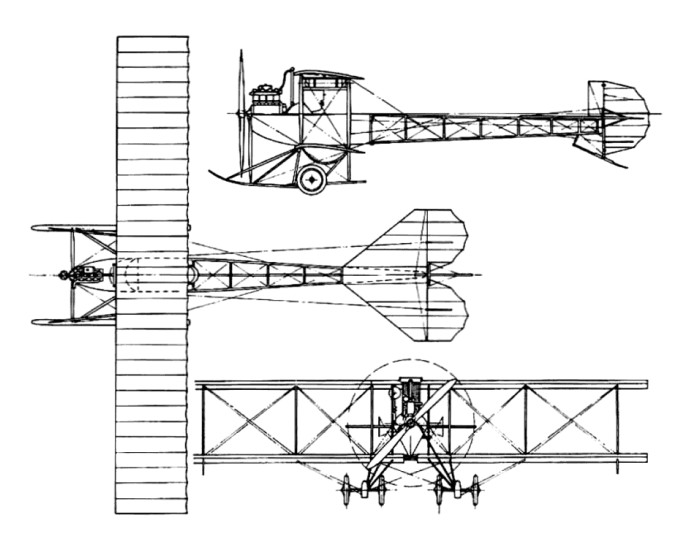
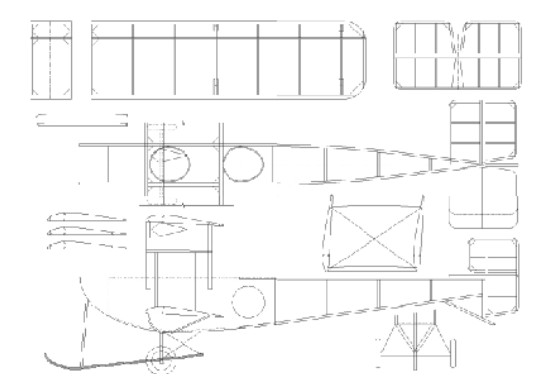
Roe’s first biplane design, the Avro Type D had first flown in April 1911. The Avro Duigan was a major refinement of this fundamentally successful aircraft. It had a square rather than triangular cross section fuselage, simplifying construction and allowing the crew seats to be lower down, giving more protection. The wings were supported using an aerodynamically cleaner ordinary two-bay layout, replacing the two and a half bay arrangement of its predecessor, which had a third pair of interplane struts close to the fuselage. The undercarriage was simpler, a V-strut below the wing leading edge bearing a leaf-spring axle whose wheels had the refinement of covered spokes, and under this a single long skid supported by a second V-strut below the trailing edge and a single strut from the extreme nose of the aircraft. The tailplane was steel framed, with a rectangular fixed stabiliser and elevator and rudder. Other details were as previous aircraft. The fuselage was constructed of wire-braced ash metal covered forward of the cockpits. The observer sat in front with the pilot sitting behind the cut away trailing edge, an arrangement which positioned the front cockpit close to the centre of gravity of the aircraft and allowed it to be flown without a passenger with no change its balance. The wire-braced high aspect ratio two-bay wings had ash spars and poplar ribs with the curved ends formed from cane. Lateral control was by wing warping. A sprung tailskid was mounted below the rudder and small hoops were fitted below the outer interplane struts to protect the wingtips. The aircraft had dual controls and was fitted with small “Cellon” window to improve downward vision.
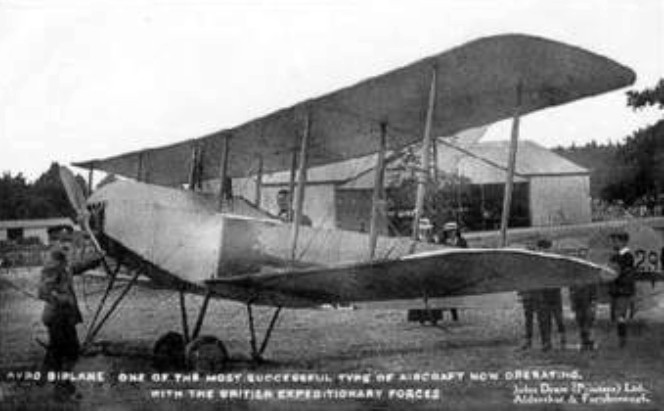
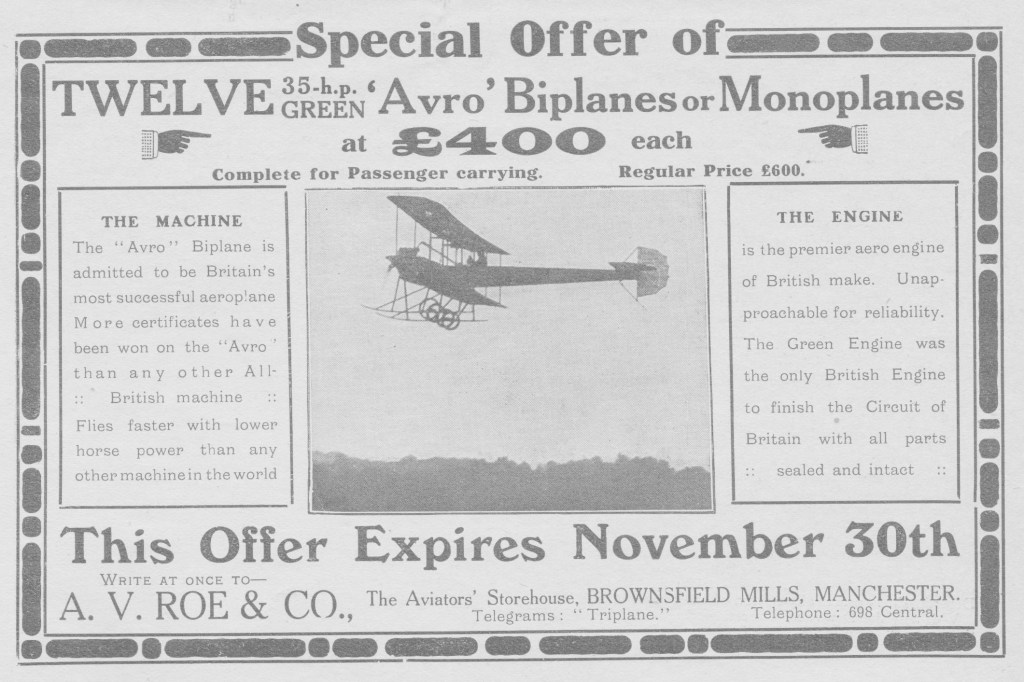
The aircraft was initially powered by a 40 hp (30 kW) two-cylinder horizontally opposed Alvaston but soon replaced by a 35 hp (26 kW) E.N.V. V-8 motor. Both were water-cooled engines, with pairs of large coiled tube radiators positioned parallel to the fuselage on either side of the front cockpit.

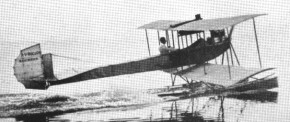
Trials with the Alvaston engine at Huntingdon racecourse were not successful, the aircraft barely lifting off. On his return to Brooklands, the E.N.V. motor was fitted and on 10 March 1912 Duigan, flying solo managed some long, straight flights in his too-evidently underpowered machine. Some intensive engine tuning, together with a new propeller resulted in more success that April, with solo circuits, figures of eight, and an hour long series of circuits at about 500 ft (150 m). Nonetheless, Duigan won his Aviator’s Certificate and returned to Australia. His aircraft, without its engine, was sold to the Lakes Aircraft Co. for £180 who rebuilt it as the Lakes Sea Bird floatplane in October 1912, powered by a 50 h (37kw ) Gnome engine. In this form, it performed well. The slightly larger Avro 500, powered by a 60 hp (45kW) E.N.V. was the first Avro aircraft type to be built in any quantity.
Duigan
Engine: 1 × E.N.V. type D, 35 hp (26 kW)
Wingspan: 34 ft 0 in / 10.36 m
Length: 29 ft 4 in / 8.9 m
Height: 10 ft 6 in / 3.2 m
Empty weight: 350 lb / 158 kg
Loaded weight: 500 lb / 226 kg
Maximum speed: 40 mph / 65 km/h
Range: 100 mi / 160 km
Crew: 2

Lakes Sea Bird
Engine: Gnome 50 hp
Wingspan: 39 ft 4 in / 11.9 m
Length: 29 ft 4 in / 8.9 m
Height: 10 ft 6 in / 3.2 m
Empty weight: 350 lb / 158 kg
Loaded weight: 500 lb / 226 kg
Maximum speed: 62 mph / 99 km/h
Range: 100 mi / 160 km
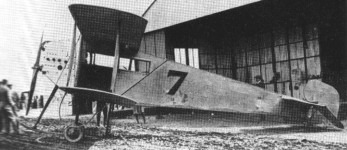
Avro Type G

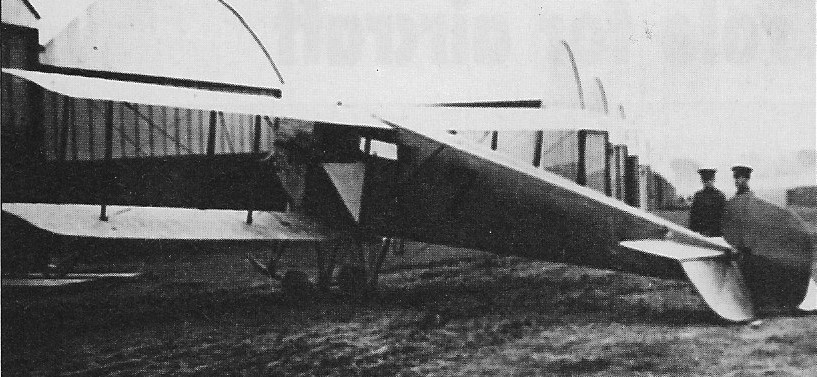
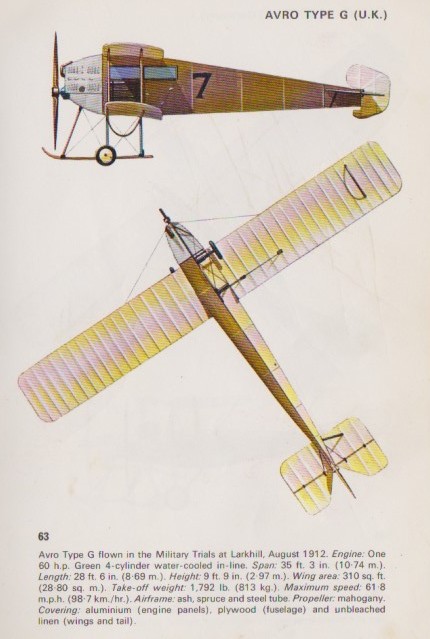
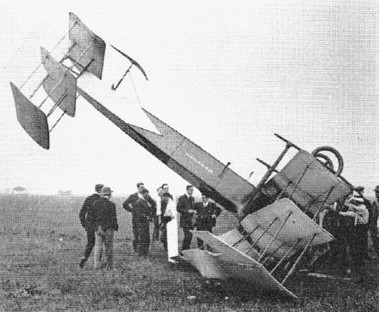
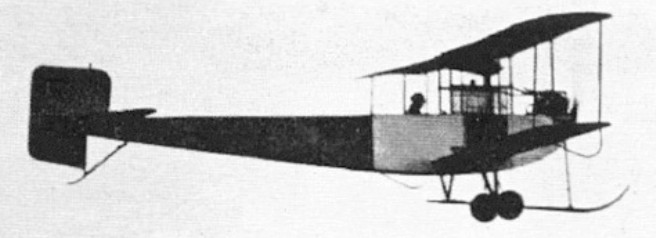
With the loss of the Avro Type F monoplane, A.V.Roe decided to build a second model; this time, it was a two-seat biplane with a fully enclosed cabin. Loosely based on the structure of the Type F, the Avro Type G, as it was known, had a very narrow cabin with maximum beam of 2 ft 3 in, tapering to 1 ft 3 in at the end. Powered by a 60 hp Green engine which had spiral tube radiators mounted either side of the cabin, the engine was enclosed in louvered cowlings with the exhaust extending over the roof of the cabin. Access to the cabin was through a hinged door in the fuselage.

Avro Type G Article

Two models were built: the first, No.6, was to be powered with the 60 hp Green engine, the second, No.7, was to be fitted with a 60 hp A.B.C. engine. The later engine was not ready in time and because it was a real rush job, the Green engine was fitted. It was intended to enter the aircraft in the 1912 Military Aeroplane Competition at Larkhill, Salisbury Plain. The aircraft was completed, crated and shipped off by rail from Manchester. On arrival the aircraft was assembled and Wilford Parke, the pilot, took off on a three hour endurance trial. The weather closed in and the air became so turbulent that Parke was forced to return to Larkhill. Landing downwind, the aircraft overturned, causing extensive damage. The Avro Type G No.7 was returned to the factory in Manchester for extensive repairs.

In the meantime, aircraft No.6 had been completed and sent to Larkhill to compete in the competition and sent to Larkhill to compete in the competition. All the tests went well, including Parke flying into a heavy rainstorm for almost 45 minutes. The Avro won the assembly test, in 14½ min, and the fuel consumption test. The watching military observers were impressed, but not so impressed as to give Avro any orders for the aircraft. The aircraft returned to Shoreham, where it joined the fleet of Avro aircraft at the Avro Flying School. Nothing more was heard of it.

Engine: 1 x 60hp Green
Take-off weight: 814 kg / 1795 lb
Wingspan: 10.74 m / 35 ft 3 in
Length: 8.69 m / 29 ft 6 in
Height: 2.97 m / 10 ft 9 in
Wing area: 31.12 sq.m / 334.97 sq ft
Max. speed: 100 km/h / 62 mph
Range: 555 km / 345 miles

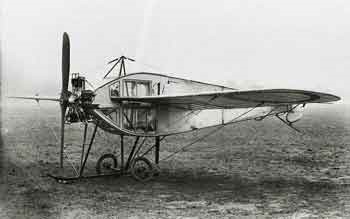
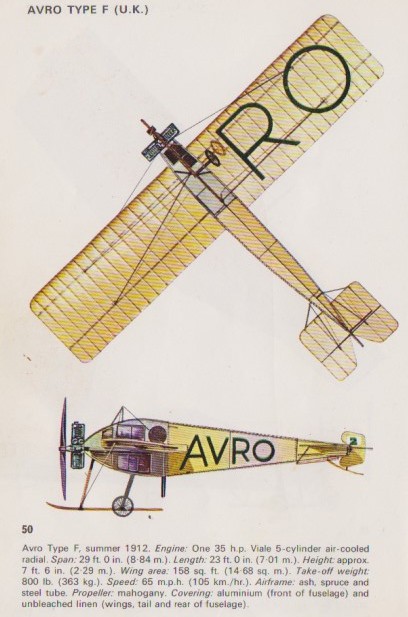
Avro Type F

Powered by a 35 hp Viele five cylinder radial engine, the Avro Type F, flown by Wilfred Parke, took off from Brooklands on 1 May 1912. This was the first flight in the world of an aircraft with a completely enclosed cockpit. The 2 ft (0.61m) wide fuselage was deep enough for the pilot to be totally enclosed. Lateral control was by wing warping.

Avro Type F Article

Over the next few days a number of successful test flights were carried out, but then on 25 May, when the aircraft was due to appear at Hendon for flight tests, the engine failed on takeoff, and the aircraft hit a fence on crash landing. It was dismantled and repaired but stayed in the hanger until September, when R.H.Barnwell took it out for a test flight. Once again the aircraft performed well, but on landing the front skid broke and the aircraft flipped over on to its back, causing considerable damage. The damage was extensive and beyond economical repair, so the Avro Type F was scrapped.

Avro Type D

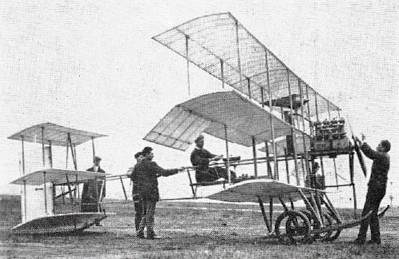
The type ‘D’ was designed by A. V. Roe, the aircraft was erected at Brooklands in March of 1911, it appears to have been powered by a 35HP Green engine and first flown on April 1st 1911 by C. Howard Pixton.

Avro Type D Article

It is believed that six examples of the Type D of 1911, with its triangular shape fuselage, were manufactured. They were all different, including one example with a 60hp engine that was intended to compete in the Daily Mail Air Race, but suffered a prior accident. The Avro Type D was the company’s first successful and (semi) production standard design.

In England A.V.Roe & Co had put the first Type D on floats and it left the water on 18 November 1911 at Barrow-in-Furness using stepped floats, but dropped back into the water and was damaged. It flew successfully in April 1912, though always underpowered.

The fourth Type D was powered by a 45hp Green engine.

November 1911

A float plane version at Cavendish Dock, Barrow-in-Furness, circa 1911, was flown by Commander Schwann, of HMS Hermione, carrying out early morning trials on the Roe biplane, which had been fitted with float attachments of his own invention.

Schwann float attachments

Built by A.V.Roe for Cdr. Oliver Schwann of the Royal Navy. He crashed it. It was rebuilt and flown successfully by Major S.V.Sippe.

One of the reasons that the Avro Flying School and airfield were moved from Brooklands to Shoreham in the autumn of 1912 was because tests could be carried out on both landplanes and float planes. The latter had come about after Commander Schwann’s experiments with the Avro Type D that he converted to a seaplane. A.V.Roe had been watching Schwann’s experiments with interest, and could see the possibilities in developing a seaplane. The result was the Avro 501.

Engine: 1 x 35hp Green / 1 x 45 hp Green / 1 x 35 hp Viale / 1 x 50 hp Issacson
Wingspan: 9.45 m / 31 ft 0 in
Length: 8.53 m / 28 ft 0 in
Height: 2.79 m / 9 ft 2 in
Empty weight: 158 kg / 350 lb
Loaded weight: 226 kg / 500 lb
Max speed: 78 km/h / 48 mph
Range: 160 km / 100 miles
Seats: 3

Sesquiplane
Wingspan upper: 9.45 m / 31 ft 0 in
Wingspan lower: 7.0 m / 23 ft 0 in
Length: 8.53 m / 28 ft 0 in
Height: 2.79 m / 9 ft 2 in
Empty weight: 158 kg / 350 lb
Empty weight: 452 kg / 1000 lb
Max speed: 78 km/h / 48 mph

Avro IV Triplane / Bellamy Avro IV Triplane

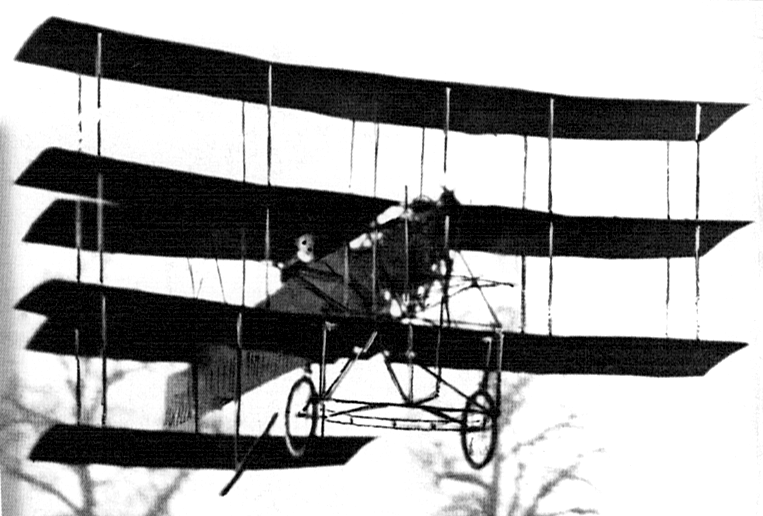
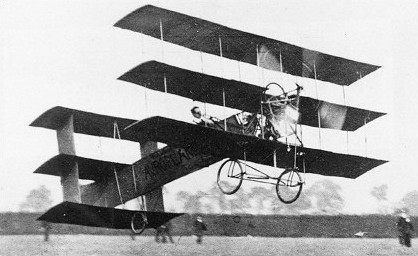
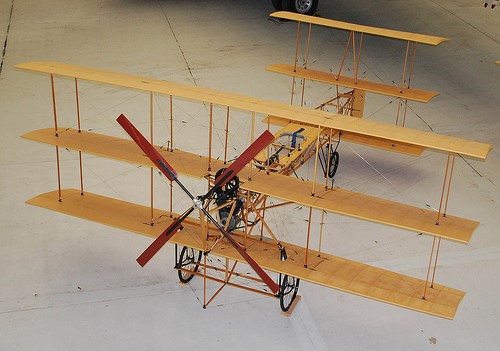
Three Avro IV Triplane (one static) were built in 1964 by the Hampshire Aero Club for the film “Those Magnificent Men in Their Flying machines”. Of all-wood construction and powered by a Cirrus II engine, they were designed by R.Hilbourne. The construction of the triplane followed A.V. Roe’s specifications and was the only replica that utilised wing-warping successfully. With a more powerful 90 hp Cirrus II replacing the 35 hp Green engine that was in the original design.

The first was flown on 9 May 1964. One passed to the Shuttleworth Trust after the film, who kept it airworthy at Old Warden as BAPC.1.

Replica

Replica:
Bianchi Avro IV Triplane

Engine: 1 x 35hp Green
Wingspan upper: 9.75 m / 32 ft 0 in
Wingspan middle: 9.75 m / 32 ft 0 in
Wingspan lower: 6.0 m / 20 ft 0 in
Length: 10.3 m / 34 ft 0 in
Height: 3.3 m / 11 ft 2 in
Wing area: 27.31 sq.m / 293.96 sq ft
Empty weight: 158 kg / 350 lb
Take-off weight: 295 kg / 650 lb
Max speed: 64 kph / 40 mph

Avro II Triplane / Mercury

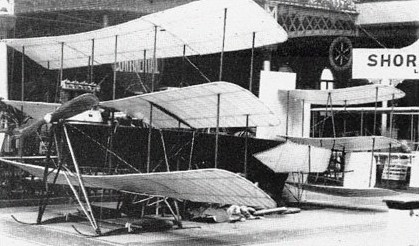
After A.V.Roe moved his entire operation back to Brooklands, he constructed the first aircraft to be built by the company; the Roe II Triplane, named Mercury. It was designed by Alliott Verdon Roe as a sturdier development of his wood-and-paper Roe I Triplane.

It was a single seat triplane powered by a 35 hp Green water-cooled, four cylinder engine. The engine’s radiators were mounted flush along the side of the front section of the triangular shaped fuselage, which was constructed from ash, with silver spruce struts and spars, all covered in Pegamoid fabric. The three wings were of equal length, as was the triplane tail section, from which control of climbing and diving by means of pivoting the entire section, which was in turn linked to the centre mainplane variable incidence gear, was carried out. Control of the mainplane was by a single cntrol stick in the pilot’s cockpit. The two wheeled undercarriage was secured to the axle by rubber shock absorber cord, which in turn was fixed to a rigid, tubular steel triangulated structure.

On 4 March 1910, the aircraft appeared in public for the first time at the Olympia Aero Show in London. A.V.Roe showed the Prince and Princess of Wales around the machine himself. Priced at £550, including instruction, an order was received while at the show, from Sir Walter Windham, MP, who also manufactured car bodies.

First flown in April 1910, the show aircraft was retained by the company for training and experimental purposes. During a flight training sessions, student pilots crashed on landing, rolled twice on take-off, resulting in a number of modifications being made. After the second crash the centre of gravity was corrected by moving the pilot’s seat forward, the wing warping control was abandoned and large, unbalanced ailerons were fitted to the upper wing. The work was completed in ten days, and tests carried out proved to be more than satisfactory.

At the beginning of May, Sir Walter Windham’s aircraft was ready and after some initial instruction he took control of his aircraft. The taxying trials were successful, and Sir Walter took to the air a couple of days later. Not much is known about what happened to the aircraft, but it is known that on one of his landings the ground turned out to be too soft and the aircraft flipped on to its back.

The performance of the A.V.Roe aircraft improved and it was finally dispatched by rail to the Blackpool Flying Meeting with the Roe III but on the journey the goods train set fire due to sparks coming out of the engine and landing on the truck. Both the Roe III and Mercury were totally burnt-out.

The longest recorded flight made by the II Triplane was only 600 ft (180 m).

Engine: × Green C.4 4-cylinder inline water-cooled, 35 hp (26 kW)
Propellers: 2-bladed
Wingspan: 26 ft (7.9 m)
Wing area: 280 sq ft (26 sq.m)
Length: 23 ft (7.0 m)
Height: 9 ft (2.7 m)
Empty weight: 150 lb / 68 kg
Gross weight: 550 lb (249 kg)
Maximum speed: 45 mph (72 km/h; 39 kn)
Seats: 1

Avro Triplane I (Bull’s Eye Avroplane) 1909

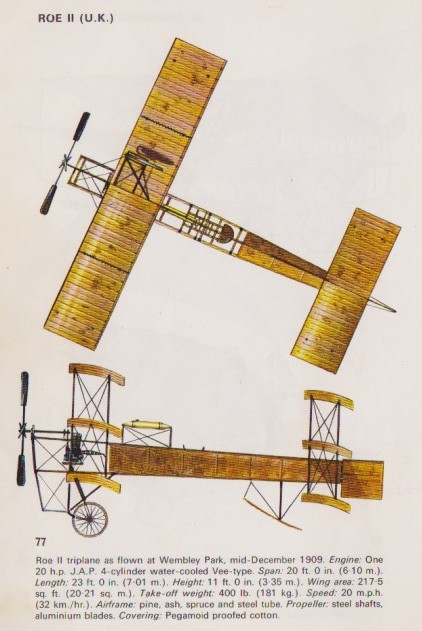
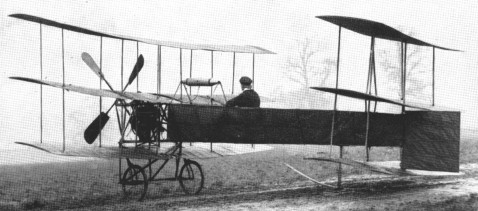
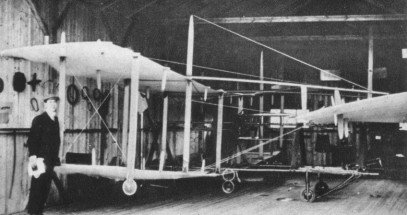
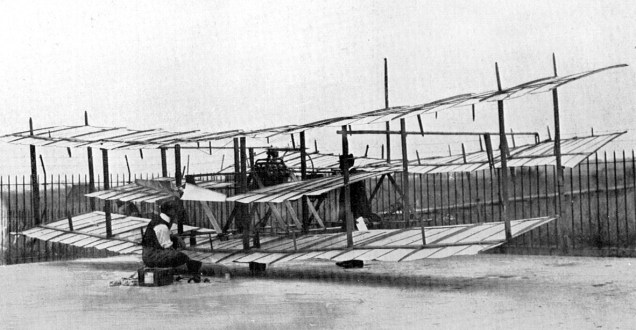
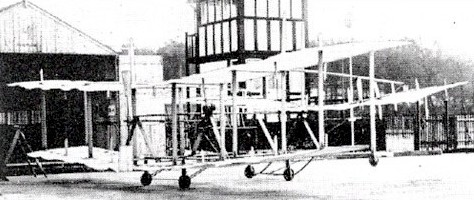
Alliot Verdon Roe transferred his experiments to Lea Marshes in 1909 and designed a triplane. Unable to afford the hire of the Antoinette engine, he built a triplane and covered its wings with brown paper in the hopes that it would be light enough to fly on 9 hp. On 13 July 1909 at Lea Marshes, with Roe at the controls, the Triplane No 1 became the first British built and piloted aeroplane to make a successful flight in England.

Testing at Wembley Park in January 1910, the 20 hp /JAP engine was sufficient to allow circuits of the airfield with few mishaps.

His triplane is now preserved in the National Aeronautical Collection at South Kensington.

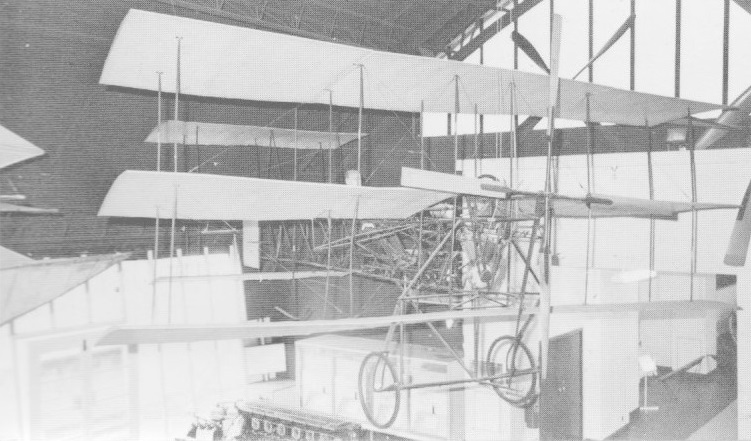
In London movie makers needed a full-size flying reproduction of A.V.Roe’s 1909 triplane for the 1964 “Those Magnificent Men and Their Flying Machines”. Blueprints were available so Avro built one for the movie scenes.

full-scale Roe Triplane replica at the Museum of Science and Industry in Manchester, UK.

Gallery

Engine: 1 x 9hp JAP 2-cylinder / 20 hp JAP
Wingspan: 6.10 m / 20 ft 0 in
Wing chord 3 ft. 71 in.
Wing area 217.5 sq. ft.
Length: 7.01 m / 23 ft 0 in
Height: 3.35 m / 11 ft 0 in
Weight empty 136 kg / 300 lb
Take-off weight: 204 kg / 450 lb
Max. speed: 40 km/h / 25 mph
Crew: 1

Roe I Biplane 1908

In 1903 Alliott Verdon Roe started to build a man carrying version of his successful model, in the hope of winning £2,500 offered by the management of Brooklands to the first aviator who flew round the track before the end of 1907.

It was soon clear that the little 9 h.p. J.A.P. engine of his biplane was powerful enough only for taxying, so he hired a 24 h.p. Antoinette.

On June 8th, 1908, the new engine enabled him to claim later that he had made the first aeroplane flight by an Englishman in England. Roe’s achievements were too late to win the £2,500.

When claims for the distinction of making the first British powered aeroplane flight were considered officially by the Royal Aero Club 21 years later, it was decided that his early efforts were only hops and not proper sustained flights; the committee accepted the claim of Moore Brabazon who, in May, 1909, flew a distance of 500 yards in his Voisin.

Gallery

Engine: 1 x 24hp Antoinette
Wingspan: 9.14 m / 30 ft 0 in
Length: 7.01 m / 23 ft 0 in
Height: 2.1 m / 7 ft 2 in
Take-off weight: 295 kg / 650 lb
Empty weight: 159 kg / 351 lb
Seats: 1

AVI Avi 205

Prototype

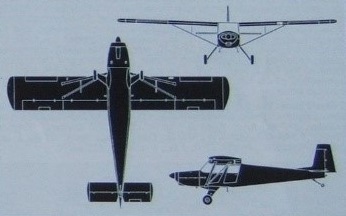
Conceived as a multi-purpose aircraft equally suited for the roles of four-seat tourer, agricultural aircraft, ambulance, school trainer and glider tug, the AVI 205 flew for the first time in September 1960, development having been initiated in October 1958. The prototype was powered by a 205 hp Continental E-185-9 engine, but the production model was to have a 225 hp Continental E-225-8 engine driving a metal variable pitch propeller, and modified undercarriage.

For liquid spraying or dusting operations a jettisonable tank or hopper was to be attached beneath the fuselage.
The AVI 205 is of all-metal construction with fabric covering.

Prototype
Engine: 205 hp Continental E-185-9
Span: 37 ft 5.25 in
Wing area: 215.278 sq.ft
Length: 26 ft 3 in
Height: 7 ft 2.75 in
Max speed: 139 mph at SL
Cruise 75%: 112 mph
Max range: 652 miles
Empty weight: 1433 lb
MAUW: 2645 lb

Production model
Engine: 225 hp Continental E-225-8
Propeller: metal variable pitch
Span: 37 ft 5.25 in
Wing area: 215.278 sq.ft
Length: 26 ft 11 in
Height: 7 ft 2.75 in
Max speed: 151 mph at SL
Cruise 75%: 132 mph
Max range: 756 miles
Empty weight: 1620 lb
MAUW: 2790 lb

Prototype