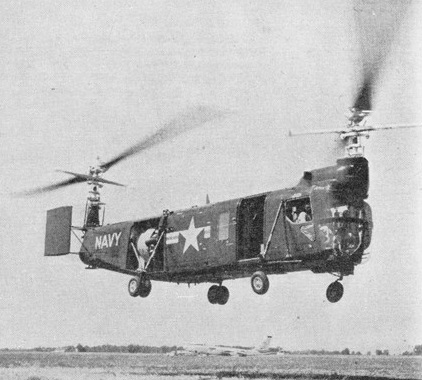
From the tandem rotor HSL-1 Bell developed the model 216 for commercial use with three Lycoming T-53 free shaft gas turbines.
From the tandem rotor HSL-1 Bell developed the model 216 for commercial use with three Lycoming T-53 free shaft gas turbines.
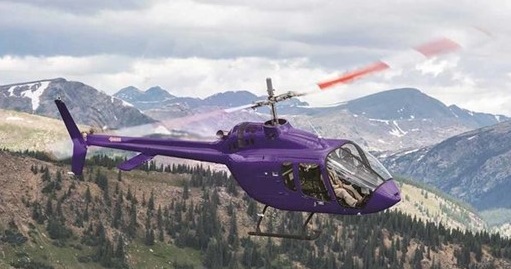
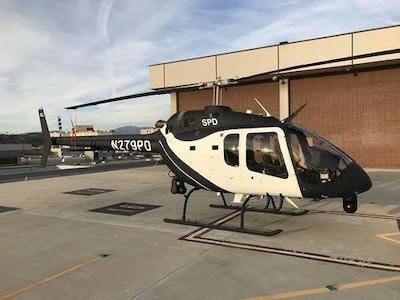
The Bell 505 features the Safran Helicopter Engines Arrius 2R engine incorporating dual-channel fadec that delivers good performance and reduces pilot workload and Garmin G1000H avionics. Top speed is 125 knots and useful load 1,500 pounds. When announced in 2013, the price was set at $1.07 million.
The five-seat Bell 505 Jet Ranger X received FAA certification six months after notching Canadian approval of the light single, Bell Helicopter announced in June 2017. Deliveries of the five-seat light single to U.S. customers were to begin immediately.
Bell was continuing to work with other certification authorities around the world to bring the 505 to more markets. The Bell Helicopter Training Academy was also prepared for entry into service with customer training and flight training device and coursework on track.
The first delivery of the Bell 505 occurred in March 2017 to Pylon Aviation. Bell confirmed delivery of the 200th Bell 505 Jet Ranger X to Austria-based operator Hubi-fly Helikopter GmbH in August 2019 with the global fleet of 200 aircraft flying across six continents.
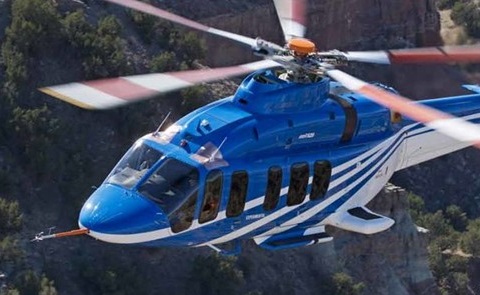
Designed to seat up to 20 passengers, the 525 is the first commercial helicopter with a fly-by-wire system, featuring BAE Systems’ flight control computers. The ARC Horizon flight deck is built around the Garmin G5000H integrated touch screen enabled avionics suite, incorporating four LCD screens and two touchscreen controllers into the wide instrument panel.
Powered by two electronically controlled GE CT7-4F1 engines putting out 1,979 shp on takeoff, the 525 is designed to cruise at speeds up to 160 knots with a max range of 560 nm and a useful load of 8,200 pounds.
“Bell Helicopter has worked with the NTSB and FAA since the accident and we are confident in the resumption of flight test activity,” said Bell’s president and CEO Mitch Snyder.
While the final report from the NTSB regarding the accident has not yet been released, the preliminary report said the helicopter broke up in flight. Both test pilots died as a result of the ensuing crash. Before the crash, the flight test program had accumulated more than 260 flight hours for the 525 and Bell hopes to finalize its certification next year.
The FAA has awarded experimental certificate renewal to the Bell 525 Relentless, allowing Bell Helicopter to resume the flight test program after a 2016 crash. Bell Helicopter was to resume testing the 525 Relentless following the FAA’s awarding of experimental certificate renewal. Certification for 20-passenger fly-by-wire helicopter is expected in 2018.
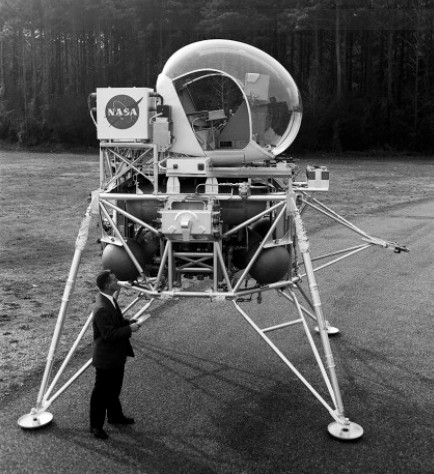
Lunar Landing Research Vehicle (LLRV) built in 1963 as part of the Apollo Project to land on the moon. It was a vertical take-off and landing vehicle powered by a single jet engine. The vehicle allowed Apollo astronauts to train for real moon landings.
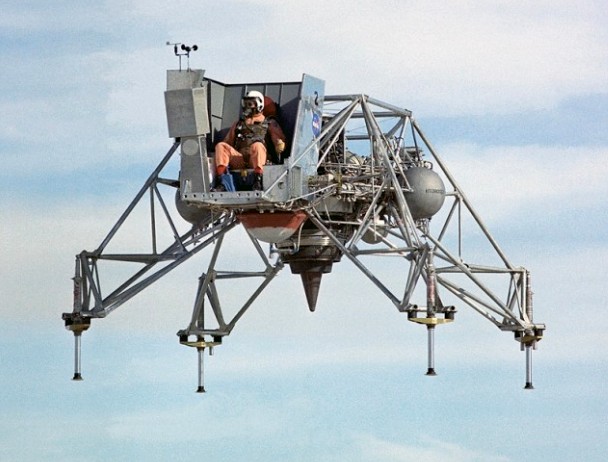
The Lunar Landing Training Vehicle (LLTV) was built by Bell Aerosystems in 1964 as part of the Apollo Project to land on the moon, it was a vertical take-off and landing vehicle powered by a single jet engine. The Lunar Landing Research Vehicle (LLRV) was built by Bell Aerosystems in 1964 as part of the Apollo Project to land on the moon, it was a vertical take-off and landing vehicle powered by a single jet engine.
By always offsetting five-sixths of earth’s gravity, the vertically mounted turbofan engine enabled the LLTV to reproduce the characteristics of landing a lunar module on the moon’s surface. The LLTV was used to train America’s Apollo astronauts.
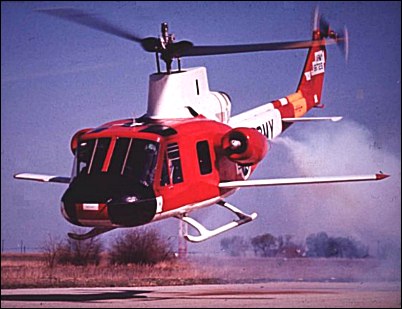
In 1959, the TRECOM (United States Army’s Transportation Research Command) set up a programme in order to determine various rotor systems and methods of drag reduction for helicopters. For this programme, Bell modified the first YH-40-BF service test model (s/n 56-6723) as a research test-bed which was known at Bell as the Model 533. Reworking was done on the airframe in order to reduce drag, including a cambered vertical tail surface to unload the tail rotor, streamlined fairing for the rotor head, flush air intakes located on each side of the new rotor fairing, redesigned cross-tubes for landing skids, and new hinges for the doors. The stabilising bar was removed and replaced by a variable-tilt rotor mast in order to maintain the fuselage in low-drag attitude. The 1400shp Lycoming T53-L-13 turboshaft was retained.
Tests in NASA’s Ames wind tunnel showed that the aerodynamics of the airframe had been improved to such an extent that the equivalent flatplane area of the Huey had been reduced from 2.3sq.m to 1sq.m. Still with its original US Army serial number, the Model 533 made its maiden flight on Friday 10 August, 1962, and flight tests were conducted at Fort Worth in late 1962. In March 1963, the Model 533 flew at 278km/h and 302km/h was attained in a shallow dive. Several rotor types were tested (two-blade UH-1B-like rotor and rigid three-blade rotors) and two 765-kg Continental J69-T-9 turbojets were installed on each side of the fuselage. Take-off weight of the aircraft was now 3880kg. On 17 January, 1964, the helicopter achieved a speed of 338km/h in level flight using only 780shp from the 1100shp Lycoming T53-L-9A shaft-turbine, plus 568kg from the J69s.
The next modification consisted of fitting two small sweptback fixed wings to convert the aircraft into a compound helicopter. On 11 May, 1964, it flew at 357km/h. The aircraft was then flown to San Antonio to have its J69-T-9s replaced by 765-kg J69-T-29s, and, on 15 October, 1964, the Model 533 was the first helicopter to break the 200 knots (370km/h) barrier by attaining 380km/h. On 6 April, 1965, the Model 533 flew at 402km/h in level flight and 409km/h in a shallow dive. It showed also its outstanding manoeuvrability in performing 2g turns and 60deg banks at speeds around 320km/h, and a Mach number of 0.985 was recorded by the advancing blades of the rotor.
Early in 1968, a subsequent phase of the programme was the installation of two 1490-kg Pratt & Whitney JT12A-3 turbojets at the end of short stub wings. The first flight in this configuration was made in 1968, the machine gradually recording still higher speeds and, in May 1969, Bell announced that 508km/h had been attained.
Model 533
Rotor diameter: 13.41m
Length of fuselage: 12.98m
Normal take-off weight: 4173kg
Maximum speed: 508km/h
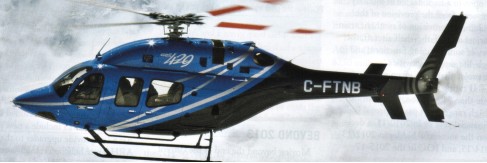
The Bell 429 was the first model designed from scratch, since the Bell 222.
A light-medium twin helicopter which received certification from Transport Canada Civil Aviation and the FAA on 1 July 2009. Five prototypes were used during certification.
The first delivery was on July 7, in Iowa.
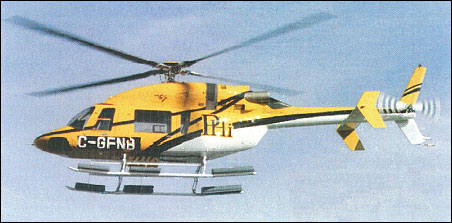
Launched as the New Light Twin (NLT) in February 1996 on signature of collaborative agreement with Samsung Aerospace Industries of South Korea. The Bell 427 prototype assembly began early 1997.
An enlarged and lengthened by 13 inches version of Model 407 with wider cabin, centre-section fuel tank, OH-58D composite four-blade main rotor, and 2705kg TOGW, powered is from two 600shp Pratt & Whitney PW206D turboshafts.
The first flight of the first prototype (C-GBLL) was on 11 December 1997 at Mirabel, Quebec. The second prototype (C-FCSS) was completed in February 1998 and the two prototypes undertook flight test programme, gaining Transport Canada certification on 19 November 1999, FAA VFR certification achieved in 24 January 2000, followed by Dual Pilot IFR (DPIFR) Category A certification on 24 May 2000.
The first production aircraft (C-GDEJ) was flown in June 1998. Compared with prototypes, the production 427 has longer exhausts and revised upper surface contours.
Similar in appearance to the Bell 407, with a cabin stretch of 33cm, the 427 is all-new design, incorporating twin-engine safety margins. Flight dynamics are based on the four-blade rotor system of Bell OH-58D Kiowa, allied to tail rotor of Bell 407, and folding main blades.
A purpose-designed ‘flat pack’ main transmission, with direct input from both engines, has only four gear meshes to simplify design and operation. The transmission is attached to the airframe by four liquid-inertia vibration eliminators. It was the first Bell helicopter designed entirely with use of computer (Dassault CATIA programme).
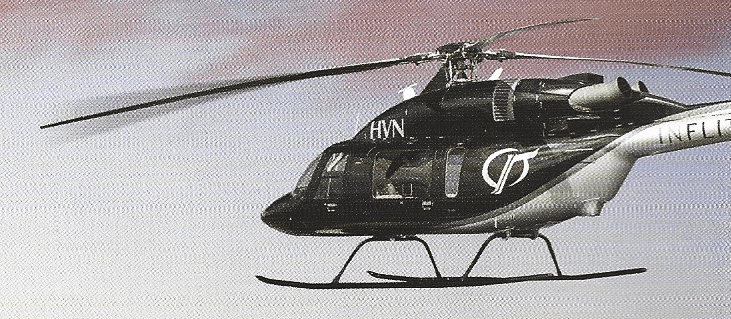
The structure is generally as for the Bell 206, but extensive use of carbon/epoxy composites reduces airframe parts count by some 33%. Cabin floor and roof are flat panels for ease of manufacture; minimal use of curved panels elsewhere. Composites main and tail rotors; main blades have nickel-plated stainless steel leading-edges. Soft-in-plane hub of main rotor employs a composites flexbeam yoke and elastomeric joints, eliminating lubrication and maintenance requirements. Brake and main rotor blade folding optional. Composites cabins and rolled aluminium tailbooms built by Samsung; assembly in Canada, except for sales to Korea and China; Hexcel honeycomb as stiffener. The landing gear is twin skids with dynamically tuned cross tubes to reduce ground resonance. Low skids standard; optional high skids and emergency floats.
Fuel is contained in three crash-resistant tanks; two forward, one aft, with a total usable capacity of 770 litres. One forward fuel tank can be removed in EMS configurations to provide additional stretcher space in cabin or to permit stretcher to extend into port side of cockpit. Oil capacity (total, both engines) 10.2 litres.
Standard accommodation is for two crew in cockpit, on 20g energy-attenuating seats, and six passengers in cabin on two rows of three, seats in club configuration (all-forward-facing scats optional); all scats equipped with inertia-reel shoulder harnesses. Optional EMS interiors provide for carriage of one or two stretchers with up to two medical attendants, affording either full patient or head-only in-flight access, with single- or two-person crew. In cargo configuration, with all passenger seats removed, an optional removable flat cargo floor can be installed, equipped with integral tie-downs. Two forward-hinged doors each side; cabin doors, both sides, are forward-hinged, but port unit can be replaced by optional rearward-sliding door for cargo handling. External door on starboard side to rear baggage hold.
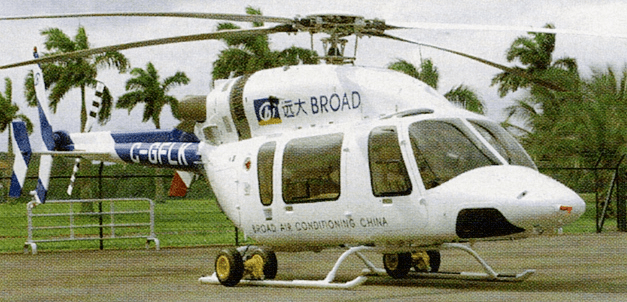
Orders for 22 were placed during the mockup’s first public display at Farnborough Air Show 1996, and 85 were on order by May 2000 from 50 customers. Deliveries began 2000 five delivered that year, 15 in 2001 and five in 2002.
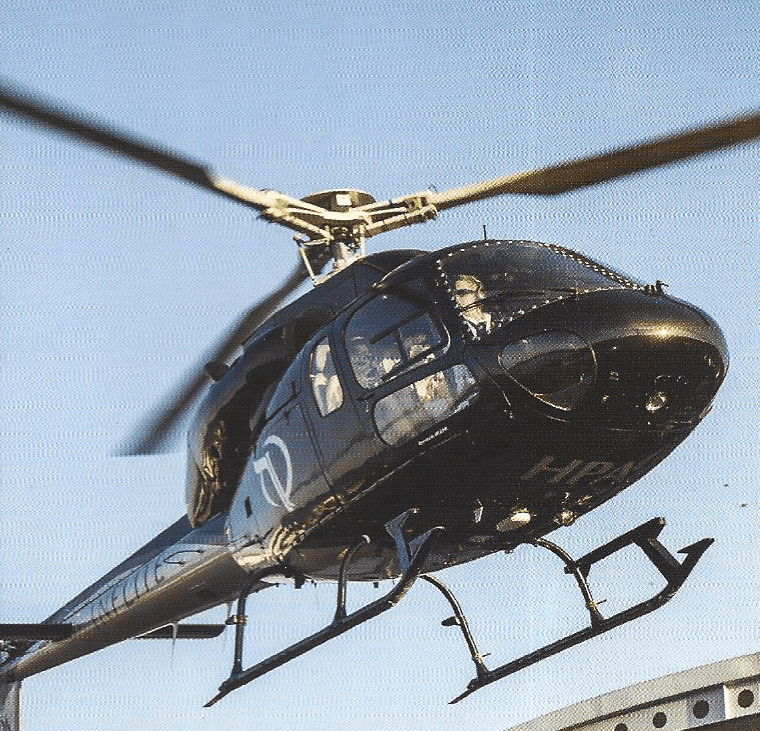
Engines: Two Pratt & Whitney Canada PW207D turboshafts with FADEC, each 529kW for T-O (5 min) or 466kW max continuous
OEI ratings: 611kW for 30 sec, 582kW for 2 min, 559kW for 30 min or 529kW max continuous.
Twin-engine transmission rating: T-O & max continuous: 597kW.
OEI transmission rating: 485kW for 30 sec: 451kW for 2 min; 343kW max continuous.
Main rotor rpm: 395
Tail rotor rpm: 2,375
Main rotor diameter: 11.28m
Fuselage length: 10.9m
Take-off weight: 2722kg
Empty weight: 1581kg
Max speed at sea level: 252km/h
Cruising speed at sea level: 240km/h
Hovering ceiling, OGE: 4235m
Hovering ceiling, IGE: 4940m
Range at sea level: 663km
Crew: 1
Passengers: 6-7
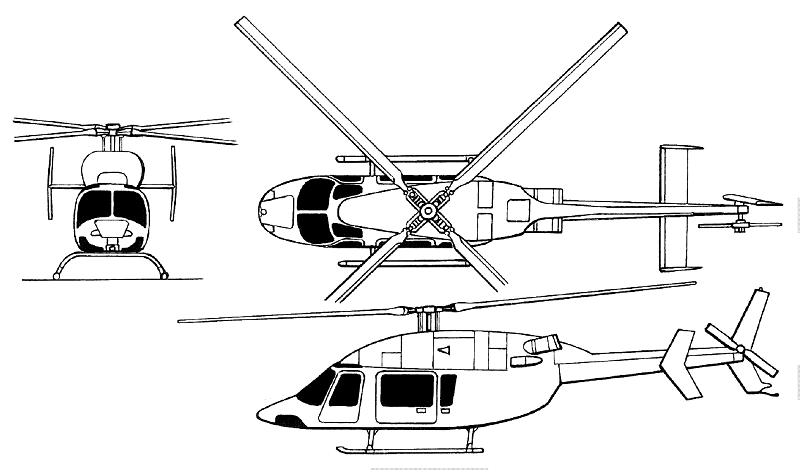
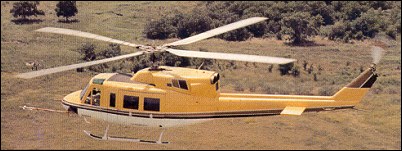
On 8 September, 1978, Bell announced its intention to develop a four-bladed variant of its twin-turbine Model 212. Designated Model 412, this helicopter was the first four-blade rotor helicopter to be produced by Bell. The rotor head had elastomeric bearings that eliminated both mechanical hinges and viscous dampers. In mid-1984, the internal vibration level was further lowered by the introduction of a pendulum damper kit on production aircraft, but this was also available independently for retrofit to earlier machines.
Two newly built Model 212 airframes served as development prototypes and for the certification programme.
The Model 412 retained the same powerplant as the Model 212, the Pratt & Whitney Canada PT6-3B-1 Turbo Twin Pac delivering 1400hp for take-off and 1130hp for continuous operation. The blades, fitted with a Nomex honeycomb core, are bonded together by glassfibre wrapping incorporating anti-icing heater mats and are interchangeable. The rotor mast is shorter than the 212, with blades that can be folded ans a rotor brake as standard. The main rotor rpm is 314. Equipped with a two-blade tail rotor. The elastomeric bearings of the hub eliminate both mechanical hinges and heavy, viscous dampers. This improves the ride and also extends the rotor system life, while the flex beam yoke of the main rotor hub provides quick control response. The new bearings require no lubrication and require only a quick visual inspection to confirm integrity. In the drive system, five of the six-rotor drive shaft sections are interchangeable, reducing spares. Main transmission chip detectors help protect the system. The four composite blades have an unlimited life and span wise variation of their chord, twist and thickness of airfoils give added turning and aerodynamic efficiency.
Generally of conventional light metal. Main rotor blade spar unidirectional glass libre with 45degree wound torque casing of glass fibre cloth; Nomex rear section core with trailing-edge of unidirectional glass fibre; leading-edge protected by titanium abrasion strip and replaceable stainless steel cap at tip; lightning protection mesh embedded; provision for electric de-icing heater elements; main rotor hub of steel and light alloy; all-metal tail rotor.
The undercarriage is high skid, emergency pop-out float or non-retractable tricycle gear optional. Spats optional.
Fuel in in seven interconnected rupture-resistant fuel cells, with automatic shutoff valves (breakaway fittings), have a combined usable capacity of 1,249 litres. Two 76 or 310.5 litre auxiliary fuel tanks, many combination, can increase maximum total capacity to 1.870 litres. Single-point refuelling on starboard side of cabin.
The cabin hold a pilot and up to 14 passengers: one in front port seat and 13 in cabin. Dual controls optional. Accommodation heated and ventilated.
The first modified helicopter made its maiden flight in early August 1979, followed by the second machine in December of the same year.
FAA Pt 29 type approval was given on 9 January, 1981, and IFR certification came on 13 February, 1981.
The first deliveries had taken place on 18 January, 1981, ERA Helicopter Inc of Anchorage received its first aircraft (c/n 33001, N412EH), this company eventually acquiring up to nine Model 412s (c/n 33004/N164EH, 33007/ N414EH, 33009/N415EH, 33011/ N416EH, 33043/N419EH, 33068/ N422EH, 33069/N524EH and 33072/N356EH) to be operated alongside some sixteen Model 212s and fifty-two other Bell helicopters.
Two were delivered to the Venezuelan Air Force later in the year.
By the end of 1987, a total of 145 Model 412s had been delivered.
213 were built in USA before production (SP version) was transferred to Canada in February 1989.
A majority of the operators are civil. Only a few machines have been sold to military customers: two aircraft to Bahrain Defence Force Air Wing with codes BPS-03 and 04; two to the Venezuelan Air Force (one is c/n 33013); three TO the Botswana Defence Force (with two more on order); one to Panama (c/n 33091, serialled FAP-1101); four to Sri Lanka’s armed forces; two to the Nigerian Police Air Wing; an estimated seven to the Bangladesh Air Force and some aircraft to Peru to equip Escuadron 341 and Escuadrilla Presidencial.
An improved variant, the Model 412SP (SP for Special Performance), was later introduced. This Model had increased maximum take-off weight, a 55 per cent increase in fuel capacity and new interior seating options. The 412SP (Special Performance) is powered by Pratt & Whitney PT6T-3B-1 turbo Twin-Pacs developing around 1400shp and has a maximum speed of 260kph and a range of over 650km.This variant was also available in both civil and military configurations. Several military operators have ordered Model 412SPs: Bahrain (the Public Security Flying Wing operates two), Botswana (five aircraft to be supplemented by two more in 1991), Honduras (ten), Nigeria (the Police Air Wing received two aircraft), Sri Lanka (four), Venezuela (two) and Norway (eighteen).
In November 1982, a licence agreement was signed with IPTN for the partial manufacture and complete assembly of more than one hundred Model 412s. The first of these Indonesian-built aircraft (designated NBell-412) flew for the first time in April 1986. Among the customers are the Indonesian armed forces and several private operators.
Norway is assembling seventeen out of the eighteen machines ordered in Helikopter Services A/S workshops at Stavanger for the Royal Norwegian Air Force.
Agusta in Italy began production of the Model 412 in 1981, and manufactures the type as the AB 412SP, and has delivered over 75.
Agusta and has since developed its own military variant designated AB 412 Griffon. This variant includes a high-energy-absorbing undercarriage, energy attenuating seats and crash resistant self-sealing fuel tanks. Armament can include a wide range of external weapons such as an 12.7mm gun and 25mm Oerlikon cannon under a swivelling turret, four to eight TOW missiles, 70mm rocket launchers, air-to-air missiles and air-to-surface Sea Skua missiles. The Griffon prototype flew for the first time in August 1982 and deliveries began in the following January. Among military customers for the AB 412 are the Italian Army, Carabinieri and Special Civil Protection, Capitanerie di Porto (four AB 412SP for coastal patrol and SAR duties), Dubai Central Military Command (three aircraft), Finnish Coast Guards (two), Ugandan Army and Zimbabwe Air Force (ten).
In June 1986 Bell produced the 412 Attack Helicopter (AH) based on the Bell 412SP.
The demonstrator aircraft (c/n 33119, N412AH) was equipped with a 0.50m machine-gun (carrying 875 rounds) in a Lucas Aerospace undernose turret aimed through a Sperry Head Tracker helmet sight system (as on the AH-1S) and had provision for nineteen air-to-ground rockets on each side of the cabin. The 412AH has a maximum speed of 220kph.
By January 1989, 162 Model 412s had been delivered.
The Bell 412 is operated by the RAF as the Griffin. The Bell 412EP Griffin HT.1 being the training variant.
Some 635 Bell 412s of alI versions built in North America by early 2003, including 26 delivered in 1999 and in 2000; 22 in 2001 (including five to El Salvador) and in 2002 (including five to Saudi Arabia).
Military deliveries include Venezuelan Air Force (two), Botswana Defence Force (three), Public Security Flying Wing of Bahrain Defence Force (two), Sri Lankan armed forces (four), Nigerian Police Air Wing (two), Mexican government (two VIP transports), South Korean Coast Guard (one), Honduras (10), Royal Norwegian Air Force (19, of which 18 assembled by Helikopter Service, Stavanger, to replace UH-1Bs of 339 Squadron at Bardufoss and 720 Squadron at Rygge). Three 412EPs delivered to Slovenian Territorial Forces in 1995, for border patrol and rescue duties; four ordered by Philippine Air Force late in 1996, comprising two for VVIP transport and two SAR; first of nine 412EPs entered service in April 1997 as HT. Mk 1s with civilian-operated Defence Helicopter Flying School at RAF Shawbury, UK, within which they constitute No.60 (Reserve) Squadron, RAF; two more ordered in May 2002. together with four HAR. Mk 2s, latter replacing Wessex SAR helicopters of No.84 Squadron at Akrotiri, Cyprus, from April 2003. Four in SAR/utility fit delivered to Venezuelan Navy, 1999. Recent customers include the National Defence Secretariat of Mexico, which took delivery of four in mid-2002; Venezuelan Navy, which ordered four in SAR configuration in early 2002; and Khalifa Airways of Algeria, which took delivery of one 412EP in June 2002.
Costs: Bell 412EP, VFR-equipped US$4,895 million (1999); Bell 412EP, lFR-equipped US$5.12 million (1999).
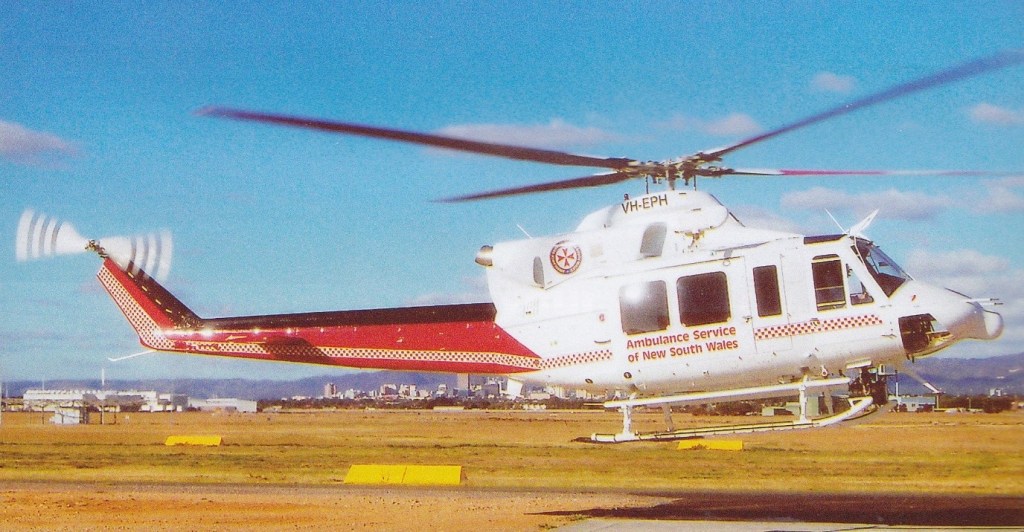
Versions:
412SP
Special Performance version with increased maximum T-O weight, new seating options and 55% greater standard fuel capacity. Superseded by 412HP early 1991.
Military 412
Announced by Bell June 1986; fitted with Lucas Aerospace chin turret and Honeywell Head Tracker helmet sight similar to that in AH-1S; turret carries 875 rounds, weighs 188kg and can be removed in under 30 minutes; firing arcs 110deg in azimuth, +15deg and –45deg in elevation; other armament includes twin dual FN Herstal 7.62mm gun pods, single FN Herstal 12.7mm pod, pods of seven or nineteen 70mm rockets, M240E1 pintle-mounted door guns, FN Herstal four-round 70mm rocket launcher and a 12.7mm gun or two Giat M621 20mm cannon pods.
412HP
Improved transmission giving better OGE hover; FAR Pt 29 certification 5 February 1991, first delivery (c/n 36020) later that month.
412EP (Enhanced Performance)
PT6T-3D engine, dual digital automatic flight control system (DDAFCS), three-axis in basic aircraft but customer option for four-axis and EFIS. Category A certification was imminent in late 1998. Also customer option for SAR fit.
412CF (CH-146) Griffon
Canadian Forces C$700 million contract for 100 CH-146s (modified Bell 412EP) placed in 1992. Duties include armed support, troop/cargo transport, medevac, ASW, SAR and patrol; first flight (146000) 30 April 1994; deliveries began 14 October 1994; completed early 1998. Generally as commercial Bell 4I2EP except for avionics and mission equipment. Empty weight 3.402kg; maximum weight as civil version.
412EP Sentinel
First of two modified in 1998 by Heli-Dyne Systems with quick-change ASV and ASW mission packages; intended for Ecuadorean Navy, but order cancelled and aircraft became demonstrator. ASV equipment comprises Honeywell RDR-1500B chin radar, Hughes Starburst searchlight, radar warning receiver, Wescam sensor turret and possibly Penguin Mk 2 Mod 7 ASMs; ASW fit is L3 Ocean Systems AN/AQS-18A dipping sonar and Raytheon Mk 46 torpedo.
412SA
First three of 16 ordered by Royal Saudi Air-Force built in 2001 for manufacturer’s trials. Equipment standard not disclosed, but sufficiently different from 412EP to warrant separate c/n sequence beginning 33501. Production continued in 2002-03.
412 Plus
Projected improved version under study in 1999 with MTOW increased to 5.647kg, uprated PT6C engines, new dynamic components and Rogerson-Kratos avionics. Development terminated in early 2001.
NBell-412
Indonesia’s Dirgantara has licence to produce up to 100 Model 412SPs.
AB.412 Griffon
Agusta’s multirole military development of the Bell 412 which first flew in August 1982, and is suitable for troop transport, fire-support, scout and reconnaissance, SAR, medevac and maritime surveillance. Armament options include 25mm Oerlikon cannon, machine-gun pods, rocket pods, and Sea Skua ASMs.
Specifications:
412
Engine: 2 x P&W PT6T-3B, 900 shp, 1342kW
TBO: 2500 hr
Main rotor: 46 ft / 14.02m
Seats: 15
Length: 56 ft
Length with rotors turning: 17.07m
Height: 10.7 ft
Max ramp weight: 11,600 lb
Max takeoff weight: 11,600 lb
Standard empty weight: 6267 lb / 2823kg
Max useful load: 5333 lb
Max landing weight: 11,600 lb
Max sling load: 5000 lb
Disc loading: 7 lbs/sq.ft
Power loading: 6.4 lbs/hp
Max usable fuel: 1455 lb
Service ceiling: 20,000 ft
Hover in ground effect: 4100 ft
Hover out of ground effect: 2000 ft
Max speed: 142 kt
Normal cruise @ 3000 ft: 125 kt
Fuel flow @ normal cruise: 758 pph
Endurance @ normal cruise: 1.7 hr
412EP
Engine: 1 x P&WC PT6T-3D Twin Pac, 1342kW for T-O / 1193kW max continuous
OEI ratings: 850kW for 2 1/2 min / 723kW for 30 min
Transmission rating: 1,022kW for T-O, 828kW max continuous
OEI rating: 850kW
Instant pwr: 1342 kW
Rotor dia: 14 m
MTOW: 5402 kg
Payload: 2319 kg
Useful load: 2271 kg
Max speed: 140 kt
Max cruise: 130 kt
Max range: 782 km
HIGE (@ MAUW): 10,200 ft
HOGE (@MAUW): 5200 ft
Service ceiling: 13,100 ft
Crew: 1
Seats: 14
412HP
Engine: 2 x P&WC PT6T-3BE
Instant pwr: 1340 kW
Rotor dia: 14 m
MTOW: 5400 kg
Payload: 2395 kg
Useful load: 2395 kg
Max speed: 140 kt
Max cruise: 130 kt
Max range: 745 km
HIGE (@MAUW): 10,200 ft
HOGE (@MAUW): 5200 ft
Service ceiling: 17,000 ft
Seats: 15
AB.412 Griffon
Engine: 1 x P&WC PT6T-3BE Twin Pac
Instant pwr: 764 kW
Rotor dia: 14 m
Fuselage length: 12.7 m
No. Blades: 4
Empty wt: 2840 kg
MTOW: 5400 kg
Payload: 2290 kg
Max speed: 125 kts
Max cruise: 122 kts
ROC: 440 m/min
Ceiling: 5180 m
Fuel cap (+aux): 820 lt ( 680 lt )
Range: 480 km
Max range: 656 km
HIGE: 10,200 m
HOGE: 5200 m
Crew: 1
Pax: 14

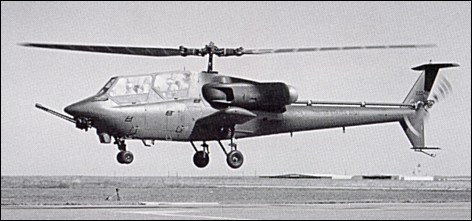
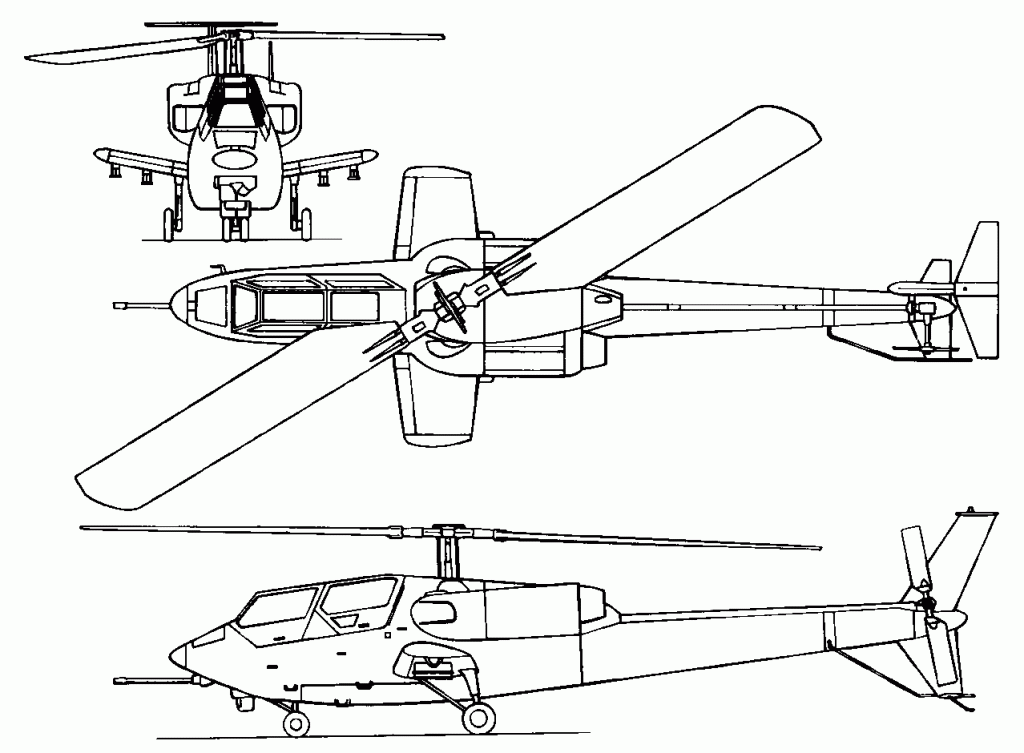
In November 1972 the Army called for design proposals for a new Advanced Attack Helicopter (AAH) intended for the all-weather anti-armor role. The Army’s specifications required that the aircraft be powered by twin General Electric T700 turboshaft engines and armed with up to sixteen Hellfire or TOW anti-tank missiles in addition to a single 30mm cannon. Preliminary design proposals were submitted by Boeing-Vertol, Bell, Hughes, Lockheed, and Sikorsky, and in June 1973 Bell and Hughes were selected as finalists and were each awarded contracts for the construction of two prototype aircraft. The contract was awarded to Bell on 22 June, 1973, for design, construction and qualification (Phase 1) of two flying prototypes (YAH-63A-BF) and a ground test vehicle (GTV).
Bell’s 409, military designation YAH-63, was based largely on the earlier 309 King Cobra. The YAH-63 seated its two man crew in tandem within a narrow fuselage, though Bell put the pilot in front in order to improve the aircraft’s low-level ‘nap-of-the-earth’ (NOE) flight capabilities.
In accordance with the Army’s specifications the YAH-63 was powered two widely separated 1536shp GE T700-GE-700 engines and was intended to carry its anti-tank ordnance load on short stub wings fixed to either side of the fuselage below the engine air intakes. The engines driving wide-chord, two-bladed semi-rigid main and tail rotors. Main rotor blade chord was 1.08m and an FX-69-H-083 aerofoil was used. The wide-chord had been selected mainly because it met performance requirements, permitted the spar separation required for 23mm survivability and was less complex by a factor of two. The ‘flat-pack’ transmission had large slow turning herringbone gears for increased survivability, reduced noise and a 30-minute fly-dry capability. The main rotor mast quickly retracted into the transmission for air transport. The YAH-63 had wheeled tricycle landing gear and a distinctive T-tail. The YAH-63 had a high flotation tricycle wheeled undercarriage with oleo struts equipped with ‘strut cutter’ crash energy absorber to meet the design impact velocity of 12.8m/sec.
The weapon ‘systems consisted of a chin turret-mounted triple-barrel 30mm XM-188 rotary cannon (fire rate 600 to 1800rpm) mounted ahead of the stabilised sight to minimize damaging muzzle blast effects, and up to sixteen Rockwell AGM-114A Hellfire air-to-ground missiles or seventy-six 70mm FFAR rockets could be carried on the four wing stores.
The first proroype YAH-63 (s/n 73-22246) first flew on 1 October, 1975, and the second prototype (s/n 73-22247) followed it into the air two months later. On 4 June, 1976, the first prototype experienced a heavy emergency landing and suffered minor damage. It was repaired in time to take part in the evaluation of the two contenders which was made at the Army Engineering Flight Activity (AEFA) from June to September 1976. The comparative tests between YAH-63 and YAH-64 led eventually to the selection of the Hughes design on 10 December, 1976. All flight testing with the YAH-63 then ceased and plans were made to continue work with the T700 powerplant.
One Bell YAH-63 (s/n 73-22247) survives and is preserved by the US Army Aviation Museum, at Fort Rucker, Alabama.
AH-63
Engine: 2 x General Electric T700-GE-700 turboshaft, 1145kW
Main rotor diameter: 15.54m
Length with rotors turning: 18.51m
Height: 3.73m
Take-off weight: 7237kg
Max speed: 325km/h
Hovering ceiling: 1980m
Crew: 2