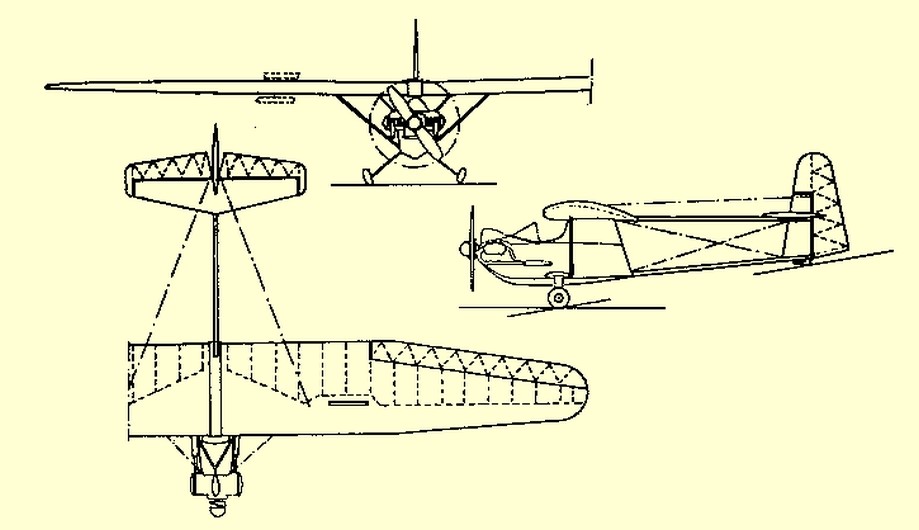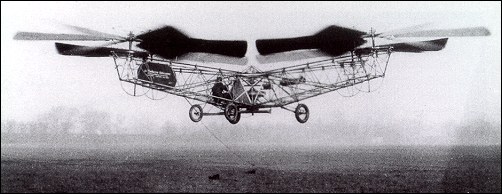
de Bothezat Helicopter

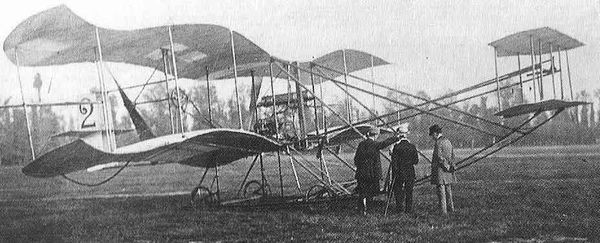
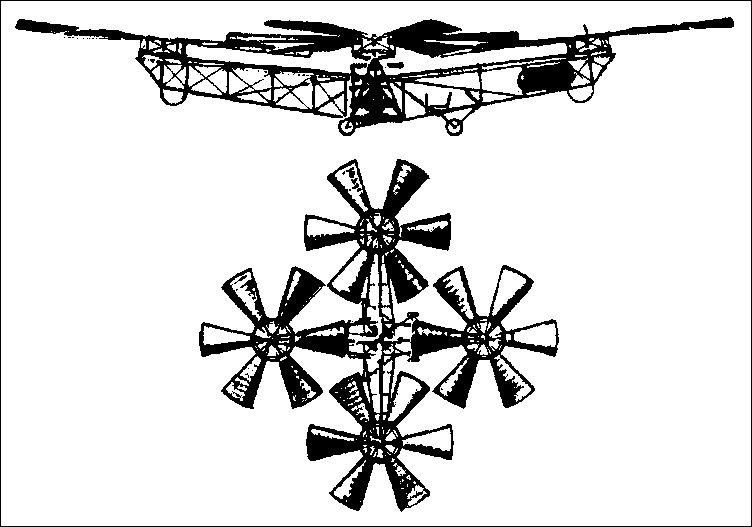
In January 1921, the US Army Air Corps awarded a $20,000 contract to Dr. George de Bothezat and Ivan Jerome to develop a vertical flight machine at Dayton. The 1678kg “X”-shaped structure supported an 8.1m diameter six-blade rotor at each end of the 9m arms. At the ends of the lateral arms, two small propellers with variable pitch were used for thrusting and yaw control. A small lifting rotor was also mounted above the 180hp Le Rhone radial engine (which it also cooled) at the junction of the frames, but was later removed as unnecessary. Each rotor had individual collective pitch control to produce differential thrust through vehicle inclination for translation. The aircraft weighed 1610 kg at take-off and made its first flight in October 1922. The engine was soon upgraded to a 220hp Bentley BR-2 rotary. About 100 flights were made by the end of 1923 at what would eventually be known as Wright Field near Dayton, Ohio.
On 18th December 1922 during a test by the Technical Section at McCook Field (now known as Wright Field), the aircraft rose 1.8 metres from the ground and remained airborne for 1 minute 42 seconds. On 19th January 1923 it lifted two persons to a height of 1.2 metres, and on 17th April 1923 it lifted not only the pilot but also four people hanging on to the framework.
Although the contract called for a 100m hover, the highest it ever reached was about 5m. After expending $200,000, de Bothezat demonstrated that his vehicle could be quite stable and that the practical helicopter was theoretically possible. It was, however, underpowered, unresponsive, mechanically complex and susceptible to reliability problems. Pilot workload was too high during hover to attempt lateral motion. Development ended in 1923.

Bothezat helicopter
Engine: 1 x Le Rhone radial 135kW, 180hp / Bentley BR-2 rotary, 220hp
Rotor diameter: 8.08m
Length and width: 19.8m
Height: 3.05m
Take-off weight: 1700kg
BOT-Aircraft SC07 Speed Cruiser

The Polish-designed, German-built, mostly carbon-fiber composite high-wing Speed Cruiser received ASTM certification (#131). It has a custom-built power plant and paraplegic controls for pilots in the Wounded Warrior flight program. The D-Motor is a flathead four-cylinder liquid-cooled direct drive plant rated at 95 hp and weighs 125 pounds. Cabin width is 48 inches, and seats are adjustable.

Stall: 35 kt / 40 mph / 65 kmh
Cruise: 127 kt / 146 mph / 235 kmh
VNE: 141 kt / 162 mph / 261 kmh
Empty Weight: 127 kg / 280 lbs
MTOW Weight: 214 kg / 472 lbs
Range: 650 nm
Climb Ratio: 6 ft/min
Glide Ratio: 15
Take-off distance (50ft obstacle): 490 ft / 150 m
Landing distance (50ft obstacle): 660 ft / 200 m
2009 Price: 59800 EURO
2012 Price: US$129,000.

Bossi Dai-Dai

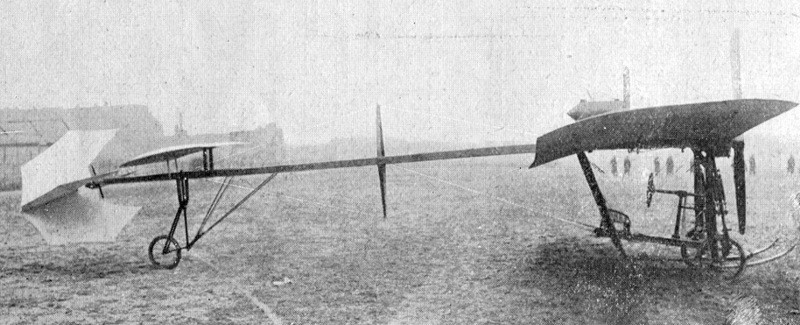
Signor Enea Bossi was the Italian representative of the Curtiss Co. and had arranged with the Zari Bros. of Bovisia, Italy, to build the Curtiss type boat from plans sent from Hammondsport. On September 22, 1914, Lanny made a demonstration flight in the first Italian built flying boat on Lake Como before naval officials. The Dai-Dai boat was purchased and an order placed for several more. The Italians were convinced that naval aviation was an excellent way to patrol their long and exposed coastlines.

Boshoff SB2

Building the SB2 was started in 1994 by S Boshoff, before the KR2S concept gained momentum. Looking for an aircraft that had better aerodynamic characteristics than the KR2, and the simplicity of the KR2, the SA-CAA granted permission to build an aircraft that was based on the KR2, but they would not allow it to be register as a KR2. Hence the SB2 which has the same wing as the KR2 with a lengthened fuselage and bigger tail areas.

The aircraft had its maiden flight on 23 November 2001.

SN: 1
Engine: Turbo charged VW 2.0 l t
Wing Span: 6150 mm
Length: 5050 mm
Empty weight: 310 kg
MAUw: 545 kg
Vstall: <50 mph
Vcruise: 155 mph
Vne: 190 mph
U/C: Fixed Composite MLG, Steerable NLG

Borzęcki JB-4 Skowronek               

Józef Borzęcki choose Olesno Śląskie as his place of residence. There, he designed and built the fourth ultra-light structure called JB-4 “Skowronek”.

In the fall of October 29, 1989, in the presence of Elżbieta’s daughter, “Skowronek” made several successfully completed take-offs and landings. A year later, on October 14, 1990, he made his last flight. From a height of 200 m, while descending to land, the left wing girder was broken. On this day, Józef Borzęcki died.

Borzęcki Altostratus

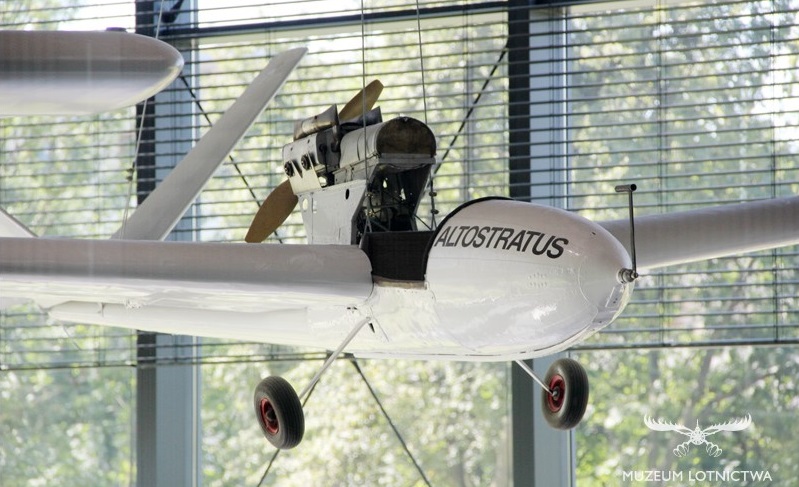
In late 1960s Józef Borzęcki undertook a rebuilding of his Stratus motor glider. The aircraft was fitted with wings from Komar (mosquito) glider, lighter and providing better glide ratio and flat two-stroke four-cylinder RB2 engine, designed by J. Borzęcki out of two connected Riedel starter engines from German Junkers Jumo 004 turbojet engine from World War II.

After this rebuilding the motor glider was named Altostratus and first flew in 1972. It remained in use until 1982.

Since 1994, “Altostratus”, as the only surviving structure of Józef Borzęcki, was transferred to the Polish Aviation Museum in Krakow.

Engine: RB2 Four-cylinder two-stroke, 18 kW (24 hp)
Span: 10 m (32.8 ft)
Length: 5.5 m (18 ft)
Empty weight: 90 kg (198 lb)
Take-off weight: 160 kg (353 lb)
Glide ratio: 20
Sink rate: 0.9 m / s
Maximum speed: 100 km / h (54 kt)
Minimum speed: 48 km / h (30 kt)

Borzęcki Cirrus  

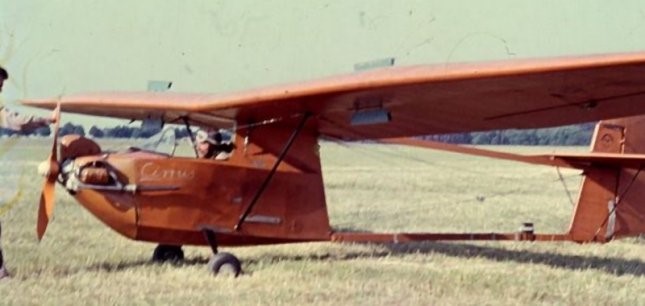
In the autumn of 1967, Józef Borzęcki began preparations for the construction of the “Cirrus” motor glider (“Salamandra moto”). In its construction, he used the experience gained while working on the “Stratus” motor glider. In the airframe, the designer used a number of wooden construction details from the school glider IS-A “Salamandra 53” (SP-1161) Kiibelwagen. He used a Volkswagen Kübelwagen car engine that he converted. A technical curiosity was the so-called elastic chassis, made of special shock-absorbing steel. The chassis on a single spring shank in the shape resembling the letter M was made of railway spring steel. This type of chassis designed and constructed by Borzęcki was the first of its kind in Poland to be used for light aircraft. The plane had, like “Stratus”, coupled control only by means of a joystick.

Looking for new solutions and constructional improvements, he used, among others double engine speed control system. It consisted in the fact that the aircraft also had a gas throttle mounted on the inside of the pilot’s cabin (as in a normal plane), and a car-type foot pedal, whose pressure increased the engine speed. These two control systems operated independently. The builder of Cirrus took the propeller-engine assembly very seriously. He took an exhaust gas analyzer, connected to the engine exhaust system, to the cabin. Flying at different heights, the amateur designer and pilot simultaneously selected the optimal composition of the gas-air mixture. The end result of these efforts was a significant engine economy with good performance of power.

“Cirrus” was flown on October 22, 1967. It had the characteristics of an ordinary glider after switching off the engine in flight. The powered glider carried out many flights in different weather conditions and seasons. Some of them on the ceiling 3000-4000 m and sometimes lasted 2-3 hours, with the engine turned on and off, circling in the thermals, enjoying a slow flight. For several years of using Cirrus, there were no accidents. The constructor flew about 2000 hours on it.

The constructor’s activities were revealed by a press article in 1968 and in 1969, unknown perpetrators destroy the motor glider, which, however, was rebuilt and flown. From 1971, the motor glider was hangar in the hangar of the Wroclaw Aeroclub, where in 1972 unknown perpetrators destroy Cirrus again, this time completely.

Engine: Volkswagen, 21 kW (28 HP).
Span: 12.5 m
Length: 6.5 m
Height: 1.95 m
Wing area: 16.8 sq.m
Empty weight: 200 kg
Total weight: approx. 300 kg.
Permissible speed: 140 km / h
Max speed: 120 km / h
Landing speed: 45 km / h
Minimum speed: 42 km / h
Rate of climb – 1.4 m / s
Glide: 12 / 1.3-1.5 m/s
Theoretical ceiling: 5000 m
Range: 400 km

Borzecki 2RB

The Borzecki 2RB is a Polish air-cooled, four-cylinder, horizontally opposed, two-stroke, piston engine designed and built by Jozef Borzecki for use in motor gliders. It was designed by J. Borzęcki out of two connected Riedel starter engines from German Junkers Jumo 004 turbojet engine from World War II.

First bench tested in 1970 the 2RB can be used in both tractor and pusher configuration, and the 24 hp (18 kW) engine was first flown in 1972 in his own design motor glider, the Borzecki Alto-Stratus.

Type: Air-cooled four-cylinder horizontally opposed two-stroke piston engine
Bore: 70 mm (2.76 in)
Stroke: 35 mm (1.38 in)
Displacement: 33 cu in (540 cc)
Length: 450 mm (17.7 in)
Width: 250 mm (9.8 in)
Height: 260 mm (10.2 in)
Dry weight: 15 kg (33 lb)
Designer: Jozef Borzecki
Fuel system: Jawa 250 motor-cycle carburettor
Fuel type: Mixture of 76-octane petrol and oil
Cooling system: Air-cooled
Power output: 24 hp (18 kW) at 6,000 rpm
Compression ratio: 7.2:1