Boulton Paul P3 Bobolink

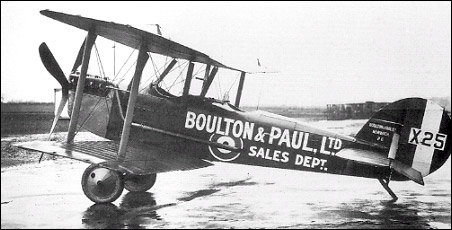
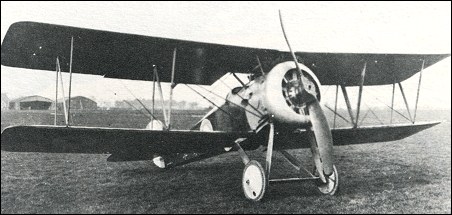
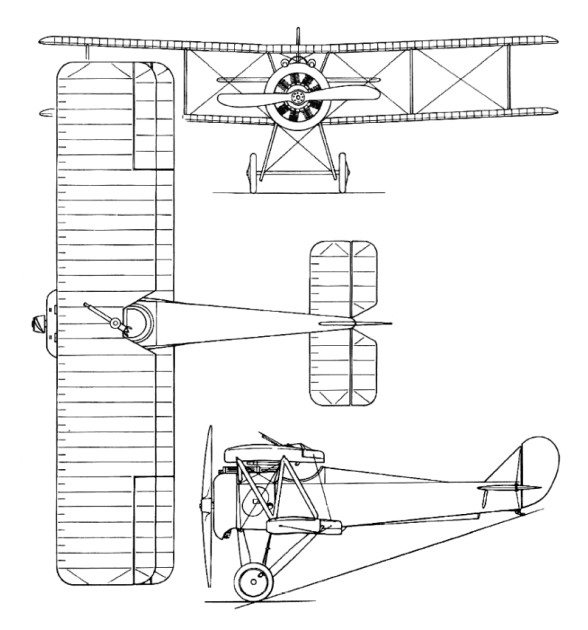
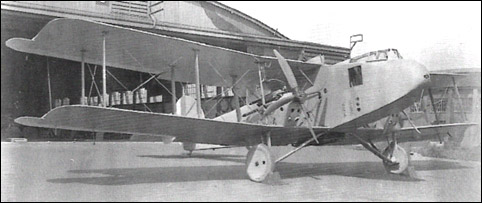
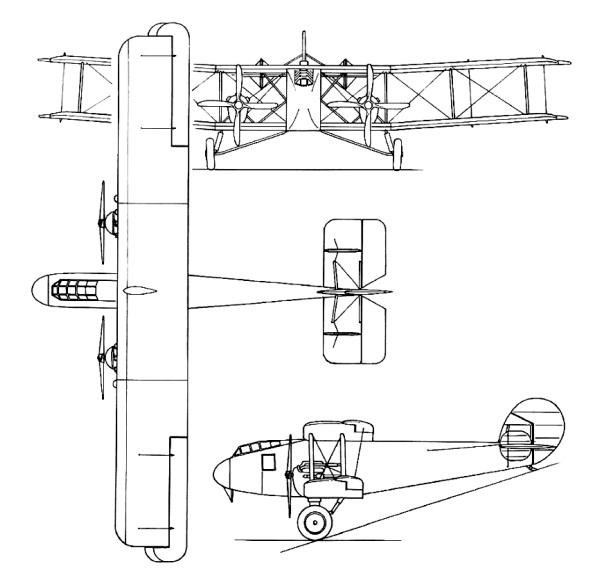
Boulton & Paul had manufactured wooden buildings at its Norwich factory, and during World War I built aircraft under sub-contract. Among the types produced were the FE.2b and Camel, and the Bobolink was the result of a design competition to find a Camel replacement. Boulton & Paul’s first aeroplane, the P.3 Bobolink designed by John D. North, was built only in prototype form.
The winner of the competition was the Sopwith Snipe, and the Boulton & Paul aircraft did not enter production. Three serial numbers were allocated for the prototypes, but records suggest that only one was built.
A Bobolink feature made it possible for the pilot to jettison its main fuel tanks in the event of an in-flight fire.

Engine: 1 x Bentley B.R.2 rotary piston engine, 172kW
Take-off weight: 904 kg / 1993 lb
Empty weight: 556 kg / 1226 lb
Wingspan: 8.84 m / 29 ft 0 in
Length: 6.10 m / 20 ft 0 in
Height: 2.54 m / 8 ft 4 in
Wing area: 24.71 sqm / 265.98 sq ft
Max. speed: 201 km/h / 125 mph

Bounsall Super Prospector

In 2012 the Bounsall Super Prospector had revised, professionally drawn plans. Material is tubing, wood, and fabric. Prefab kits were available. The Super Prospector could be built for less than US$5,995. The complete plans including postage were US$75.00.

Engine: Hapi 1835cc, 60 hp.
Speed max: 100 mph.
Cruise: 90 mph.
Range: 300 sm.
Stall: 36 mph.
ROC: 600 fpm.
Take-off dist: 300 ft.
Landing dist: 250 ft.
Service ceiling: 12,000 ft.
HP range: 50-85.
Fuel cap: 12 USG.
Weight empty: 440 lbs.
Gross: 800 lbs.
Height: 6.75 ft.
Length: 19.33 ft.
Wing span: 29.67 ft.
Wing area: 120.8 sq.ft.
Seats: 1.
Landing gear: tail wheel.

Bouchard Bush

A two seat tandem, open frame autogyro. Frame is bolted together, dual controls and composite partial enclosure. Engine: Rotax 582. Prop: 64” 3 blade composite. Rotor blades: 28’ x 75” Challenge aluminium rotors, bonded, riveted.

Min speed: 30 mph.
Cruise: 85 mph.
Top speed: 100 mph.
Empty wt: 390 lbs.
Useful load: 460 lbs.
Gross wt: 850 lbs.
Width: 7’8”.
Height: 8’4”.
Length: 14’8”

Botts 1903 Flying Machine

A motor-driven aeroplane designed by R. H. Botts. The machine was a combination of a circular aeroplane with two sets of two propellers, the screws of each set working in opposite directions. The aeroplane itself is circular, 20ft diam., and attached to two hoops, the outer of steel tubing and the inner, 6ft diam., of wood. In the centre a bamboo framework supported the boiler, engines, and the car. One set of screws (upper 5ft 1in. and lower 6ft 2in diam.) was placed above the car, and these ran on a vertical axis, the thrust upward in both, though rotating oppositely. Fore and aft of the aeroplane the other propellers, of the fan-wheel type, and 6ft 2in diam., worked on a horizontal axis. There were two engines. A cloth-covered rudder was so pivoted as to be able to be set at any angle either vertical or horizontal.

The airship was intended for the St. Louis competition. Total weight of engines 33 lbs.; of complete apparatus with operator (of weight not stated, 214 lbs).
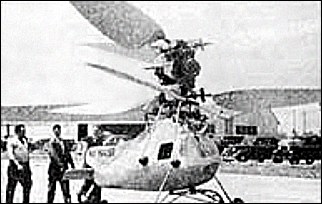
de Bothezat Helicopter 1939

De Bothezat who, after abandoning his first helicopter in 1923, had created a firm for the design and manufacturing of industrial fans, returned in 1937 to the helicopter: he created then the Helicopter Corporation of America and built a coaxial helicopter.
A single-seat close-cockpit helicopter with 85hp radial engine and two coaxial rotors, the machine was completed by De Bothezat’s colleagues after he passed away in 1939.
Testing was entrusted to a Russian ace of World War I Captain Sergievsky.