Canadian Home Rotors Baby Belle Safari    

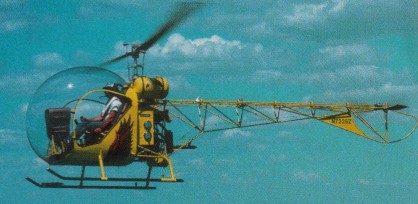
Canadian Home Rotors Inc. (CHR) are the manufacturers of the Safari helicopter. A scaled Bell 47G look alike, that has consist¬ently placed at the top of the custom built helicopter pile. Originally called the Baby Belle, but after objection from Bell Helicopters the name was changed to Safari.
A two seat side by side enclosed helicopter, the 4130 steel tube frame cabin monocoque and boom can be made up in the home workshop while awaiting delivery of the factory built main rotor and tail rotor gearboxes along with the main rotor head and blades. Main rotor is gear driven, tail rotor is shaft driven. Tail boom is steel tube. The main rotor blades are skinned all-aluminium with extruded aluminium leading and trailing edges. Blades are shaped by one solid rib each 6 inches from the root to three feet outboard, then one rib per 12 inches to the tip. Each blade contains 16 ribs. The main rotor flies at 500 rpm, and tail-rotor at a 5.4:1 rpm ratio.
The four foot diameter, 4 inch chord tail rotor blades are stainless steel, with a solid steed spar running out 6 inches from each blade root and wrapped with stainless sheeting to form the airfoil.
The main rotor gearbox includes clutches and engine fan. The cabin bubble is sourced from Nordam Plastics, manufacturers of the original Bell 47 item. The bubble is an actual Bell 47 series enclosure.
A Delta teetering system provides the control. Aluminium castings are used in the swashplate-controlled main rotor system.
The instrument panel carries operational instruments and a main transmission temp indicator and chip detectors for the main and tail rotor gearboxes. Engine, seats and cockpit fittings were generally the items sourced from written off Robinson R22.
Fuel capacity of 28 US gallons is carried in two 14 USG aluminium tanks aft of the cabin.
Skid landing gear is built with 2 inch diameter tubing, the bottom horizontals black anodised.
In 1996 the kit price was US$38,000.

CHR are constantly improving the Safari with experience, including increased service intervals on the main rotor gearbox. Build weight is always slightly different between machines but generally just under 1,000 lbs., which allows a useful load of better than 500 lb. The 12 foot span blades feature an eight inch chord and weigh 40 lb. each.
The Safari is powered by a Lycoming 160 hp aircraft engine, maintaining the highly trustworthy flying abilities of this classic design. Cruising speed is 80 mph with climb rate of 1,000 fpm & an operating ceiling of 10,000ft. Max. speed is 100mph.
A US corporation, CHR International Inc acquired Safari Helicopter. The owners of CHR International Inc., Bobby and Delane Baker, have been involved with Safari for several years. Murray Sweet, one of the original developers of the Safari, was to remain involved with the new company as a technical consultant, as will other long time members of the Safari team.
Much of the production was to remain in Canada, with assembly and flight training continuing in Marianna, Florida. They reduced the dealership requirements in most parts of the world, with positive results.
Gallery

Engine: Lycoming O-320, 150 hp.
HP range: 150-180.
Disk span: 25 ft 11 in
Rotor Blades chord: 8 in
Disk area: 490.6 sq.ft.
Width 6 ft
Height 8 ft
Length 29 ft 8 in
Weight empty: 920-945 lbs.
Gross: 1450 lbs.
Speed max: 100 mph.
Cruise: 80 mph.
Range: 200 sm.
ROC: 1000 fpm at 45 mph.
Service ceiling: 10,000 ft.
HIGE: 7000 ft
HOGE: 2000 ft
Fuel cap: 28 USG.
Seats: 2.
Landing gear: skids.

Engine: Lycoming O-320, 150 hp
Rotor span: 7.30 m
MAUW: 750 kg
Empty weight: 372 kg
Fuel capacity: 108 lt
Max speed: 160 kph
Cruise speed: 145 kph
Minimum speed: 0 kph
Climb rate: 5 m/s
Seats: 2
Price (1998): $88,500
Plan price (1998): $150
Kit price (1998): $38,430
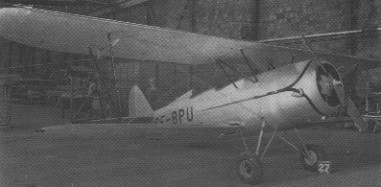
Canadian Car & Foundry FDB-1 Gregor Fighter        

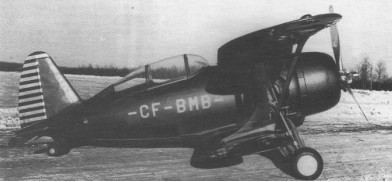
Can Car’s final attempt to produce its own design was the FDB 1, the so called ‘Gregor Fighter’, named after Michael Gregor, the chief aeronautical engineer who preceded Miss MacGill. The FDB 1 was designed as a highly manoeuvrable, biplane fighter/dive bomber with retractable undercarriage and powered by a Pratt & Whitney R 1535 SI34 G Twin Wasp Junior. The fuselage was of stressed skin construction while the wings were fabric covered metal structures with trailing edge flaps on upper and lower planes and automatic leading edge slots on the former. Port and starboard sections of the upper wing were separate, joining the fuselage in a modified gull wing form, which helped to improve forward visibility.
Despite the excellent manoeuvrability of the prototype, which first flew on 17 December 1938 at Fort William, Ontario, its speed was considerably less than had been predicted and there were problems with controls and flaps. Aircraft of this type were rapidly becoming outdated and, since by this time CCF had become involved in what was to be its most successful contract, the Gregor Fighter was placed in storage at Cartierville, Quebec, where it was burned in 1945.

Canadian Car & Foundry Maple Leaf II

The Maple Leaf I was followed by the Maple Leaf II, which, despite the name, had little more than the empennage in common with its predecessor. The design and engineering team, led by Miss E G MacGill, at that time the only female chief aeronautical engineer in Canada, had the prototype ready for its first flight in the fall of 1939. Although it gave creditable performances in tests by the Department of Transport and the RCAF, the Maple Leaf II never reached the production line, mainly because at that time the company had already committed its Fort William plant to the production of the much needed Hurricane. The prototype, along with various components and parts of at least two partly finished aircraft, was eventually exported to Mexico.

Canadian Airmotive CAM 100 / Firewall Forward CAM 100

The Firewall Forward CAM 100 is a 100 hp (75 kW) four-cylinder, four-stroke liquid-cooled piston aircraft engine built by Firewall Forward Aero Engines. Originally designed and built by Canadian Airmotive as the CAM 100 and later marketed by The Cam-Fire Engine Group, it is based on a Honda Civic automotive piston engine. Unit cost was US$8,450 in 2005.

Applications:
Blue Yonder Merlin
Denney Kitfox V
Murphy Rebel
Zenith Zodiac CH 601

CAM 100
Type: Four-cylinder, four-stroke piston engine
Bore: 74 mm (3.07 in)
Stroke: 86.5 mm (3.41 in)
Displacement: 1488 cm3 (90.7 cu in)
Length: 32 inches (810 mm)
Width: 19.5 inches (500 mm)
Height: 25 inches (640 mm)
Dry weight: 226.2 pounds (102.6 kg)
Valvetrain: overhead camshaft
Fuel type: 90 Octane petrol or 100LL aviation petrol
Cooling system: Uses a water-glycol mixture with a camshaft belt driven water pump.
Reduction gear: 2.4:1 reduction ratio (6,000 rpm engine, 2,500 rpm propeller).
Starting system Electric gear reduction starter.
Power output: 100hp (74.6 kW) at propeller flange.
Specific power: 130 kW/L (1.10 hp/cu in)
Compression ratio: 9.6:1
Specific fuel consumption: 0.43 lb/bhp/hr at 80% power

Firewall Forward CAM 100
Cycle: 4 stroke
No cylinders: 4 inline
Bore: 74 mm
Stroke: 86.5 mm
Compression: 9.6
Displacement: 1488 cc
Cooling: liquid
Ignition: Electronic
Reduction: Crantee Belt 2.4/1
Dimension: 570 x 641 x 813 mm
Weight: 101.9 kg
Max pwr: 105 hp
Price 1998: $7950

Canadian Aerodrome Company Hubbard Monoplane “Mike” 

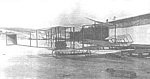
The Canadian Aerodrome Company Hubbard Monoplane “Mike” (Hubbard II) designed and built in Canada in 1910.

J. A. D. McCurdy set up the Canadian Aerodrome Company after the AEA was dissolved. Gardiner Hubbard was a cousin of Bell’s wife, Mabel Gardiner Hubbard.

The Hubbard Monoplane, also nicknamed “Mike”, was designed by John McCurdy and built by the Canadian Aerodrome Company. It was commissioned by Gardiner Greene Hubbard II of Boston. The monoplane was constructed at the Beinn Bhreagh estate of Alexander Graham Bell in Baddeck, Nova Scotia, by John McCurdy and F. W. “Casey” Baldwin. The aircraft was the third to be built by the Canadian Aerodrome Company, and the first to represent an indigenous design, although loosely based on the Blériot XI. The aircraft made two brief flights on 3 March 1910, flown by McCurdy.

After it was shipped to Montreal for the 1910 Montreal Air Meet, Hubbard was unsuccessful in flying the aircraft, it possibly being too low-powered to do more than taxiing. Shortly after, Hubbard had the aircraft dismantled and shipped to Boston, making it the first Canadian aircraft sold and built for export. The intent was to enter the aircraft at the Harvard-Boston Aero Meet in Boston. The aircraft was displayed at the aero meet, and was included in the photographs of the flight line, but it did not leave the ground.

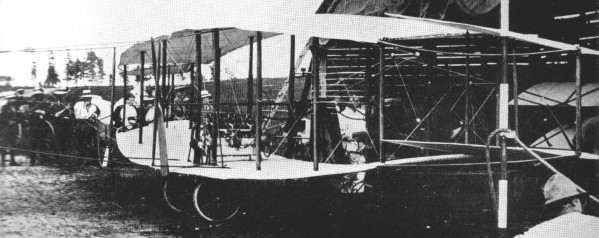
Baddeck No. 2
Engine: 1 × Kirkham air-cooled piston engine, 40 hp (30 kW)

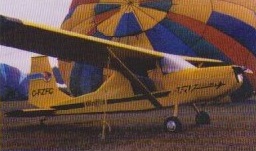
Canada Air RV ARV Griffin          

Engine mounts were available for Subaru, Continental, and CAM-100.

By 1998 twenty kits had been delivered.

Engine: Divers
Wing span: 10.8 m
Wing area: 10.7 sq.m
MAUW: 681 kg
Empty weight: 340 kg
Fuel capacity: 140 lt
Max speed: 238 kph
Cruise speed: 215 kph
Minimum speed: 73 kph
Climb rate: 8.5 m/s
Seats: 2
Fuel consumption: 25 lt/hr
Kit price (1998): $21,450

Engine: Continental O-200, 100 hp.
HP range: 65-100.
Speed max: 135 mph.
Cruise: 121 mph.
Stall: 45 mph.
Range: 828sm.
ROC: 850 fpm.
Take-off dist: 250 ft.
Landing dist: 450 ft.
Service ceiling: 18,000 ft.
Fuel cap: 37 USG.
Weight empty: 640 lbs.
Gross: 1500 lbs.
Height: 8 ft.
Length: 21 ft.
Wing span: 35.5 ft.
Wing area: 115 sq.ft.
Seats: 2.
Landing gear: nose or tail wheel.

Canadair CRJ 700 / CRJ 900

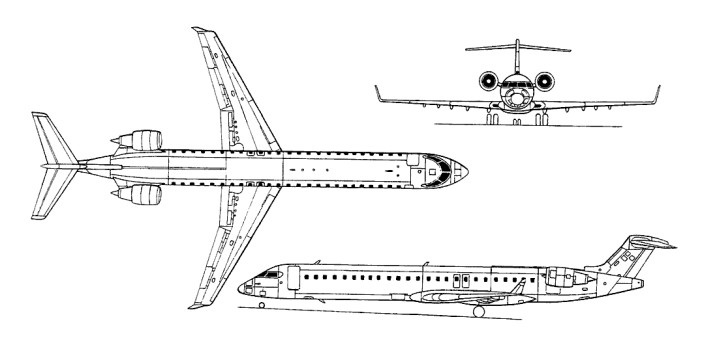
The CRJ 700 (originally known as the CRJ X) was a stretched 70 ¬seater, launched with a firm order for four aircraft from the French company Brit Air.
Compared to the CRJ100/200 re¬gional jets from which it’s descended and with which it shares Collins ProLine 4 avionics, the CRJ700 features a fuselage stretch of 186 inches, new General Electric CF34 8C1 engines, a larger horizontal tail, leading edge slats and an APU in the tail cone instead of the equipment bay. Other changes in¬clude raising the passenger windows by 4.5 inches, lowering the floor an inch, and expanding the interior cabin by an inch to a total width of eight feet, five inches. The airplane’s commonality with the CRJ100s and 200s allow operators with both types an advantage in spares as well as pilot training. The GE engines are capable of 13,790 pounds of thrust with Automatic Power Reserve
On May 27, 1999, the evening before its official rollout, Bombardier’s CRJ700, new 70 passenger Canadair Regional Jet airliner, made its first flight. The CRJ700 took off from Montreal, Canada’s Dorval Airport at 6:18 in the evening with test pilots, Craig Tylski and Chuck Ellis, on a test flight that lasted two hours and eight minutes.
The public debut was at Farnborough International Air Show on 23 July 2000, and Transport Canada certification achieved 22 December 2000.
The first customer delivery, to Brit Air of France, was in February 2001, followed by deliveries to Horizon Air and Lufthansa CityLine in May 2001.

The CRJ900 was originally CRJ700 Msn 10001, and the airframe was converted with two plugs of 90in (2.28m) and 62in (1.57m).
The prototype retained the CRJ-700 wings, landing gear and engines, and was first flown on 21 February 2001, from Montreal-Mirabel, piloted by Chuck Ellis, Craig Tylski and Jeff Hyde.
The public debut was at the Paris Air Show on 14 June 2001, and first production aircraft first flown on 20 October 2001. Transport Canada certification was achieved on 9 September 2002, followed by FAA approval 25 October 2002 and JAA certification 23 December 2002.
The first customer delivery, to Mesa Air, was on 3 February 2003.

CRJ900

VERSIONS

CRJ-700
68-seat version in standard and extended range (ER) weight options.
Engine: 2 x General Electric CF 34 8C1, 61313 N
Length: 106.66 ft / 32.51 m
Height: 24.836 ft / 7.57 m
Wingspan: 76.247 ft / 23.24 m
Wing area: 738.733 sq.ft. / 68.63 sq.m
Max take off weight: 51255.2 lb / 23245.0 kg
Weight empty: 30109.3 lb / 13655.0 kg
Max. speed: 464 kt / 860 km/h
Cruising speed: 442 kt / 818 km/h
Service ceiling: 41011 ft / 12500 m
Wing load: 69.5 lb/sq.ft / 339.0 kg/sq.m
Range: 1701 nm / 3150 km
Crew: 2
Payload: max. 8527kg

CRJ-701
70-seat version in standard and extended range (ER) weight options.

CRJ-900
Standard version.
Length : 106.60 ft / 32.51 m
Height: 24.836 ft / 7.57 m
Wingspan: 76.247 ft / 23.24 m
Wing area: 738.733 sq.ft. / 68.63 sq.m
Max take off weight: 51255.2 lb / 23245.0 kg
Weight empty: 30109.3 lb / 13655.0 kg
Max. speed: 464 kt / 860 km/h
Cruising speed: 442 kt / 818 km/h
Service ceiling: 41011 ft / 12500 m
Wing load: 69.5 lb/sq.ft / 339.0 kg/sq.m
Range: 1701 nm / 3150 km
Engines: 2 x General Electric CF 34 8C1, 61313 N
Crew: 2
Payload: 70 pax (max. 8527kg)

900ER
Extended-range version.

900ER European
As 900ER but with maximum T-O weight limited to 36,995kg to minimise weight-related charges when operating in European airspace.

900LR
Long-range version.

900LR European
As 900LR hut with maximum T-O weight limited to 37,995kg.

Bombardier CRJ-700
Bombardier CRJ-900