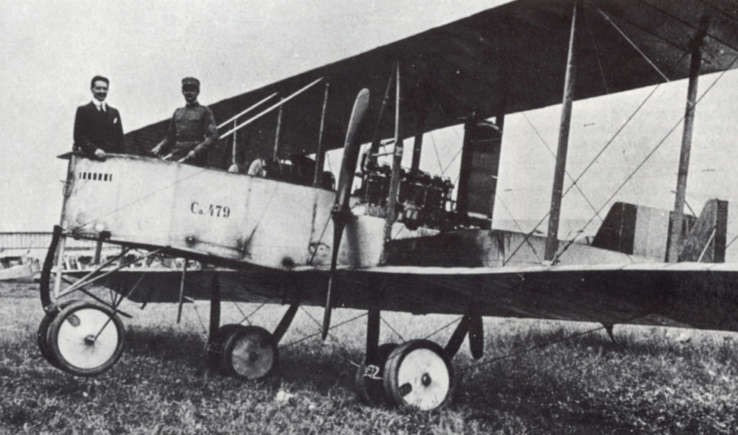
Caproni 260hp / Caproni 300hp / Ca.1 / Ca.2 / Ca.30 / Ca.31 / Ca.32 / Caproni 350hp

Caproni Ca.1 Heavy Day Bomber

The “Societa de Aviazone Ing Caproni” bureau (better known simply as “Caproni”) proved something of a pioneer in the field, resulting in their first impressive attempt sometime in 1913 as the “Caproni 260hp”. This version sported a “pusher” engine and a pair of “pusher” engines – these 80 hp Gnome rotary engines all being mounted in-line along a central fuselage nacelle. The three man crew sat in the forward part of the nacelle, and two slender fuselage booms carried the triple rudder tail unit. The two pusher systems drove propellers mounted at the tail booms via a tractor arrangement. Prior to the first flight, in October 1914, the two forward engines were re installed with direct propeller drive.

In the post-war years, these respective systems came to be designated as the Ca.30 and Ca.31.
After a period of evaluation, it was determined that the new larger bomber platforms were wholly underpowered. Caproni set to achieve better performance from his “giant” and moved the puller engines to the tips of each tail boom, keeping the pusher system in its centralized nacelle approach from earlier. This allowed each wing-mounted engine to directly drive its propeller more efficiently. The French-based Gnome rotary engines were then replaced with Italian FIAT A.10 inline types and produced the new company designation of “Caproni 300hp”.
Ca.1

A contract was signed for 12 Caproni 300HP bombers powered by three 74.5kW Fiat A.10 engines. First flight occurred in late 1914. A further 150 were delivered during the next two years. These aircraft were also known as Ca.1s and were followed by nine Ca.350HP machines (with the third engine replaced by a 112kW Isotta Fraschini) designated Ca.2.
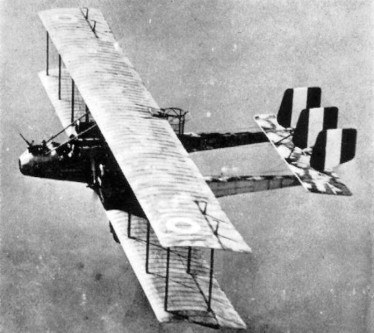
The Ca.1 featured a wide-span, four-bay, biplane wing assembly. At the center of the wings was fitted the crew nacelle containing the four crew and the third engine. The primary engines were fitted ahead of the twin booms extending aft in a “puller” function arrangement. The third engine on the central nacelle operated in a “pusher” format. The crew consisted of two pilots, a forward gunner and a rear gunner – all fielded in tandem positions. The forward gunner sat in the forward-most compartment. Distinctly, the rear gunner stood in an open air, cage-like pulpit behind the upper wing assembly and ahead of the pusher engine at rear. The twin booms extended aft into a tailplane. The tailplane held three vertical tail fins. The undercarriage was a fixed tricycle featuring two single-wheeled main landing gear legs and a single-wheeled nose landing gear, all supported by struts. The rear of the empennage was supported by a tailskid fitted to the extreme end. Construction was mainly wood covered in fabric.
Bombs were suspended under the central nacelle and there were 2 x 6.5mm FIAT-Revelli machine guns used for defense. These machine guns were fitted to the front gunner tub and the rear gunners pedestal cage.
The 3 x Fiat A.10 6-cylinder, liquid-cooled in-line engines delivered up to 100 horsepower output each. This supplied the massive aircraft with speeds of up to 75 miles per hour as well as a range equal to 344 miles. Her service ceiling was listed at approximately 13,000 feet. Her empty weight ranged in at about 7,200lbs with a gross weight tipping the scales at 8,800lbs. Wingspan was nearly 23 feet with an overall running length of 36 feet plus. She stood 12 feet high.
This revised development led to the Italian Army and the first Italian bomber force. The aircraft was designated officially as the Ca.1 by the Italian Army and production increased by the middle of August 1915. A total of 162 were delivered up to December 1916.
Their first true sortie in Italian Army service occurred on August 20th, 1915, in an attack on Austrian targets at an airfield in Aisovizza. Most Ca.1s were committed to such attacks, primarily against the Austro-Hungarian Empire and the new bomber eventually served in some fifteen total Italian air squadrons during the war effort. Three of these Italian squadrons were known to have operated out of France with another stationed for action out of Libya.

A modified version (for which no post war designation seems to have been allotted) was the Ca 2, in which the ‘pusher’ A.10 engine was replaced by a 150 hp Isotta Fraschini V-4B. Only nine of these were completed.
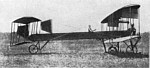
1910 Caproni Ca.2

In the post-war years, the Ca.1 was redesignated Ca.32. The Ca.1/Ca.32s that survived were refurbished to be used as passenger airliners. These could transport up to six passengers in relative comfort and fell under the Caproni designation of Ca.56.
The Caproni Ca.2 (“Caproni 350hp”) was a minor variation (improved engines) on the strengths of the Ca.1 platform. Development ultimately led to the definitive Ca.3 bomber platform.

Caproni Ca.1 / Ca.32
Engines: 3 x FIAT A.10 6-cylinder, 100 hp
Length: 36.25ft (11.05m)
Wing span: 74.61ft (22.74m)
Height: 12.14ft (3.70m)
Maximum Speed: 75mph (120kmh; 65kts)
Maximum Range: 342miles (550km)
Service Ceiling: 13,123ft (4,000m; 2.5miles)
Armament: 2 or 4 x 6.5mm FIAT-Revelli machine guns
Up to 1,874lbs of external ordnance
Accommodation: 4
Hardpoints: 4
Empty Weight: 7,280lbs (3,302kg)
Maximum Take-Off Weight: 8,818lbs (4,000kg)

Ca.2
Span: 34’5″
Length: 32’4″
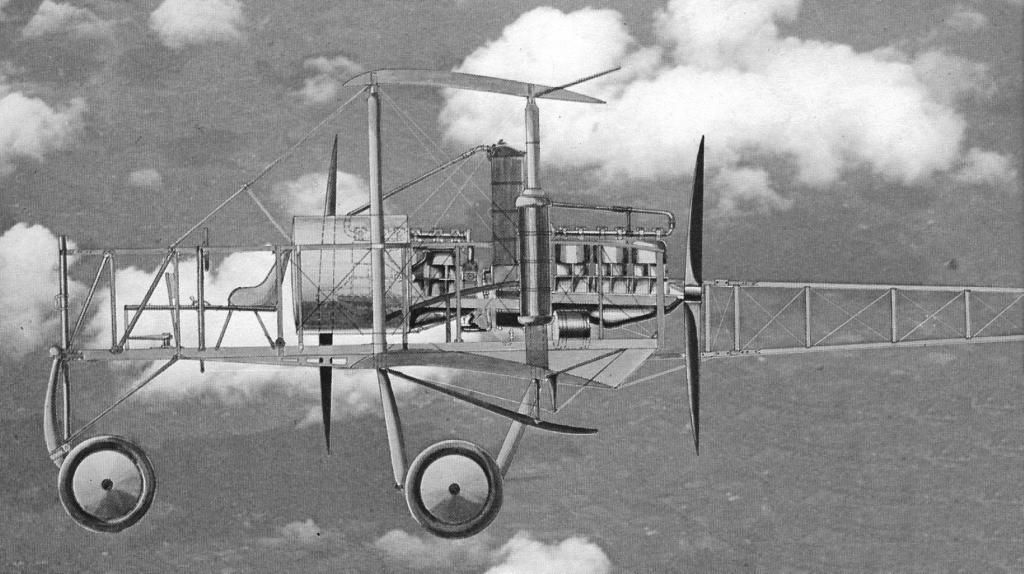
Caproni Ca 30

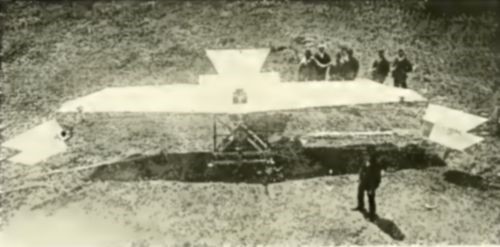
Capone Aérogyroplane

Federico Capone’s machine was called l’Aérogyroplane because of the way it was powered. A small motorcycle engine of 4.5 hp drove double pairs of swinging blades symmetrically disposed at the end of wings. The blades worked like rotors in the initial stage of flight and then their position could be changed from horizontal to vertical. The latter was to give horizontal action to the machine. Built by Ceccarelli in Naples, testing was not very successful, as the machine was partially wrecked by a gale on April 30, 1905. The repaired machine was later sent off from a high launching position and managed to fly a certain distance.

Capital Aircraft Air Trainer / Royal Air Trainer / Derickson Air Trainer

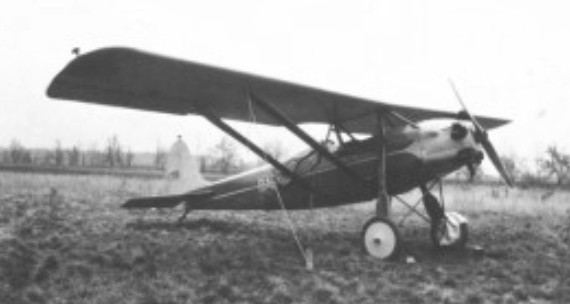
The aircraft was designed by Prof. Peter Altman of the University of Detroit. At that time it was named the Derickson Air Trainer.

John and Donalt Thomas acquired the design rights in 1928 and formed a company under the name Capital Aircraft Corporation located in Lansing, Michigan.

They built only one aircraft, registration number X795K. The airframe was initially built as a seaplane powered with a 60 hp LeBlond 5-D engine, which was exchanged with a 90 hp 7-D when later converted as a landplane. Span was 34 ft, length 25 ft, useful load 535 lbs, Vmax 105 mph, Vc 85 mph, Vso 30 mph, and range 400 miles.

In 1929 Capital Aircraft Corporation was relocated in Royal Oak, Michigan, and was renamed the Royal Aircraft Corporation.

Capella Javelin / T-Raptor

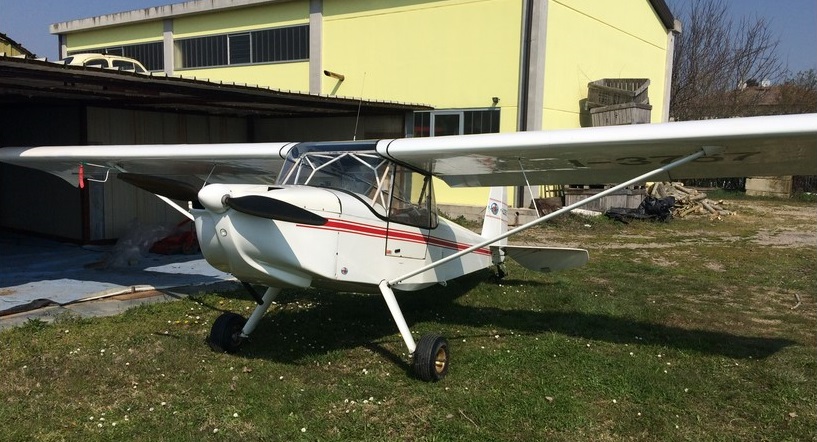
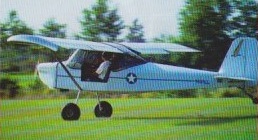
The Capella Javelin is a family of American open cockpit, high wing, tractor configuration, conventional landing gear-equipped ultralight aircraft that were designed by J. Reid Howell and produced in kit form by Capella Aircraft of Austin, Texas and intended for amateur construction.

First flying in 1998, the single seat Javelin I was designed to comply with the American FAR 103 ultralight regulations, including that category’s maximum 254 lb (115 kg) empty weight. The 2001 cost was US$6000 without engine, propeller, instruments or covering supplies.

The design features an open frame fuselage of welded 4130 steel tubing, with the pilot’s and passenger’s seats bolted to the frame. The horizontal stabilizer and tail fin are also constructed of welded steel tubes. The wing is framed from riveted aluminium tubing with all flying surfaces covered in doped aircraft fabric. The wing is equipped with full span ailerons.

The conventional landing gear includes sprung-steel main gear and a similarly sprung steerable tail wheel. The open cockpit design provides good visibility while taxiing.

The standard engine supplied by the manufacturer for the single seat version was the 28 hp (21 kW) Rotax 277, but it was reported that the aircraft was underpowered with that engine installed. The throttle control is of a unique motorcycle grip type.

Original factory kit options included a cockpit pod and windshield, brakes and steel tube powder coating.
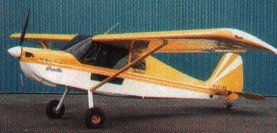
The single-seat Javelin was developed into a tandem two-seater, designated the Javelin II and then further developed into the T-Raptor ultralight trainer. The T-Raptor uses a wider and more enclosed fuselage, with optional bubble-windowed doors, to allow cool weather flying and was intended to be marketed to ultralight schools.

Capella Aircraft went out of business in late 2007, and the type is no longer in production.

Variants:

Javelin I
Single seat open cockpit ultralight
Engine: 1 × Rotax 277, 28 hp (21 kW)
Wingspan: 28 ft 0 in (8.53 m)
Wing area: 112 sq ft (10.4 sq.m)
Length: 18 ft 0 in (5.49 m)
Height: 6 ft 0 in (1.83 m)
Empty weight: 240 lb (109 kg)
Gross weight: 575 lb (261 kg)
Fuel capacity: 5 US gallons (19 litres)
Maximum speed: 63 mph (101 km/h, 55 kn)
Cruise speed: 60 mph (97 km/h, 52 kn)
Stall speed: 26 mph (42 km/h, 23 kn)
Range: 140 mi (220 km, 120 nmi)
Service ceiling: 12,500 ft (3,800 m)
Rate of climb: 400 ft/min (2.0 m/s)
Seats: one

Javelin II
Two seats-in-tandem open cockpit ultralight trainer powered by a 50 hp (37 kW) Rotax 503 engine. It was reported as being in development in 1998 and forecast to be available at the end of 1998.

T-Raptor
Two seats-in-tandem ultralight trainer powered by a 50 hp (37 kW) Rotax 503, 64 hp (48 kW) Rotax 582 or 60 hp (45 kW) HKS 700E four stroke engine. The T-Raptor has an expanded-width steel cage to provide a more enclosed cockpit and is a development of the Javelin II.

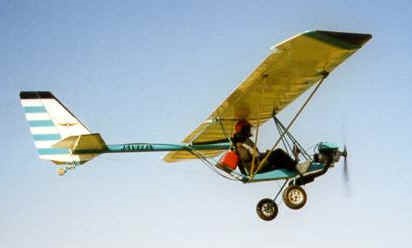
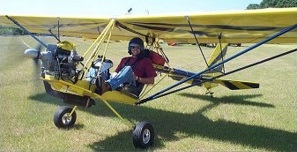
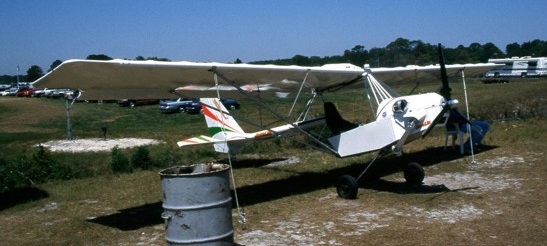
Capella Aircraft Corp Capella

Capella Single Seat

Desined by J. Reid Howell
The Capella SS first flew in 1988.
Folding wing optional.

The FW2T has a dacron covered spaceframe fuselage, while the strut braced wings are fabricated from sheet dural, pop riveted.

FW2T

The Capella XLS first flew in 1990.
Capella Aircraft Corp received certification in Germany for the Capella XLS model FW2C80 and Capella SS model FW1C50.
The Capella XS first flew in 1990.
The Capella Fastback first flew in 1995.

Capella Fastback

Capella SS
Engine: Rotax 503, 50 hp.
HP range: 40-50.
Speed max: 112 mph.
Cruise: 102 mph.
Stall: 34 mph.
ROC: 980 fpm.
Take-off dist: 130 ft.
Landing dist: 130 ft.
Service ceiling: 10,000 ft.
Fuel cap: 7 USG.
Weight empty: 360 lbs.
Gross: 650 lbs.
Height: 5.67 ft.
Length: 17.33 ft.
Wing span: 27.5 ft.
Wing area: 110 sq.ft.
Seats: 1.
Landing gear: nose or tail wheel.

Capella XLS
Engine: Rotax 912, 80 hp.
HP range: 65-80.
Speed max: 121 mph.
Cruise: 119 mph.
Stall: 41 mph.
ROC: 1450 fpm.
Take-off dist: 200 ft.
Landing dist: 150 ft.
Service ceiling: 10,000 ft.
Fuel cap: 22 USG.
Weight empty: 560 lbs.
Gross: 1100 lbs.
Height: 5.67 ft.
Length: 18.4 ft.
Wing span: 28.5 ft.
Wing area: 114 sq.ft.
Seats: 2.
Landing gear: nose or tail wheel.

Capella XS
Engine: Rotax 582, 65 hp.
HP range: 65-80.
Speed max: 116 mph.
Cruise: 111 mph.
Stall: 41 mph.
ROC: 1200 fpm.
Take-off dist: 175 ft.
Landing dist: 115 ft.
Service ceiling: 10,000 ft.
Fuel cap: 10 USG.
Weight empty: 480 lbs.
Gross: 1100 lbs.
Height: 5.67 ft.
Length: 18.4 ft.
Wing span: 28.5 ft.
Wing area: 114 sq.ft.
Seats: 2.
Landing gear: nose or tail wheel.

Capella Fastback
Engine: Rotax 912, 80 hp.
HP range: 65-80.
Speed max: 121 mph.
Cruise: 120 mph.
Stall: 36 mph.
ROC: 1450 fpm.
Take-off dist: 200 ft.
Landing dist: 150 ft.
Service ceiling: 10,000 ft.
Fuel cap: 10/22 USG.
Weight empty: 560 lbs.
Gross: 1100 lbs.
Height: 5.7 ft.
Length: 18.5 ft.
Wing span: 28.5 ft.
Wing area: 114 sq.ft.
Seats: 2.
Landing gear: tail wheel.

Capella FW2T
Engine: Rotax 912, 80 hp
Wing span: 8.63 m
Wing area: 10.62 sq.m
MAUW: 450 kg
Empty weight: 265 kg
Fuel capacity: 52 lt
Fuel consumption: 14 lt/hr
Max speed: 180 kph
Cruise speed: 155 kph
Minimum speed: 58 kph
Climb rate: 3.8 m/s
Certification: VZ
Seats: 2
Kit price (1998): $13,795

Capelis XC-12   

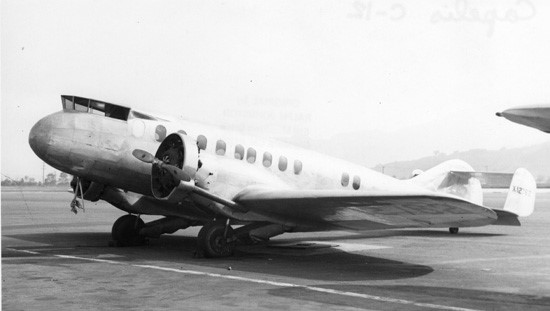
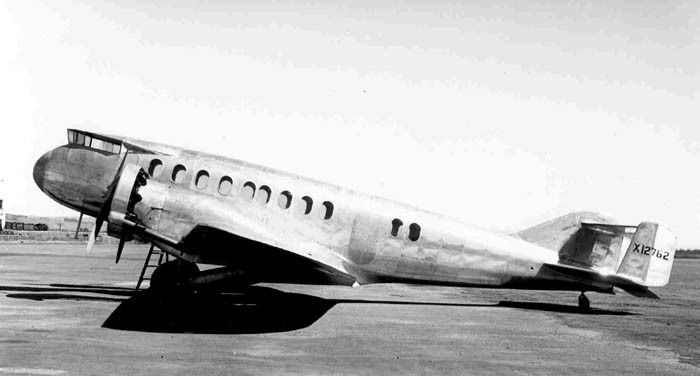
The Capelis Safety Airplane Company Ltd XC-12 was a 1933 aircraft design that most notably was used as a prop in the films Five Came Back, The Flying Tigers, The Falcon in Danger, and Immortal Sergeant. The aircraft featured unusual twin horizontal tail structures supported by three vertical tail surfaces. Construction and finishing methods involved using sheet metal screws which ultimately led to the abandoning of the project.

The original design by Socrates H. Capelis was issued U. S. patent #1,745,600 in 1930. The patent comprised a modified application with a half-span dorsal wing mounted rearward on top of the cabin and two additional engines mounted on the wings. The project was funded by local Greek restaurateurs as a promotional aircraft; it was constructed with help from University of California students.

A less radical design by Dr. John E. Younger featured all-metal construction; the aircraft was built as an all-metal, low-wing, retractable gear, twin engine transport with a triple vertical tail supporting a dual (biplane arrangement) horizontal stabilizer. The wing used a large box-spar construction with corrugated skin panels. The partly retracting landing gear extended automatically when the throttle was closed.

Following a 1938 incident, the XC-12 was modified at Glendale, California: The forward slanting eight-piece windshield was modified to a four piece that slanted rearward, and the passenger windows were squared off to look more like a Douglas DC-3.

On April 15, 1938, the XC-12 suffered minor damage from a forced landing after running out of fuel while flying over Fresno, California. The main wing spar construction was bolted together, and many of the metal skin panels were attached with P-K sheet metal screws rather than with permanent rivets. These tended to vibrate loose, requiring tightening or replacing every few flights, constituting a safety hazard that would later ground the aircraft. With promotional tours abandoned after the 1938 crash, the aircraft’s flying career was over.

The aircraft was purchased by RKO in March 1939, after which the studio’s insurance company permanently grounded the aircraft. Used as a full-size prop, the transport appeared only in ground roles in RKO’s feature films made during World War II; flying sequences used a scale XC-12 shooting miniature. The aircraft became an RKO back lot relic, falling into worse repair during the 1940s until it was completely scrapped some time around 1950. The XC-12 miniature continued to be used in later feature films.

The aircraft was featured as a prop in Five Came Back (1939), The Flying Tigers (1942), and Immortal Sergeant (1943). In RKO’s Dick Tracy’s Dilemma (1947) the XC-12 was shown somewhat dismantled, and in Daredevils of the Clouds (1948), after which it was apparently scrapped.

Filmography:

Five Came Back (RKO) 1939 (aircraft and model)

Flying Blind (Paramount) 1941 (model)

King of the Zombies (Monogram) 1941 (model and disassembled fuselage)

Flying Tigers (Republic) 1942 (aircraft and model) John Wayne guides in a crippled XC-12 with an engine on fire, and later uses it as an improvised bomber

Invisible Agent (Universal) 1942

Immortal Sergeant (20th Century Fox) 1942/1943 (aircraft and model)

Adventures of the Flying Cadets (Universal) 1943 (model)

Night Plane from Chungking (Paramount) 1943

The Falcon in Danger (RKO) 1943 (while a Lockheed Model 10 Electra aircraft model is used for the in-flight scenes, the full-size aircraft appears as a wreck)

Wings Over the Pacific (Monogram) 1943 (model)

The Purple V (RKO) 1943

Action in Arabia (RKO) 1944

Passport to Destiny (RKO) 1944

Jungle Queen (serial) (Universal) 1945; re-edited into Jungle Safari a 1956 feature film

Dick Tracy’s Dilemma (RKO) 1947 The aircraft is shown somewhat dismantled in this movie, but not scrapped

Daredevils of the Clouds (Republic) 1948 (model)

Jungle Goddess (Lippert Pictures) 1948 (model)

Tarzan’s Magic Fountain (RKO) 1949 (model)

On the Isle of Samoa (Columbia) 1950 (model)

China Gate (Globe Enterprises) 1957 (model)

Specifications:
Powerplant: 2 × Wright Cyclone R-1750, 525 hp (391 kW) each
Propeller: 2-bladed
Wingspan: 55 ft (17 m)
Wing area: 500 sq ft (46 m2)
Airfoil: Modified USA 45
Length: 42 ft (13 m)
Height: 12 ft (3.7 m)
Empty weight: 6,500 lb (2,948 kg)
Gross weight: 9,500 lb (4,309 kg)
Fuel capacity: 145 gal
Maximum speed: 190 kn (220 mph, 350 km/h)
Cruise speed: 170 kn (190 mph, 310 km/h)
Stall speed: 53 kn (61 mph, 98 km/h)
Service ceiling: 28,000 ft (8,500 m)
Capacity: 12