Ceskoslovenske Zavody A Letecke Tom-8 / Letov L-8

A basic trainer, the Czechoslovak Letov L.8 is also known as the TOM-8 after the bureau design chief Ing. Karel Tomas. Of all-metal construction the Letov L.8 has a cantilever wing with split metal flaps, which like the nosewheel-type retractable undercarriage, is electrically operated by way of a 1,500-watt generator situated in the fuselage.

Ing. Tomas designed the L.8 round the six-cylinder, horizontally opposed, piston, 235-h .p. M-208-C which is also known as the Praga Doris C. The Doris C is a development of the 220-h.p. (3,000 rpm) Doris B flat-six. The two-blade metal airscrew (V.421) has variable pitch and the hub is covered by a pointed metal spinner. The powerplant engine cowling has a triple entry intake – the centre one being the carburettor air intake.

The Letov L.8 is fully aerobatic and is equipped for night flying and instrument training. Light bombs can be mounted under each wing. Gunnery instruction is also catered for.

The prototype Letov L.8 is finished in light grey and has the Czech air force markings on the wings and the fin/rudder. On each side of the rear fuselage is the large serial number “K-01” painted in black.

The Czech air force planned to replace the standard piston-engine basic trainer (the Letov-built C.2B – the Czech version of the wartime Arado Ar 96B) with the Letov L.8.

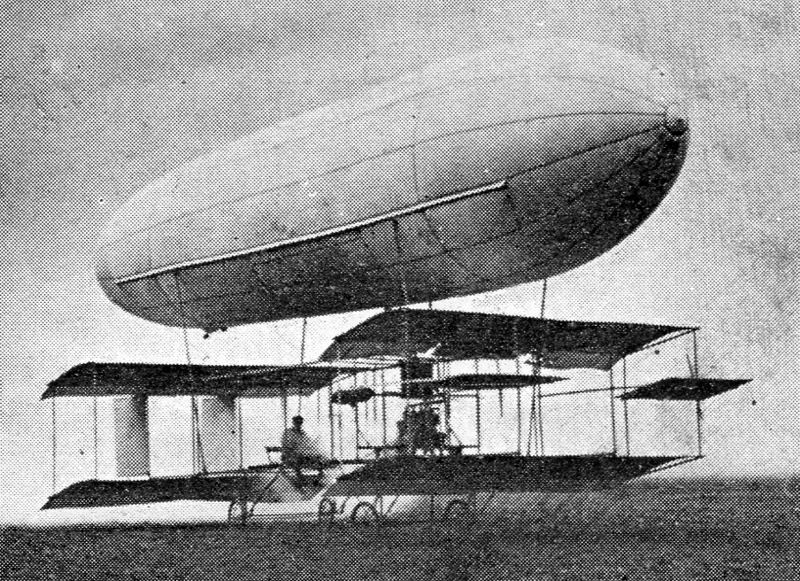
César Balloon-assisted Tandem

This tandem biplane design of central pusher configuration is attributed to Léopold César, but was a modification of a 1909 design of Eugène Boutaric. The Boutaric design had the same construction, but used a 25 hp Anzani which drove two propellers via chains. The propellers were placed just behind the front biplane wing in tractor configuration. There are no reports that the César tandem-wing machine left the ground, not even when fitted with a balloon on struts above it. Wing span was only six metres. It had a 50 hp Prini-Berthaud engine, mounted quite some way behind the front biplane wings on the connecting structure between the wing cells.

Cerva CE-43 Guepard

First flown in 1971, the CERVA CE-43 Guepard (Cheetah) was an all metal derivative of the Wassmer WA-40 Srs. A six-seat Tiara engine version was flown in 1974.

Engine: Lycoming IO-540-C4B5, 250 hp
Wingspan: 32 ft 9.5 in / 10.00 m
Length: 27 ft 6.5 in / 8.40 m
Cabin max width: 3 ft 7 in / 1.09 m
Empty weight: 1863 lb / 845 kg
MTOW utility: 3220 lb / 1460 kg
MTOW normal: 3527 lb / 1600 kg
Max cruise: 167 kt / 192 mph / 310 kph
Max ROC SL: 1080 fpm / 330 m/min
Service ceiling: 17,400 ft / 5300 m
Range max fuel: 1565 nm / 1800 mi / 2900 km
Seats: 4

Century Four-in-line         

Circa 1920s, the Century Four-in-line has nickel cast iron cylinders and detachable nickel cast iron cylinder heads with one intake and one exhaust valve. The pistons are nickel cast iron.

The Century Four-in-line has and electric self-starter with generator as standard equipment, and ignition switch and instruction pamphlet.

Type: 4 cylinder, air cooled, vertical inline
Rating: 100 hp at 1950 rpm
Displacement: 310 cu.in
Compression ratio: 5.3
Bore: 4.5 in
Stroke: 5 in
Length (with supercharger): 54 in
Height: 31 1/8
Weight: 290 lb
Fuel consumption: with supercharger & atomiser, .356 lb / hr / hp; with Stromberg Carb NAR 3, .500 lb / hp / hr
Oil consumption: not more than .010 lb/hp/hr
Lubrication: Pressure (gear pump). No scavenger pump
Ignition: 2 Scintilla magnetos
Spark plugs: 2 per cylinder

CVV P.110

Centra Volo a Vela also produced prototypes of the P.110 three/four-seat cabin monoplane and P.M. 280 Tartuca single-seat low-wing monoplane.

Designed by Ing. Ermenegildo Preti, the P.110 was of all wood construction and the enclosed cabin seats four in two pairs.

The sole prototype was built by the Centro Volo a Vela (Gliding Centre) of the Milan Polytechnic School, originally designated C.V.V. P.110 or, alternatively, Preti CP.110.

The manufacturing rights were acquired by Construzioni Aeronautiche Giovanni Agusta, and the type was evaluated by the Italian Air Force, but no production orders materialised.

Engine: Alfa 110ter, 145 hp
Wingspan: 34 ft 9 in
Length: 23 ft 11 in
Empty weight: 1500 ft
Loaded weight: 2425 lb
Max speed: 170 mph
Cruise: 149 mph
Range 620 mi