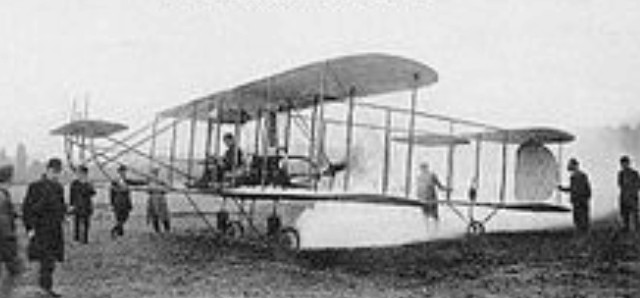
A shoulder-wing monoplane with a deep, triangular, REP-inspired fuselage, powered by a 70 hp Gnôme. It was displayed at the 1912 Paris Aero Salon and several examples with slight variations were built.
Gnome-engined Clement-Bayard two-seat monoplane set world distance record of 255 miles (410 km) February 1913.
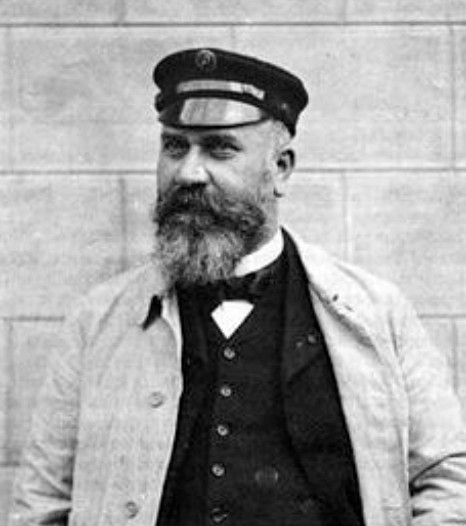
Clément-Bayard was a French manufacturer of automobiles, aeroplanes and airships founded in 1903 by the entrepreneur Adolphe Clément-Bayard (née Adolphe Clément). The name celebrated the Chevalier Pierre Terrail, seigneur de Bayard who saved the town of Mézières in 1521. A statue of the Chevalier stood in front of the Mézières factory, and the image was incorporated into the company logo.
In 1894 he started construction work on a former military site in the Faubourg Saint-Julian at Mézières, to build a new factory, which would become known as La Macérienne. Clément personally supervised the work remotely using photographs taken every day and visiting the site once a week. By 1897 it was producing components and spokes for the Gladiator Cycle Company. It covered 15,000 sq.m and using a hydraulic turbine power plant, a steam room, large machine hall, a foundry, a workshop for the nickel processing, the operation with the manufacturing of nuts and spokes on a bike. The factory building still exists but in the spring of 2006 it was transformed into a cultural center.
From 1903 Clément-Bayard automobiles were built in a ‘state of the art’ factory at Mézières, known as La Macérienne, which Clément had designed in 1894 mainly for building bicycles.
In 1908 ‘Astra Clément-Bayard’ began manufacturing airships at a new factory in La Motte-Breuil in response to a French Army decision to commence airship operations. Seven Clément-Bayard airships were completed.
Aircraft test flights began in 1908 and Louis Capazza’s ‘planeur (glider) Clément-Bayard’ was unveiled in L’Aérophile on 15 May 1908. Clement-Bayard was pioneer of welded steel tube airframe construction. Clément-Bayard also built Alberto Santos-Dumont’s Demoiselle No 19 monoplane that he had designed to compete for the Coupe d’Aviation Ernest Archdeacon prize from the Aéro-Club de France. The plane was small and stable, but they planned a production run of 100 units, built 50 and sold only 15 for 7,500 francs for each airframe. It was the world’s first series production aircraft. By 1909 it was offered with a choice of 3 engines, Clement 20 hp; Wright 4-cyl 30 hp (Clement-Bayard had the license to manufacture Wright engines); and Clement-Bayard 40 hp designed by Pierre Clerget. It achieved 120 km/h.
Pierre Clerget designed a range of Clement-Bayard aircraft engines including a 7-cylinder supercharged radial, the 4-cyl 40 hp used on the Demoiselle, a 4-cyl 100 hp used on ‘Hanriot Etrich’ monoplanes, and a V8 200 hp airship engine. By 1909 Clement-Bayard had the license to manufacture Wright engines alongside their own design.
Circa 1909 Adolphe Clément received permission from the Conseil d’État to change his name to Adolphe Clément-Bayard.
In 1910 the Clement-Bayard Monoplane No. 1 was introduced at the Paris show.
By 1912 Clément-Bayard built a biplane plus three different models of horizontally opposed aircraft engines.
In November 1912 the Clement-Bayard Monoplane No. 5 was introduced. It was powered by a Gnome 7-cylinder rotary engine producing 70 hp (52 kW). The pilot sat in an aluminium-and-leather tub.
Gnome-engined Clement-Bayard two-seat monoplane set world distance record of 255 miles (410 km) February 1913. Same year other Gnome-engined civil/military monoplanes appeared.
In 1913 a three-seater biplane was introduced as part of the military project, the Clement-Bayard No. 6. It was configured for two observers in front of the pilot, and was powered by either a 4-cyl 100 hp (75 kW) Clement-Bayard or 4-cylinder Gnome engine.
At Olympia Aero Show, London, March 1914, exhibited an all-steel armored monoplane. Clément-Bayard produced a steel scouting monoplane powered by either an 80 hp (60 kW) motor or a 100 hp (75 kW) Gnome et Rhône engine. The nickel steel armour was designed for protection against rifle fire.
Adolphe Clément ceded control of Clément-Bayard to his son Maurice in early 1914, but the consequences of World War I for the company were disastrous. The La Macérienne factory at Mézières was lost to the Germans, the machinery was shipped back to Germany, and the forges, foundries and smelter were destroyed. The gutted building was used as an indoor riding school for German officers.
Automobile production in Levallois-Perret, Paris, was suspended as the factory was turned over to war production, military equipment and military vehicles, aero engines, airships and planes.
In 1922 the Clément-Bayard automobile company was sold to André Citroën, in whom Adolphe Clément also invested financially, and the factory at Levallois-Perret became the centre of 2CV manufacturing for the next 40 years.
In 1922 the company was broken up and the factory in Paris was taken over by Citroën. In 1928 Clement-Bayard sold his factory to Citroen.
Single-seat light aircraft with twin booms and pusher propeller, designed and built by Laister Sailplanes and first flown 1983.
The CL-1 was powered with a 38 hp Kawasaki engine and had a power off glide ratio of 18-1.
The Zipper was first registered in 1983 as N3999C Serial Number X1.
I worked in building this aircraft with Jack Laister for Bill Cleary. Jack was the Engineer and I was the A&P. I’m trying to locate where this aircraft is. Both Jack and Bill have passed on now. Timothy Blackmon
John Thorp retired in 1985 and took the T-18 plans off the market. Lu Sunderland, having worked with John on a wider fuselage and folding wing option for the T-18, did a complete rework of the drawings and produced plans for the S-18. The S-18 is then a redesign of the Thorp T-18. The fuselage body is 2″ wider and 5″ longer than the standard T-18. Also it has a newer NASA computer designed Wing Airfoil, which is stated to lower the stall speed by 6-8 knots. This airfoil also allows a more gentle stall with adequate warning. The top and cruise speeds remain the same. An S-18 with an 160hp Lycoming IO-320 and Hartzel Constant Speed propeller will cruise around 180 mph at 8500 ft (MSL) on less than 7 GPH (gallons per hour of fuel). The S-18, like the T-18 is an all metal 2 place side-by-side high performance aircraft. Control response is exceptional and control forces are well harmonized. The S-18 is a very capable cross-country airplane. It will carry 2 people and 80 lbs. of baggage. Powerplants range from Lycoming O-235 (115hp) to IO-360 (180). Parts can be provided with matched holes so that parts fit together saving a lot of time in construction. Also parts are scribed to outer mold-lines or trim lines. No jigs are required. The airplane is built using 1/8″ solid aluminum rivets, but can be built using 1/8″ stainless steel pop rivets (but not recommended). The S-18 has a folding wing designed by Lu Sunderland which can be swung around parallel to the fuselage making the airplane less than 8 feet wide. So that it can be trailered home or stored in small spaces. Test Flights were completed on the S-18T Tri-Gear in May of 2003.
The S-18 was available in kit form from Classic Sport Aircraft. Pieces and parts for both the T-18 and the S-18 are available here also.
S-18T Engine: Lycoming O-360 Propeller: constant speed Wingspan 20′ 10″ Length 18′ 6″ Wing area: 86 sq.ft Gross Weight 1600 lbs. Empty Weight 1000 lbs. Useful Load 600 lbs. Fuel – Standard Tank 29 gallons Fuel – Wing Tank 24 gallons Rate of Climb 1500 fpm Luggage Capacity 80 lbs. Range (standard) 540 SM Range (with optional wing tanks) 900 SM Cruise – 75% power 180 mph Top Speed 200 mph Stall: 63 mph Cockpit width; 40 in Seating 2 side by side Engine options: Lycoming 290, 320, or 360
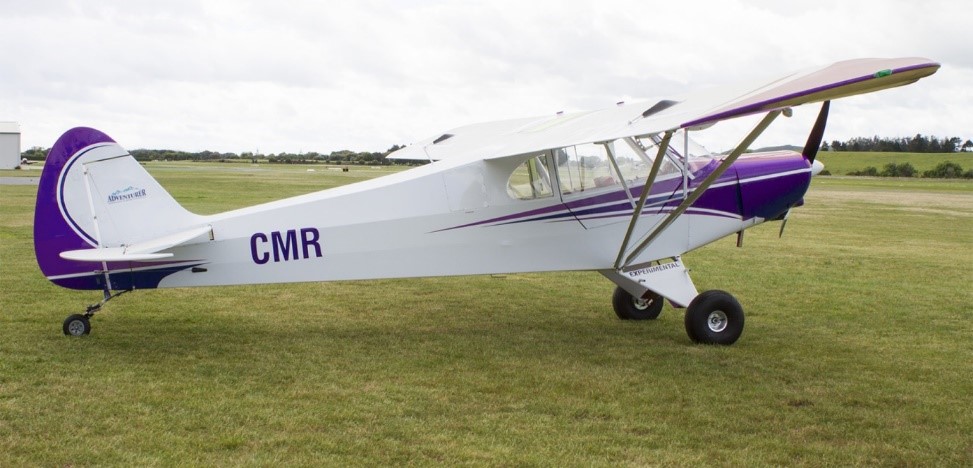
The CA18-1320 is the lightest weight version. It is designed for New Zealand’s CAA Class Two Microlight category with a maximum all up weight of 600Kgs.
The basic aircraft does not come equipped with flaps or large grass all terrain tyres to keep weight to a minimum. Fuel is limited in each wing tank to 35 litres.
For this model you can choose between a full size J3 or PA18 Cub. The added bonus is that solo flight is from the front seat.
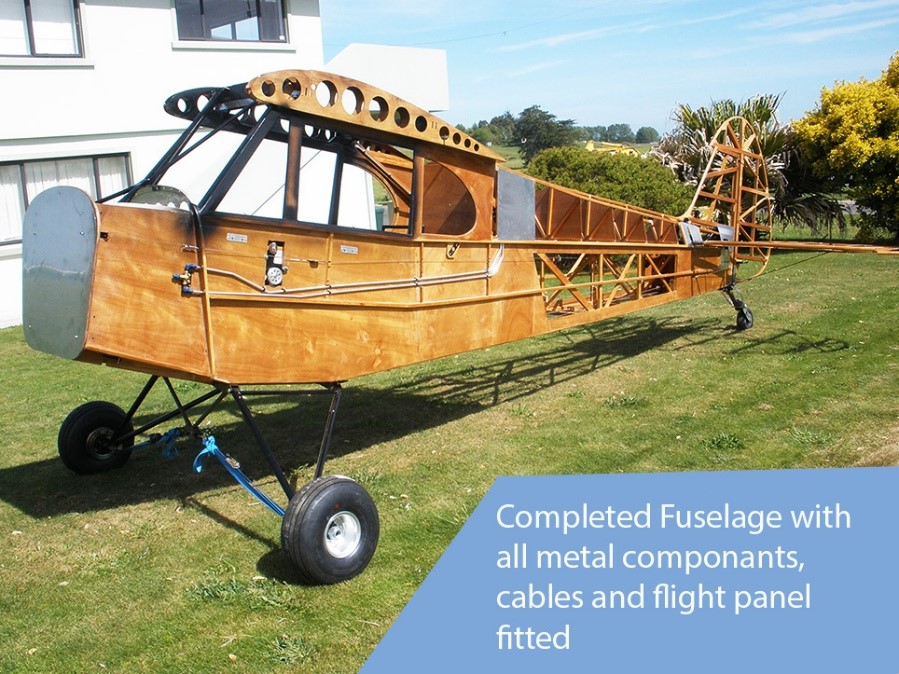
The CA18-1530 model is based on the 100hp Cub. With its 1530 MAUW capacity this model is suited for engines up to 120hp. To accommodate the increased weight capacity from the CA18-1320 model, it has increased size of the timber framework within the fuselage. The wings are the same, however the wing lift struts are larger and 50 litre fuel tanks are fitted.
Extra options available for the CA18-1530 model include:
Flaps
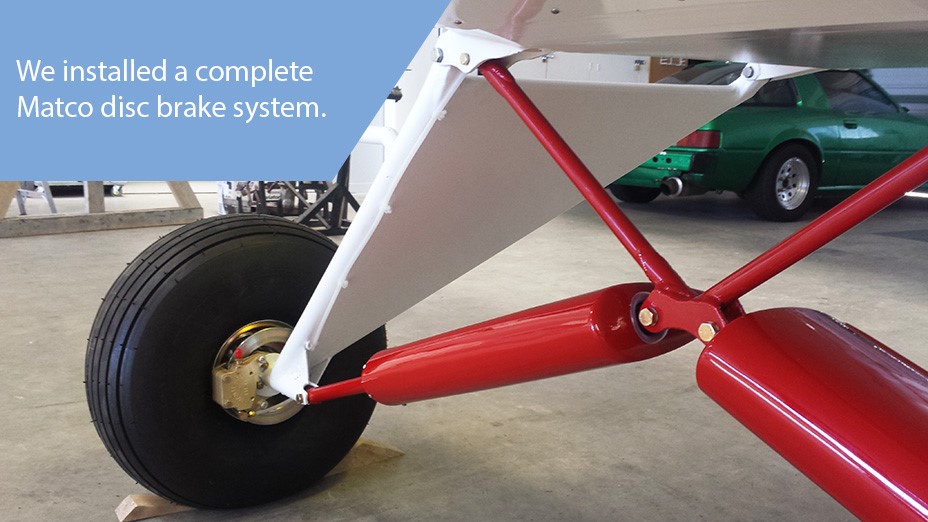
Larger main landing gear tries & rim kits for disc brake mounts
Large tail wheel assembly
Navagation and runway lighting kit
The CA18-1920 model is based on a 180hp retro fitted PA18 Super Cub. The CA18-1920 has a maximum all up weight of 1920lbs. To accommodate the increased load capacity, the timber framework within the fuselage along with the wing spar caps have been increased in size.
This model is an ideal platform to fit a STOL kit for those shorter and rougher landing areas.
CADL was to be offering STOL components for this model by the end of 2016, the components were to include:
Fibre glass hoerner style wing tips
Carbon fibre leading edge coverings (to replace the plywood)
CA18-1320 Engine: Continental 0-200 / Rotax 912, 100 hp Wing span: 10.668 m / 35.0 ft Wing Area: 15.80 sq/m / 178.5 ft MAUW: 1320 lbs Fuel Capacity: 2 x 35 lt Total useable fuel: 68 lt Fuel type: 100 LL Avgas/ MOGAS Main Landing Gear Tires: 6.00 x 4 Tail Wheel: 2.50 x 4 Axles & Bearings: 1 – ¼ inch Brakes: Matco MLG Wing Loading: 43.92 kgs/m / 8.5 lbs/ft Wheel Base: 5.059 m / 16 ft Wheel Track: 1.879 m / 74 in Main Wheels: 21×8.00×6, 18 psi Tail Wheel: 2.80×4, 20 psi Elevator Maximum up Deflection: 25⁰ Elevator Maximum Down Deflection: 15⁰ Elevator Trim Maximum up Deflection: 3⁰ Elevator Maximum Down Deflection: 4⁰ Rudder Defection Left & Right: 25⁰ Tail wheel defection before unlocks to 360deg: 22⁰ Aileron deflection: Up 18deg, Down 18deg Maximum G: +4, -0 Service Ceiling: 13,500ft Manoeuvring Speed: 85 mph Maximum Cruise: 100 mph Never Exceed (Vne): 120 mph Rate of Climb: 524 fpm at 71 mph Best Angle of Climb: 64 mph Best Rate of Climb (Ratio): 1 to 9.4 Stall Speed: 38 mph
CA18-1530 Engine: Continental O-200, 100 hp Prop: Omega 71 x 41 Wing span: 10.668 m / 35.0 ft Wing Area: 15.80 sq/m / 178.5 ft MTOW: 1530 lb Wing Loading: 43.92 kgs/m / 8.5 lbs/ft Fuel Capacity: 2 x 50 lt Total useable fuel: 98 lt Fuel: 100 LL Avgas Main Landing Gear Tires: 21/8.00 x 4 Tail Wheel: 2.80 x 4 Axles & Bearings: 1 – ¼ inch Brakes: Matco MLG Wheel Base: 5.059 m / 16 ft Wheel Track: 1.879 m / 74 in Main Wheels: 21×8.00×6 18 psi Tail Wheel: 2.80×4, 20 psi Elevator Deflection: +25⁰ / -15⁰ Elevator Trim Deflection: +3⁰ / -4⁰ Rudder Defection Left & Right: 25⁰ Tail wheel defection before unlocks to 360deg: 22⁰ Aileron deflection: Up 18deg / Down 18deg Maximum Flap Speed (Vfe): 85 Mph Flap deflection: 15deg / 25deg / 40deg TO to 50ft: 332-372m Landing dist from 50ft: 104-106m ROC: 505-644 fpm at 71 mph Stall Speed Angle of Bank 0⁰: 42 mph Stall Speed Angle of Bank 10⁰: 44 mph Stall Speed Angle of Bank 20⁰: 45 mph Stall Speed Angle of Bank 30⁰: 47 mph Stall Speed Angle of Bank 40⁰: 50 mph Stall Speed Angle of Bank 60⁰: 55 mph Stall Speed Angle of Bank 90⁰: 62 mph Manoeuvring (Va): 90 mph Max cruise: 110 mph Never exceed: 138 mph Flight Load: +4.4 / -0 Max Endurance: 5 hr Service Ceiling: 13,500 ft Manoeuvring Speed: 90 Mph Max Cruise: 110 Mph Never Exceed (Vne): 138 Mph MAUW: 1530 lb Best Rate of Climb: 624 fpm at 71 Mph Best Angle of Climb: 64 Mph Rate of Climb Ratio: 1 to 9.4 Stall Speed: 39 Mph
CA18-1920 Engine: Lycoming O-320 / 360, 160 / 180 hp Wing span: 10.668 m / 35.0 ft Wing Area: 15.80 sq/m / 178.5 ft Fuel Capacity: 2 x 50 lt Total useable fuel: 98 lt Fuel: 100 LL Avgas Main Landing Gear Tires: 21/8.00 x 4 Tail Wheel: 2.80 x 4 Axles & Bearings: 1 – ¼ inch Brakes: Matco MLG Wheel Base: 5.059 m / 16 ft Wheel Track: 1.879 m / 74 in Main Wheels: 21×8.00×6 18 psi Tail Wheel: 2.80×4, 20 psi Wing Loading: 43.92 kgs/m / 8.5 lbs/ft Wheel Base: 5.059 m / 16 ft Wheel Track: 1.879 m / 74 in Main Wheels: 21×8.00×6 18 psi Tail Wheel: 2.80×4, 20 psi Elevator Deflection: +25⁰ / -15⁰ Elevator Trim Deflection: +3⁰ / -4⁰ Rudder Defection Left & Right: 25⁰ Tail wheel defection before unlocks to 360deg: 22⁰ Aileron deflection: Up 18deg / Down 18deg Maximum Flap Speed (Vfe): 85 Mph Flap deflection: 15deg / 25deg / 40deg Flight Load: +4.4 / -0 Service Ceiling: 13,500 ft Manoeuvring Speed: 94 Mph Max cruise: 110 mph Never exceed: 138 mph MAUW: 1920 lb ROC: 980 fpm at 71 mph Best Angle of Climb: 64 Mph Rate of Climb Ratio: 1 to 9.4 Stall Speed: 42 Mph
Mr Wytenburg, who started building parts for old warplanes in Blenheim in 2004, has built an international reputation for reverse engineering and remanufacturing aircraft parts, frames and engines.
Building the Gnomes has “been a dream come true” for the aviation engineer, who had been trying to find one of the original engines to use as a template for almost five years. Once he had an engine to copy, he wanted to have five buyers lined up, to ensure it was a viable enterprise, he said.
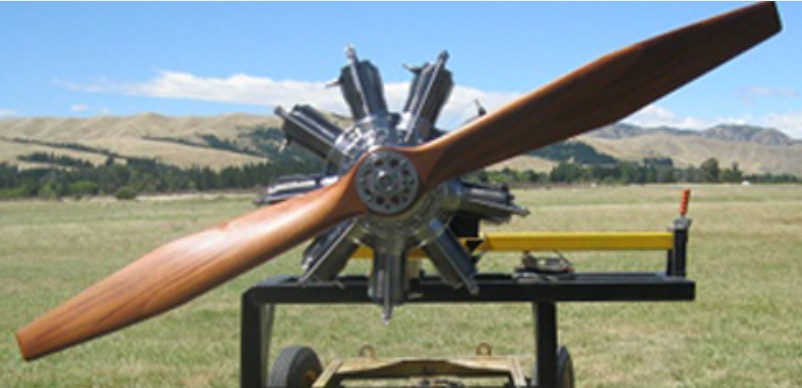
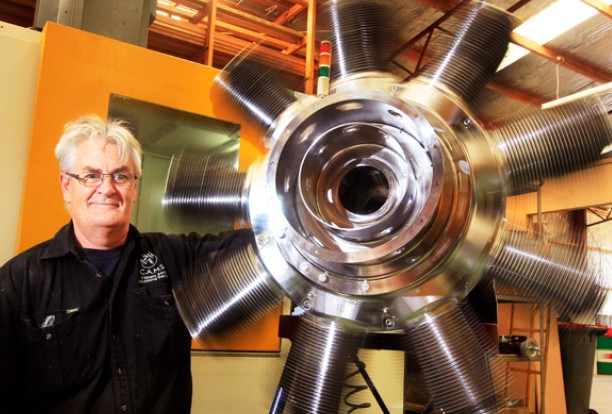
Classic Aero Machinery Service owner Tony Wytenburg had spent the past four months working full-time on building the shell of his first Gnome 100 horsepower Monosoupape rotary engine.
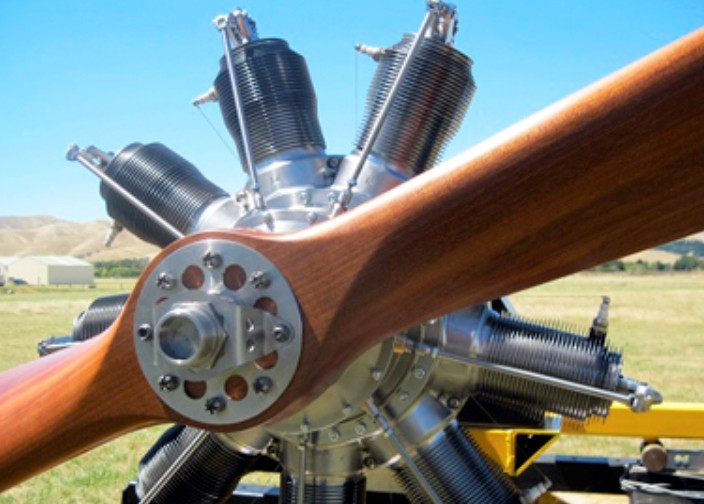
Tony has stripped an original Gnome and generated CAD drawings from that. From those he will manufacture new engines as close as possible to the original. There were some significant engineering challenges associated with this, which Tony has identified and come up with modern day fixes to a 90 plus year old design.
Known issues included the concern that some of the original ball bearing sizes were no longer available. Standard off-the-shelf bearings are used, and modifications made to suit these. Other changes are the use of aluminium pistons and modern ring combinations instead of the cast iron used in the originals.
On Friday the 31st January 2014 at 3.35pm at the Omaka Airfield, Marlborough, New Zealand, CAMS Aero Engines 100 hp Gnome CAMS 001 ran for the first time. The official launch and start-up was scheduled for 18th of February at Omaka Airfield.
It cost about $200,000 to make one engine but the cost reduced considerably when manufacturing to scale. At the end of 2013, Wytenburg had three buyers on board and decided to get started early.
In order to maintain 100% authenticity, The Australian Vintage Aviation Society ordered a 100hp Gnome Rotary engine built to fit to the Fokker E.III Eindekker. The work is being done by Tony Wytenburg of Classic Aero Machining Service (CAMS), in Blenheim NZ.
Tony Wytenburg and his team at CAMS Aero Engines has a track record with the re-manufacture of the first RAF 1a engine, which was in turn, the first WW-I aero engine to be built new to operational condition, anywhere in the world, since the Great War period. This, followed by the 100 hp Gnome rotary.