two-seat fighter/reconnaissance shipborne flying-boat (1935)
Engines – Power
CMASA M.F.6
two-seat fighter/reconnaissance floatplane
CMASA M.F.5
development of Wal
CMASA M.F.4
radial-engined flying-boat (1933)
Cluzan 1909 Biplane
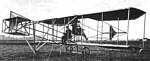
The 1909 Cluzan biplane was designed and built by Cluzan in France.
Span: 33’9″
Clutton EC-2 Easy Too
The design of the EC-2 all wood low wing single seat monoplane was started by Eric Clutton in 1969. It was designed to be as simple to build as the FRED, but with aerobatic capability.
The prototype, PFA.1361 was started in Stoke-on-Trent, to be powered by a belt-reduced VW1500.
Wingspan: 23.04 ft
Clutton FRED

Designed by Eric Clutton of Stoke-on-Trent in conjuction with E.Sherry during 1957 to 1963. FRED stands for “Flying Runabout, Experimental Design,” but the design is now far from experimental, says its designer – Eric Clutton. A parasol-type single-seater, FRED has folding wings for road-towing. It has steel spring shocks for rough-field operations. Volkswagon powered.
Clutton started building the first, G-ASZY PFA.1311 cn EC/ES/1A in 1957 at Stoke-on-Trent, finished at Meir and first flown from there on 3 November 1963 with a modified Triumph 5T as FRED Series 1. It was re-engined with a Scott A.2S in 1965 to demonstrate the wide range of engines it can take. It was further re-engined in 1966 with a Lawrence radial as FRED Series II.

From 1968 it was used as a testbed for the Clutton belt-reduced VW of various sizes and drives, eventually with an EC/VW1500.

Badly damaged at Meir in 1974, it was rebuilt and flown again in mid-1975 in WW1 German markings including lozenge markings.

Engine: VW, 65 hp.
HP range: 55-65.
Height: 6 ft.
Length: 16 ft.
Wing span: 22.5 ft.
Wing area: 110 sq.ft.
Speed max: 85 mph.
Cruise: 70 mph.
Stall: 29 mph.
ROC: 500 fpm.
Take-off dist: 900 ft.
Landing dist: 450 ft.
Fuel cap: 14 USG.
Weight empty: 550 lbs.
Gross: 800 lbs.
Seats: 1.
Landing gear: tail wheel.
Club ULM Rotor Ptenets-2
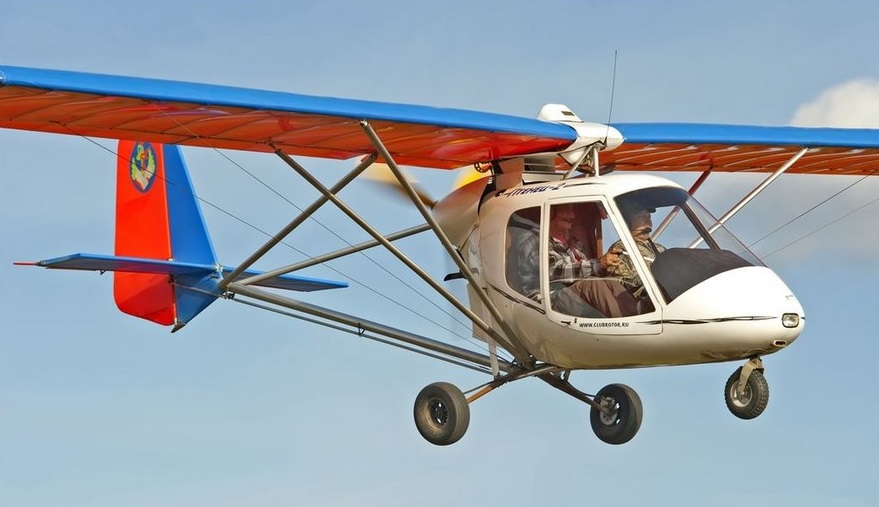
The Club ULM Rotor Ptenets-2 (Russian: Птенец-2, English: Chick or Fledgling) is a Russian ultralight aircraft, designed and produced by Club ULM Rotor of Kumertau, Bashkortostan.
The aircraft was designed to comply with the Fédération Aéronautique Internationale microlight rules. It features a strut-braced high-wing, a two-seats-in-side-by-side configuration enclosed cockpit, fixed tricycle landing gear and a single engine in pusher configuration.
The aircraft is made from aluminum tubing, with its flying surfaces covered in Dacron sailcloth. The fuselage is made from fibreglass. Its 10.2 m (33.5 ft) span wing has an area of 12.7 m2 (137 sq ft). The tail is supported by four tubes that allow space for the pusher propeller. Standard engines available are the 50 hp (37 kW) Rotax 503 and 64 hp (48 kW) Rotax 582 two-strokes and the 60 hp (45 kW) HKS 700E four-stroke powerplant.
The aircraft was supplied as a complete ready-to-fly-aircraft for €21,000 in 2011.
Ptenets-2
Engine: 1 × Rotax 582, 48 kW (64 hp)
Propeller: 4-bladed composite
Wingspan: 10.2 m (33 ft 6 in)
Wing area: 12.7 m2 (137 sq ft)
Empty weight: 220 kg (485 lb)
Gross weight: 450 kg (992 lb)
Fuel capacity: 55 litres (12 imp gal; 15 US gal)
Maximum speed: 160 km/h (99 mph; 86 kn)
Cruise speed: 120 km/h (75 mph; 65 kn)
Stall speed: 65 km/h (40 mph; 35 kn)
Rate of climb: 4 m/s (790 ft/min)
Capacity: one passenger
Crew: one
Club Aeronatique Delisle Cadi
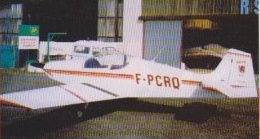
The Cadi was created by an ex-employee of Aviation Normand Dube. Metal covered, the Cadi can be ultralight or experimental.
Engine: Rotax 912, 80 hp
Wing span: 9.74 m
Wing area: 16 sq.m
MAUW: 544 kg
Empty weight: 274 kg
Fuel capacity: 90 lt
Seats: 2
Max speed: 160 kph
Cruise speed: 142 kph
Climb rate: 4.5 m/s
Fuel consumption: 12 lt/hr
Certification: Canada
Price (1998): Can$50,000
Kit price (1998): Can$15,000
Cloud Dancer Jenny
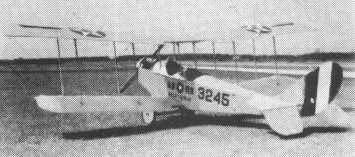
The Jenny is a three-quarter scale replica of the famous Curtiss JN4D Jenny Trainer. Although this ultralight version has a rear cockpit it is there purely for aesthetics and is non-functional. The airframe is gussett riveted aluminium tubing covered in a doped dacron finish. Centre mounted joy stick, rudder pedals.
I flew one many years ago here in Australia. A delightful short range aircraft. The ailerons do not exist. What there is are spoilers on the tops of the upper wings and controlled by a linen cord that pulled them up thus spoiling the air flow. Spoiler up and the lift on the other side raised that wing thus a turn. Real STOL take-off and landing. Mt first experience with a two stroke. Love to own this Curtiss Jenny! Now I can say that I have flown both a Curtiss Jenny and a Boeing! (A Stearman).
David Prossor
Engine: Cuyuna ULII-02 (429 cc) 35 hp.
Prop: 198cm.
Static thrust: 296 lbs.
Empty wt: 248 lbs.
Wing span: 28’4”.
Wing area: 186 sq.ft.
Height: 7’6”.
Length: 17’.
Fuel cap; 5 USG.
Construction: Alumnium, Dacron.
Max wt: 500 lbs.
Stall: 21 mph.
Max speed: 62 mph.
Vne: 69 mph.
Econ cruise speed: 45 kts.
Climb rate: 1000 fpm @ 40 mph.
Design limit: +4, -2g.
Glide ratio: 5.5-1.
Wing loading: 2.69 lbs/sq.ft.
Power loading: 14.29 lbs/hp.

