Continental O-170 / A50 / A65 / A75 / A80 

Continental  O-170-3

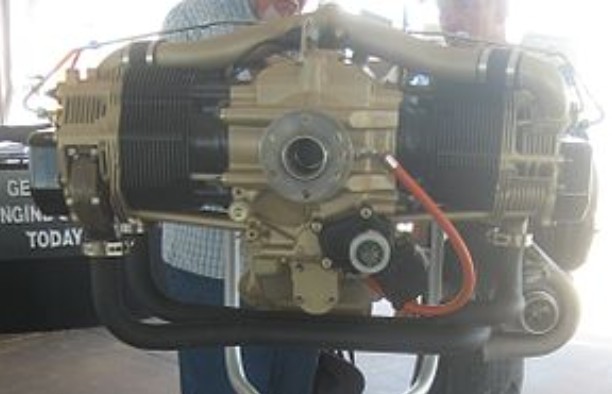
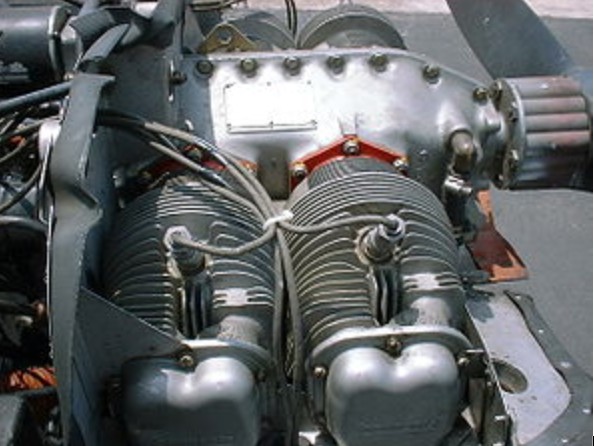
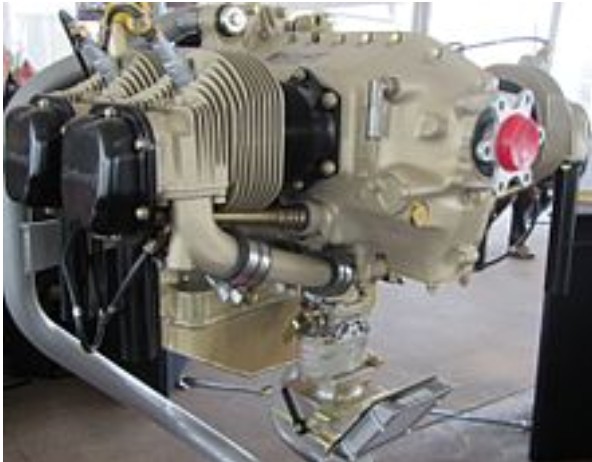
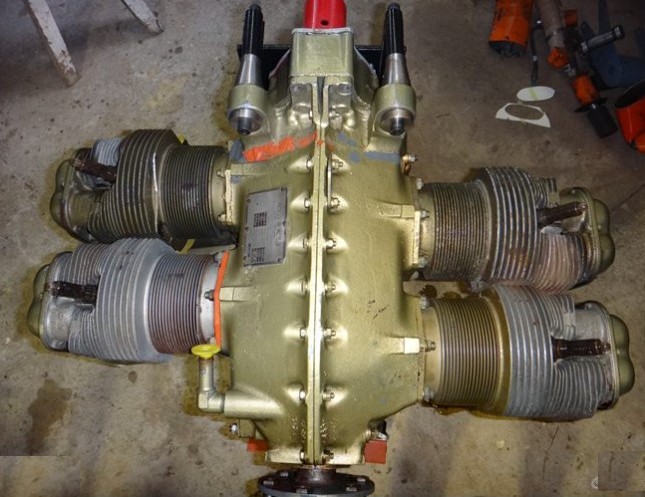
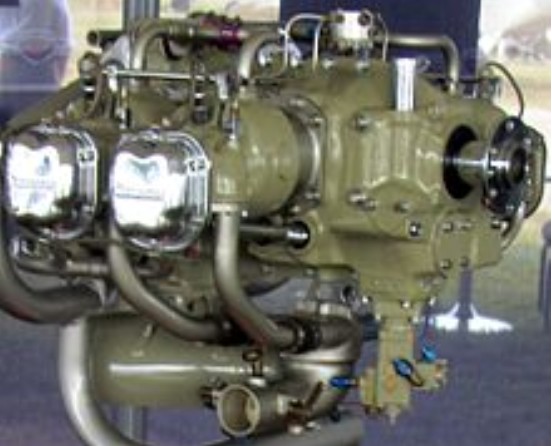
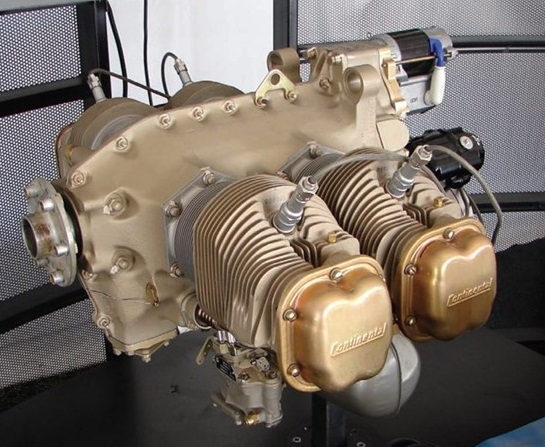
The Continental O-170 engine is the collective military designation for a family of small aircraft engines, known under the company designation of A50, A65, A75 and A80. The line was designed and built by Continental Motors commencing in the 1940s. It was employed as the powerplant for civil and military light aircraft

The horizontally opposed, four-cylinder engines in this family are all identical in appearance, bore, stroke, dry weight and piston displacement. All feature a bottom-mounted updraft carburetor fuel delivery system. The higher power variants differ only in compression ratio and maximum allowable rpm, plus minor modifications. The lower power versions are fully convertible to the higher rated versions.

1938 50 hp

In all models of this family of engines the cylinder heads are of aluminum alloy, screwed and shrunk onto steel barrels. Spark plug inserts and intake valve seats are made from aluminum-bronze alloy, while the exhaust valve seats are steel. The engines all employ hydraulic tappets which operate in aluminum guides that are machined into the crankcase. The tappets are built from four parts, a cam follower body, cup, cylinder and piston and operate with clearances of 0.03 in (1 mm) to 0.11 in (3 mm). The pushrods are steel and feature pressed-in ball ends.

Lubricating oil is delivered under pressure from the 4 US qt (4 lt) oil sump to the drive bearings and the crankpins though the crankshaft. The cylinder walls and pistons are spray lubricated. Normal operating oil pressure is 35 psi, with minimum idle oil pressure 10 psi.

Variants:

A50
50 hp (37 kW), Compression ratio 5.4:1, max rpm 1,900, fuel consumption at cruise 3.8 US gph

A65
65 hp (48 kW), Compression ratio 6.3:1, max rpm 2,300, fuel consumption at cruise 4.4 US gph. The exhaust valves have stellite faces. The pistons have three rings, although some early production A65s had four piston rings.

A65-8F
1939 (ATC 205)
65hp 171ci

A75
75 hp (56 kW), Compression ratio 6.3:1, max rpm 2,600, fuel consumption at cruise 4.8 US gph. The exhaust valves have stellite faces and the connecting rods have a 0.125 in (3 mm) hole drilled in the rod cap to improve lubrication. The pistons have three rings and smaller piston pins.

A80
80 hp (60 kW), Compression ratio 7.55:1, max rpm 2,700, fuel consumption at cruise 5.2 US gph. The connecting rods have a 0.125 in (3 mm) hole drilled in the rod cap to improve lubrication. The pistons have five rings and smaller piston pins. (ATC 217)

O-170
Military designation for the A55, A65, A75, A80 family of engines.

Applications:

A50
Aeronca KCA, 50C, 50TC, S50C
Luscombe 8
Piper J-3
Piper J-4
Porterfield CP50
Porterfield CP55
Taylorcraft BC
Taylorcraft BCS

A65
Aeronca S65C, S65CA
Aeronca 65F, 65CA, New Chief
Aeronca Champion
Airdrome Fokker D-VIII
Bearhawk LSA
Circa Reproductions Nieuport
Coupé-Aviation JC-01
Ercoupe 415C
E & P Special
Falconar F11 Sporty
Fisher Celebrity
Fisher Dakota Hawk
Helmy Aerogypt
Interstate SIA Cadet
Jameson RJJ-1 Gipsy Hawk
Luscombe 8A
Piper J-3
Piper J-4A
Porterfield CP65
Rearwin Skyranger 165
Smith Miniplane
Taylorcraft BCS, BCS12, 65
Tayorcraft BC, BC1265, BCT
Taylorcraft L-2
Taylorcraft Tandem
Turner T-40
Wolf W-11 Boredom Fighter

A75
Bearhawk LSA
Culver LCA
Luscombe 8C, 8D
Piper J-4E
Piper J-5
Porterfield 75C
Rearwin Skyranger 175
Stinson HW75

Specifications:

O-170-3 / A-65-8
Type: 4-cylinder air-cooled horizontally opposed aircraft piston engine
Bore: 3.875 in (98 mm)
Stroke: 3.625 in (92 mm)
Displacement: 171 in³ (2.8 L)
Length: 31 in (787 mm)
Width: 31.5 in (800 mm)
Height: 29 5/16 in (745 mm)
Dry weight: 170 lb (77 kg)
Valvetrain: One intake and one exhaust valve per cylinder, pushrod-actuated.
Fuel system: Updraft carburetor
Fuel type: 80/87 octane avgas
Oil system: Wet sump
Cooling system: Air-cooled
Power output: 65 hp (48 kW) at 2,300 rpm
Specific power: 0.38 hp/in³ (17.1 kW/L)
Compression ratio: 6.3:1
Fuel consumption: 4.4 US gal/hr
Oil consumption: maximum desirable 0.37 US quarts/hr
Power-to-weight ratio: 0.38 hp/lb (0.62 kW/kg)
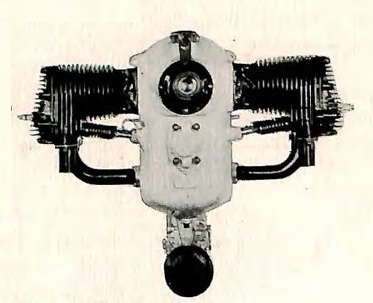
Continental A40 / O-110

Continental A40

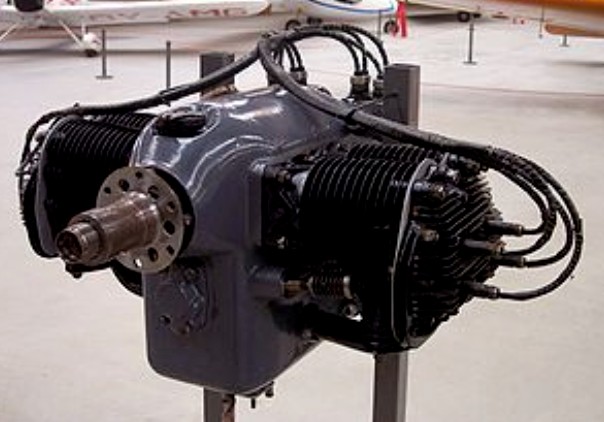
The 37 hp (28 kW) A40 / O-110 was introduced in the depths of the Great Depression. At the time there were a number of small engines available but all suffered from either high cost, complexity, or low reliability. A carbureted four-cylinder, horizontally opposed, air-cooled aircraft engine, it was developed especially for use in light aircraft. The A-40 (ATC 72, 174) addressed all those shortcomings and was instrumental in the production of light aircraft in the difficult economic constraints of the period. The A-40-4 introduced an increase in power to 40 hp (30 kW). The engine later inspired the A-50 and subsequent engines.

The A40 featured single ignition until the A-40-5 version, which introduced dual ignition. All engines in this family have a 5.2:1 compression ratio and were designed to run on fuel with a minimum octane rating of 73.

Produced between 1931 and 1941, the entire family of engines had its certification terminated on 1 November 1941. Engines produced before that date are still certified, but none can be produced after that date.

Continental A-40 37hp

Variants:

A40
Single ignition, 37 hp (28 kW) at 2550 rpm, dry weight 144 lb (65 kg)

A40-2
Single ignition, 37 hp (28 kW) at 2550 rpm, dry weight 144 lb (65 kg)

A-40-3
Single ignition, 37 hp (28 kW) at 2550 rpm, dry weight 144 lb (65 kg) Featured cadmium-nickel connecting rod bearings.

A40-4
Single ignition, 40 hp (30 kW) at 2575 rpm, dry weight 144 lb (65 kg), Steel backed connecting rod inserts

A40-5
Dual ignition, 40 hp (30 kW) at 2575 rpm, dry weight 156 lb (71 kg)

Applications:
Aeronca KC
Piper J-2 Cub
Piper J-3 Cub
Porterfield Collegiate
Rose Parakeet
Taylor E-2 Cub
Taylorcraft A
Welch OW-5M

Specifications:

A40-5
Type: 4-cylinder air-cooled horizontally opposed aircraft piston engine
Bore: 3.125 in (79.3 mm)
Stroke: 3.75 in (95.3 mm)
Displacement: 115 in³ (1.9 L)
Length: 27.9375 in (710 mm)
Width: 26.4375 in (672 mm)
Height: 20.4375 in (519 mm)
Dry weight: 154 lb (69.9 kg) dry with carburrettor and magnetos
Valvetrain: One intake and one exhaust side-valve per cylinder with a flathead valve design.
Fuel system: CMC Stromberg NA-82 carburetor
Fuel type: minimum 73 octane
Cooling system: Air-cooled
Power output: 40 hp (30 kW) at 2,575 rpm
Specific power: 0.35 hp/in³ (15.3 kW/L)
Compression ratio: 5.2:1
Specific fuel consumption: 0.72 lb/hp/hr (0.439 kg/kW/hr)
Oil consumption: 0.025 lb/hp/hr (0.0153 kg/kW/hr)
Power-to-weight ratio: 0.28 hp/lb (0.45 kW/kg)

Continental J69 / J100 / Teledyne CAE J69 / 320 / 352 / 354 / 356

Teledyne-Continental J69

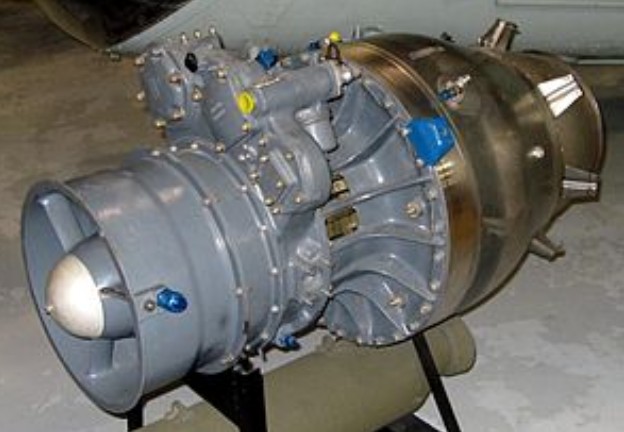
The Teledyne CAE J69 was a small turbojet engine produced by Continental Aviation and Engineering (CAE) under license from Turbomeca. A development of the Marboré II, the J69 powered a number of US drones, missiles and small aircraft. Later produced by Teledyne CAE, the J69 was also developed into the J100 turbojet optimized for higher altitudes

Variants:
J69-T-9
J69-T-19B
J69-T-25
J69-T-27
J69-T-29
J69-T-31
J69-T-33
J69-T-41A

J100-CA-100
2,800 lb thrust

CJ69-1025

CJ69-1400
1,400 lb thrust

Model 352-5a
(CJ69-1025) 1,025 lb thrust

Model 354-12
(J69-27) 1,150lb thrust

Model 356-7A
(J69-29) 1,700lb thrust

Model 356-7D
(J69-29) 1,700 lb thrust

Model 356-8
(J69-T31) 1,900 lb thrust

Model 356-11
(J69-T33) 1,625 lb thrust

Applications:

J69
Avro Canada VZ-9 Avrocar
Cessna T-37 Tweet
Radioplane Q-1
Ryan BQM-34 Firebee
Temco TT Pinto

J100
Ryan Model 147T

Continental TD-300

In 2008, Teledyne Continental’s new president, Rhett Ross, announced that the company is very concerned about future availability of 100LL avgas, and as a result will develop a Diesel engine in the 300 hp (220 kW) range for certification in 2009 or 2010.

Rather than develop a new Diesel engine from scratch, Continental decided to license an existing design to develop. The company did not release details on which engine they licensed, but the aviation media have identified it as the French SMA SR305-230 engine.

The Continental TD-300 is a four-cylinder, horizontally opposed aircraft Diesel engine produced by Continental Motors, Inc.

The engine was type certified by the US Federal Aviation Administration in April 2013.

Continental O-280 / C115 / C125 / C140

The Continental C115, C125 and C140 aircraft engines were made by Continental Motors in the 1940s, all sharing the US military designation O-280. Of flat-6 configuration, the engines produced 115 hp (86 kW) 125 hp (93 kW) or 140 hp (104 kW) respectively.

The C115 was in production from 1945 to 1951, the C125 was in production from 1945 to 1952, and the C140 from 1945 to 1946.

The C125 has the same crankcase as the Continental C145, although the engines differ in stoke, compression ratio and carburetor jetting. The C125 features a cast iron camshaft and hydraulic tappets.

Applications:

C125
Aero-Flight Streak
Baumann Brigadier
Call-Air A-3
Globe Swift
Grumman Tadpole
Hockaday Comet
KZ VII
Meyers MAC-125
Miles Gemini

Specification:

C-115
1945
115hp
281.9ci

C125
Type: 6-cylinder air-cooled horizontally opposed aircraft piston engine
Bore: 4.0625 in (103 mm)
Stroke: 3.625 in (92 mm)
Displacement: 282 in³ (4.6 L)
Length: 39.75 in (101.0 cm)
Width: 31.5 in (80.0 cm)
Height: 23.25 in (59.0 cm)
Dry weight: 286 lb (130 kg)
Cooling system: Air-cooled
Power output: 125 hp (93 kW) at 2,550 rpm
Specific power: 0.44 hp/in³ (20.2 kW/l)
Compression ratio: 6.3:1
Power-to-weight ratio: 0.43 hp/lb (0.72 kW/kg)

C-140
145hp
281.9ci

Continental C90 / O-200 / IOL-200 / Voyager 200 / Rolls-Royce RR C90 / O-200 / O-205

Continental O-200-A

First run in 1947, the Continental C90 and O-200 are a family of air-cooled, horizontally opposed, four-cylinder, direct-drive aircraft engines of 201 in³ (3.29 L) displacement, producing between 90 and 100 horsepower (67 and 75 kW).

The C90 was introduced in 1947 as a follow-on to the A65, which had been in production since 1939. Many of the designs powered by the C90 are upgraded variants of earlier A65 powered designs, such as the Piper J-3 Cub and PA-11 Cub Special, Aeronca 7AC, and Luscombe 8A. The engine was developed from the earlier O-190 by increasing the stroke 1⁄4 inch.

This engine family is considered to be dependable, according to both industry publications and the FAA, certified under ATC 252.

While the C90 is approved for takeoff power of 95 horsepower (71 kW) for 5 minutes, the designation derives from its continuous power rating of 90 hp (67 kW). As noted above, certain models of the C90 replace the usual carburetor with a fuel injection system. In addition, there are models which provide for the installation of a controllable pitch propeller and one, the C90-12FP, designed for pusher installation. While slightly less horsepower than the O200, many floatplane operators prefer the performance of the C90 over the O200, due to its higher torque at lower rpm. This is primarily due to the C90’s camshaft design. The C90 is also known by its military designation of O-205.

Though the C90 was superseded by the O-200, and many of the designs utilizing the O-200 had gone out of production by 1980, with the 2004 publication of the United States Federal Aviation Administration light-sport aircraft regulations came a resurgence in demand for the O-200. The light-sport aircraft standard is for small, simple single- and two-seat aircraft for which the O-200 is well-suited.

The O-200 is an updated and upgraded version of the engine, achieving increased power of 100 hp (75 kW) as a result of higher maximum rpm. The standard and most common model of the engine is the O-200-A; the -B model is designed for pusher installation, the -C model provides for the installation of a controllable pitch propeller, and the -D model is a lightweight model designed for Light Sport aircraft.

Continental O-200D

With 23,949 Cessna 150s built, this type is the most common application for the O-200.

In a cooperative venture, Rolls-Royce produced these same designs in England, under separate certification, with model designations beginning RR, e.g. the Rolls-Royce RR C90-12FH is the equivalent of the Continental C90-12FH; the Rolls-Royce versions are “directly interchangeable with the equivalent models manufactured by Continental.” The Rolls-Royce O-200-A powers the Beagle B.121 Pup 100, the Bölkow BO 208 C Junior, the Avions Robin DR 220, and the Morane-Saulnier MS-880.

Rolls Royce O-200-B

All versions of the C90 and O-200 are Four-stroke reciprocating engines and are all similar in size, displacement and weight. These engines are typically fitted with an updraft carburetor, though the C90-8FJ, -12FJ, and -14FJ are equipped with fuel injection systems. They utilize a redundant ignition system requiring no external power, driving two magnetos, each of which fires one spark plug per cylinder. Each cylinder has one intake valve and one exhaust valve, pushrod-activated.

Continental’s recommended time between overhaul (TBO) for these engines is 1,800 hours of operation or 12 years in service, whichever is reached first. The standard certification for the C90 and O-200 specifies Avgas 80/87 as the minimum fuel grade. Both are eligible for operation on automobile gasoline on the basis of Supplemental Type Certificates.

An engine designated the IOL-200, an O-200 variant modified with fuel injection and liquid cooling, powered the 1986 non-stop, non-refueled global circumnavigation flight of the Rutan Voyager. The 110-horsepower (82 kW) IOL-200, also referred to as the Voyager 200, was the rear engine and—unlike the forward engine, another modified engine, a Continental O-240 —ran throughout the entire 9-day flight save for a four-minute shutdown due to a fuel problem.

Continental IOL-200

Formula One racer Sharp Nemesis, designed and flown by Jon Sharp, was powered by a ‘stock’ O-200. Between 1991 and 1999, the plane won 45 of the 48 events in which it was entered, as well as winning three Louis Blèriot medals, four Pulitzer Trophies, and setting 16 speed records in its class. In one of those records, Nemesis was clocked at over 290 mph (467 km/h). By contrast, the O-200 powered Legend Cub cruises at 95 mph (152.9 km/h).

TCM O-200

Gallery

Variants:

C90
90-95hp 201ci

C90-9F
O-200-A but wt 184 lb

C90-8FJ

C90-12F
C-90-8F with starter

C90-12FH
C-90-12F with manual hydraulic prop

C90-12FJ

C90-12FP

C90-14FJ

O-200-A
standard model

O-200-B
designed for pusher installation

O-200-C
provides for the installation of a controllable pitch propeller

O-200-D
a lightweight model designed for Light Sport aircraft.

IOL-200 / Voyager 200
The forward engine of the round the world flight Rutan Voyager

TSIO-200
145hp O-200A
Turbocharger
electrical system
Weight: 239 lb

O-205 / Rolls-Royce O-200-A
(a.k.a. Rolls-Royce/Continental O-200-A) Licence production of the O-200 in the United Kingdom for Beagle Pup

Applications:
Aeronca Champion 7EC
AMD Zodiac
Anglin J6 Karatoo
Bearhawk LSA
Bölkow Bo 208
Bushcaddy R-120
Cassutt Special
Cessna 150
Cessna 162 Skycatcher
Civil Aviation Department MG-1
Coupé-Aviation JC-200
CubCrafters Carbon Cub EX
CubCrafters CC11-100 Sport Cub S2
Falconar F11 Sporty
Falconar Minihawk
Fisher Celebrity
Fisher Dakota Hawk
Flaeming Air FA 04 Peregrine
Interstate Cadet
IndUS Aviation Sport E
Jodel D113-D11
Jodel DR1050 Excellence
Luscombe LSA-8
Malmö MFI-9
Mignet Pou-du-Ciel
Nexaer LS1
RLU-1 Breezy
Rutan Voyager
Ryan ST-100 Cloudster
VTOL Aircraft Phillicopter
Warner Sportster
World Aircraft Spirit

Specifications:

O-200-A
Type: Four-cylinder air-cooled horizontally opposed piston engine
Bore: 4.06 in (103.1 mm)
Stroke: 3.88 in (98.6 mm)
Displacement: 201 in³ (3.29 L)
Length: 28.53 in (724.7 mm)
Width: 31.56 in (801.6 mm)
Height: 23.18 in (588.8 mm)
Dry weight: 170.18 lb (77.19 kg) dry, without accessories
Valvetrain: Hydraulic lifters, two pushrod-actuated valves—one intake, one exhaust—per cylinder
Fuel system: Updraft carburetor with manual mixture control
Fuel type: 80/87 avgas minimum
Oil system: 6 US quart (5.7 L), wet sump
Cooling system: Air-cooled
Power output: 100 hp (75 kW)
Specific power: 0.5 hp/in³ (23 kW/L)
Compression ratio: 7.0:1
Power-to-weight ratio: 0.56 hp/lb (920 W/kg)

Continental O-190 / C75 / C85

Continental C-85

The Continental O-190 (Company designations C75 and C85) is a series of engines made by Continental Motors beginning in the 1940s. Of flat-4 configuration, the engines produced 75 hp (56 kW) or 85 hp (63 kW) respectively.

The two variants shared the same bore, stroke and compression ratio. The C85 produced ten extra horsepower by virtue of having a maximum permissible rpm of 2575 versus the 2275 of the C75.
The C75 was in production from 1943 to 1952 and the C85 from 1944 to 1970.

Variants:

C75

C85
85 hp
177 ci
4 cylinder
Weight: 170 lb

C-85-8
A-65 but 188ci
tapered propshaft
Weight: 188 lb

C-85-8F
C-85-8 with flanged propshaft.

C-85-12
C-85-8 with starter.

C-85-12F
C-85-12 with flanged propshaft.

O-190
Military designation for the C75, C85 family of engines.
85 hp
177 ci
4 cylinder
Weight: 170 lb

Applications:

C75
Auster Arrow
Commonwealth Trimmer
IPT Bichinho
ERCO Ercoupe 415
Thorp T-11

C85
Aerauto PL.5C
Aero-Flight Streak
Aeronca 7BC 7DC, 11BC, 11CC, and 12AC
All-American Ensign
Ambrosini Rondone
Carlson Sparrow
Cessna 120 and 140
Commonwealth Skyranger and Trimmer
Culver V
Druine Turbi
Emigh Trojan
Ercoupe 415
Fleet 80 and 81
Fisher Celebrity
Fisher Dakota Hawk
Funk B-85
Globe Swift
Iberavia Peque
Jurca Tempête
Heinonen HK-1
IPT 13
LeVier Cosmic Wind
Limbach Gusty
Lombardi FL.3
Luscombe Silvaire
Macchi MB-308
Paul Baumgartl PB-63
Phoenix Major
Piel Emeraude
Taylor Titch
Taylorcraft 19
Smith Miniplane
Starr Bumble Bee
Stits Playboy

Specifications:

C85
Type: 4-cylinder air-cooled horizontally opposed aircraft piston engine
Bore: 4.0625 in (103 mm)
Stroke: 3.625 in (92 mm)
Displacement: 188 in³ (3.1 L)
Dry weight: 180 lb (81 kg)
Fuel type: 80/87 octane avgas
Cooling system: Air-cooled
Power output: 85 hp (63 kW) at 2,575 rpm
Compression ratio: 6.3:1
Fuel consumption: 5.4 US gal/hr
Oil consumption: Maximum desirable 0.4 US quarts/hr

Continental T51 / T67 / T65 / T72 / 210 / 217 / 220

The Continental CAE T51 was a small turboshaft engine produced by Continental Aviation and Engineering (CAE) under license from Turbomeca. A development of the Artouste, it was followed by three additional turboshaft engines, the T72, the T65, and the T67. However, none of these engines, including the T51, entered full production. CAE abandoned turboshaft development in 1967 after the XT67 lost to the Pratt & Whitney Canada PT6T (T400) to power the Bell UH-1N Twin Huey.

Variants and derivatives:

XT51-1 (Model 210)
Based on the Artouste I; 280 shp.

XT51-3 (Model 220-2)
Based on the Artouste II; 425 shp.

XT72 (Model 217-5)
Based on the Turbomeca Astazou; 600 shp.

XT65 (Model 217-10)
A scaled-down version of the Astazou; competed against the Allison T63 to power the Light Observation Helicopter; 305 shp.

XT67 (Model 217A)
two engines driving a common gearbox; based on the Astazou X and T72; 1,540 shp.

Applications:

XT51-1
XL-19C Bird Dog
Sikorsky XH-39 (S-59)

XT51-3
Bell 201 (XH-13F)

XT67
Bell 208

XT72
Republic Lark (license-built Aérospatiale Alouette II)

Continental R-670 / W-670             

Continental W-670

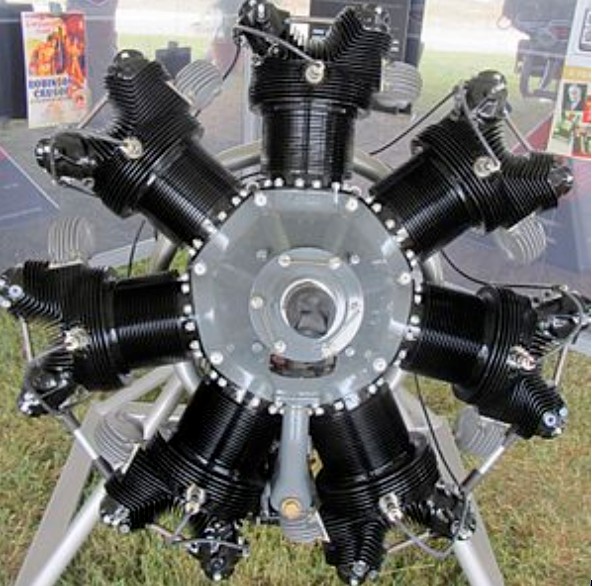
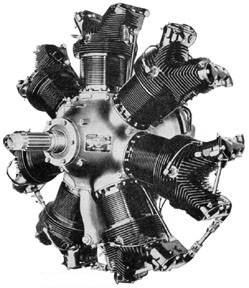
The Continental R-670 (factory designation W-670 (ATC 80 and 120)) was a seven cylinder four-cycle radial aircraft engine produced by Continental displacing 668 cubic inches (11 litres) and a dry weight of 465 lb (211 kg). First run in 1934, horsepower varied from 210 to 240 at 2,200 rpm. The engine was the successor to Continental’s first radial engine, the 170hp Continental A-70. This engine was used on many aircraft in the 1930s and 1940s. The R-670 was widely used in the PT-17 Stearman primary training aircraft of the U.S. military.

W-670

The 1934 W-670 received ATC 168.

In addition to being used in aircraft, the R-670 was used in a number of light armoured vehicles of World War II.

Variants:

W-670-K
carburettor, 5.4:1 compression, 73 Octane, front exhausts and 225 hp (168 kW)

W-670-L
carburettor, 5.4:1 compression, 73 Octane, rear exhausts and 225 hp (168 kW)

W-670-M
carburettor, 6.1:1 compression, 80 Octane, front exhausts and 240 hp (179 kW)

W-670-N
carburettor, 6.1:1 compression, 80 Octane, rear exhausts and 240 hp (179 kW)

W-670-K1
fuel injection, 5.4:1 compression, 73 Octane, front exhausts and 230 hp (172 kW)

W-670-L1
fuel injection, 5.4:1 compression, 73 Octane, rear exhausts and 230 hp (172 kW)

W-670-M1
fuel injection, 6.1:1 compression, 80 Octane, front exhausts and 250 hp (186 kW)

W-670-N1
fuel injection, 6.1:1 compression, 80 Octane, rear exhausts and 250 hp (186 kW)

W670-6A (military R-670-5)

W670-6N (military R670-4, -11A)

W670-17 (military R-680-8)

Applications:
American Airmotive NA-75
Boeing Stearman
CallAir Model A
Cessna 190
Fairchild PT-23
G class blimp
M1 Combat Car
M2 Light Tank
M3 Stuart
LVT-4 Water Buffalo
Timm N2T Tutor
Waco 240-A
Waco UEC and UIC
Waco VKS-7
Waco QCF-2

Specifications:

R-670-K
Type: Seven cylinder air-cooled radial
Bore: 5+1⁄8 in (130.2 mm)
Stroke: 4+5⁄8 in (117.5 mm)
Displacement: 668 cu in (10.95 l)
Length: 34+3⁄16 in (868.4 mm)
Diameter: 42+1⁄2 in (1,079.5 mm)
Dry weight: 450 kg (992.1 lb)
Valvetrain: 1 inlet and 1 exhaust valve per cylinder
Fuel system: 1 Stromberg NA-R6 Carburetor
Fuel type: 65 octane
Oil system: Dry sump, one pressure pump, one scavenge pump, encoesed valve-train
Cooling system: Air-cooled
Power output: 225 hp (168 kW) at 2,175 rpm
Specific power: 0.337 hp/in³
Compression ratio: 5.4:1
Fuel consumption: 13 US Gal/hr (49 l/hr) at cruising rpm
Specific fuel consumption: 0.54 lb/hp/hr (0.328 kg/kW/hr) – at rated rpm
Oil consumption: 0.4 US Gal/hr (1.5 l/hr) at cruising rpm
Power-to-weight ratio: 0.49 hp/lb at cruising rpm

Continental I-1430 / OL-1430 / XI-1430 / V-1430

Continental I-1430-9

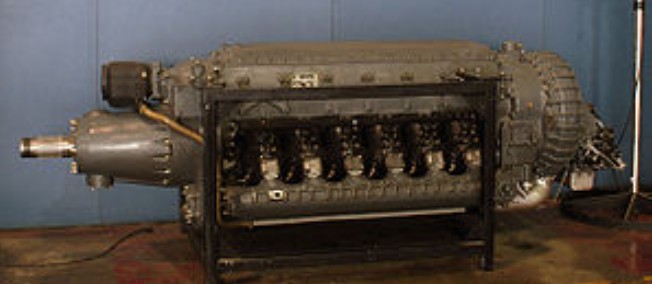
The Continental XI-1430 Hyper engine (often identified as the IV-1430) was a liquid-cooled aircraft engine developed in the United States by a partnership between the US Army Air Corps and Continental Motors. It was the “official” result of the USAAC’s hyper engine efforts that started in 1932, but never entered widespread production as it was not better than other available engines when it finally matured. In 1939, the I-1430-3 was designated as the engine to power the Curtiss XP-55, an extremely radical (for the time) pusher-engine fighter design that would not reach production.

In the late 1920s Harry Ricardo wrote a paper on the sleeve valve design that led to the USAAC’s hyper engine efforts. He claimed that the 1 hp/in³ goal was impossible to achieve with poppet valve type engines. The USAAC engineering team at Wright Field decided to test this claim by beating it. The I-1430 was the result of an experimental effort at Wright Field to build a high-power cylinder using conventional poppet valves. The engineers, led by Sam Heron, used a variety of techniques to raise the allowable RPM, which was the key to increased power without requiring a larger engine.

The USAAC was interested in very large bomber designs, and were most interested in engines that could be buried in the wings in order to improve streamlining. From this requirement they designed a 12-cylinder horizontally opposed engine using twelve separate “hyper” cylinders. Although this sort of arrangement, with entirely separate cylinders from each other and the crankcase, was common for liquid-cooled Central Powers World War I-era inline-6 aviation engines, as in the German Mercedes D.III of nearly two decades earlier – and had been used for the 1918-era Allied Liberty L-12 liquid-cooled aviation engine with significant success – it had fallen from use in favor of engines featuring a monobloc engine design philosophy, with a cylinder block that combined the cylinders and the crankcase, leading to much stiffer engines, that were better able to handle increased power.

The USAAC proposed an engine of about 1200 cubic inches (20 L), hoping the engine’s smaller size would lead to reduced drag and hence improved range. By 1932, the USAAC’s encouraging efforts led the Army to sign a development contract with Continental Motors Company for the continued development of the engine design. The contract limited Continental’s role to construction and testing, leaving the actual engineering development to the Army.

A second cylinder was added to Hyper No. 1 to make a horizontal-opposed engine for evaluation of an opposed-piston 12-cylinder engine. After running the modified engine with different combinations of cylinder bore and stroke, it was found that the high coolant temperatures required to maintain the required output was impractical. A third high-performance single-cylinder engine was then constructed with lower operating parameters. This one-cylinder engine was designated “Hyper No. 2”, and became the test bed for developing the cylinders that would become the Continental O-1430 (“O” for “opposed”) engine. It would require a ten year development period which changed the layout to first an upright V-12 engine and later, an inverted V-12 engine, before becoming reliable enough to consider for full production as the Continental I-1430 in 1943.

During development, interest in the “buried engine” concept faded. Improvements in conventional streamlining, notably the NACA cowling, eliminated the need for a buried engine for improved performance. Additionally, with bomber designs like the B-17, using radial engines for power, starting to enter production, the need for new bomber designs became less pressing and the Army turned its attention to new pursuit models. For this role the O-1430 was not terribly useful, so Continental modified the basic design into a V-12, and then into an inverted-V-12, the I-1430, in the same basic format that the German Luftwaffe of World War II would use.

The I-1430 featured cylinders with “hemispherical” combustion chambers and two sodium cooled exhaust valves. Although it retained the separate cylinders, the change to a V-layout allowed the individual cylinder heads to be cast as a single piece. Mounted at either end, a Y-shaped plate provided stiffness, while containing the camshaft drives. Continental built the first I-1430 engine in 1938 and successfully tested it in 1939.[1] At the time it was an extremely competitive design, offering at least 1,300 hp (970 kW) from a 23 liter displacement; the contemporary Rolls-Royce Merlin offered about 1,000 hp (700 kW) from 27 l displacement, while the Daimler-Benz DB 601 offered slightly more power at 1,100 hp (820 kW), but was much larger, at 33 l displacement.

While the engine was producing exceptional power for its displacement, the reason it was not put into production may have had to do with it’s weight. Both the Rolls Royce/Packard Merlin V-1650 and the Allison V-1710 were in production, with similar power and better Power/Weight Ratios. The V-1710 was 1395 lbs, 385 pounds lighter than I-1430 with a power-to-weight ratio of 1.05. The Merlin V-1650 weighed in at 1640, 25 pounds more than the smaller and unproven Continental with about the same power/weight ratio of about 1.00. It did not seem the XI-1430 would be the solution to any important problem. It was not until 1943 that the 1,600 hp (1,190 kW) IV-1430 was tested extensively in the Lockheed XP-49, a modified version of the P-38 Lightning. It was also to be used in the production version of the Bell XP-76, which was canceled before production began. In 1944 it was also tested in the McDonnell XP-67.

Interest in the design had largely disappeared by then; piston engines with the same power or greater ratings were widely available, the Merlin for example had improved tremendously and was offering at least 1,500 hp (1,120 kW), and the military and aircraft builders were already starting to focus on jet engines.

Only twenty-three I-1430 series engines were delivered, later redesignated the XI-1430 to indicate the purely experimental use.

A 24 cylinder H-style engine, the XH-2860, based on the XI-1430 was designed but probably not built.

Specifications:

I-1430-1
Type: 12-cylinder, liquid-cooled, inverted Vee
Bore: 5.5 in (139.7 mm)
Stroke: 5 in (127.0 mm)
Displacement: 1,425 cu in (23.35 l)
Length: 5.8 in (147.3 mm)
Width: 5.8 in (147.3 mm)
Height: 5.8 in (147.3 mm)
Dry weight: 1,615 lb (732.6 kg)
Valvetrain: Overhead cam with 4 valves per cylinder
Supercharger: Gear driven centrifugal 5.97:1 gear ratio
Turbocharger: 1 x General Electric turbo-charger with intercooler
Fuel system: 1 x Bendix-Stromberg PD-12P2 updraught injection type carburettor with automatic mixture control
Fuel type: 100/130 grade aviation gasoline
Oil system: Pressure feed at 100 psi (689,475.73 Pa) with dry sump, 100-120 S.U. (20.5-25.1 cs) grade oil
Cooling system: liquid, 50% Glycol, 50% water
Reduction gear: 0.385:1 spur reduction gear
Eclipse V-27 or Jack& Heinz JH-3L direct cranking electric starter
Power output:
(take-off) 1,600 hp (1,193.1 kW) at 3,300 rpm at 61 in (1,549.4 mm) Hg / +15.5 lb (7.0 kg) boost
(emergency) 2,100 hp (1,566.0 kW) at 3,400 rpm at 25,000 ft (7,620 m)
(military) 1,600 hp (1,193.1 kW) at 3,300 rpm at 25,000 ft (7,620 m)
(normal) 1,150 hp (857.6 kW) at 3,000 rpm at 25,000 ft (7,620 m)
(cruising) 920 hp (686.0 kW) at 2,780 rpm at 25,000 ft (7,620 m)
Specific power: 1.47 hp/cu in {67.18 kW/l)
Compression ratio: 6.5:1
Specific fuel consumption: 0.47 lb/hp/hr (0.286 kg/kW/hr)
Oil consumption: 0.025 lb/hp/hr (0.015 kg/kW/hr)
Power-to-weight ratio: 1.45 hp/lb (2.384 kW/kg)
B.m.e.p. (max) 3.42 psi (23,580.07 Pa) (Brake mean effective pressure)