Croses first flew in 1965 the two-seat tandem-wing EC-6 Criquet, available as plans.
Engines – Power
Croses EC-3 Pouplume
Avions Croses produced one of the original and practical modern microlights in 1961 as the EC-3 Pouplume, with pivoting forward wing and fixed rear wing as a Pou-du- Ciel type; still available for home construction via plans.
Crosby CR-4
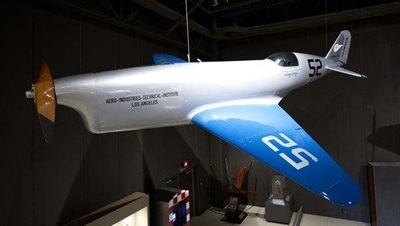
Harry Crosby designed the all-metal CR-4 racer while recuperating from serious back injuries sustained in the crash of its predecessor, the CR-3. The CR-4 incorporated butt joints, flush riveting, and stress skin construction, and was designed to carry a 420 hp ranger V-12 engine. When plans for procuring that engine fell through, Crosby used the Menasco Super Buccaneer from the CR-3.
The airplane first flew in April 1938, but, dogged by engine and gear problems, it didn’t race until 1939. At the 1939 Greve, Crosby was awarded third place despite being flagged down in the 13th lap. He took fourth in the Thompson that year, with an average speed of 244.522 mph. After the race, Crosby and his crew kept the plane in Cleveland to be filmed for the movie Tailspin before trailering it back to California. There the CR-4 spent a few days in a sound stage for engine noise recording and cockpit close-ups for the film.
Before being stored in Crosby’s shop in Burbank, the plane was unofficially clocked at 386 mph, a speed that would have made it faster than Howard Hughes’ racer. Crosby went on to test planes for Northrop, and was ultimately killed testing the XP-79B.
Shortly after the end of World War II, an Air Force pilot named Harry Austell purchased the CR-4 from Crosby’s widow. He intended to restore and race the plane, but Austell apparently never completed that restoration, and the CR-4 itself disappeared. That is until Morton Lester, following up a tip from a friend, discovered the plane’s fuselage on a farm outside Norlina, NC. More searching through the farm’s outbuildings turned up nothing, until Lester looked inside a disused school bus parked in the woods. There he found the plane’s wing panels, landing gear doors, flaps, and other smaller pieces.
Restoration of the plane was begun by Lester and completed by the EAA staff after the aircraft was donated to the museum.
Engine: Menasco C6S-4 Super Buccaneer, 260 hp
Length: 21 ft. 6 in.
Wingspan: 16 ft.
Tailspan: 6 ft. 1 in.
Empty weight: 1540 lbs.
Propeller diameter: 6 ft.
Top recorded speed: 244.52 mph
Crosby CR-3
Harry Crosby designed the all-metal CR-4 racer while recuperating from serious back injuries sustained in the crash of its predecessor, the CR-3.
Croll-Turner 1910 Monoplane
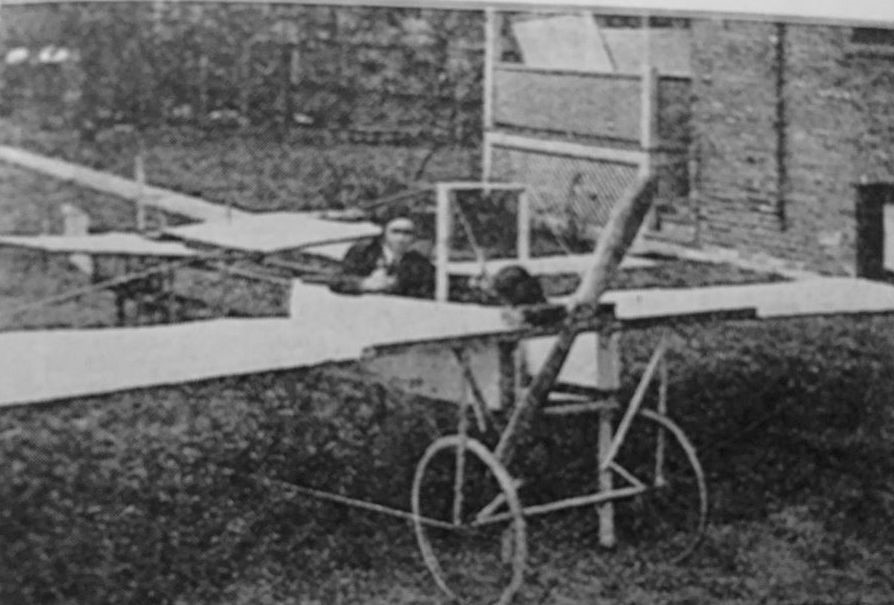
A monoplane built by Harold Turner and Fred Croll, two high school students of Chicago, USA. Weighing 125 lbs it had fully operable controls via an electrical device. It was towed into the air where it reached a height of 15 feet and a flight of 43 seconds.
Cro Metallica LG2

All metal with tandem seating, circa 1998.
Engine: Verner, 70 hp
Wing span: 9.4 m
Wing area: 13.2 sq.m
MAUW: 450 kg
Empty weight: 260 kg
Fuel capacity: 72 lt
Max speed: 210 kph
Cruise speed: 160 kph
Minimum speed: 63 kph
Climb rate: 4 m/s
Fuel consumption: 8 lt/hr
Certification: CS
Seats: 2
Price (1998): 57,500 DM
Creative Flight Aerocat
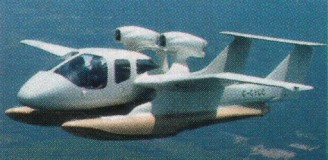
Aerocat SR
Cruise: 175 mph
Stall: 50 mph
Range: 1120 sm
Rate of climb: 1200 fpm
Takeoff dist: 600 ft
Landing dist: 450 ft
Engine: Lycoming , 210 hp
HP range: 180-320 hp
Fuel capacity: 68 USG
Empty weight: 1600 lb
Gross weight: 2700 lb
Length: 27 ft
Wing span: 34 ft
Wing area: 165 sq.ft
Seats: 4
Cockpit width: 56 in
Landing gear: retractable nose
Aerocat SRX
Cruise: 150 mph
Stall: 50 mph
Range: 960 sm
Rate of climb: 1100 fpm
Takeoff dist: 600 ft
Landing dist: 450 ft
Engine: Crossflow, 250 hp
HP range: 200-300 hp
Fuel capacity: 68 USG
Empty weight: 1800 lb
Gross weight: 2700 lb
Length: 27 ft
Wing span: 34 ft
Wing area: 165 sq.ft
Seats: 4
Cockpit width: 56 in
Landing gear: retractable nose
Aerocat TR
Cruise: 175 mph
Stall: 50 mph
Range: 1090 sm
Rate of climb: 1200 fpm
Takeoff dist: 600 ft
Landing dist: 450 ft
Engines: 2 x Jabiru 3300, 130 hp each
HP range: 210-300 hp
Fuel capacity: 68 USG
Empty weight: 1800 lb
Gross weight: 2700 lb
Length: 27 ft
Wing span: 34 ft
Wing area: 165 sq.ft
Seats: 4
Cockpit width: 56 in
Landing gear: retractable nose
Aerocat TRX
Cruise: 155 mph
Stall: 50 mph
Range: 980 sm
Rate of climb: 1100 fpm
Takeoff dist: 600 ft
Landing dist: 450 ft
Engines: 2 x Jabiru 3300, 130 hp each
HP range: 210-300 hp
Fuel capacity: 68 USG
Empty weight: 1800 lb
Gross weight: 2700 lb
Length: 27 ft
Wing span: 34 ft
Wing area: 165 sq.ft
Seats: 4
Cockpit width: 56 in
Landing gear: retractable nose
Creative Flight MPA
The MPA (multi-platform Aircraft) by Creative Flight of Haliburton, Ontario, Canada, made its first flight in 2001.
As a development prototype, engine options were to be one or two 120 hp Jabirus or a single 200 hp Jabiru.
Crawford & Keeney Serra S-1

Less than six feet high and only 18 feet long, the Serra S-1 was built by Hugh Crawford and Roger Keeney. The pusher made itd initial trial flights at Los Angeles in 1954. With a wingspan of 20 feet, the 85 hp Continental gave an estimated top speed of 200 mph and cruise of 165 mph.
Cranwell Light Aeroplane Club CLA.4A
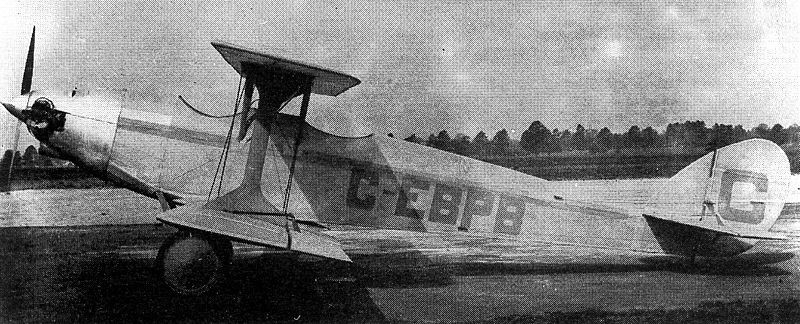
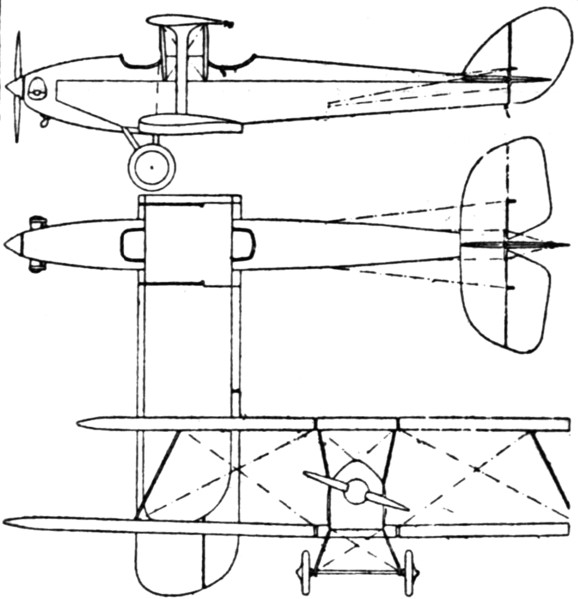
The Cranwell CLA.4 was for the 1926 Lympne light aircraft trials, as two-seat inverted sesquiplanes, powered by a Pobjoy P. The first aircraft, G-EBPC was started as a CLA.4 but completed as a CLA.4A, powered by a Bristol Cherub III.
The first of two built, G-EBPC, was flown from Cranwell in 1927, and by Comper at the trials but was withdrawn with a damaged landing gear. It was broken up at Heston in 1933.
The second aircraft, G-EBPB, was destroyed in a crash on 4 March 1927.
A group of students, unsatisfied with their flying hours at the Edmonton and Northern Alberta Flying Club, purchased a set of plans to build a Cranwell CLA.4 in 1927. Alf Want assembled the aircraft in his house basement, but then moved it to Blatchford Field for flight trials. It is the third and last aircraft of its kind, and is the oldest surviving airplane originally built in Edmonton.
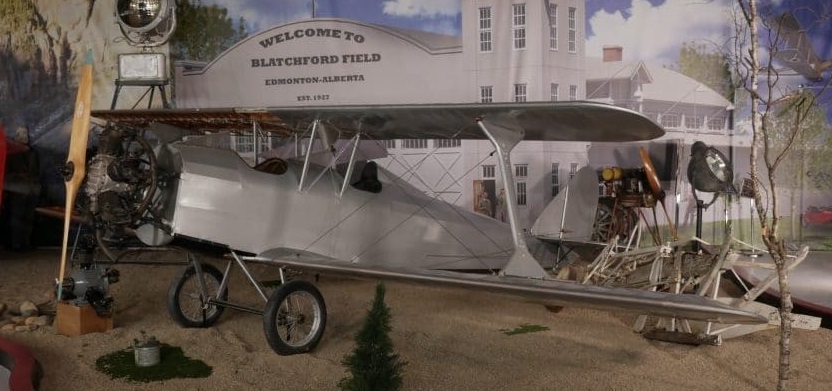
Cranwell CLA.4
Powerplant: 1 x Velie M-5, 41 kW)
Wingspan: 8.33 m
Length: 6.80 m
Maximum Speed: 105 km/h
Cruise Speed: 80 km/h
Range: 200 km
Crew: 1
Passengers: 1