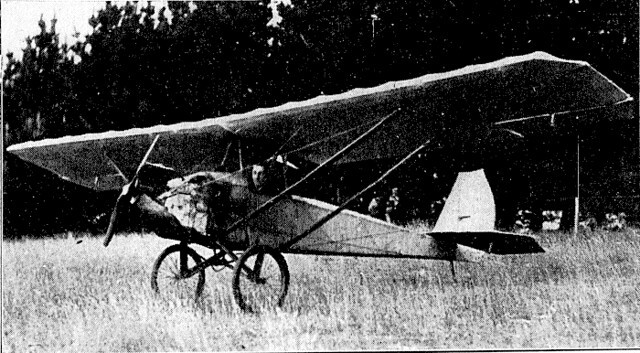
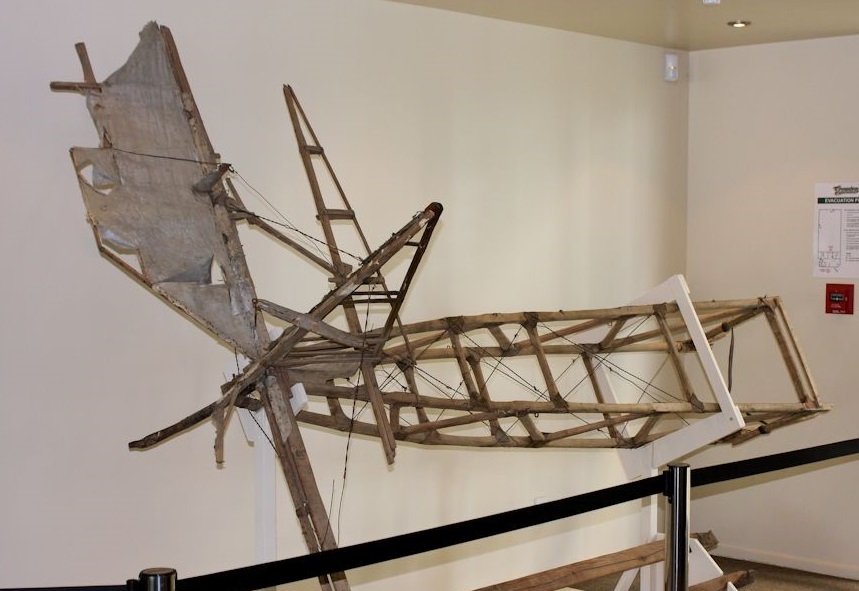
Mr. David Cross, aged 23, in the aeroplane designed and built by himself in which he crashed from a height of 300 ft. near Gore, New Zealand, on Monday. Mr Cross was injured and the machine was wrecked.
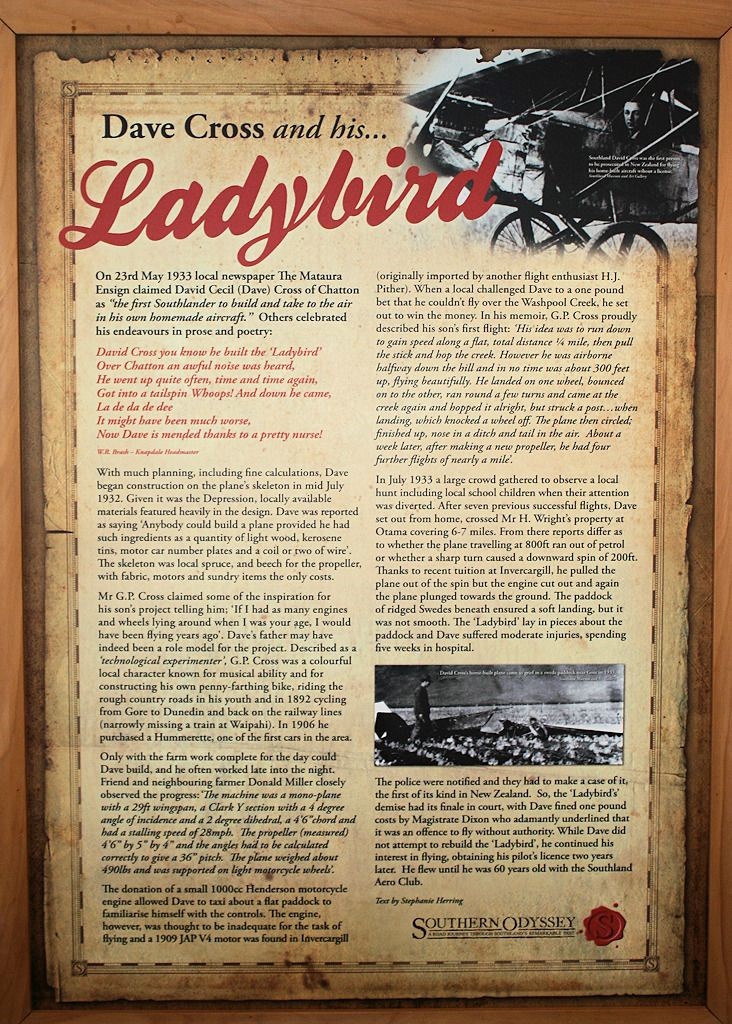
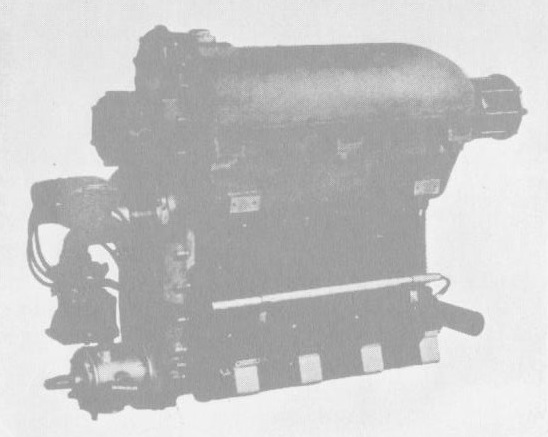
The Ladybird first flew on 21 May 33 with ex-Pither 40hp JAP engine. Span 29ft.
He made several flights (Approx 6 ) including one of 14km and he was the first man to be prosecuted in New Zealand for flying without a licence.
On 24 May 1933 the ODT reported, “Some months ago it was hoped to take the machine into the air, but the engine with which it was then equipped – a four-cylinder motor cycle engine – was not sufficiently powerful to lift the plane and the young aviator finally obtained an old engine imported from England by Mr Pither of Invercargill some 22 years ago for aviation purposes.
“This was overhauled and found to be in good order and after some alterations it was installed in the machine.
“Much study and energy had been devoted to the construction of a small monoplane at Chatton, Eastern Southland, when a very proud young man named David Cecil Cross, made his first successful trial flights in the machine.
“In the presence of about 20 onlookers the monoplane was taken out on Sunday morning and the young man took his place at the controls.
“The machine took off beautifully, crossed the Washpool Creek and a row of tall poplar trees, reached an altitude of 200 feet and made a good landing. The return journey was commenced a few minutes later and would have been equally successful had not one of the wheels struck a log of wood which was almost hidden in the ground.
“A wheel was torn off and a certain amount of damage was done to the undercarriage, but the pilot was uninjured. Naturally the young man was very proud of his achievement, although the slight mishap at the end of the trial was a disappointment to him. The monoplane has a wing span of 29 feet and on account of its graceful lines has been called the Ladybird. Despite its age, the engine now installed is in excellent order.”
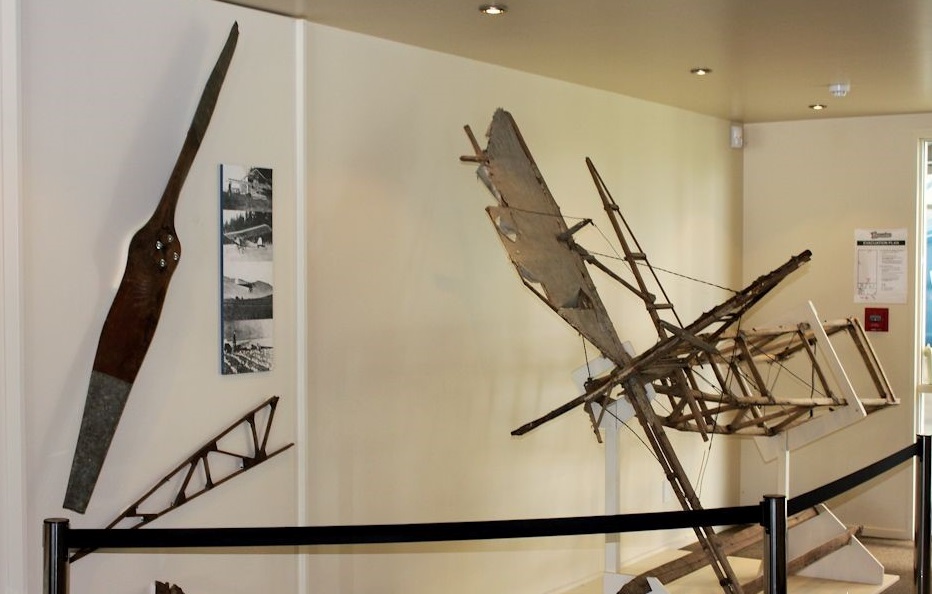
The Ladybird crashed in a turnip paddock at Otamita, Southland on 10 July 1933, and the remains went to the Croydon Aviation Heritage Centre at Mandeville, New Zealand, in 2012.