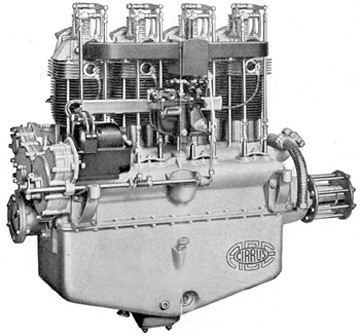
de Havilland Cirrus / American Cirrus Engines Inc American Cirrus / ACE Cirrus

American Cirrus Engines Inc American Cirrus

In 1925 Geoffrey de Havilland was looking for a reliable cheap engine for use in a light sports aircraft. Halford gave it to him by building a four-cylinder crankcase and adding to it half of the air-cooled V8 240 hp (180 kW) Renault 8G’s cylinders, several other of the Renault’s components, and standard parts used in car engines.

The result was a 60 hp (45 kW) in-line aircraft engine that, although it fell short of the promised horse-power, was still superior to all contemporary engines for light aircraft. It was a true aircraft engine at a time where its competitors were more often than not motorcycle engines adapted to running at high altitude. The engine secured, de Havilland Aircraft commenced manufacture of the D.H.60 Moth and the combination of reliable powerplant – the ADC Cirrus – and reliable training craft – the Moth – marked the start of serious sports flying in Britain.

American Cirrus
Type: 4 cylinder in line, vertical air cooled
Rating 5.1 compression: 90 hp at 1900 rpm
Rating 5.1 compression: 95 hp at 2100 rpm
Rating 5.4 compression: 93 hp at 1900 rpm
Rating 5.4 compression: 98 hp at 2100 rpm
Displacement: 310 cu.in
Compression ratio: 5.1-1 to 5.4-1
Bore: 4 3/8 in
Stroke: 5 1/8 in
Length: 38 1/2 in
Height: 36 3/8 in
Width: 18 3/4 in
Weight: 275 lb
Fuel consumption: not more than .54 lb/hp/hr
Oil consumption: not more than .0213 lb/hp/hr
Lubrication: Force feed, wet sump
Ignition: 2 Scintilla magnetos
Carburation: Stromberg
Spark plugs: 2 pr cylinder B.G. and AC
Price: $1600
de Groof Machine Volant

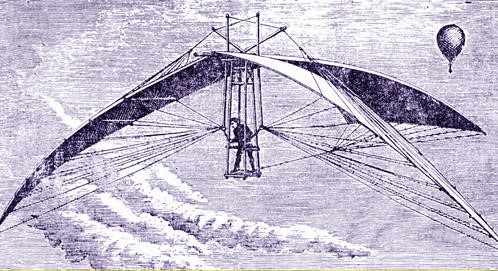
In 1864, a Belgian shoemaker named Vincent de Groof designed an apparatus which was a sort of cross between beating wings and a parachute. His plan was to cut loose with it from a balloon, and to glide down in a predetermined direction by manoeuvring the supporting surfaces. He endeavoured to make a practical experiment, both in Paris and in Brussels, but it was only in 1874 that he succeeded in doing so in London.

The apparatus consisted of two wings, each 24 feet long, moved by the arms and the weight of the operator, and a 20 foot long tail which could be adjusted using one’s feet.

De Groof first went up on June 29, 1874, from Cremorne Gardens, London, attached to the balloon of Mr. Simmons. He came down safely, and claimed to have cut loose at a height of 1,000 feet. Subsequently however, it was stated by others that in fact he had not, on this occasion, cut loose at all, but had descended still attached to the balloon. In any event, he went up again on July 5 following, with the same balloon, and on this occasion he really did cut loose. The result was disastrous. In his descent, as soon as pressure gathered under the moving wings, they were seen to collapse together overhead into a vertical position, bringing De Groof down like a stone and killing him on the spot.

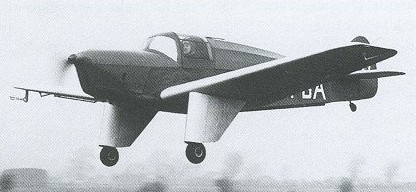
de Glymes DG X

The de Glymmes DG X OO-AKV (c/n 01) was designed by engineer Raoul de Glymes of Hollebecque, Belgium, and fabricated in collaboration with Alfred Herrmann.

This two-seater aircraft was equipped with a Renard 100hp engine and was registered as OO-AKV in 1931.

In 1931, R. Van de Velde owner and pilot of the aircraft flew Brussels – Nuremberg – Vienna (1400 Km) in 9 flight hours with an average speed of 155 Km/H.

On August 22nd, 1931 the same pilot won the first place of a Belgian air raid organized by the “Aeroclub Royal de Belgique”.

The registration and the plane disappeared in 1935.

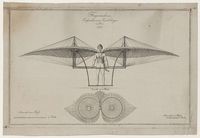
Degen 1807 Flugmachine

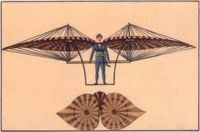
Ornithopter built by Jakob Degen – a Swiss watchmaker living in Vienna – first drafted and published in 1807. Degen made his earliest somewhat successful flights by using a counterweight to assist his lift, indoors at the Winter Riding School of the Spanish Riding School in Vienna on April 18, 1808. That same year, on November 13 and 15, he gave two outdoor performances with his Flying machine at the Wiener Prater using a small hydrogen-filled balloon to aid his ascensions. Later on over the years, three times Degen staged his performance in Paris and is also known to have visited Berlin with his apparatus. These attempts generally resulted in complete failure accompanied with personal injury.

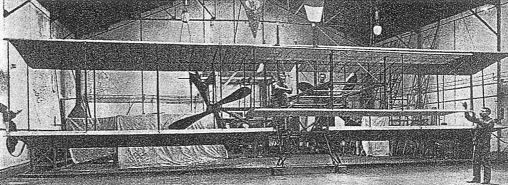
de Dion-Bouton 1909 Multiplane

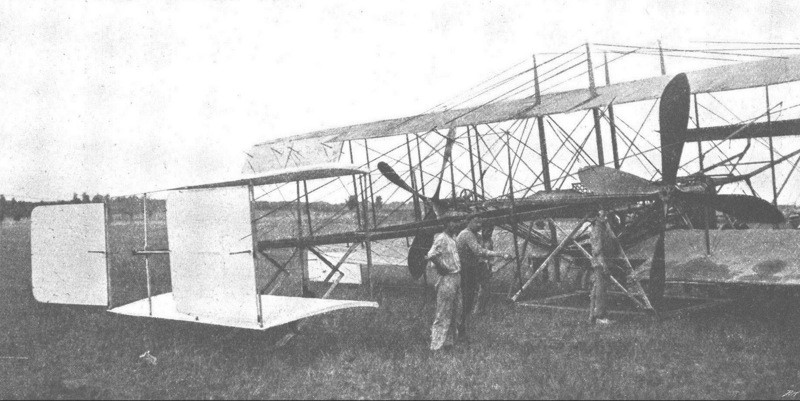
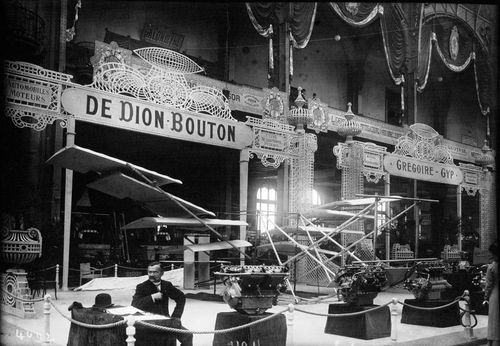
The first of two unsuccessful aeroplanes designed and built by Établissement de Dion-Bouton, the car and motor company. Remotely resembled a Wright Flyer, with twin rudders at the rear, a single small tailplane, and a triplane elevator in front, but instead of wings, each side had four wing-segments set at 30 degrees dihedral. Four propellers were to be employed, driven by a 100 hp engine. Displayed incomplete at the Première Exposition internationale de la locomotion aérienne at the Grand Palais in Paris during September 25 – October 17, 1909, construction and/or testing was likely halted afterwards as nothing more was heard of this flying machine of Jules-Albert de Dion and Georges Bouton.

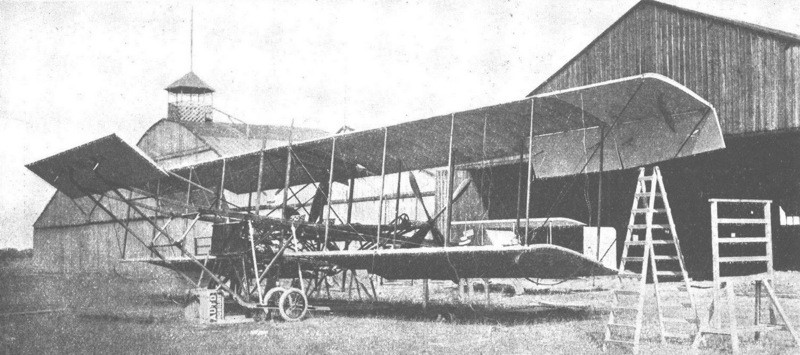
Decommines I

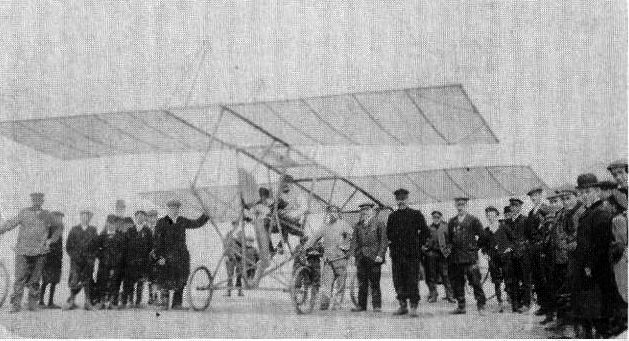
Emmanuel Honoré Decommines, known as Georges Decommines, was born in Ostend, Belgium, on 14 February 1879. His brother Louis Decommines helped him with the construction of this airplane. The tractor propeller was driven by a 25 hp Anzani, which was financed by his aunt. On the first flight attempt, on the morning of May 15, 1910 on the beach of Ostend, Belgium, refused to start and on the second threw a propeller blade through the fuel tank, causing a fire which burned both the plane and the pilot/builder, but both were able to recover and try again. After repair, the machine crashed while attempting to take off. The builder, with minimal damage this time, took the hint and scrapped it, but he would come back with another design the year after.