Dorna D-139 Parandeh Abi / Blue Bird

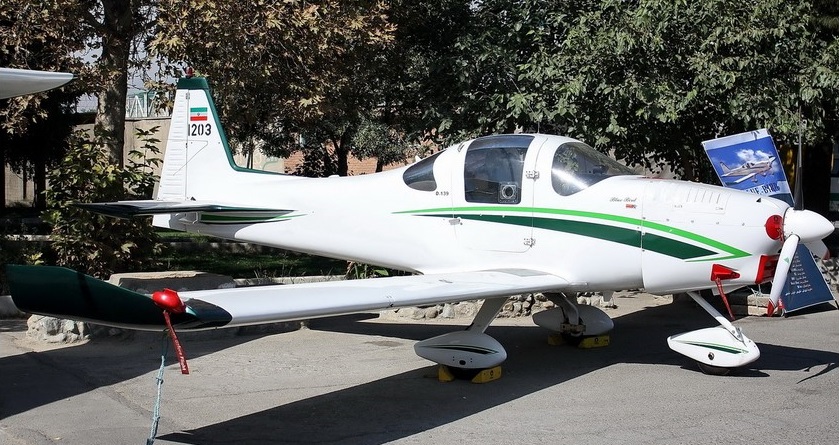
The design of the Parandeh Abi, Blue Bird in English, recreational and training aircraft was begun in 1994 and the first flight was on 27 July 1998. The designer was Mohammad Hassan Karami.

It is a conventionally laid out low wing single-engine monoplane, built entirely from composite materials and seating two side-by-side. Its two spar wings and single spar horizontal tail are rectangular in plan. The wing carries 2.5° of dihedral and the tips are slightly upturned. Plain flaps fill the trailing edges inboard of the ailerons. The elevators are horn balanced, as is the rudder. Together, the fin and rudder are straight tapered, with a small dorsal fillet.
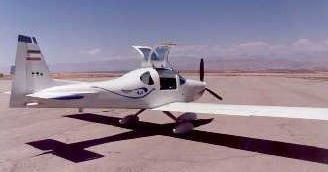
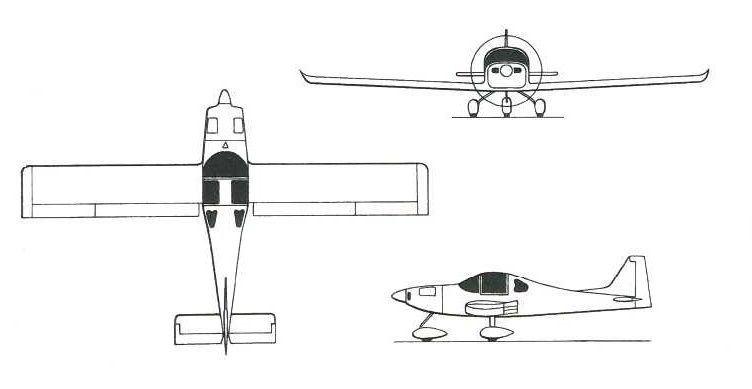
The Parandeh Abi is powered by a Rotax 914 F3 horizontally opposed four-cylinder engine driving a thee-bladed propeller. Its fixed, self-sprung steel cantilever tricycle undercarriage is attached to the fuselage. All wheels have speed fairings. In early production aircraft, access to the cabin was via the top hinged, upward opening canopy, but later examples have forward hinged doors reaching down almost to the wing. The doors contain a framed window, though the total cabin transparency is noticeably reduced. All models have a pair of small, fixed windows in the tapering fuselage behind the seats, where there is a baggage compartment. The aircraft can be equipped with either a stick or yoke for primary control. Other differences between early and later production models include improved engine cooling with the addition of chin and cheek air intakes, enlarged rudder horn balances, tailplane root fillets and fluted skinning on the ailerons and rudder.

The design was type certified to JAR-VLA standards.

Production of the Parandeh Abi began in 2001 with orders for 5 from Iranian flying clubs. By March 2006 Dorna had orders for 14 and options on another 30 and by November 2008 28 had been built at a unit cost of €120,000. As well as supplying clubs and training centres, Parandeh Albis also went to the Iranian Police and to the Civil Aviation Organisation.

By the end of 2012 the company’s website was gone and the domain was for sale. The company may no longer be in business.

Parandeh Abi
Engine: 1 × Rotax 914 F3
Propeller: 3-bladed MT-Propeller MTV-6-A/172-8, 1.72 m (5 ft 8 in) diameter
Wingspan: 9.45 m (31 ft 0 in).
Wing area: 11.06 m2 (119.0 sq ft) gross
Airfoil: NACA 63-215
Length: 6.17 m (20 ft 3 in)
Height: 2.70 m (8 ft 10 in)
Empty weight: 490 kg (1,080 lb)
Max takeoff weight: 750 kg (1,653 lb)
Fuel capacity: 120 L (26.4 Imp gal, 31.7 US gal)
Maximum speed: 282 km/h (175 mph; 152 kn) at 4,267 m (14,000 ft)
Cruise speed: 161 km/h (100 mph; 87 kn) economical, at 3,658 m (12,000 ft)
Stall speed: 83 km/h (52 mph; 45 kn) sea level, flaps down
Never exceed speed: 321 km/h (199 mph; 173 kn)
Range: 1,094 km (680 mi; 591 nmi) with maximum fuel
Service ceiling: 4,265 m (13,993 ft)
Rate of climb: 3.8 m/s (750 ft/min) at sea level
Crew: one
Capacity: one passenger
Dormoy Bathtub

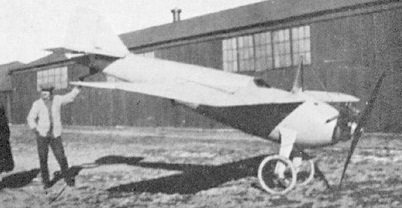
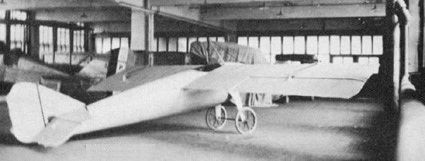
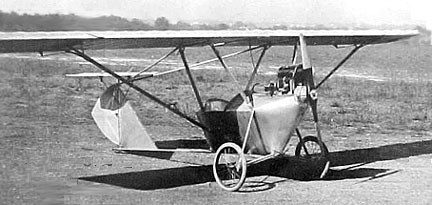
The 1924 Dormoy Bathtub won the Rickenbacker Trophy for its class at the 1924 Nationals. After the 1924 races Dormoy sold it to a farmer, who taxied it around his cow pasture, but was afraid to fly it. It eventually ended up parked in the field, and his cows chewed the wings away.

The 1925 Bathtub was built from scratch with a full-length, covered fuselage.

Only the two originals were built. Many subsequently replicated by home-builders even into the 1990s.

Engine: 25hp 4-cyl Henderson
Wing span: 24’0″
Length: 13’5″
Useful load: 190 lb
Max speed: 70 mph
Cruise speed: 60 mph
Stall: 25 mph
Sats: 1

Dormoy 1919 biplane

Designed by Etienne Dormoy in 1919 as a single place open cockpit biplane experiment in ultralights. A basic framework with wings and a pilot’s seat behind the 18hp Henderson motor. The idea was carried over into Dormoy Bathtub.

Flown successfully at Selfridge Field, Detroit, only the one was built, sometimes listed as a Packard Motor Co product but actually spare-time project by Dormoy and his co-workers while employed there.

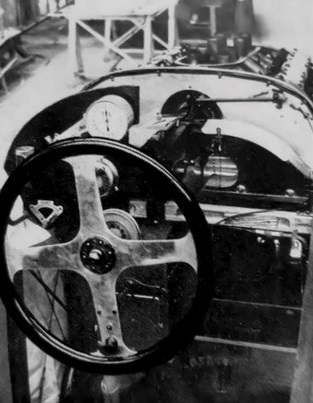
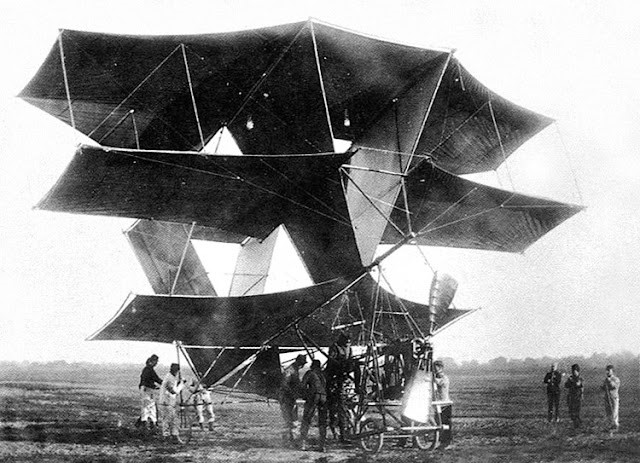
Dorand Biplan-Laboratoire

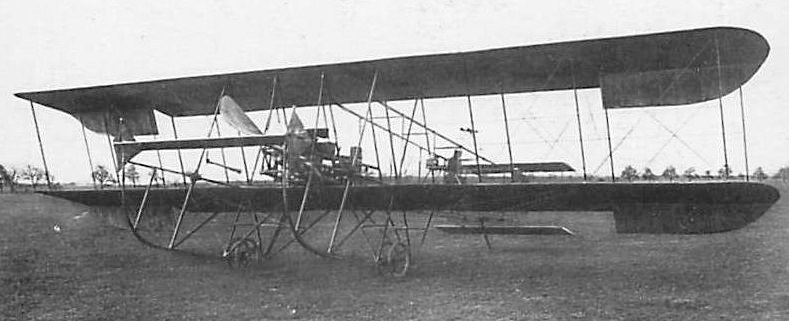
A design specially built for the testing of several components, like wings and propellers. The machine was loaded with all sorts of measurement instruments. As this was far before the time of automatic registration, these instruments were photographed in flight. At that time glass plate negatives were used for photographing. Interpretation was made on the ground.

The machine dates from 1910 (although first described in L’Aérophile 1912) and was continuously modified if needed for the tests. Dorand was an old hand in aeronautics as he was already assigned commander of the Établissement Aérostatique at Chalais-Meudon in 1894.

Dorand AR.1 / AR.2 / ARL.2

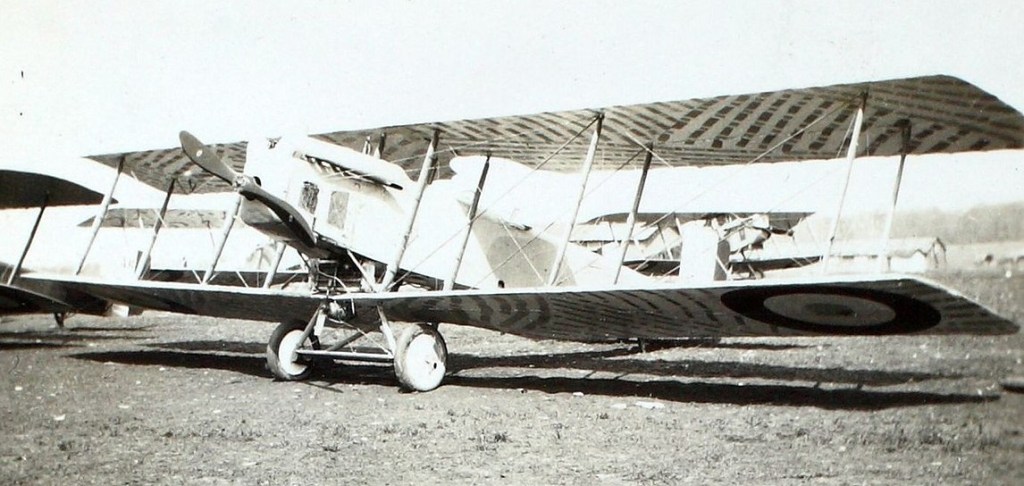
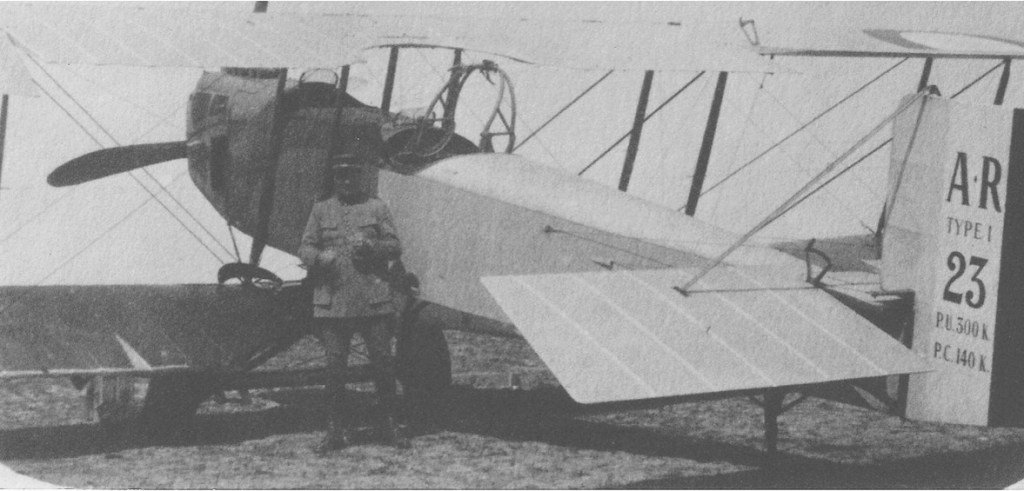
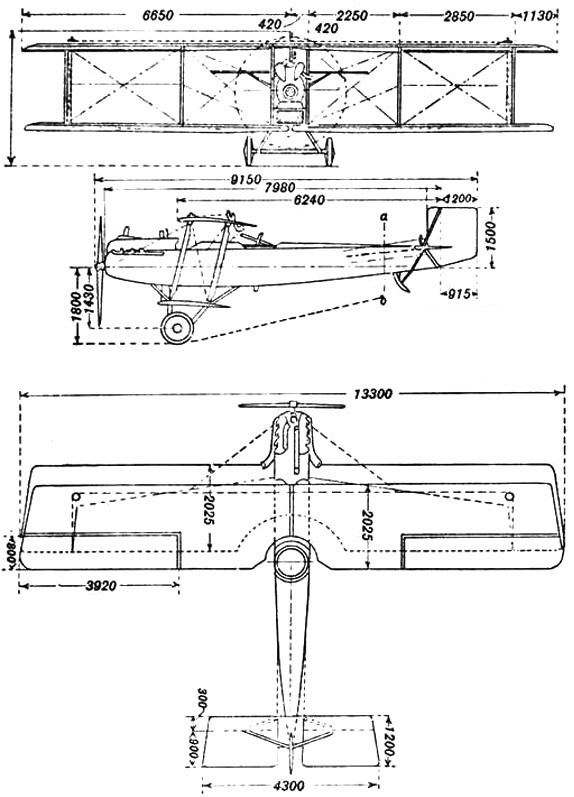
The Dorand AR.1 was a World War I French two-seat observation biplane aircraft used by the French Air Force, the American Expeditionary Force and, in small numbers, by Serbian Aviation.

Designed by Captain Georges Lepère of the STAé to replace the obsolescent Farman F.40 pusher aircraft, Dorand AR-series were two-seater reconnaissance biplanes that were named after the STAé director, Lt. Col. Dorand. They were characterized by backward-staggered two-bay wings and angular all-moving tail surfaces. The pilot sat beneath the leading edge of the upper wing, with the observer’s cockpit being under the trailing edge, and there were cut-outs in both wings to improve the latter’s field of view. Rather unusually for a single-engine tractor biplane of the era, the lower wing was not directly attached to the fuselage, instead being somewhat below it, supported by struts.

Dorand AR.1

Production of these aircraft began in a state-owned French Army Aircraft Establishment (or S.T.Aé.) factory at Chalais-Meudon, near Paris, after flight testing had been completed in the autumn 1916.

The first of the thirteen squadrons which flew Dorands on the Western Front received their aircraft in the spring 1917. Five other French squadrons used the type on the Italian Front. These aircraft were withdrawn from the combat units in early 1918.

In 1917 the American Expeditionary Force ordered the Renault-engined varieties of the Dorand, the first of 22 AR.1s being delivered in December 1917 and the first of 120 AR.2s in following February. The Americans operated these types on the Western Front for the first half 1918, until replacing them with the Salmson 2. After being retired from fighting duties, the surviving examples were used as trainers.

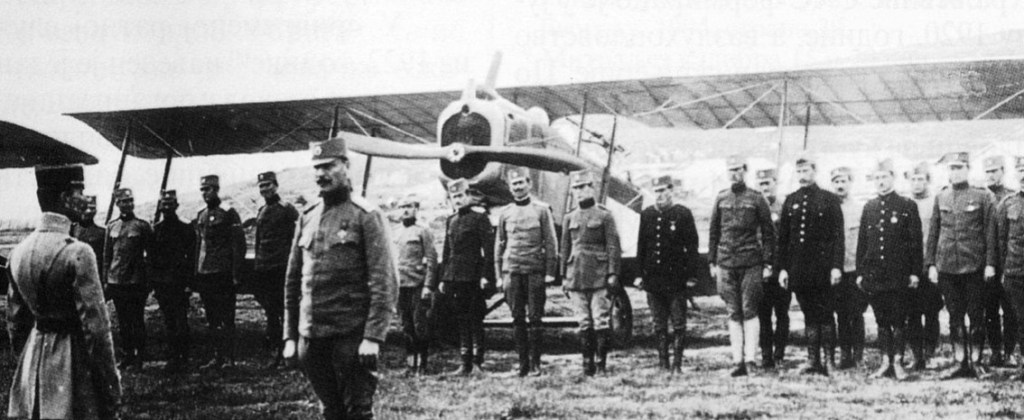
A small number of Dorand AR.1s were also supplied to Kingdom of Serbia, which operated these aircraft in four squadrons from April 1918 onwards.

Dorand AR.2’s of the first Serbian squadron

While the Dorand AR-types didn’t have a particularly distinguished career in either French or American service, having a rather mediocre performance for a late-war daytime reconnaissance aircraft and suffering from having low priority for engine supplies, it is a testimony to the general soundness of the design that after the war, many AR.1s and AR.2s appeared in the French civil register, being used as 2/3-passenger transports by companies like Compagnie Aérienne Française and Réseau Aérien Transafricain. Private users found the aircraft useful for training and joy-flights as well.

All these types had “A.2” added to their names in French service, indicating that they were two-seater reconnaissance aircraft.

1917

Variants:

AR.1 A2 160
Early production version, frontal radiators
Engine: 120 kW (160 hp) Renault 8Gd
Wing span: 13.27 m (43.5 ft)

AR.1 A2 200
Mid production version, frontal radiators
Engine: 150 kW (200 hp) Renault 8Gdy
Propeller: 2-bladed wooden fixed pitch
Wing span: 13.27 m (43.5 ft)
Wing area: 50.36 m2 (542.1 sq ft)
Length: 8.225 m (27 ft 0 in)
Empty weight: 890 kg (1,962 lb)
Gross weight: 1,330 kg (2,932 lb)
Wing loading: 26.4 kg/m2 (5.4 lb/sq ft)
Power/mass: 0.143 kW/kg (0.087 hp/lb)
Fuel capacity: 170 L (37 imp gal)
Maximum speed: 148 km/h (92 mph, 80 kn) at 2,000 m (6,600 ft)
Endurance: 3 hours
Service ceiling: 5,500 m (18,000 ft)
Crew: 2 (pilot and observer)
Armament: 1 × fixed forward-firing 7.7 mm (.303 in) Vickers mg / 1 or 2 × 7.7 mm (.303 in) Lewis gun(s) for observer

AR.1 A2 190
Late production version, frontal radiators
Engine: 140 kW (190 hp) Renault 8Gd
Wing span: 13.27 m (43.5 ft)

ARL.1 A2
AR.1s modified, frontal radiators
Engine: 180 kW (240 hp) Lorraine-Dietrich
Wing span: 13.27 m (43.5 ft)

AR.1 D2
Trainers, frontal radiators
Engine: Renault 12d
Wing span: 13.27 m (43.5 ft)

AR.2 A2
2nd production version, wing mounted radiators
Engine: 148 kW (199 hp) Renault 8Ge
Wingspan: 12.0 m (39.4 ft)
Wing area: 45 sq.m

ARL.2 A2
AR.2s modified, wing mounted radiators
Engine: 180 kW (240 hp) Lorraine-Dietrich
Wingspan: 12.0 m (39.4 ft)
Wing area: 45 sq.m

Donohoe Shuttle

Dave Donohoe, a colleague of Tom Cadet, developed the Boorabee’s airfoil. This wing was mated to a new fuselage mould to use a 4 x 3 inch rectangular boom and Dave called the result the Shuttle. Similar in overall appearance, the Shuttle has a single wing strut and a different tail and undercarriage and control system. After the undercarriage of the Shuttle proved weak, some Shuttles adopted that of the Boorabee.

The Shuttle design was abandoned after Dave’s second aircraft, powered by a 1600cc Jabiru, developed aileron flutter. The wings were damaged extensively, but Dave was able to land the aircraft. Vibration from the Jabiru, coupled with a control system that was too slack, caused the flutter.

Donnet-Lévêque Type A / Type C

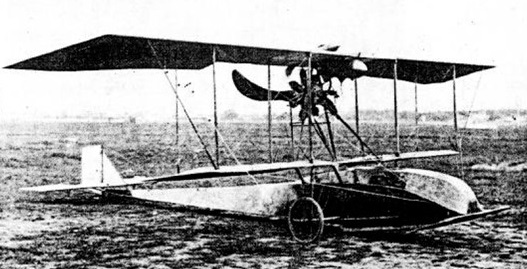
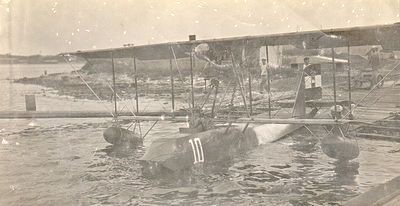
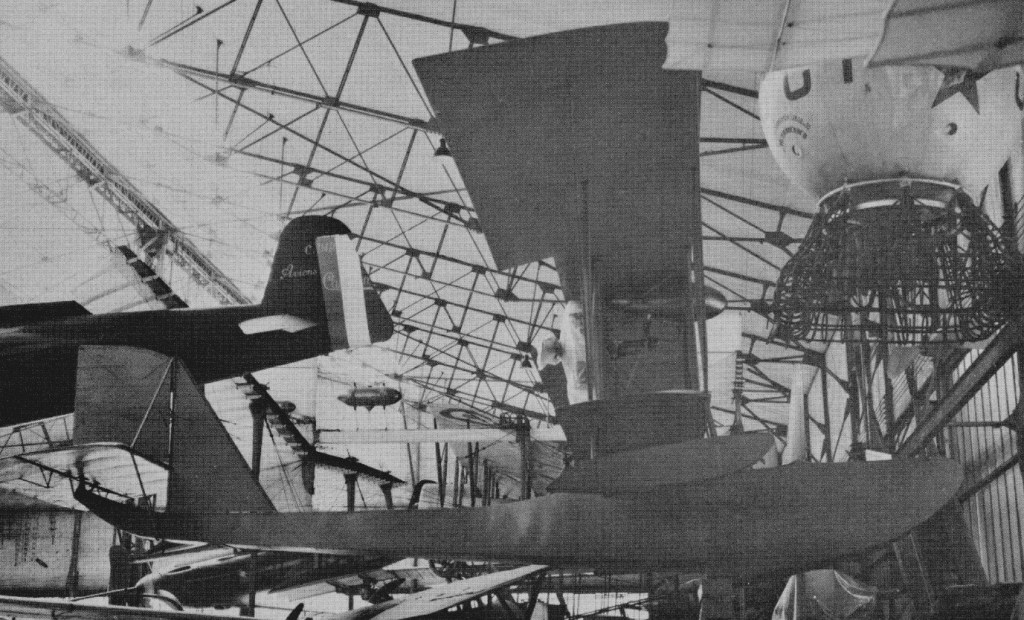
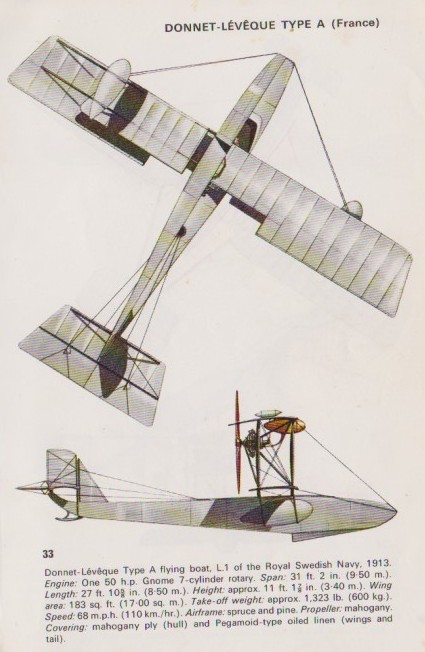
In 1912 four Donnet-Lévêque flying boats type A (no ailerons) and type C (with ailerons) – assigned numbers from 8 to 12 – were obtained by K.u.k. Seeflugwesen. A two-place hulled hydroplane designed by Francois Denhaut, they were powered by a 50 hp Gnome engine.

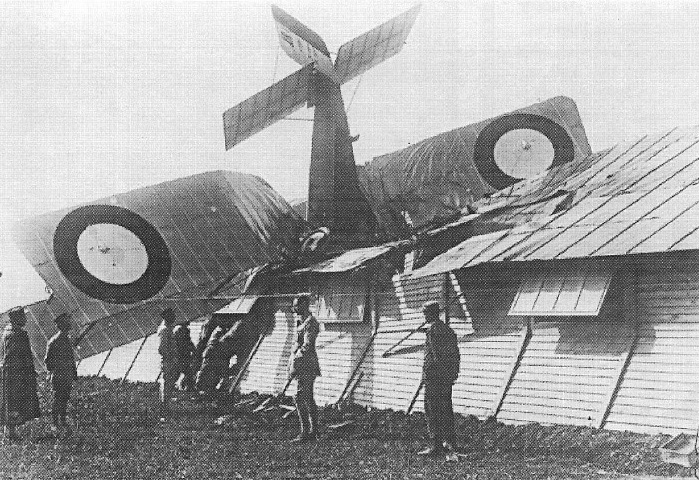
Aircraft sporting number 10 entered service on January 4, 1913 and was written off in December 1913 due to damage sustained in a crash.

At Argenteuil in 1913, piloted by the marine Konning

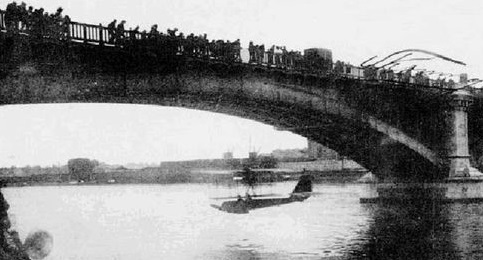
On 9 August 1912, Jean Conneau (also known as Beaumont) attempted a Paris-to-London flight. He took off from the Seine, near Bezons, made stops at Quilleboeuf and Le Havre, and the landed at Boulogne-sur-Mer where an accident cancelled the flight.

Jean Conneau’s aircraft was donated to the Musse de L’Air by the Schreck concern.

Jean Conneau’s aircraft

Engine: Gnome, 50 hp
Wingspan: 31.16 ft
Length: 28.86 ft

Dongan WJ-5 / WZ-5

Dongan WJ-5 turboprop powered Xian Y-7-100

The Dongan WJ-5 is a Chinese single-shaft turboprop aero engine built by the Dongan Engine Manufacturing Company for the Xian Y-7 twin-engined transport.

Variants:
WJ-5A
Main production variant of 2162 ekW (2900 ehp)

WJ-5E
Improved variant for the Xian Y-7-200 sometimes referred to as the WJ-5A-1G. Developed with the help of General Electric.

WZ-5
A turboshaft version of the WJ-5, which failed to progress beyond the prototype stage.

Application:
Harbin SH-5
Xian Y-7