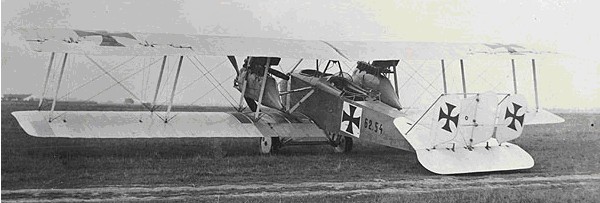
A 1924 biplane night bomber, one prototype was built with Warren truss.
First flown with 4 x 200 hp SPA 6A inline 6-cylinder engines, later modified with 2 x 400 hp Lorraine-Dietrich 12Db V-12 engines.
Wingspan: 23m
A 1924 biplane night bomber, one prototype was built with Warren truss.
First flown with 4 x 200 hp SPA 6A inline 6-cylinder engines, later modified with 2 x 400 hp Lorraine-Dietrich 12Db V-12 engines.
Wingspan: 23m
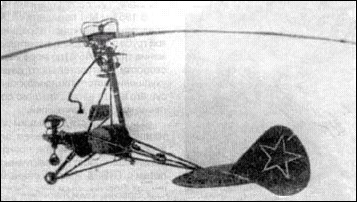
An experimental tip-jet helicopter designed by engineers of the Bratukhin design bureau. Only few tethered flights were made before the project was abandoned in 1951.
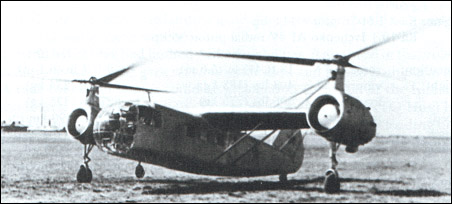
The last design authorised from OKB-3 was to provide comparision against Mil and Yak single-rotor submissions to VVS requirement for a three-seat all-weather communications helicopter. Dynamic parts were as previous Bratukhin except for hydraulic rotor-hub dampers and faired masts with oil-cooler inlets. Wing of lifting section are set at zero incidence. The fuselage had improved form, with round instead of polyhedral top and bottom. The tail was basically as the B-5. The pilot was in B-5 type nose, main cabin for two seats, with space at rear for freight ot two stretchers (in lieu of passengers) loaded through enlarged door. Improved differential rotor controls with reduced friction were fitted. The B-11 was equipped for blind flight.
Two prototypes were completed in April 1948, flying in June and September. Progress was made with measured performance, sustained (47 min) single-engine flight, autorotative landings and in eradication of various faults stemming mainly from vibration was achieved. One problem was lack of wing lift resulting from incidence setting, causing the rotors to stall at high forward speeds. A further snag was hydraulic leaks difficult to rectify. On 13 Decemeber 1948 first machine shed a blade from the right rotor, killing Ponomaryov and I.G.Nilus.
After several modification, including installation of new engines (same series), it was presented on an Aviation Parade.
The favored scheme of twin-rotor helicopter became “The Flying Banana” (due to less drag), and the transversal scheme was not used again until the Mil Mi-12.
B-11
Engine: 2 x AI-26GRF, 575hp
Rotor diameter: 10.0m
Take-off weight: 4150kg
Empty weight: 3398kg
Max speed: 155km/h
Service ceiling: 2550m
Range: 328km
Crew: 3
Passengers: 1-3
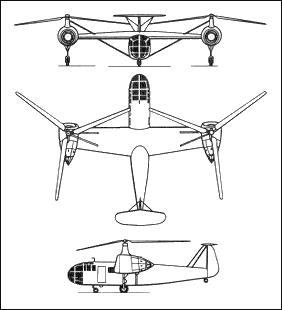
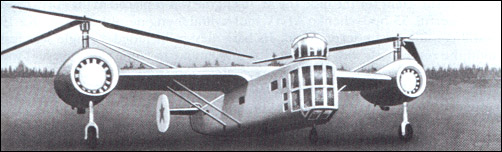
Also designated VNP (Vozdushni Nabludatyelnii Punkt – aerial observation point), its original role was to replace the AK in artillery spotting. The Bratukhin helicopter had become larger and potentially more capable and the VNP was to be a multi-role machine able to fly recon, tactical supply and even casevac missions. Engines were fully boosted AI-26 version, and dynamic parts were essentially the same as the B-9. Wings were of the same plan and section as the B-9 but with a pair of bracing struts from the bottom of two main-spar frames in the fuselage to the spar booms at 60% semi-span, and two bracing struts from the upper spar booms at same location to the top of rotor masts. The fuselage was an entirely new dural monocoque with a glazed nose seating the pilot on the left and navigator on the right under a large observation dome. An was also in the tail, again with large observation dome. A new tail with a variable-incidence tailplane mounted on the fuselage carrying endplate fins(latter possibly rudders). Usual four-wheel landing gear. The central fuselage was available for additional loads: three passengers, or two stretchers (room for more but weight-limited) or 200kg cargo or various radio or photographic equipment. Entrance door on left.
A single example was built and flown 1947. Behaviour was satisfactory, and complete performance measurements were taken. Later fitted ShKAS at nose and tail. At the time on the ‘decision-making level’ attention was shifted to competing schemes of helicopters (under influence of Western designs). Despite B-10 was performing well, it failed to catch any interest in the ‘High Circles’.
According to Shavrov 1947-48 saw general disillusionment with helicopters and especially with twin lateral rotor configuration.
B-10
Engine: 2 x AI-26GRF, 575hp
Rotor diameter: 10.0m
Take-off weight: 3900kg
Empty weight: 3019kg
Max speed: 218km/h
Service ceiling: 6550m
Hovering ceiling: 2200m
Range: 440km
Crew: 3
Passengers: 2-3
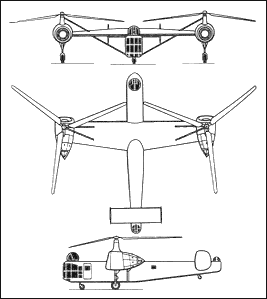
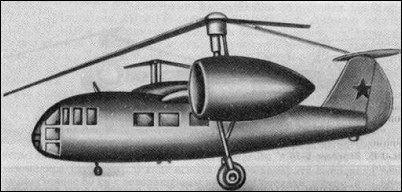
A scaled-up derivative of the G-4, with slightly more powerful model of same engines.
The first helicopter designated for Bratukhin himself, the transmission and other dynamic parts were identical but the new airframe had a lifting aerofoil wing instead of space-frame outriggers and large passenger fuselage.
Designed as a duralumin semi-monocoque (not steel tube as has been reported) with a level floor and door on the right side. A total of 7 seats, intended as two crew and 5 passenger seats, with an aisle along the right wall. Wings were also of light-alloy stressed-skin construction with lifting profile to carry about 25% of the weight in cruise. Fixed tricycle gear with bumber tail-wheel.
A single example was completed in 1947 powered by supercharged version of the AI-26GR engine, but only limited testing was undertaken because of inadequate wing stiffness.
B-5
Engines: 2 x AI-26GRF, 550hp
Rotor diameter: 10.0m
Take-off weight: 4032kg
Empty weight: 2932kg
Max speed: 236km/h
Service ceiling: 6400m
Hovering ceiling: 2280m
Range: 595km
Crew: 2
Passengers: 5
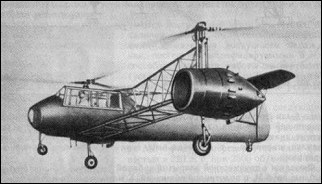
The first Soviet helicopter with the engines purposely designed, with cooling fan and front gearbox giving vertical and lateral outputs for the rotor and for transverse coupling shaft. The transmission was provided with centrifugal clutch; overall drive ratio 0.27 (540 rotor rpm). The main rotor had an inbuilt twist of 6 deg 45 min along the blade, and blade spar were extruded instead of folded sheet. Two prototypes were built, the first flown in October 1947 by M.K.Baikalov and second a month later. In January 1948 the first G-4 was damaged in the course of autorotational descents and deadstick landings typically at 12 m/s descent along 15.5-16 deg glide path.
The first prototype did not meet expectations (some calculated parameters were not reached). The second prototype had an improved rotor blade airfoil passed the extended test program without problems. Gliding (autorotation) rate was 12m/s, with gliding angle 16°. In this case landing speed was 80-90km/h with 10-15m roll.
The second G-4 was the first helicopter in the Soviet Union to meet its stipulated life for dynamic parts (in this case 100h). A small series constructed 1947-48, according to one account four flying out of ten ordered.
A G-4 and two G-3s participated in Aviation Parade in 1947.
G-4
Engine: 2 x AI-26GR pistone engine, 370kW
Rotor diameter: 7.7m
Take-off weight: 3002kg
Empty weight: 2364kg
Max speed: 148km/h
Ceiling: 2400m
Range: 233km
Crew: 1
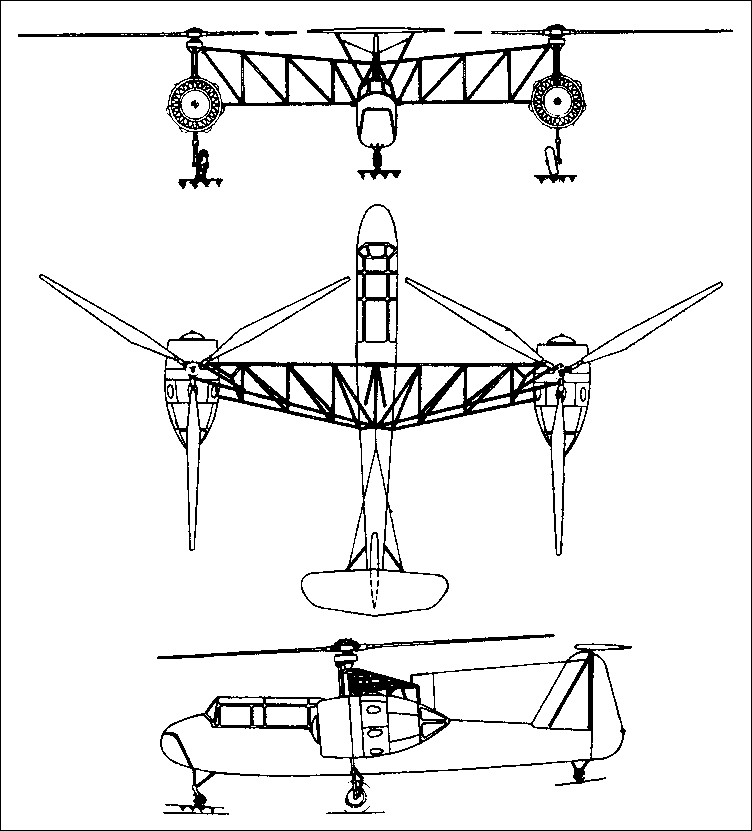
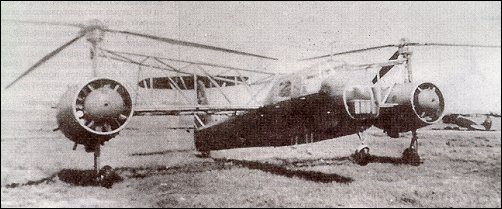
The third Bratukhin helicopter was based on the Omega / G-2 but planned from outset for operational use by VVS as AK (Artilleriiskii Korrektirovshchik – artillery correction). There were no significant differences apart from more powerful, imported, engines. Two prototypes ordered in 1944 and first flown in 1945. On completion of State trials in 1945, a batch of ten AKs were ordered. Soviet histories mention only original two prototypes as having flown. A single AK delivered to VVS with dual control for training helicopter pilots.
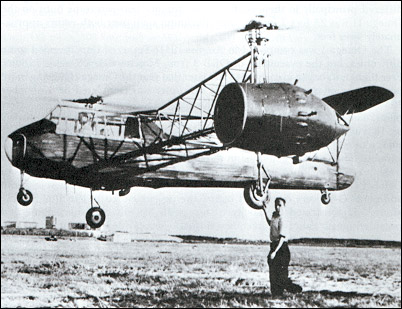
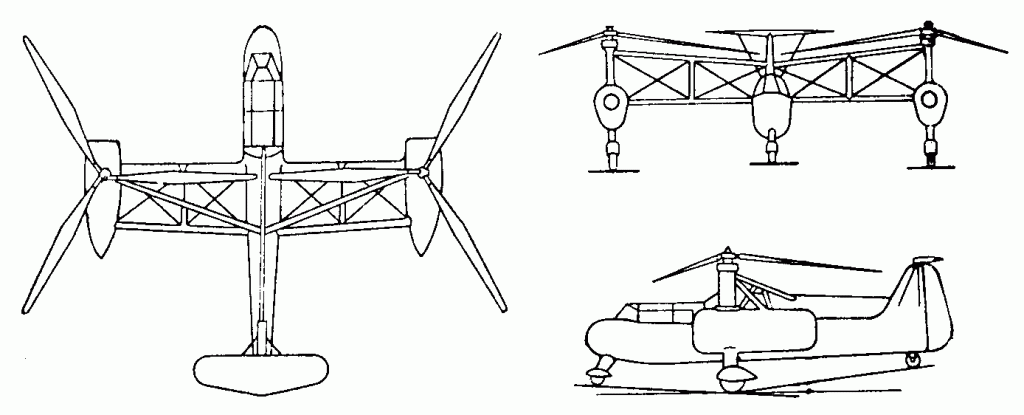
Also designated 2MG (twin-engined helicopter), the Omega project was authorised on 27 June 1940 with two engine rotor groups side-by-side and steel-tube construction with fabric covering. Lateral structures carrying engine rotor units and fixed main landing gears were triangular spaceframes with two lower booms and one at top, with no covering. Fully articulated hubs of steel and light-alloy, carrying three duralumin blades, rotors being handed to rotate in opposite directions. Each rotor was driven by separate MV-6 engine linked with synchronizing shaft with universal joint on aircraft centreline. This shaft provided also opportunity to fly helicopter with any one of engines running. Engines of Omega were equipped with specially designed gearboxes, clutch and other elements. Manual controls, driving swash-plates in fixed and rotating parts of head for collective and cyclic pitch control. Much research into optimum method with differential collective to apply initial bank and then T-tail rudder, worked by pedals, to make turns. Emergency control for immediately autorotative setting of both rotors. Final 0.231 gearbox to rotors (577 rpm). No centrifugal clutches. Three mechanical clutches, with overrunning capability, engaged by observer after both engines were running. First drive to associated rotor was clutched-in; then interlink left/right shaft. Fuel tanks behind engines. Observer behind pilot.
The helicopter was ready for testing in August 1941, thr final design having no wheel or rotor brakes but trimming tailplane with pilot handwheel. Tentative hovering tests, interrupted by engine rough running and overheating. Six-month delay followed the evacuation of the OKB-3 in October 1941. Pilot K.I.Ponomaryov gradually made progress in 1942, discovering structural and control problems but remained tethered until early 1943. The engines seriously overheated.
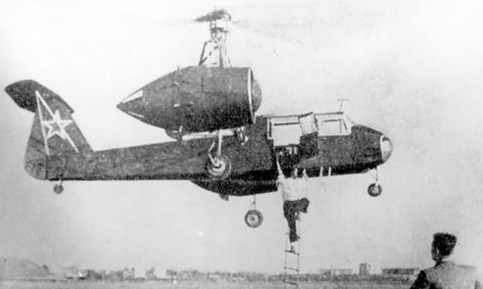
The Omega II, sometimes called G-2 (helicopter 2), was the original design with superior engines in streamlined pods with fan-assisted cooling. Gearboxes, clutches, cooling system etc were redesigned. Drive ratio 0.32. Important progress was made in optimization of gearbox ratio. It resulted in increase of the rotor lift force by 300kg and substantial increase of ceiling.
Rotor masts and outriggers stiffened, and dynamic parts (cliutches and gearboxes) redesigned for a longer life. Test flown by Ponomaryov in September 1944 with good results, but damaged in January 1945, repaired and improved (drive ratio 0.283) and used again from July 1945, by this time for research and pilot training. With chief engineer D.T.Matsitskii as observer, gained a height of 3km. Demonstrated in Tushino by M.K.Baikalov in August 1946.
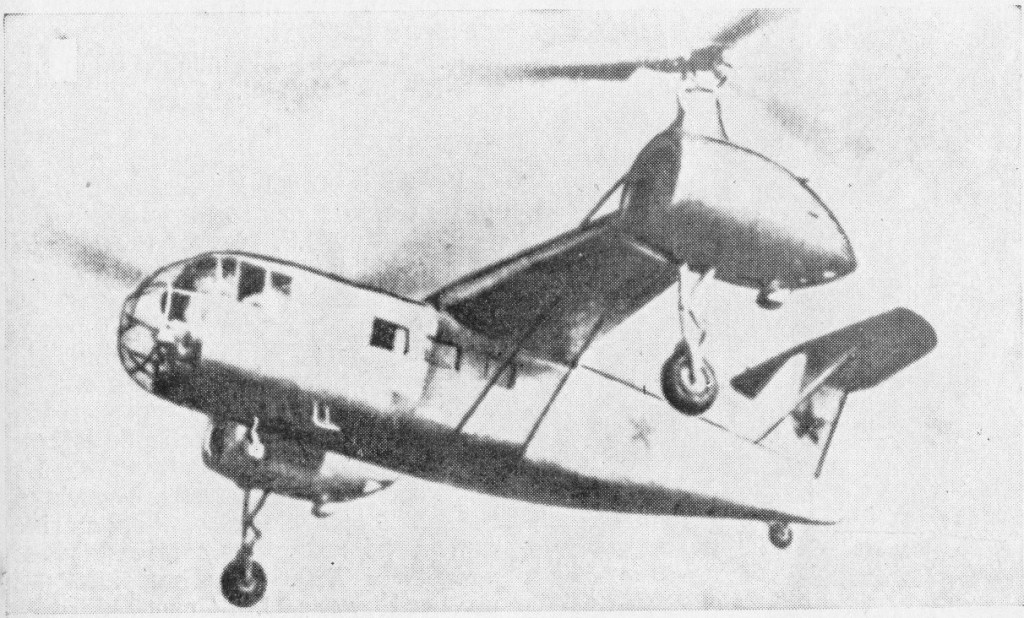
The Omega II performed in the 1948 Soviet Aviation Day Display at Tushino.
Omega
Engine: 2 x MV-6 piston engine, 220hp
Rotor diameter: 7.0m
Length: 8.2m
Width with rotors turning: 14.2m
Take-off weight: 2050kg
Empty weight: 1760kg
Max speed: 186km/h
Service ceiling: 700m
Hovering ceiling: 290m
Range: 250km
Crew: 1
Omega II
Engine: 2×750 h.p. Ash-21
Rotors: 2 x 3-blade main rotors on outriggers.
Seats: 8
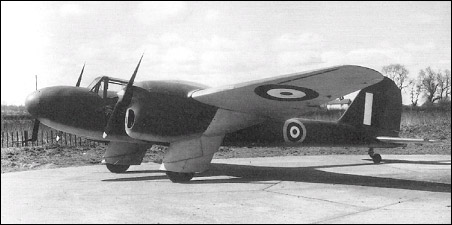
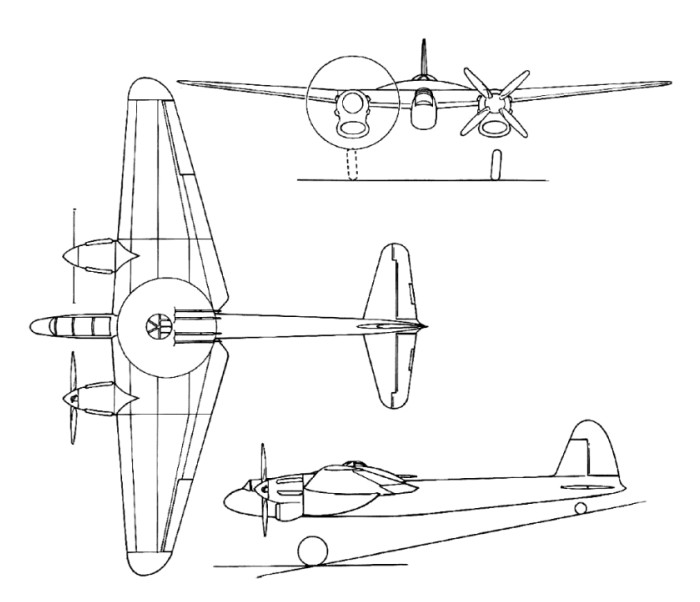
The P.92/2 was a half scale flying model of the P.92 built for Boulton Paul by Heston Aircraft for aerodynamic testing. The P.92 was cancelled before this ever flew.
P.92/2
Engine: 2 x 130hp de Havilland Gipsy Major II
Take-off weight: 1261 kg / 2780 lb
Wingspan: 10.11 m / 33 ft 2 in
Length: 8.38 m / 27 ft 6 in
Height: 2.34 m / 7 ft 8 in
Max. speed: 245 km/h / 152 mph
Cruise speed: 217 km/h / 135 mph