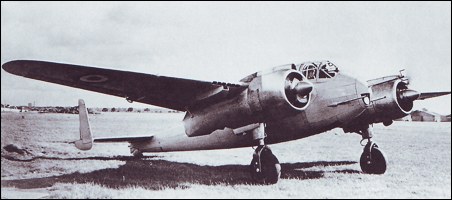
Breguet Bre.690 / 691 / 693 / 694 / 695 / 696 / 697

Breguet 693

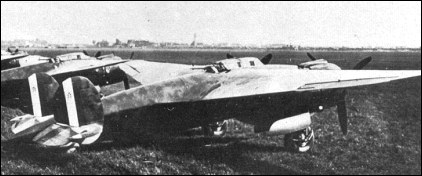
In 1934 the French Air Force issued a requirement for a twin-engined three-seat heavy fighter. Several manufacturers submitted proposals, and the contest was won by the Potez 630. The Breguet proposal had been heavier and more powerful than the other submissions, its designers believing it to be a more versatile, multi-role aeroplane. Design of the Breguet 690 was started in 1935 and a prototype was completed in 1937, first flying on 23 March 1938 with two 507-kW (680-hp) Hispano-Suiza 14AB-02/03 engines. The aircraft was found to have a performance superior to that of the Potez 630, and Breguet received a contract to supply 100 aircraft, configured as two-seat light attack bombers as the Bre.691, first flying in March 1939 with 522-kW (700-hp) 14AB-10/11s.

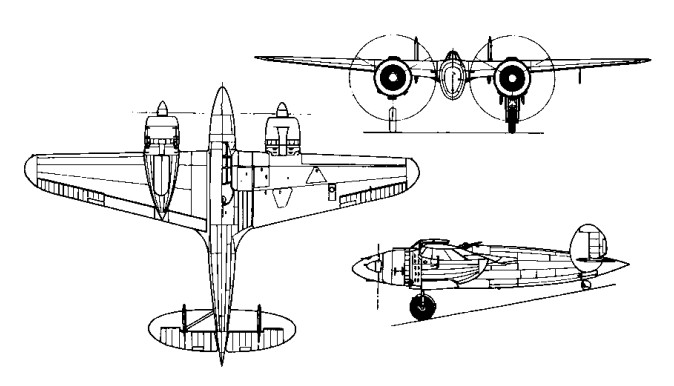
The Breguet 691 was a cantilever mid-wing monoplane of all-metal construction, with two wing-mounted engines and a short fuselage nose. Aft of the wing the fuselage tapered to a tailplane with twin endplate fins and rudders. Conversion from Bre.690 to Bre.691 was deletion of the navigator’s position to provide a small bomb bay. Experience with the Bre.691 proved the Hispano-Suiza powerplants to be unreliable, and the Bre.693.01 was introduced with two Gnome-Rhone 14M-6/7 engines after only 78 Bre.691s had been built. Two hundred and thirty four examples of the Bre.693 were built, later examples having two extra 7.5mm machine-guns, one installed in the tail of each engine nacelle, to improve self-defence. The Breguet 693 proved extremely vulnerable and almost half were lost to enemy action.
Foreign interest in the Bre.690 series was cut short by the German invasion of France and the single Bre.694.01 built, intended as a three-seat reconnaissance aircraft, was delivered directly to the Aeronavale. The Bre.694 was generally similar to the original Bre.690 with no bomb bay and a navigator’s compartment, but with Gnome-Rhone 14M-4/5 engines.
The Bre.695 was virtually identical to the Bre.693 but with Pratt & Whitney SB4G Twin Wasp Junior engines. Fifty Bre.695s were built, being delivered to Groupe 18 in June 1940.
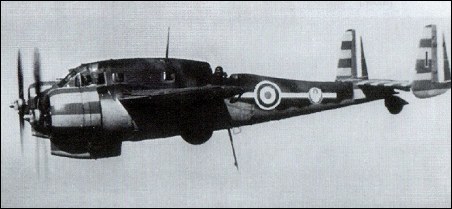
Breguet 695

The Bre.696 and 697 were built only as prototypes and were respectively a two-seat light bomber and a two-seat heavy destroyer.

Bre.690
two 507-kW (680-hp) Hispano-Suiza 14AB-02/03 engines

Bre.691
Hispano-Suiza 14AB-10/11, 522-kW (700-hp)

Bre.693.01
two Gnome-Rhone 14M-6/7 engines

Bre.693
Engines: 2 x Gnome-Rhone 14M-6/7, 522kW (700 hp).
Span: 15.37m (50ft 5in).
Length: 9.67m (31ft 8.75in).
Max T/O weight: 4900 kg (10,803 lb).
Max speed: 304 mph at 16,405 ft.
Operational range: 839 miles.
Armament: 1 x 20-mm Hispano¬Suiza cannon and 4 or 6 7.5-mm (0.295-in) Darne mg, up to 400kg (882 lb) of bombs

Bre.693 AB2
Engines: 2 x Gnome-Rhone 14M-6/7, 522kW (700 hp).
Take-off weight: 4892 kg / 10785 lb
Empty weight: 3006 kg / 6627 lb
Wingspan: 15.4 m / 50 ft 6 in
Length: 9.7 m / 31 ft 10 in
Height: 3.2 m / 10 ft 6 in
Wing area: 29.2 sq.m / 314.31 sq ft
Max. Speed: 490 km/h / 304 mph
Ceiling: 9500 m / 31150 ft
Range: 1350 km / 839 miles
Crew: 2
Armament: 1 x 20mm cannon, 3 x 7.5mm machine guns, 400kg bombs

Bre.694.01

Bre.694
Gnome-Rhone 14M-4/5 engines.

Bre.695
Pratt & Whitney SB4G Twin Wasp Junior engines.

Bre.696

Bre.697
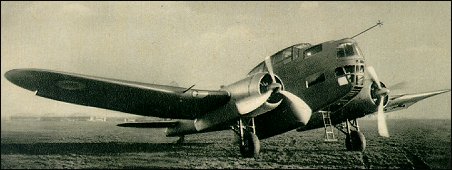
Breguet Bre.462

The first prototype Br.460 flew for the first time in 1935. Then the project was cancelled in favour of Br.462 which first flown in October 1936. Only three Br.462 were built.

Engine: 2 x G+R 14NO, 700kW
Take-off weight: 8200 kg / 18078 lb
Empty weight: 4350 kg / 9590 lb
Wingspan: 20.5 m / 67 ft 3 in
Length: 14.8 m / 48 ft 7 in
Wing area: 57.0 sq.m / 613.54 sq ft
Max. Speed: 402 km/h / 250 mph
Ceiling: 8300 m / 27250 ft
Range w/max.fuel: 3100 km / 1926 miles
Range w/max.payload: 900 km / 559 miles
Crew: 4
Armament: 1 x 23mm machine-gun, 1500kg bombs

Breda-Pittoni B.P.471

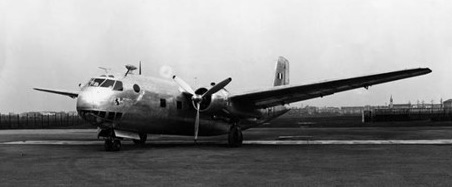
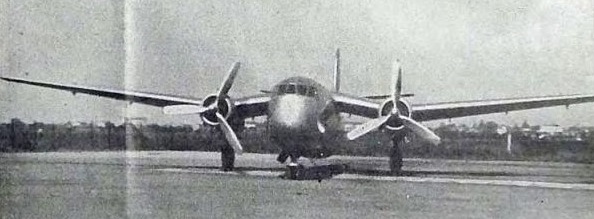
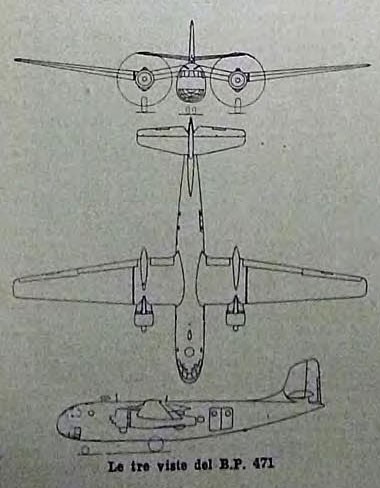
As part of its efforts to get back into aircraft manufacturing following the war, Breda commissioned Mario Pittoni to develop a twin-engine medium transport designated the Breda-Pittoni B.P.471. The prototype first flew in 1950. It was an all-metal twin-engine monoplane of stressed-skin construction. It had a retractable tricycle undercarriage and wings were of an inverted-gull configuration, this allowed the main landing gear to be short and light. The cabin had room for 18-passengers or freight. The company proposed many uses for the aircraft including a civil airliner and freighter, military navigation trainer or utility freighter. With no interest from buyers the prototype was operated by the Italian Air Ministry as a staff transport until retired in 1954.

Gallery

B.P.471
Engines: 2 × Pratt & Whitney R-1830-92 Twin Wasp, 890 kW (1,200 hp) each (take off power), 780 kW (1,050 hp) at 2,300 m (7,500 ft)
Length: 17.5 m (57 ft 5 in)
Wingspan: 23.0 m (75 ft 6 in)
Height: 5.75 m (18 ft 10 in)
Empty weight: 5400 kg
Gross weight: 10,000 kg (22,046 lb)
Maximum speed: 473 km/h (294 mph; 255 kn) at 3000 m
Cruising speed: 412 km/h (256 mph; 222 kn)
Range: 2,000 km (1,243 mi; 1,080 nmi) at 395 km/h (245 mph; 213 kn)
Service ceiling: 7,500 m (24,606 ft)
Time to altitude: 9 min 39 sec to 4,000 m (13,100 ft)
Crew: 2
Capacity: 18 passengers

Breda BZ.301 / BZ.303

Filippo Zappata, responsible for the C.R.D.A. Cant series of bombers, joined the Breda design staff in 1941, and was subsequently responsible for several interesting projects, few of which were actually built.

The Breda- Zappata BZ.301 was a projected medium bomber derived from the Cant Z.1018 Leone. It was accepted for production but none were completed.

The Breda BZ.303 was a projected night fighter derived from the Cant Z.1018 bomber. The Bz 303 was a sleek two-seat, low-wing monoplane of mixed construction with twin fins and rudders. Power was provided by two 1,450-h.p. Piaggio P.XV R.C.60j2V radials, and the exceptionally heavy armament of eight 20-mm. Mauser cannon (four firing forwards and four firing to the rear) and a 12.7-mm. machine gun in a dorsal position. Maximum speed was 360 m.p.h., and range was 963 miles. The sole prototype was under construction in 1943 but was scrapped after the armistice.

BZ.303
Engines: 2 x 1,450 hp Piaggio P.XV R.C.60
Armament: 8 x 20 mm + 1 x 12.7 mm

Breda Ba.88 Lince

Initially, the prototype (MM.302) was flown with a single fin and rudder assembly, but poor stability necessitated the adoption of a rather cumbersome twin fin and rudder arrangement which marred the Ba 88s otherwise good aerodynamic form. The 1936 prototype was powered by two 900-h.p. Isotta-Fraschini K.14 radials and was one of the fastest aircraft in its class at the time of its appearance. A hybrid structure with stressed metal skin, shoulder-wing monoplane, the Lince had a structure of steel tube with a light metal outer skin.

Modified in 1937, the Breda Ba 88 Lince prototype, in December of that year, established several international records (with a load of 2,205 lb. flying 62 miles (100 km.) at 344.5 mph, and 621 miles (1,000 km.) at 326.3 mph).

Production orders for the Ba 88 were placed for the Regia Aeronautica and assembly lines were established by both Breda and 1.M.A.M. (Meridionali) with deliveries commencing late in 1938.

Regarded as an aeroplano di combattimento, suitable for attack, long-range reconnaissance or bombing operations, the Ba.88 then had its military equipment and weapons installed. Immediately, performance and flight characteristics fell off dramatically, but by then production orders were already in place. Bombs could be carried either in a bomb bay or semi-externally in recesses under the belly, and the Ba.88 could carry a 1000kg bomb load and four machine guns, three firing forward and a flexible gun in the rear cockpit. A window in the floor aided the pilot in aiming the bombs.

The production version featured considerable redesign and was powered by two 1,0000h.p. Piaggio P.XI R.C.40 radials which provided a maximum speed of 304 mph. Eight Ba.88 bicomando two-seat trainer version were built, with a raised instructor’s seat.

The first unit to receive the Ba 88 was the 7th Gruppo, which arrived in North Africa in September 1940.

On 16 June 1940, just after Italy’s declaration of war on France and her allies, the twelve Ba.88 aircraft from the Regia Aeronautica’s 19° Gruppo Autonomo made bombing and machine-gun attacks on the principal airfields of Corsica; three days later nine Ba.88s made a repeat attack. Analysis of these operations showed that the Ba,88 had only limited value, and any remaining doubts were settled when Ba.88s of the 7° Gruppo Autonomo joined action in Libya against the British. Fitted with sand filters, the engines overheated and failed to deliver their designed power. Attacks on targets at Sidi Barram had to be aborted in September 1940, the aircraft failing to gain sufficient altitude or maintain formation, and reaching a speed less than half that claimed by the manufacturers. The Ba 88 being taken out of production after only 105 aircraft had been built. Eighty-one by Breda and twenty-four by IMAM Meridionali.

In 1938 a Ba.88 bis was proposed with two Alfa Romeo 135 engines for the Caccia Combattimento competiton. It was not proceeded with.

By mid-November 1940 most surviving Ba.88s had been stripped of useful equipment and were scattered around operational airfields as decoys for attacking British aircraft.

In 1941 Agusta substituted two 840-h.p. Fiat A.74 R.C.38 radials for the Piaggios, increased wing span by 2.00m and fuselage length, and began the construction of a small series under the designation Ba 88M as ground-attack aircraft. Nose armament was increased to four 12.7mm machine-guns, and dive brakes were installed. Only three aircraft of this type were completed. These Breda Ba.88Ms were delivered to the 103° Gruppo Autonomo Tuffatori (independent dive-bombing group) at Lonate Pozzolo on 7 September 1943. They were flight-tested by Luftwaffe pilots, but that was the last heard of the Breda Ba.88.

A total of 149 were built.

Breda Ba.88 Lince
Engine: 2 x Piaggio P.XI RC 40, 986 hp
Length: 35.4 ft / 10.79 m
Height: 10.171 ft / 3.1 m
Wingspan: 51.181 ft / 15.6 m
Wing area: 358.872 sq.ft / 33.34 sq.m
Max take off weight: 14883.8 lb / 6750.0 kg
Weight empty: 10253.3 lb / 4650.0 kg
Max. speed: 265 kts / 490 km/h
Service ceiling: 26247 ft / 8000 m
Wing load: 41.41 lb/sq.ft / 202.0 kg/sq.m
Range: 871 nm / 1614 km
Armament: 3x MG 12,7mm BredaSAFAT, 1x MG 7,7mm Breda SAFAT, 1000kg Bomb. int. / 3x200kg Bomb. ext.

Breda Ba.82

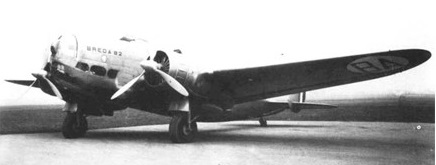
In response to the competition organized by the Italian Air Ministry in 1934 for a Terrestrial Bomber Fast, Breda developed the model “82” consisting of a very compact medium bomber. The construction was all-metal, and powered by two radial Fiat A.80 RC 41 1000 Hp engines.

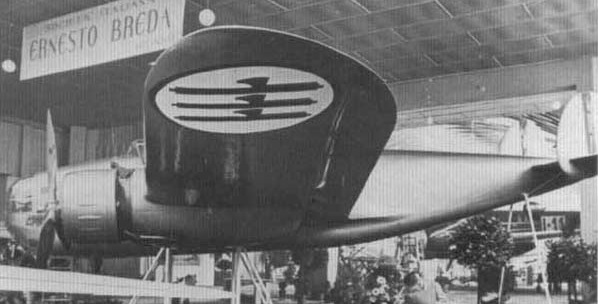
Its development was slow and not without its difficulties, but it was brought out at the Air Show in Milan in 1937, but now the military thought that his was dated. Continuous trouble with the engines made that flight tests would start in 1939, but the competition decided on the Fiat BR.20 and now focused on three-engine medium bombers.

Engines: 2 x Fiat A.80 R.C.41, 1,000 hp
Wingspan: 20.80m
Wing area: 66.00 sq.m
Length: 13.80 m
Height: 4.00 m
Empty weight: 6840 kg
Max weight: 10040 kg
Useful load: 3200 kg
Max speed: 425 km/h at 4000 m
Ceiling: 9940 m
Time to 4000 m: 12 min 14 sec
Time to 5000 m: 15 min 15 sec
Armament: 2 x Breda – SAFAT 12.7 mm machine guns
Bombload: 1000 kg
Crew: 4-5 men