CASA C-212 Aviocar / IPTN NC-212

C-212

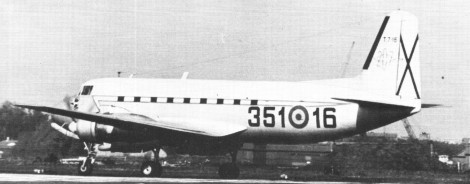
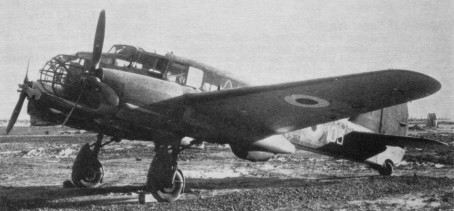
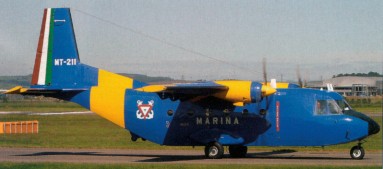
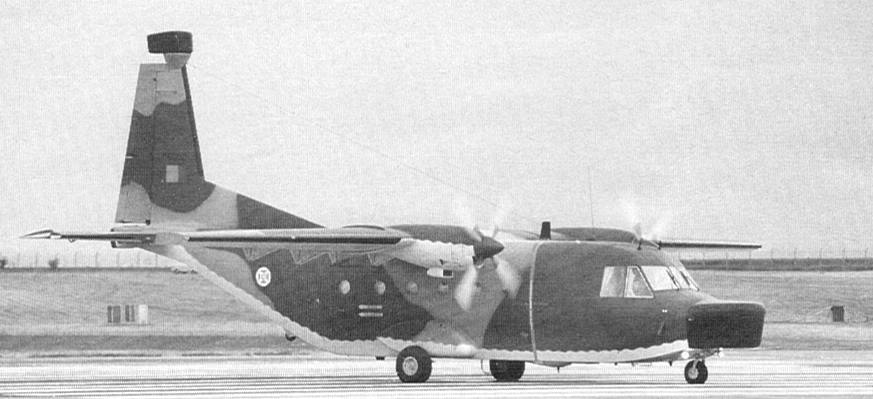
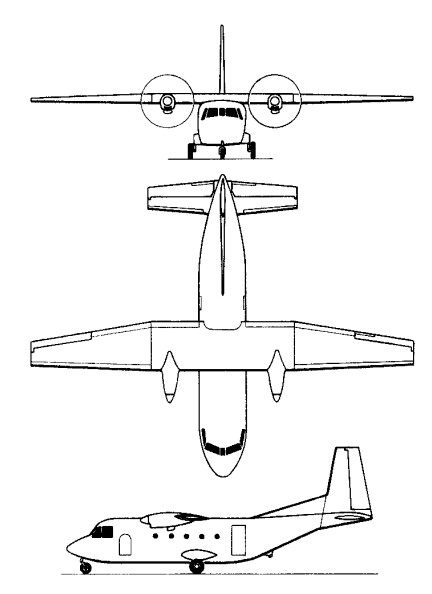
Design of the Aviocar originated to provide the Spanish Air Force with a general purpose transport and first flight was made on 26 March 1971. Active military roles include ASW and Maritime Patrol, with nose-mounted radar, specified role equipment and fuselage hardpoints for torpedoes, rockets or depth charges. Specially equipped ELINT/ECM versions of the Aviocar are used by Portuguese Air Force and others.
CASA C-212 Aviocar Article

CASA 212ECM 502 Sqn Portuguese AF

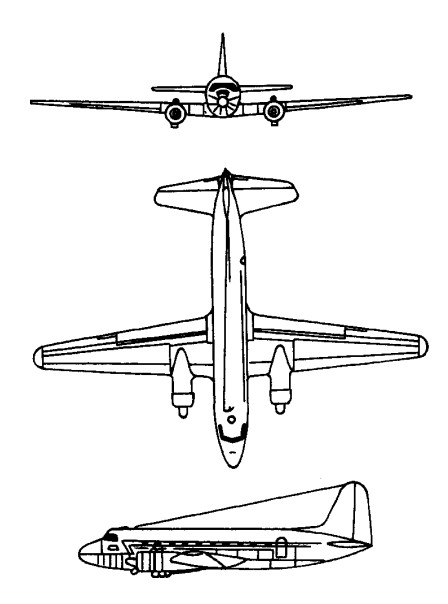
Powered by two 776 hp AiResearch TPE331 251C turboprops driving four blade propellers, the C.212 has an unpressurized fuselage with full section rear doors for heavy freight or for paradropping. Able to operate from unimproved 2,000-foot strips, loads, with a flight crew of two, include 2000 kg (4410 lb) of cargo, 15 paratroops and jumpmaster, or 12 stretcher patients and three attendants or sitting casualties. Versions are available for navigational instruction, air survey and other special roles, and studies have been made of armament schemes which include stores pylons for guns, bombs or rockets under the fuselage and wings. The prototype flew on March 26, 1971, and by late 1976 well over 100 had been sold.
Since early 1987 the standard production version was the Series 300, which has an increased maximum take-off weight of 8,000kg (for the military variant), improved range and payload, and structural modifications including a redesigned nose and glassfibre wingtips. The military version can carry two 500 litre auxiliary fuel tanks on underwing hardpoints. The 26-seat commercial Series 300 flew in September 1984.
Several special-mission Aviocars are offered, including an Elint/ECM version and an ASW/maritime patrol model. The ASW/maritime patrol model is equipped with a nose-mounted 270Oscan APS-128 search radar for maritime patrol or a 3600 radar for ASW duties. Two underwing hardpoints are provided.
The Mexican Navy purchased nine Aviocars for maritime duties (plus another for VIP transport) without radar but retaining other maritime equipment.
The 212 was manufactured under licence by IPTN from 1976 as the NC-212.
By 1990 a total of 435 aircraft were built.

Engines two 908 shp Garrett-AiResearch turboprops
Seats 26.
Gross wt. 16,091 lb
Empty wt. 9,072 lb
Fuel capacity 555 USG
Top speed 242 mph
Initial climb rate 1,730 fpm
Ceiling 28,000 ft
Range 1,070 miles.
Takeoff distance (50 ft) 1,588 ft.
Landing distance (50 ft) 1,700 ft.

C-212-200
Engines: 2 x Garrett TPE331-10 turboprops, 671kW
Max Take-off weight: 7450 kg / 16425 lb
Loaded weight: 3915 kg / 8631 lb
Empty wt: 4115 kg.
Payload: 2770 kg.
Wingspan: 19 m / 62 ft 4 in
Length: 15.16 m / 49 ft 9 in
Height: 6.68 m / 21 ft 11 in
Wing area: 40 sq.m / 430.56 sq ft
Cruise speed: 385 km/h / 239 mph
Initial ROC: 455 m / min.
Ceiling: 8500+ m.
T/O run: 440 m.
Ldg run: 250 m.
Fuel internal: 2000 lt.
Range w/max.fuel: 1620 km / 1007 miles
Range w/max.payload: 760 km / 472 miles
Crew: 2
Passengers: 15-26

C.212-200 CC
First built: 1971.
Engines: 2 x Garrett TPE-331-501 C, 900 shp.
Props: Hartzell 4-blade, 110-in.
Seats: 28.
Length: 49.8 ft.
Height: 21.8 ft.
Wingspan: 62.3 ft.
Wing area: 430 sq.ft.
Wing aspect ratio: 9.
Maximum ramp weight: 16,537 lbs.
Maximum takeoff weight: 16,427 lbs.
Standard empty weight: 9700 lbs.
Maximum useful load: 6272 lbs.
Maximum landing weight: 16,207 lbs.
Wing loading: 38.2 lbs/sq.ft.
Power loading: 9.1 lbs/hp.
Maximum usable fuel: 3538 lbs.
Best rate of climb: 1735 fpm.
Service ceiling: 28,000 ft.
Maximum single-engine rate of climb: 345 fpm @ 112 kts.
Single-engine climb gradient: 182 ft/nm.
Single-engine ceiling: 11,500 ft.
Maximum speed: 200 kts.
Normal cruise @ 10,000ft: 192 kts.
Fuel flow @ normal cruise: 650 pph.
Endurance at normal cruise: 4.9 hrs:
Stalling speed clean: 84 kts.
Stalling speed gear/flaps down: 71 kts.
Turbulent-air penetration speed: 147 kts.

CASA C 212-300 Aviocar
Engine: 2 x AlliedSignal TPE 331 10R, 662 shp
Length: 53.15 ft / 16.2 m
Height: 20.669 ft / 6.3 m
Wingspan: 66.929 ft / 20.4 m
Wing area: 441.324 sqft / 41.0 sqm
Max take off weight: 16978.5 lb / 7700.0 kg
Weight empty: 10650.2 lb / 4830.0 kg
Max. weight carried: 6328.4 lb / 2870.0 kg
Max. speed: 200 kts / 370 km/h
Landing speed: 83 kts / 154 km/h
Cruising speed: 166 kts / 308 km/h
Initial climb rate: 1574.80 ft/min / 8.00 m/s
Service ceiling: 26083 ft / 7950 m
Wing load: 38.54 lb/sq.ft / 188.0 kg/sq.m
Range: 329 nm / 610 km
Crew: 2
Payload: 23-26 pax
CASA C-207 Azor

CASA 207

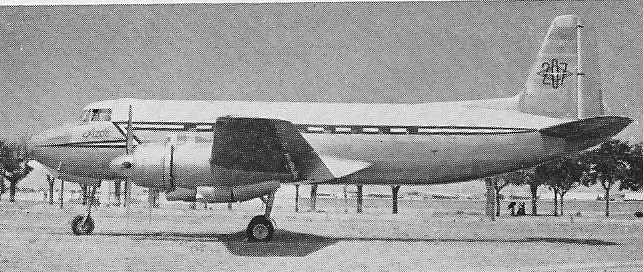
The Azor is basically a scaled-up version of the CASA 202 Halcon, intended as a 30-38 seat commercial transport.

CASA C-207 Azor Article

The prototype, completed in August 1955, was powered by two 2040 hp Bristol Hercules 730 engines.

Following the production of ten of the basic C-207-A 30-passenger transport aircraft for the Spanish Air Force (designated T.7A), CASA completed ten C-207-C (T.7B) Azors equipped for cargo carrying.

C.207C Azor

C-207
Engines: 2 x Bristol Hercules 730, 1522kW
Max Take-off weight: 16500 kg / 36376 lb
Empty weight: 10600 kg / 23369 lb
Payload: 3000kg / 6614 lb
Wingspan: 27.8 m / 91 ft 2 in
Length: 20.85 m / 68 ft 5 in
Height: 7.75 m / 25 ft 5 in
Wing area: 85.8 sq.m / 923.54 sq ft
Max. speed: 420 km/h / 261 mph
Cruise speed: 400 km/h / 249 mph
Ceiling: 8000 m / 26250 ft
Range w/max.payload: 2350 km / 1460 miles
Crew: 4
Passengers: 40

CASA C-202 Halcon

CASA 202

The second aircraft of original design to be produced in Spain, the CASA 202 Halcon flew for the first time on 21 May 1953. Twenty were being produced for Iberia’s internal routes.

CASA 202 Halcon
Engines: 2 x ENMA Beta B-4, 775 hp
Wingspan: 70 ft 9 in
Wing area: 617.6 sq.ft
Length: 52 ft 6 in
Height: 12 ft 6 in
Empty weight: 11,615 lb
Loaded weight: 17,900 lb
Max speed: 192.5 mph at SL / 230 mph at 23,950 ft
Cruise 70%: 205 mph
Service ceiling: 23,950 ft
Passenger capacity: 14-18
Crew: 3

CASA C 202 B Halcon
Engine: 2 x Wright Cyclone R 1850 56, 1282 hp
Length: 53.576 ft / 16.33 m
Height: 20.899 ft / 6.37 m
Wing span: 67.52 ft / 20.58 m
Wing area: 602.784 sq.ft / 56.0 sq.m
Max take off weight: 21278.3 lb / 9650.0 kg
Weight empty: 13825.4 lb / 6270.0 kg
Max. speed: 233 kts / 432 kph
Cruising speed: 215 kts / 398 kph
Service ceiling: 24934 ft / 7600 m
Wing load: 35.26 lb/sq.ft / 172.0 kg/sq.m
Range: 1485 nm / 2750 km
Crew: 2
Payload: 8pax

Carden-Baynes Bee

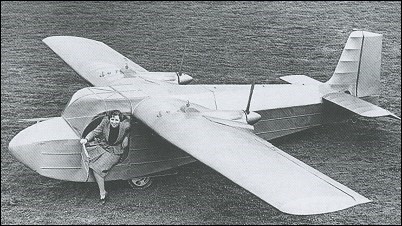
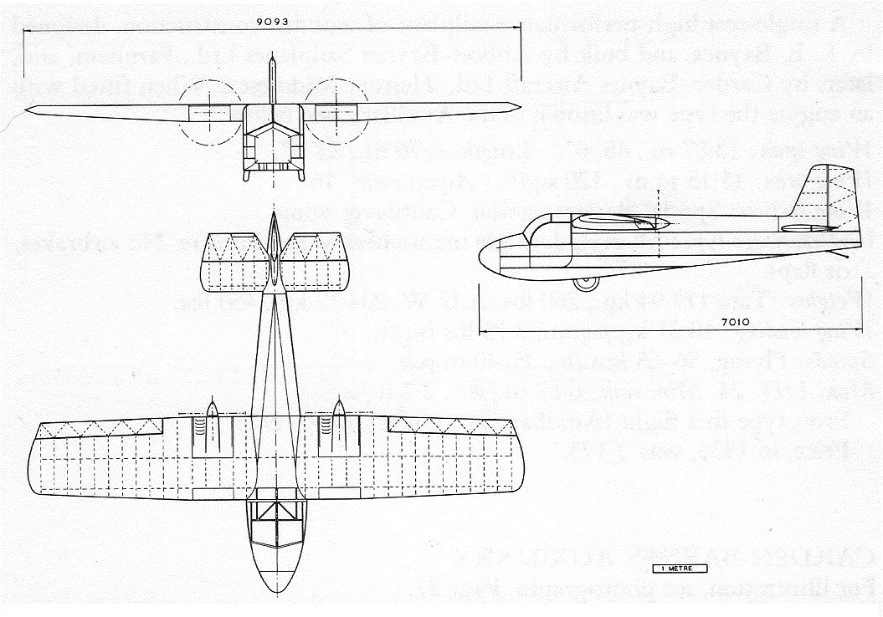
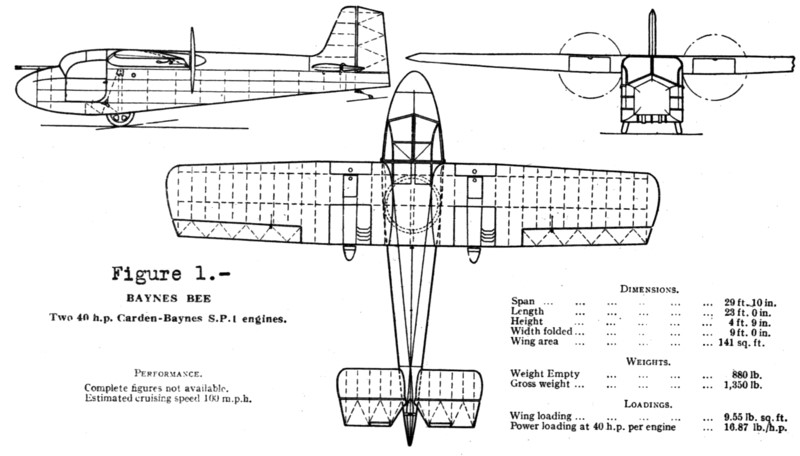
The Carden Baynes Air¬craft Company Ltd built the twin pusher, side by side two-seater, designed by L.E. Baynes, at Heston, Middlesex, UK. It was fitted with two totally-enclosed pusher Carden Ford S.P.1 modified car engines.

Of all wooden construction, the wings pivoted about the centre-line of the aircraft, the aft fuselage top decking folded down to enable the wings to pass over the top.

The undercarriage had twin mainwheels of fixed centre, mounted inside the fuselage, and a tail skid.

Only one Bee was built, c/n 1 G-AEWC. First flown on 3 April 1937, at Heston.

It was broken up and scrapped in 1939.

Engines: 2 x Carden Ford S.P.1, 10 hp
Wingspan: 9.09 m / 29 ft 10 in
Wing area: 13.10 sq.m / 141 sq.ft
Length: 7.01 m / 23 ft 0 in
Empty weight: 400 kg / 880 lb
AUW: 612.35 kg / 1350 lb
Wing loading: 46.62 kg/sq.m / 9.55 lb/sq.ft
Max speed: 177 kph / 110 mph
Cruise: 161 kph / 100 mph
Stall: 64 kph / 40 mph
ROC: 213 m/min / 700 fpm
Endurance: 3 hr

Caproni C22J Caproncino

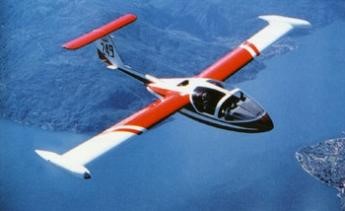
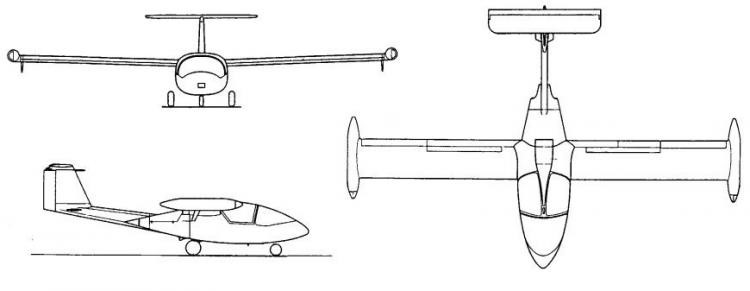
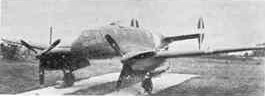
Based on the experience gained with the Calif, the C- 22J was developed. The C-22 J Caproncino is a side by side two-seater equipped with two Microturbo engines.

Caproni C22J Caproncino Article

The first C- 22J has made its first flight 21 July 1980. It was presented static at the Salon du Bourget 1981 and flying at Farnborough in 1984, where it was flown by Colonel Paolo Barberis, former commander of the Italian nationnale patrol “Frecce Tricolori”.

3 examples were built.
Sale price: $300 000 – 375 000

No. 001
I-CAVJ
Museo Gianni dell’Aeronautica
Caproni, Trento, Italy

No. 002
I-GIAC

No. 003
I-CAVT
Museum “Volandia” Milan, Italy

Wingspan: 10 m
Length: 6.188 m
Height: 1.88 m
Wing area: 8.75 m²
Max level speed: 530 km.h
Max speed: 700 km.h
Endurance: 3 hr 18 min
External load: 200 kg

Caproni Ca.380 Corsaro

The Ca 380 Corsaro was a twin- fuselage two-seat fighter with the crew seated in tandem in a cockpit carried by the port boom (a similar arrangement to that adopted for the S.M.92). The Corsaro was powered by two 1,550-h.p. Daimler- Benz DB 603 engines and carried an armament of eight 2O-mm. Mauser cannon and a bomb load under the wing section between the two fuselages. A prototype of the Corsaro was flight tested but eventually destroyed by the retreating German forces.

Caproni Ca.331

Caproni-331A.jpg

The Ca 331 was a light twin-engined bomber reconnaissance aircraft. Of all-metal construction, the Ca 331 was projected in two versions, the Ca 331A reconnaissance bomber and the Ca 331B night fighter, prototypes of both versions being built and flown. The latter version was to have been built in large numbers and carried an armament of four 20-mm. cannon and four 12.7-mm. machine guns. Power was provided by two 825-h.p. Isotta-Fraschini Delta 4 in-line engines and construction was all metal.

Caproni Ca.331B

Caproni Ca.313 / Ca.314

Ca.314

A modified Ca.310 with two Isotta-Fraschini Asso 120 IRCC 40 engines served as the Ca.313 prototype, first flown on 22 December 1939, but France had already confirmed an order for 200 Ca313 RPB1 on 1 October, followed closely by British and Swedish orders for 300 and 64 respectively.

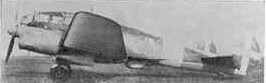
The Caproni Ca313 and Ca314 were comparatively small and light aircraft powered by two Isotta-Fraschini Delta RC35 twelve-cylinder in-line engines of 700hp each. Both aircraft were constructed of a mixture of wood, metal and fabric and were developed versions of the Ca311 and 312M for multi-role use.

Caproni Ca.313

The Ca313 and Ca314 fulfilled a specification for a lightweight general-purpose combat aircraft capable of being used for reconnaissance, light bombing, ground attack, training and torpedo-attack. Both types had similar speed performance, in the 250-270mph category.

The torpedo installation was carried by the Ca313 RPB 1 SIL and Ca314 SIL (silurante =torpedo, in Italian).
These aircraft were also used by the Luftwaffe and some were used after capture by the Allies as communications aircraft in North Africa.

Italy’s entry into the war prevented delivery of any of the British machines and France received only five Ca.313F models, the remainder being diverted to the Regia Aeronautica.

Eighty Ca 313 were exported to Sweden in 1940. According to Swedish sources, the Ca 313 was generally unsatisfactory and had to be rebuilt and extensively strengthened after delivery. Forty-one Swedish airmen lost their lives in accidents involving the Ca 313 and, after the war. The Swedish Government took legal action against the Caproni concern but, in the meantime, the Societa Italiana Caproni had gone into liquidation.

Most extensively built version was the Ca.314.

Caproni Ca.314

The Ca 314, an improved version of the Ca 313, was the last of the Bergamaschi-designed light twin-engined reconnaissance bombers to be produced in quantity. It was also used in small numbers by the Luftwaffe and was to have been built under license in Germany as the Ca 315 (featuring a modified nose similar to that of the Ca 316).

Ca.314

Variants included the Ca.314A or Ca.314-SC (Scorta), a convoy escort/maritime patrol aircraft, the Ca.314B or Ca314-RA (Ricognizione Aerosiluranti) torpedo-bomber and the ground-attack Ca.314C. The extra under-fuselage gun packs were carried by the Ca314C. These additional items were not normally carried by the reconnaissance-bomber versions.

Ca313 RA

Ca313 RPB 1
Type: reconnaissance-bomber.

Ca313 RPB 1 SIL
Type: torpedo bomber.

Ca313 RTB 2
Type: reconnaissance-bomber.

Ca 314 A Libeccio
Engine: 2 x Isotta-Fraschini Delta RC.35, 720 hp
Length: 38.714 ft / 11.8 m
Height: 12.139 ft / 3.7 m
Wingspan: 54.626 ft / 16.65 m
Wing area: 421.949 sq.ft / 39.2 sq.m
Max take off weight: 14597.1 lb / 6620.0 kg
Weight empty: 10054.8 lb / 4560.0 kg
Max. speed: 213 kts / 395 km/h
Cruising speed: 173 kts / 320 km/h
Service ceiling: 20997 ft / 6400 m
Cruising altitude: 13780 ft / 4200 m
Wing load: 34.65 lb/sq.ft / 169.0 kg/sq.m
Range: 913 nm / 1690 km
Armament: 2x MG 12,7mm, 1x MG 7,7mm, 500kg Bomb.

Ca314C
Type: attack aircraft.

Ca314 SIL
Type: torpedo-bomber.

Caproni Ca.311 / Ca.312 / SABCA S.48

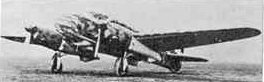
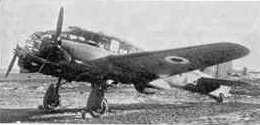
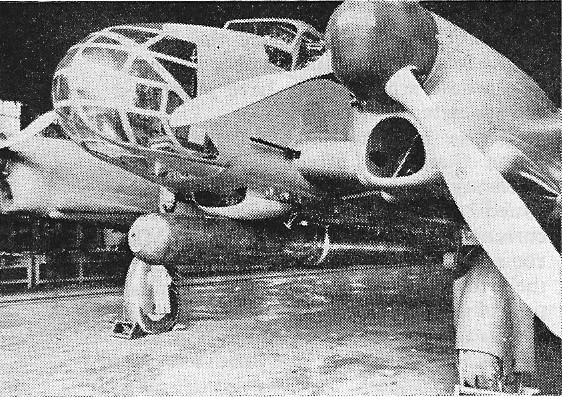
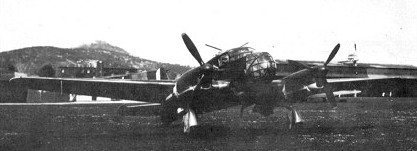
The Ca 311 differed from its predecessor in having the “stepped” windscreen replaced by a more extensively glazed Blenheim I-style dose section (although the second production series, the Ca 311M (Modificato) reverted to a stepped canopy rather like that later adopted for the Ca 314), and the Ca 312 was a version with 630-h.p. Piaggio P.XVI R.C.35 radials.

Caproni Ca.311M

Defensive armament was a Caproni Lanciani turret with a single 7.7mm machine-gun, and one machine-gun in the port wing root and another firing aft through a ventral hatch.

Caproni Ca.311

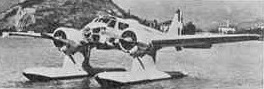
The Ca 312M possessed a similar nose to that of the Ca 311, the Ca 312bis was a twin-float seaplane variant, and the Ca 312-1S was an experimental torpedo floatplane. The Ca 313 was a further development of the Ca 311 with two 650-h.p. Isotta-Fraschini Delta R.C.35 engines which was used in limited numbers on the Russian Front.

(SABCA) made a marketing agreement with the Italian company Caproni, with SABCA selling some of Caproni’s military aircraft in certain markets, including the Caproni Ca.135, Ca.310 and the Ca.312, which were to be designated SABCA S.45bis, S.46 and S.48 respectively.

Ca.311
Engines: 2 x Piaggio P.VIII C.35, 470 hp