Aero Vodochody L-29 Delfin

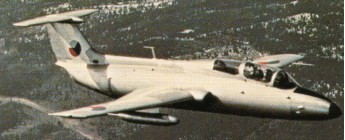
The Czech designed and produced Aero L-29 Delfin (translating to “Dolphin”; NATO designation of “Maya”) series was a highly utilized Cold War jet trainer aircraft for the Soviet Union and its satellite states. The twin-seat aircraft was capable of speeds over 400 miles per hour and a ceiling of over 36,000 feet.

Aero Vodochody L-29 Delfin Article

Early design studies for a two-seat jet trainer were conducted by K Tomas and Z Rubic in 1955. The L-29 features a T tail and can operate from grass, waterlogged, and dirt strips.

The single engine L-29 was built from two XL-29-designated prototypes – one fitted with a British Bristol Siddeley Viper turbojet engine and another fitted with an indigenous 1,960 lb thrust M 701c 500 turbojet, first flown on 5 April 1959. The XL-29 powered by an M 701 turbojet flew for the first time on April 5, 1960.

Further development saw a three-way competitive fly-off occur against the Yak-30 design and the PZL Mielec TS-11 Iskra with the L-29 coming out ahead (Poland would go on to utilize the TS-11 trainer however). Placed in production in 1963, it subsequently became a standard trainer with many Warsaw Pact and other countries.

The last of over 3,600 rolled off the production line in 1974. Almost all production was of the basic aircraft variant (codename Maya), although two other variants did appear.

The Soviet Union alone took over 2,000 Delfins, while significant numbers also served in Czechoslovakia, East Germany, and Hungary. In these countries the Delfin was used in all-through training from ab iniito to advanced stages.
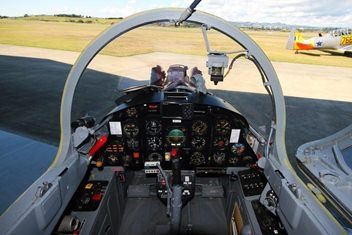
Small numbers of a single seat L-29A Delfin Akrobats were built for aerobatics while a prototype L-29R dedicated attack aircraft was also built.

With two available underwing hardpoints, a light attack strike aircraft was designed that could carry gun pods, drop bombs and rockets. Specialized aerobatic performers were also devised from the existing base L-29 airframe. 3665 were built until production ceased in 1974, superceded by the L-39. NATO name Maya.

Gallery

Aero L-29 Delfin (Dolphin) / Maya
Engine: 1 x Motorlet M 701c 500 turbojet, 1,960lbs / 870 kgp thrust.
Length: 35ft 5.5 in (10.81m)
Wingspan: 33ft 9.5in (10.29m)
Height: 10.17ft (3.10m)
Wing area: 213.125 sq.ft (19.8 sq.m)
Empty wt: 5071 lb (2 360 kg)
Loaded weight: 6,834 lb (3100 kg)
Maximum Take-Off Weight: 7,804lbs (3,540kg)
Wing loading: 36.7 lb/sq.ft / 179.0 kg/sq.m
Maximum Speed: 407mph (655kmh; 354kts) at 16,400ft (5 000 m)
Cruise speed: 339 mph (545 kph)
Maximum Range: 398miles (640km)
Rate-of-Climb: 2,755ft/min (840m/min)
Service Ceiling: 36,089ft (11,000m)
Accommodation: 2
Hardpoints: 2
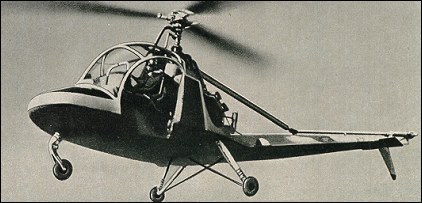
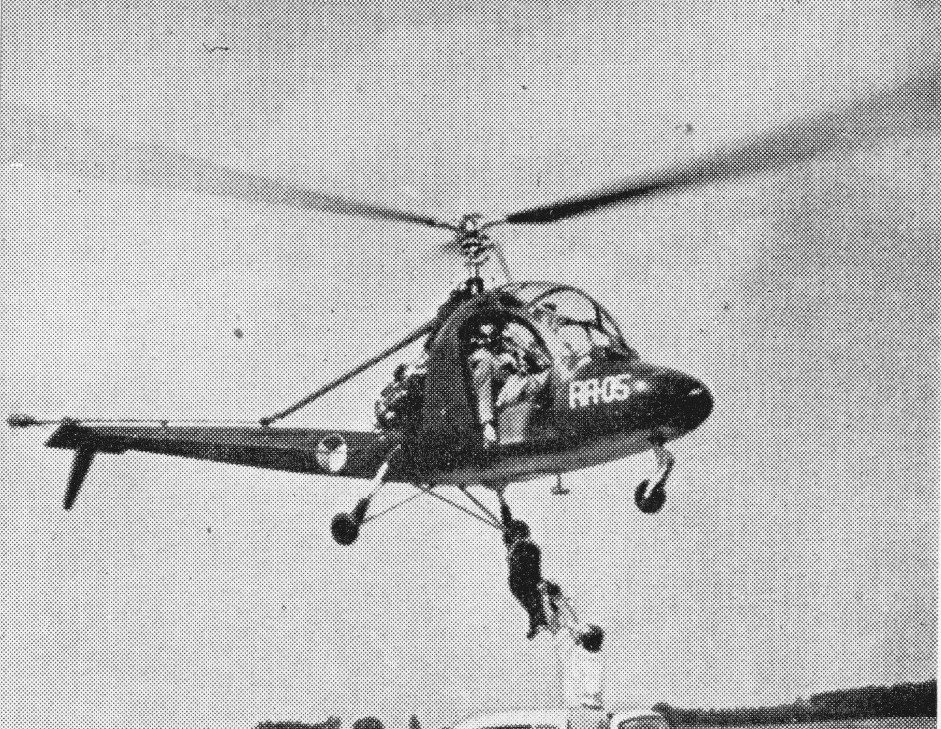
Aero Vodochody XE-II / HC-2 Heli-Baby / HC-102 Heli-Baby / HC-3

HC.2

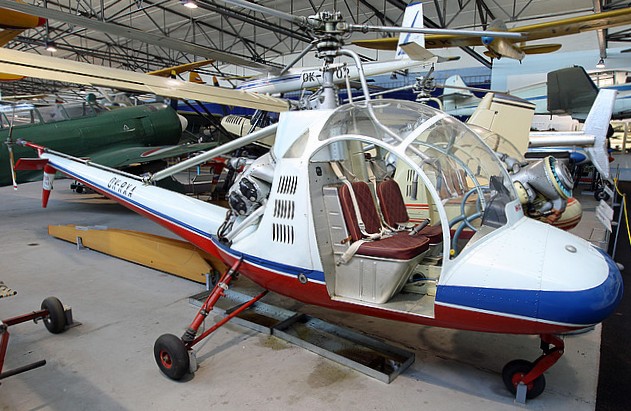
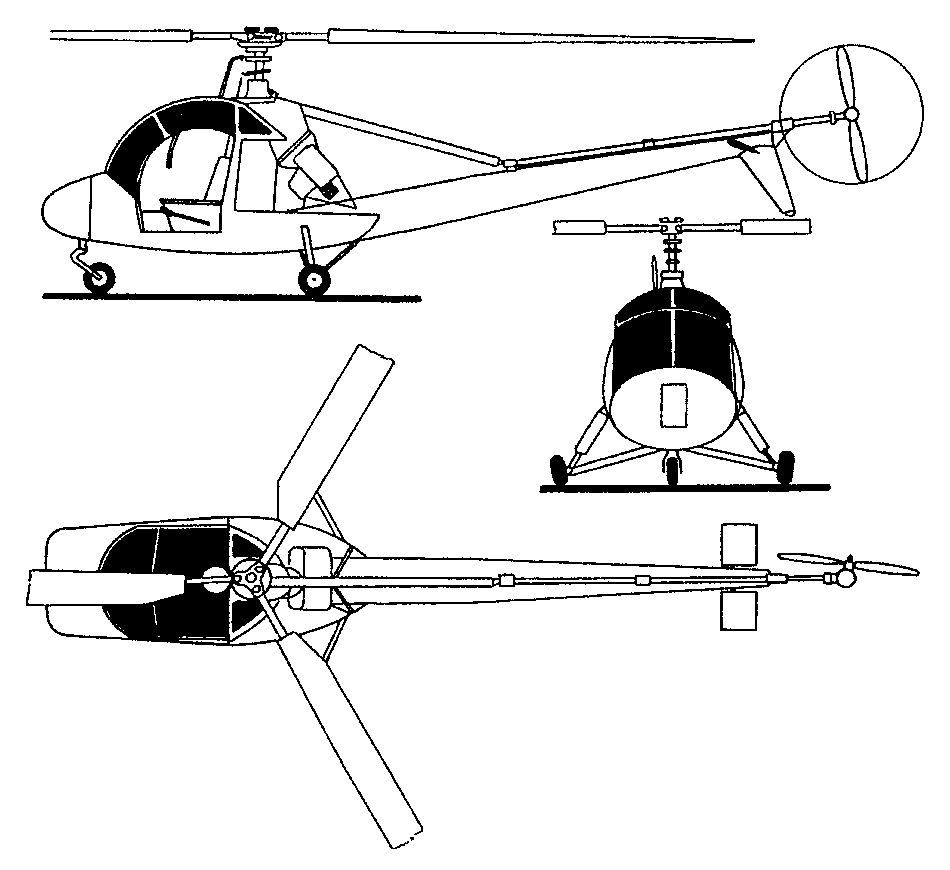
The XE-II was developed into the prototype HC-2, HC-3, and HC-102 Heli-Baby two-seat general-purpose helicopter. With an all-metal fuselage/boom, fixed tricycle undercarriage and 80hp Praga DH engine driving a three-blade rotor, the prototype HC-2 flew on 3 March 1954, and an order for 200 HC-2 helicopters was announced while still flying in prototype form. It is not clear how many examples were finally delivered, but the HC-2 of 1958 served with the Czech Air Force for some years.

The HC-2 prototype is a two-seat light general-purpose helicopter, with a three-blade main rotor and two-blade anti-torque tail rotor. The main rotor blades are of wooden construction with a steel insert in leading-edge for mass balance and plywood covering armoured with fiberglass of NACA 23015 aerofoil section. The blades are fully articulated in flapping and drag planes with a single adjustable friction damper for all three drag hinges. The blades are mounted on tubular steel spars incorporating tension-torsion bars with cyclic pitch change actuated by control stick. The collective pitch lever is synchronised with engine throttle. Override settings of throttle are by means of twist-grip on pitch control lever. The individually-flapping tail rotor blades of laminated wood with fiberglass covering have the pitch controlled by rudder pedals. Additional horizontal tail surfaces are used during transition from vertical to horizontal flight. The fuselage is an all-metal semi-monocoque structure, with a non-stressed cabin enclosure. The landing gear is a fixed tricycle type, with castoring nose-wheel capable of swivelling through 360°, and oleo-pneumatic shock-absorbers on all three 260x85mm wheels. A tail-skid is fitted to avoid damage to rotor.

HC-2

Powered by an 83hp Praga DH four-cylinder horizontally-opposed fan-cooled engine mounted aft of the rotor pylon, with the crankshaft centre-line inclined at 45°. Drive from engine is taken through a centrifugal clutch to the main gearbox with a free-wheel in the main gearbox for autorotation. The tail rotor is driven off the main gearbox through a universal joint and shafting. The engine / main rotor r.p.m. ratio is approximately 10 : 1, and engine / tail rotor r.p.m. ratio approximately 3 : 2. Normal fuel capacity is 40 litres.

Seating is side-by-side for two in a cabin with Plexiglas canopy. Controlled by dual overhead cyclic control sticks and collective pitch levers on the left side of each seat. Starboard controls quickly removable. No doors.

HC.3

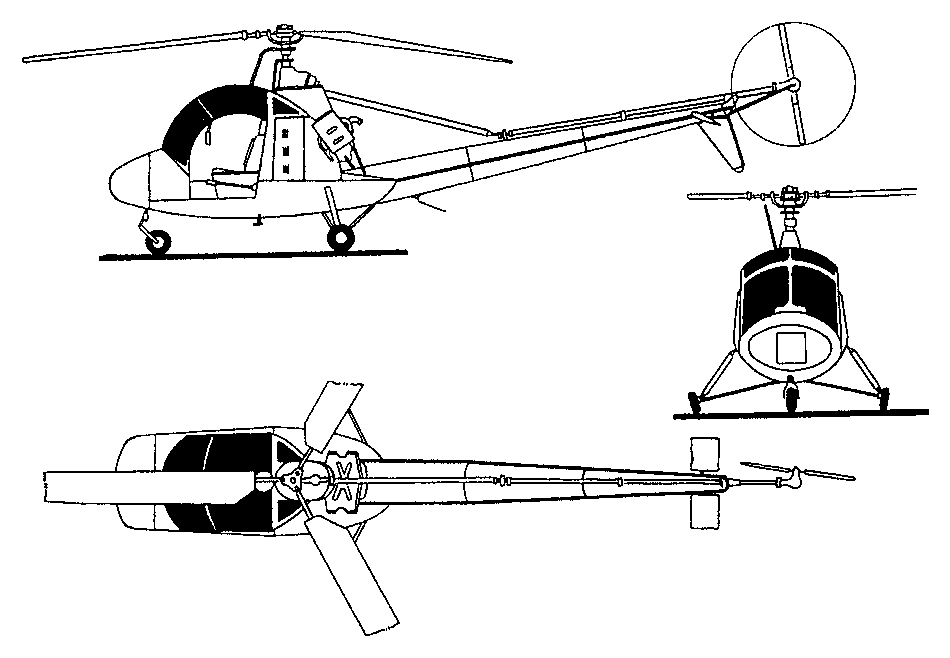
The HC.3 was an enlarged four-seater based on the HC-2 but with a four-leg undercarriage, englarged cabin section and an M-108H engine mounted above and behind the cabin. Three prototypes were tested (OK-15 to OK-17) but the type did not reach production.

HC.102

HC-2
Engine: 1 x Praga DH, 80 hp / 60kW
Main rotor diameter: 8.8m
Length: 10.50m
Height: 2.3m
Take-off weight: 580kg
Empty weight: 370kg
Max speed: 126km/h
Cruising speed: 100km/h
Ceiling: 3030m
Range: 150km

HC-3
Engine: 1 x Praga DH, 83hp
Fuel capacity: 40 litres
Oil capacity: 8 litres.

HC.2
HC.102

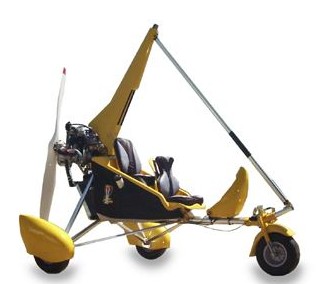
Aerotrike Cobra / Naked Cobra      

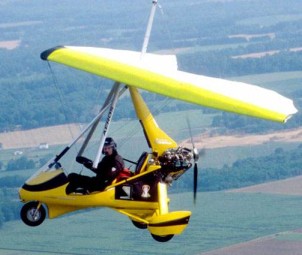
The first production Cobra, C-001, flew 46,000 km around the world in the Millennium Microlight Adventure, which proved as an extensive test flight and debugging exercise. Several advances and developments were made to the Cobra following information provided about the performance, comfort and other factors of the Cobra during its rough operations and incredibly long flights of this expedition.
The Cobra was offered with fairing of without (the ‘Naked Cobra’).
Aircraft-grade 4130 chromoly steel and aluminium construction for operation on rough terrain and large diameter aluminium are used. Steel and ali are treated for corrosion protection. All junction points on the Cobra are rubber-bushed to increase the lifespan and ruggedness of the trike.
The Cobra is equipped with a folding ‘click-up’ pylon for easy rigging and de-rigging allowing one person to lift the wing and click the pylon into place and bolt. No removing of the fuel tank and seats is involved. Independant seats have full composite backreasts and padding.
A 3/4 nose and pylon fairings encloses all peripherals such as the ballistic parachute. The 55 litre (14 US gal) fuel tank has side access for refuelling with the optional 76 litre (20 US gal) fuel tank (not fitted on the standard 503 model) endurance can be 7 hours and 700 kms depending on engine and other factors.
The Rotax 912 or 912S 4-stroke motors can be fitted to the Cobra with a radiator scoop with adjustable flap (includes full rear underbelly fairing) allowing the radiator to be out of sight. The adjustable intake flap allows the pilot to manually control the airflow onto the radiator to maintain engine temperatures as well as preventing stone and sand damage to the radiator while maneouvring on the ground. (This feature is an option and is only available when the 582, 912 or 912S engine options are selected).
An integral landing light option for after dark taxiing is available.
Equipped with front wheel telescopic suspension through non-degrading poly-urethane with large diameter mecahnical drum brake, mudflap, parking brake, and the front fork pivots on two heavy-duty ball bearings that make steering easier.
Rear wheel suspension is through telescopic poly-urethane shocks though rear nosewheel steering not available on the Cobra.
Standard configuration includes a Rainbow Aircraft Spirit 15 New Generation Dual Surface Wing, Rotax 503 DCDI Engine with Dual Ignition and Twin Carbs (52 HP), and “B” Series Gearbox (reduction 2,58:1). The Aerotrike Cobra is certified by the South African Civil Aviation Authority (CAA) to be fit and safe for general ultralight use.

Naked Cobra

For $1,250 (2009) less than the price of the standard Cobra, the ‘Naked’ Cobra offers open flying. Still retaining the pylon fairing, large wheel spats and composite seating arrangement, the Naked Cobra removes the front fairing and replaces it with a banana pod. This trike can still be fitted with the Rotax 912 engine (and 912S), or the 2-stroke Rotax 503 or 582 engines.

Cobra
Engine: Rotax 582, ‘C’ Gearbox
MTOW: 450 kg / 990 lb
Design Loads: +6g -3g
Typical Useful Load: 247 kg / 543 lb
Empty Weight (trike and engine): 153 kg / 337 lb

Cobra
Engine: Rotax 912
MTOW: 450 kg / 990 lb
Design Loads: +6g -3g
Typical Useful Load: 214 kg / 470 lb
Empty Weight (trike and engine): 186 kg / 409 lb

Aerotrek Eurofox / A-220 / A-240

A220

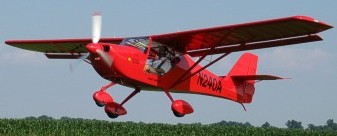
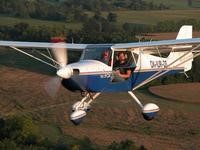
Until 2009, the Aeropro aircraft had the model name EuroFox for both the tricycle-gear and taildragger airplanes. To reflect the considerable development and evolution of the aircraft designs over the years, and with developments since the Aeropro aircraft have been delivered into the U.S. in the S-LSA category, the tricycle-gear aircraft model designation was changed to A240 and the taildragger aircraft given the model designation A220, and the aircraft sold in the U.S. and Canada are sold under our Aerotrek banner.

A240

The Aerotrek A220 and A240 are factory-built two-seat aircraft, FAA-approved S-LSA (Special Light Sport Aircraft) that have a quick-folding wing design (only one-person, only 10 minutes).
Both the Aerotrek A220 and A240 are built in series-production.
The Aerotrek A220 taildragger has a range of 600+ miles, a cruise speed up to 120 mph, and a climb rate of over 1,000 fpm with the 100 hp engine. The cockpit has side-by-side seating, dual stick controls and is 44.1″ wide.
The Aerotrek A220 taildragger features a composite main landing gear and has wide-spaced main wheels to aid with cross-wind landings and takeoffs. The forward visibility of the A220 is helped by having clear polycarbonate doors for visibility out the side of the aircraft. The A220 also features a new dual toe brake system and larger tundra tires.

Aeropro EuroFox

The Aerotrek A240 tricycle-gear and A220 taildragger S-LSA have payloads of 585- and 650-pound useful loads respectively, and more than 400 of them have been flying worldwide since 1990. Options include Dynon SkyView, tundra tires and a “well-equipped” price of US$84,950 (2012).

The Aerotrek A240 tricycle-gear and A220 taildragger S-LSA have payloads of 585- and 650-pound useful loads respectively, and more than 400 of them have been flying worldwide since 1990. Options include Dynon SkyView, tundra tires and a “well-equipped” price of US$84,950 (2012).

Aerotrek A240

Aeropro CZ EuroFox
Empty Weight: 288 kg / 636 lb
MTOW Weight: 599 kg / 1320 lbs
Stall: 35 kt / 40 mph / 64 kmh
Cruise: 103 kt / 118 mph / 190 kmh
VNE: 111 kt / 128 mph / 206 kmh
Climb Rate: 1200 ft/min / 6 m/s
Glide Ratio: 14:1
Take-off distance (50ft obstacle): 400 ft / 122 m
Landing distance (50ft obstacle): 460 ft / 140 m
2009 Price: 39500 EURO

Aero Tovarna Letadel A.200

The Aero A.200 was a sportsplane of Czechoslovakia, designed and built specifically to compete in Challenge 1934, the European touring plane championships. There two built were four-seater low-wing monoplanes.

Mixed construction low-wing monoplane, braced with wire. Fuselage of a steel frame, covered with wood and canvas, elliptical in cross-section. Rectangular wings of wooden construction, canvas covered, fitted with all-span slats and with flaps. Wings were folding rearwards. Cab had two seats side by side in front, with twin controls, and two seats in the rear, under a common multi-part canopy. Fixed landing gear with a rear skid. Radial engine in fuselage nose, with NACA cowling. Two-blade propeller.

Flown in competition by Jan Ambrož, the A.200 took fourth place, beaten by the RWD-9 (that took both first and second places for Poland) and the Fieseler Fi 97 (from Germany). The other A.200, flown by Vojtěch Žaček, took the 14th place for 34 competitors. They carried registrations OK-AMA and OK-AMB.

In a technical evaluation, A.200s scored the 4th result from among aircraft types taking part in the Challenge. They had the best short take-off capabilities in the contest – A.200s needed 74.5-77.6 m to take off and fly over 8-m high gate, although they needed some 118 m to land from above the gate.

A.200
Engine: 1 × Walter Bora, 160 kW (220 hp)
Length: 7.80 m (25 ft 7 in)
Wingspan: 11.10 m (36 ft 5 in)
Height: 2.55 m (8 ft 4 in)
Wing area: 16.6 m2 (179 sq ft)
Empty weight: 560 kg (1,235 lb)
Gross weight: 950 kg (2,094 lb)
Maximum speed: 255 km/h (158 mph; 138 kn)
Cruising speed: 220 km/h (137 mph; 119 kn)
Stall speed: 55 km/h (34 mph; 30 kn)
Range: 800 km (497 mi; 432 nmi)
Service ceiling: 6,300 m (20,669 ft)
Wing loading: 57.2 kg/m2 (11.7 lb/sq ft)
Power/mass: 0.17 kW/kg (0.11 hp/lb)
Crew: 1 or 2
Capacity: 2 or 3 passengers

Aero Tovarna Letadel A-100

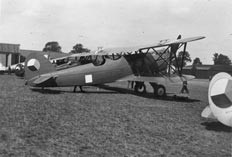
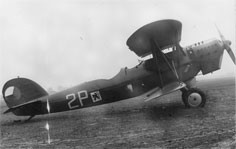
Aero succeeded in winning the Czechoslovakia Ministry of National Defence bid for a recce and bomber plane in 1932, this type was again a biplane. By early 1930s company was making A100 two-seat multipurpose aircraft and A102 fighter.

The wings were wood-framed, covered by fabric, and fuselage, elevator, rudder as well as tail-plane and fin steel-tube-framed, fabric-covered.

recce aircraft 
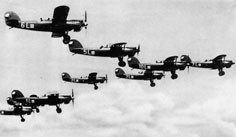
Aero A-100 formation from Brno, No 1 Regiment of the 5th Sqn

Engine: Avia Vr-36, 650 hp
Wingspan: 14.7 m
Length: 10.6 m
Empty weight: 2040 kg
Top speed: 270 kph
Service ceiling: 6500 m
Climb to 5000m: 20 min
Endurance: 4 hrs
Bombload: 600 kg

Aero Tovarna Letadel A-42

The A-42 bomber monoplane was built by Aero in 1930, with wooden wing, and steel-tube-riveted fuselage covered by fabric. The engine cowling was sheet metal shaped over an 880 hp Isotta Fraschini Asso engine with a three-blade propeller. Fixed undercarriage.

The Aero A-42 bomber monoplane flown by Svozil made three International speed achievements in 1930 – 252.380 km.p.h.at a 1000 km distance loaded by 500 and 1000 kg respectively and 253.428 km.p.h. at the distance of 1000 km with no load.

Climb was inadequate and hold-off too long. Pilot`s complaints about poor view out of the cockpit covered by a canopy resulted in refinements that proved to be catastrophic in the second prototype.

The Fokker F-IX type was preferred by the Defense Ministry and A-42 production aircraft was not realized.

Engine: Isotta Fraschini Asso, 880 hp
Wingspan: 20.80 m
Length: 13.80 m
Empty weight: 2 940 kg
Top speed: 270 kph
Service ceiling: 7000 m
Range: 1200 km