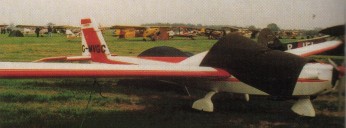
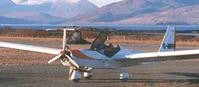
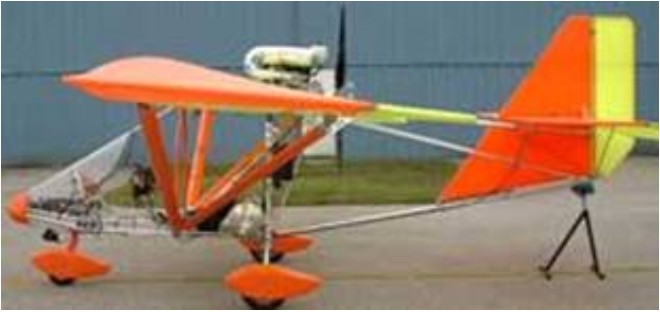
Promoted as a motor glider, the side-by-side two seater has long, cantilevered wings.
After corporate difficulties the Chevrn returned to production by Aviation Enterprises. Aviation Enterprises markets the Chevron 2-32C two-seat composites microlight trainer (first flown 1983 in original prototype form). Over 40 were sold worldwide.
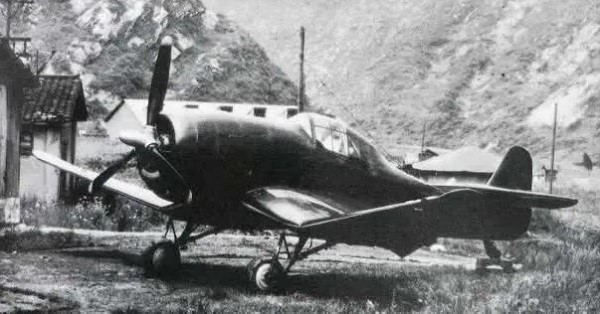
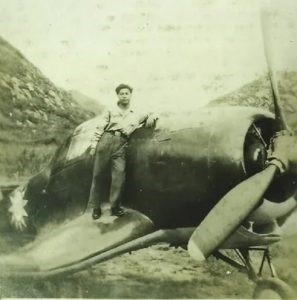
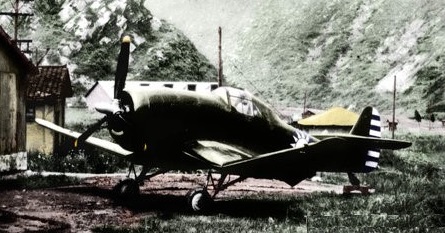
This aircraft seems to have drawn inspiration from the Vought Corsair and contemporary Japanese fighters. The XP-1 had the rear fuselage cut down, assumable to give a good all-round view for the pilot. It also had a rather peculiar wing, which was both bent and swept forward, to quite a strong degree apparently.
The XP-1 was designed in 1942 by Constantin Zakharchenko and built in Guiyang in 1944. with fixed undercarriage, The XP-1 was powered by one 1,200 hp Wright Cyclone R-1820-71 from A C-49D. It had wood/plywood inverted-swept wings, with automatic flaps, and the fuselage was built in steel tube/fabric.
Completed at some point in 1944, it reportedly first flew in January 1945.
And on this first flight its engine, which was supposedly recovered from a crashed C-47, failed and the aircraft crashed. A second prototype is reported to have been under construction at the time but cancelled after this and the program scrapped.
The chaos of the Chinese Civil War seems to have destroyed most traces of the XP-fighters and all that remains of them are a few snippets.
Engine: 1,200 hp Wright Cyclone R-1820-71 Wingspan: 12.10 m Length: 8.72 m Max weight: 2,930 kg est.Max speed: 580 kph Armament: two 12.7 mm machine guns
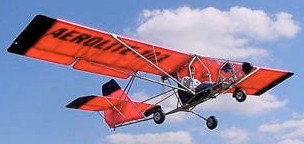
A kit built ultralight featuring aircraft grade aluminum tube, steel tube and fabric construction. There is a Kwik Kit for the Aerolite 103. The jig built air frame comes 100% complete with everything needed to fully assemble and finish your new Aerolite 103. The Aerolite’s airframe features Aircraft Grade aluminum tubing, hardware, bolts, rivets, and professionally welded 4130 steel components throughout it’s construction. The exposed aluminum tubing is clear anodized for cosmetic appearance and protection from the elements. The 4130 steel components are both primed and finished in Aerolite Trim Black. Single seat, high wing, with trigear, the fuselage comes completely framed and includes several items such as the seat, 4-point safety harness, fuel-tank and engine mounts already installed. The fuselage needs only the wheels, windshield, engine, prop, gauges, and flying instruments to complete. The wing panels and all flying surfaces are completely built and are ready for covering. The wing struts and tail-boom assemblies are pre-built and only require final adjustments during the final assembly of the airframe. Pre-sewn Dacron covers slide onto the pre-built flying surfaces and the covers are secured to the air frame by a combination of zippers, quick latch straps and wing rib battens. The wing ribs are inserted into pre-sewn pockets inside the wing covers. The control surface set up and final rigging is made easy by using the supplied push-pull stainless steel cables that securely lock into place, and with only the final adjustments needing to be made. Normal Take-Off uses full throttle, accelerating to 30 mph, rotate, and climb at Vy 45 mph. A Short Field Take-Off uses 15 – 20 degrees of flaps and climb at Vx 40 mph. Cruise Flight is at 45 – 63 mph indicated airspeed. Normal Landing involves 45 – 50 mph on final and wheels touch down at 30 mph. Short Field Landing or Landing Over an Obstacle uses 30 – 40 degrees of flaps and a minimum 40 mph from base to final. Maintain 40 mph on final and wheels touch down at 30 mph.
Engine Power Requirements: 28 hp. – 50 hp. Reduction: Cog Belt / B-model gearbox / ratios 2.5/1, 2.58/1, 2.6/1, 3.0/1 Empty Weight: 252 lb – 300 lb Gross Weight: 600 lb. Rec. Gross TO Wt: 450 lb-525 lb Wingspan: 26ft 10in Wing Loading @ Gross Wt: 4.8 lb. / per sq. ft. Wing Area: 124 sq. ft. Propeller Maximum Diameter: 63″ Design Load Limits: +4 / -2 Stall Speed: 26 mph – 35 mph Cruise Speed: 45-63 mph Top Speed: 63-70+ mph Rate of Climb: 800-1000 fpm Sink Rate: 350-400 fpm Glide Ratio: 9:1 Roll Rate 45 deg-45 deg: 2.5 seconds Take-Off Distance: 100-200 ft Landing Distance: 100-200 ft TO dist (50ft obstacle): 300 ft / 91 m Landing distance (50ft obstacle): 300 ft / 91 m Fuel Capacity: 5-6 US gallons Endurance: 1.5 – 2.5 hrs. Fuel Consumption: 2-4.5 USG/.hr Range: 80 – 120 sm Vne: 65 kt / 75 mph / 121 kmh Va (design maneuvering speed): 50 mph Vfe (maximum flap extend speed): 70 mph (0 – 40 degrees) Vy (best rate of climb speed): 45 mph Vx (best angle of climb speed): 40 mph Vr ( take-off rotation speed): 30 mph Maximum Crosswind Component: 15 mph Maximum Wind Speeds: 25 mph Maximum Bank Angle: 45 degrees Maximum Pitch Angle (up & down): 30 degrees
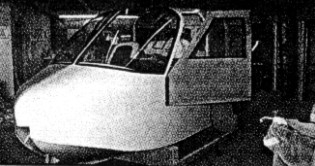
This 4-seat amphibian was a design of a company name Aero Wood Specialties, Inc. and work started around 1993. The aircraft had a largely all composite materials construction and the first example (a Model Avovet 1-A with a 300hp Lycoming IO-540-K1D5 engine) was under construction when the project was halted, possibly in/around 1998 and consequently the prototype was never completed.
Engine: Lycoming IO-540-K1D5, 300 hp. HP range: 240-350. Wing span: 39 ft. Wing area: 185 sq.ft. Height: 10.75 ft. Length: 26.25 ft. Weight empty: 1960 lbs. Gross: 3520 lbs. Speed max: 165 mph. Cruise: 155 mph. Range: 900 sm. Stall: 53 mph. ROC: 1200 fpm. Take-off dist: 700 ft. Landing dist: 1200 ft. Service ceiling: 16,500 ft. Fuel cap: 100 USG. Seats: 4. Landing gear: retractable nose wheel amphibian.
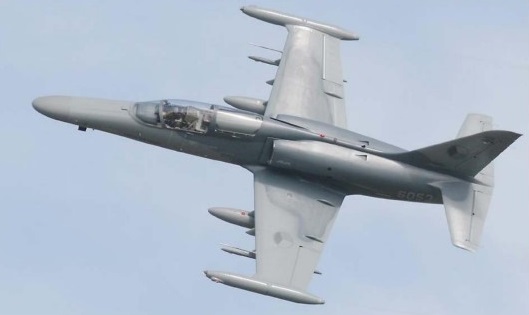
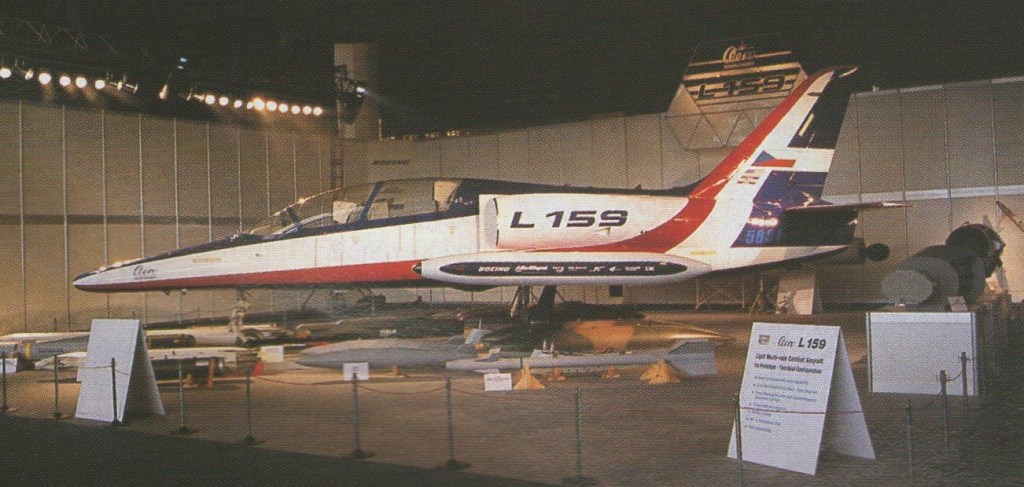
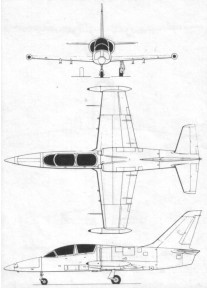
The L-159 ‘Albatross II’ was developed from the L-39 Albatross family for a Czech Air Force’s requirement in the early 1990s. Based on the L-59, the tandem canopy was retained, the back seat of the single-seat L-159A being occupied by an additional fuel tank. This enabled Aero to offer a two-seat combat capable version, designated L-159B, for training and operational conversion. Compared to the L-59, a number of changes were made although the aerodynamic configuration was retained. The airframe was strengthened and the cockpit area was reinforced with composite and ceramic ballistic armour to offer the pilot better protection. The aircraft’s nose was enlarged to accomodate the radar, and the fuselage was extended behind the cockpit, making the L-159 0.52m (1ft 8in) longer than the L-59. One centre-line weapon pylon was added and the number of underwing pylons was increased from four to six.
The engine was replaced with the US Honeywell/ITEC F124-GA-100 non-afterburning turbofan, of 6,300 lb of thrust (28,58 kN), providing about 66% more thrust than the L-39’s AI-25TL turbofan, and almost 30% more than the L-59’s Slovak ZMK DV-2 turbofan. Providing a better thrust-to-weight ratio and the ability to carry full weapon loads, the new engine makes the aircraft faster and more capable in the combat role. The L-159A is fitted with the Italian FIAR Grifo-L multimode pulse Doppler radar. The radar has five air-to-air modes including track-while-scan with four air combat submodes, and is able to track up to eight targets simultaneously. For ground and maritime attack it has nine air-to-surface modes. The L-159B it features a full cockpit including HUD repeater panel. Both versions are fitted with lightweight fully automatic VS-2C zero-zero ejection seats and a canopy jettison system.
The L-159 has the digital MIL-STD-1553 integrated avionics system with two multi-function colour displays and analogue instruments for backup. The cockpit is NVG-compatible and has NATO-compatible radios for secure communication. For navigation it uses a Honeywell GPS navigation system, with Ring Laser Gyro INS as backup. The Head-Up Display is the FV-3000 by Flight Vision, and the L-159 provides Hands On Throttle And Stick (HOTAS) functionality. The L-159 is capable of carrying a wide range of NATO-compatible weapons. The short-range air-to-air AIM-9M Sidewinder and the air-to-ground AGM-65 Maverick air-to-surface missiles have been integrated. Unguided weapons include Mk.82 bombs, CBU-87 cluster bombs and LAU-5002 rocket launchers. The aircraft is also capable of carrying a podded 20mm cannon.
The Czech government signed a contract with Aero on April 11, 1995, to fund 25% of the development cost and stated a requirement for 72 single-seat L-159A, but this many aircraft far exceeded the requirement, and there were no orders for the L-159B.
prototype L-159, 5831
The prototype L-159, 5831, was unveiled at Aero Vodochody near Prague on 12 June 1997.
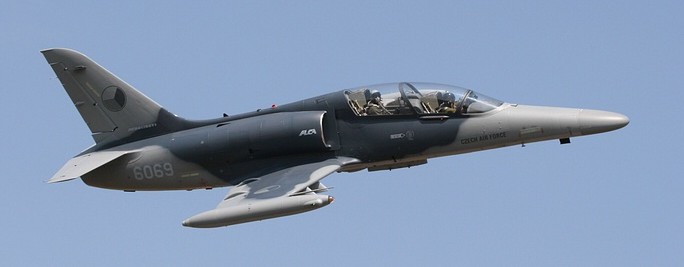
The first prototype (L-159T serial 5831) was rolled out on June 12, 1997, and first flew on August 2, 1997, flown by Aero’s chief test pilot Miroslav Schutzner. The second prototype (L-159A serial 5832) made its first flight on August 18, 1998. Again flow by Schutzner, it was the first single-seat aircraft to fly with the space of the rear cockpit being occupied by test equipment. In 2002, the third L-159 protype performed its maiden flight on June 1. Designated L-159B, ‘6073’ was a two-seat version designed for advanced training and operational conversion. The first L-159A arrived at Çáslav AB on December 27, 2000, joining the 42 Fighter Squadron. Economic conditions resulted in defence cutbacks, putting the L-159As into storage. 212 FS remained as the sole L-159 unit with just 18 L-159A ALCA and six aircraft as reserve. The Czech Air Force ordered the conversion of a number of L-159A single-seat aircraft into L-159T1 two-seaters. The Czech MoD signed a contract for four conversions of surplus L-159A aircraft to two-seat L-159T1 trainers on June 26, 2006. Two days later the first L-159A arrived at Aero’s plant, serialled 6069 it is one from the 24 at Çáslav AB. It was completed in early 2007 and made its first flight on March 8, 2007. The three others converted to L-159T1 are 6067, 6071 and 6072. All four L-159T1 were officially accepted back into service on November 23, 2007. L-159T1 is the designation introduced by the Czech Air Force, Aero Vodochody also referred to the conversion as L-159BAT (“B from A for Training”). The L-159T1 conversion replaces the front fuselage with a new one providing the second cockpit. The new version lacks cockpit protective armour, but closely resembles the L-159A on all other areas to provide a good conversion trainer. Aero Vodochody has failed to attract any customers and the Czech MoD also failed to find any takers for its surplus of 47 L-159A ALCAs. Despite this, Aero Vodochody continued to develop the L-159 offering new capabilities including aerial refueling capability.
Aero L 159 ALCA Engine: Allied Signal / ITEC F 124 GA-100, 28.58 kN / 6,300 lb turbofan Length: 41.765 ft / 12.73 m Height: 15.682 ft / 4.78 m Wingspan: 31.299 ft / 9.54 m Wing area: 202.363 sqft / 18.8 sqm MTOW: 17640.0 lb / 8000.0 kg Weight empty: 9172.8 lb / 4160.0 kg Internal fuel: 1596 kg / 5,159 lb Max fuel: 2973 kg / 6,554 lb Max. speed: 505 kts / 936 km/h / 582 mph Initial climb rate: 9251.97 ft/min / 47.0 m/s Service ceiling: 43307 ft / 13200 m Wing load: 87.33 lb/sq.ft / 426.0 kg/sq.m Range int. fuel: 1570km / 850 nm Max range: 2250km / 1,215 nm Crew: 1-2 Armament: 7x ext. Max. stores: 2340kg / 5,159 lb Design load: +8/-4 G
Similar externally to earlier versions, the L 59 (previously designated L 39MS) has a more powerful DV 2 engine of 4,850 lb st (21,57 kN) giving a 20 per cent improvement in climb-rate, a VS 2 zero/zero ejection seat, and upgraded avionics including a HUD. First flight was made on 30 September 1986.
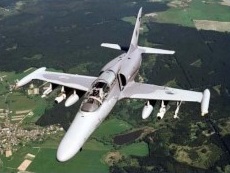
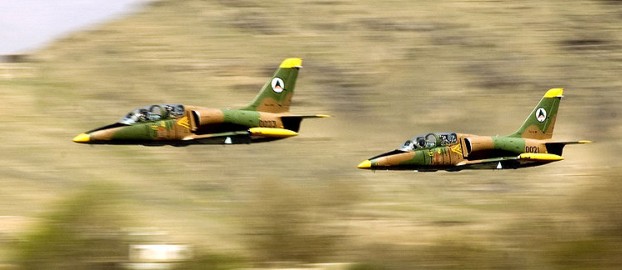
The Albatros, first flown on November 4, 1968, is the L 29’s successor as the standard trainer of all Warsaw Pact countries except Poland, and was in production in a light attack version, mainly for export. Designed three years after the L-29, the L-39 went through a series of prototype and development models before seeing production begin in 1972. The L-39 was designed with simplified and a more modular approach to engineering allowing the L-39 to be produced more efficiently and quicker than the L-28. The base powerplant allowed for a thrust upgrade when compared to the L-29 and avionics coupled with reinforced subsystems put the L-39 ahead.
A tandem seater, with the instructor in the raised rear ejection seat, it is powered by the 1720 kg (3792 ¬lb) thrust Walter Titan, the Czech built Ivchenko Al 25TL turbofan also used in the Yak 40 STOL trijet. The name Albatros is used only for L 39 aircraft in service with the Czech air force, to which deliveries began in April 1974.
The basic aircraft is equipped with a camera gun and electrically controlled gunsight, but has no internal gun. Gun pods, bombs, rockets and missiles can be carried on two or four wing pylons along with a centerline-mounted 23mm GSh-23L twin-barrel cannon for close quarters work.
With production of 2,600 by 1990 it proved to be a very successful aircraft, with more than 2,900 built by 2005 with about 300 in civilian ownership around the world.
The aircraft is fully aerobatic stressed for +8G and 4G and can climb at the rate of about 3500 feet per minute. Export numbers for the L-39 Albatross were roughly the same as the L-29. Thailand went on to purchase an export model designated with L-39 ZA/ART that featured Israeli-produced Elbit avionics. The most numerous in terms of production was the L-39 “C” model, which helped drive total production total past 3,000.
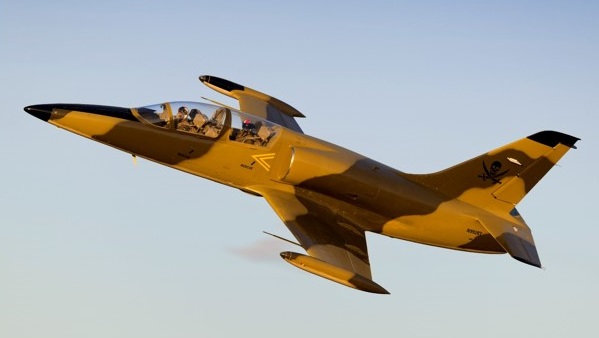
L-39C
Earlier variants of the aircraft are the L.39ZO weapons trainer, the L.39ZA ground attack and reconnaissance aircraft, which has an under-fuselage gun pod and four wing hardpoints, and the L.39V target tug. The L.39MS version of the Albatros was rolled out in mid-1986, but later designated the L-59.
Aero L 39 Albatros Engine: Ivtshenko AI 25 TL turbofan, 3,792 lb / 16873 N Wingspan: 31.037 ft / 9.46 m Length: 40.42 ft / 12.32 m Height: 15.486 ft 4.72 m Wing area: 202.363 sqft / 18.8 sqm Aspect ratio: 4.4 Area of elevons: 18.299 sqft / 1.7 sqm Area of flaps: 28.848 sqft / 2.68 sq.m Empty weight: 7,340 lb MTOW: 11,618 lb Max. speed: 405 kts / 750 km/h Landing speed: 92 kts / 170 km/h TO distance: 1476 ft / 450 m Landing dist: 2034 ft / 620 m Initial climb rate: 4330.71 ft/min / 22.00 m/s Service ceiling: 37730 ft / 11500 m Wing load: 49.41 lb/sq.ft / 241.00 kg/sq.m Range: 589 nm / 1090 km Crew: 2 Armament: 1100kg ext. 4 pods., 23mm MK
L.39A Engine: 1 x Walter Titan, 1720 kg / 3792 lb thrust. Span: 9.4 m / 31 ft 0.5 in Length: 12.25 m / 40 ft 5 in Gross weight: 4535 kg / 9998 lb Max speed: 750 km/h / 466 mph
L-39C Engine: 3,800 lbs thrust turbofan. Max wt: 4500 kg. Speed: M 0.8 / 500mph / 600kph / 490 KIAS Ceiling: 36,000 ft. G-Limits: +8 / -4 Payload: 550 lb per pylon (2) Endurance: 1.5+
L.39Z Engine: 1 x Ivchenko AI-25TL, 16.9 kN. Span: 9.5 m. Length: 12.1 m. Wing area: 18.8 sq.m Empty wt: 3650 kg. MTOW: 5600 kg. Warload: 1100 kg. Max speed: 755 kph. Initial ROC: 1260 m / min. Ceiling: 11,000 m. T/O run: 480 m. Ldg run: 600 m. Fuel internal: 1255 lt. Range: 1750 km. Combat radius: 600 km. Armament: 1 x 23 mm. Hardpoints: 4.