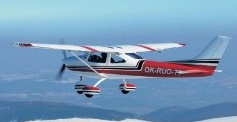
Airo Aviation Airo 1

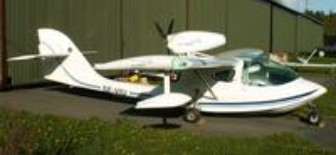
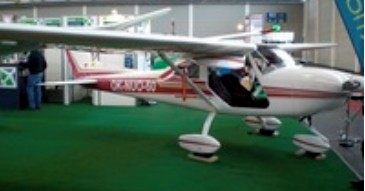
The AIRO1 UL is a light sport aircraft designed for sport/leisure flying, touring, training and aerial photography. With two seats side-by-side and ULSA certified, main structure is made of aluminium and steel with three-wheeled, shock-absorbed landing gear.

It is a high wing, single engine aircraft mounting powered by a Rotax 912, 4 stroke, 4 cylinders horizontally opposed with 2 constant depression carburettors. A two or three-bladed propeller is driven via an integrated gear box.

Airo 1 UL
Stall: 35 kt / 40 mph / 65 kmh
Cruise: 81 kt / 93 mph / 150 kmh
VNE: 89 kt / 102 mph / 164 kmh
Empty Weight: 297 kg / 655 lbs
MTOW Weight: 472 kg / 1041 lbs
Take-off distance (50ft obstacle): 490 ft / 150 m
Landing distance (50ft obstacle): 490 ft / 150 m

Airo1 LSA
Stall: 35 kt / 40 mph / 64 kmh
Cruise: 83 kt / 95 mph / 153 kmh
VNE: 109 kt / 125 mph / 201 kmh
Empty Weight: 297 kg / 655 lbs
MTOW Weight: 600 kg / 1323 lbs
Take-off distance (50ft obstacle): 1610 ft / 490 m
Landing distance (50ft obstacle): 1610 ft / 490 m

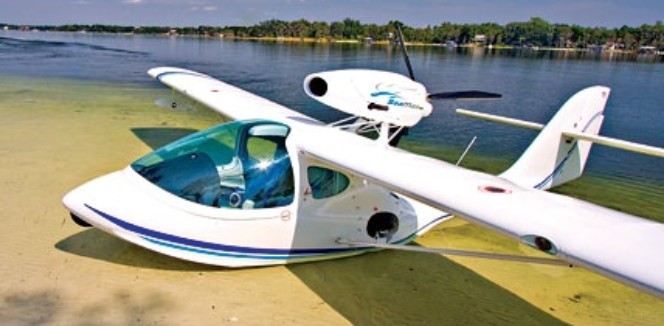
Airmax Seamax

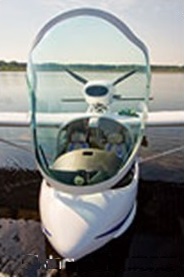
The SeaMax amphibian LSA / Ultralight take off and landing performance is equally good on grass, tarmac and sea. With electrically controlled landing gear retraction, flaps and trim rudders. The cabin is ergonomically designed with a panorama view due to the wing position behind the pilot.

This Brazilian-built all-composite amphibian is Rotax powered. Base price 2012: US$150,000.

Stall: 31 kt / 36 mph / 58 kmh
Cruise: 113 kt / 130 mph / 209 kmh
VNE: 139 kt / 160 mph / 257 kmh
Empty Weight: 300 kg / 661 lbs
MTOW Weight: 520 kg / 1146 lbs
Climb Ratio: 1000 ft/min / 5 m/s
Endurance: 6h
Range: 540nm

Airmass Sunburst

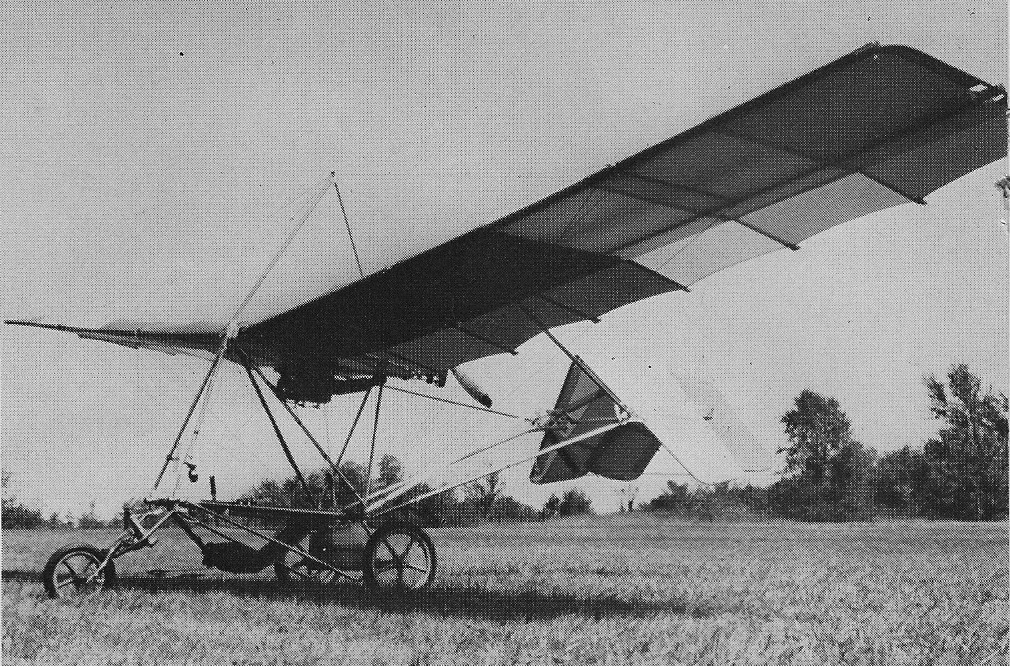
Terry Toetze, a graduate of Southern Illinois University with a degree in Industrial Technology, worked on the plans, sketches and designs from John C. Massey and the two created the first Sunburst. The first model was a learning platform and needed a few changes and a second machine turned out to be the prototype for the production model.

Airmass Sunburst Article

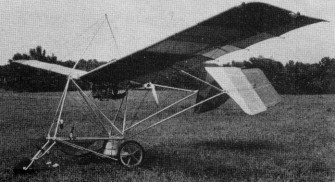
The single seater Sunburst stick operates differentially, working spoilers to control the roll and, together with the rudder bar through a mixer, operating the elevons of the inverted V tail as elevators or rudders. The nosewheel of the tricycle undercar¬riage on the Sunburst is steered by the rudder bar. The Cuyuna 430RR twin cylinder in line engine of 429 cc, drives a pusher propeller through a reduction gear and has dual ignition. It is situated under the wing, in line with the centre of gravity, over the pilot’s head. John Massey of Airmass flew one of these machines in the 1982 London Paris, finishing in 18th place.

Supplied in kit form, the Sunburst is estimated by Airmass Incorporated to require around 30 h for completion.
Single seat single engined high wing mono¬plane with conventional three axis control. Wing has unswept leading and trailing edges, and constant chord; inverted V tail. Pitch/yaw control by elevon; roll control by one third¬ span spoilers; control inputs through stick for pitch/roll and pedals for yaw. Wing braced from above by kingpost and cables, from below by cables; wing profile; 90% double surface. Undercarriage has three wheels in tricycle formation; bungee suspen¬sion on nosewheel and glass fibre suspension on main wheels. Push right go right nose¬wheel steering connected to yaw control. Optional brake. Aluminium tube framework with optional pod. Engine mounted below wing driving pusher propeller. Tubing from blue anodized 6061T6 aluminium, rigging is stainless steel with vinyl coating, wing cover¬ing is Dacron.
First year built: 1980. Units delivered to June 1981: 6. Price 1982: $4,645 (with engine) Includes ASI, altimeter, 30-hp engine with reduction drive.

Engine: Cuyuna 430RR, 30 hp
Static thrust, 170 lb
Wingspan: 36 ft
Wing area: 156 sq.ft
Aspect ratio: 8.3
Overall length: 16ft
Empty weight: 185lb
Usable payload (include fuel), 240 lb
Max pilot weight: 240 lb
Wing loading, 2.5 lb
L/D power-off glide ratio, 12:1
Cruise speed (85% power), 50 mph
Stall speed, 23 mph
Approach speed, 30 mph
Flair speed, 25 mph
Liftoff speed, 28 mph
Takeoff roll distance, 75 ft
Rate of climb, 600 fpm
Fuel capacity, 5 gal
Range at cruise, 100 mi

AirLony Highlander

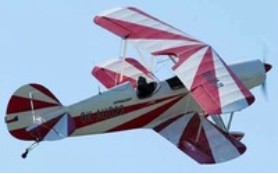
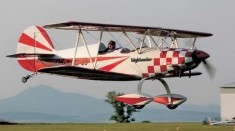
The Highlander is a modern biplane, constructed for higher limit factors than most ultralights.
The lower wing has the NACA 2412 profile, and upper the NACA 415 profile. Wings, fuselage and wing canopy are mutually braced by steel profiled struts and wires. The wingtips are rounded, and the ailerons are on both wings, their deflections are diferential.

The tail assembly is of classic elevator and rudder, and tailplane and fin profile is plain plate. The tail assembly is braced by steel struts and wires. The landing gear is fixed, tail wheel type, and the main landing gear is created by laminated spring. The wheels have independent hydraulic brakes, controlled by pedals on the rudder steering. The tail wheel is controlable with the rudder.

Any engine of 80 HP can be used and propeller of 1800 mm diameter. Allowable weight of engine: 70-100 kg.

Controls are single, in the rear cockpit only (with optional dual). Ailerons and elevator are controlled by rods and levers, rudder by steel cables.

The airplane is in standard equipped by instruments for flight and engine monitoring.

Stall: 35 kt / 40 mph / 65 kmh
Cruise: 86 kt / 99 mph / 160 kmh
VNE: 102 kt / 117 mph / 188 kmh
Empty Weight: 240 kg / 529 lbs
MTOW Weight: 450 kg / 992 lbs
Climb Ratio: 2000 ft/min / 10 m/s

AirLony Skylane

Skylane is classic design, two seat, shoulder-wing monoplane. Although it is an ultralight, this plane is noted as a “small Cessna“.This plane can be used for towing of sail planes too.

The wing is strut-braced, wooden design, with a semi-laminar profile MS (1)-313. The centre section is rectangular and outer parts are trapezoidal, with short winglets on the tips. The main spar, situated in 37% of chord, is made of wood. In front of main spar, in rectangular part, is torsion box, with integral fuel tanks (2×35 litres). Trapezoidal part of torsion box is coated by plywood. Behind the main spar, wing consists of wooden ribs and short auxiliary spar. The ribs are coated by aviation fabric.

Landing flaps are single-slotted, in 29% of depth, made of wood and consist of spar, ribs, plywood and fabric coating. They have fixed positions at 13°, 29°and 37°, and are electric servo operated.

The ailerons are all-wood, with one spar, ribs, plywood and fabric coating and are operated by rods with diferential deflections.

The all-wood tail assembly structure is with elevator and rudder. The profile of fin and tailplane is symetric, NACA 0012. Design of tailplane assembly is the same as design of landing flaps and the fin is integrated part of fuselage.

The undercarriage is fixed, three wheel type and the main landing gear is laminated spring. The wheels have independent hydraulic brakes, controlled by pedal brake on the rudder steering. Towed type nose gear is spring loaded by steel spring with hydraulic absorber. It is not steered; freely slewing round about 360°.

An engine of 50-100 HP can be used and propeller can be fixed blade, adjustable blade or variable pitch blade with diameter of 1700 mm. Weight of engine assembly should be 50-80 kg.

Ailerons and elevator are controlled by rods and levers, and the rudder is controlled by steel cables.

Stall: 35 kt / 40 mph / 65 kmh
Cruise: 97 kt / 112 mph / 180 kmh
VNE: 112 kt / 129 mph / 207 kmh
Empty Weight: 258 kg / 569 lbs
MTOW Weight: 450 kg / 992 lbs
Climb Ratio: 1200 ft/min / 6 m/s
Airframes Unlimited Basic 2 seat

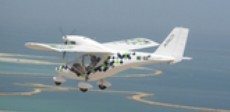
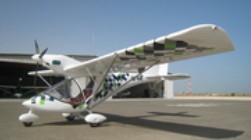
The Basic 2-seater was designed to fly 2 people in style with a 50 horsepower Rotax 503 engine, for a price of under $8300.00
For 2010 the Basic 2-seater came with a Rotax gearbox instead of the previous belt drive.
The Basic 2-seater will lift a 450 pound payload on a standard density altitude day and airframes may be painted red, blue, black, white, or green.
The price for a ready-to-fly Basic 2-seater in 2009 was $8295.00 fully assembled and ready to fly.
Instrumentation is not included on the Basic 2-seater but is offered as an option. The Basic 2-seater comes with rigid suspension, an all steel airframe, welded by professional aircraft welders, tundra Tire/ Azusa plated wheels on the mains (rear) / Azusa plated wheel/400×6 rib tire on the front, 500′ canopy complete with high quality storage bag and line sox, new 72″ three blade ground adjustable Ivoprop, and standard lowback seats.
Basic 2-seater options include:
Poly race car seats;
Landing light / strobe light package (includes rectifier/regulator);
Analog Engine monitoring system; and
7.5 gallon fuel tank.

Basic 2-seater
Airspeed: 28-33 mph
Gross Weight:695 lbs
Take off Distance: 75-150 ft
Landing Distance: 50-75ft
Maximum Payload: 450+ lb
Rate of Climb: 400-800 fpm
Sink Rate: 9 ft/sec

Airframes Unlimited USA-1b

The USA-1b was designed to fly with a 32-55 horsepower 2 cycle engine.
With the optional Rotax 503 engine even 300+ pound pilots can fly.
The USA-1b was flight tested with the Rotax 447 and 503 engines.
Airframes Unlimited utilises rebuilt Rotax 447 engines as standard equipment on the USA-1B. These engines will lift a 200+ pound pilot on a hot day.
The price for a ready-to-fly USA-1B in 2009 was $7295.00 fully assembled and ready to fly.
For 2010 this powerchute came with a Rotax gearbox instead of the previous belt drive.
No instrumentation is included on the USA-1b but is available as an option.
The USA-1b comes with rigid suspension, all steel airframe, welded by professional aircraft welders, performance Design 360′ or 400′ chute, storage bag and line sox, new 72″ two blade Ivoprop (on the smaller engines), and new Azusa wheels and 400×6 rib tires.
The USA1-b airframe was available in black, white, red, or blue.
USA-1b upgrade options include:
Rotax 503 engine with 3 blade prop;
500′ chute;
Tundra Tire package;
Landing light / strobe light package (includes rectifier/regulator);
Analog Engine monitoring system (tachometer and EGT gauge);
Poly race car seat; or upgrade to 3-blade prop on the 447 Rotax engine.

USA-1b
Airspeed: 28-33 mph
Gross Weight: 450 lb
Take off Distance: 75-150 ft
Landing Distance: 50-75 ft
Maximum Payload: 200+ lbs with the standard engine
Rate of Climb: 400800 fpm
Sink Rate: 9 ft /sec
Stall Speed: Stall Resistant

Airfer Paramotores Transan

The Aifer Transan is a Spanish powered parachute, designed and produced by Airfer Paramotores. The aircraft was designed to comply with the Fédération Aéronautique Internationale microlight rules it features a parachute-style high-wing and two seats in tandem in an open framed structure, tricycle landing gear and a single 52 hp (39 kW) Hirth engine in pusher configuration. The Transan was also available powered by a Rotax 503, Hirth 2702 and 2703 engines.

Variants:

Airfer Trike Monoplaza
Single-seat light-weight variant.

Airfer Trike Biplaza
Tandem two-seater

Airfer Tranan
Tandem two-seater

Airfer Transam 2702
Tandem two-seater with a Hirth 2702 engine.

Specifications:

Engine: 1 × Hirth, 52 hp (39 kW)
Propeller: 4-bladed
Empty weight: 340 lb (154 kg)
Crew: two