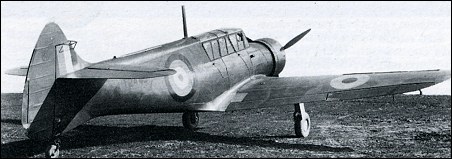
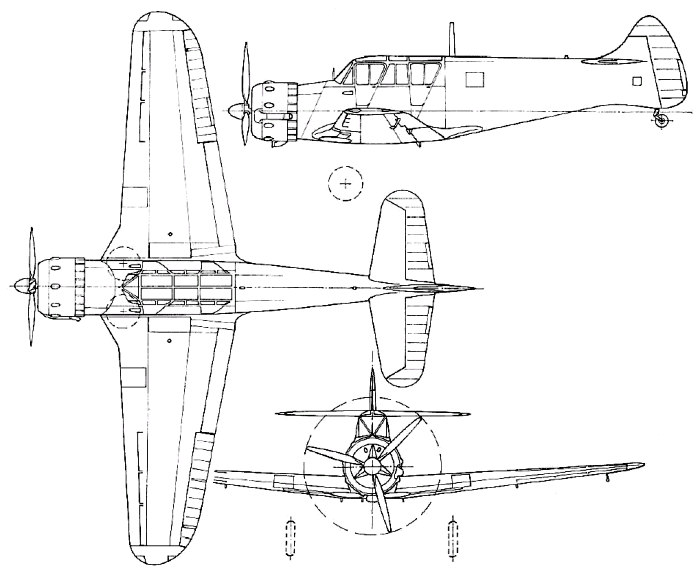
Designed to Air Ministry Specification 134/39 for an advanced trainer, the Airspeed AS.45 design was a conventional low-wing monoplane having retractable tailwheel type landing gear, and powered by a 544kW Bristol Mercury VIII radial air-cooled engine. Following Air Ministry approval of the design, which was given the provisional name Cambridge, two prototypes were ordered, the first of these making a maiden flight on 19 February 1941. The wings and tail unit were wood with plywood skins, except for control surfaces which were fabric-covered. The trailing edge of each wing was shared almost equally by ailerons and flaps. Four doors were provided, two on each side, so that exit in emergency could be made on either side. The main units of the Dowty landing gear retracted inwards, the wheels lying flush in the undersur¬face of the wing centre-section. Instructor and trainee were seated in tandem beneath a glazed canopy. Flight testing of these two prototypes was to show that low-speed flight characteristics were poor, and speed was below estimates. Both of the aircraft were handed over to the RAF in July 1942, following a decision not to proceed with production.
Engine: 1 x Bristol Mercury VIII radial piston, 544-kW (730-hp) Propeller: three-blade constant-speed Maximum speed at 4875 m (16,000ft): 381 km/h (237 mph) Service ceiling: 7560m (24,800ft) Range: 1094 km (680 miles) Wing span: 12.8m (42ft 0in) Length: 11 m (36ft 1 in) Height: 3.51 m (11ft 6in) Wing area: 26.94sq.m (280sq,ft) Armament: none Seats: 2
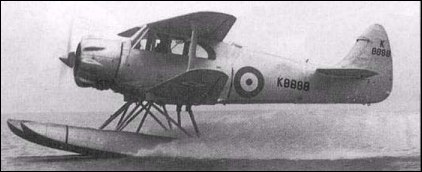
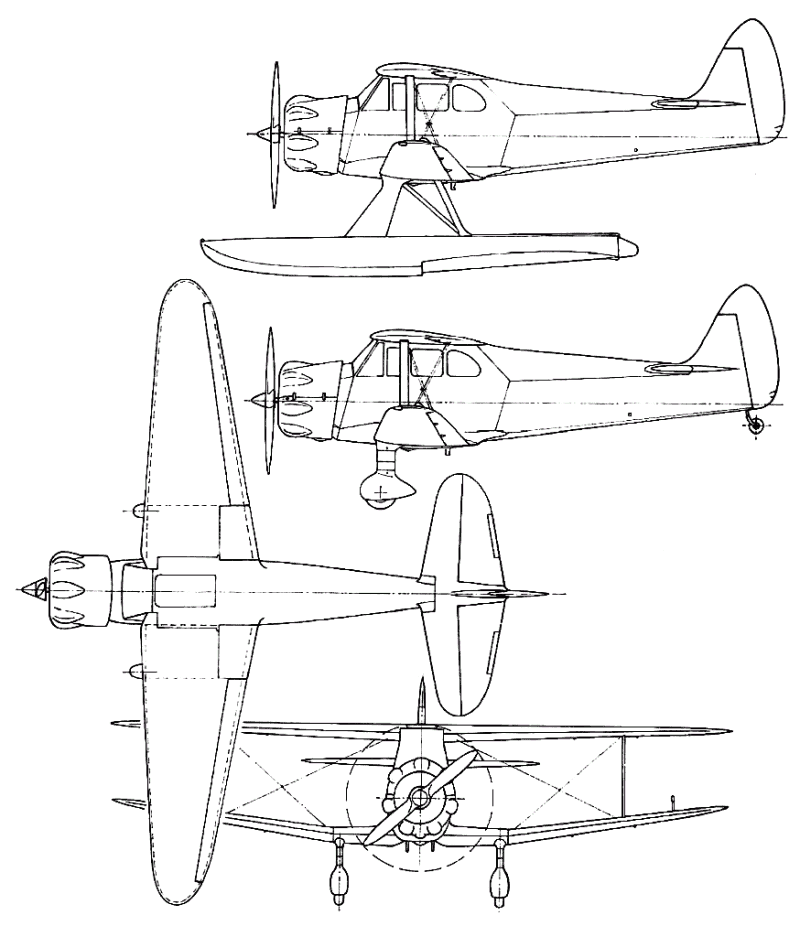
Designed as a radio-controlled and unmanned target aircraft, first flown as a piloted aircraft in 1937. A total of seven aircraft were built (including prototypes) of 65 production aircraft ordered.
Engine: Armstrong Siddeley Cheetah IX, 345 hp Length: 29.068 ft / 8.86 m Wingspan: 31.004 ft / 9.45 m Max take off weight: 3801.4 lb / 1724.0 kg Max. speed: 150 kt / 277 km/h Cruising speed: 131 kt / 243 km/h Service ceiling: 20013 ft / 6100 m Crew: 1
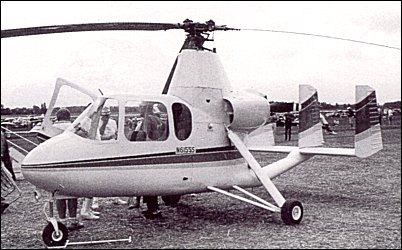
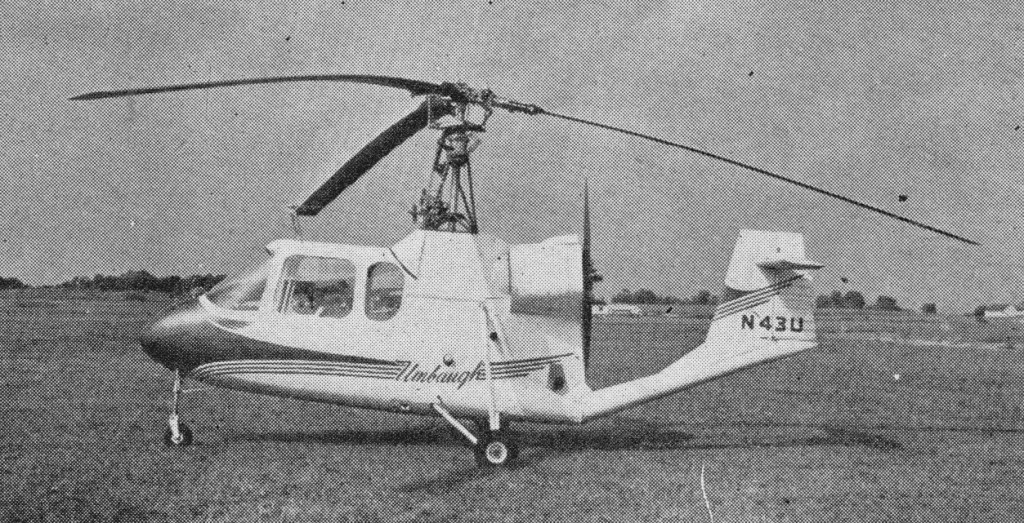
The U-17 gyrocopter was designed by Raymond E. Umbaugh with a 4130 welded tube centre section, aluminium forward fuselage and tail. His U-17 design was a tandem two-seat machine with a slim low-set tailboom and a single fin and T-tailplane. The prototype, N43U, was built for Umbaugh by the Fairchild Engine & Airplane Corporation at Hagerstown, Maryland. It made its first flight in mid-1959 and was powered by a 195kW Lycoming engine.
Umbaugh 18
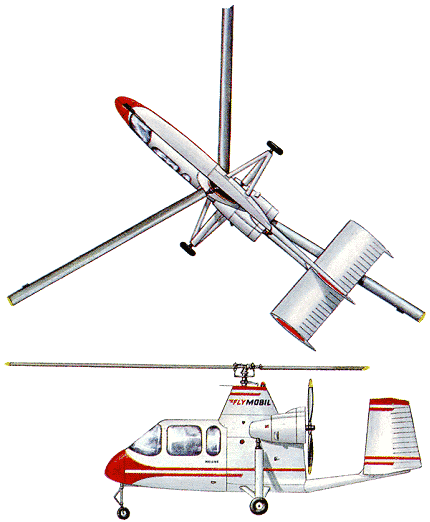
The second prototype, designated U-18, was redesigned to eliminate the stability problems of the first prototype. This aircraft was fitted with a 135kW Lycoming 0-360 and, initially, with a V-tail. The stability problems were still not resolved and a new triple tail was installed with a low-set tailplane bearing two fixed fins and a third movable one in the centre. This improved the Umbaugh to the point where it was awarded its Type Certificate (1H 17) on 12 September 1961, and certification of the production version, the Model 18-A, was granted early in 1965. Ray Umbaugh embarked on an ambitious plan to market the U-18, placing an order for 10000 units with Fairchild as the Flymobil. A large network of dealers and distributors was set up in the United States but Umbaugh started to run into trouble because the manufacturing output of the U-18 was too slow to meet the demands of dealers for demonstration aircraft.
Basic price of the Umbaugh 18 was quoted as $9,995 (£3,498), or $11,695 (£4,093) for the deluxe model 18A, in July 1962.
The dealers, who had paid large franchise fees took over Umbaugh, the agreement with Fairchild was terminated and manufacturing moved to Florida. Fairchild built only five development aircraft during 1960, all being tandem 2-seaters with 180hp Lycoming O-360-A1D engines. The company finally collapsed with just four aircraft completed and flown. The design was then acquired by Air & Space Manufacturing of Muncie, Indiana in 1965, which made some modifications to the tail unit and commenced manufacture of the Air & Space 18A. Again, Air & Space was faced with dealer pressure for aircraft and set out to raise capital for expansion. This funds-raising exercise resulted in accusations from the Securities & Exchange Commission of irregularities in the commercial claims made to new investors and, though the company’s management was eventually cleared of wrongdoing, the costs and delay resulted in the company’s collapse. A total of 99 production aircraft had been registered though only 67 of these appear to have been actually completed by the end of 1965. The assets of Air & Space then went into storage but were eventually reinstated by one of the dealers, Don Farrington of Paducah, Kentucky.
Farrington 18A FAC
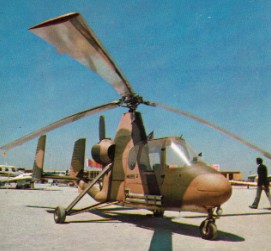
The autogyro has an all-metal fuselage skin, and wooden rotor blades reinforced with glassfibre. The engine drive can be connected to the rotor for jump starts, after which it is disengaged and clutched to the pusher propeller for forward movement. In 1972 Farrington Aircraft Corporation proposed a Forward Air Control version, with provision for air-to-ground rockets for target marking. Lacking the rights to the type certificate, Farrington Aircraft set up a programme to remanufacture existing aircraft with a modified collective pitch system, fibreglass engine cowlings and new composite blades. Farrington Aircraft produced the tandem two-seat Model 20A Heliplane cabin autogyro as a modern development of the Air & Space Model 18-A. Farrington has also developed an amateur-built kit gyrocopter with some features of the Umbaugh U-18 known as the Farrington “Twinstar”.
Air & Space 18A / Umbaugh A18A Flymobil Engine: 180 hp Lycoming O-360-A1D, 180 hp / 135kW Prop: Hartzell HC-C2YK-1BLF/FL7666A constant speed Rotor blades: 3 blade composite Rotor dia: 35 ft 0 in / 10.67 m Width: 9 ft Length: 19 ft 10 in / 6.04 m Height: 9 ft 3 in / 2.82 m Min speed: 25 mph Cruise: 90 mph Top speed: 112 mph / 177km/h Empty wt: 1315 lb Useful load: 485 lb Max TO wt: 1800 lb / 816 kg Ceiling: 3658m Range: 483km
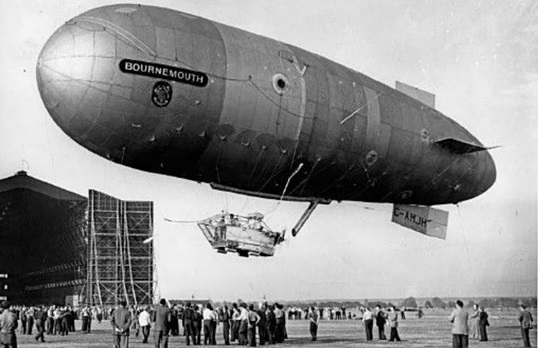
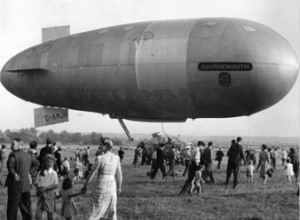
The “Bournemouth” was constructed by the Airship Club launched in 1951. As part of the club, Lord Ventry, Squadron Leader T.P. York-Moore and a small group of enthusiasts wanted to prove that airships could still return after the closure of the British Airship programme in 1932.
Plans were drawn up at Lord Ventry’s Poole home, Lindsay Hall. The little band founded the Airship Club of Great Britain, which they established at Wharncliffe Road, Boscombe. Their premises were formally opened early in 1951 by the Mayor of Bournemouth, Councillor Sydney Thompson. Numerous airship notables lent their support, including former Farnborough superintendent and engineer Major-General Sir John Capper, who had held the first British airship pilot’s licence ever issued. Past head of the Zeppelin company, Dr Hugo Eckener, also joined the club, together with several old airship hands.
The project was funded largely by private enthusiasm, however the Bournemout Corporation made a substantial grant from it’s “Festival of Britain” funds to assist with the completion of the craft and for it’s first flight. This is how the British south coast resort managed to have an airship named after it. The idea being that the completed ship would play a part in the local celebrations of the Festival of Britain year.
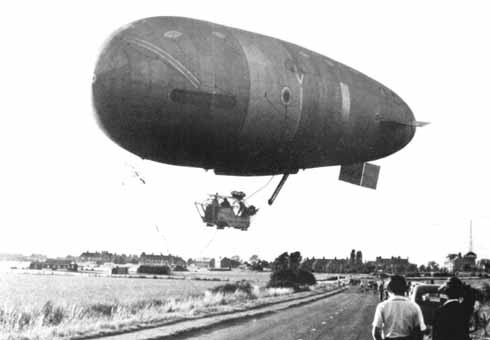
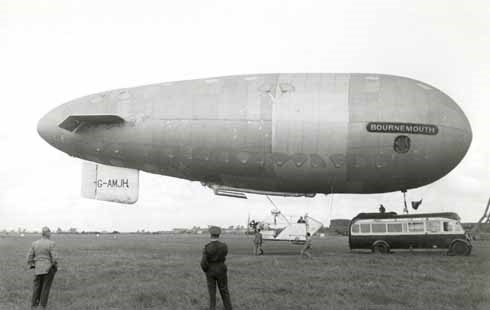
The first airship built in Britain since 1929, the Airship Club built their airship using a gas-bag converted from an old barrage balloon left over from the war. Acquired from the Air Ministry, it set them back £25. The finished airship’s length was just over a hundred feet. Hydrogen was used to inflate her gas-bag and provide lift; although helium was a far safer, non-inflammable gas, none was available. To power the craft through the skies a seventy horse-power Salmson engine from the 1930s was found, and with this it was hoped to achieve a flat-out speed of 35 mph. Suspended beneath the gas-bag by steel cables, the gondola in which pilot and passengers would travel was built from aircraft-gauge steel tube, with a covering of light alloy sheet and clear perspex. The engine was positioned at the rear, a small fuel tank sat on the roof, and four intrepid flyers could be carried.
Although the craft was constructed at Hurn Airport, her hangar there was not available long-term. Drawing on his experience, though, Lord Ventry assured a curious reporter from Flight Magazine that his airship could be safely picketed outside, ideally among trees to protect her from the wind. The plan for Bournemouth, as the craft had been christened, was that she be kept inflated and out-of-doors during all spells of operational activity – and for the flying Lord, this would be as often as possible. Assured by Lord Ventry that an airship is quite amenable to being tethered in the open, and that, with the aid of a protective screen of trees, a small non-rigid can safely ride out a 70 mph gale if properly picketed.
There was some confusion over who was actually allowed to pilot Bournemouth. The Ministry of Civil Aviation was clear on the qualifications for a full airship pilot’s licence, but unsure of the form a provisional licence should take. By 1950 trained airship flyers were very few; as things stood, just a handful of people would be permitted to take charge of Bournemouth, excluding most of the enthusiasts who had helped build her. Meanwhile the government’s Air Registration Board was pondering the safety requirements she should meet, and how to issue a Certificate of Airworthiness for an airship.
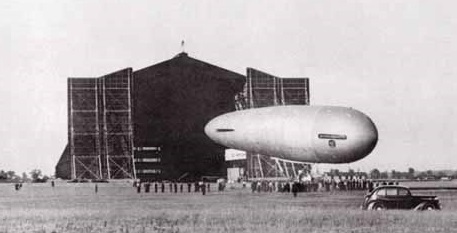
The ship was constructed at Cardington, and by mid-1951 the craft was complete, her engine tested in the Hurn workshop, the name and Bournemouth’s coat of arms painted on her gasbag. For flight trials, though, somewhere quieter than Hurn’s airspace was needed. Bournemouth was transported to an old hangar built especially for airships on an RAF base at Cardington in Bedfordshire. It was intended to bring her back to Bournemouth once tests were complete and various sites were considered as potential homes, among them King’s Park, where iron mooring stakes were set into the ground.
Red tape resolved, the airship received her Ministry registration, G-AMJH, which was painted on her fin. Two more helpers joined: engineers Arthur Bell and Joe Binks, both of whom had survived the 1930 R101 airship disaster. On 21 May, Empire Day, Bournemouth was inflated and it was hoped that the inaugural flight would be in time for Festival of Britain celebrations the following month. But the Salmson engine overheated and it was 19 July before a first flight was made.
Lord Ventry was unable to ascend that day. With three crewmen he climbed aboard, but the machine refused to rise from the ground – he was simply too heavy. He removed duffle-coat and jacket and emptied his pockets but there was no improvement. Very reluctantly the Lord vacated his gondola, replaced by a slimmer man. He joined a small group of her builders who watched as Bournemouth made a decorous circuit of Cardington’s perimeter and returned safely.
The third flight was not overly successful as the ship crash landed on the hanger roof when a guy rope snagged when coming in to land. With Thomas York-Moore in command, Bournemouth crashed into a field near Cardington after suffering engine overheating and steering failure.
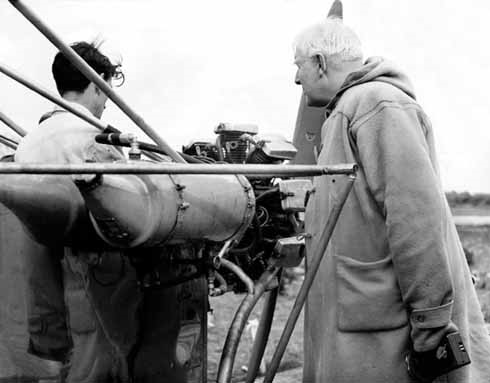
Lord Ventry examines Bournemouth’s Salmson engine
Having a gross lift 3,060lb and useful lift of 13,000lb, the Bournemouth managed three flights in 1951 and then put in for repairs and a chance for the improvements for stability following the crash landing. A further eight flights were managed in 1952. It was found that the first set of steering planes were too small and made her unstable and she had a top plane on the first two testing flights of in 1951, however this was removed. In 1952 a larger set of de Havilland planes were fitted and made the ship quiet controllable. Only eleven flights were made through lack of funds, the last flight made on 16th August 1952, Battle of Britain Day.
The first flight was shown in newsreels around the world and featured in many newspapers of the day. But Bournemouth’s flight had exposed tail-heaviness, together with steering problems. Following modifications, a second flight on 28 July was commanded by Thomas York-Moore. But again the engine grew too hot and to make matters worse, the steering-wheel mechanism failed. Bournemouth came down unexpectedly in a field near her hangar, but nobody was hurt. Adjusted once again, on 17 August she flew with Lord Ventry for the first time. After a 35-minute tour around the local area she returned to Cardington, although one crewman was hurt during her landing, which involved crashing onto the roof of the station’s gymnasium.
Following that episode Bournemouth was deflated. But repairs and more alterations were made and a Certificate of Airworthiness finally obtained. An ex-Bournemouth Royal Blue motor coach arrived, its job to provide a base for a mast to which the airship could moor.
Winter weather interrupted but from spring 1952 several more flights took place. Dogged by incidents, an autumn accident on the ground caused permanent damage to Bournemouth’s gas-bag, which had to be scrapped. By then the Airship Club’s funds were low, and it was decided to wind up the scheme.
Engine: Salmson, 60hp Length: 108 ft Diameter: 27 ft Volume: 45,000 cu.ft
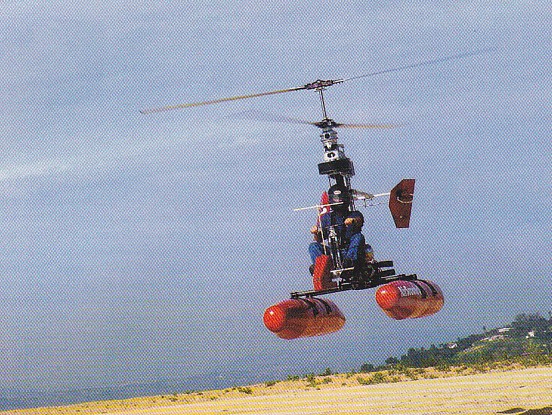
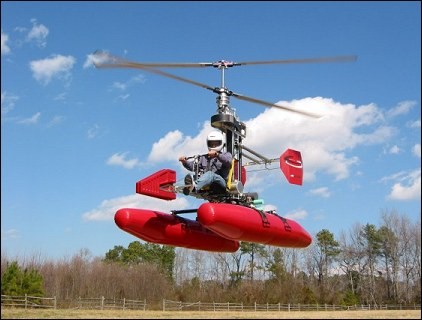
The 2007 AirScooter II is a coaxial design in a modern light-weight craft. By eliminating the need and complexity of swashplates, collective and cyclic control through a coaxial rotor design a number of benefits beyond conventional helicopter designs are immediately realized. First; enhanced, intuitive flight controls are achieved by simple motorcycle-style handlebars and the absence of a tail rotor. To gain altitude, simply throttle up like you would on a motorcycle, turn left or right on the handlebars for craft rotation and move the handlebar assembly as a joystick for directional control (including reverse). No pedal controls are necessary, which means someone without the use of their legs can just as easily fly the AirScooter. Handlebar controls represent the most distinguishable feature of the AirScooter. AirScooter’s patented design also provides an amazing level of stability while in the air and during flight.
The AirScooter falls into the ultralight weight class; requiring no pilot’s license. Weight has been overcome this obstacle by using composite materials.
AirScooter II
The AirScooter is not a kit. The AirScooter was planned to come completely assembled except for installation of the rotor blades and to include pneumatic floats instead of traditional helicopter skids. This feature further adds to the versatility of the AirScooter to get you wherever you want to go on land or swamp while providing a softer landing.
AirScooter II Engine: 1 x 65hp AeroTwin four-stroke Rotor diameter: 4.27m Length: 3.81m Height: 3.35m Width: 2.13m Useful load: 150kg Max speed: 100km/h
Designed by Gerald Vultee, the V-1 was an eight-seat commercial transport, low-wing monoplane. Powered by a 700 hp Wright Cyclone, it had a maximum speed of 225mph (362kmh).
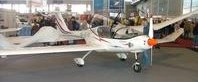
AIRO5 is a two-seat, single-engine, low-wing all-composite aeroplane. The fuselage is made mainly of carbon fibre laminate with sandwich construction. The wing is equipped with slotted flaps, electrically adjustable to 20° for take-off and 45° for landing. The wing is a monospar construction with a sandwich skin composed of two layers of fibreglass and foam. Control surfaces and Empennage is of the same construction.
The undercarriage is three-wheel with a steerable front wheel and braked main wheels.
The main carriage legs consist of a laminate spring. Integrated fuel tanks (2 x 50 litres) are located in the wing leading edges. The plane may be equipped with a towing device for sail planes towing with maximum take-off weight of 650 kg. AIRO5 may be equipped with removable wing extensions (optional).
Airo 5 UL Stall: 35 kt / 40 mph / 65 kmh Cruise: 119 kt / 137 mph / 220 kmh VNE: 146 kt / 168 mph / 270 kmh Empty Weight: 292 kg / 644 lbs MTOW Weight: 472 kg / 1041 lbs Take-off distance (50ft obstacle): 490 ft / 150 m Landing distance (50ft obstacle): 490 ft / 150 m