Arado Ar.76

1935

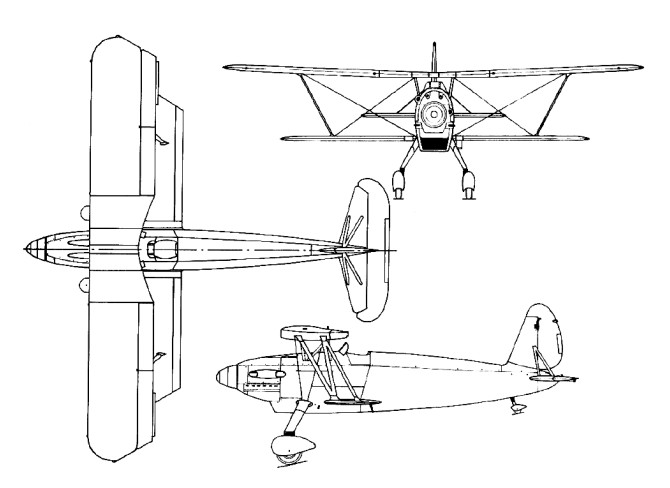
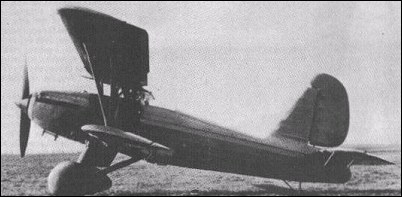
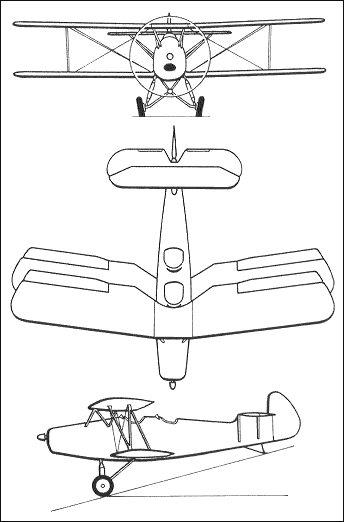
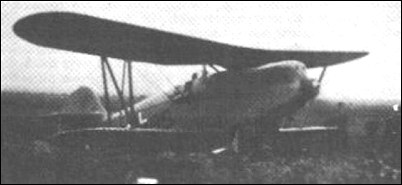
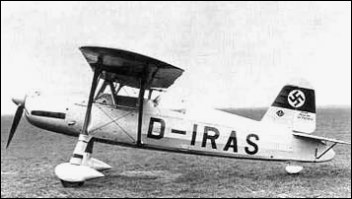
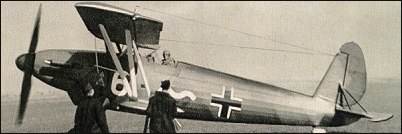
The Ar 76 was a lightweight home-defence fighter and advanced trainer. Single-engined with an open cockpit, The Ar 76 parasol monoplane had a traditional horizontal stabilizer at the extreme back of the fuselage.
Few were built up to the end of 1934, preference being given to the Fw 56.

Engine: Argus Aces 10C, 240 hp
Propeller: two-blade fixed pitch
Wingspan: 9,50 m
Length: 7,20 m
Height: 2,55 m
Wingarea: 13,30 sq.m
Empty weight: 750 kg
MTOW: 1070 kg
Speed: 267 Kmh
ROC: 5000 m in 21 min
Ceiling: 6400 m
Range: 470 km
Armament: 1 MG 17 7,92 mm, or 2 MG 17, plus 3 x 10 kg bombs

Arado Ar.68

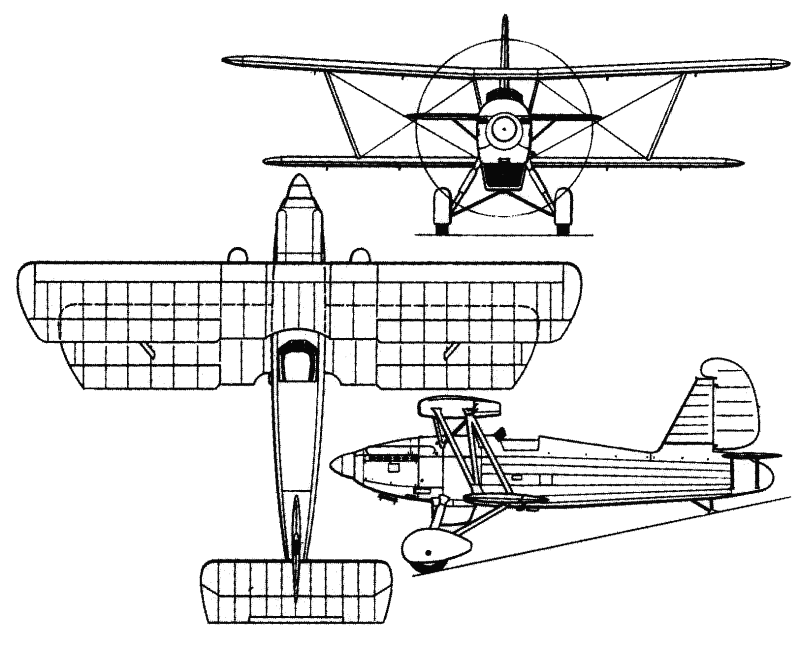
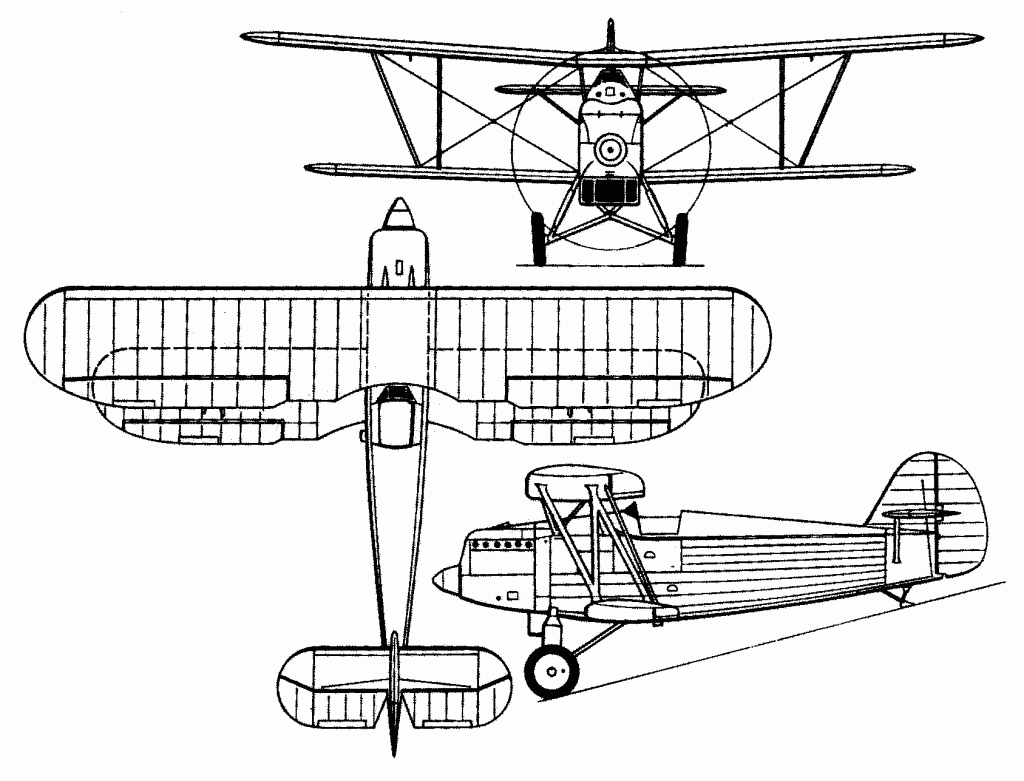
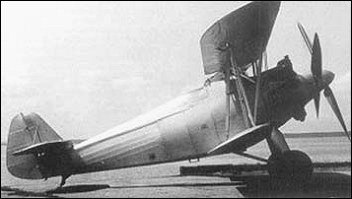
Five prototypes of Ar 68 single-seat fighter biplane (the Luftwaffe’s first fighter) appeared in 1933, powered by BMW VI or Junkers Jumo 210 engines. The choice of engine was influenced by the availability. Rethel wanted the Jumo 210 but other manufacturers had claims before Arado so they had to settle on the BMW VI until supplies of the former were more readily available.
Designed to replace the Heinkel He 51, it was sent to Spain for operational evaluation. Three aircraft were sent to La Cenia in January 1937 for use in an experimen¬tal night fighter flight. They were used briefly, but apparently ineffectively, against Republican Potez 540 and Bloch 200/210 bombers.
All three aircraft were painted over¬all RLM 63 gray. In early 1938, the two surviving Arados (coded 9 1 and 9 2) were transferred to the Nationalists, who used them in the 2nd Army Co¬operation Group.

The first version to enter production and service (1936) was the Ar.68F, powered by the BMW engine, followed after a small production run by the improved 514kW Jumo Da- or Ea-engined Ar.68E.
Prototype Ar.65G and H versions were subsequently built, of which only the supercharged 533.4kW BMW 132 Da-engined ‘H’ was fully developed. The Ar68H was flown using the BMW 132Da radial, a license built Pratt and Whitney Hornet, this engine offered a very much improved performance (max speed 400 km/h) but it was all too late. But even this failed to enter production despite having four machine-guns and an enclosed cockpit for the pilot. A few Ar.68 remained operational as night fighters during the first months of World War II and were the Luftwaffe’s last operational biplane fighters.

Engine: 1 X Jumo 210ea, 505kw
Take-off weight: 2020 kg / 4453 lb
Empty weight: 420 kg / 926 lb
Wingspan: 11.0/8.0 m / 36 ft 1 in / 26 ft 3 in
Length: 9.5 m / 31 ft 2 in
Height: 3.3 m / 11 ft 10 in
Wing area: 27.3 sq.m / 293.85 sq ft
Max. speed: 335 km/h / 208 mph
Cruise speed: 280 km/h / 174 mph
Ceiling: 8100 m / 26600 ft
Range w/max.fuel: 500 km / 311 miles
Armament: 2 machine-guns, 60kg of bombs
Crew: 1

Arado Ar 68G
Engine: 1 x BMW VI V-type, 750hp.
Wingspan: 36.09ft (11.00m)
Length: 31.17ft (9.5m)
Height: 10.76ft (3.28m)
Maximum Take-Off Weight: 5,456lbs (2,475kg)
Maximum Speed: 190mph (305kmh; 165kts)
Maximum Range: 258miles (415km)
Service Ceiling: 26,575ft (8,100m)
Armament: 2 x 7.92mm MG 17 forward-firing fixed machine guns.
Crew: 1

Arado Ar.66

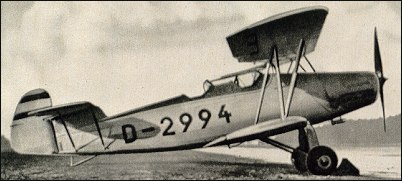
Two-seat biplane trainer powered by a 179kW Argus As 10 engine.

Engine: 1 x Argus As 10C, 175kW
Take-off weight: 1330 kg / 2932 lb
Empty weight: 425 kg / 937 lb
Wingspan: 10.0 m / 32 ft 10 in
Length: 8.3 m / 27 ft 3 in
Height: 2.9 m / 9 ft 6 in
Wing area: 29.6 sq.m / 318.61 sq ft
Max. speed: 210 km/h / 130 mph
Cruise speed: 175 km/h / 109 mph
Crew: 2

Arado Ar.65

Development of the Ar.64 and powered by a 372kW BMW VI inline engine, the first prototype flew in 1931. Delivery of production Ar.65E single-seat fighters began in 1933 and the first Staffel became operational in April 1934.
The Ar.65E was superceeded in production by the slightly heavier Ar.65F, but both versions were transferred to training units from 1935 with the arrival of better aircraft.

Arado Ar.64

Developed from SD.II and SD.III prototypes that Walter Rethel produced at the request of Reichswehrministerium, the Ar 64 was a single-seat biplane fighter intended to succeed Fokker D.XIII. It was a traditional biplane with unequal wings of mixed construction, the aerofoil having a timber structure and the fuselage a metal tubular structure, both fabric covered. The landing gear was fixed, with a split axle.

Versions
Arado Ar 64a: First prototype, powered by a Bristol-built Jupiter VI, 530 hp licensed built by Siemens Halske and with a four-bladed wooden propeller.

Arado Ar 64b: The second and third prototypes, tested with Lipetsk in 1931, were powered by a 12 cylinders BMW VI 6,3 of 640 hp and were used for the development of the Ar 65.

Arado Ar 64c: The last prototype appeared in 1931, and was distinguished from the first by a reinforced structure and a four-bladed propeller of large diameter.

Arado Ar 64D: A production version powered by a Jupiter VI, identifiable with a modified landing gear and a two-bladed propeller. The armament was proposed to be 2 7,9 mm machine-guns but it is very probable that they were not fitted on the 19 aircraft of the DVS during 1934/1935. These aircraft were used as advanced trainer by civil and military pilots.

Arado Ar 64E: The last version, powered by a Jupiter VI. Used by Jagdstaffeln of Fliegergruppe Döberitz and Damm, along with Ar 65.

Users:
Germany:
30 Ar 64 were ordered by Luftwaffe clandestine between 1931 and 1934, including 12 to produce by Focke-Wulf. 6 Ar 64D and 5 Ar 64E were in account at April 1, 1933. The last specimens were delivered during 1934 and, in spite of the arrival of Ar 65, intended to succeed to him, 21 Ar 64 remained in service on July 1, 1936.

Soviet Union:
The first Ar 64 had been used briefly for tests powered by a Rolls-Royce engine before ordering 24 to be delivered at the beginning of 1933, but by April 1936 they had received only 19 planes.

Aquilair Kid

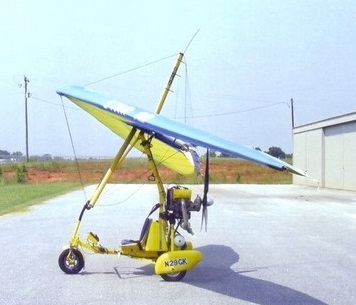
The Aquilair Kid ultralight trike was designed and produced by Aquilair to comply with the Fédération Aéronautique Internationale microlight category, including the category’s maximum gross weight of 450 kg (992 lb). The aircraft has a maximum gross weight of 300 kg (661 lb).

It features a cable-braced hang glider-style high-wing, weight-shift controls, a single-seat open cockpit, tricycle landing gear and a single engine in pusher configuration.

The aircraft is made from metal tubing, with its wing covered in Dacron sailcloth. Its 9.9 m (32.5 ft) span Star 12 wing is supported by a single tube-type kingpost and uses an “A” frame weight-shift control bar. The standard powerplant is a twin cylinder, air-cooled, two-stroke, dual-ignition 50 hp (37 kW) Rotax 503 engine, with the 40 hp (30 kW) Rotax 447 and the 64 hp (48 kW) liquid-cooled Rotax 582 optional.

With the Star 12 wing the aircraft has an empty weight of 132 kg (291 lb) and a gross weight of 300 kg (661 lb), giving a useful load of 168 kg (370 lb). With full fuel of 30 litres (6.6 imp gal; 7.9 US gal) the payload is 146 kg (322 lb).

The aircraft was supplied in modular form, with the chassis, engine, reduction drive and propeller all available separately, Priced at€7912 in 2011. A number of different wings can be fitted to the basic carriage, but the Star 12 was formerly the standard wing offered. The chassis incorporates an under-seat pivot system that allows the wing to be mounted and then raised into position.

Supplied as a kit for amateur construction or as a complete ready-to-fly-aircraft, production was completed in 2014.

Variants:

Kid 447
Aircraft with the twin cylinder, air-cooled, two-stroke, single-ignition 40 hp (30 kW) Rotax 447 and the 64 hp (48 kW)

Kid 503
Aircraft with the twin cylinder, air-cooled, two-stroke, dual-ignition 50 hp (37 kW) Rotax 503 engine

Kid 503 / Star 12 wing
Engine: 1 × Rotax 503, 37 kW (50 hp)
Propeller: 2-bladed wooden
Wingspan: 9.9 m (32 ft 6 in)
Wing area: 12.9 m2 (139 sq ft)
Empty weight: 132 kg (291 lb)
Gross weight: 300 kg (661 lb)
Fuel capacity: 30 litres (6.6 imp gal; 7.9 US gal)
Maximum speed: 145 km/h (90 mph; 78 kn)
Cruise speed: 90 km/h (56 mph; 49 kn)
Stall speed: 52 km/h (32 mph; 28 kn)
Rate of climb: 5 m/s (980 ft/min)
Wing loading: 23.2 kg/m2 (4.8 lb/sq ft)
Crew: one

Kid 582
Aircraft with the twin cylinder, liquid-cooled, two-stroke, dual-ignition 64 hp (48 kW) Rotax 582 engine
Aquilair Swing

Swing 582 S 14

The Swing trike is built in welded dural tube and uses a monopole which pivots behind the rear seat, to lift the wing. The Swing can use a Top 14.9 wing specially built for Aquilair by La Mouette.

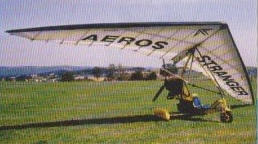
Aquilair does not make its own wings, but the budget Swing 502 Aeros uses Ukranian Aeros wings.

Swing 503 Aeros

The Swing Citroën uses a modified Citroën Visa engine of 56 hp.

Swing Citroën

Swing 582 S 14
Wing span: 9.90 m
Wing area: 14.9 sq.m
Fuel capacity: 50 lt
Certification: Vz
Engine: Rotax 582, 64 hp
MAUW: 405 kg
Seats: 2
Max speed: 148 kph
Cruise speed: 105 kph
Minimum speed: 56 kph
Climb rate: 5.5 m/s
Fuel consumption: 11 lt/hr
Price (1998): 115 000 Fttc

Swing 503 Aeros
Wing area: 14.8 sq.m
Fuel capacity: 30 lt
Engine: Rotax 503, 52 hp
MAUW: 405 kg
Seats: 2
Max speed: 125 kph
Cruise speed: 90 kph
Minimum speed: 52 kph
Climb rate: 5 m/s
Fuel consumption: 11 lt/hr
Price (1998): 80 500 Ftc

Swing Citroën
Empty weight: 151 kg
Wing span: 10.50 m
Wing area: 16 sq.m
Fuel capacity: 50 lt
Engine: Citroën Visa, 56 hp
MAUW: 405 kg
Seats: 2
Max speed: 145 kph
Cruise speed: 95 kph
Minimum speed: 58 kph
Climb rate: 4.8 m/s
Fuel consumption: 8 lt/hr
Price (1998): 135 000 Fttc

Apollo Ultraleightflug Racer

Racer GT

A straightforward design using bolted dural tube.

The Racer S has a laminated fairing over the rear undercarriage and engine, and gas struts in the rear suspension.

Racer S

Racer GT
Empty weight: 165 kg
Wing span: 10.4 m
Wing area: 17 sq.m
Fuel capacity: 32 lt
Certification: A
Engine: Rotax 503, 48 hp
MAUW: 374 kg
Seats: 2
Max speed: 120 kph
Cruise speed: 80 kph
Minimum speed: 40 kph
Climb rate: 5 m/s
Fuel consumption: 8 lt/hr
Price (1998): 17 500 DM

Racer S
Empty weight: 195 kg
Wing span: 10.4 m
Wing area: 17 sq.m
Fuel capacity: 40 lt
Certification: A
Engine: Rotax 582, 65 hp
MAUW: 430 kg
Seats: 2
Max speed: 110 kph
Cruise speed: 85 kph
Minimum speed: 45 kph
Climb rate: 3 m/s
Fuel consumption: 14 lt/hr
Price (1998):224 500 DM