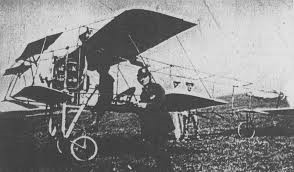
Horace Greeley Baker of Harlan, Iowa, USA, built this own design multiplane in 1911. The four wings were adjustable for maintaining lateral and longitudinal stability. A public demonstration was done at the Shelby County Fair in August 1911, but the huge machine was taken by a gust of wind and ended damaged in a fence, never to fly again.
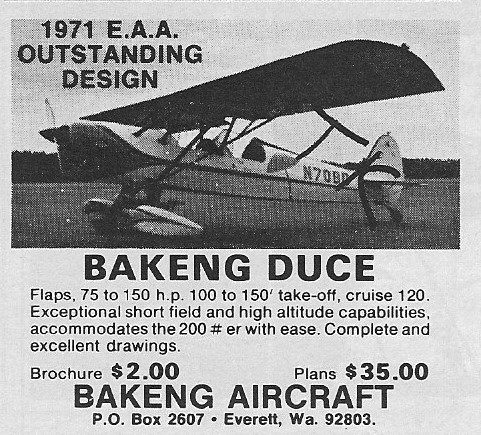
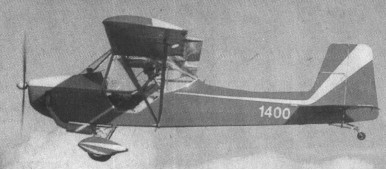
The Bakeng Deuce is a two-place parasol design utilizing a steel tube fuselage. The structure is faired with plywood and aluminum formers which support spruce stingers. Wings are of basic wooden construction with solid spruce spars.
First flown on 2 April 1970, this homebuilt received the ‘Outstanding New Design” and “Design improvement’ awards from the EAA in 1971. The V-strut braced wing utilizes both metal and spruce construction and is covered with fabric. The fuselage is also fabric-covered but is built from steel tubes. The landing gear is the conventional tailwheel type, and the two seats are arranged in tandem fashion. Bakeng has also designed a biplane version of the Duce, called the Double Duce. Both horizontally opposed and radial engines can be used, from 85-150 hp. Baking Deuce Airplane Factory purchased the rights to the Bakeng Duce in March of 1999. The name was changed to “Deuce” to separate those aircraft built before and after. The new Deuce incorporates the design of the old Duce with improvements based on analyzing the aircraft and listening to builders who have built and flown them for the past thirty years.
Dec 1973
Design Improvements are changes only to enhance integrity, reliability, ease of construction or function. These changes include: Beef up fuselage behind the landing gear legs. Complete redesign and relocation of the rudder pedals, cables and toe brakes. Complete redesign of the elevator control (pushrods instead of pulleys). Completely new lift strut attachments (individual, like old Pipers). Different tail mount structure New attachments for turtle deck Entirely new rudder design and mount (now removable). New method of attaching cross wire bracing in front of front cockpit. Removal of all elevator pulleys and cables. Larger fuel tanks Comfortable, factory-built bucket seats CAD drawings of the original plans have been completed.
It is unknown when Baird first developed an interest in aviation, but he certainly corresponded with early pioneers such as Louis Bleriot and S. F. Cody about the finer points of aircraft design. A visit to the Blackpool Aviation Week in October 1909 seems to have given focus to his enthusiasm, and when he returned to Rothesay he began work on an aircraft of his own design, the Baird Monoplane. This was generally similar in layout to the aircraft in which Bleriot had made the first crossing of the English Channel on 25 July 1909, albeit with a unique control system. His aircraft also had a four-cylinder air and water-cooled engine made by Alexander Brothers in Edinburgh. The body was constructed from tubular steel and the wings were covered in silk sewn by Mrs Baird.
The completed Baird Monoplane went on display in Rothesay during the summer of 1910, and was a star attraction at the Bute Highland Games on 20 August 1910. It is unclear whether Baird himself had been one of the 250,000 people to attend the Lanark Air Show, the first to be held in Scotland, between 6 and 13 August 1910, but given his interest in aviation it would seem odd had he not been there.
Early on the morning of 17 September 1910, the Baird Monoplane was transported by cart across Bute to Ettrick Bay, on the island’s west coast. It was a fine day, and a small crowd had gathered, including a correspondent of Flight magazine. Baird started the engine, and advanced the throttle. According to the report in that week’s Flight the aircraft accelerated over the sand and took off correctly, but having cleared the ground then veered to the right, landing with a crunch that buckled one of the main wheels and slightly damaged a wing.
Having succeeded in making (albeit briefly) the first flight of an entirely Scottish aircraft, it is not known if Baird ever flew his monoplane again. What set his achievement apart was the entirely Scottish nature of the undertaking.
It is said that the engine from the Baird Monoplane was given to a museum in Glasgow in the 1950s, and the propeller was donated to the National Museum of Flight in 2010, to mark the centenary of the flight.
While it was on show over the summer of 1910, the Baird Monoplane was examined by Thomas Sopwith, who would later become an aviation pioneer in his own right and an aircraft manufacturer. With Baird’s permission, Sopwith drew on some of the novel ideas in the Baird Monoplane when he later began building his own aircraft, which went on to have a significant impact during World War One. Baird’s name was also remembered when, in 2010, the small Bute Airstrip near the southern end of the island was renamed in his honour as Baird Airstrip.
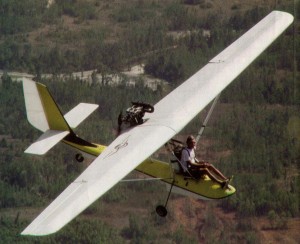
Built by Bob Bailey, circa 1991, the Connie utilises a single Cosmos trike float and qualifies as a Pt.103 ultralight. The float is the primary structural unit. Baily fitted a modified version of his Tempest ultralight sailplane wing and a Rotax 447. The main undercarriage retracts with a simple lever. On the prototype, the tailwheel retracts but this may change in a production version. The Connie may be produced with Baliey’s partner, Bill Moyes.
Prototype Engine: Rotax 447, 40 hp Wingspan: 35.1 ft. Length: 18 ft. Wing area: 118 sq.ft. Empty wt: 328 lbs. Gross wt: 570 lbs. Vne: 90 mph. Cruise: 65 mph. Stall: 35 mph. Fuel cap: 5 USG. ROC: 900 fpm. TO dist: 200 ft. Ldg dist: 300 ft.
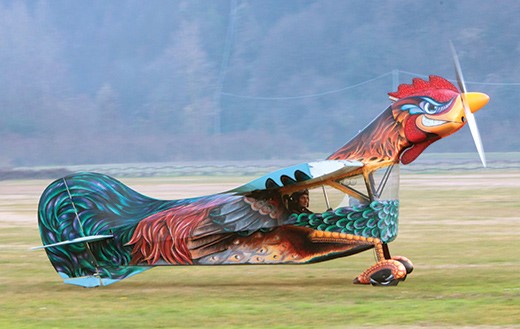
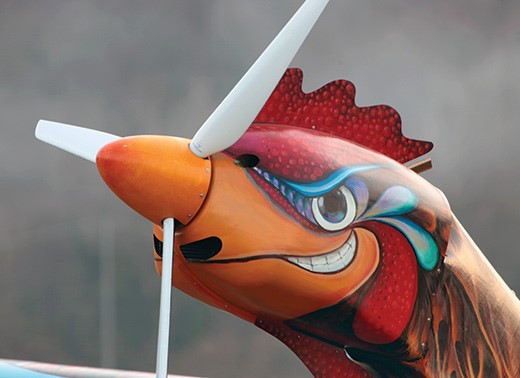
At Nervesa della Battaglia, near Treviso in northeastern Italy, aircraft designer and homebuilt aircraft enthusiast Ottone Baggio conceived the idea of building a flying machine modelled on the world’s best known flightless bird: the rooster.
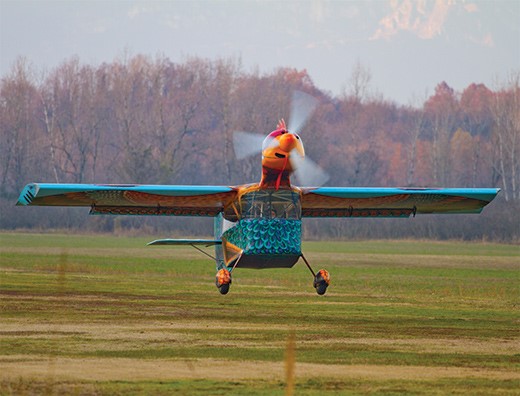
The engine nacelle (the rooster’s head) would be mounted well ahead and above the wing leading edge. The design does not utilize fuselage and wing components from any other kit aircraft, and is 100% original. The wings are of a conventional, lightweight wood structure with a forward box spar that runs through the roof of the cockpit, plus trailing edge spar; there are no wingstruts, and the wings have a 1 degree dihedral. They are covered in extremely thin-gauge aluminum with a total span of 29 feet, and, unusually, the “bird” has 66%-span flaperons, but these are on the inboard sections of the wings. The wingtips are square and flattish, slightly angled inward with wingtip strobes, and the ailerons are cable operated.
Ottone Baggio with the small-scale model
The Rooster took about three years to conceive, design and build. Ottone started with model airplanes, first a “chuck” (hand-launched) glider and then a radio-controlled version. Proving that in small scale such a design would fly, he developed a prototype that would be partially like a conventional, three-axis-controlled small airplane, but would have the world’s most exotic color scheme—plus the head of a rooster.
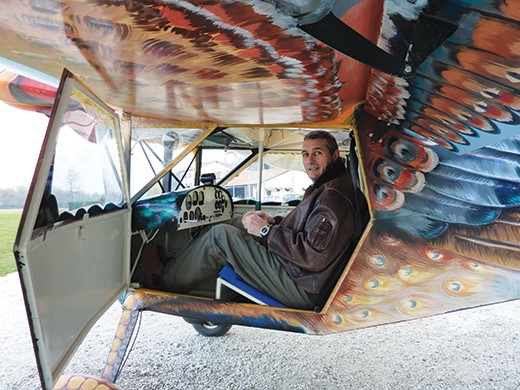
The fuselage is steel tube with gussets covered by fabric, though areas of the forward fuselage are covered in thin-gauge aluminium. The rooster’s head, which is the engine compartment, is a molded composite cowling around a tubular-steel engine bearer. The cockpit resembles that of a 1930s airship gondola with a rounded, acrylic screen and a basic panel. The rudder is linked to the tailwheel, and there are caliper brakes on the mainwheels operated from a hand-actuated brake lever on the panel. Because of the engine’s high thrust line, Baggio has designed a huge tail and rudder relative to the meager 19-foot total length of the rooster, and he even fitted a dorsal “rudder” in which the steerable tailwheel is shrouded.
It has an empty weight of 500 pounds and is powered by a 100-horsepower Rotax 912 engine. The paint job took many months of detailed work with an amazing palette of colors.
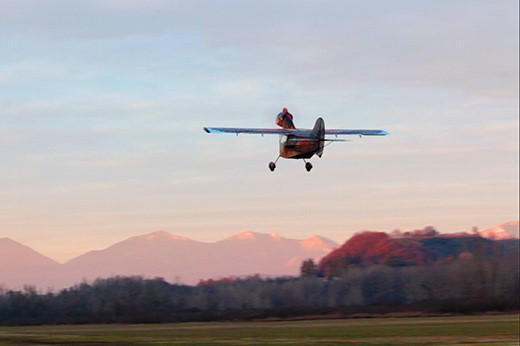
The Rooster, registered in the Italian ultralight sequence as I-9923, was actually completed earlier but suffered some fast-taxi mishaps. In December 2011, the test pilot, fellow homebuilder Daniele Beltrome carried out many fast taxi trials and a few tentative hops. “The Rooster is a difficult aircraft to fly,” he reported (no kidding!) and suggested a few adjustments to its elevators and control-wire cable tensions. The first proper flight, lasting about 10 minutes, had the Rooster leaving the airfield, completing a slow 180 turn and then returning to the airfield.
Daniele Beltrome carried out much of the initial flight testing.
Unfortunately, Beltrome further reported, “The Rooster is unstable in roll and has a tendency to go into the first stages of a spin when you start to turn, if it isn’t noticed and checked.” He put in one stage of the flaperons to try to solve this problem. This is why the first flight turn was a very gentle affair with little more than 5 of bank and often less, with a very obvious and “twitchy” pitch.
The Rooster is its control system works in reverse to a normal three-axis-control aircraft. The control column comes down from the roof of the cockpit, and the control inputs are exactly the opposite to what one learns in normal piloting skills, so you pull back on the stick to go down and vice versa. This is the reason for some of the accidents during early taxi tests. It is apparently more like flying a delta-wing hang glider.
More test flying was planned and the builder may extend the flaperons to full span to help improve roll control. But like the bird of its inspiration, the Rooster is unlikely to fly that much and achieve widespread acceptance among homebuilders and pilots. It is more the product of a dream becoming reality. However, as an aviation spectacle, the sight of the Rooster flying over the Nervesa Valley has gotten everyone talking aviation and flight, though it may also have stirred considerable unrest and disruption to egg production in local hen houses.
Giovanni Paolo Baglioni built his biplane in Italy. This staggered-wing tractor biplane with two double sets of front control surfaces was briefly tested in June 1911.
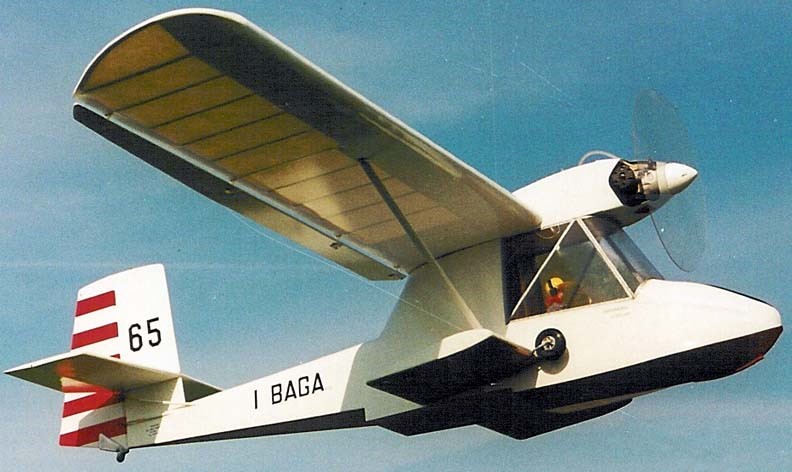
The Bagalini Baganfibio (from “Bagalini” and “Amphibian”) is an Italian homebuilt flying boat that was designed by Marino Bagalini. The two-seat tandem amphibious aircraft was supplied in the form of plans for amateur construction.
The Baganfibio features a strut-braced high-wing, a two-seats-in-tandem enclosed cockpit, retractable conventional landing gear and a single engine in tractor configuration mounted above the wing.
The aircraft is of all-wooden construction, with its wings covered in doped aircraft fabric. Its 10.7 m (35.1 ft) span wing employs an RSG 36 airfoil and has Junkers ailerons. The aircraft does not use tip floats, but instead relies on sponsons for balance in the water. The acceptable power range is 40 to 50 hp (30 to 37 kW).
Full fuel is 26 litres (5.7 imp gal; 6.9 US gal) and the payload is 151 kg (333 lb).
The manufacturer estimates the construction time from the supplied kit as 700 hours.
Plans were available in 1998.
Engine: Rotax 503, 50 hp / 37 kW Wingspan: 35 ft 0 in / 10.67 m Wing area: 167 sq. ft / 15.5 sq.m Airfoil: RSG 36 Length: 22 ft 0 in / 6.71 m Empty weight: 385 lb / 175 kg MTOW: 759 lb / 344 kg Fuel capacity: 26 litres (5.7 imp gal; 6.9 US gal) Wing loading: 22 kg/sq.m / 4.5 lb/sq ft ROC 600 fpm / 3.0 m/s Cruise: 43 mph / 69 km/h / 37 kn Max speed: 62 mph / 100 km/h / 54 kn Range: 130 mi / 210 km / 110 nmi Stall: 28 mi / 45 km/h / 24 kn Seats: 2
A small ultralight motorglider. This motorglider is available as plans only. It consists of wood and metal construction. The wings are tapered. The landing gear is fixed. Estimated building time is 700 hours. Plans price was $250. 2009 Price: 6000 EURO
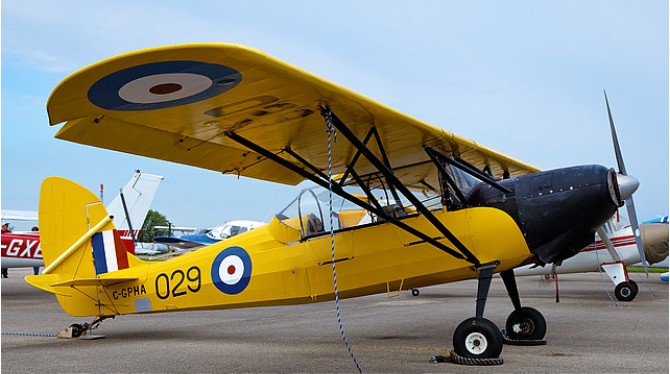
The Bagimer I (also referred to as Alouette) was a two-seat homebuilt aircraft developed by Badez, Giraud and Mercier and was basically a Piper J-3/L-4H with modifications to the landing gear, wings and tail surfaces and a 75 hp Minié 4.DC.32 engine replacing the original 65 hp Continental A65. The first aircraft was built by the developers and registered F-WFAR (c/n 01) it first flew in September 1949, being reregistered F-PFAR after it received its CofA.
F-PFOK with club member Guy Thion in the cockpit
The Bagimer II was the same aircraft after it had been re-engined with the original 65 hp Continental A65. A second very similar aircraft was then constructed by members of the Aéro-club de Pithiviers, initially registered F-WFOK, later F-PFOK. Reportedly a third example, a Bagimer II, was also built in France.
Keith Bennett of Devonport, Tasmania, Australia, asked Owen Badcock about designing him a plane. Owen Badcock proceeded to draw up some plans and then built a one-quarter scale radio¬controlled model complete with folding wings. This performed completely as planned with no need for modifications. Keith started building in June 1992. All stress-bearing metal parts are chrome molydenum steel tube which after welding (T.I.G.) has been sand blasted, oil filled, primed and then painted with two-pack white. The wing ribs are Epi glued Canadian Spruce with 6m l2ply noses and tails. All moving parts are nylon bushed. An early problem with tail-wheel shimmy was solved by Keith who turned up a wheel from solid aluminium to fit a standard ball-bearing. A solid rubber tyre was vertical stabilizer and the leading edges of the wings snug up to rubber blocks on the roof and sides of the trailer as the plane settles ‘home’ upon loading. Starting of the 503 DCDI engine is facilitated by use of a G.A. type fuel primer. The wheel brakes are operated by twin levers conveniently situated forward of the throttle lever on the left side of the cockpit. This makes for very easy taxing. For parking a spring loaded lever can be rotated to hold both levers on. This unlocks automatically when the brake levers are activated. Wing folding is affected by first half withdrawing a pin on the leading-edge spar at the root of each wing. This unlocks a safety-pin which is moved ‘on’ by the last part of the pins travel when it presses down on a nylon wedge on the forward end of a rod. The aft end of the rod carries the safety pin which prevents the spring loaded flaperon disengaging mechanism separating in flight in the event of spring failure. The flaperon as are then disengaged for wing folding and held up by a small piece of shock-cord which retracts into the wing when not in use. The leading edge spar pin can then be lifted right out and the wings swing back and locked on to the tail. The whole operation takes two minutes.