A wing from 1974 is made up of an aerial wing of inflatable material (Patent issued 1974). Partly inflated by lighter than air gas and the rest inflated by air during flight. Shroud lines are used to suspend a person beneath the aerofoil during flight. At least one was completed.
The Wing reportedly was apparently still in existence in 2009.
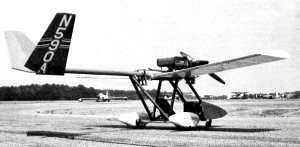
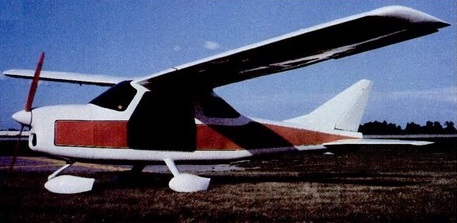
A single-seat sport plane, the Demoiselle N590A first flew in July 1966 and had a Continental A65 engine. Reportedly this aircraft was later briefly tested with an enclosed cabin (as the Super Demoiselle), the planned production model, but development was soon halted.
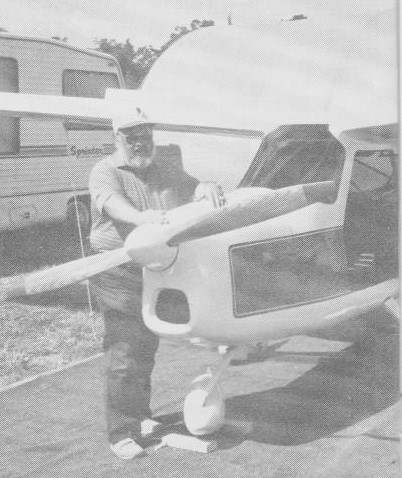
Designed by Jim Bede, the Dream was to be an affordable airplane.
The NAC Dream featured leading edge wing slots and spoilers for glidepath control, in addition to ailerons. The spoiler control lever is used by the same hand as the throttle. The ailerons had a 2-to-1 differential.
The fuel tank is mounted on the centre of gravity.
A prototype only was built in 1983 and in 1984 it was to be sold with a 35 hp Cuyuna 430-2UL engine at a target price of $7200 ready to fly.
Jim Bede was contracted by a development group and plans were to market the aircraft by a company named NAC under the name Dream.
The Bede XBD-2 was an experimental short takeoff and landing (STOL) aircraft, with structural use of glass-fibre and aluminium honeycomb, a suction boundary layer control (BLC) system and fuselage-mounted twin engines driving a pusher configuration, shrouded single propeller. The Bede XBD-2 was developed through a design study with the Department of Aerodynamics at the University of Maryland.
The boundary layer was controlled with a suction system via 160,0000 upper wing and aileron surface holes, with diameters ranging from 0.020 to 0.029 in (0.51 – 0.74 mm). Aluminium honeycombs were used throughout the fuselage as structural elements. The XBD-2 was powered by a pair of piston engines mounted inside the fuselage, driving a single pusher configuration propeller.
The wing of the XBD-2 had an aspect ratio of 9 and 5° of dihedral. It was built around an aluminium box spar, was aluminium skinned and carried sealed all-metal ailerons. A 14 in (356 mm) Joy blower pulled air through the pinholes in the surfaces, venting it in the fuselage to cool the engines. Sealed flaps smoothly changed the wing camber and increased its area by about 15% when extended.
Apart from its use of aluminium honeycomb, the front part of the flat-sided fuselage was conventional, with a cabin with space to seat four, though mostly filled with instrumentation. Aft, two 145 hp (108 kW) Continental O-300 engines were mounted one above the other. They drove the rear propeller shaft through ten V-belts via Sprag clutches to avoid engine speed synchronisation problems. The rear fuselage tapered to a vertical wedge with the propeller shaft emerging at its top. The circular shroud was attached to the fuselage by the fixed triangular fin mounted on the top of the fuselage, the triangular tailplane and a short boom at the bottom. The propeller rotated close to the shroud’s leading edge; the shroud was intended partly to reduce propeller tip losses and also to act in the place of conventional stabilizing surfaces. The fin resumed above the shroud and carried the top of a high aspect ratio rudder behind the shroud’s trailing edge, its bottom end attached to the tailboom, with a midpoint cutout to allow for elevator movement. The elevator was supported by tailplane extensions beyond the shroud, similar to that of the fin.
Structurally, the shroud was a glass-fibre shell surrounding an aluminium spar and filled with polyurethane foam. The control surfaces were conventionally constructed from aluminium sheet. The XBD-2 had a fixed tricycle undercarriage, with wheels enclosed in fairings. The main legs were glass-fibre cantilevers, unusual at the time.
After the XBD-2 first flew on 26 July 1961 it was flight tested and slightly modified to simplify future production. It was intended to lead to the BD-3, which would have been a six-seater with bigger engines, more use of honeycomb panels, retracting undercarriage and a laminar flow wing, but this was not built.
The sole XBD-2 is mounted on outdoor display at the entrance to Manitowoc County Airport.
Engines: 2 × Continental O-300-A, 145 hp (108 kW) each Propeller: Hartzell constant speed Wingspan: 37 ft 6 in (11.42 m) Wing area: 150.0 sq ft (13.94 sq.m) Airfoil: Göttingen 549 Length: 23 ft 8 in (7.22 m) Height: 12 ft 5 in (3.78 m) Max takeoff weight: 3,300 lb (1,497 kg) Maximum speed: 204 mph (328 km/h, 177 kn) at sea level Cruise speed: 179 mph (288 km/h, 156 kn) maximum at 65% power at 9,000ft (2,740 m) Stall speed: 42 mph (68 km/h, 36 kn) with BLC. Stall speed: Without BLC 64 mph (57 kn;106 km/h) Service ceiling: 21,000 ft (6,400 m) Rate of climb: 1,050 ft/min (5.3 m/s) Take-off run: less than 300 ft (90 m) Take-off distance to clear 50 ft (15.25 m): under 500 ft (152 m) Landing distance from 50 ft (15.25 m): under 500 ft (152 m) Seats: 4
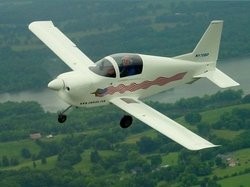
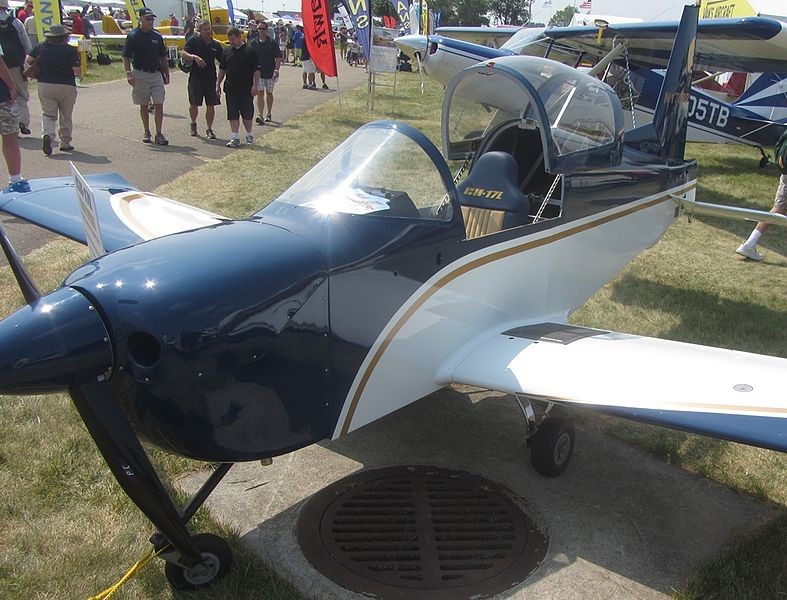
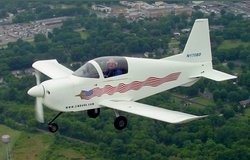
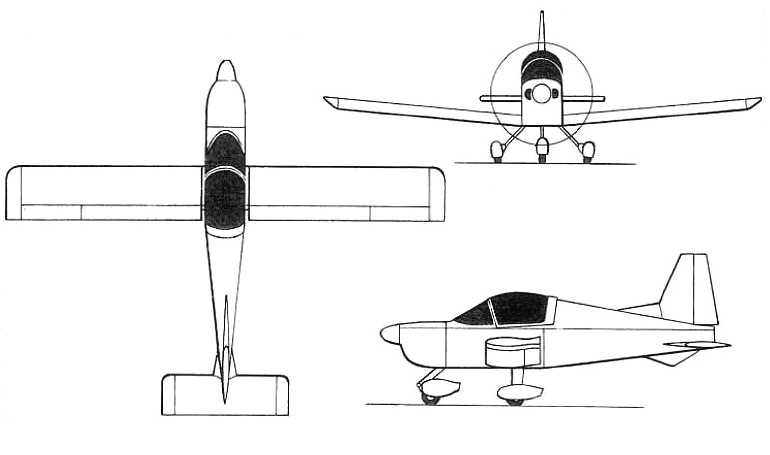
The Bede BD-17 Nugget is an American single-seat monoplane. designed by Bedecorp for amateur construction from a kit.
The Nugget was announced in June 2000 and was designed to be easy to build with a maximum of 110 parts. The first flight of the tricycle landing gear prototype (N624BD) was on 11 February 2001.
It is an all-metal low-wing constant-chord monoplane, it has optional folding wings and is available with fixed conventional landing gear with a tailwheel or a tricycle landing gear. Scotch ply main legs and differential braking. The prototype BD-17 has 5.00-5 mainwheel tyres and 25 cm (10 in) nosewheel tyre. It can be fitted with an engine between 45 and 80 hp (33.6 to 59.7 kW). The flying controls are conventional and manual. No flaps were fitted on the prototype BD-17 but production kits have flaps.
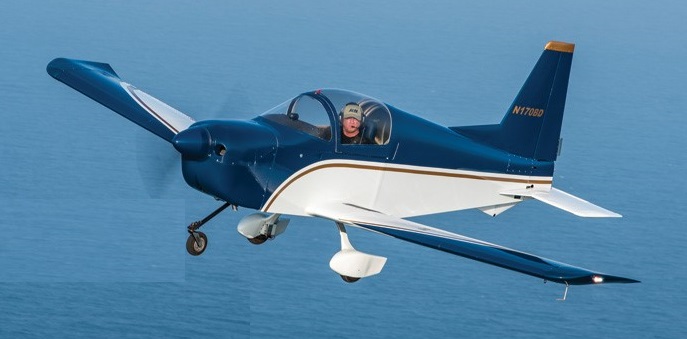
The prototype BD-17L N170BD had a 60 hp (45 kW) HKS 700E two-cylinder four-stroke engine. The pilot has an enclosed cockpit with a rearward-sliding canopy. The structure is all-metal honeycomb sandwich. Honeycomb fuselage covered with 5 mm (0.20 in) aluminium sheet and control surfaces are of urethane foam. Constant-chord wings have extruded tube spar.
The public debut was at Sun ‘n’ Fun, April 2001.
The BD-17L is a LSA version of the original BD-17. The BD-17L sold as a kit,meets the 51% rule.
BD-17L
The BD-17L uses a half inch honeycomb sandwich panels. They are chemically welded with gussets to each other. This concept was originally used on the BD-1 and the Yankee. It is a honeycomb core with .020 skins bonded on each side. This creates an extremely light weight but strong panel.
The BD-17 wing spar is strong, light and simple, extruded aircraft-quality aluminum tube. Both wing spars slide over a center spar rigidly, fastened to the fuselage, providing exceptional load-carrying strength. Ribs are made of the same honeycomb aluminum that makes the fuselage 300% stronger than conventional construction. The BD-17′s wing spar has been tested to 11.2 Gs without failure in destructive testing. The honeycomb wing ribs form a series of sealed panels in each wing, capable of holding up to ten gallons of fuel in each with the option of an additional panel on each wing to store fuel.
The landing gear is one continuous hoop that is fastened to the center section with two pins. The actual assembly to the center section takes approx. 15 minutes. The landing gear is bullet drilled for the brake lines. Fittings are attached at the top and bottom of the hoop. The main landing gear takes approximately 3 hours to build including wheels and brakes.
The BD-17 Nugget possesses exceptional flying qualities. Being small and lightweight, it utilizes the side stick control first adopted on the BD-5. The basic stability in all three axes are positive, both in static and dynamic stability. Control harmony is smooth and even for all three surfaces. Roll response is smooth and positive even into stall buffet. Cockpit room is accommodating for both large and small pilots, and visibility is excellent throughout.
The cost of the BD-17 was US$19,990 less engine in 2003. Seven had been produced by 2011. At least 17 BD-17 kits sold and four aircraft registered by August 2003; three of which were completed by that time.
Bede BD-17 Nugget Engine: HKS 700E, 60 hp (44.6 kW) Wingspan: 21 ft 6 in (6.55 m) Wing area: 53.5 sq ft (4.97 m2) Wing chord, constant: 0.76 m (2 ft 6 in) Wing aspect ratio: 8.6 Length: 17 ft 6 in (5.33 m) Height: 7 ft 9 in (2.36 m) Empty weight: 450 lb (204 kg) Gross weight: 850 lb (386 kg) Fuel capacity: 20 USG / 76 lt / 16.7 Imp gallons Maximum speed: 195 mph (313 km/h, 169 kn) Cruise speed: 150 mph (241 km/h, 130 kn) Stall speed: 52 mph (84 km/h, 45 kn) Range: 702 mi (1,129 km, 610 nmi) Rate of climb: 1,050 ft/min (5.3 m/s) T-O run: 213 m (700 ft) Landing run: 189 m (620 ft) Cockpit max width: 1.17 m (3 ft 10 in) Seats: 1
After the BD-5 the Federal Trade Commission banned Bede from accepting aircraft kit investments for a period of 10 years. Shortly after the FTC Consent Decree expired in 1989, Bede revealed plans for a homebuilt tandem-seat supersonic jet, the Bede BD-10. The initial specs for the BD-10 were using a single General Electric J85 engine, the same model as used on the Learjet Model 23, Bede promised customers climb rates of over 12,000 feet per minute, a range of 2,000 miles at 590 mph and max ceiling of around 45,000 feet. Most of all, the BD-10 adverts promised supersonic speeds up to Mach 1.4.
When the BD-10 was announced, it was billed as the world’s first and only supersonic jet kit aircraft. Designed and promoted by Jim Bede, the BD-10 was touted as an everyman’s personal supersonic fighter that could fill the “need for speed” at a relatively low cost.
Construction of the BD-10 is made largely of state-of-the-art honeycomb sandwich aluminum and is designed with all the seriousness of today’s frontline fighter aircraft. The aircraft is complex in structure but not beyond the means of competent builders exhibiting the proper building skills. Build time is around 6,000 hours, and it does take a large amount of change, but in the grand scheme it is a lot less expensive to build and operate than most military surplus jets available to the serious GA pilot.
The prototype was completed in 1992 and began flight-testing. The enthusiasm for the project was huge, but flaws manifested themselves from the BD-10’s very first flight. This didn’t dampen the enthusiasm of aviation publications, and big-name aviation legends such as Bob Hoover and Gene Cernan were hired by the company to pitch the aircraft. But actual performance never matched the optimistic specs. As aircraft weight increased with each design change, range decreased. Even at full thrust, the aircraft couldn’t achieve a speed greater than Mach 0.83.
Bede became disenchanted with the project by 1993 as performance of the aircraft continued to disappoint. Mike Van Wagenen, a Vietnam-era fighter pilot and Bede’s primary business partner and inspiration for the BD-10, took the reins of the entire project and pressed ahead. Peregrine Flight International purchased the rights to BD-10 jet from Bede Jet Corporation in 1995, with the redesignated factory-production BD-10 used as the PJ-1 prototype.
The biggest red flag for the project was when wrinkling appeared on the aircraft’s vertical tail after performing demo flights at the 1994 Reno Air Races. The tail was beefed up, and the next prototype, dubbed the PJ-1, was quickly built based on the redesign, and Van Wagenen’s new company, Peregrine Flight International, was born. Rights to the BD-10 jet were purchased from the Bede Jet Corporation in 1995, with redesignated factory-production BD-10 used as PJ-1 prototype (first flown November 1994) and PJ-2 version for certification flying June 1995 with GE J85 as a home-builder kit.
The redesign wasn’t enough. While doing envelope expansion fight testing, on Dec. 30, 1994 (three months after the Reno structural damage), the PJ-1 experienced tail flutter and broke up in flight, killing Van Wagenen. Eight months later, his successor, Joseph Henderson, was killed in the second prototype in Minden, Nevada, when one flap failed to retract on an attempted go-around. After this crash, Peregrine ceased operations. In 1996, Bede sold BD-10 military rights to Monitor Jet in Canada, but the company test pilot refused to fly it, and the aircraft ended up in a museum and was never flown again.
Acquired by Fox Aircraft of Minden, but its president, too, was killed in a crash. In 1996 Monitor Jet Corp of Canada took over but, despite claim of 12 standing orders, no production was forthcoming.
The last kit-built variant of the BD-10 flew in 2003 but suffered an inflight breakup, killing its pilot, Frank Everett, off the coast of Southern California.
In all, five BD-10 variants were built, three crashed, killing each pilot, and two were relegated to static displays.
Later developed into the Vortex Aircraft Company Llc Phoenix Jet-TJ tandem two-seat military primary jet and electronic warfare trainer.
Engine: GE CJ610, 2950 lb thrust. Speed max: 926 mph. Cruise: 620 mph Range: 1840 sm. Stall: 85 mph ROC: 30,000 fpm. Take-off dist: 600 ft Landing dist: 1500 ft. Service ceiling: 45,000 ft Fuel cap: 263 USG. Weight empty: 1580 lbs Gross: 4140 lbs. Height: 8 ft Length: 28.9 ft. Wing span: 21.5 ft Wing area: 98 sq.ft. Seats: 2 Landing gear: retractable nose wheel.
This Bede BD-8 was purchased by Mike Huffman partially-completed following the Bede Aircraft bankruptcy auction in 1977. Huffman finished the aircraft in 1980 and flew it to Oshkosh. The single-place airplane was designed by Jim Bede for competition aerobatics, featuring a Lycoming I0-360 engine, constant-speed prop, sheet metal fuselage and tail group, composite wings, and composite spring main gear. The large, slab-sided aft fuselage was designed to enhance knife-edge performance. A unique feature of the design (though not incorporated on this aircraft) was that each half of the all-flying stabilator moved independently in concert with the ailerons – the idea was to provide better roll rates during vertical rolls.
Essentially a single-seat version of the BD-4, it incorporates the same ease of construction aimed at the novice builder while utilizing the same German-made Hirth engine originally used in the BD-5. This high-wing, all-metal ship seats one person in an en¬closed cockpit and stands on tricycle gear of the non-retractable type.
BD-4 Aircraft BD-6 Engine: Hirth, 60 hp HP range: 40-90 Speed max: 165 mph. Cruise: 148 mph Range: 650 sm. Stall: 51 mph. ROC: 1500 fpm Take-off dist: 700 ft Landing dist: 100 ft. Service ceiling: 21,000 ft Fuel cap: 20 USG Weight empty: 410 lbs. Gross: 675 lb Height: 6.2 ft Length: 15.6 ft. Wing span: 21.5 ft Wing area: 64 sq.ft Seats: 1. Landing gear: nose or tail wheel.
Bede Corp LLC BD-6 Engine: HKS 700E, 60 hp HP range: 50-80 Cruise: 140 mph Range: 980 sm. Stall: 51 mph. ROC: 1200 fpm Take-off dist: 450 ft Landing dist: 500 ft. Fuel cap: 20 USG Weight empty: 570 lbs. Gross: 800 lb Length: 19.3 ft. Wing span: 21.5 ft Wing area: 56 sq.ft Seats: 1. Cockpit width: 24 in Landing gear: nose or tail wheel.
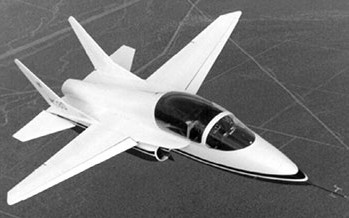
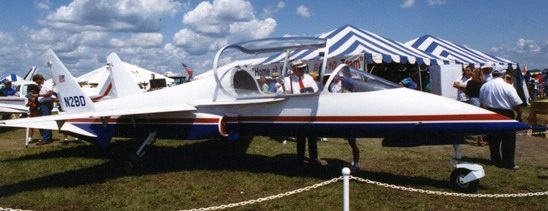
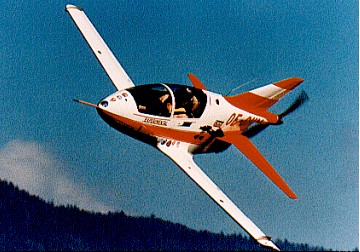
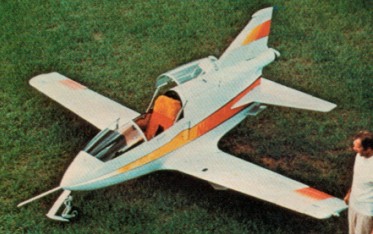
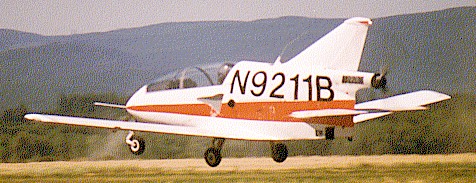
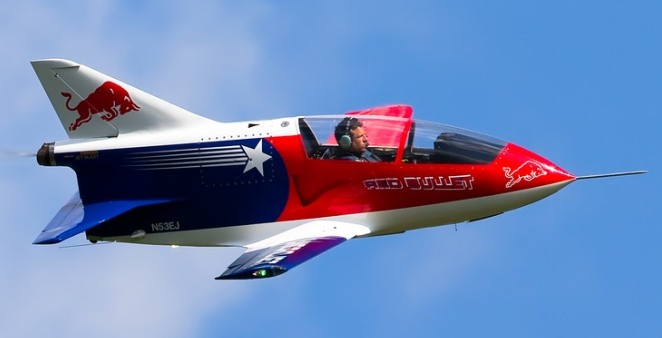
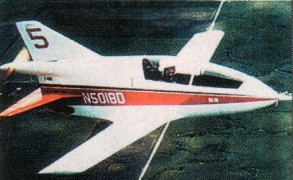
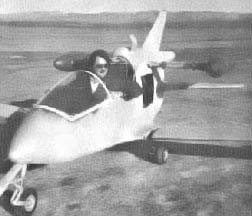
The BD-5 is a high performance single-place, low-wing, pusher-configuration sport plane. Design features include all-metal construction, mechanical retractable landing gear among the industry finest, detachable wings, and wrist action side stick control as in modern day fighter aircraft. Originally developed in the early 1970’s the aircraft was designed to day VFR requirements for use in sport and recreational flying, including limited aerobatic capability. Originally it was powered by a 40-hp Hirth snowmobile engine and was fitted with a wingspan of 14 feet. More recently the wingspan was stretched to 17 feet and the more powerful Xenoah three-cylinder two-stroke engine was installed. The pilot is seated under a transport canopy forward of the engine in a heated cockpit. The landing gear is fully retractable, and the entire fuselage/wing structure is constructed of light alloy materials.
Oshkosh 1973 was the year the BD.5 appeared and it provided a spectacular show in the hands of Les Bervan, Bede’s test pilot. It performed both in long and short winged versions and with a retracting gear. The jet powered BD-5J also made its first public appearance.
BD-5J
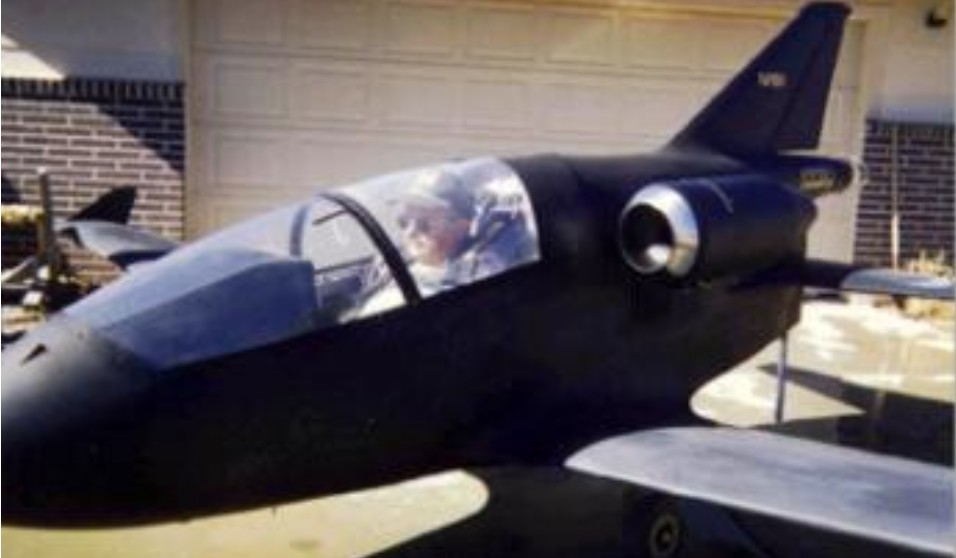
The BD 5J was powered by a 100 kg (202 lb) thrust Microturbo jet engine, spans 5.18 m (17 ft), and is fully aerobatic. After the collapse of Bede, the BD-5 became available as modified conversions such as the Alturair BD-5. BD-Micro Technologies, in late 1995, offered enhanced BD-5 kits. Enhanced BD-5 Kits are designed to be assembled in the shortest time with the least hassle. Components (Wings, Flaps, Ailerons, Vertical Stabilizer, Horizontal Stabilator, Rudder, Fuselage, Landing Gear, and Nose Gear Box) come predrilled on factory jigs. Machined, welded, and difficult to form parts are supplied. The .032” thickness wing skins with modified leading edge improves stall and slow flight control.
Flightline BD-5T Turboprop
The BD-5T Turboprop kit features everything except paint & avionics. With the standard components (Wings, Flaps, Ailerons, Vertical Stabilizer, Horizontal Stabilizers, Rudder, Fuselage and Landing Gear) pre-drilled on factory jigs, and machined, welded, and difficult to form parts are supplied. The BD-5T features a fuselage superstretch of 13.4 in and supplementary wingspar system, detachable wings and control system (20 minutes for assembly or removal), and detachable horizontal stabilizer. Power is from a Quantum H-95 turboshaft engine and Quantum III Propeller. The propeller is developed specifically for turbine engines, weighs 11 lbs including hub and 3 blades. The Quantum turboprop powerplant system (engine & propeller) was designed for the BD-5T. It is a constant speed, torque variable turboshaft engine based on Solar T-62 series components. Flightline Series® BD-5B kit features a complete airframe package- less engine, engine systems, paint & avionics. With the standard Wings, Flaps, Ailerons, Vertical Stabilizer, Horizontal Stabilizers, Rudder, Fuselage and Landing Gear) pre-drilled on factory jigs, and machined, welded, and difficult to form parts supplied, construction time is around 900-1000 hours. Assembled quickly and easily with common skills. Engines can be in the Hirth 2706, Xenoah range.
In 1992, Ed (“Skeeter”) and Richard Karnes started BD Micro Technologies Inc. (BMT), beginning a long journey to update the BD-5 with modern technology while using current building techniques. After many years of research and development, BMT has successfully incorporated many improved design features in an aircraft lineup called the “Flight Line Series” or “FLS” kits.
FLS safety advances include improved stall characteristics, increased pitch stability, reduced airframe fatigue, and modern technology integration focused on increasing systems reliability while reducing pilot workload. Lewis, who formed Lewis & Clark Performance LLC, collaborated with BMT to build the first complete FLS Microjet.
The Flightline Series BD-5J Microjet airframe kit features a complete airframe package requiring 600 to 800 hour construction time. Components (Wings, Flaps, Ailerons, Vertical Stabilizer, Horizontal Stabilizers, Rudder, Fuselage and Landing Gear) are pre-drilled on factory jigs and the fuselage preassembled to “On the Gear” stage. Machined, welded, and difficult to form parts are supplied. Parts are manufactured to aircraft industry standards. The Flightline Series BD-5J Microjet has FLS turbine structural airframe enhancements and a fuselage stretch, 5.2 in. (optional 13.5 in superstretch). The BD-5J has fuel quick disconnects, NACA jet engine intake scoops, Super Spar (supplementary wing spar system), Microjet disc brakes, a Hartwell canopy latch system, and a 5-point safety harness system. With adjustable seating and side stick control, the retractable landing gear cycles in one second. Detachable wings and control system takes 20 minutes for assembly or removal. The horizontal stabilizer is also detachable. The engine is also equipped with an attenuator designed to cut thrust.
BD-5J
Alturair produced a modification of the standard Bede BD-5 to accept an alternative engine.
William ‘Wild Bill’ Brooks Cornville (Arizona) BD-5J Trijet
Bill Brooks flew a BD-5B with a Solar T62, then modified it with 3 HJFS-100 55 Kp units (pod 2 and 1 in the fuselage) and a canard in the front. It is more than probable that he never flew in this configuration.
It was bought by Dave Dearing in 2004 who changed it to standard 5J (the wing is still that of a 5B). Engine side, Dave acquired a Christmas Penny NPT301.
EMG G8-2-130 powered BD-5
Leolan McRorey was the first owner of BD-5 to have equipped it with two Gluhareff EMG G8-2-130 pulse jets. These jets are mounted on a steel rod to each side of the rear fuselage. This configuration was chosen to create a separation between the motors and to avoid the propagation of sound waves.
The small size of the BD-5 managed to board 50 liters of propane in two tanks, a 20 and 30 liter.
Instead of installing a dual throttle, he decided to change the position of the two engines, close to the fuselage.