In 1944, Vincent Bendix (of washing machine fame) established Bendix Helicopters (later renamed Helicopters Inc.). The Bendix designer, Martin Jensen, devised the Bendix Model J single-seater which used a system of coaxial rotors and was driven by a 450hp Pratt & Whitney R-985 piston engine. This was followed by the Model K.
Gyrodyne acquired rights to the five-seat Helicopters Inc. (Bendix) Model J and developed this as the Gyrodyne GCA-2.
1 engine
Belyayev PBI
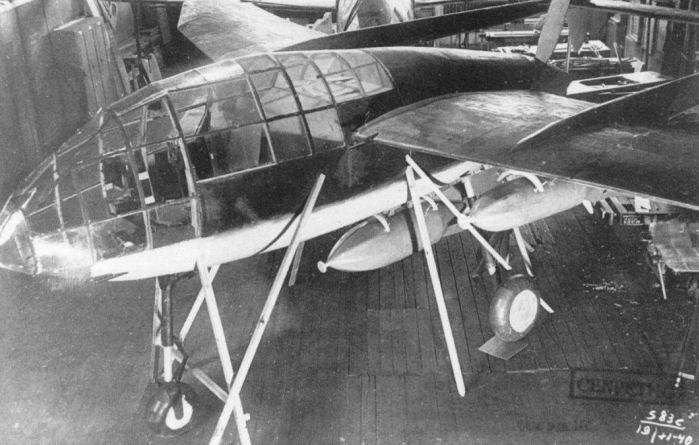
In parallel with the EOI fighter, the Belyayev collective began work on a version of a dive bomber with fighter capability. From this combination the project was named PBI according stands for P ikiruyushi B ombardirovshik – I sterbitiel or bomber – Hunting.
The Belyayev PBI (Russian: Беляев ПБИ) main differences with respect to the EOI fighter were in the selection of the powerplant, the replacement of the flaps by dive brakes and the armament. This new model was to be powered by the M-107 engine, which was under development by Vladimir Yakovlevich Klimov’s bureau.
The armament included a cannon developed by Taubin and Baburin and a ShKAS machine gun, as well as a 500 kg bomb capacity (made up of two 250 kg FAB-250 bombs) and unguided RS-132 rockets.
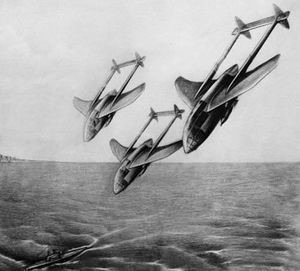
The plane was designed with the possibility of once the bombs were dropped it could be used as a fighter.
Construction of a life-size model was started in the second quarter of 1940 at Factory No. 156 in Moscow. By June it was practically finished.
The preliminary draft of the PBI was presented for analysis in November 1940. After analyzing the information presented, the commission determined that the GDP could not be included within the category of fighter aircraft for the next experimental production plan of 1941.
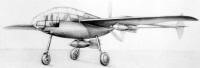
It was considered that the load of 500 kg of bombs required a structural reinforcement, with the corresponding increase in weight and therefore a decrease in performance. It was proposed to increase the surface of the horizontal tail plane by 55% to compensate for the possible impact on stability caused by the increase in load.
The conclusions presented by the NII VVS on 5 December 1940 was recommended not to include the aircraft GDP in the plan of experimental construction of the year 1941, pending the outcome of the EOI which was tested in that year. As a consequence of this decision, work on the project was stopped and the start of the war resulted in its being totally abandoned.
PBI
Powerplant: Klimov M-107
Wingspan: 10.40 m
Wing area: 16.11 m²
Length: 8.66 m
Maximum takeoff weight: 2850 kg
Accommodation: 1
Armament: 1 Taubin – Baburin cannon, 1 ShKAS 7.63 mm machine gun
Bombload: 500 kg and RS-132 unguided rockets.
Belyayev UK / Kazan Aviation Institute (KAI) UK
In the 1930s on the way to increasing speed, a new phenomenon known as “Flutter” appeared. Many aeronautical researchers dedicated themselves to investigating this phenomenon and the ways to combat it. In the USSR, the research carried out in this field at the TsAGI by a group of specialists headed by Victor Belyayev had a special impact.
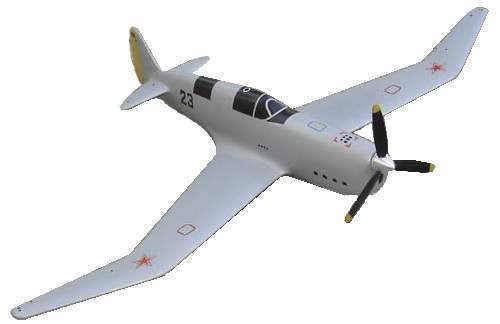
In the course of the research process, it was linked to the increase in wing resistance through the change of its shape, achieving a self-balancing state capable of counteracting the appearance of the “Flutter” throughout the range of increased speeds. To demonstrate this principle, engineers Victor Nikolayevich Belyayev and Victor Ivanovich Yujárin developed a new wing design at the TsAGI . The plan view depicted an open M with a slim profile and large wingspan.
To verify the effectiveness of this new “elastic” wing, the manufacturers, in addition to the tests in the wind tunnel, decided to build two experimental gliders that were successfully tested, allowing to collect valuable information on the way to design a high-speed aircraft with this wing plant.
In 1938, Víctor Belyayev’s group designed an experimental aircraft that received the UK name according to the acronym of “U prugoye K rylo” or Elastic Wing with the new wing structure, which at the time was popularly known as “butterfly” type wing.
The UK design was compact enough to be able to use the lightweight 430 hp Renault Ro.1 12-cylinder engine. In 1936 a group of Soviet specialists had traveled to France to familiarize themselves with this technology and to buy several licenses for the production of Renault engines for the development of light aviation in the USSR. Among these engines was the Ro.1, which was to be produced at Factory No.26 in Ribinsk.
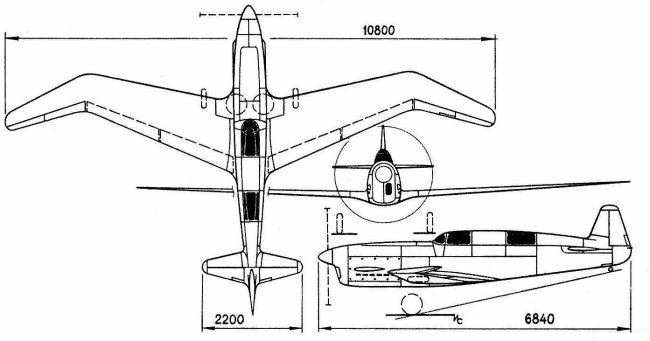
An 11 m² wingspan “butterfly” wing was attached to the fuselage, with a profile of variable thickness throughout the wingspan, 7.7% at the root and 5% at the ends, which was attached to the fuselage in low implantation. Long flaps were located on the trailing edge to improve takeoff and landing characteristics. The thin double-section ailerons were located along the entire span of the positive-taper section of the wing.
The UK was conceived to carry out all the high-school piloting maneuvers on it and was equipped with special recording equipment to measure the deformations of the wing and the impact on the stability of the aircraft in the different flight regimes. The structure was calculated to withstand overloads of 13 units.
The construction of both the wings and the fuselage was made of wood.
The landing gear was of the conventional retractable type, with a small tail wheel and the main landers that were collected into elliptical cavities located in the fusion zone of the fuselage and the wing root.
The cockpit was closed, with capacity for two crew members in tandem: the pilot and a specialist, destined to guarantee the correct registration of the instruments.
The fuel system included tanks located in the wing, in the negative sagging zone.
A single-seater version known as UK-1 was also conceived designed as a sports aircraft with the aim of setting a new speed record in land aircraft.
The excellent results obtained during the tests with the Belyayev gliders, as well as the excellent results that the project calculations yielded, led the TsAGI management to “think big”, so it was decided to close the development of the record-breaking aircraft and concentrate on designing a much more ambitious project: the DB-LK bomber, with an inverted swept wing similar to that used by gliders. This bomber was designed in 1938 and in its state tests, which lasted until 1941, it showed better performance than the Ilyushin DB-3M with the same power plant and bomb load.
Despite the reorientation of the project, the idea of building the single-engine model with an “elastic” wing was not rejected. At the request of the TsAGI the OKB for light constructions of the Kazan Aviation Institute (KAI) , under the direction of ZI Itskplich (who until 1939 worked on the OKB-301 dedicated to the study of Caudron models in the USSR under the direction of AA Dubrovin ) and later by GN Borobiov, two specimens were studied: the UK-1A with the “butterfly” wing and the UK-1B with a low wing of normal configuration. Both were two-seater and differed only in the wing, in order to be able to carry out comparative experiments.
Due to the fact that the Renault Ro-1 engine was never produced, it was decided to install the MV-6 engine (a copy of the 6-cylinder Renault Bengali 6 produced under license in the USSR) in both examples, which was characterized by having only half the projected power. This reality definitively removed the idea of being able to establish a new speed record, but despite this it was thought that, in parallel with the experimental tasks, the aircraft could be ideal for participating in different air competitions.
The first of two aircraft built at KAI was completed in 1940. In the spring of the following year it was handed over to the TsAGI for the development of the tests. With the beginning of the war these were not realized.
The second was never finished. Actual flight data was not preserved.
Engine: A 430 hp Renault Ro.1 12-cylinder engine
Wingspan: 10.8 m
Wing area: 11.0 sq.m
Length: 6.84 m
Tailplane wingspan: 2.2 m
Empty weight: 750 m
Takeoff weight: 1028 m
Speed at altitude: 510 km / h
Landing speed: 100 km / h
Ceiling: 11000 m
Range: 900 km
Accommodation: 2
Belworthy Figaro

The Figaro ZK-PUR is another creation from Alan Belworthy. This microlight has a two-seat tandem cockpit and is flown solo from the rear seat. Power is from a Ford two-litre Sierra with 9:1 pistons and a slightly ground camshaft. The aircraft is constructed from wood except for the steel tube and fabric covered elevator and rudder. The wings are basically Jodel and the fuselage is built along the Pietenpol style.
Engine: Ford Sierra 2-litre.
Belworthy Moa

The design by Alan Belworthy was initiated in 1992 with construction beginning in 1995. First flown on 20 May 2000.
Engine: Ford 3.8 lt V-6.
Seats: 4.
Beltrame Colibri
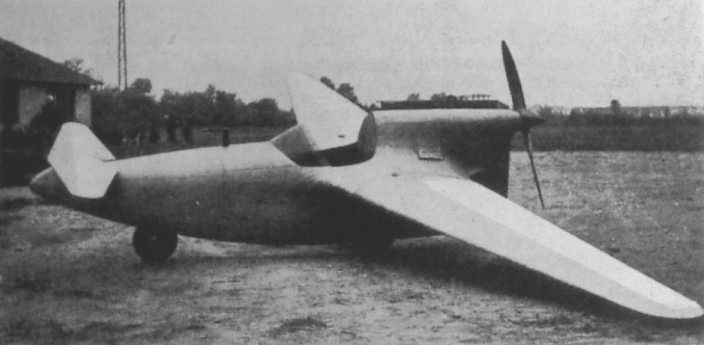
The Colibri was built in 1937 by Quinto Beltrame. It is plywood monocoque, with an 18 hp opposed-piston single cylinder air cooled two-stroke Beltrame engine, and three drive belts to the prop. The 450 cc engine produces 18 hp at 4200 RPM, with oil and fuel mixed.
The elevator is the only controllable surface: +12.5 degrees, – 2.5 degrees, 30 degrees lateral tilt each side.
Engine: Beltrame 450 cc, 18 hp
Wingspan: 6.06 m
Length: 3.55 m
Height: 1 m
Wing area: .5 sq m
Empty weight: 70 kg
Loaded weight: 160 kg
Stall speed: 60 km/h
Cruise speed: 140 km/h
Max speed: 160 km/h
Take off run: 125 m
Landing roll: 50 m
Range: 500 km
Bellaire Monoplane Co SE-II
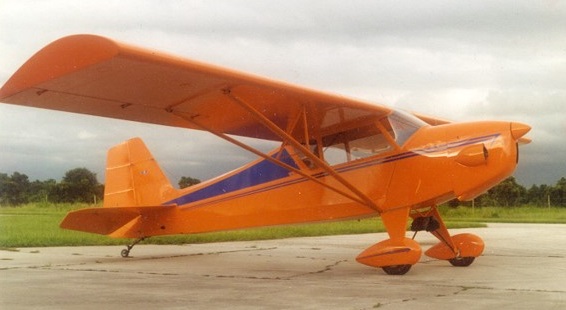
This aircraft is available only as pre-built assemblies. All fit and welded 4130 steel components are available with construction drawings. 2009 Price: 17500 USD
Stall: 31 kt / 36 mph / 58 kmh
Cruise: 91 kt / 105 mph / 169 kmh
VNE: 104 kt / 120 mph / 193 kmh
Empty Weight: 245 kg / 540 lbs
MTOW Weight: 522 kg / 1150 lbs
Climb Ratio: 800 ft/min / 4 m/s
Glide Ratio: 9-1
Take-off distance (50ft obstacle): 400 ft / 122 m
Landing distance (50ft obstacle): 400 ft / 122 m
Bell 505 JetRanger X
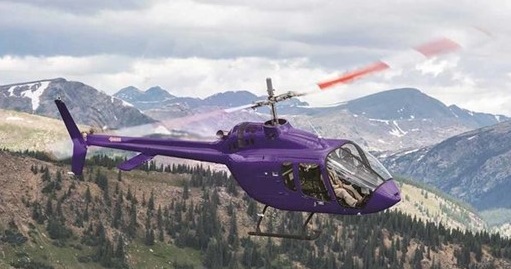
The Bell 505 features the Safran Helicopter Engines Arrius 2R engine incorporating dual-channel fadec that delivers good performance and reduces pilot workload and Garmin G1000H avionics. Top speed is 125 knots and useful load 1,500 pounds. When announced in 2013, the price was set at $1.07 million.
The five-seat Bell 505 Jet Ranger X received FAA certification six months after notching Canadian approval of the light single, Bell Helicopter announced in June 2017. Deliveries of the five-seat light single to U.S. customers were to begin immediately.
Bell was continuing to work with other certification authorities around the world to bring the 505 to more markets. The Bell Helicopter Training Academy was also prepared for entry into service with customer training and flight training device and coursework on track.
The first delivery of the Bell 505 occurred in March 2017 to Pylon Aviation. Bell confirmed delivery of the 200th Bell 505 Jet Ranger X to Austria-based operator Hubi-fly Helikopter GmbH in August 2019 with the global fleet of 200 aircraft flying across six continents.
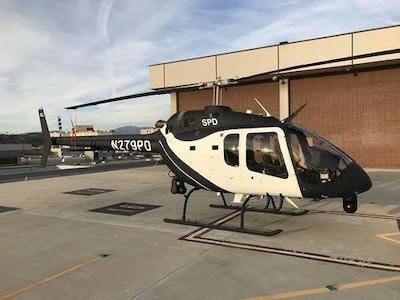
Bell Lunar Landing Research Vehicle / LLRV
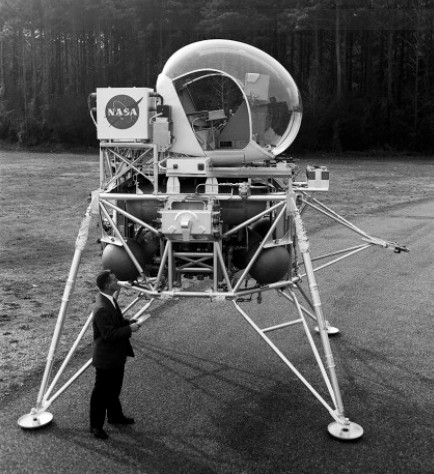
Lunar Landing Research Vehicle (LLRV) built in 1963 as part of the Apollo Project to land on the moon. It was a vertical take-off and landing vehicle powered by a single jet engine. The vehicle allowed Apollo astronauts to train for real moon landings.
Bell LLTV (Lunar Landing Training Vehicle)
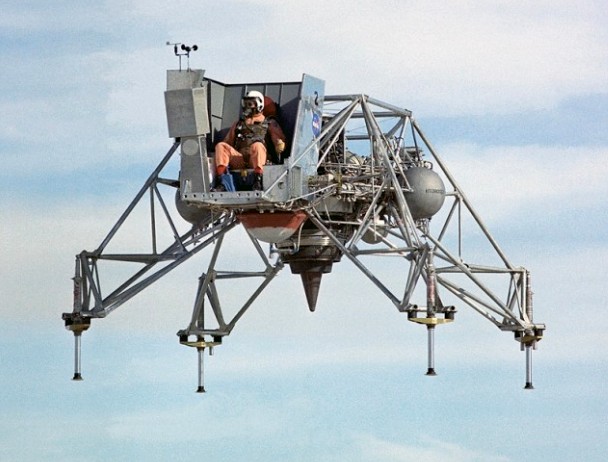
The Lunar Landing Training Vehicle (LLTV) was built by Bell Aerosystems in 1964 as part of the Apollo Project to land on the moon, it was a vertical take-off and landing vehicle powered by a single jet engine. The Lunar Landing Research Vehicle (LLRV) was built by Bell Aerosystems in 1964 as part of the Apollo Project to land on the moon, it was a vertical take-off and landing vehicle powered by a single jet engine.
By always offsetting five-sixths of earth’s gravity, the vertically mounted turbofan engine enabled the LLTV to reproduce the characteristics of landing a lunar module on the moon’s surface. The LLTV was used to train America’s Apollo astronauts.

