Bernard SIMB AB 10

The Bernard SIMB AB 10 or Bernard SIMB AB 10 C 1 single-seat fighter (the AB in this name stood for Adolphe Bernard and C for chasseur – English: fighter – with 1 indicating single-seat), was an all-metal aircraft with straight-edged, slightly tapered wings which had straight wing tips tips rounded at the leading edge designed by Jean Hubert. Ailerons extended to the tips. The tail surfaces had straight swept leading edges but had rounded trailing edges on the control surfaces. The tailplane was mounted on top of the fuselage and the rudder extended to the bottom of the fuselage, moving between separate elevators.

Its fuselage, rounded in cross-section, tapered to the rear and curved down forwards over the engine to the low-mounted two-blade propeller. The open cockpit, with a brief, faired headrest, was placed over the middle of the wing. It had a conventional undercarriage with a pair of single mainwheels and a tailskid, but the mainwheel mounting was unusual, a wide-chord faired inverted T-shaped pylon. The engine was a 224 kW (300 hp) Hispano-Suiza V-8, cooled by a pair of Lamblin radiators placed horizontally side by side below the fuselage.

During its development the AB-C.1 was displayed at the Paris Aero Show in December 1922, though without its radiators. Over twenty months passed before the first flight of what became the SIMB AB 10. In this period the wing structure was revised and the span extended by 800 mm (2.6 ft) with more squared-off tips. The fin area was increased with a curved leading edge and the elevator trailing edge straightened. The SIMB AB 10 had its radiators close to each other, vertical and side by side, just ahead of the central undercarriage member. A late alteration braced the faired axle with vertical V-form struts on each side.

It flew in August 1924, piloted by Florentin Bonnet, but it was judged too radical and expensive and no production order was awarded. Only the one was built.

Engine: 1 × Hispano-Suiza 8Fb V-8, 220 kW (300 hp)
Propellers: 2-bladed
Wingspan: 11.00 m (36 ft 1 in)
Wing area: 19.20 m2 (206.7 sq ft)
Length: 7.00 m (23 ft 0 in)
Height: 2.75 m (9 ft 0 in)
Gross weight: 1,350 kg (2,976 lb)
Maximum speed: 245 km/h (152 mph; 132 kn)
Service ceiling: 6,000 m (19,685 ft)
Crew: 1
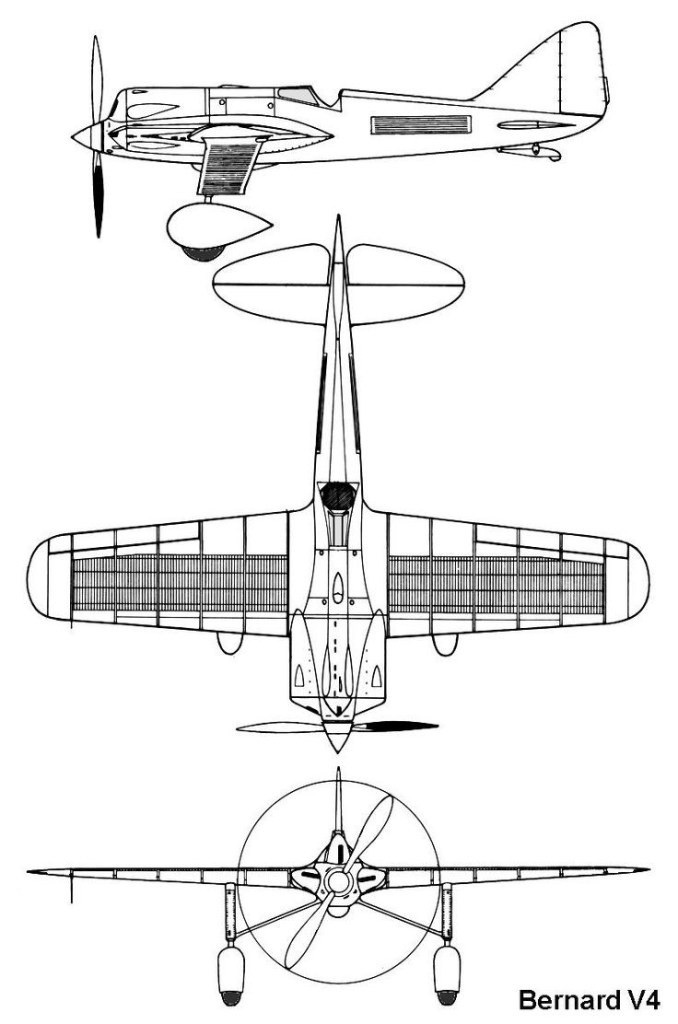
Bernard V.4

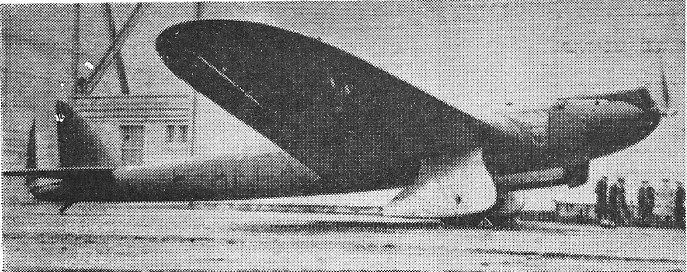
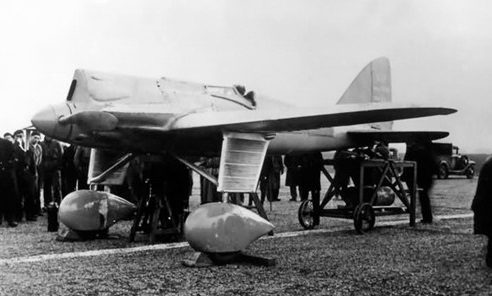
In 1933 the prototype H.S.120 seaplane racer (on pontoons) was converted into a racing landplane as the Bernard V.4 no.1 with a 1,125 hp (839 kW) Hispano-Suiza 18Sb engine and shorter span wings.

The V.4 had widely spaced main landing gear with streamlined wheel spats. It was moved to Istres in December 1933 to try and achieve a French Air Ministry prize for a French aircraft to beat the world speed record before January 1934. It was due to make an attempt to fly on 27 December 1933 but strong winds kept the aircraft grounded. Further attempts in February 1934 to fly were thwarted by engine problems and lack of government finance. The project was abandoned without the aircraft have flown.

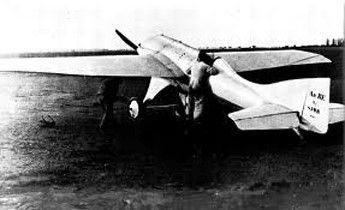
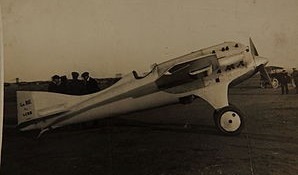
Bernard V.1 / SIMB V.1

The Bernard SIMB V.1 (V = Vitesse) was a French single seat racing monoplane designed by Jean Hubert to compete for the 1924 Beaumont Cup requiring a 300 km (186 mi) flight round a 50 km (31 mi) circuit at Istres at an average speed of over 290 km/h (180 mph).

Alternatively known as the SIMB V.1: the Société Industrielle des Métaux et du Bois (SIMB), the V.1 had a cantilever shoulder wing of thin section, built around four spars with plywood and fabric covering. Straight edged beyond the centre section, it tapered only slightly to the oblique tips. The tailplane had curved, swept leading edges and carried split elevators with a cut-out for rudder movement. The fin was almost triangular, with a slightly convex leading edge; it carried a pointed rudder on a vertical hinge extending to the bottom of the fuselage.

The smooth, oval section fuselage was ply and fabric covered, tapering towards the tail. The pilot sat low down in a small open cockpit with narrow streamlined dorsal fairings in front and behind. His view forward was severely restricted by the central inline bank of four cylinders of the W-12 Lorraine-Dietrich 12E water-cooled piston engine. The engine was cooled by radiators in the wings, assisted for the first flight by a bank of radiators mounted between the undercarriage legs. These backward leaning legs were wide chord, faired cantilevers with large, unfaired wheels mounted on individual stub axles. The V.1’s conventional undercarriage was completed by a small tailskid.

The racer was completed in nine months and taken to Istres in May 1924 to prepare for the competition. Its first flight, piloted by Florentine Bonnet, ended in disaster. It was immediately apparent that the V.1 lacked longitudinal stability, oscillating uncontrollably in altitude; these oscillations persisted even as Bonnet reduced speed and attempted to land and the V.1 crashed at 200 km/h (125 mph), sliding on its back. Bonnet was fortunate to escape unhurt. The instability was ascribed to insufficient tailplane area combined with a far forward centre of gravity. With the race only a few days away, there was no time to repair the V.1 and development was abandoned.

Engine: 1 × Lorraine-Dietrich 12E W-12, 332 kW (445 hp)
Propeller: 2-bladed Levasseur (licence built Reed), metal, 2.45 m (8 ft 0 in) diameter
Wingspan: 10.50 m (34 ft 5 in)
Height: 2.50 m (8 ft 2 in)
Wing area: 15.50 sq.m (166.8 sq ft)
Empty weight: 900 kg (1,984 lb)
Gross weight: 1,050 kg (2,315 lb)
Maximum speed: 420 km/h (261 mph; 227 kn) estimated

Berliner-Williams Helicopter

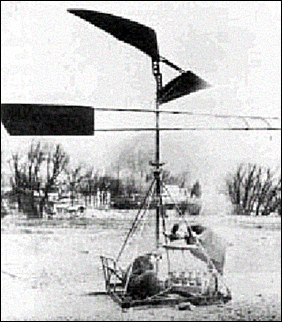
The first manned US vertical flight machine appears to have been developed by Emile Berliner and John Newton Williams. Berliner was an inventor who developed the disk-type phonograph record and designed what may be the first production rotary aircraft engine, the 36hp Adams-Farwell engine. In 1908, Williams constructed a coaxial machine for Berliner using two of these rotary engines. It reportedly lifted both Williams and the machine, a total of 277kg, but was probably steadied from the ground.

In May, 1908, Williams built another stand in Hammondsport, New York, as a member of the famed Aerial Experiment Association (which included Alexander Bell and Glenn Curtiss), using a 40hp Curtiss engine. It made hovers around 1m, again steadied from the ground.

Berliner-Joyce XFJ-2

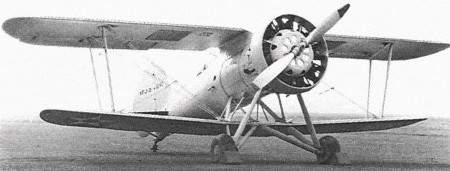
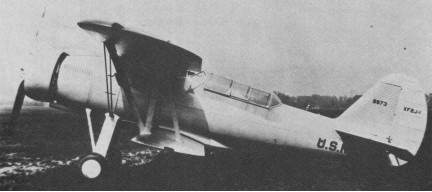
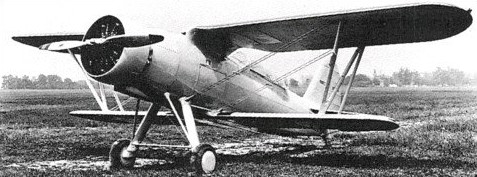
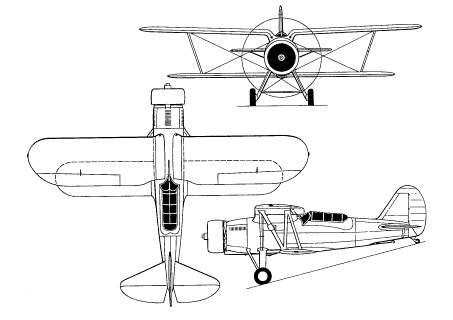
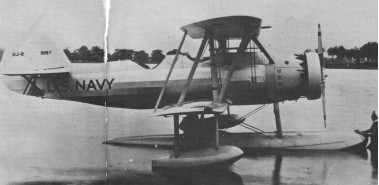
The XFJ-1 was returned to Berliner-Joyce for reconstruction in November 1930, during which the dihedral was eliminated from the upper wing, the vertical tail surfaces were enlarged and a 500hp R-1340D Wasp engine was installed, this being enclosed by a Townend ring and fitted with a spinner.
Redesignated XFJ-2, the fighter resumed its flight test programme at Anacosta on 22 May 1931. The XFJ-2 displayed no improvement in landing characteristics by comparison with the XFJ-1 and proved unstable, and after testing by the US Navy, was discarded as unsatisfactory.

Engine: 500hp R-1340D
Take-off weight: 1291 kg/2846 lb
Empty weight: 953 kg/2101 lb
Wingspan: 8.69 m/29 ft 6 in
Length: 6.28 m/21 ft 7 in
Height: 2.99 m/10 ft 10 in
Wing area: 16.59 sq.m/178.57 sq ft
Max. speed: 285 km/h/177 mph
Range: 837 km/520 miles

Berliner-Joyce XF2J-1

Berliner-Joyce XF2J-1

Essentially a navalised P-16, the XF2J-1 two-seat shipboard fighter prototype was ordered by the US Navy on 30 June 1931, but did not fly until 1933. Originally designed for a single-row Pratt & Whitney R-1690C Hornet radial, the XF2J-1 was completed with the experimental two-row 14-cylinder Wright R-1510-92 Whirlwind rated at 625hp at 1830m.
The XF2J-1 was a two-seater fighter with a smooth monocoque fuselage. Upper and lower wings were gulled in¬to the fuselage, as in the P 16.
As initially flown, the XF2J-1 had tandem open cockpits, but at an early stage in the test programme sliding canopies were fitted.
Inadequate visibility for deck landing and inability to compete with the Grumman XFF-1 ended further development of this type. The Navy chose the Grumman and the F2J never went into production.

Take-off weight: 2059 kg/4539 lb
Empty weight: 1456 kg/3210 lb
Wingspan: 10.97 m/36 ft 0 in
Length: 8.78 m/29 ft 10 in
Wing area: 28.19 sq.m/303.43 sq ft
Max. speed: 315 km/h/196 mph
Range: 840 km/522 miles