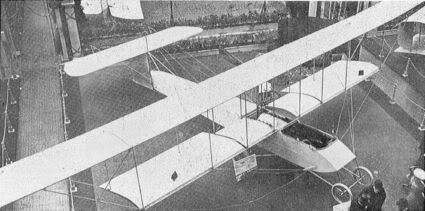
The José Sanchez Besa pusher biplane with a buried 80 hp Canton-Unné motor as seen at the Paris Salon in 1912.
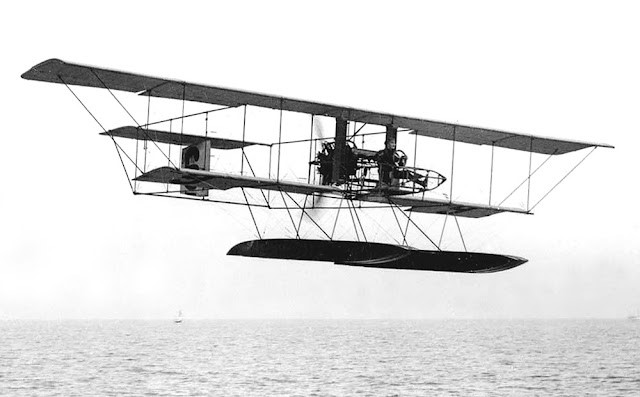
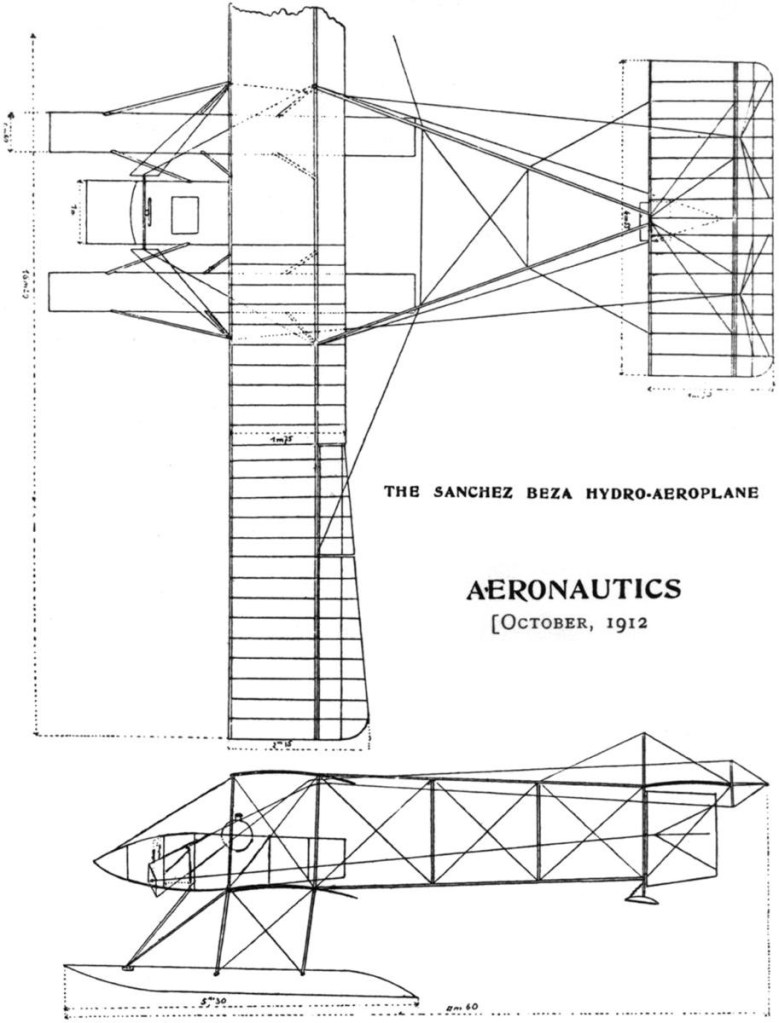
The José Sanchez Besa pusher biplane with a buried 80 hp Canton-Unné motor as seen at the Paris Salon in 1912.
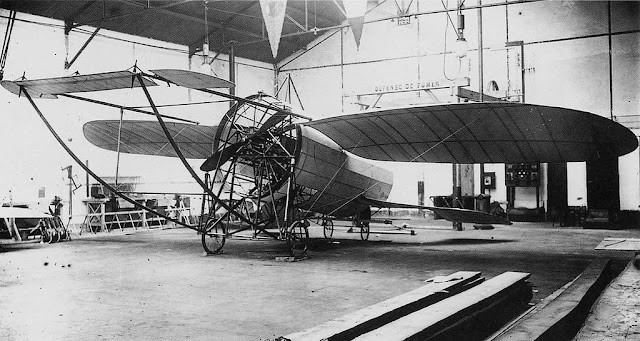
Aeronautical engineers have known for many years that the efficiency of a propeller can be improved by placing it in an annular channel. At the same time, the additional mass and aerodynamic resistance of the channel can often negate the achieved increase in the efficiency of the power plant. Some designers sought to solve this problem by turning part of the fuselage into an annular channel.
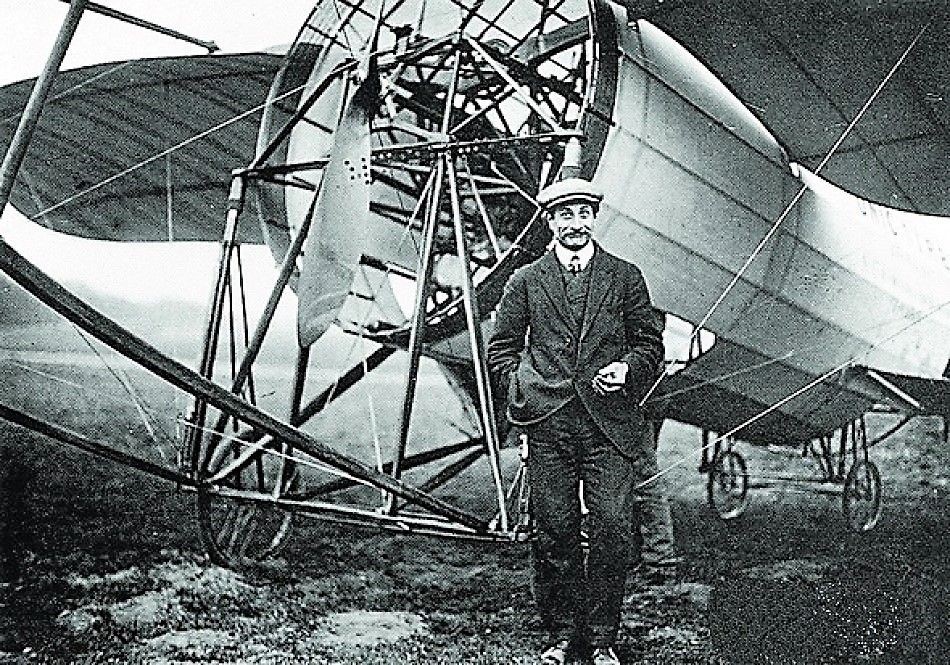
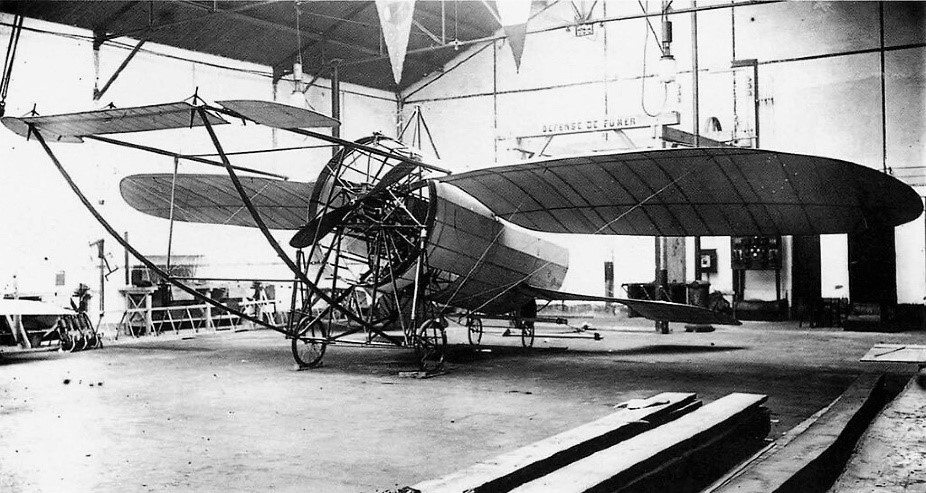
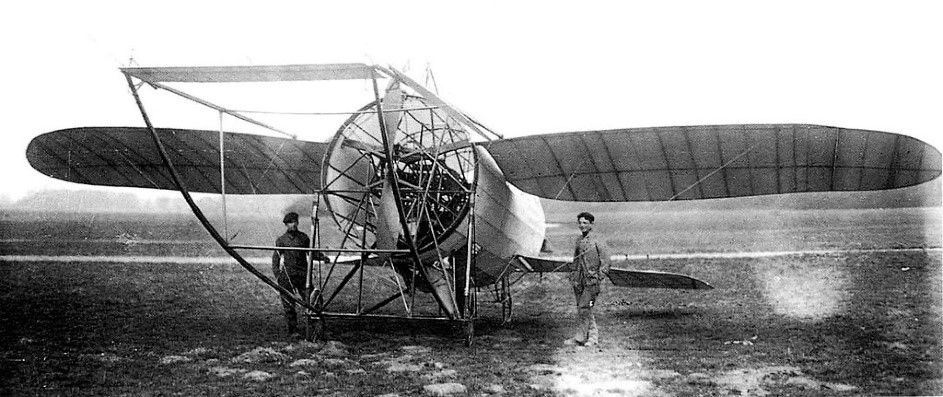
One of these aircraft was the monoplane Bertrand U1 (Bertrand Unic 1). This French “tunnel” aircraft built in 1909 had a number of unique features. One 30 hp Unic engine. (22 kW) set in motion two propellers, each of which was installed at opposite ends of the tunnel (diameter 2 meters). According to the aerodynamic scheme, the aircraft was a “duck” equipped with an additional tail unit. The ailerons were not installed on the wing (span 13.40 m), but on the ends of the PGO.
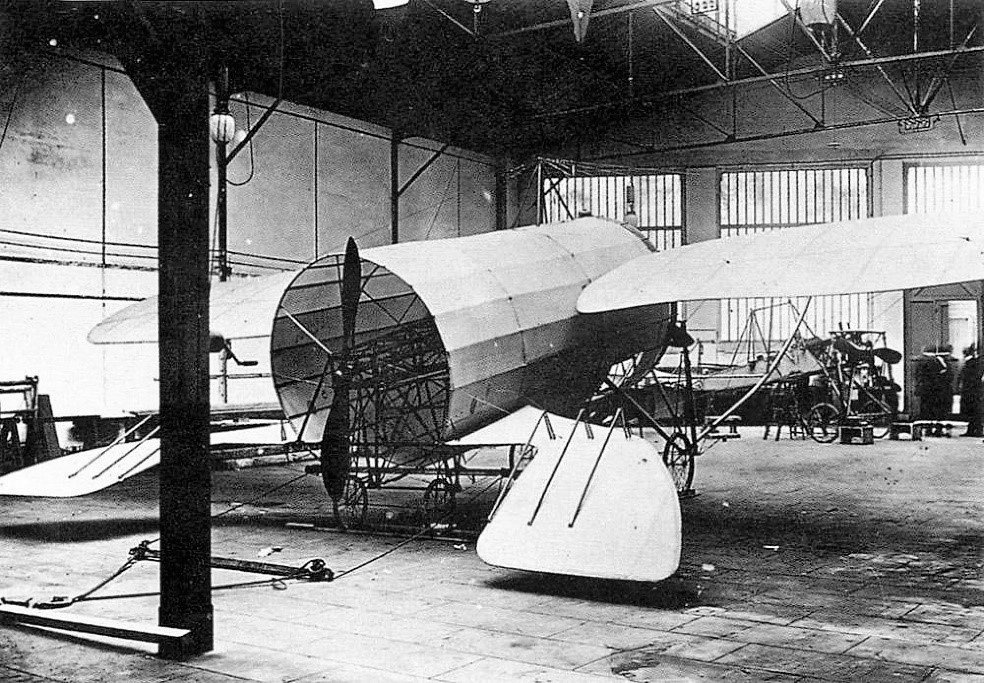
Engine: 30 hp (22 kW) Unic.
Wingspan: 13.40 m
Wing area: 40.00 sq.m
Normal takeoff weight: 461 kg
Seats: 1
The Bertin 1910 monoplane was designed and built by Leonce Bertin in France.
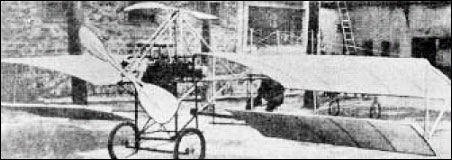
In France in 1908, Bertin, a motorcyclist, and Boulline, a mechanic from Puteaux, built a machine with variable incidence angle biplane wings, a 2.2m tractor propeller and a 2m lifting propeller. Bertin built a 150hp flat eight-cylinder motor (weighing 120kg) to power the 433kg vehicle. It could hop off the ground for a few feet, but lacked adequate control to achieve any stability.
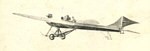
The 1911 Berthaud Type W monoplane was designed by P. Wroblewsky and built by Berthaud in France.
Span: 43’3″
Length: 33’8″
Weight empty: 925 lbs
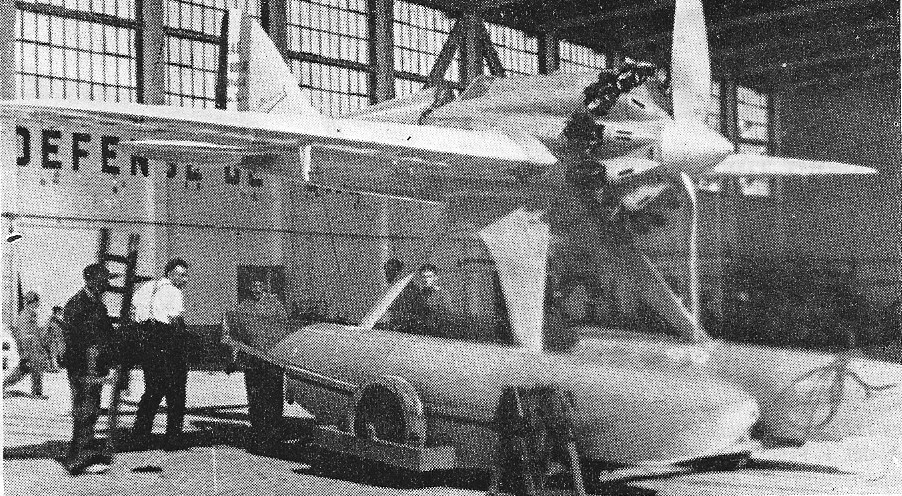
The Bernard HV.45 speed trainer was used for training pilots taking part in the Schneider Trophy Races during 1928.
It was based at Berre, France, until 1939.
Engine: Gnome Rhone 9 Kfr, 1200 hp
Span: 28 ft 6 in
Length: 24 ft 4 in
Height: 11 ft 9 in
Max speed: 280 mph
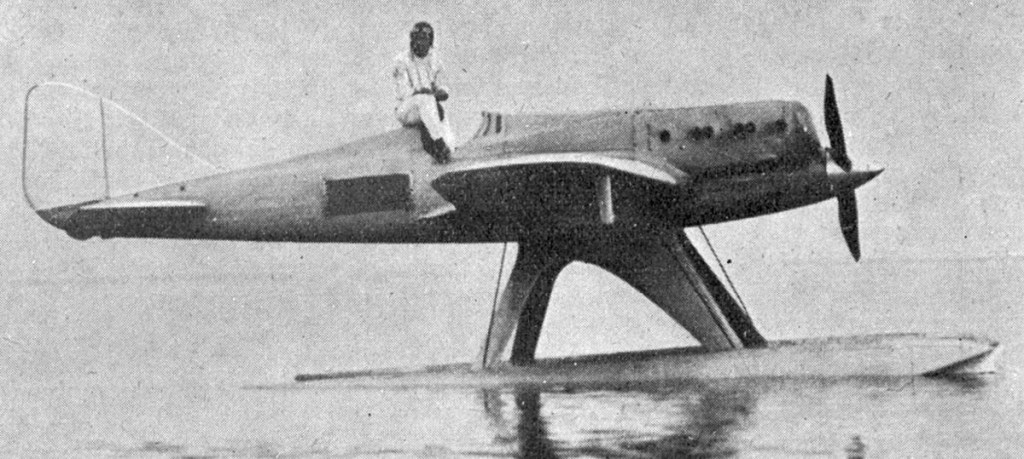
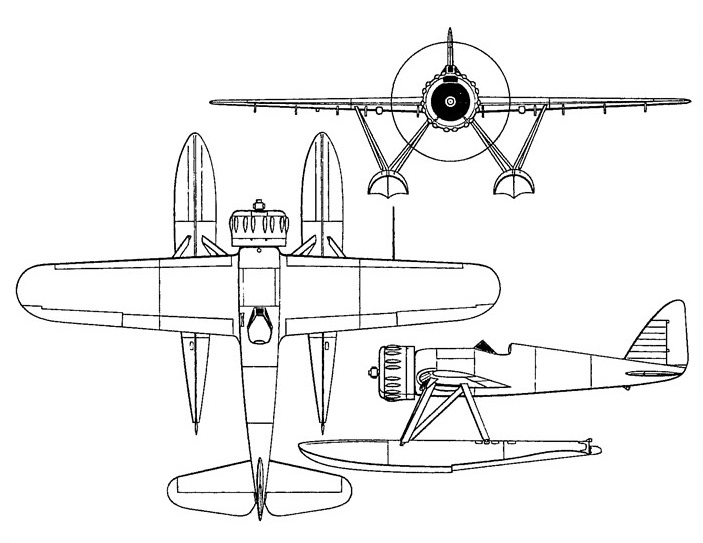
The Bernard H.V.42 was a racing seaplane designed by Société des Avions Bernard for the French government for use of the French Schneider Trophy team.
Three H.V.42s were ordered by the French government for use as trainers for the French Schneider Trophy team at Lake Berre. Similar to the earlier H.V.41 they were streamlined single-seat cantilever monoplanes with twin floats. The first H.V.42 flew in March 1931 and was soon joined by the other two. Marked as “1” “2” and “3” they were used during the summer of 1931 to train the French team for the 1931 race.
Powerplant: 1 × Hispano-Suiza 12Nsr Special, 746 kW (1,000 hp)
Wingspan: 9.20 m (30 ft 2.25 in)
Wing area: 12.00 sq.m (129.17 sq ft)
Length: 7.99 m (26 ft 2.5 in)
Height: 3.60 m (11 ft 9.75 in)
Maximum speed: 450 km/h (280 mph, 240 kn) (estimated)
Crew: 1
The Bernard-370 was single seat racer aircraft project intended for Coupe Deutsch contest of 1934, powered by one 450 hp Salmson V engine.
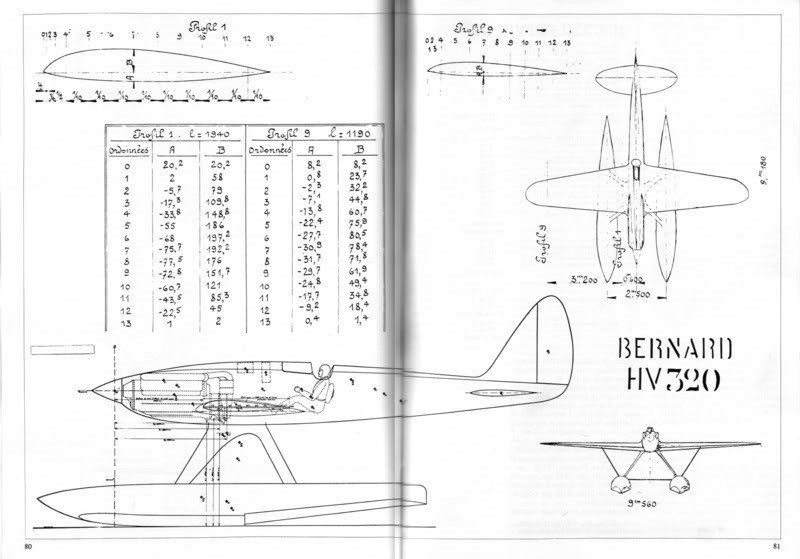
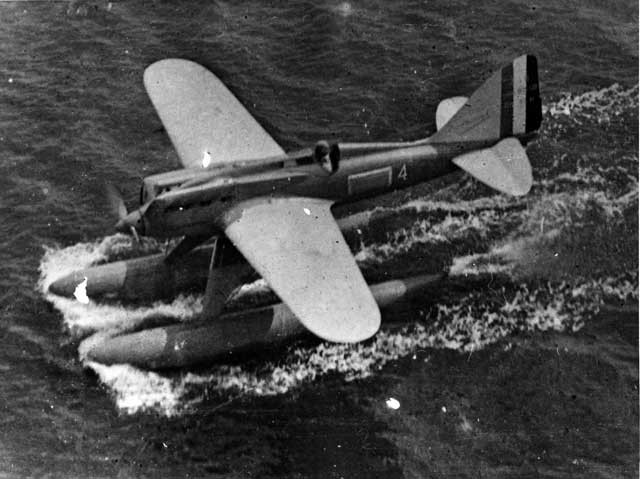
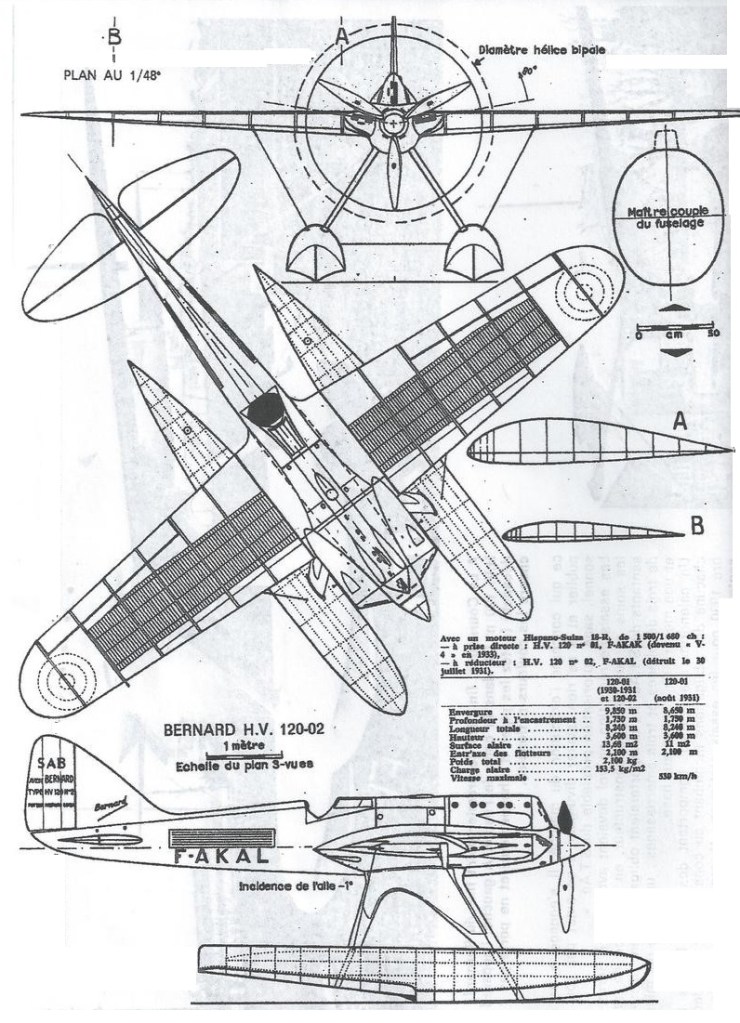
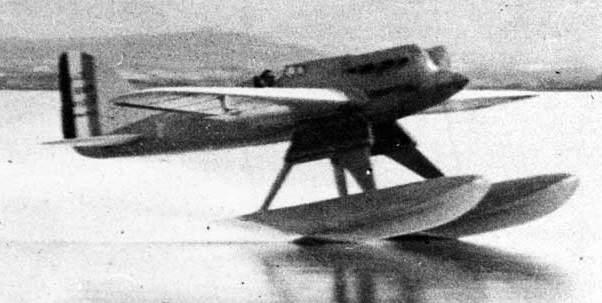
The H.V.120 was a wooden single-seat mid-wing cantilever monoplane seaplane designed and built by Bernard to compete in the Schneider Trophy race.
Powered by a 1,680 hp (1,253 kW) Hispano Suiza 18R W-18 piston engine, the first H.V.120 flew for the first time at Hourtin on 25 March 1930. Development was delayed due to engine problems, as well as technical issues. It was overweight and the engine mount and forward fuselage had to be re-designed. The first aircraft had a direct drive three-bladed propeller but the second had a reduction gear to drive a four-bladed Chauvière propeller. The second aircraft crashed into the water on its first flight in July 1931 killing pilot Georges Bougault.
In 1933 the prototype was converted into a racing landplane as the Bernard V.4 with a 1,125 hp (839 kW) Hispano-Suiza 18Sb engine and shorter span wings. The V.4 had widely spaced main landing gear with streamlined wheel spats. It was moved to Istres in December 1933 to try and achieve a French Air Ministry prize for a French aircraft to beat the world speed record before January 1934. It was due to make an attempt to fly on 27 December 1933 but strong winds kept the aircraft grounded. Further attempts in February 1934 to fly were thwarted by engine problems and lack of government finance. The project was abandoned without the aircraft have flown.
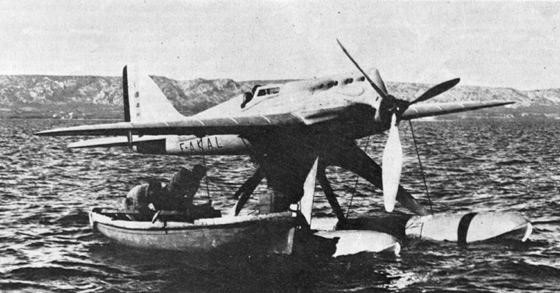
H.V.120-01
Engine: 1 × Hispano Suiza 18R W-18, 1,253 kW (1,680 hp)
Propeller: 3-bladed
Length: 8.24 m (27 ft 0 in)
Wingspan: 8.65 m (28 ft 5 in)
Height: 3.60 m (11 ft 10 in)
Wing area: 11.00 m2 (118.4 sq ft)
Max takeoff weight: 2,100 kg (4,630 lb)
Maximum speed: 530 km/h (329 mph; 286 kn)
Crew: 1