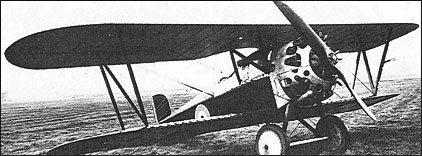
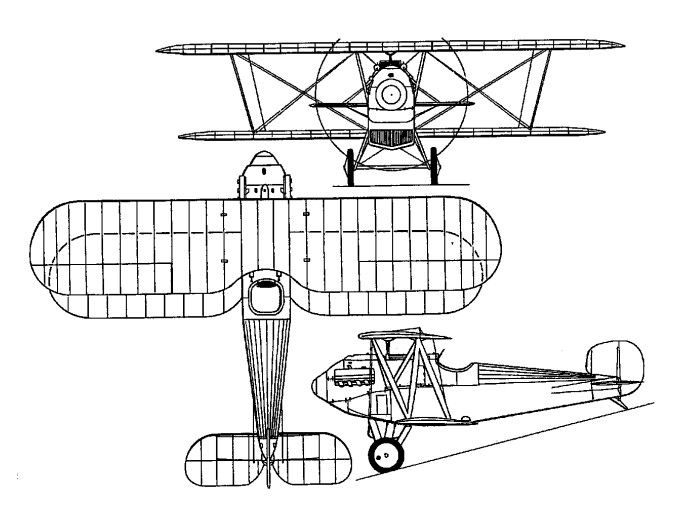
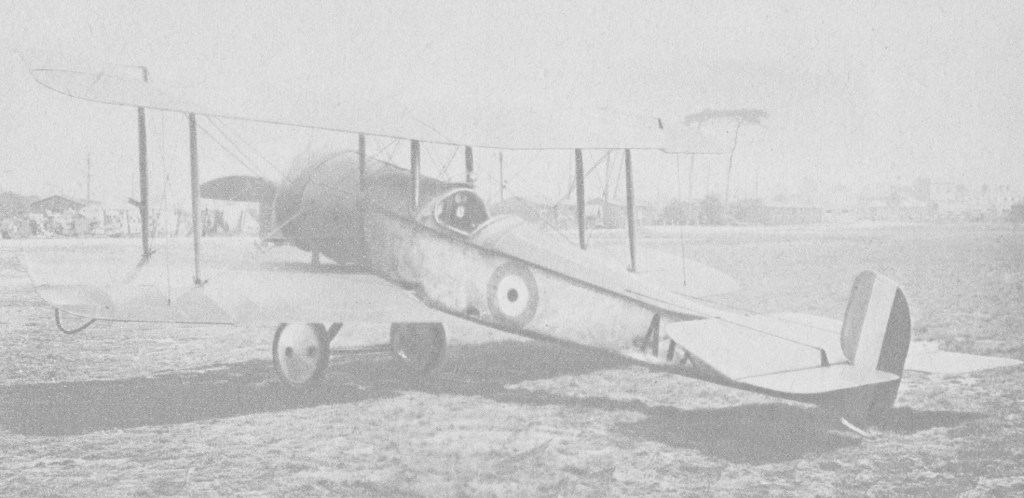
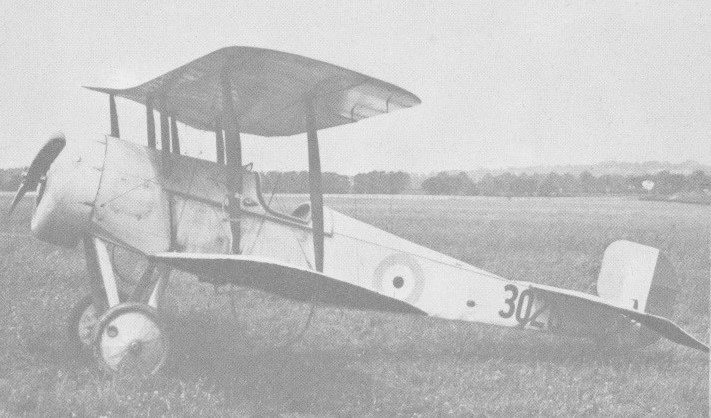
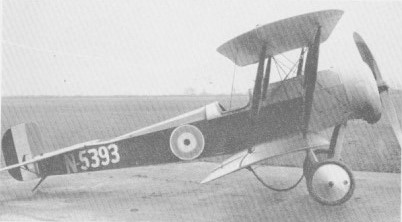
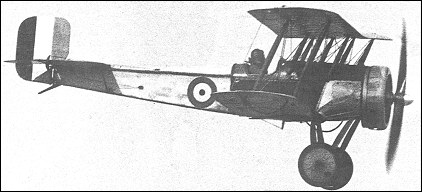
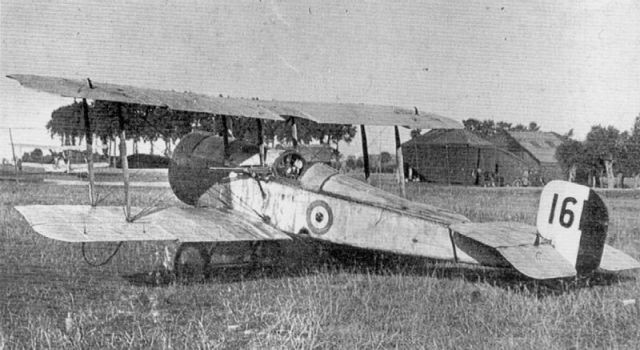
The problems with the Arab engine in the Scout F led to an investigation of possible alternative power plants, and it was decided to adapt the third prototype airframe to take a new 14-cylinder two-row Brazil-Straker (later Cosmos Engineering) Mercury radial of 347hp. Designated Scout F.1, the aircraft was first flown on 6 September 1918, and proved to possess an excellent performance, establishing new unofficial climb records in April 1919. By that time, further development of the Mercury engine had been abandoned and no more work on the Scout F.1 was undertaken.
Engine: Brazil-Straker Mercury 14-cylinder radial, 347hp Take-off weight: 1025 kg / 2260 lb Wingspan: 9.03 m / 29 ft 8 in Length: 6.09 m / 19 ft 12 in Height: 2.54 m / 8 ft 4 in Wing area: 24.15 sq.m / 259.95 sq ft Max. speed: 233 km/h / 145 mph
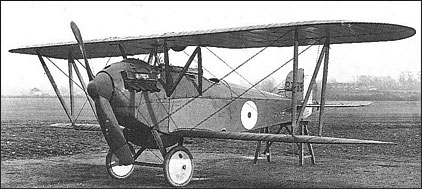
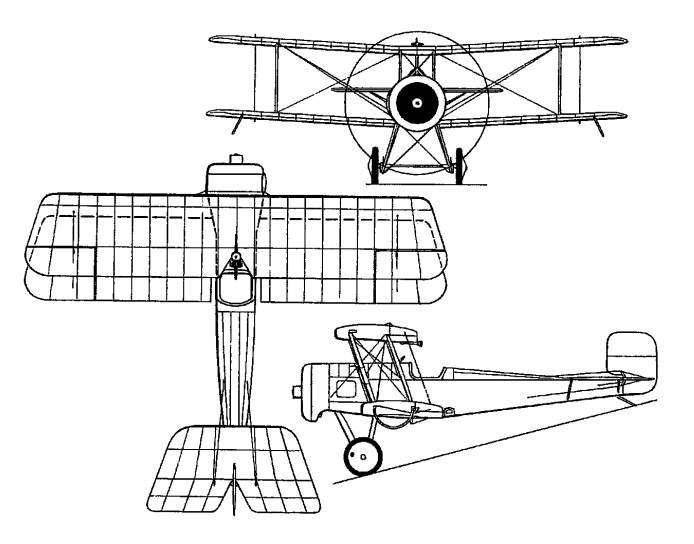
Originally intended for a 200hp Hispano-Suiza engine, the Scout F was initiated by Frank Barnwell in June 1917, subsequently being redesigned to take a 200hp Sunbeam Arab II eight-cylinder water-cooled engine. This power plant had been ordered into large-scale production in January 1917, before adequate testing had been undertaken.
Six prototypes of the Scout F were ordered, the first of these flying in March 1918, by which time it had been decided to complete only the first two aircraft with Arab engines. The Scout F possessed excellent flying qualities, but its Arab engine proved totally unreliable. Nevertheless, the second prototype was completed and flown, flight testing continuing into 1919. Armament comprised two synchronised 7.7mm Vickers guns.
Engine: 200hp Hispano-Suiza Take-off weight: 1002 kg / 2209 lb Empty weight: 651 kg / 1435 lb Wingspan: 9.03 m / 29 ft 8 in Length: 6.35 m / 20 ft 10 in Height: 2.54 m / 8 ft 4 in Wing area: 24.15 sq.m / 259.95 sq ft Max. speed: 222 km/h / 138 mph Armament: 2 x 7.7mm Vickers guns
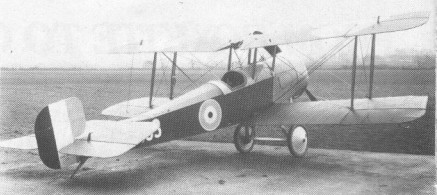
A single-seat sports biplane designed by Frank Barnwell, was first flown on 23 February 1914, with an 80 hp Gnome engine, and retrospectively known as the Scout A,
Two Scout Bs completed six months later were intended for reconnaissance, were officially unarmed, but one of which was fitted with a rifle on each side of the fuselage and angled outward to avoid hitting the propeller when fired. They were sent to France.
The Scout B was followed by 161 Scout Cs (74 for the RN and 87 for the RFC) which, again, were officially unarmed, although in the field the fitting of pistols, rifles and carbines was common, while some RN Scouts carried 24-round canisters of Ranken darts which it was intended to use against Zeppelins.
Scout C
An installation of cavalry carbine on a later production Scout C enabled Capt. Lanoe Hawker of 6 Sqn to shoot down one enemy aircraft in flames, drive another down and damage a third in quick succession on July 25, 1915. All three enemy aircraft were armed with machine-guns and Capt. Hawker was awarded the Victoria Cross.
The Scout D was a revised design which, completed in November 1915, had provision for a fixed synchronised 7.7mm Vickers gun. The Scout D was the first model for which armament was officially intended, though relatively few of these had the synchronised Vickers gun and the armament of others varied considerably. Some having a 7.7mm fixed Lewis gun firing straight ahead without synchronising equipment and others having a movable Lewis above the upper wing.
Scout D
A number of modifications were made at Bristol’s and the type was varied from the D-1 to D-5. Engines varied from the 80 hp Gnome and Le Rhone to the 100 hp Gnome Monosoupape, 110 hp Le Rhone, and 130 hp Clerget. Over 200 were built before the type was abandoned.
Of the 210 examples built, 80 went to the RN, of which 50 had 100hp Gnome Monosoupape engines and the remainder the 80hp Gnome. Most of those delivered to the RFC ultimately had the 80hp Le Rhone engines.
The Scout C and D had early limited use by the Australian 1 AFC in Egypt where Lt L.J. Wackett used one in experiments with a synchronised machine gun.
Altogether 236 Scouts were delivered to the RFC, and 137 to the RNAS.
Some RNAS machines had a Lewis gun mounted above the top wing. RFC Scout D’s had a Vickers gun above their front fuselage.
Scout C Engine: 80 hp Le Rhone, or Gnome, or 110 hp Clerget Wing span: 24 ft 7 in Wing area: 198 sq ft Length: 20 ft 8 in Height: 8 ft 6 in Fuel capacity: 16 Gal Endurance: 2 hr Service ceiling: 11,000 ft
Scout C Engine: 80 hp Clerget Wing span: 24 ft 7 in Wing area: 198 sq ft Length: 20 ft 8 in Height: 8 ft 6 in Empty weight: 750 lb MTOW: 1089 lb Fuel capacity: 16 Gal Max speed: 94 mph at SL Endurance: 2 hr Service ceiling: 11,000 ft
Scout D Engine: 1 x Gnome, 80hp. Wingspan: 24 ft 5 in Wing area: 198 sq.ft Length: 20 ft 7 in Height: 8 ft 6 in Empty weight: 757 lb Loaded weight: 1195 lb Max speed: 98 mph at SL Service ceiling: 15,500 ft ROC: 385 fpm to 6500 ft Endurance: 2 hr 30 min Seats: 1
Scout D Engine: 1 x Le Rhone 9, 80hp. Length: 20 ft 8 in (6.02m) Wingspan: 27.33ft (8.33m) Wing area: 18.39 sq.m / 197.95 sq ft Height: 8 ft 6 in (2.59m) Maximum Speed: 100mph (161kmh; 87kts) Rate-of-Climb: 540ft/min (165m/min) Service Ceiling: 13,999ft (4,267m) Armament: 1 x 7.7mm machine gun Crew: 1 Empty Weight: 761lbs (345kg) Maximum Take-Off Weight: 1,250lbs (567kg)
Scout D Engine: 1 x Gnome Monosoupape, 100hp Max speed: 104 mph at SL
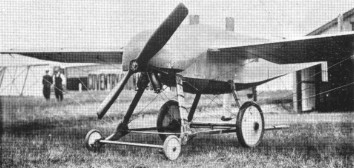
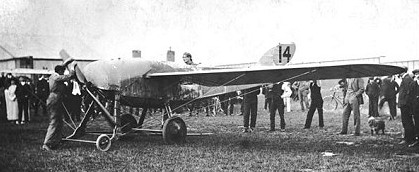
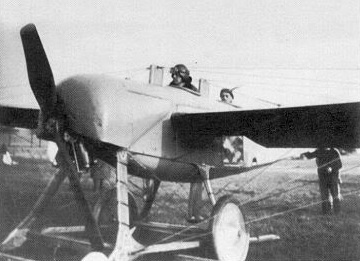
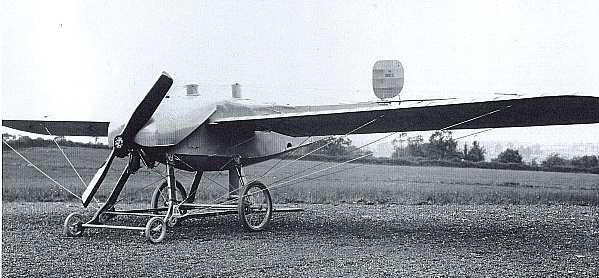
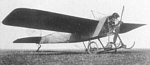
The Romanian aircraft designer Henri Coandă joined Bristol in January 1912 and his first design for Bristol was a two-seat monoplane trainer, a development of the Bristol Prier Monoplane, controlled by wing warping. The first prototype flew in March 1912.
Several versions of the plane were built from 1912 onwards with both tandem and side-by-side cockpits. Several were purchased by the War Office for use as trainers by the Royal Flying Corps. International purchases were by Italy and Romania.
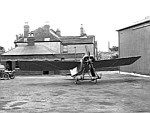
Henri Coandas’ second monoplane, No. 80, was similar but had side-by-side seats with dual controls. It was built in May 1912 and remained in continuous use as a school machine at Brooklands and Larkhill until crashed by Merriam and Gipps on 26 January 1914.
A series of similar aircraft followed with both tandem and side-by-side cockpits, known as the School Monoplane and the Side by Side Monoplane. The first School and Side by Side monoplanes entered service with flying schools operated by Bristol at Larkhill and Brooklands.
The two Competition Monoplanes were bought by the War Office after the Military Aircraft Competition, being used as trainers for the RFC. However, on 10 September 1912, one of the Competition Monoplanes crashed, killing Lieutenants Edward Hotchkiss and Claude Bettington. While this was traced to one of the bracing wires becoming detached, it resulted in a five-month ban of flying of all monoplanes by the military wing of the RFC.
Despite this ban, Military Monoplanes were purchased by Romania and Italy, with a production license being granted to Caproni (although this license was later cancelled, only two being built by Caproni). One tandem and two side-by-side machines were sold to Italy, with four tandem and three side-by-side aircraft being sold to Romania.
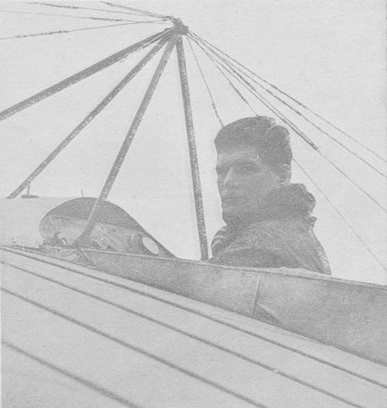
A more powerful derivative was built for a competition to provide aircraft for the British War Office. Two aircraft, known as Competition Monoplanes were built and entered into the competition, together with two Bristol Gordon England biplanes. The aircraft were flown by Harry Busteed, Bristol’s test pilot and James Valentine.
These did well in the competition, rated equal fifth and were described at the time as “well-designed and well-constructed” though criticised as “heavy for the wing area” and lacking in power. This resulted in their being purchased by the War Office for use as trainers by the Royal Flying Corps. These two aircraft formed the basis for a revised military trainer, the Military Monoplane, which had increased wingspan.
One example of the 37 built survives in the Gianni Caproni Museum of Aeronautics, Trento, Italy, being the oldest surviving Bristol aircraft still in existence. This aircraft was a pattern aircraft sent to Caproni as a basis for their licensed production, never being flown, but was restored to a complete example for display at the museum. The Military Monoplane later formed the basis for the Bristol TB.8, several being rebuilt into TB8s.
There is a monument in Wolvercote, Oxfordshire to Lieutenants Edward Hotchkiss and Claude Bettington, killed in a Bristol Coanda crash in 1912. The crash of a Coanda Military Monoplane on 10th September, 1912, at Wolvercote, Oxford, in which Lts. C. A. Bettington and E. Hotchkiss were killed, was responsible for the decision of the War Office to ban the use of all monoplanes in the Military Wing of the R.F.C. after several fatal accidents had occurred also with other types of monoplane.
A couple of dozens were built and exported to Bulgaria, Germany, Italy and Roumania. No. 150, one of the three sent to the Deutsche Bristol Werke, at Halberstadt in April 1913.
Variants:
School Monoplane Trainer aircraft with tandem cockpits. Powered by 50 hp (40 kW) Gnome engine. Six built.
Side by Side Monoplane Trainer aircraft with side-by-side cockpit. Powered by 50 hp (40 kW) Gnome engine. Six built.
Competition Monoplane Two aircraft built for War Office Military Aeroplane Competition. Powered by 80 hp (60 kW) Gnome engine.
Daimler Monoplane Single aircraft powered by 70 hp (50 kW) Daimler engine. Overweight and unsuccessful.
Coanda School Engine: 1 x 50hp Gnome Take-off weight: 499 kg / 1100 lb Empty weight: 350 kg / 772 lb Wingspan: 12.19 m / 39 ft 12 in Length: 8.23 m / 27 ft 0 in Height: 2.13 m / 6 ft 12 in Wing area: 25.55 sq.m / 275.02 sq ft Max. speed: 105 km/h / 65 mph
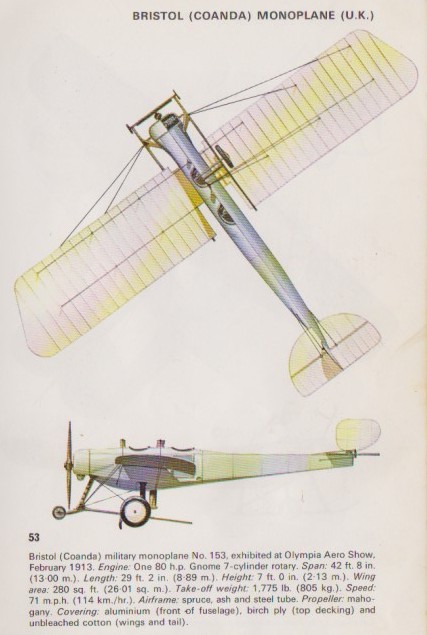
Military Monoplane Improved development of Competition Monoplane with increased wingspan. Powered by 80 hp (60 kW) Gnome engine. 21 built.
Military Monoplane Engine: 1 × Gnome Rotary, 80 hp Wingspan: 37 ft 8 in (11.48 m) Length: 29 ft 3 in (8.92 m) Wing area: 450 ft² (41.8 m²) Empty weight: 970lb (441 kg) Max. takeoff weight: 1,665 lb (757 kg) Maximum speed: 56–61 knots (65–70 mph, 105–113 km/h) Endurance: 5 hours Climb to 3000 ft (915 m): 11 min Armament: Some with a 7.92mm machine gun Bombload: 12 x 10 lb (4.5 kg) light bombs Crew: two
Military Monoplane Engine: Gnôme 80ps, 79 hp Length: 27.067 ft / 8.25 m Height: 9.022 ft / 2.75 m Wingspan: 41.995 ft / 12.8 m Wing area: 279.864 sq.ft / 26.0 sq.m Max take off weight: 1323.0 lb / 600.0 kg Weight empty: 771.8 lb / 350.0 kg Max. weight carried: 551.3 lb / 250.0 kg Max. speed: 62 kts / 114 km/h Cruising speed: 54 kts / 100 km/h Wing load: 4.72 lb/sq.ft / 23.0 kg/sq.m Range: 130 nm / 240 km Crew: 2
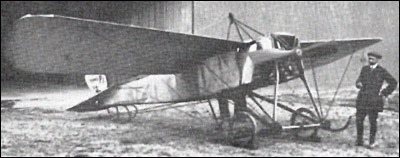
The 1911 P1 monoplane, designed by Prier, Dickson and Coanda, was built as single- or two- seaters, and with various dimensions; Span: 30’2″, 32’9″, 34′, 35’6″ Length: 24’6″, 27′.
A reconnaissance version was exhibited at the Salon de l’Aeronautique at Paris in December 1911, where it was the only British product on show. The type was also used for early wireless experiments.
Australian Mr Busteed flying the Bristol Monoplane in 1911
Prier P-1 Engine: 1 x 50hp Gnome Take-off weight: 372 kg / 820 lb Empty weight: 291 kg / 642 lb Wingspan: 9.19 m / 30 ft 2 in Length: 7.47 m / 24 ft 6 in Height: 2.97 m / 9 ft 9 in Wing area: 15.42 sq.m / 165.98 sq ft Max. Speed: 109 km/h / 68 mph Crew: 1
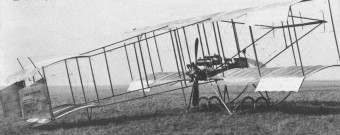
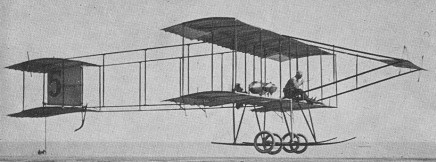
After first buying a Zodiac biplane from France, which Bristol proposed to manufacture, they settled on a copy of the Farman III which was a better design and unlike the Zodiac could be made to fly successfully.
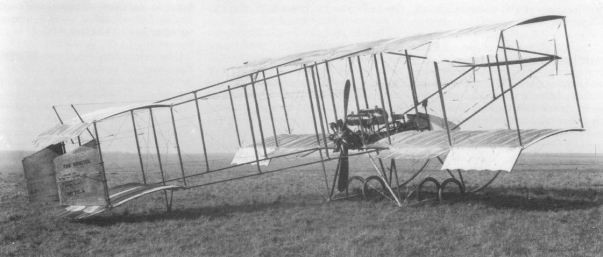
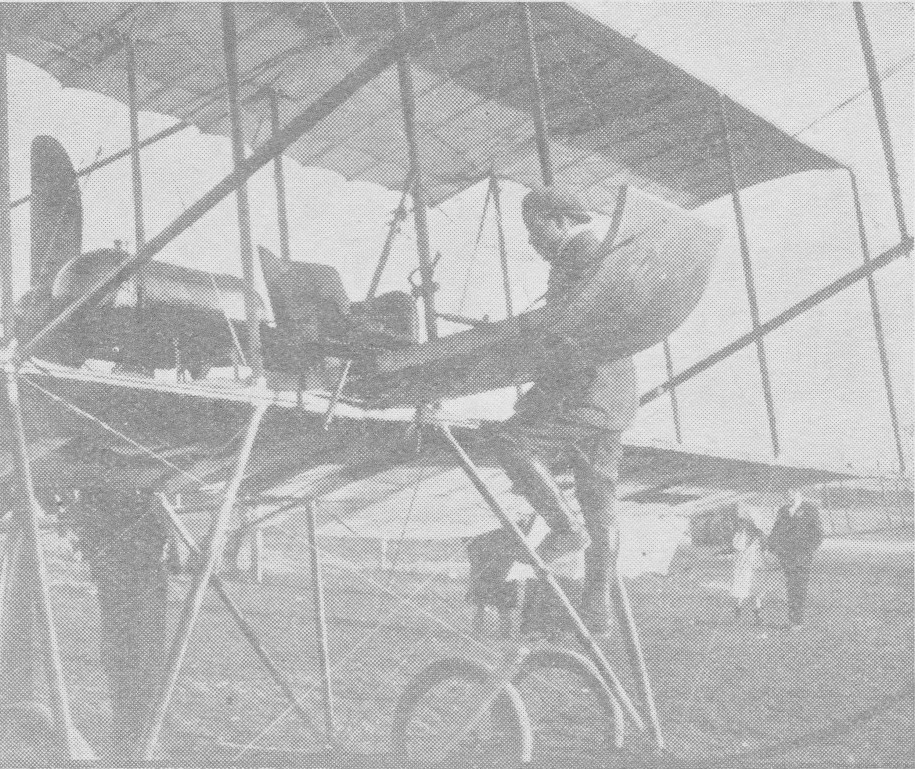
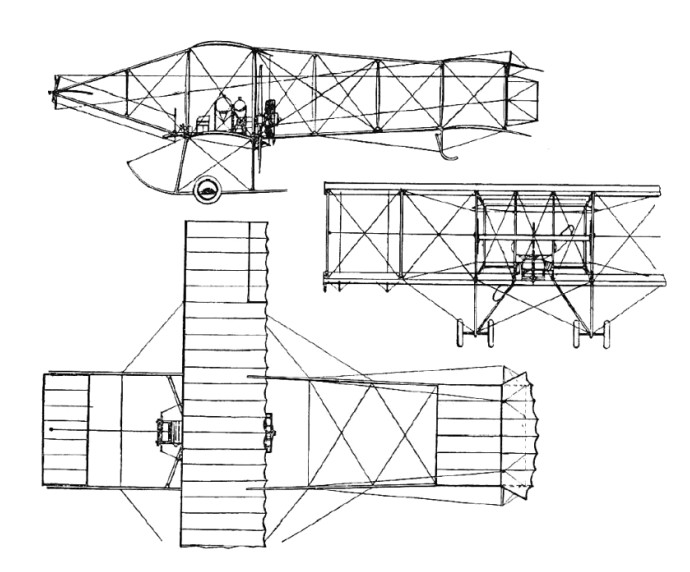
George Challenger, the company’s chief engineer at Filton, sfter seeing detailed drawings of the Farman III in Flight magazine, was pretty sure he could build a copy of the plane. A few weeks later, the first copy was constructed, using materials from the partially built Zodiac aeroplanes. The Farman copy is a tractor biplane having its upper and lower planes equal, directly superposed, and connected by 6 struts. The front struts are rigidly braced by cables; the rear ones free for warping. The fuselage is of quadrangular section. The chassis has four wheels.
The Boxkite, as it was named, was first flown on 31 June 1910 by Maurice Edmond at the company’s flying school on Salisbury Plain with a 37kW Gregoire engine and in September 1910 made the first military flight when it was used in a reconnaissance role during Army manoeuvres on Salisbury Plain, which led to the delivery of the first military aircraft as an army co-operation machine in May 1911.
Farman, not surprisingly, sued the British and Colonial Aeroplane Company for patent infringement. However, White was able to show Farman that they had made significant alterations to Farman’s design to improve it… so Farman dropped the suit. The Bristol Boxkite was the first plane to be built in mass quantity, with four purchased by the British War Office in 1911, and others sold to Russia and Australia.
This plane was simply called the No. 7. Best guess is that the initial Zodiac was No. 1, with the five partially-constructed Zodiac‘s taking the numbering up to No. 6.
The first Boxkite, No. 7, used fitted with a Grégoire 50 horsepower motor, but even before its first test flight, they swapped it out for a same output Gnome motor.
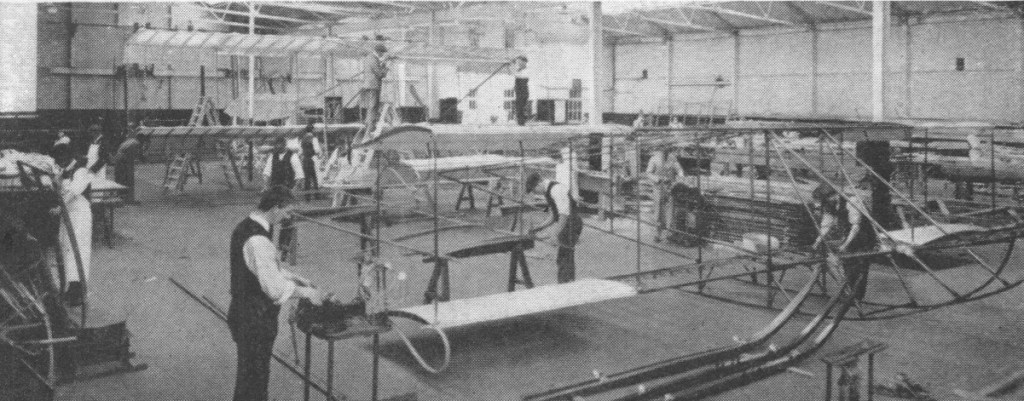
Boxkites under construction
For later trials, they put the Grégoire back in.
Boxkite No. 8 used an E.N.V. 50 horsepower motor.
Still, for almost all other aeroplanes, the company supplied the aeroplanes with the 50 horsepower Gnome rotary engine. Each motor was set just above the lower wing upon sturdy wooden beams, which, also held up the pilot and passenger seats up front.
Although early Boxkite examples built had equal upper and lower wingspans, later ones had a longer upper wing (known as the Military version).
The No. 9, flown by pilot Robert Loraine in late September of 1910, was the first aeroplane to send a radio signal down to the ground, in Great Britain. Loraine, has his diary noted by the Oxford English Dictionary, as the first written example of the word “joystick” to describe aircraft stick controls.
Within a matter of months of the first flight the company was planning for expansion and mounting its first overseas sales drive. Missions were dispatched to Australia, India and other countries with good results. In November 1910 the first export order was placed by Russia for eight Boxkites and subsequently aircraft were also sold to Sweden, Spain, France, Italy, Turkey, Romania and Bulgaria.
The Boxkite has a rich history in the evolution of military aviation in Australia and was the first official military aircraft built in Australia that was used to train Australia’s military aviators.
A Bristol Boxkite was flown in Australia for the first time on 1 March 1914, when Lieutenant Eric Harrison took one into the air at Point Cook. The airfield was then the home of the Australian Flying Corps (AFC).
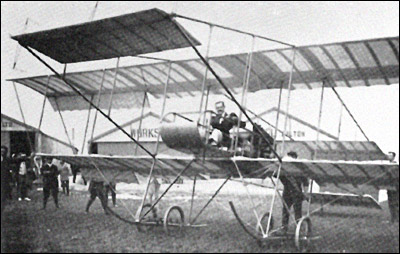
M. Jullerot in November 1911
On March 14, 1911, the British War Office ordered four Bristol Boxkites for its planned Air Battalion Royal Engineers—becoming the first production contract for military aircraft for Britain’s armed forces. A second order of four was made later that year, with them all pretty much being used as trainers for would-be pilots. When WWI broke out, four more were ordered by the British War Office, the last of which was written off in February of 1915, as obsolete. These aeroplanes were used as trainers at the Bristol flying schools at Brooklands and Larkhill, both of which were responsible for giving nearly 50 percent of British pilots their license before WWI.
By the time production of the Boxkite ceased in 1914, the British and Colonial Aeroplane Company had constructed 78 Bristol Boxkite aeroplanes in total, of which 60 were the so-called Military version, one (no. 44) was a Racer version, and one, No. 69, was a an unsuccessful Voisin variant.
Bristol Boxkite‘s No. 73-78 were built at Brislington by the Tramway Company, with all those before it manufactured at the Filton facility.
Three replica aircraft built for the movie Those Magnificent Men In Their Flying Machines. One is at the Bristol City Museum and Art Gallery, another at the Shuttleworth Collection at Bedfordshire, and the third is at the Museum of Australian Army Flying in Australia.
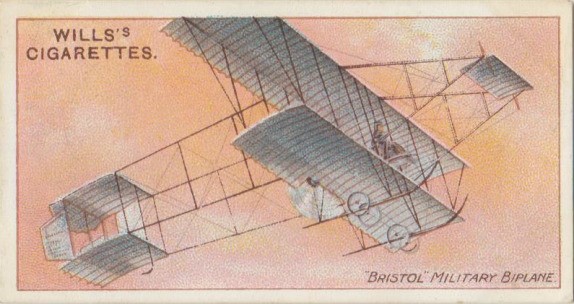
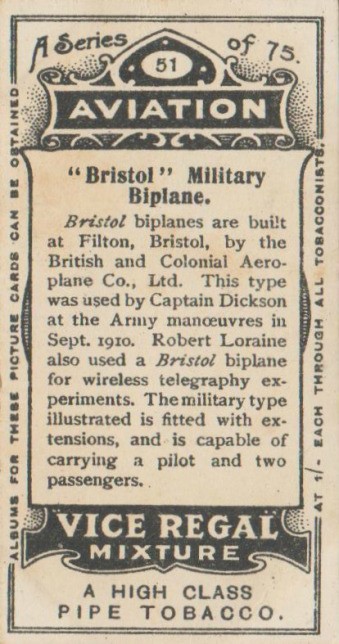
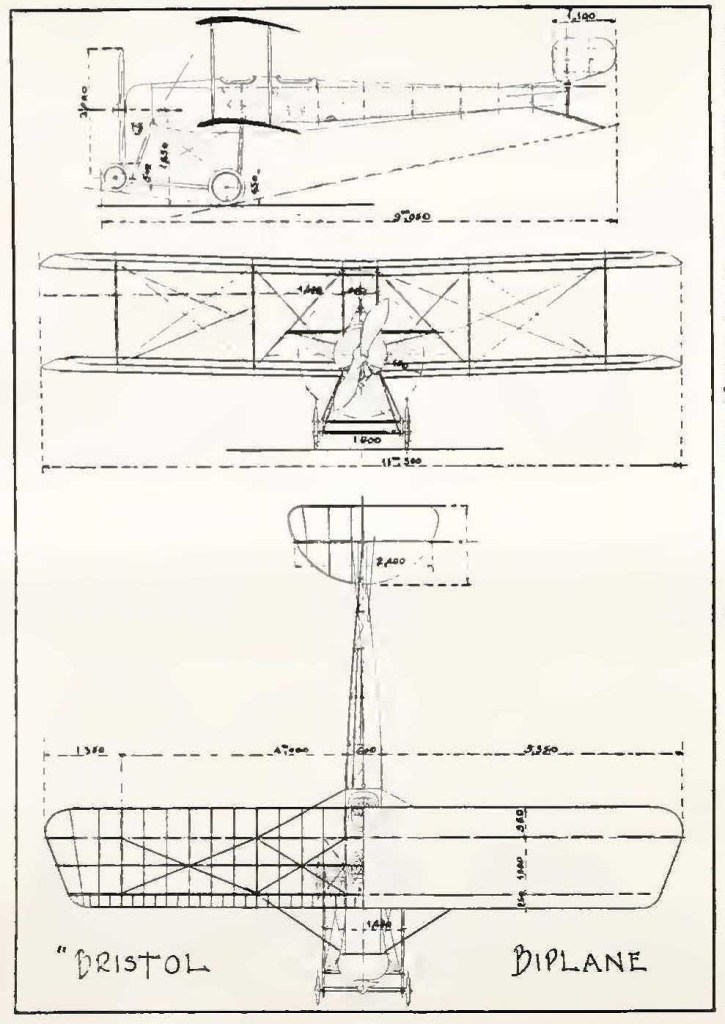
Wills’s Aviation Card #51 – “Bristol” Military Biplane.
Card #51 of 75, W.D.& H.O Wills, Aviation series 1911, Vice Regal Mixture issue
This card shows the Bristol Biplane (official name), though the Wills’s card calls it the Bristol Military Biplane, and the world seems to refer to it as the Bristol Boxkite.
Replica: RAAF Museum Bristol Boxkite Miles Bristol Boxkite
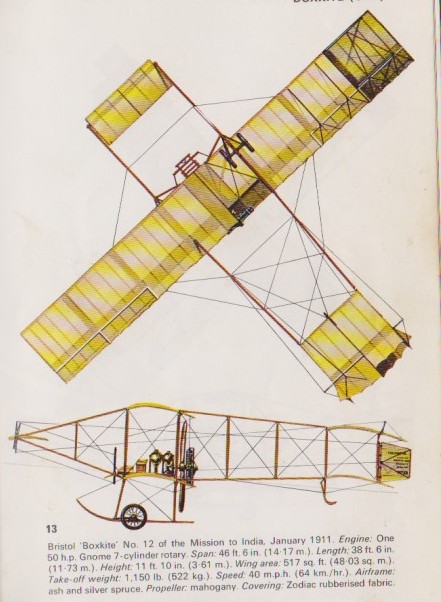
Bristol Boxkite Length: 38.386 ft / 11.7 m Height: 10.827 ft / 3.3 m Wingspan: 46.49 ft / 14.17 m Max take off weight: 1151.0 lb / 522.0 kg Empty weight: 363 kg / 800 lb Max. speed: 35 kts / 65 km/h Engine: Gnôme, 50 hp Crew: 2
Bristol Boxkite Engine: Gnôme, 80 hp Wingspan: 11.3 m Wing area: 40 sq. m Max. speed: 80 km/h
Boxkite Standard Engine: Gnôme, 50 hp Wingspan: 10.52 m / 34 ft 6 in Length: 11.73 m / 38 ft 6 in Height: 11 ft 10 in / 3.61 m Empty weight: 363 kg / 800 lb Wing area: 42.46 sq.m / 457.04 sq ft Max. speed: 64 km/h / 40 mph
Bristol Boxkite Military version Engine: 1 × Gnome Omega, 50 horsepower (37 kW) Wingspan: 14.17 meters (46 feet 6 inches) Wing area: 48.03 square meters (517.0 square feet) Length: 11.73 meters (38 feet 6 inches) Height: 3.61 meters (11 feet 0 inches) Empty weight: 408 kilograms (900 pounds) Maximum takeoff weight: 522 kilograms (1150 pounds) Maximum speed: 64 kilometers per hour (40 miles per hour) Wing loading: 10.9 kilograms per square meters (2.22 pounds per square foot) Power/mass: 70.9 watts per kilogram (0.043 horsepower per pound) Crew: 2
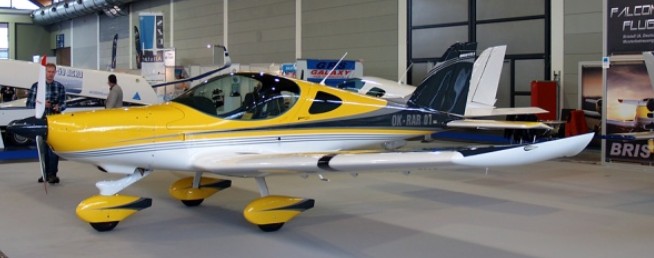
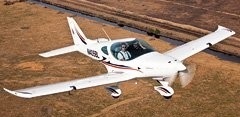
The BRM Aero Bristell is a Czech low-wing, two-seat in side-by-side configuration, single engine in tractor configuration, ultralight and light-sport aircraft that was designed by Milan Bristela and produced by BRM Aero. The aircraft was supplied as a complete ready-to-fly aircraft.
The aircraft was designed to comply with both European microlight rules and also the US light-sport aircraft regulations, by using different versions for each regulatory environment.
The aircraft is made from aluminium and features a 130 cm (51 in) wide cabin at the shoulder, with a bubble canopy over the cockpit. The wings feature flaps. The standard engine is a 60 kW (80 hp) Rotax 912UL, with the 75 kW (101 hp) Rotax 912ULS, the 71 kW (95 hp) ULPower UL260i/iS and the 88 kW (118 hp) ULPower UL350iS powerplants optional. The 115 hp (86 kW) Rotax 914, 85 hp (63 kW) Jabiru 2200 and 120 hp (89 kW) Jabiru 3300 are also available. Other engines are planned, particularly for the United States market. The aircraft has a useful load of 279 kg (615 lb). The landing gear is of tricycle configuration.
The aircraft was introduced at the Aero show held in Friedrichshafen in 2011. After 42 examples had been completed (September 2011) the aircraft was introduced into the US market in September 2011 at the AOPA Summit. The 2011 base price was US$125,000.
Ultralight aeroplane Bristell UL and its modifications Bristell HD, Bristell RG and Bristell LSA are aeroplanes for flight training in flight schools, gliders towing and recreational flying. The Bristell HD version offers heavy-duty wing spars, and Bristell RG is a version with retractable undercarriage.
The Bristell tricycle-gear (and new taildragger version), low-wing S-LSA comes standard with 10-inch Dynon SkyView or Advance Flight Systems AF5600 EFIS panel, Com, two-axis autopilot, BRS parachute and leather interior. Price 2012: $156,000.
Bristell UL Base ultralight model Engine: 1 × Rotax 912ULS , 75 kW (100 hp) Wing span: 8,13 m (26 ft 8 in) Wing area: 10,5 sq.m (113 sq ft) Wing loading: 45 kg/ sq.m Length: 6,45 m (21 ft 2 in) Height: 2,28 m (7 ft 6 in) Cabin width: 1,3 m Empty weight: 290 kg (639 lb) Maximum take-off weight: 472,5 kg (1,042 lb) Useful load: 182,5 kg Fuel tanks capacity: 130 lt (29 imp gal; 34 US gal) Fuselage luggage compartment: 15 kg Wing luggage compartment: 2 x 20 kg Load factors: +4/-2g Stall speed with flaps VSO: 52 km/h Stall speed without flaps Vs1: 67 km/h Manoeuvring speed VA: 165 km/h Maximum flap speed VF: 139 km/h Cruising speed: 214 km/h 250 km/h Never exceeded speed VNE: 270 km/h Seats: 2
Bristell HD Heavy duty model Wing span: 8,13 m Wing area: 10,5 sq.m Wing loading: 57,1 kg/ sq.m Length: 6,45 m Height: 2,28 m Cabin width: 1,3 m Empty weight: 310 kg Maximum take-off weight: 600 kg Useful load: 290 kg Fuel tanks capacity: 130 lt Fuselage luggage compartment: 15 kg Wing luggage compartment: 2 x 20 kg Load factors: +4/-2g Stall speed with flaps VSO: 78 km/h Stall speed without flaps Vs1: 87 km/h Manoeuvring speed VA: 165 km/h Maximum flap speed VF: 139 km/h Cruising speed: 250 km/h Never exceeded speed VNE: 290 km/h
Bristell LSA Model for the US light-sport aircraft category Wing span: 9,13 m Wing area: 11,75 sq.m Wing loading: 51,06 kg/sq.m Length: 6,45 m Height: 2,28 m Cabin width: 1,3 m Empty weight: 330 kg Maximum take-off weight: 600 kg Useful load: 270 kg Fuel capacity: 130 lt Fuselage luggage capacity: 15 kg Wing luggage compartment: 2 x 20 kg Load factors: +4/-2g Stall speed with flaps VSO: 58 km/h Stall speed without flaps Vs1: 74 km/h Manoeuvring speed VA: 165 km/h Maximum flap speed VF: 139 km/h Cruising speed: 250 km/h Never exceeded speed VNE: 290 km/h
Bristell RG Rectractable gear model Wing span: 9,13 m (30.0 ft) Wing area: 11,75 sq.m Wing loading: 51,06 kg/ sq.m Length: 6,45 m Height: 2,28 m Cabin width: 1,3 m Empty weight: 335 kg Maximum take-off weight: 600 kg (1,323 lb) Useful load: 265 kg Fuel tanks capacity: 130 lt Fuselage luggage compartment: 15 kg Wing luggage compartment: 2 x 20 kg Load factors: +4/-2g Stall speed with flaps VSO: 58 km/h Stall speed without flaps Vs1: 74 km/h Manoeuvring speed VA: 165 km/h Maximum flap speed VF: 139 km/h Cruising speed: 250 km/h Never exceeded speed VNE: 290 km/h
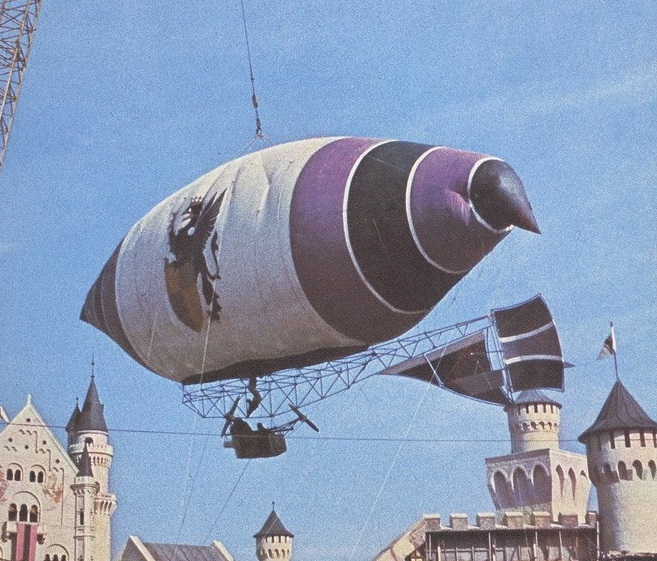
The semi-rigid airship, whose appearance was designed by Ken Adam, was an approximate replica of a 1904 Lebaudy airship for the film Chitty Chitty Bang Bang. It was intended to represent the airship of Baron Bomburst of Vulgaria. Although fictional in inspiration, it was a fully functional flying airship.
Vulgaria, and the airship, is drawn from Roald Dahl’s screenplay for the film, rather than Ian Fleming’s original book.
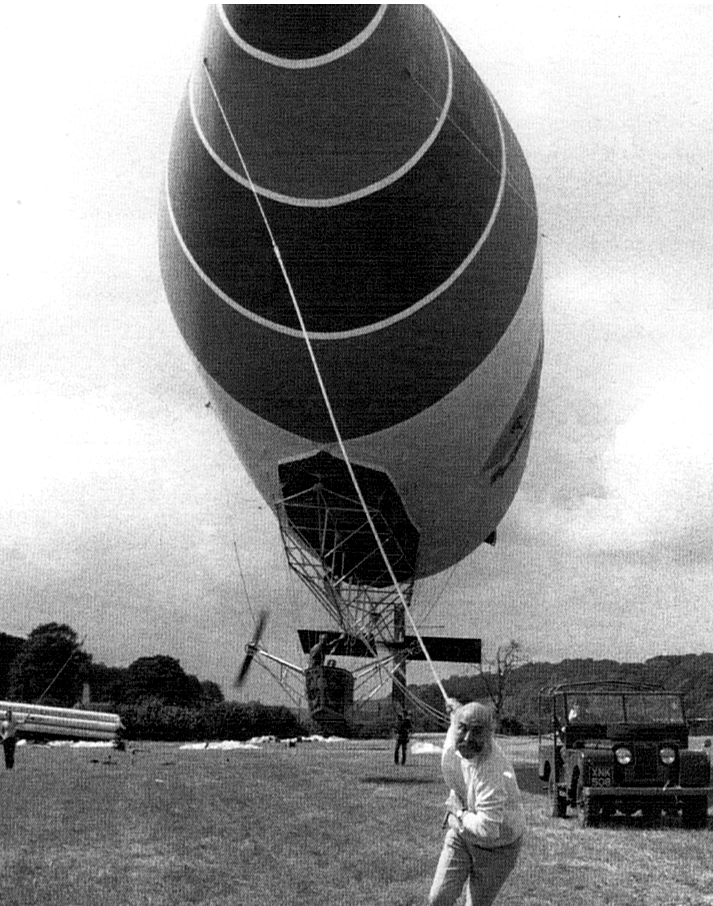
The airship was built in 1967 by Malcolm Brighton, at Cardington, Bedford. It was only the second British airship to be built post-war, the first being the Airship Club’s 1951 Bournemouth. It was also the first British airship to be mainly filled with helium rather than hydrogen, though it was topped up with hydrogen.
The envelope was symmetrical fore-and-aft and short and deep compared to typical rigid airships, with pointed ends above the centre of the envelope that gave it the distinctive Lebaudy “hooked” appearance. The gondola was a long open truss structure beneath this and a crew basket beneath, with the typical Lebaudy feature of cruciform control surfaces at the rear of the gondola.
The ends of the airship envelope were coloured with bands of the Vulgarian tricolor: black and purple on white. The flanks were adorned with a large black griffin, the arms of Vulgaria.
The envelope was 112 feet long, with a width of 30 feet and height of 44 feet, giving a volume of 37,000 cubic feet (1,000 m3). A single Volkswagen Beetle engine of 40 hp drove two two-bladed propellers. First flying in 1967, the small Lebaudy control surfaces made the airship difficult to control in pitch.
Only the one was ever built. It first flew, from a farm at Turville Heath, Buckinghamshire, on 9 August 1967.
Lionel Jefferies, one of the films stars.
On one flight by Malcolm Brighton and Derek Piggott the airship collided with two sets of high-voltage power wires, causing much damage. Soon after it was repaired, a freak storm tore the point of attachment of the mooring ropes, destroyed it totally.
In the Fifties, Georges Briffaud designed the GB-6, a tailless airplane with a high wing and a Lutétia 44 hp engine. Inspired by the work of Abrial and Fauvel, he provided his airplane with an inherently stable wing allowing the horizontal tail to be omitted. The wing, however, had an original airfoil section, based on the NACA 23012, whose inherent stability was achieved by raising the trailing edge. Assembled by SAN (Société Aéronautique Normande), this airplane took off with Lucien Quérey (Director of SAN) at the controls in June 1955, from the Bernay airport. While landing on a wet section of the runway, however, the nosewheel dug in and the GB-6 flipped over violently. The pilot was only slightly injured. Only the wing was salvageable.
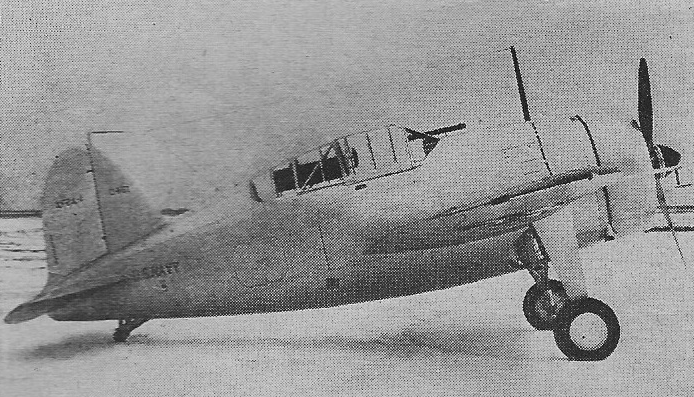
The prototype of this single-seat all-metal fighter flew for the first time in December 1937.
1938 XF2A-1
The first production version was the F2A-1 powered by a 700.4kW Wright R-1820-34 radial engine which went into service with the US Navy in 1939. From the initial order of 54, only 11 were actually accepted into service with US forces. The eleven were operated by the US Navy on board USS Saratoga and 44 were exported to Finland. The F2A-1 was the US Navy’s first monoplane fighter.
These were followed by 43 894kW R-1820-40-engined F2A-2 and 108 F2A-3 for the US Navy. Addition of armour plate on the F2A-2 version reduced any performance advantage the basic Buffalo may have had over Japanese fighters.
A contract was placed by the RAF in 1939 for 170 Brewster Model 339’s (called Buffalos) to be operated as a land fighter. Meanwhile a few fighters had reached Belgium and others were in service in the Netherlands East Indies and with the RAF.
Finland bought 44 Brewster 239 from USA 1939-1940. Basically 43 Brewsters were on sale (US Navy order was 54 and only 11 was delivered). But Finland bought 44 and 38 came from US Navy order and six from Belgium order. Since Belgium has ordered Brewster 339, the factory had to make rather big modification to front fuselage.
After the Russian invasion of Finland in 1940, slowly reinforcements began to arrive for the Finnish air force. The first to come were 5 Gloster Gladiators, 12 Hurricanes, 17 Lysanders and 24 Blenheims, all from Britain. After that, 76 Morane-Saulnier and Koolhoven F.K. fighters arrived from France. Italy sent 17 Fiat fighters, Sweden 12 Gloster Gladiators, and the USA 44 Brewster Buffalo, of which however only 5 reached Finland in time. Even the Union of South Africa sent 25 Gloster Gladiators. Pilots and ground personnel from a number of countries also volunteered to assist them.
Apart from the Finnish fighters which fought well against the Russians, F2A were used almost exclusively against the Japanese and in all cases met superior aircraft. Heavy British losses in the Far East led to their withdrawal and US Navy action during the Battle of Midway was equally unsuccessful as 13 out of the 19 available Buffalos were lost to enemy fire.
In an attempt to improve performance against the Japanese Zero, the .50 in mgs were replaced by .303s and the number of rounds reduced to 350. The fuel was restricted to 80 gallons.
A total of more than 500 F2A were built.
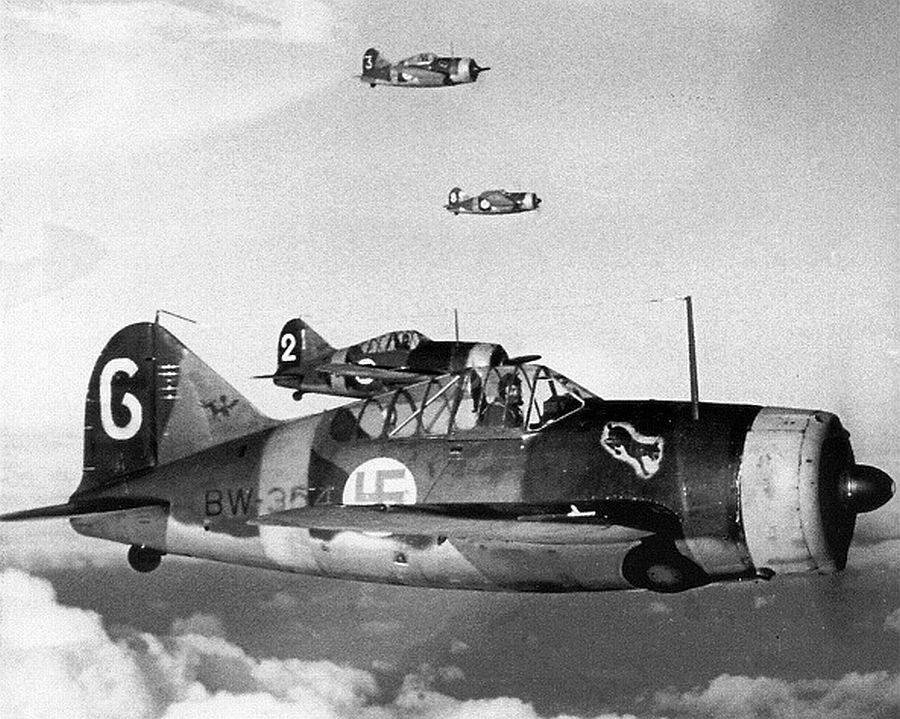
In 1939, following requests by the Finnish Embassy in Washington, D.C., a total of forty-four U.S. Brewster F2A-1 “Buffalo” aircraft that were originally intended for the U.S. Navy were diverted at the behest of the U.S. State Department to Finland for use by the Finnish Air Force (FAF) and designated by Brewster as the Model B-239E. They were flown at first during the Winter War of 1939-40 between the Soviet Union and Finland. There they were never referred to as the “Buffalo” by the FAF, but merely “Brewster” or by nicknames such as “Sky Pearl” and “Pearl of the Northern Skies” and “Butt-Walter” (or “Pylly-Walter”) and “American Hardware” (American metal) and “Flying Beer Bottle,” and they received FAF serial numbers BW-351 though BW-394 (“BW” aircraft).
Brewster B-239s over Lake Tikshozero, 1942.
The Finns liked the Buffalo enough to design a version called the Humu (‘Reckless’) with a wooden wing and a Russian engine. It proved unsatisfactory in trials and only a single example was built.
The one Brewster 239 (F2A-1) is in The Aviation Museum of Central Finland in Tikkakoski, Finland. There is also the prototype of VL Humu which is the clone of F2A-1 or 239.
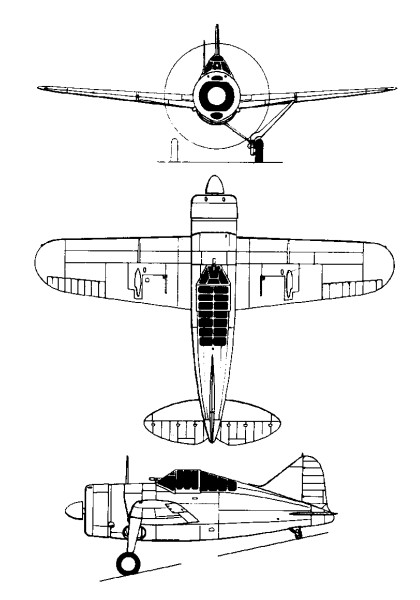
Brewster F 2 A Buffalo Carrier based fighter aircraft 1938 Length: 26.345 ft / 8.03 m Height: 12.073 ft / 3.68 m Wingspan: 35.007 ft / 10.67 m Wing area: 208.929 sqft / 19.41 sq.m Max take off weight: 7159.6 lb / 3247.0 kg Weight empty: 4731.9 lb / 2146.0 kg Max. speed: 279 kts / 517 km/h Cruising speed: 224 kts / 415 km/h Service ceiling: 33202 ft / 10120 m Wing load: 34.24 lbs/sq.ft / 167.00 kg/sq.m Range: 839 nm / 1553 km Engine: Wright R 1820-40 Cyclone, 1184 hp Crew: 1 Armament: 4x cal.50 MG (12,7mm), 2x 45kg Bomb.
F2A-2 Engine: 1100 hp Wright R-1820-40 (G-205A) Cyclone Wingspan: 35 ft / 10.67 m Length: 26 ft 4 in / 8 m Height: 12 ft 1 in / 3.7 m Empty weight: 4630 lb / 2100 kg Loaded weight: 7055 lb / 3200 kg Max speed: 300 mph / 483 km ROC: 3070 fpm / 935 m/min Service ceiling: 30,500 ft 9300 m Range: 650-950 mi / 1045-1530 km Armament: 4 x mg, 0.30 in, 0.303 in, or 0.50 in
Brewster F2A-3 Buffalo Length: 26 ft 4 in (8.03m) Wingspan: 35 ft 0 in (10.67m) Height: 12 ft 1 in (3.68m) Wing area: 19.41 sq.m / 208.93 sq ft Maximum Speed: 321mph (517kmh; 279kts) Cruise speed: 415 km/h / 258 mph Maximum Range: 965miles (1,553km) Rate-of-Climb: 3,070ft/min (936m/min) Service Ceiling: 33,202ft (10,120m) Armament:4 x 12.7mm machine guns, 2 x 45-kg bombs Accommodation: 1 Empty Weight: 4,731lbs (2,146kg) Maximum Take-Off Weight: 7,158lbs (3,247kg) Engine: 1 x Wright R-1820-40 cyclone radial piston , 895kW