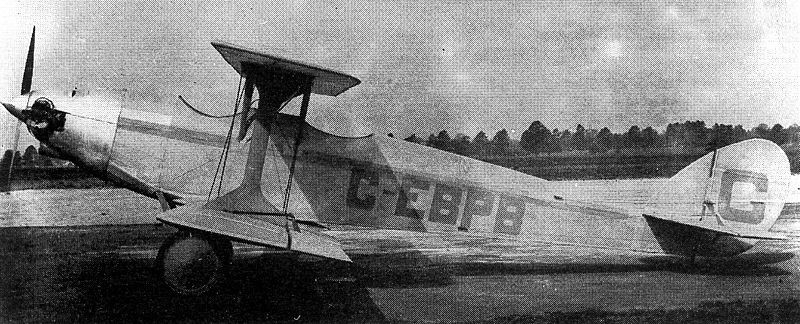
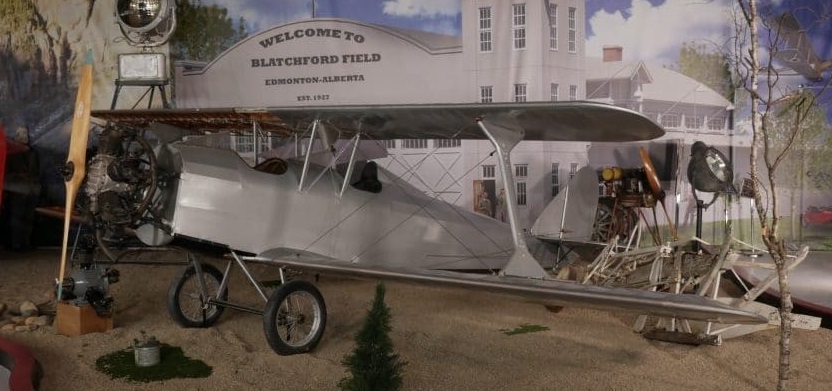
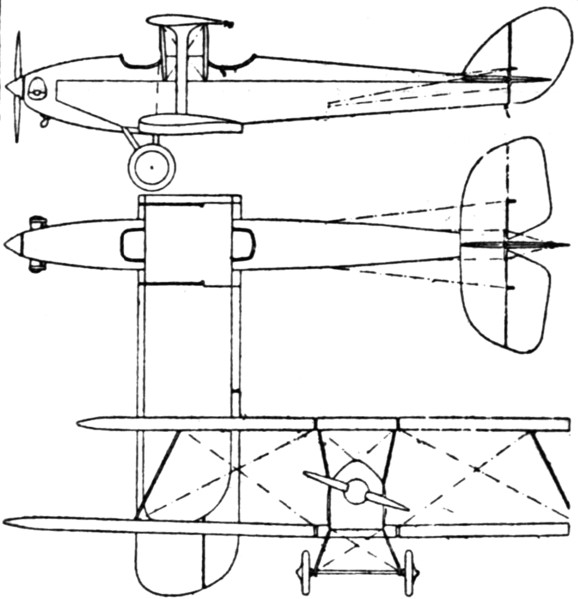
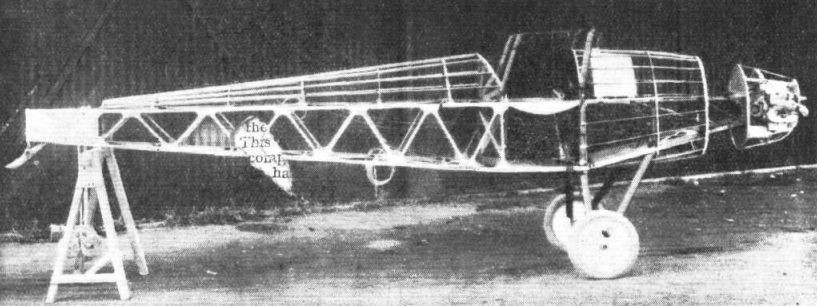
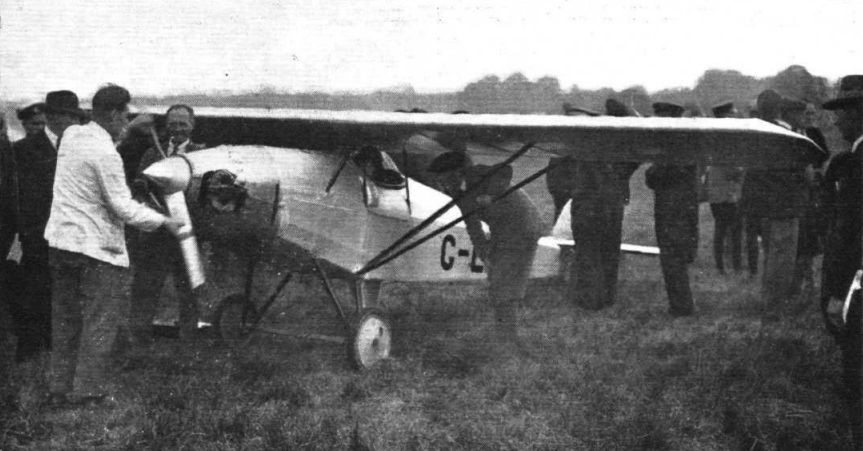
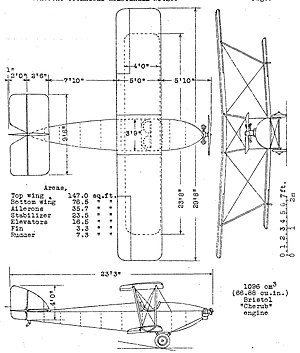
The Cranwell CLA.4 was for the 1926 Lympne light aircraft trials, as two-seat inverted sesquiplanes, powered by a Pobjoy P. The first aircraft, G-EBPC was started as a CLA.4 but completed as a CLA.4A, powered by a Bristol Cherub III.
The first of two built, G-EBPC, was flown from Cranwell in 1927, and by Comper at the trials but was withdrawn with a damaged landing gear. It was broken up at Heston in 1933.
The second aircraft, G-EBPB, was destroyed in a crash on 4 March 1927.
A group of students, unsatisfied with their flying hours at the Edmonton and Northern Alberta Flying Club, purchased a set of plans to build a Cranwell CLA.4 in 1927. Alf Want assembled the aircraft in his house basement, but then moved it to Blatchford Field for flight trials. It is the third and last aircraft of its kind, and is the oldest surviving airplane originally built in Edmonton.
Cranwell CLA.4 Powerplant: 1 x Velie M-5, 41 kW) Wingspan: 8.33 m Length: 6.80 m Maximum Speed: 105 km/h Cruise Speed: 80 km/h Range: 200 km Crew: 1 Passengers: 1
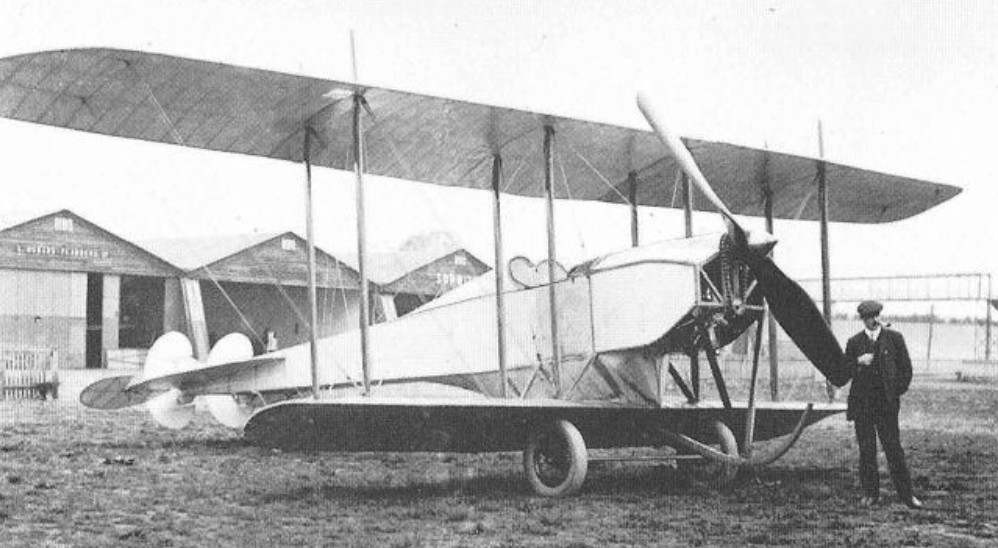
The Cranwell CLA.2 was a two-seat single-engined biplane designed and built for the 1924 Lympne light aircraft trials.
It was first flown at Cranwell at 14 September 1924 with a Bristol Cherub as G-EBKC, it went on to win the £300 Reliability Prize at Lympne.
After the light plane trials the CLA.2 went to RAF Martlesham Heath for evaluation but it was written off by an Air Ministry pilot. The Air Ministry compensated the club for the loss and this was used to fund the next project.
Engine: Bristol Cherub Wingspan: 29.08 ft Length: 23.03 ft
The Cranfield Institute of Technology had a design study for a competition class aerobatic aircraft to represent Britain in the World Aerobatics Contests.
A company, Air Invert, was set up between the Institute and Alan Curtiss to produce the aircraft. The prototype was allocated registration G-BCIT, c/n 001.
Single seat single engined mid wing mono¬plane with conventional three axis control. Wing shape; tapering chord; no tail, canard wing. Pitch control by fully flying canard; yaw control by tip rudders on canard; roll control by half span ailerons. Cantilever wing; wing profile; double surface. Aluminium fuselage. Engine mounted at wing height driving pusher propeller. The Cozza/Scholl Scorpion was only an experimental machine in 1982. Chicago based designers Craig Cozza and Mark Scholl wanted to create an ultralight with good soaring ability and which would operate safely in temperatures low enough to weaken composites. So the Scorpion uses an all aluminium construction, with Dacron wing covering. Pitch control is by fully flying canard and yaw control by tip rudders mounted on the ends of the canard. Half span ailerons look after roll control. Particularly novel is the wing construction which allows the pilot to rig the aircraft with 40.0 ft (12.19 m) wings for soaring, or to halve the span by removing a 10.0 ft (3.05 m) panel from outboard end of each wing, in which form the Scorpion will have a more ultralight-like feel. For ease of construction, the fuselage is triangular in cross section, allowing flap panels to be used. The low drag shape has allowed the designers to use a small engine, and they have chosen the single cylinder Cuyuna 215R of 20 hp for the prototype.
Engine: Cuyuna 215R, 20 hp. Wing span 20.0 or 40. ft (6.10 or 12.19m). Empty weight 235 lb, 107 kg. Max cruising speed 60mph, 97kph.
Cozy is designer Nat Puffer’s side-by-side version of Burt Rutan’s Long¬EZ. It has a larger instrument panel, full dual controls, a large baggage compartment and the same efficiency, speed and range as Long-EZ, allowing passenger to assist with piloting/navigating, and makes long trips more pleasant and less fatiguing, as well as adding a margin of safety in bad-weather flying. The Cozy MK IV is a high-performance, four-seat canard aircraft which is comfortable, efficient, and economical to build. It has a range of about 1,000 miles and a top speed of 200 mph. When constructed according to plans and operated within the approval C.G. range, the canard configuration makes it highly resistant to stalls or loss of position control. The MK IV features full dual control and two-axis trim. The composite construction is very strong, resistant to corrosion and fatigue. The MKIV features the same moldless construction as the Cozy. It used the same basic materials of foam, glass, cloth, and epoxy.
AeroCad Inc also licence manufacture a development of the Cozy as the AeroCanard. Aircraft Spruce & Specialty Co. has acquired all existing inventory, tooling, and drawings for the prefabricated metal parts used in construction of the popular Cozy III and Cozy Mark IV aircraft as of January 1, 2004. Ken Brock Manufacturing Co. of Stanton, CA produced the metal parts for the construction of the Cozy and Long-EZ aircraft since the mid-1970’s until ceasing business operations on December 31, 2005. As the owner of the design rights for the Cozy Mark IV and the source for plans and kits, Aircraft Spruce continues to sell Brock’s parts. There was no remaining inventory of some of the parts, but there are new alternate sources on most of them. These designs are protected with U.S. copyrights, and Aircraft Spruce has licensed no one else to copy all or any part of these designs to sell, loan, or give to others.
Greg Richter converted his Cozy III from a Mazda RX7 motor car engine to General Electric T58 turbine jet engine power. The transformation was performed by Valerie Harris and Robert with EZJET at Covington, Tennessee, in 1991.